


Manitoba Jellies: Not Your Grandmother's Preserves

Manitoba Jellies: Not Your Grandmother’s Preserves

No, I’m not about to give a recipe for Saskatoon berry jam, but instead introduce some members of an animal group that most would never associate with Manitoba: jellyfish. Jellyfish are, of course, not fishes at all, but part of a very interesting phylum of animals called the Cnidaria [nie-dare-ee-a] that includes corals, sea anemones, and jellyfish. Some of you might remember high school biology and examining the superficially plant-like Hydra, a hydrozoan cnidarian, under a microscope. The term “jellyfish” refers to similar-looking stages of the lifecycles of various members of the Cnidaria that are not necessarily closely related.
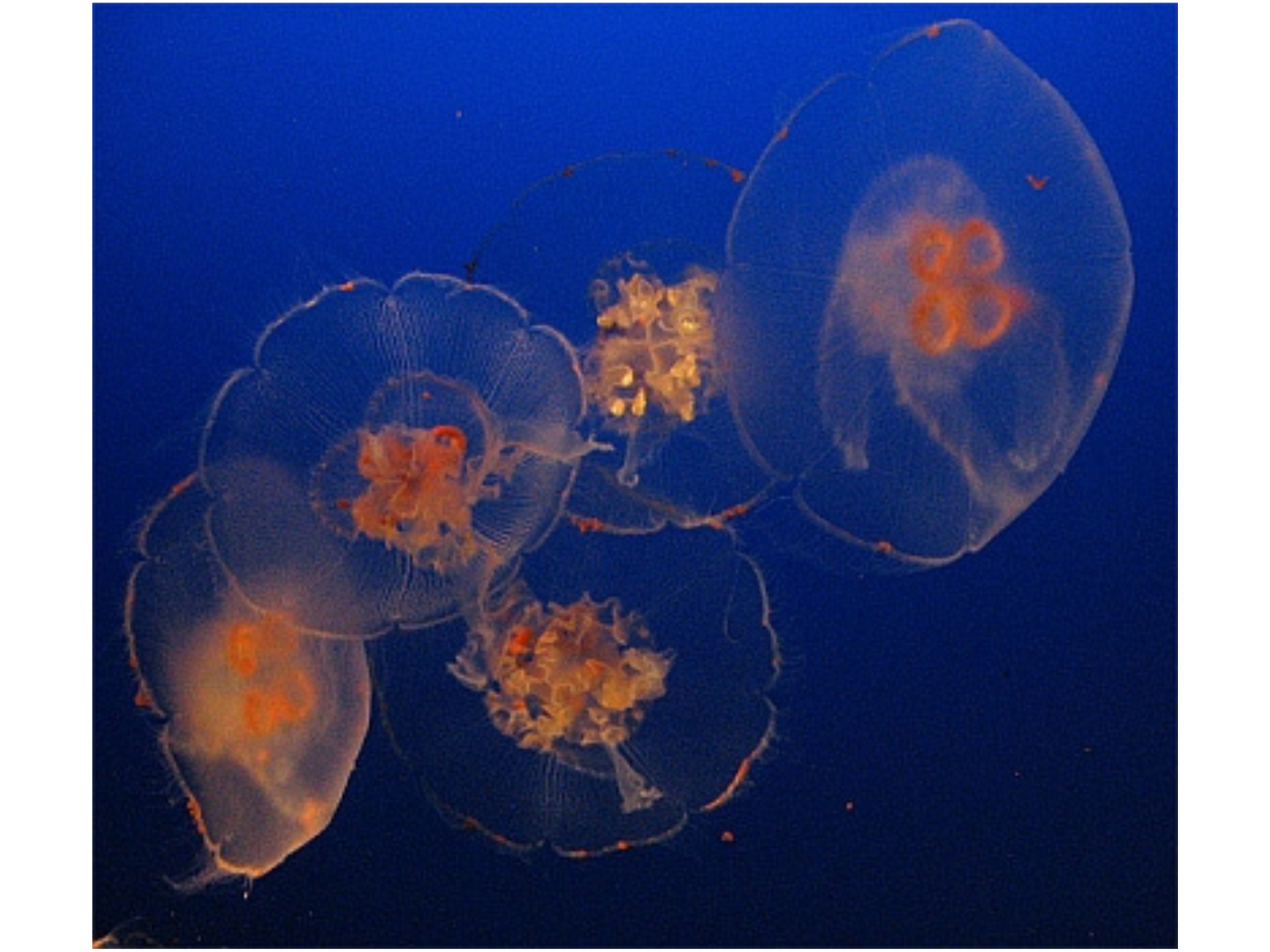
Five jellyfish swimming together in blue water.

The unique characteristic that links all members of the Cnidaria are very specialized cells called cnidocytes [nie-doe-sites] that contain some of the largest and most complex intracellular structures known – the cnidae [nie-dee]. These are hollow, harpoon-like threads that fire at or into potential food at speeds of over 9m/sec with the force of a bullet! They are either adhesive or inject a toxic cocktail of phenols and proteins to capture prey. [For a technical discussion, see Current Biology.] The hundreds of thousands of these cnidae that are triggered by the brush of a finger are what makes a sea anemone’s tentacles feel sticky. In some species of hydrozoans and jellyfish with particularly nasty neurotoxins, cnidocytes (sometimes called nematocysts) are the cause of severe pain and even death in humans that might touch them.


Image: Aurelia, a genus of typical jellyfish found in Pacific, Atlantic, and Arctic Oceans. It is also known from James Bay and might occur off the Manitoba coast. Photo courtesy of G. Young, copyright.

But what, you might ask, do cnidarians (and jellyfish) have to do with Manitoba? Actually, cnidarians are incredibly common in the province, but mostly as fossils. Many species of fossil corals are known, and often make up part of the popular Tyndall stone found cladding many buildings (including the provincial legislature and The Museum). Fossil jellyfish have recently been described from rock over 440 million years old by the Museum’s paleontologist, Dr. Graham Young. These and other discoveries form an integral part of the Ancient Seas gallery that opened just last spring. This award-winning gallery, using fossils and scientific animation brings that early Manitoba to life when cnidarians were commonplace here.

We also can’t forget that Manitoba has ocean frontage! Hudson Bay is home to over 60 species of cnidarians, including several species of jellyfish. The first image in this blog, the scyphozoan jellyfish Aurelia, is a genus recorded for James Bay. Not all of these species might wash ashore along our northern coastline, but some certainly do. One of the most spectacular is Cyanea capillata, the lion’s mane jellyfish, perhaps one of the largest invertebrates by some measures. Although most individuals are smaller, some have a bell (body) reaching over 2 metres in diameter and tentacles that are over 30 metres long! Our Arctic/Subarctic Gallery has a meticulously prepared model of this species.
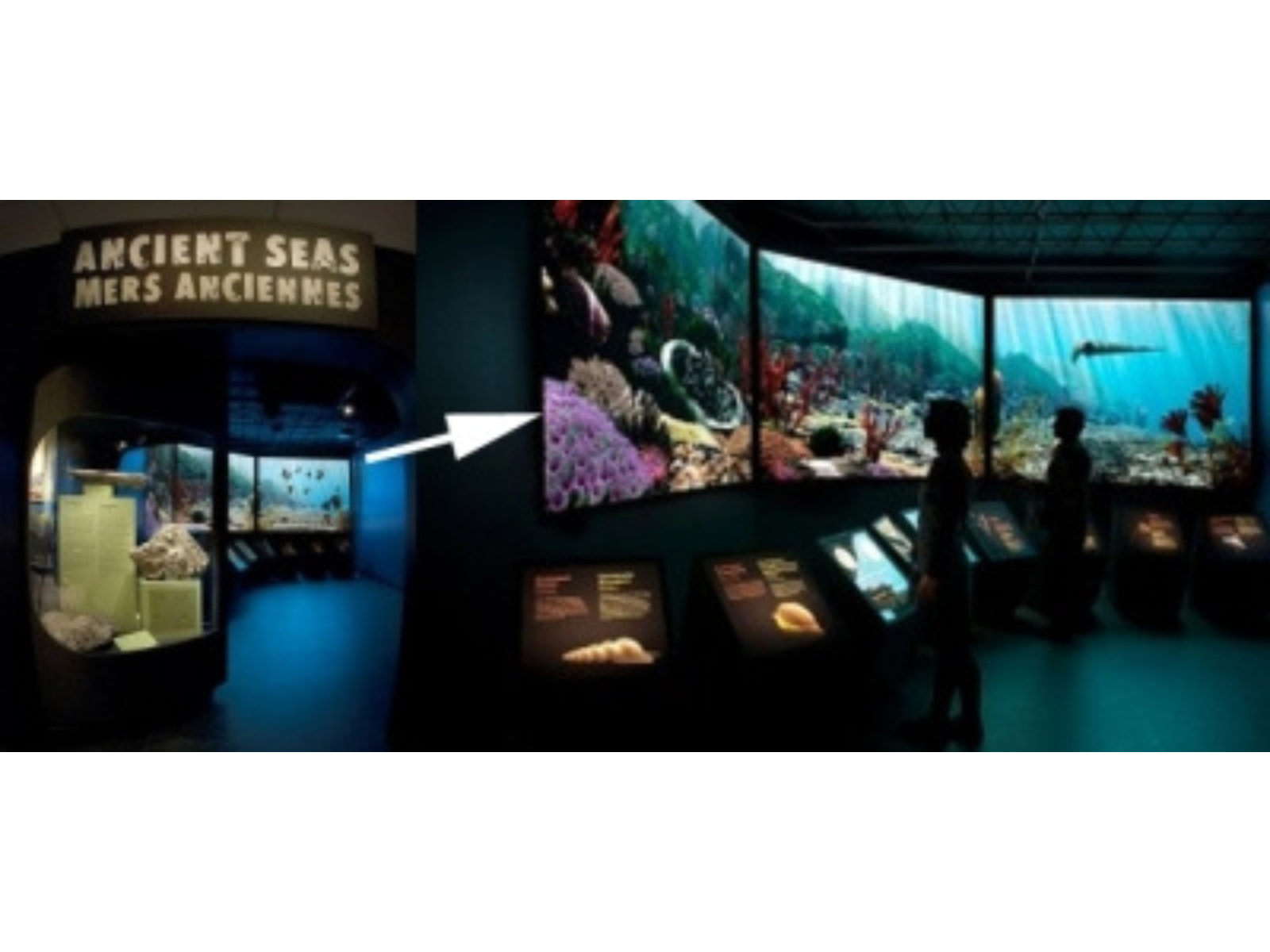
Two photographs side-by-side of the entrance to the Ancient Seas exhibit and the exhibit itself - a large curving screen along a wall showing animation of a view of a tropical sea.

The Ancient Seas gallery and a peek at the large screen theatre that brings the fossils to life, including jellyfish and corals.
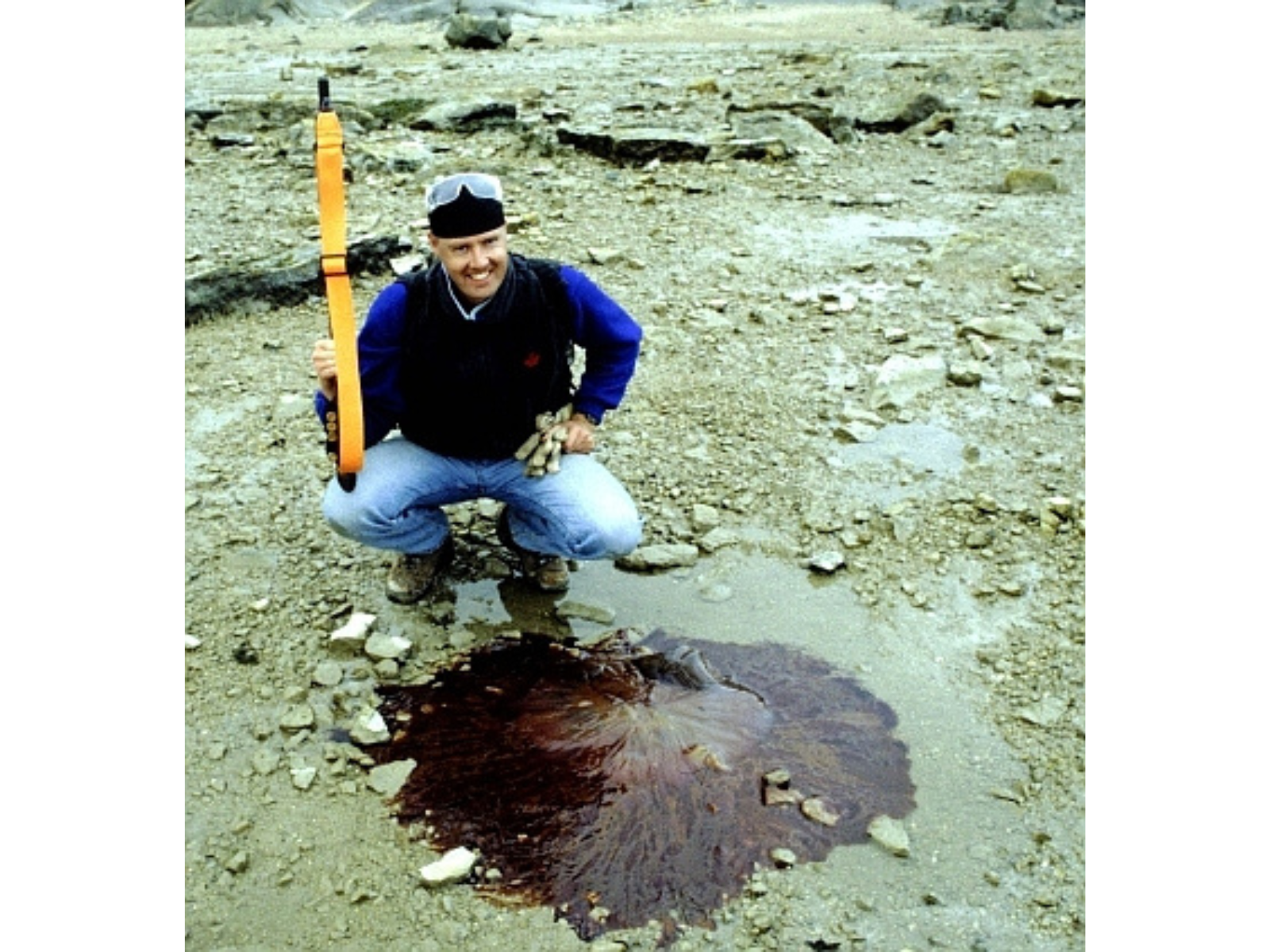
An individual crouching down next to a large beached lion's mane jellyfish.

A lion’s mane jellyfish, Cyanea capillata, washed ashore in the Churchill River estuary in Manitoba. The bell (body) on this specimen is about 50cm across. Photo copyright of David Rudkin, Royal Ontario Museum.

For a more southern taste of jellyfish, you might recall the report late last summer of a “first” record of jellyfish for the province in the Whiteshell area (southeastern Manitoba). There were reports of a bloom of small jellyfish about the size of a quarter or smaller, found in the hundreds in a couple of isolated bays of Star Lake. The species of jellyfish is Craspedacusta sowerbyi, harmless to humans, but a critter with an interesting history. It was originally described in the 1880s from ornamental water lily tanks in London, England, and thought to have come from South America. Further research suggests it is actually a Chinese species. With the popularity of aquatic ornamental plants and through other means, it had made its way to eastern North America by the early 20th century and has gradually spread throughout large portions of the United States and southern Canada. It has been regularly reported from Wisconsin and Minnesota since about 1969, so it would have seemed only a matter of time before it would turn up in Manitoba.
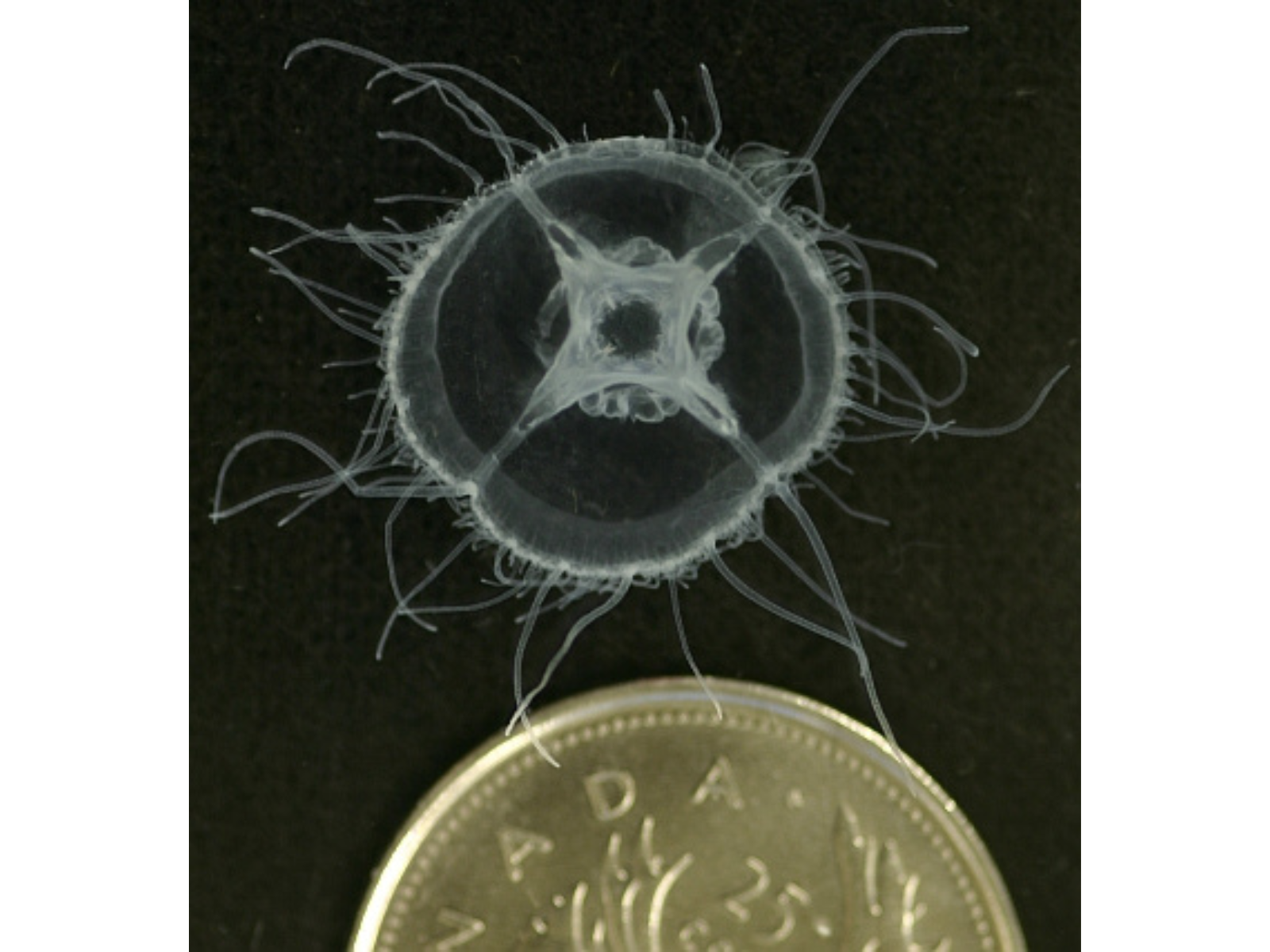
A small jellyfish on a black background next to a Canadian quarter for scale.

The freshwater jellyfish, Craspedacusta sowerbyi, of variable size but no bigger than a quarter.
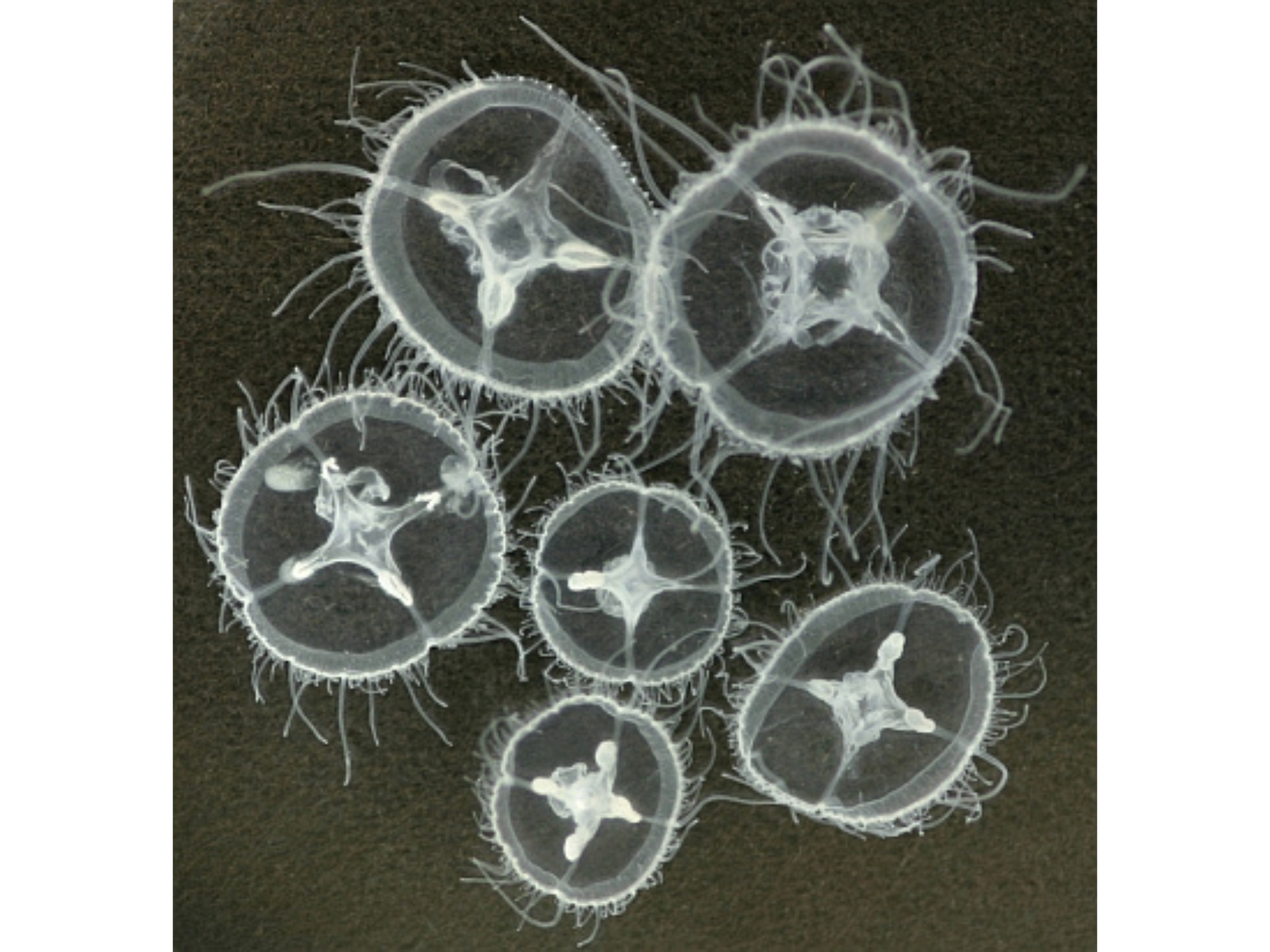
Six jellyfish against a deep grey background.

Some of The Manitoba Museum specimens of Craspedacusta from Star Lake. The specimen at the upper right is the one with the quarter in the preceding image. Most are much smaller than a quarter.

As it happens, this species of freshwater jellyfish was recorded by a reputable source in Star Lake and other Whiteshell area localities as early as 1972! Unfortunately, no voucher specimens were retained at that time, but the Museum was fortunate enough to obtain a small collection of this year’s bloom from Doug Collicutt. These will provide a permanent physical record of the species’ occurrence in the province.
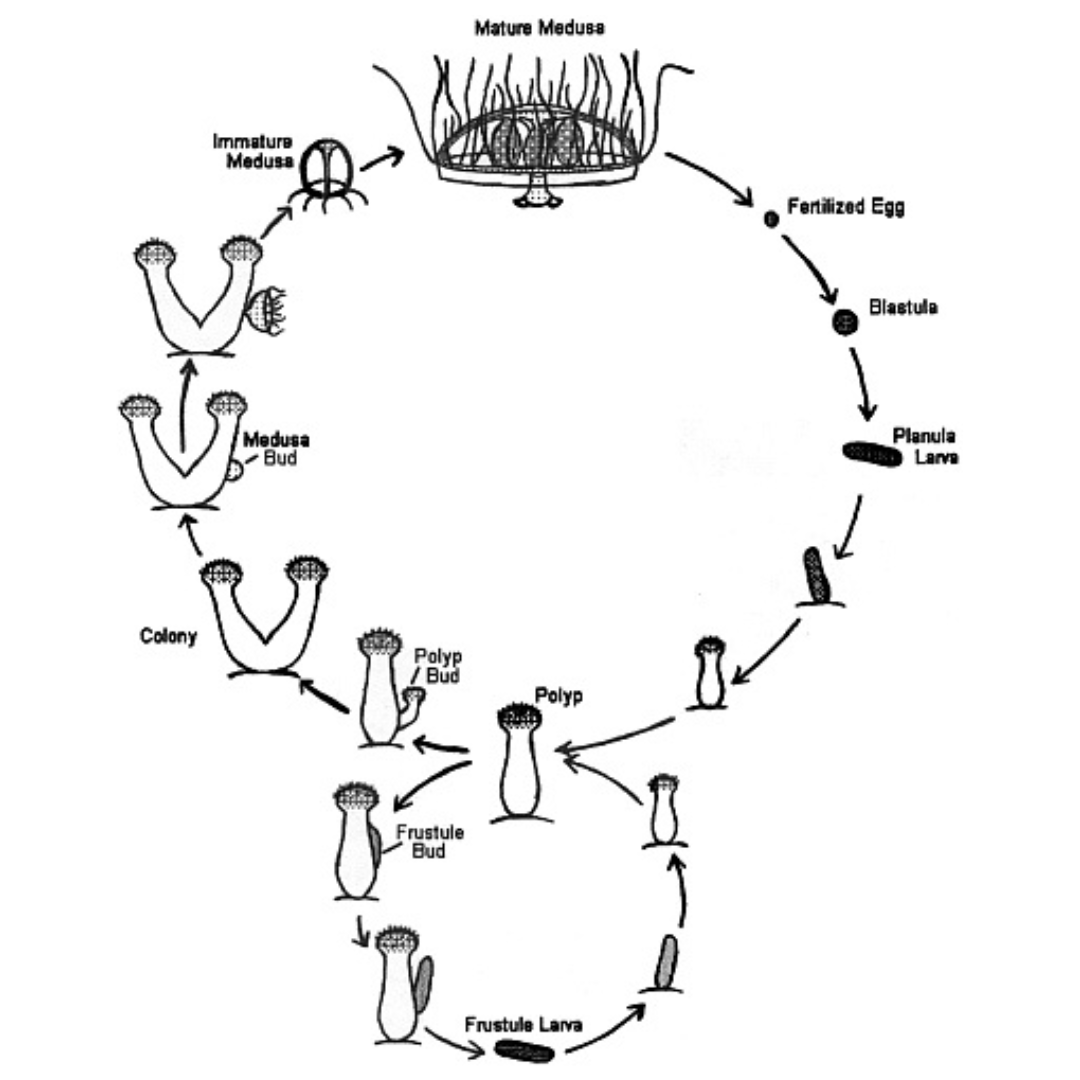
Our Manitoba freshwater jellies occur in obvious blooms in a lake ringed by cottages, so how did they manage to be seen in 1972 and not again until 2010! The answer probably lies in its lifestyle. Like most cnidarians, Craspedacusta exhibits an alternation of generations, that is, part of its life history is spent as an inconspicuous asexual polyp attached to aquatic plants or other underwater substrates in rivers, lakes, or stagnant ponds. The polyp buds off new polyps that can remain attached to the parent to form a colony (less than 10mm), or to be released as a frustule larva that can move around before metamorphosing into a new polyp. The polyp can avoid unfavourable conditions (like winter) by entering a resting stage called a podocyst. It is believed that it is during this phase that the species is transported to new habitats and has managed to spread from China to North America and around the world. The podocysts become polyps again in summer. When conditions are just right, usually requiring high water temperatures (about 20-25°C), the polyps bud off free-swimming hydromedusae, the part of the lifecycle that we recognize as jellyfish. These hydromedusae (jellyfish) are either male or female, and will release eggs and sperm to produce a new kind of larva, the planula, that grows into a polyp.

Image: The lifecycle of Craspedacusta sowerbyi. The medusa stage, or jellyfish, is a very small part, and only occurs when water temperatures are high. Reproduced with permission of Dr. T. Peard.

The high temperatures required to produce the jellyfish stage explains why they are found only in late summer, as our lakes take a while to warm up. And it also explains why these blooms of jellyfish are so rarely seen; most of our lakes won’t normally reach the required temperatures. The species goes quietly about its business as a podocyst in winter and a polyp in summer, only very rarely encountering the conditions favourable for producing the jellyfish stage – the conditions during 1972 and 2010. Although it is known that several years can go by between blooms, jellyfish might have been produced between these dates, but the conditions are so fleeting that perhaps few jellyfish would have been produced and perhaps missed by the casual observer.

Finding freshwater jellyfish in such a frequented spot in Manitoba is exciting! Although this species is a foreign invader, research has yet to show if it harms native organisms, but one might expect it would provide at least some competition for the small water animals it eats. Regardless, its unexpected occurrence shows there remains a great deal of undiscovered animal diversity right in our own backyards. And some of these Manitoba “jellies” are preserved for study at The Manitoba Museum.

So keep your eyes open for jellyfish around your cottage this summer. If you find any,  please report them to me, Manitoba Conservation.

Dr. Randy Mooi

Dr. Randy Mooi

Curator of Zoology

Dr. Mooi received his Ph.D. in zoology from the University of Toronto working on the evolutionary history of coral reef fishes. Following a postdoctoral fellowship in the Division of Fishes of the Smithsonian Institution…
Meet Dr. Randy Mooi

50 years ago today… April 12, 1961

April 12, 1961 – a date that will forever be a part of human history. The date that humanity became a spacefaring species. This achievement ranks amongst the greatest of human accomplishments – fire, the wheel, agriculture, the electric guitar – and its long-reaching effects are still rippling through our future.

On April 12, 1961, Yuri Gagarin boarded the Vostok spacecraft and flew once around the Earth. HIs 108-minute flight was significant only for its newness; the flight would be easily surpassed by both the Soviets and the Americans within a year, Gagarin became a world hero, not just for the Soviet Union but for all of us – he had gone where no one had gone before, and returned safely, blazing a trail that many of us still yearn to follow.

If you want to see what Yuri’s flight was like, watch the film First Orbit – a beautiful real-time recreation of the flight, using out-the-window imagery shot from the International Space Station, which closely mimics the Vostok’s flight path. Premiered on 12 April 2011, the film celebrates the 50 years that we have been leaving Earth for the vacuum of space. I can’t help but wonder what the next 50 years bring, both in spaceflight and in other events. Will we build on Yuri’s flight and push our frontiers ever farther, or remained mired in short-sighted and short-term plans to stay the course in space? We’ll see.

For myself, I echo Yuri’s first words after the Vostok’s carrier rocket lifted off the pad: “Poyekhali!” Translation: “Let’s go!”

Scott Young

Scott Young

Planetarium Astronomer

Scott is the Planetarium Astronomer at the Manitoba Museum, developing astronomy and science programs. He has been an informal science educator for thirty years, working in the planetarium and science centre field both at The Manitoba Museum and also at the Alice G. Wallace Planetarium in Fitchburg, Massachusetts. Scott is an active amateur astronomer and a past-President of the Royal Astronomical Society of Canada.

A.M.E.T.H.Y.S.T.

By Dr. Graham Young, past Curator of Palaeontology & Geology


For the past several years, I have been working with the Mineral Society of Manitoba to develop a mineral exhibit at the Museum. This partnership has been a wonderfully positive one; among other achievements the Society has donated to us a gorgeous selenite (gypsum) cluster from the Winnipeg Floodway, which I hope to show you on this page at some point.

So it was not a total surprise when in the fall of 2009, I received a call from my geologist colleague John Biczok (who is also president of the Mineral Society), telling me that they had found another superb specimen for us.  The gist of his call was that,

“We have the biggest amethyst cluster I have ever seen, and it is in the back of a truck. Greg Hasler has just pulled it out of the Thunder Bay amethyst mines and it has mud all over it. Where can we deliver it at the Museum, so that we can clean it up?”

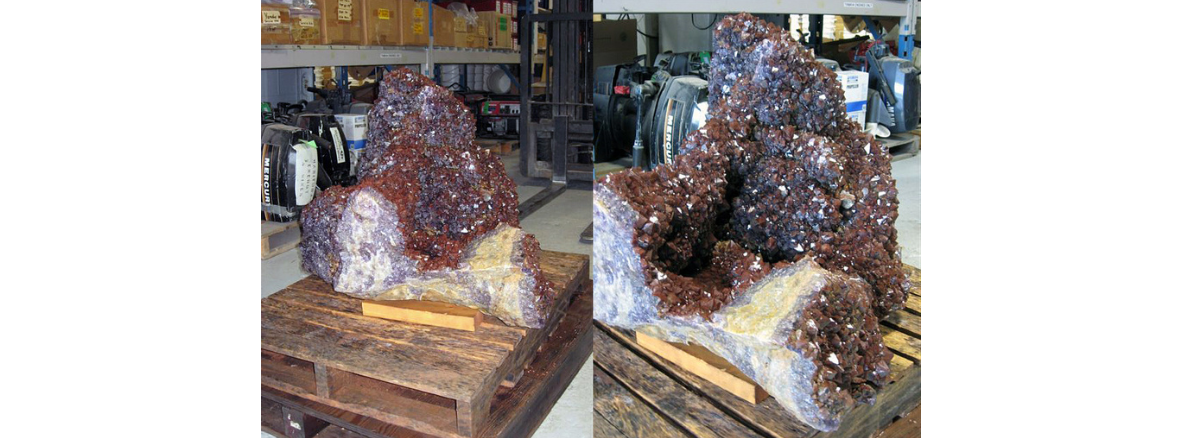
Two photos, side-by-side, of different angles of a large amethyst on a wooden pallet.

This spectacular crystal cluster was collected in September, 2009, from the Blue Point Amethyst Mine, by Lyndon Swanson, Greg Hasler, and others. It is the largest specimen Mr. Swanson has seen in ten years owning this mine! (photos: Gerry Benger, Manitoba Geological Survey).

Further discussion revealed that this was a piece that covered an entire shipping pallet, and might weigh something toward half a tonne! Now you have to appreciate that, at the Museum, we don’t have immense space available to lay things out, let alone places where we can readily pressure wash the mud from a half-tonne boulder. This specimen was arriving in Winnipeg, and it needed to be taken off the truck and put somewhere secure. Of course it was not only huge, but it was potentially beautiful and we didn’t want to see it damaged.

I was at a loss for a few minutes, wondering (for instance) if my family would mind having a giant muddy boulder temporarily stored in our garage. I surmised that they might. But then I thought of my friends at the Manitoba Geological Survey, with whom we have collaborated on several projects. A couple of calls later, and we had permission to have the amethyst delivered to the Survey’s core facility in the western part of the city. Not only would the Survey let the Mineral Society unload and wash the specimen in their yard, but they would then use their forklift to move the cleaned amethyst to a safe place inside the building.

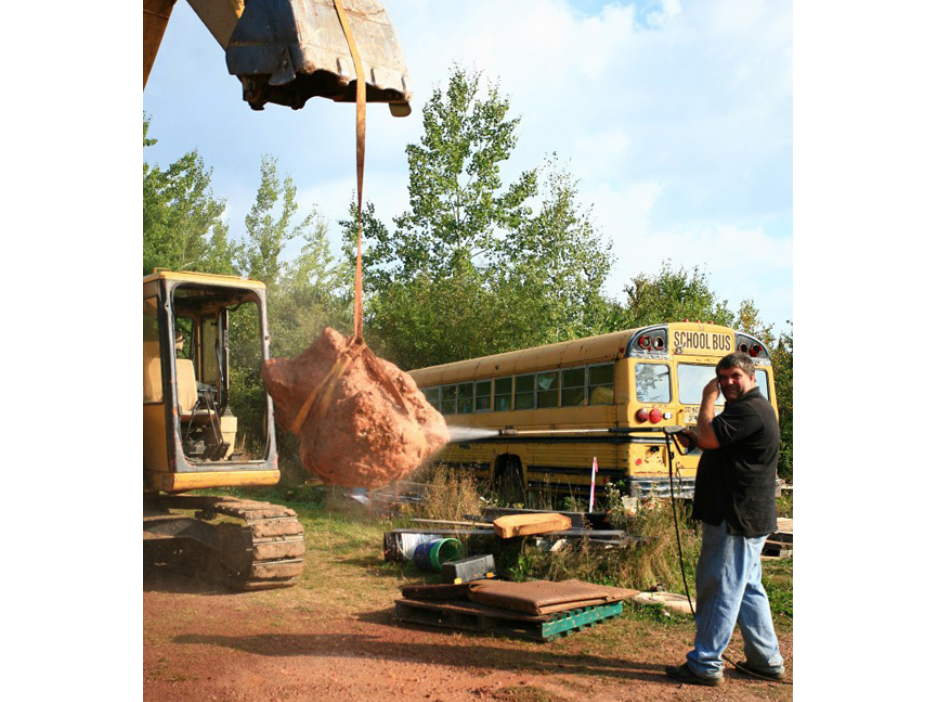
A large boulder suspended by the scoop of a bulldozer as a person pressure washes it.

The amethyst was pressure washed at the mine, after extraction from the ground. The Thunder Bay area is home to the most productive amethyst mines in North America. (photo: Cindy Hasler).

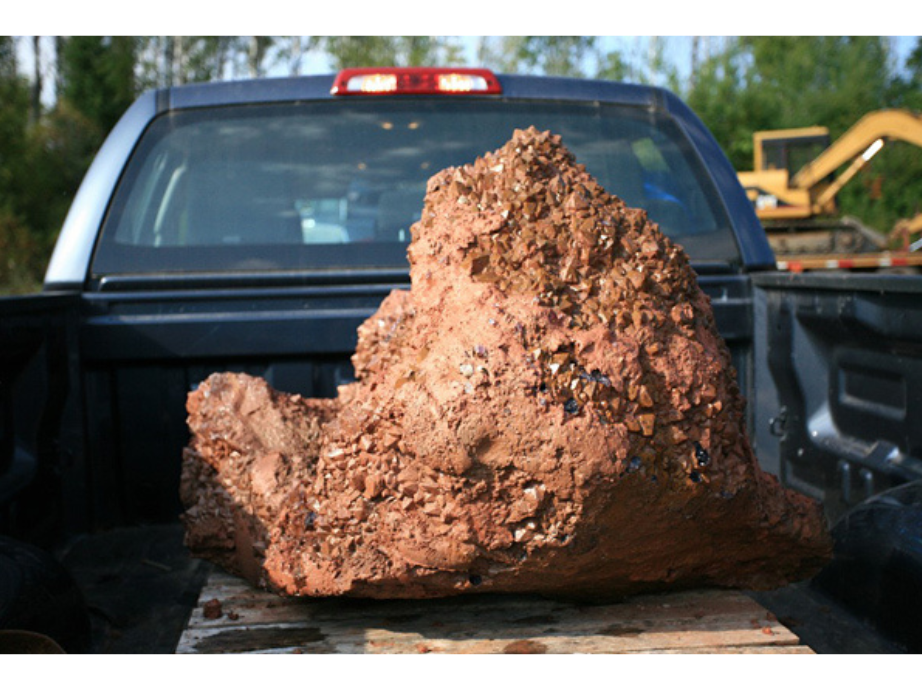
A large reddish boulder in the back of a pick-up truck.

The amethyst rests in the back of Greg Hasler’s truck, awaiting transport to Winnipeg. (photo: Cindy Hasler).

And there it sat for the winter, occasionally visited by people from the Mineral Society and Museum, and admired and photographed by Survey staff and visiting geologists. It was truly a wonderful, spectacular piece. The Museum partnered with the Mineral Society to purchase the amethyst for our collections, with a view to putting it on exhibit in the Earth History Gallery. In the early summer last year Janis Klapecki and I carefully bundled the beautiful crystals in layer upon layer of foam padding, and it was shipped over to the Museum back rooms, where it has sat for almost another year.

Now, finally, we will have our first opportunity to share it with visitors, through a temporary exhibit in the New Acquisitions Case in the Museum foyer. This will open to the public on May 10; I am really looking forward to their reaction!

What Ecology has Taught Me About Economics

In order to get my degree in environmental studies I had to take six classes in economics so that I would have some understanding of how the economy worked. In reality, I only needed three weeks of economics to understand that much of what they were teaching was a load of bunk. When I asked my professor how pollution and environmental degradation were accounted for in the economic theories she was teaching us she replied that those things were “externalities” and would not be discussed, as if we as a society could somehow pretend that they didn’t exist. I decided that perhaps nature would be a better teacher of economics.

So what have I learned about economics from the study of ecology? First of all diversity is a good thing. Although some species of plants rely on only a few pollinators, most are serviced by a wide variety of insects. This means that even if one species is doing poorly, others can fulfill the same functional role. Diverse systems are more resilient, can continue to function under atypical circumstances and recover faster from perturbations. The globalization of our economy means that we increasingly depend on just a few companies or countries to produce certain goods in the name of efficiency. Unfortunately when disaster strikes, as it just did in Japan, key parts that only Japanese companies manufacture are now in short supply, threatening the functioning of other companies half way around the globe! Imagine for a second that we were suddenly unable to rely on China for manufacturing? Would anyone else in the world be able to produce the things we need in the quantities we need them in? Species that are highly specialized are efficient but that efficiency comes at a price and that price is resiliency. With an unpredictable global climate confronting us, it is the resiliency that comes from diversity that will prevent ecosystems and economies from totally unravelling.

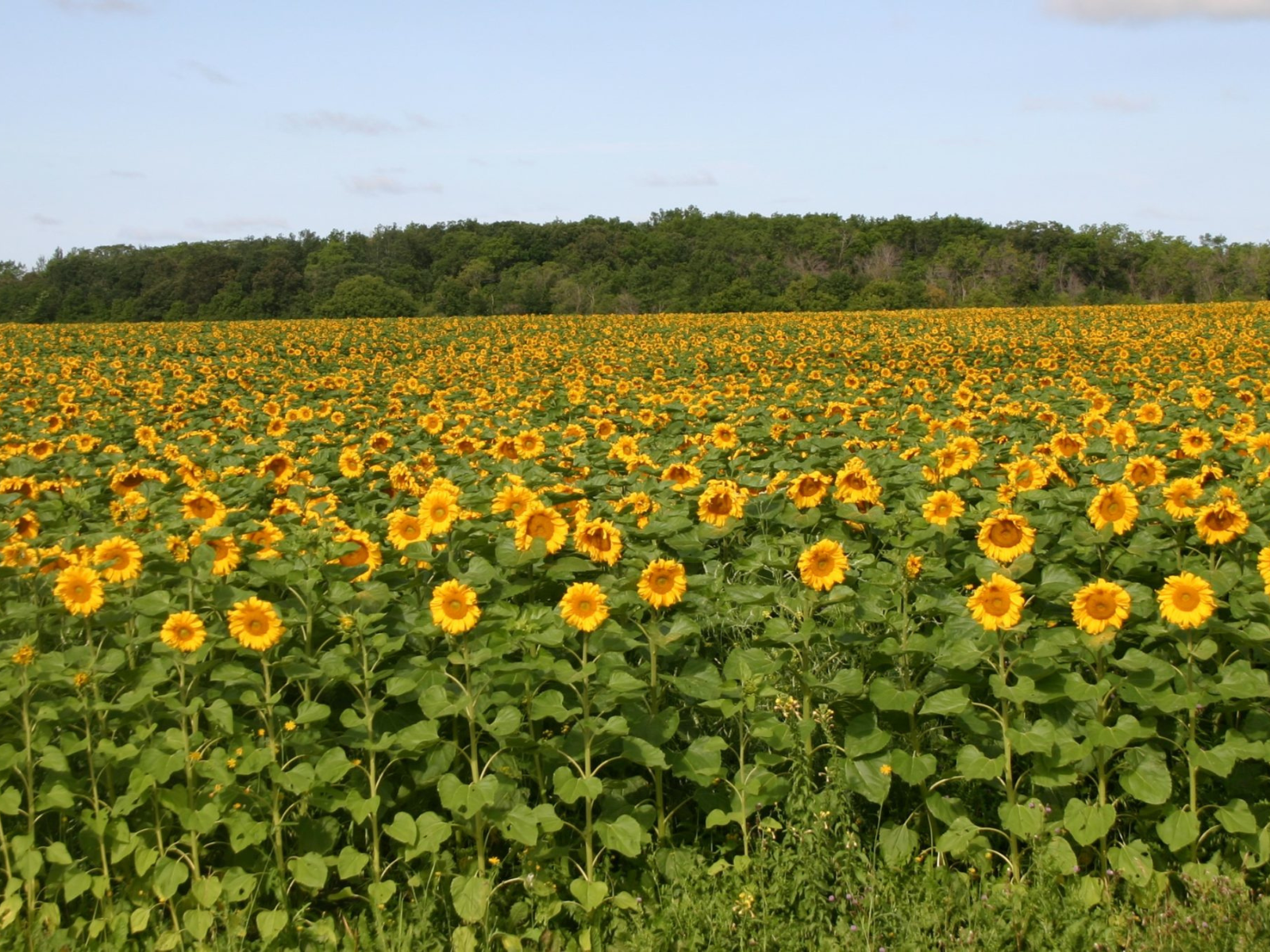
Looking out over a sunflower field on a sunny day.

Sunflowers are pollinated by numerous insect species.

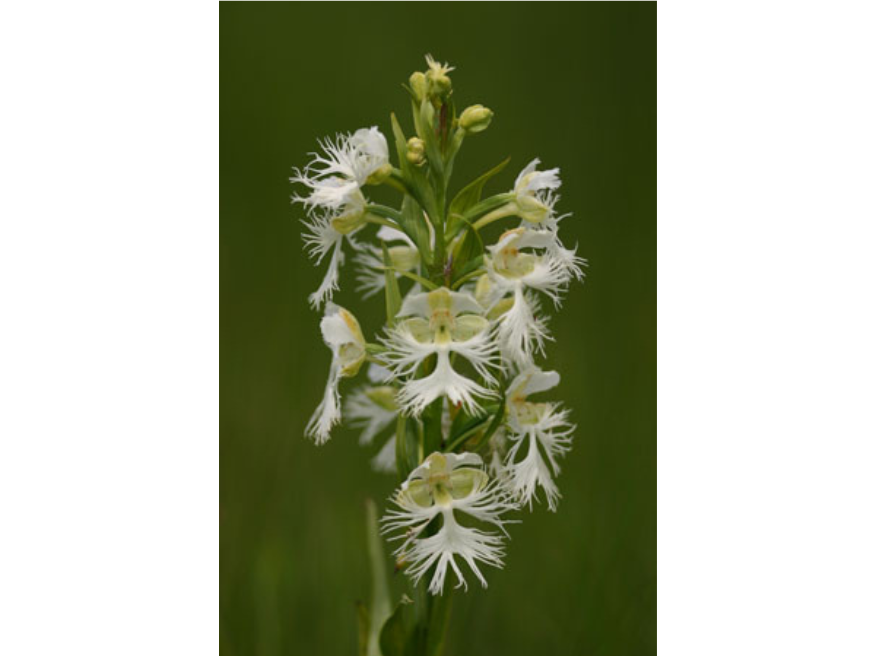
Close up on the top of a plant with small, fringed white flowers.

Like many species, the Western Prairie Fringed Orchid
depends on other plants, fungi and insects to survive.

Another lesson I’ve learned is that EVERYTHING is interconnected. The rare Western Prairie Fringed Orchid is a fascinating plant in terms of its interconnections. In order to grow it depends on a mychorrhizal fungus found in certain soils. To reproduce, it requires the pollination services of a few species of moths. The larvae of those moths require trembling aspen trees for food. We cannot save the orchid without also saving the fungus and the moth and the aspen and all of the other organisms they in turn are connected to. We Canadians like to think that we are isolated from the troubles in the rest of the world but, as the recent collapse of the banking system and subsequent decrease in the value of every Canadian’s retirement savings has shown, we are not. The fact of the matter is that we are all in this crisis together so we’d  better start getting along.

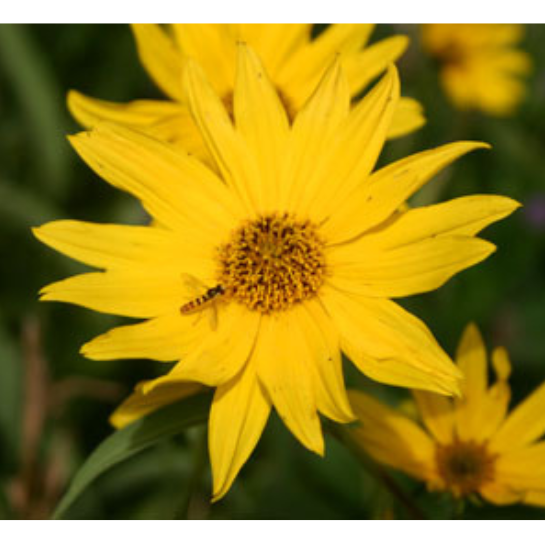
A yellow flower with a small, slender yellow and black Syrphid fly near the centre.

One of the most important lessons I’ve learned is the one that just about every economist chooses to ignore: that perpetual growth is a physical impossibility.  The population size of every species fluctuates over time and so does our economy because it is based on natural systems.  The 1929 and 2008 market crashes were inevitable because no system can grow perpetually.  The only reason the human population has been able to grow exponentially until now is because we have been co-opting more and more of the earth’s resources for ourselves at the expense of other species.  Fossil fuels have enabled us to increase productivity beyond what is normal for our planet’s systems but as these fuels are non-renewable eventually we will be back to where we started.  Nuclear power can potentially provide us with energy when fossil fuels become scarce but as is so abundantly clear from the recent disaster in Japan, it comes with grave risks that threaten humanity in other ways.  We simply have to accept that busts will always follow booms; the only thing we might be able to control is how severe each of the peaks and troughs are.  If we refuse to control our growth, nature will control it for us.


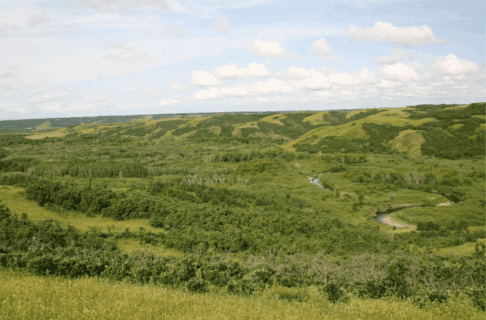
Image: More and more of the earth’s land is being used to sustain humans.

The last thing I’ve learned is that every system has its breaking point. Yes, diversity can buffer an ecosystem from extreme changes but that only goes so far. Once too many species are lost, cascading extinctions due to the interconnectivity of the world’s ecosystems will bring just about everything down. Sure there will be a few hardy survivors left behind to evolve into new and wonderful creatures in a couple million years, but they are unlikely to be the ones that humanity needs to survive. Unless you really enjoy eating jellyfish and cockroaches, I’d be concerned! The fact is 99% of all species that have ever existed have gone extinct; we know this through the fossil record. It is inevitable that humans will one day follow in the footsteps of the dinosaurs to a rocky grave. The only questions are when and how. That is what humanity has just a little bit of control over. The good news is that you have a little bit of that control too. Every day, through the choices you make, you alter the destiny of humanity for good or ill. Which one will it be?

Dr. Diana Bizecki Robson

Dr. Diana Bizecki Robson

Curator of Botany

Dr. Bizecki Robson obtained a Master’s Degree in Plant Ecology at the University of Saskatchewan studying rare plants of the mixed grass prairies. After working as an environmental consultant and sessional lecturer…
Meet Dr. Bizecki Robson

50 years ago today… April 5, 1961

50 years ago today, Soviet air force pilot Lt. Yuri A. Gagarin didn’t know he would become be the first human into space in just a week’s time. Gagarin and his colleagues, Gherman Titov and Grigori Nelyubov, were all in training for the first flights of the Vostok spacecraft, but the Soviet leadership had not yet formally authorized the flight nor assigned a cosmonaut. What’s more, the United States was racing to put a man in space as well, and although they lagged behind the Soviet Union, a surprise was still possible. Each man trained for the upcoming flight, now only a week away,  as if he would be the pilot.

On April 5, 1961, the cosmonauts flew to the launch centre with their medical team and a film crew. They are greeted by Sergei Korolev, the mastermind behind the Soviet space program. Korolev pushes for a decision on who will fly first, to no avail. General Kaminin, the man in charge of cosmonaut selection and training, will not make a final decision yet. That night, three young cosmonauts go to sleep, not knowing which of them will soon become the most famous person in the world.

Scott Young

Scott Young

Planetarium Astronomer

Scott is the Planetarium Astronomer at the Manitoba Museum, developing astronomy and science programs. He has been an informal science educator for thirty years, working in the planetarium and science centre field both at The Manitoba Museum and also at the Alice G. Wallace Planetarium in Fitchburg, Massachusetts. Scott is an active amateur astronomer and a past-President of the Royal Astronomical Society of Canada.

From the Deep Files …

When I started to work at The Manitoba Museum in 1993, I discovered this intriguing correspondence in the “deep files,” inherited from the old Manitoba Museum:


Altamont, Man.
September, 1963

Dear Sir:

Today I was digging a hole along the edge of a slough. After digging through four feet of peat, I came upon this tooth. Two inches below the tooth was a thin layer of white sand.

Could you tell me what kind of animal this tooth is from?

Thank you for the information.

[signature]


There is a sketch of a squarish tooth in pencil on the letter, and a note that it was a “very dark brown specimen.” It looks like a bison tooth to me, and apparently the Museum staff wrote back to that effect. They must have also expressed an interest in visiting the site, as indicated by the second letter:


Altamont, Man.
September, 1963

Dear Sir:

I received your letter concerning the tooth.

The hole which I found the tooth in was dug to bury a fairly large pig. The hole was about 4 1/2 feet deep, the tooth was about 4 feet from the surface. … I found the tooth along the side of the hole, I dug around the tooth but there was no sign of any other tooth or bone of any kind. After a good look for others, we buried the pig in the hole and filled it in.

You are welcome to come to investigate any time, if you still wish to under these circumstances.

Sincerely,

[signature]


There is no note in the file on whether Museum staff visited the site. One suspects that they were not able to find the time to do so.

Research Request Leads to Vacuuming

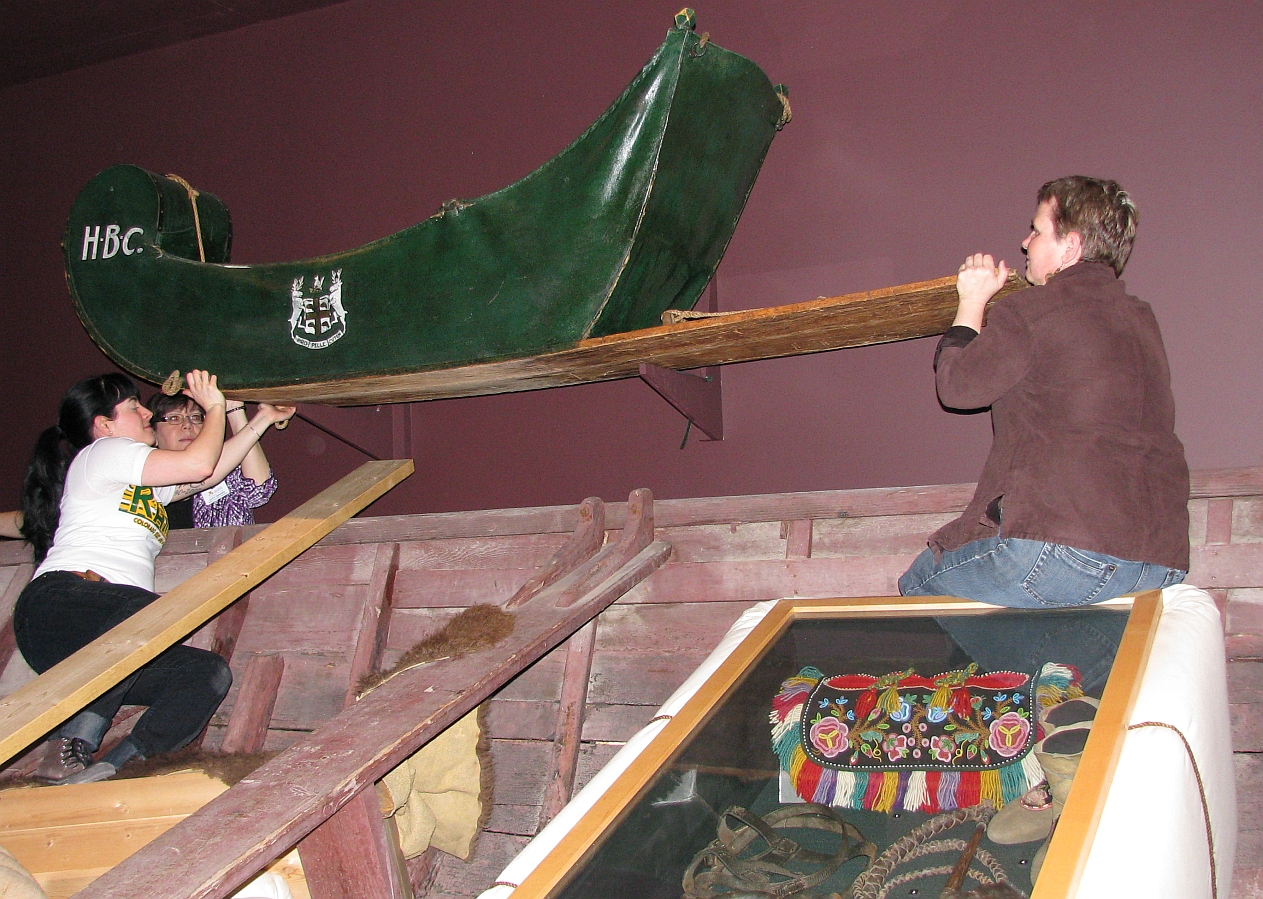
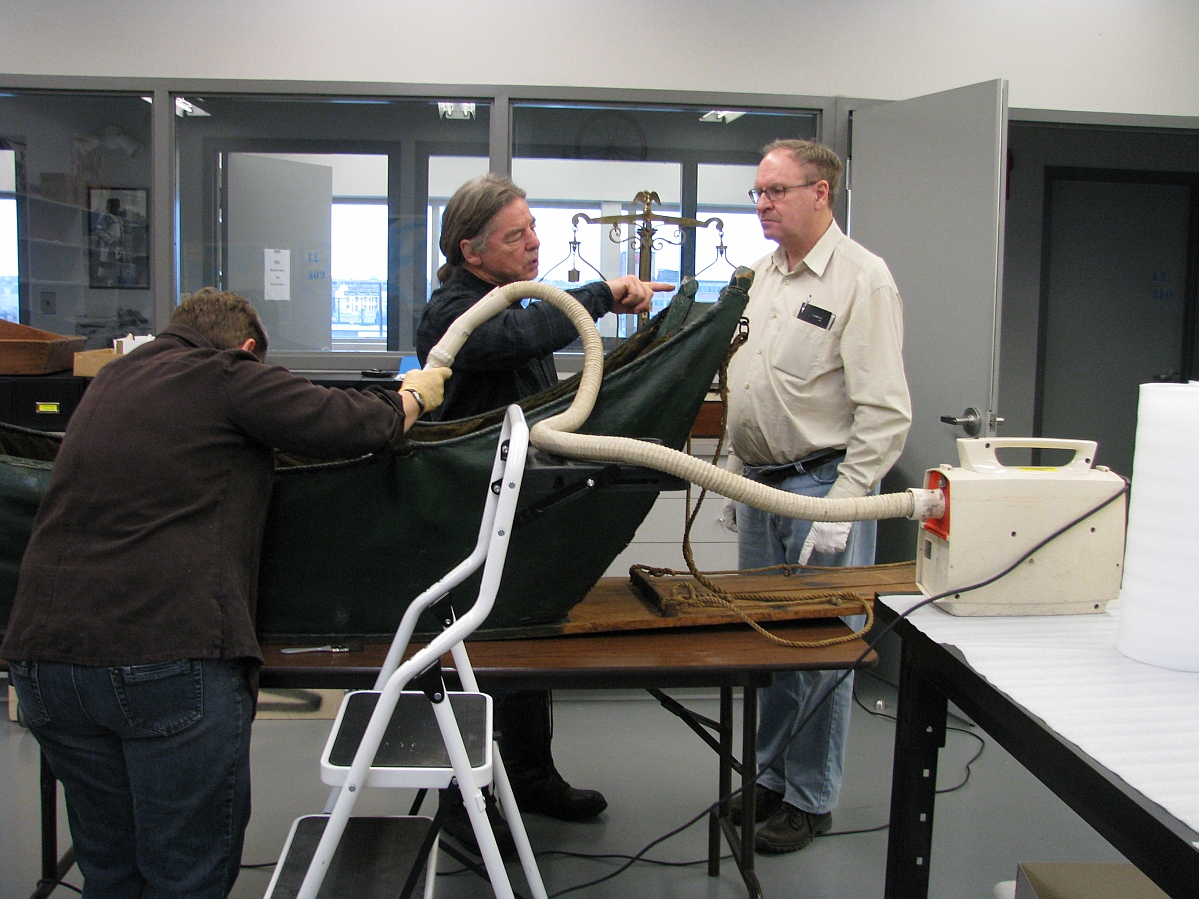
Three individuals at the ends of a green cariole sledge mounted on a wall.

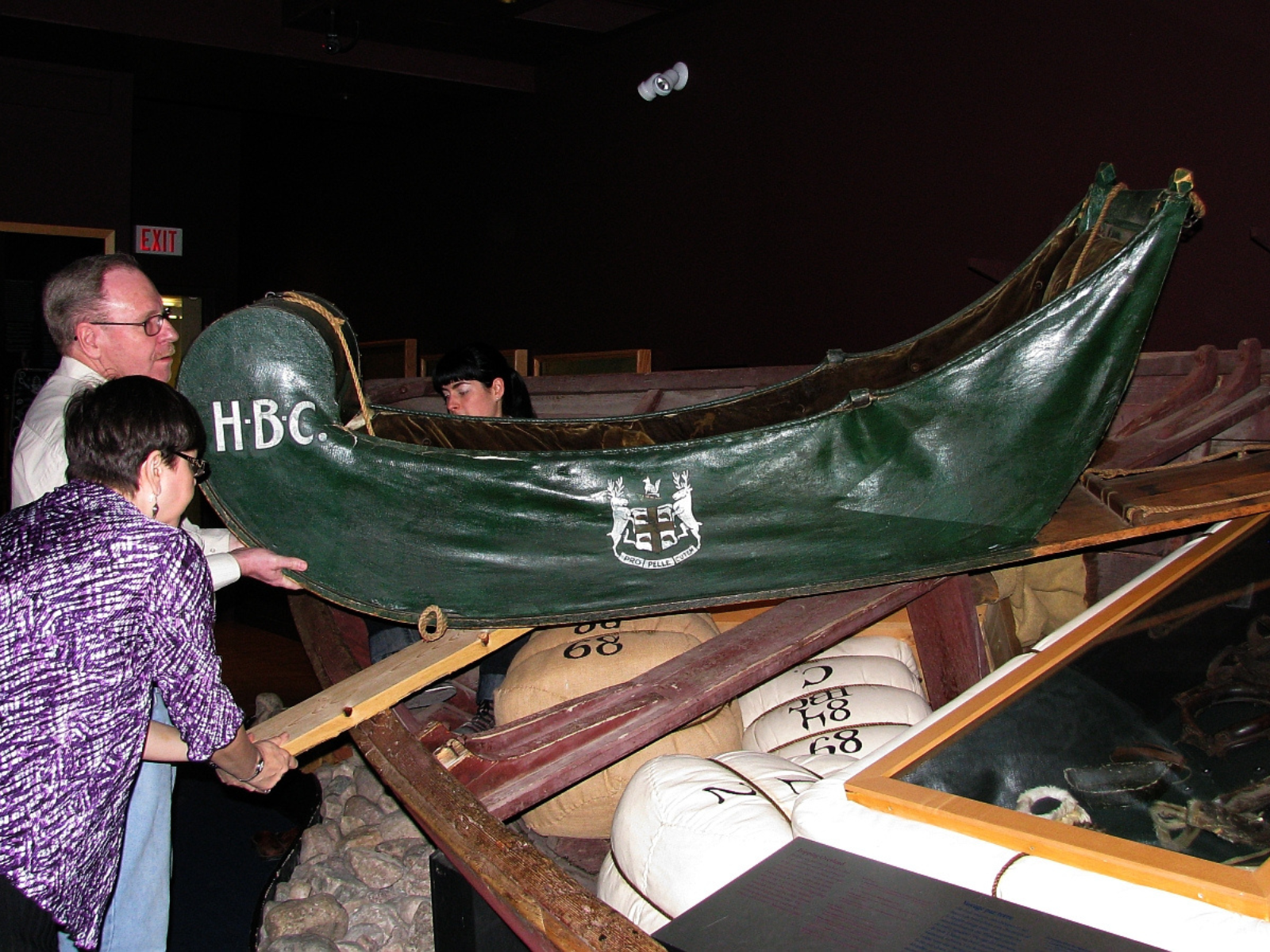
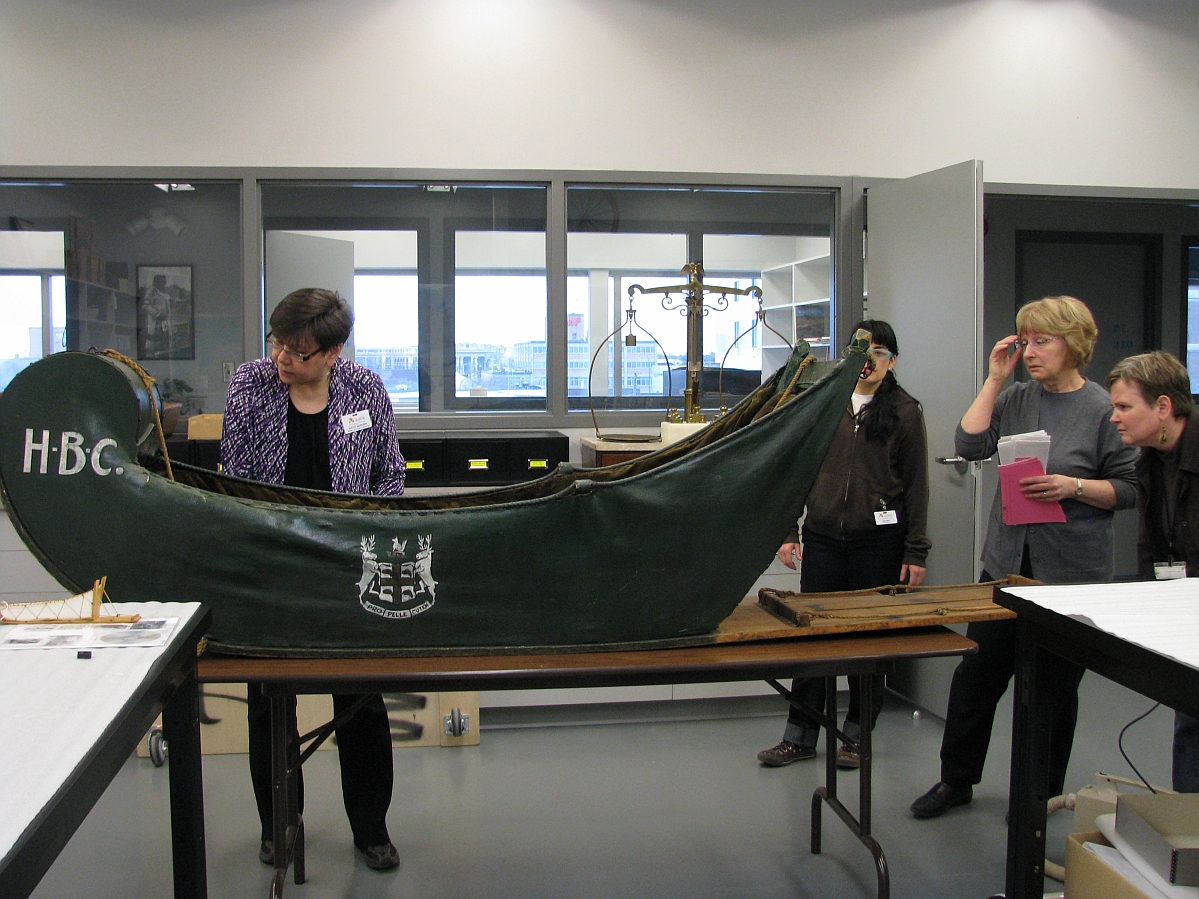
Recently, researcher Tim Worth requested access to the cariole, a toboggan-like sled, on exhibit in the Hudson’s Bay Company Gallery. Curator Katherine Pettipas agreed it would be a good opportunity to clean the cariole and assess its current condition. The work was scheduled for a Monday, a closed day, to minimize disruption for any visitors. Conservators Ellen Robinson and Lisa May, with assistance from Tim Worth and myself, took the cariole off its shelf, put it on a dolly and took it up to the HBC Lab, where Tim was able to make a thorough examination. He was joined by conservator Rick Lair from Parks Canada, a furniture and wood expert. While the cariole was in the lab, Ellen took the time to give it a thorough vacuuming, inside and out.


Image: The cariole is lifted off its shelf.

Collections Assistant Nancy Anderson took numerous photos to enhance the conservation documentation. The interior fabric, a luxurious velvet, had undergone previous conservation treatment by Parks Canada conservator Lorrie Storr. Tim completed his examination and the cariole was returned to its exhibit location at the end of the day. All in all, many people were pleased!

Several individuals working together to lift down a green cariole sledge from display.

We slid the cariole down on a piece of wood.

Four individuals standing around a cariole sledge on a table in a museum lab.

We all wanted to take a good look.

Three individuals around a cariole sledge on a table in a museum lab. Two are in discussion, and the third is vacuuming the inside of the cariole.

Rick and Tim look at construction details while Ellen vacuums the interior.

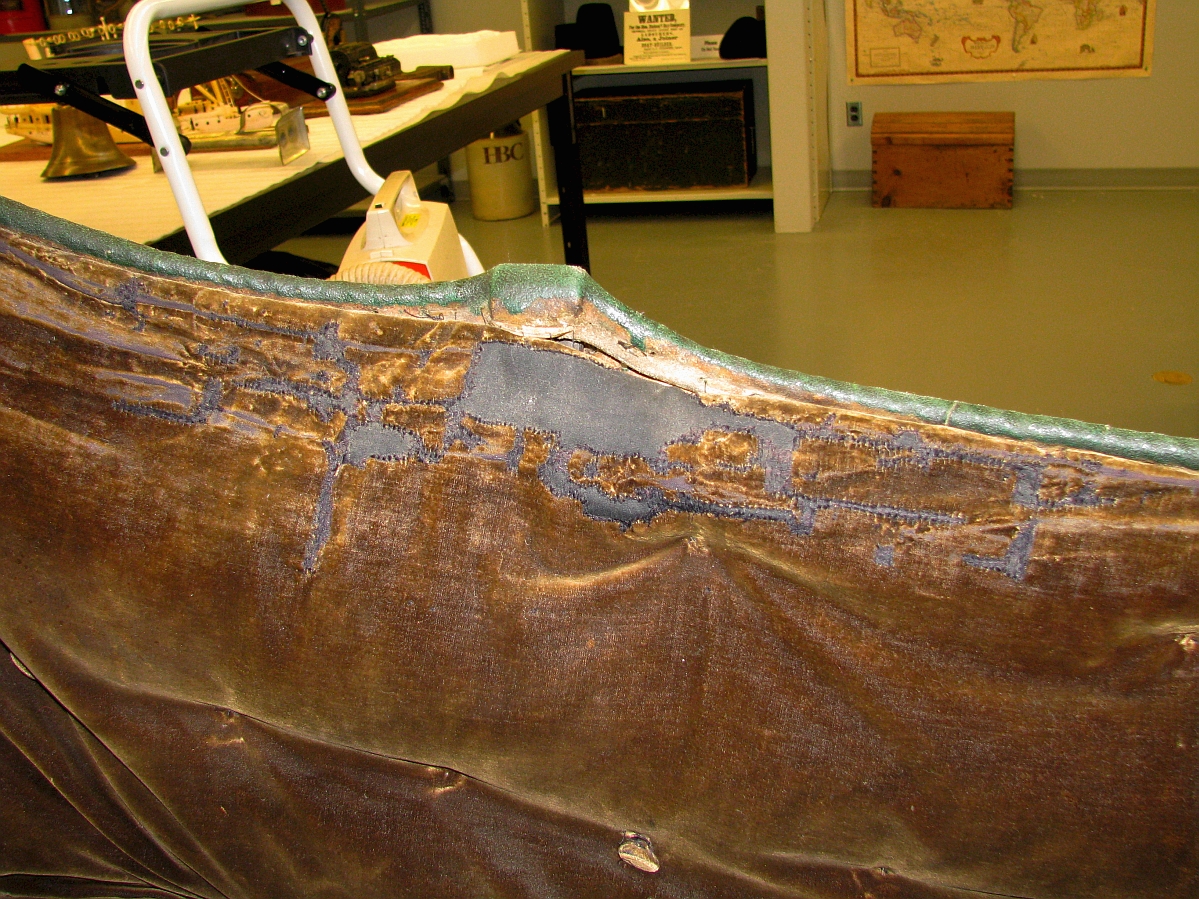
Close up on a side of the inside of a cariole on a display in a museum lab. Some repair work has been done along one of the edges.

The damage has been repaired with a backing fabric.

Fairly Scientific Community Science Fair

If you’re like me, we probably look back on your elementary school days with a mixture of nostalgia and dread. Yes, your hair really was that bad back then! However, there were likely some standout moments as well. For me, it was the annual science fair – the time of the year it was OK to be a science geek. I remember the brainstorming for topics, the hand-lettered backboards with pencil crayon drawings, the obligatory volcano and solar system model made of Styrofoam balls. For me, the science fair led me to a career in science communication – now I have a nicer backboard and better pencil crayons, but essentially I get to do science fairs every day!

A poster for the Fairly Scientific community science fair on Saturday, April 9, 2011.

Most people think they can’t do that sort of thing anymore – but now you can. “Fairly Scientific” is a community science fair open to anyone. Your project must be on a standard tri-fold cardboard or foam core backboard, but other than that you can do any sort of project you want (well, no explosives, toxic fumes, or injuries allowed). There will be a volcano contest for those who don’t want to do a full-on project.

So, who is this for? Well, students who want to continue their school science fair projects for one, but it’s especially aimed at the people who don’t get to do science fair projects any more. Folks who watch “Mythbusters” and always wanted to try something like that; grad students who want to take their thesis topic and have some fun with it for a public audience; basement tinkerers or inventors who want to show off their latest creation; it’s all appropriate for the science fair.

The projects will all be on display in the Planetarium Concourse downstairs at The Manitoba Museum on Saturday, April 9 as part of our Yuri’s Night celebrations. To get involved, contact Fairly Scientific.

Scott Young

Scott Young

Planetarium Astronomer

Scott is the Planetarium Astronomer at the Manitoba Museum, developing astronomy and science programs. He has been an informal science educator for thirty years, working in the planetarium and science centre field both at The Manitoba Museum and also at the Alice G. Wallace Planetarium in Fitchburg, Massachusetts. Scott is an active amateur astronomer and a past-President of the Royal Astronomical Society of Canada.

Century Eggs of a Different Flavour

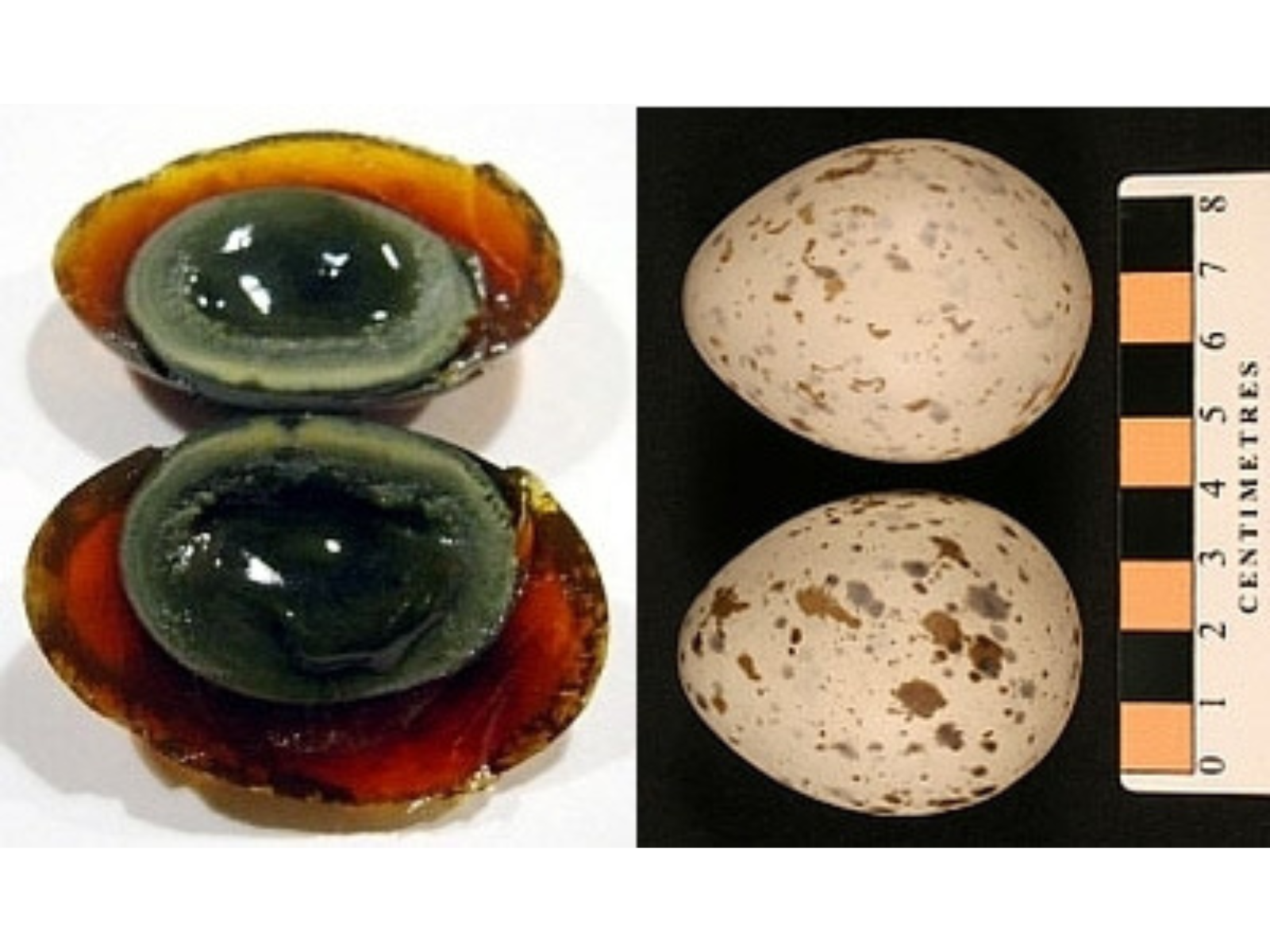
Century eggs are a Chinese tradition where eggs are placed in an exotic recipe of alkaline clay and brine solution over several months. This preserves them for later consumption, and the chemical changes in the egg proteins makes for an interesting flavour. Of course, these “century” eggs are not, in truth, one hundred years old. The Museum, however, does have actual century eggs that have been carefully prepared and preserved for later use, and can provide science with a very tasty treat.

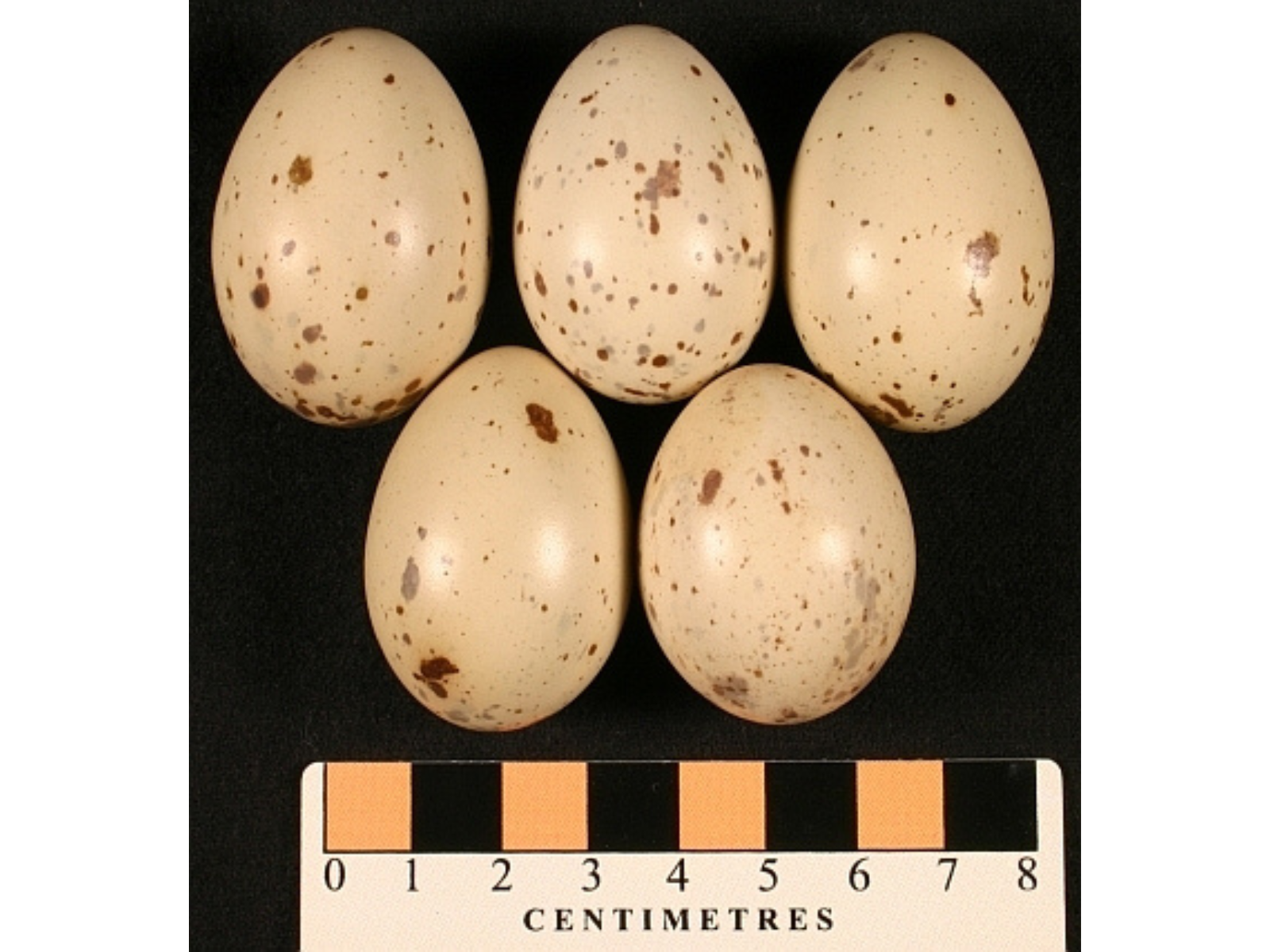
I’m afraid I couldn’t help myself, and once I had found 100-year-old eggs in the collection for my last blog post, I thought I would see if we had others. The Museum has 8 sets of eggs that are 100 years old this year. And we do have even older-than-century eggs, with over 120 clutches collected before 1911. The oldest is a set of five Clapper Rail eggs collected in Louisiana in April 1880.

Two photos side-by-side of two century eggs each. The eggs on the left are both a deep green-black. The eggs on the right are white shells with brown flecks.

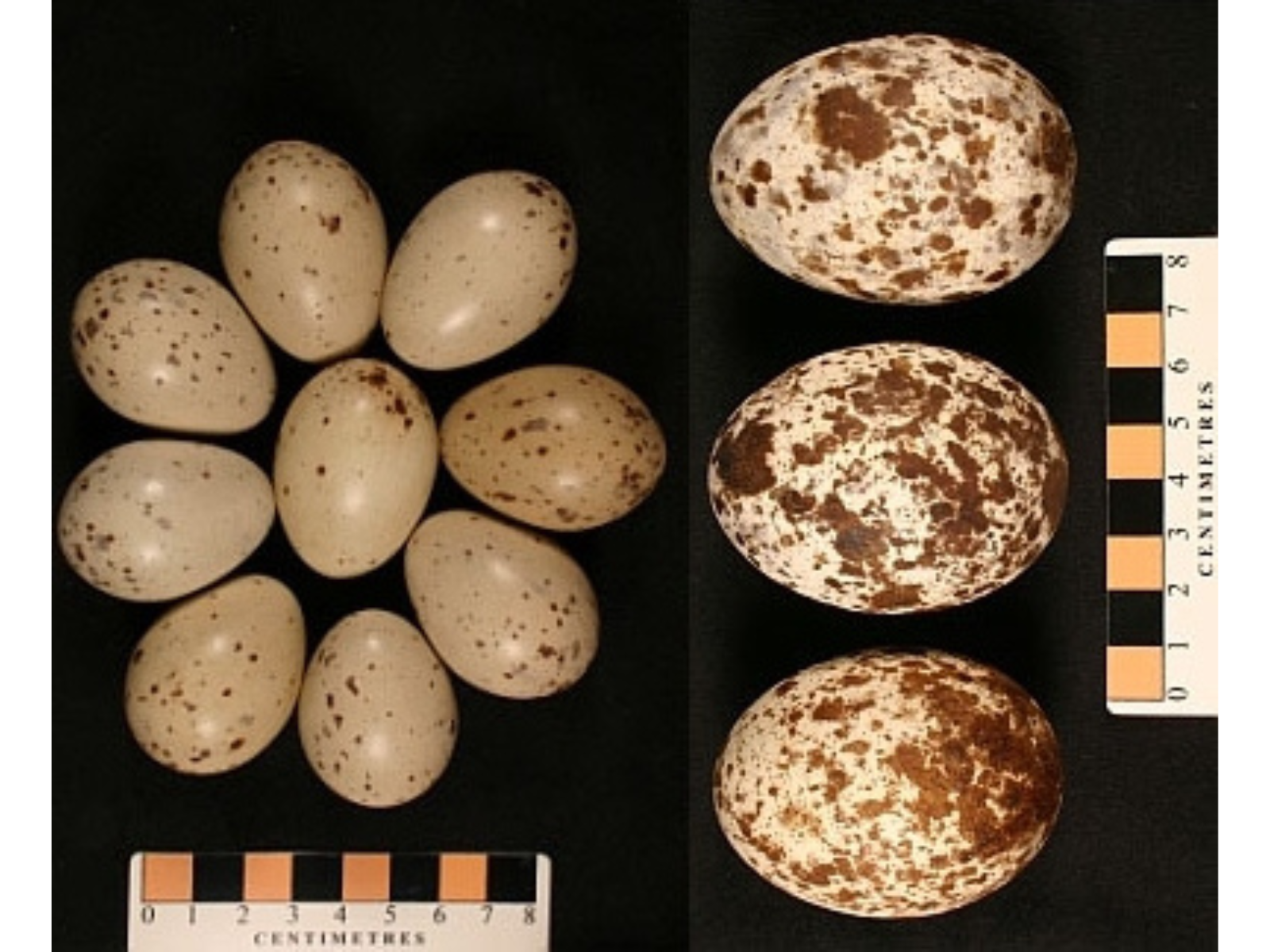
Century eggs. On the left, the Chinese version where colours should change to insure preservation (photo from Wikimedia Commons). On the right, The Museum version as exemplified by Black-legged Kittiwake eggs collected by A.C. Bent in 1911. Preserving the original colours and shapes are what makes museum eggs valuable.

Five cream-coloured eggs with brown flecks placed together on a black background.

Clapper Rail eggs collected in New Orleans in April 1880 (MM1.21-160).

I’m afraid I couldn’t help myself, and once I had found 100-year-old eggs in the collection for my last blog post, I thought I would see if we had others. The Museum has 8 sets of eggs that are 100 years old this year. And we do have even older-than-century eggs, with over 120 clutches collected before 1911. The oldest is a set of five Clapper Rail eggs collected in Louisian in April 1880.

Of the actual century eggs in the Museum collection, two were collected by Arthur Cleveland Bent of Bent’s Life Histories fame, and examined in the last posting. Of the remaining sets, there is a Sandhill Crane from Alaska,  a Grey Heron from Scotland, a Double-crested Cormorant from Quebec, a Caspian Tern from California, a Clapper Rail from Virginia, and an Osprey from New Jersey.

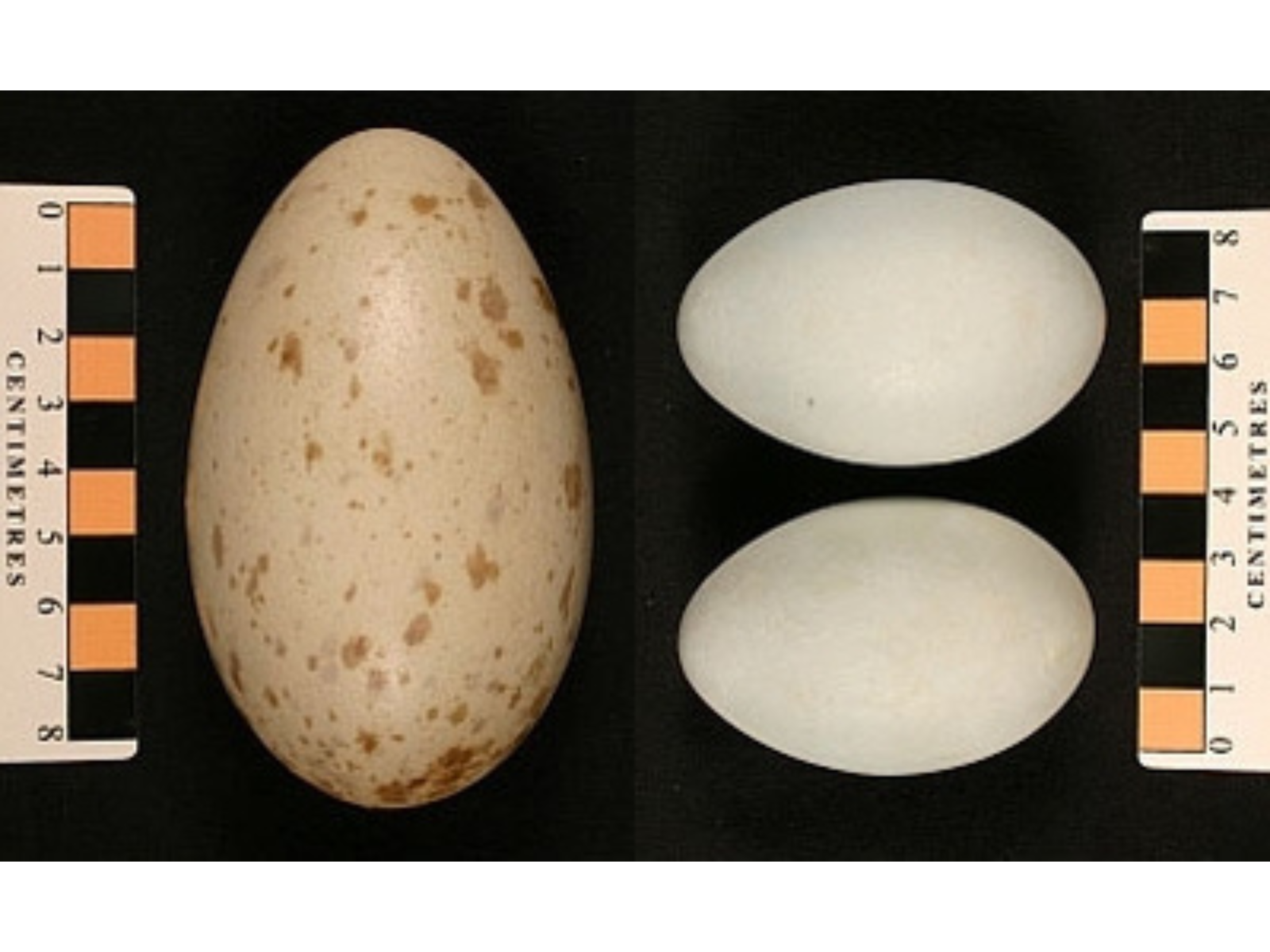
Three eggs on a black background. On the left an elongated cream-coloured egg with brown flecks, on the right-side are two average-sized white eggs.

A Sandhill Crane egg from Alaska at left (MM1.21-142) and two Grey Heron eggs from Scotland (MM1.21-129), all 100 years old.

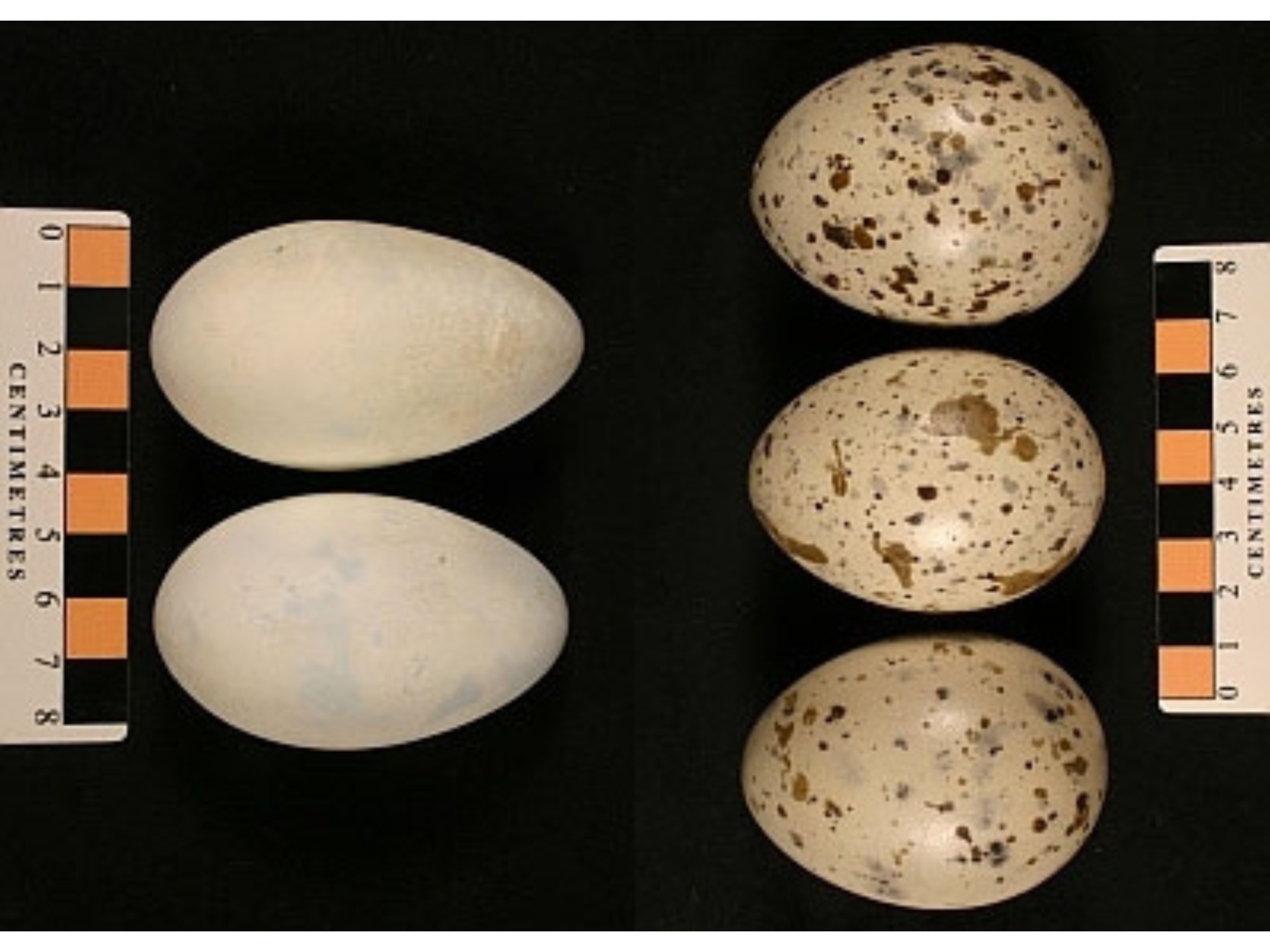
Five eggs against a black background. On the left are two white eggs and on the right are three cream-coloured eggs with brown flecks.

Century eggs of Double-crested Comorant at left (MM1.21.-106) and Caspian Tern at right (MM1.21-66).

Older specimens also provide an opportunity to examine ecosystems at the time they were collected – another Museum collection time machine.  Using various chemical analyses, scientists can determine how nutrients were cycled in an ecosystem in the past and compare how those same nutrients cycle today. Are the processes the same? If not, why not? Similarly, original background levels of various elements and chemicals can be determined from old specimens. Are today’s activities changing the levels of particular compounds in our environment compared to what they were 100 years ago?


Image: Clutches of Clapper Rail and Osprey eggs, each 100 years old and perhaps providing a record of environmental conditions at that time.

With an active and thoughtfully built museum research collection, the history and pattern of chemical signals in our environment as well as general ecosystem health and composition over the last 130 or more years can be studied and compared. This can help us better understand ecological processes and inform us on how to better manage our environment. It is worth keeping in mind, though, that the original collections were made not for some planned future application, but for the plain joy and fascination in the world around us. Taking an active interest in nature and exploring its riches just out of pure curiosity, just to know, will take us places and provide opportunities we would never have had otherwise.

I wouldn’t recommend making a meal of the Museum century eggs, but they certainly can give science and society a great deal to chew on.

Dr. Randy Mooi

Dr. Randy Mooi

Curator of Zoology

Dr. Mooi received his Ph.D. in zoology from the University of Toronto working on the evolutionary history of coral reef fishes. Following a postdoctoral fellowship in the Division of Fishes of the Smithsonian Institution…
Meet Dr. Randy Mooi

Pest Monitoring is Another Important Task

As well as temperature and RH, the Conservator also conducts pest monitoring. At the Manitoba Museum, we mostly check for insects. Sticky traps in storage and laboratory areas are checked; if a large number of insects are seen, we investigate, looking in the surrounding area more thoroughly. We often find one or two insects on the trap; one or two doesn’t indicate a problem, but is considered a normal condition. And not every insect is one that will feed on our collections.

Museum pests can include mice and squirrels, as well as insects. Although we have had a few problems with mice in the past, our current pest monitoring program focuses on insects.

A small folded triangle shaped pest trap.

Individual traps are place in corners and along walls, and checked monthly.

A sheet of three pest traps before they've been folded.

Sheets of sticky traps are available from pest extermination companies.

As part of their training, Conservators learn about different aspects of the museum environment – temperature, RH, light, atmospheric pollutants – and how these can interact with objects to cause damage and deterioration. Conservators also learn about museum pests, and must become familiar with the common pests they will encounter. We keep examples of insects found in the Museum, for reference and comparison.

A museum storage drawer containing a series of pinned insects and labels.

Examples of insects found at The Manitoba Museum.

Close-up on several pinned insects and labels in a storage case.

Insects are identified as harmless or harmful to the collections.