

Posted on: Monday May 4, 2026
At the Manitoba Museum, our Natural History collections mandate requires that we focus our collecting efforts on specimens that are from Manitoba. We do occasionally make small exceptions to that rule, especially if the specimens were originally collected or acquired by a Manitoban, like the spectacular tropical butterflies that we keep in the collection for occasional use in exhibits. Long-time museum fans may remember the spectacular Colours in Nature exhibit from 2011, where many of these were on display. In 2022, however, we made a big exception. A huge exception. An exception so enormous that the last time we moved it, we needed five people working together just to shift it a few feet to the left. Friendly Manitobans, it is my pleasure to introduce to you mammal specimen #24503, the left-side dentary bone (lower jaw) of a fin whale!
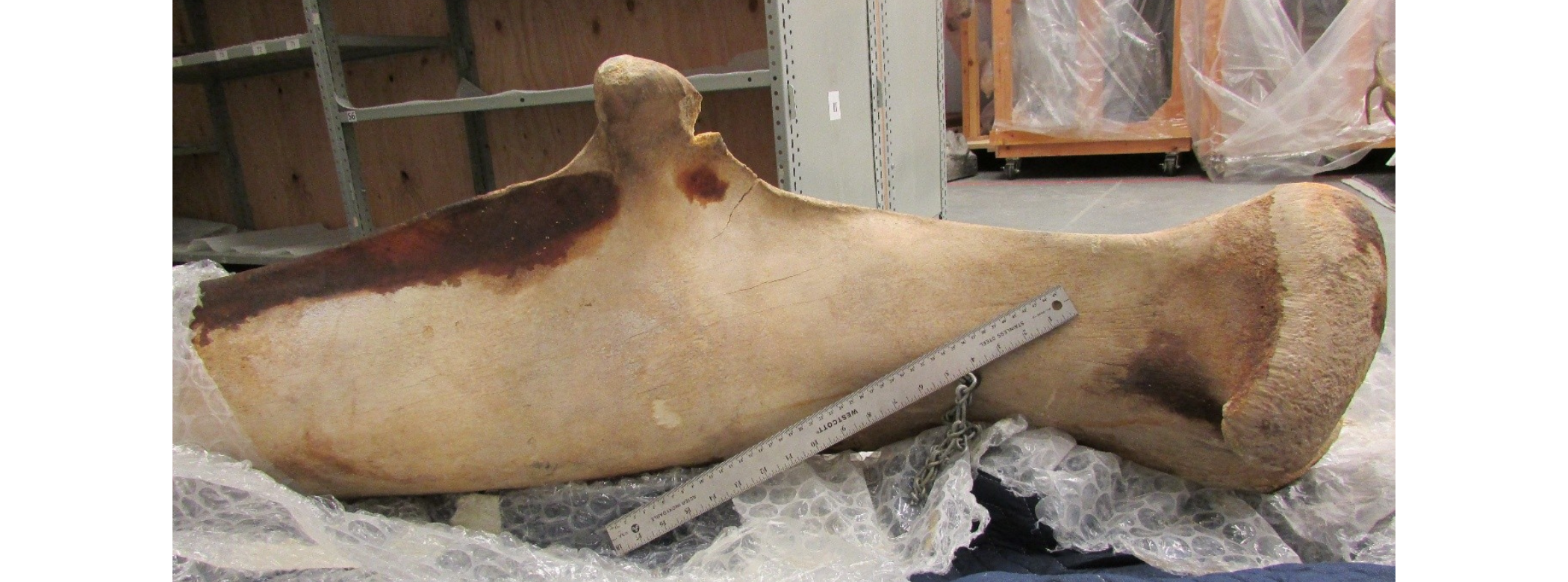
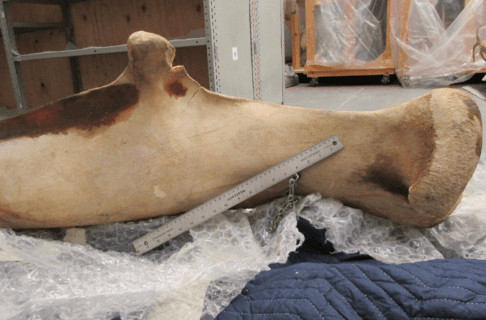
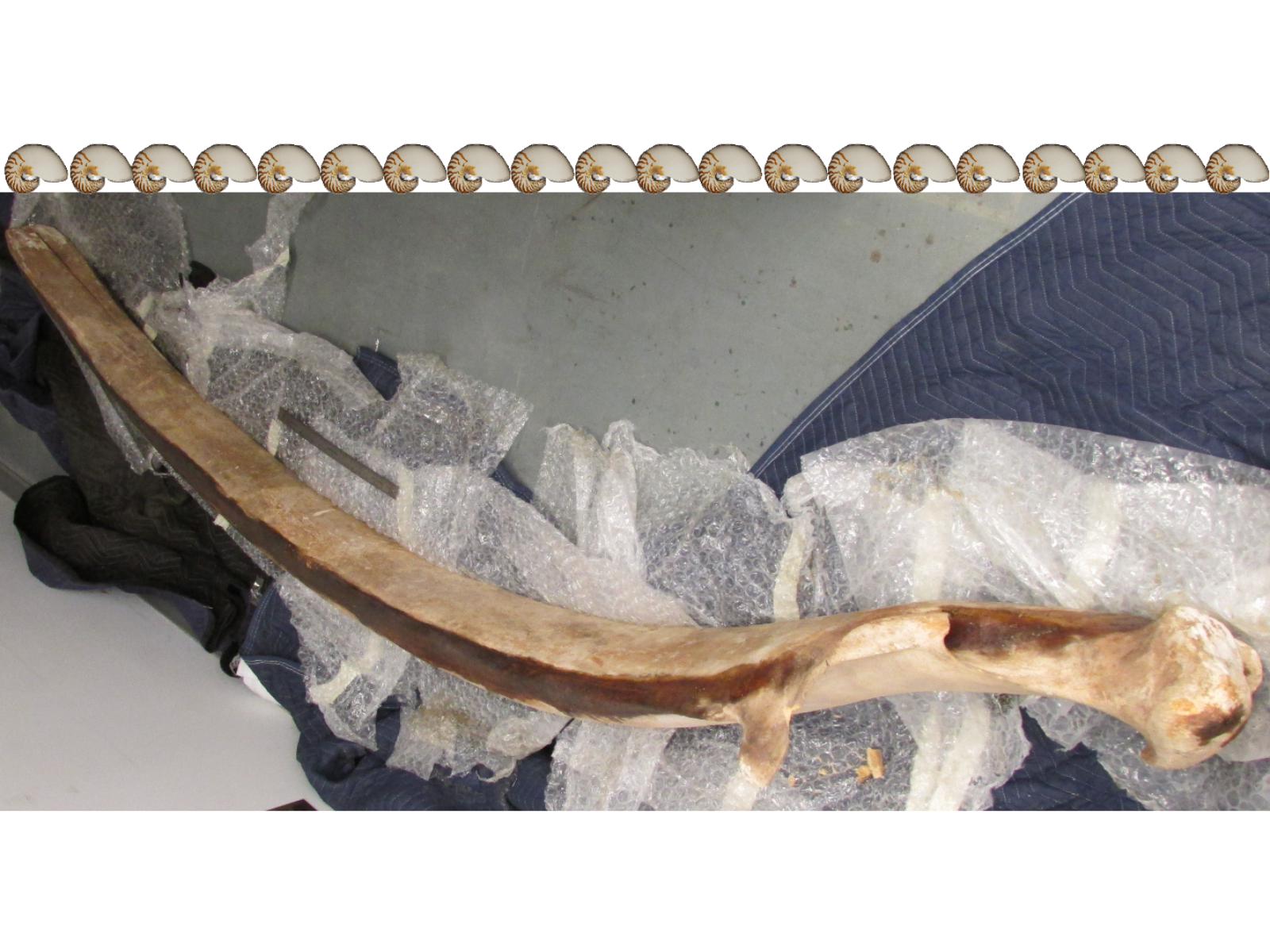
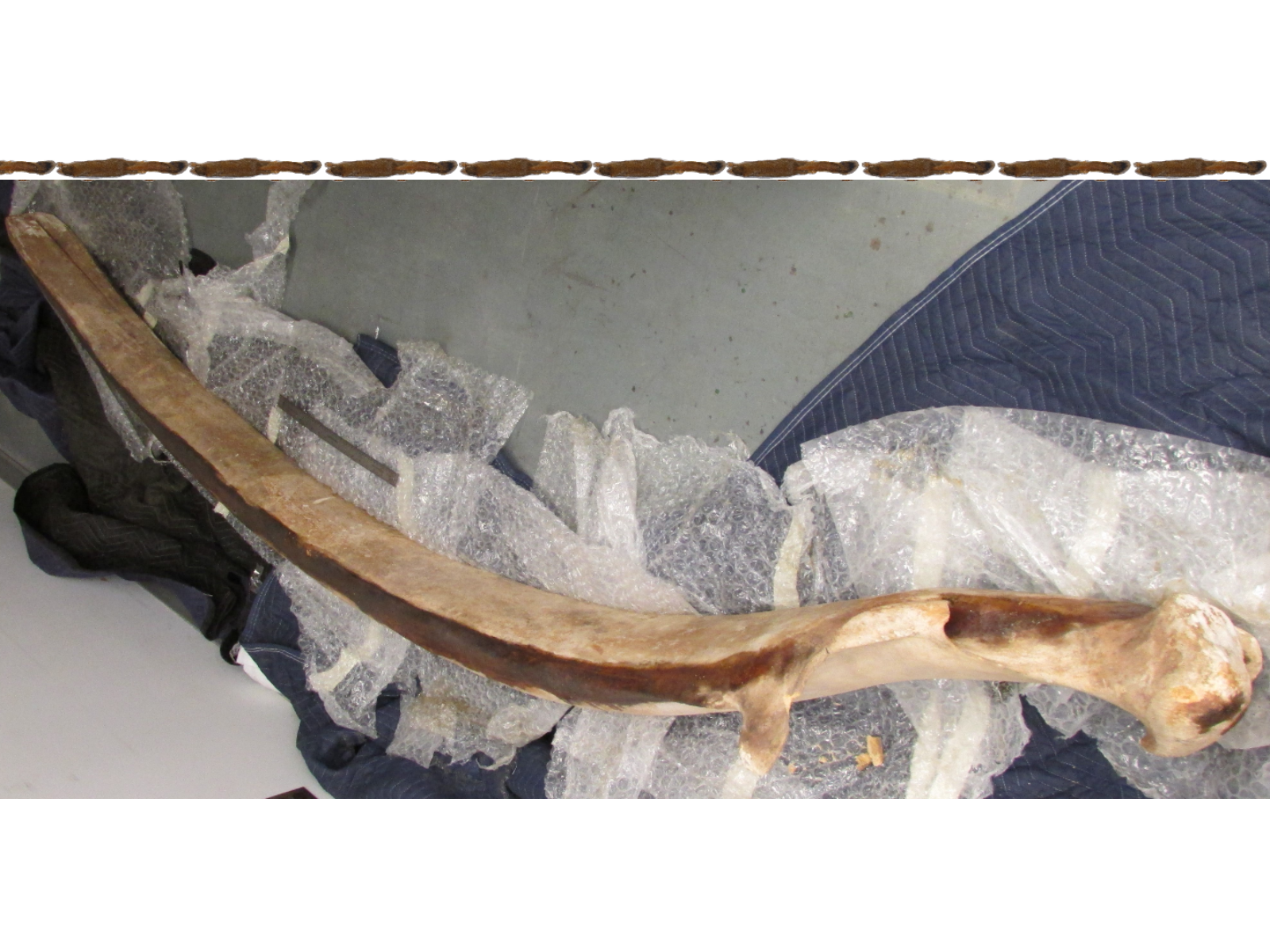
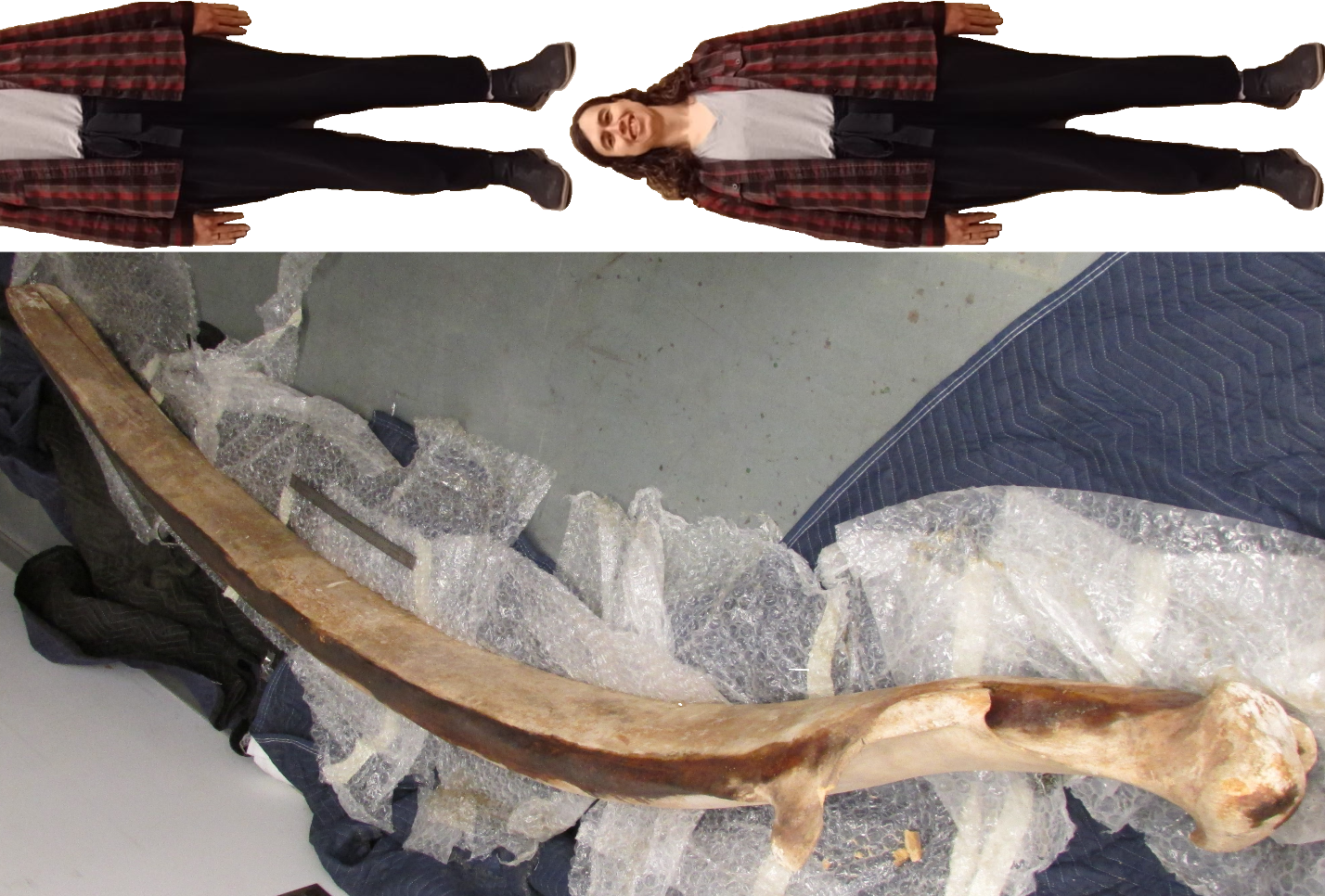
One end of a dentary bone from a fin whale, collected in Newfoundland.
Balaenoptera physalus, the fin whale, is a species of baleen whale that is found both north and south of the tropics in ocean waters around the world. Individuals of this species can grow to be incredibly large, second in size only to blue whales. As with other baleen whales, they sustain their large bodies by eating massive quantities of smaller organisms like krill, fish, and even squid. While Hudson Bay is home to several whale species, the fin whale is not one of them. So how did this jaw get to the Manitoba Museum? Why do we have it in our collection? And just how big is it, really?
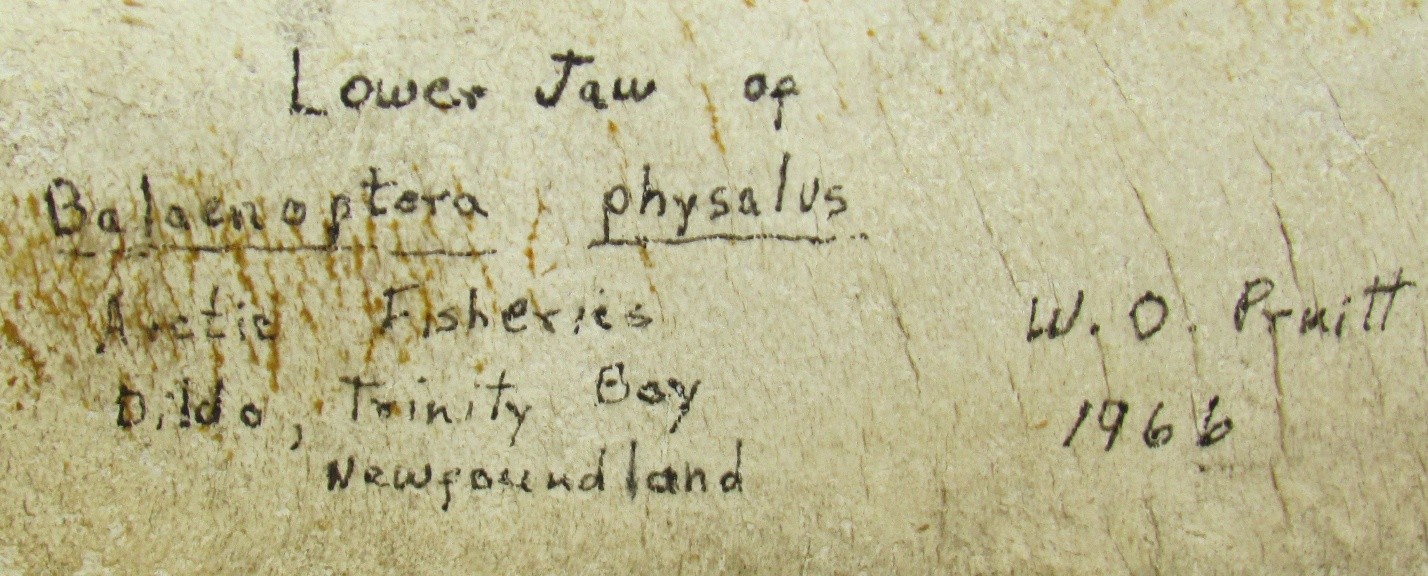
Part of the story of this specimen is written on the bone itself. In 1966, the jaw bone was obtained by Arctic Fisheries in Dildo, Newfoundland, by ecologist William Pruitt* while he was working at Memorial University in St. John’s Newfoundland. Shortly thereafter, he moved to Winnipeg for a teaching position at the University of Manitoba. While the “how” and “why” of it are somewhat of a mystery to us, the whale jaw also made its way from Newfoundland to the University of Manitoba, where it was stored in the biology collection for decades. During his time at the U of M, Pruitt launched the Taiga Biological Station, where students conducted ecological field research and collected many specimens that now reside here at the Museum. In fact, Pruitt regularly involved the Manitoba Museum in his work, and to this day we hold 1,745 specimens that he collected here in Manitoba.
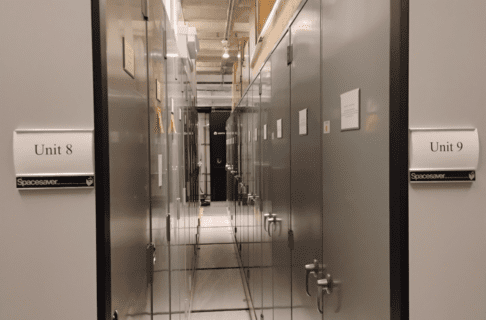
The University of Manitoba, looking to free up some space in their storage areas, offered the dentary to The Manitoba Museum in 2022. We accepted the offer, thinking that one day it may make a nice exhibit piece. The bone was loaded into a moving van for a short trip over to the Museum where we catalogued it and brought it into our collection. The dentary now lives in our dedicated storage space for oversized Natural History specimens, alongside taxidermy mounts of bears, bison, and other big animals.
The question remains, just how big is this whale jaw, anyway? While we don’t have a weight on file for this bone, it’s been measured at 3.3 metres long from tip to tip, and 3.5 metres if following the inside curve. To put that into perspective using other things that can be found in our collections room, that’s the equivalent length of…
27 blue morpho butterflies…
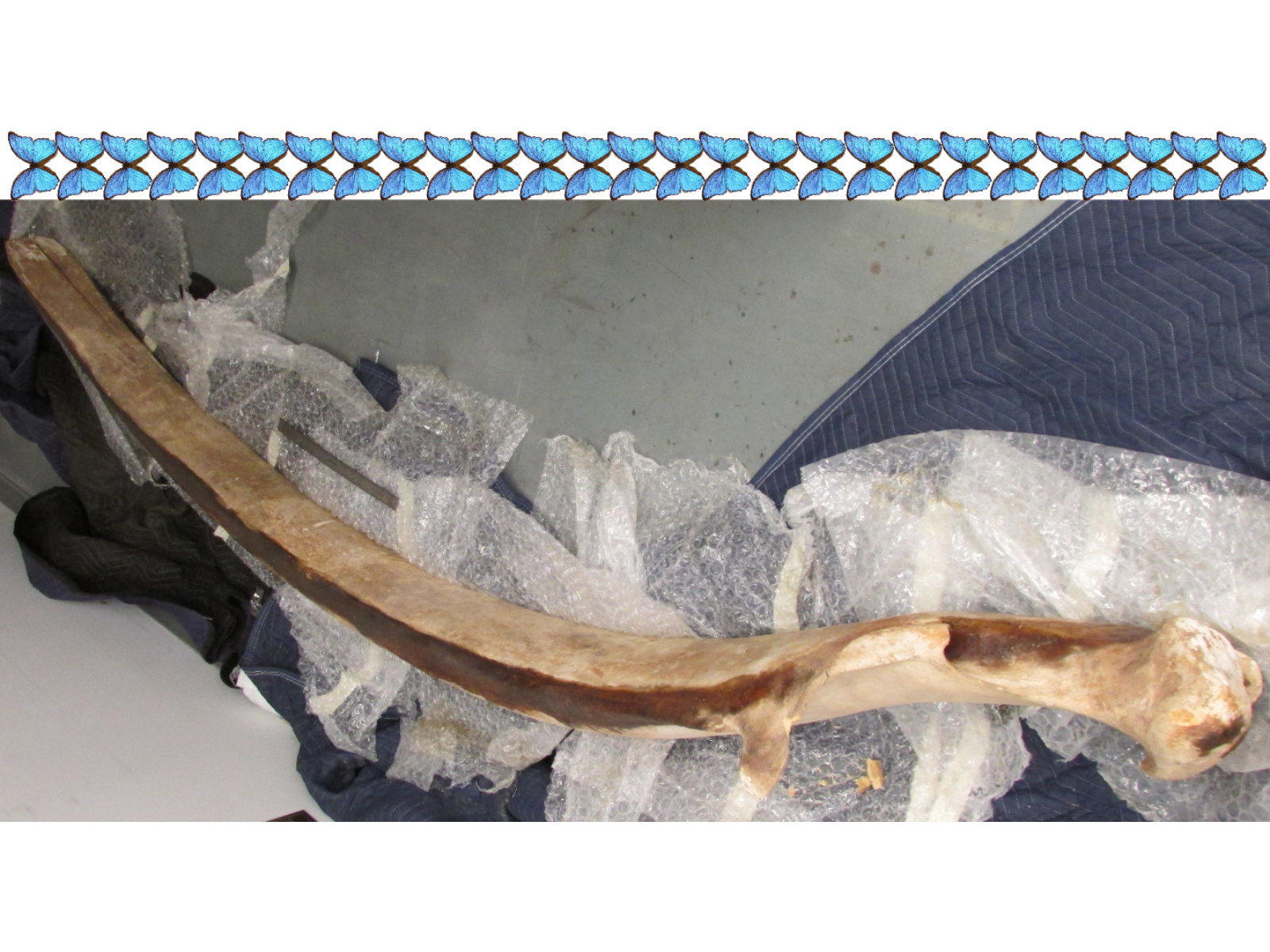
20 chambered nautilus shells…
10 American red squirrels…
Or 1.65 Collections Technicians!
*Author’s note:
While researching William Pruitt for this piece, I came across a short biography for him on the Manitoba Historical Society Archives website. While it doesn’t fit nicely into this story, there are details about how before his brief tenure in Newfoundland, he worked for the University Alaska at Fairbanks in the 1950s. At the University of Alaska, Pruitt was tasked with researching from an ecological perspective the risks of Project Chariot, which was a plan to use six nuclear bombs to rapidly excavate a new resource export harbour on the Alaskan coast. He roundly condemned the plan for its environmental risks, and the report’s release was suppressed by the United States government. The University of Alaska terminated Pruitt’s employment over the issue, putting him on the road to Newfoundland, and eventually, Manitoba! In the end, Project Chariot was shelved due to objections from the local Inupiaq people and a subsequent wave of coordinated public outrage in the United States.
Learn more about William Pruitt – Manitoba Historical Society