Lake Winnipeg Exhibit Nears Opening

Lake Winnipeg Exhibit Nears Opening

It’s nearly here, the culmination of five years of thought, research, design work, programming, and development. Lake Winnipeg: Shared Solutions (LWSS) opens on World Water Day, Saturday, March 22, 2014. It’s been a long process, and I still have to pinch myself to realize that we actually built this thing. It’s amazing to work on a project that is mostly spreadsheets and line drawings for so long, and then in a few short weeks have it sprout up all around you like a grove of new trees.

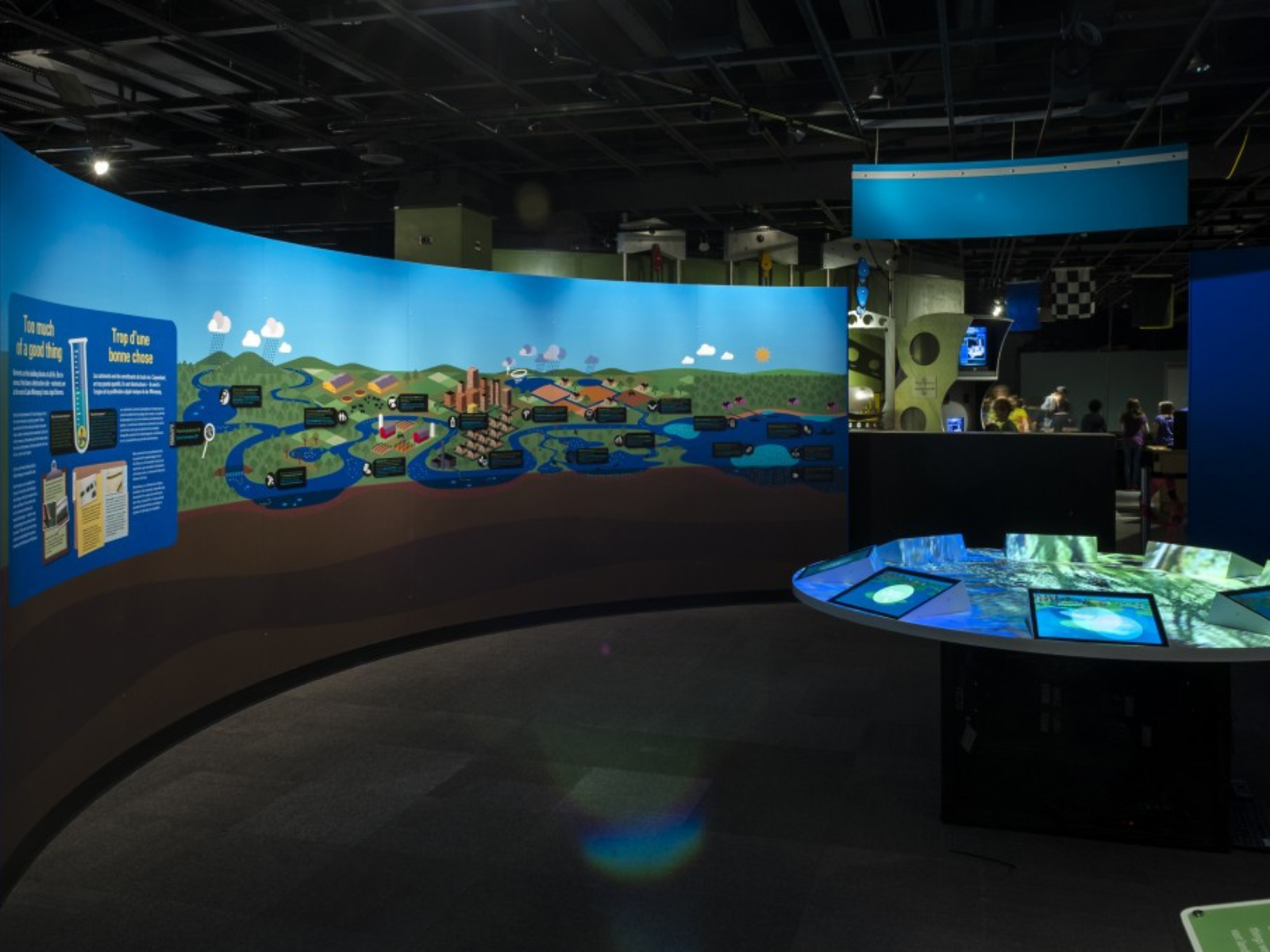
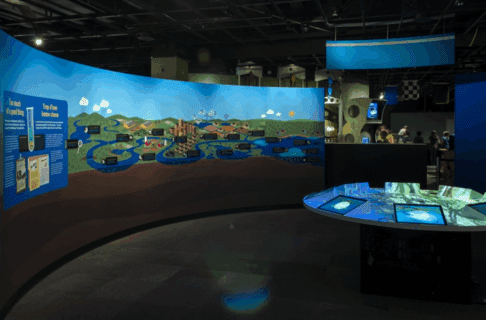
The Lake Winnipeg Shared Solutions exhibit in the Manitoba Museum Science Gallery. On the left, a curving divider wall displays a mural through the journey of water. On the right, a round table glows from eight embedded tablet screens.

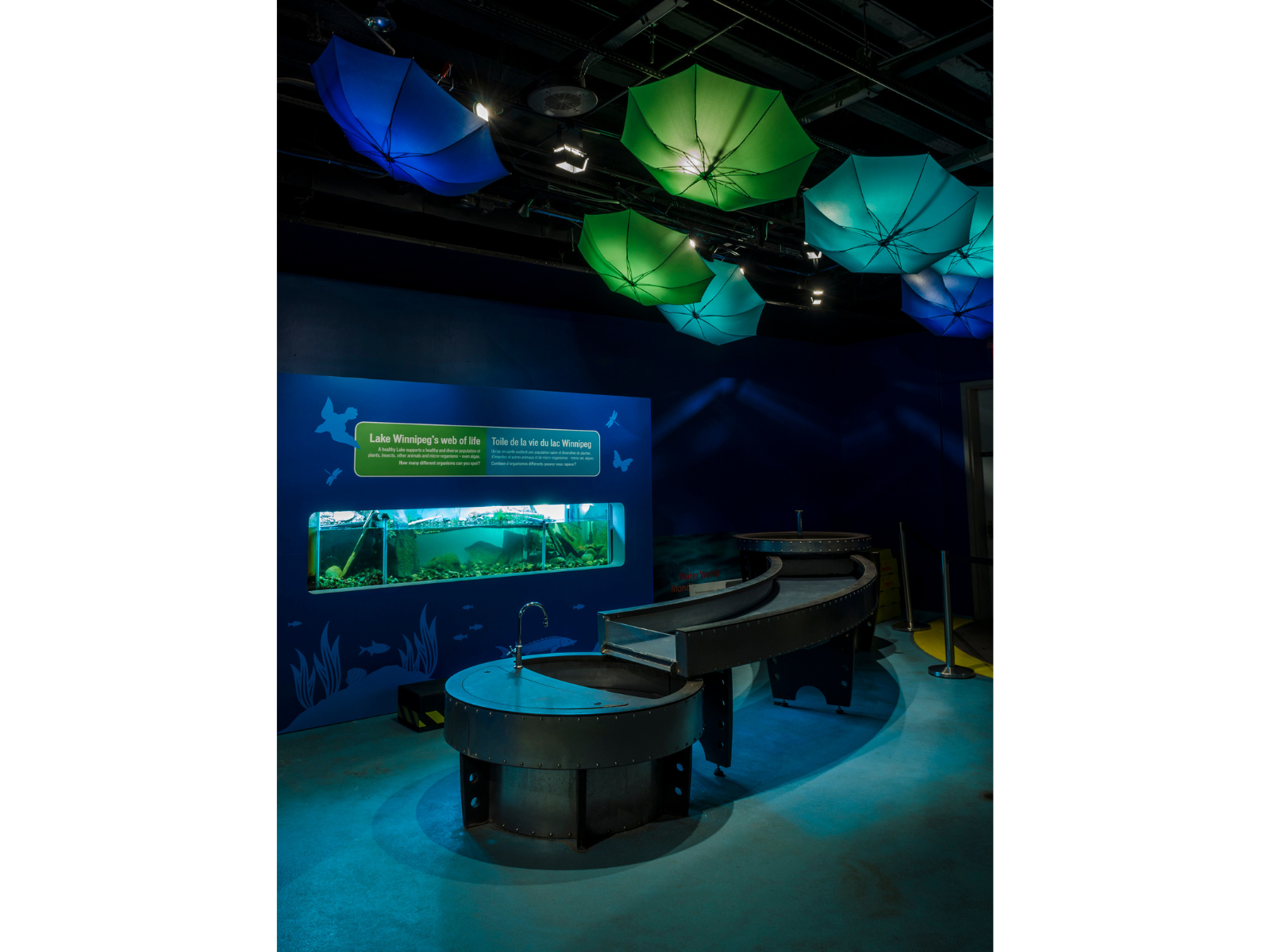
A sloping water table in front of a wall-embedded fish tank. Above the area blue and green umbrellas hang upside-down, lit by spotlights in the ceiling.

You can get a sneak preview of the exhibit when CTV’s morning show visits on Thursday, March 20, and again on Friday the 21st when Global has their morning show at the Museum. Of course, the best way to see the exhibit is to come on down – as part of the Science Gallery’s permanent exhibits, LWSS is free for Museum Members and reasonably priced for everyone.

Scott Young

Scott Young

Planetarium Astronomer

Scott is the Planetarium Astronomer at the Manitoba Museum, developing astronomy and science programs. He has been an informal science educator for thirty years, working in the planetarium and science centre field both at The Manitoba Museum and also at the Alice G. Wallace Planetarium in Fitchburg, Massachusetts. Scott is an active amateur astronomer and a past-President of the Royal Astronomical Society of Canada.

Another Water Exhibit in Development…

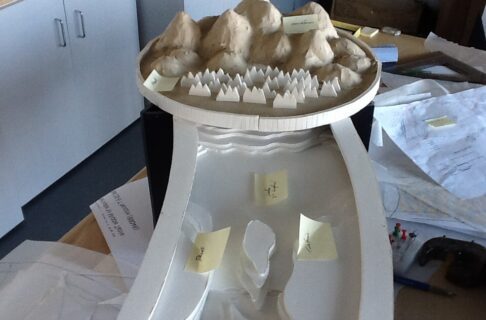
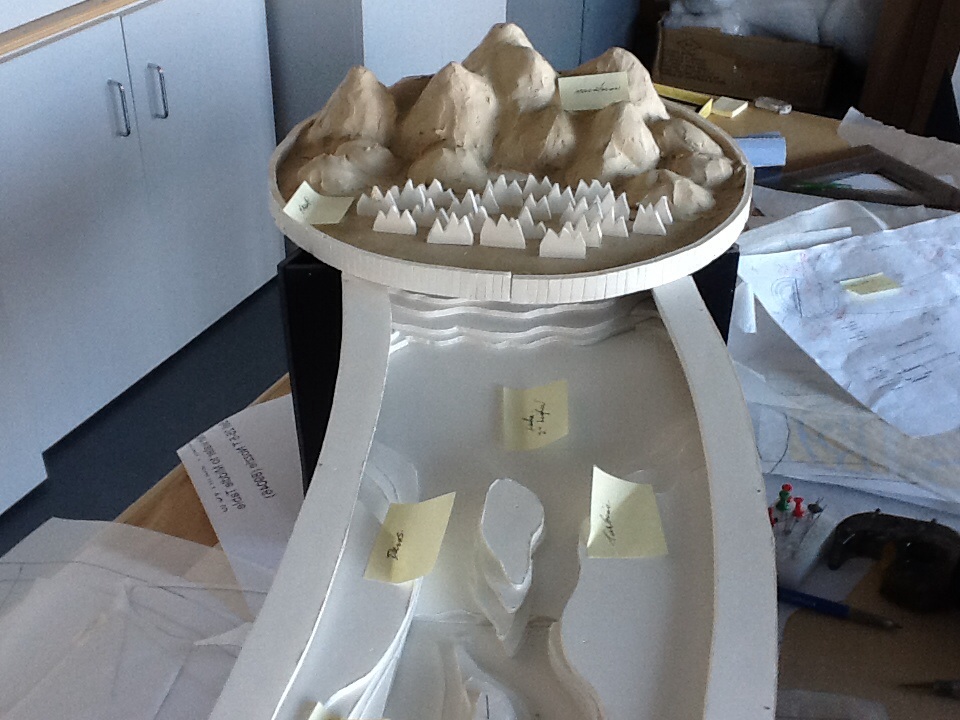
A concept model of a watershed table, where water will flow from the mountains on top down towards the camera.

As we put the finishing touches on Lake Winnipeg: Shared Solutions, we’re working on another water exhibit. Our stream table has been a popular fixture with the younger scientists, allowing them to experiment with flowing water and sand. Alas, sand and the new touch screens in Lake Winnipeg: Shared Solutions don’t mix, so the stream table was scheduled for decommissioning.

Don’t despair, though! Thanks to being slightly underbudget on some other expenses, we have been able to start working on Stream Table 2.0! Instead of sand, the table will have a complete watershed: a lake, several rivers, and a flood plain. Visitors will be able to block some channels, add vegetation and wetlands, and try to control the floods.

Here is an image of our scale concept model, built by diorama artist Betsy Thorsteinson. Enjoy!

Scott Young

Scott Young

Planetarium Astronomer

Scott is the Planetarium Astronomer at the Manitoba Museum, developing astronomy and science programs. He has been an informal science educator for thirty years, working in the planetarium and science centre field both at The Manitoba Museum and also at the Alice G. Wallace Planetarium in Fitchburg, Massachusetts. Scott is an active amateur astronomer and a past-President of the Royal Astronomical Society of Canada.

Lake Winnipeg Exhibit Takes Shape!

Today is Day One of the installation of the Science Gallery’s new exhibit, Lake Winnipeg: Shared Solutions! Lake Winnipeg is one of the most endangered lakes in the world, due to its huge watershed – water from four provinces and four U.S. states, from as far as the Rockies, flows into our Lake, carrying nutrients and pollution from cities, farms and industries. This state-of-the-art exhibit allows visitors to explore our local Great Lake and try to find solutions to this pressing problem. The exhibit features a high-tech lake simulator, the Watershed of the Future, which lets visitors take control of the decisions that affect the lake’s health. Do we improve the city’s sewer systems, or look for better ways to fertilize crops? You decide! The Watershed of the Future is based on information provided by dozens of scientists and industry experts, and shows not only the effect of your decisions on the Lake’s health, but also on the economy and the quality of life of Manitobans. The exhibit also features a live Lake Winnipeg ecosystem, natural history specimens, satellite imagery, and information on how you can do your part, at home or work, to help save our Lake.

We’ll be posting behind-the-scenes images and commentary as the exhibit is installed, so you can peek behind the curtain and see how the magic happens here at The Museum. The exhibit is scheduled to open on World Water Day, Saturday, March 22, 2014!

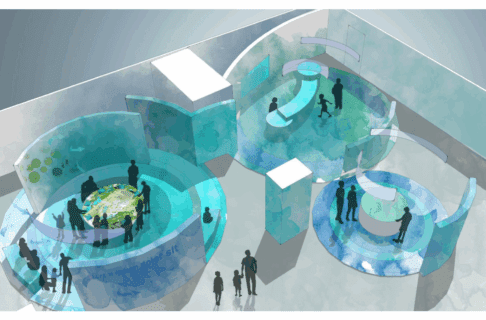
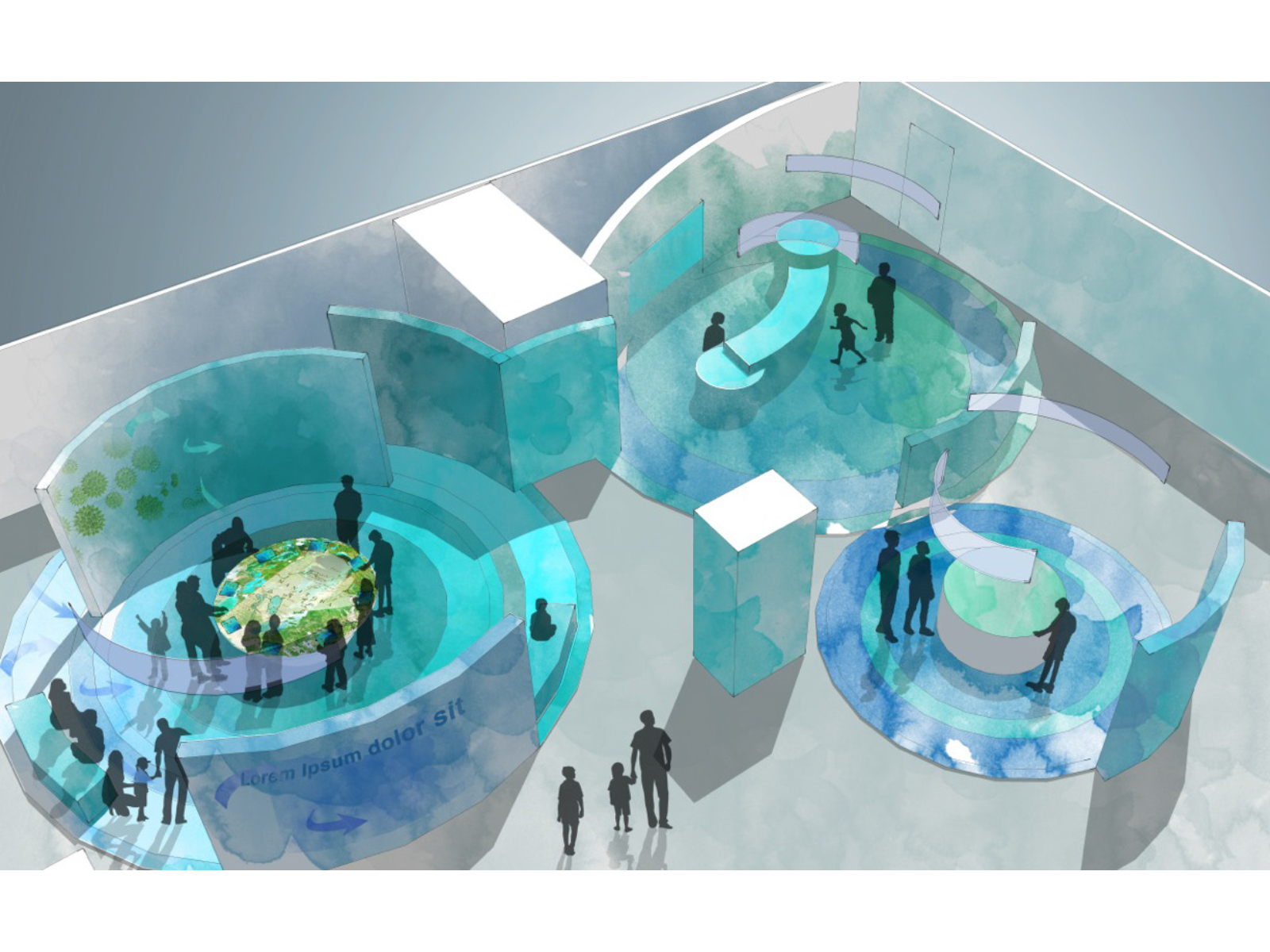
An artist's rendering of a three-part exhibit containing a digital activity, a watershed table, and an interactive station.

A early overview of the Lake Winnipeg: Shared Solutions exhibit.

A grainy photo looking over a low half wall with three porthole windows towards a sloping watershed table, and a brightly illuminated rectangle section of wall where a aquarium tank will be installed.

Lake Winnipeg Ecosystem going in. Live animals will reside here soon!

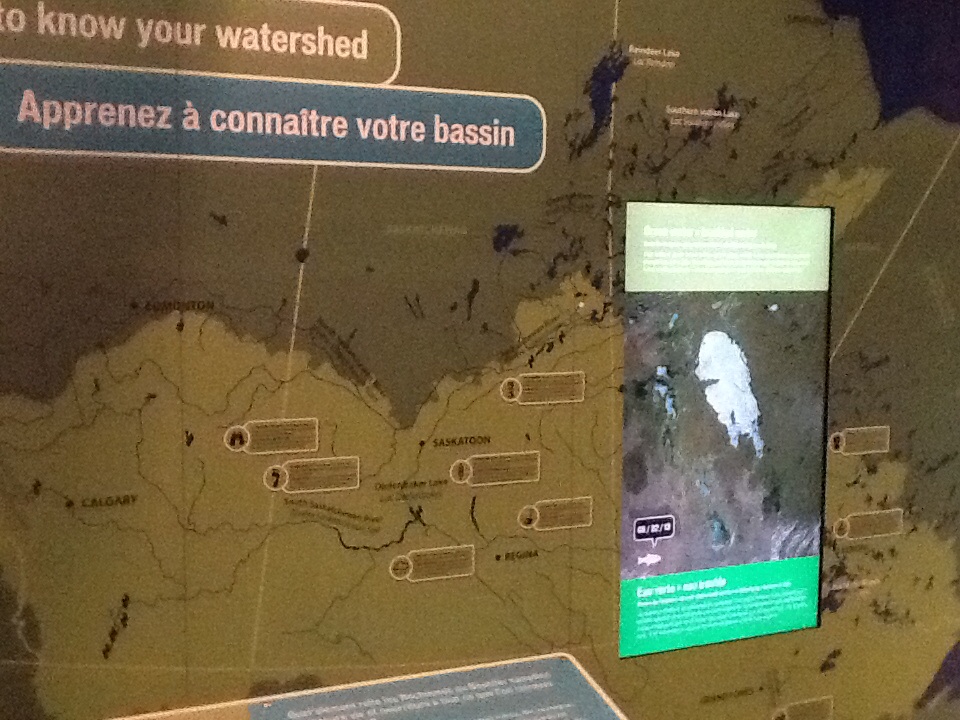
Close up on a Manitoba watershed map and digital touchscreen on an exhibit wall.

Satellite images of Lake Winnipeg are overlaid on a giant map of the watershed.

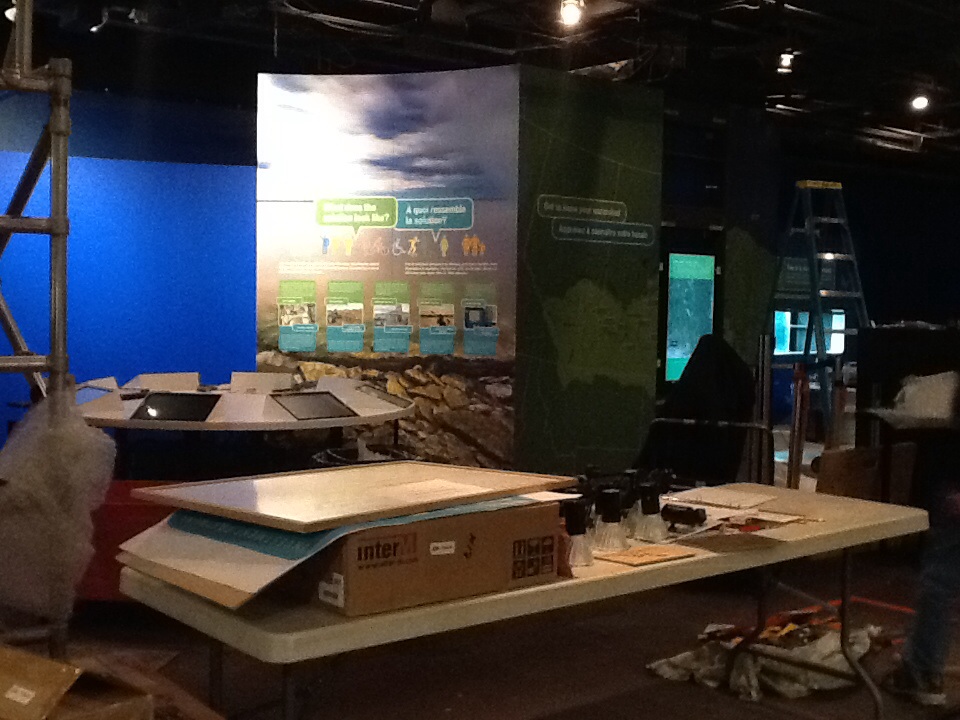
An exhiit under construction in the Manitoba Museum Science Gallery. A table holds boxes, papers, and tools in the foreground.

Installation continues.

Scott Young

Scott Young

Planetarium Astronomer

Scott is the Planetarium Astronomer at the Manitoba Museum, developing astronomy and science programs. He has been an informal science educator for thirty years, working in the planetarium and science centre field both at The Manitoba Museum and also at the Alice G. Wallace Planetarium in Fitchburg, Massachusetts. Scott is an active amateur astronomer and a past-President of the Royal Astronomical Society of Canada.

Watershed of the Future simulator update – Day Three of install

Things are shaping up – all of the computers and speakers are connected, and all eight touch screens are working. Basically, the simulator prototype is operational. Today will be spent installing the latest software updates and making sure everything is networked properly.

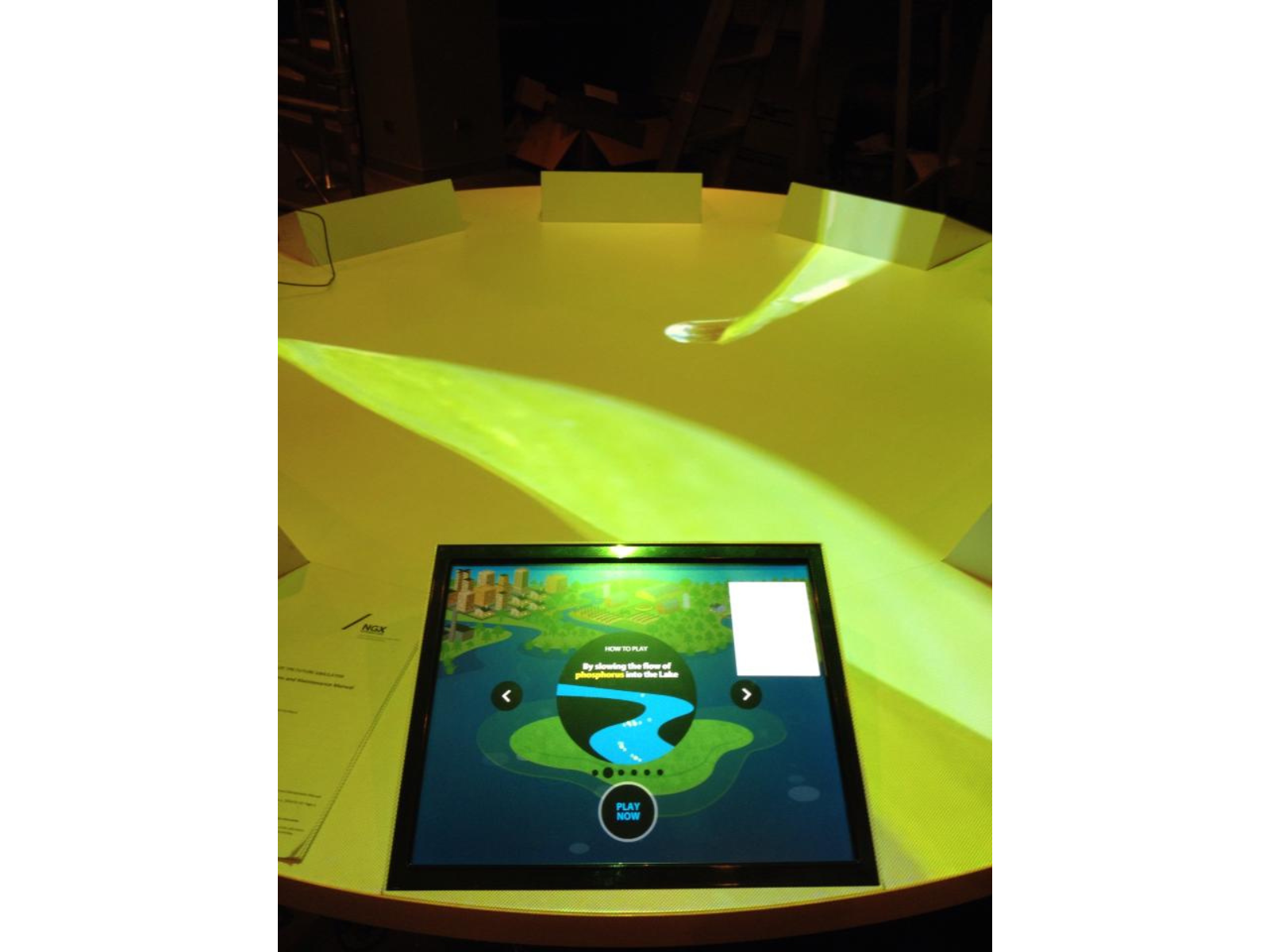
The first image below shows the simulator in “single-player mode” – this is our default experience, where a visitor can come up to the table and use any one of the eight touchscreens to have their own experience. A series of problems are available for you to examine, and each problem has three possible “projects” – these are different ways to address the problem. Each potential project will affect the health of the Lake, and also carry an economic and social cost or benefit. As you make choices, you are shown the results of each choice and warned if you are reaching a critical point.

In single-player mode, everything you do feeds your own version of the Lake, and so your results won’t depend on any other people at the table. It’s a great way to explore some of the issues facing the health of Lake Winnipeg. The central projection surface is used to show various lake images, and also when a big event like a storm or flood occurs – these events hit every player at the table, although your results will depend on what you have done in the game so far.

Looking at a touchscreen embedded in a round table lit with green. The screen shows a "How to Play" graphic.

The “Watershed of the Future” simulator prototype, installed and (almost) ready for testing.

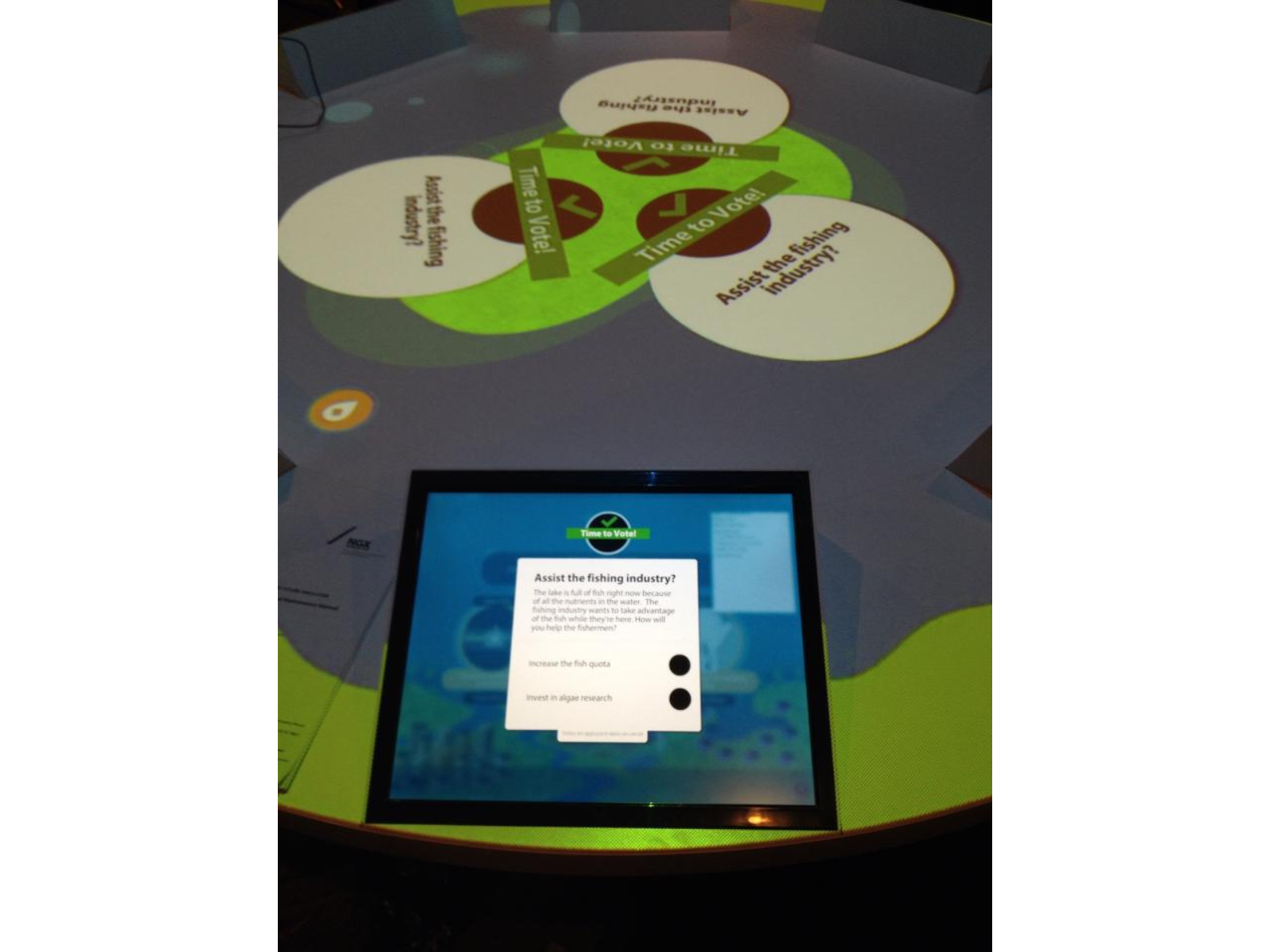
Looking at a touchscreen embedded in a round table., In the centre of the table projections ask the vote question "Assist the fishing industry?". The screen shows the same question with selectable options to "Increase fish quota" or "Invest in algae research.

Watershed of the Future simulator in multi-player mode, showing one of the polls.

The simulator also has a “multi-player mode” – we’ll be using this when we have school groups booked, or when we can have a program leader interpreting the exhibit. In this case, all eight screens feed a single model of the Lake shown using the central projection, and so the results depend not only on what you do, but what others at the table do as well. The program leader can encourage discussion and debate, and just like in real life, good results depend on everyone working together.

In multiplayer mode, there is also a new feature we’re calling “polls”. Some issues are too broad to be narrowed down into projects, and these show up in multi-player mode as a question on the main projection surface. Everyone is asked to vote on a given poll issue, and the majority vote determines which option is fed into the model. Again, having a program leader present can help spark debate and discussion, leading to informed voting and a deeper understanding of the issues.

Once the simulator is installed, we will be running it through testing to make sure it works as intended, and also to make sure it is fun to play. If you are interested in volunteering as a tester, contact me at scyoung@manitobamuseum.ca and I’ll provide more information. This is a volunteer opportunity, but you can help us make this important exhibit the best it can be!

Scott Young

Scott Young

Planetarium Astronomer

Scott is the Planetarium Astronomer at the Manitoba Museum, developing astronomy and science programs. He has been an informal science educator for thirty years, working in the planetarium and science centre field both at The Manitoba Museum and also at the Alice G. Wallace Planetarium in Fitchburg, Massachusetts. Scott is an active amateur astronomer and a past-President of the Royal Astronomical Society of Canada.

First Light on our New Exhibit!

Day Two of the Lake Winnipeg: Shared Solutions simulator installation, and we have first light from the projection system! The simulator comprises a table with eight individual touch-screens, surrounding a large projected image covering the table. In regular mode, visitors can take control of their own version of the Lake at each station, without being affected by what other visitors do. Big shared events like floods and storms will show up on the central projection, and affect everyone at the same time.

We can also run the experience for a group, where all eight stations are playing in the same Lake. All of their choices will feed into a central lake, and the effects will be displayed using the central projection screen. The “score” is depicted using a green algal bloom. The bigger the algal blob, the worse the health of the Lake.

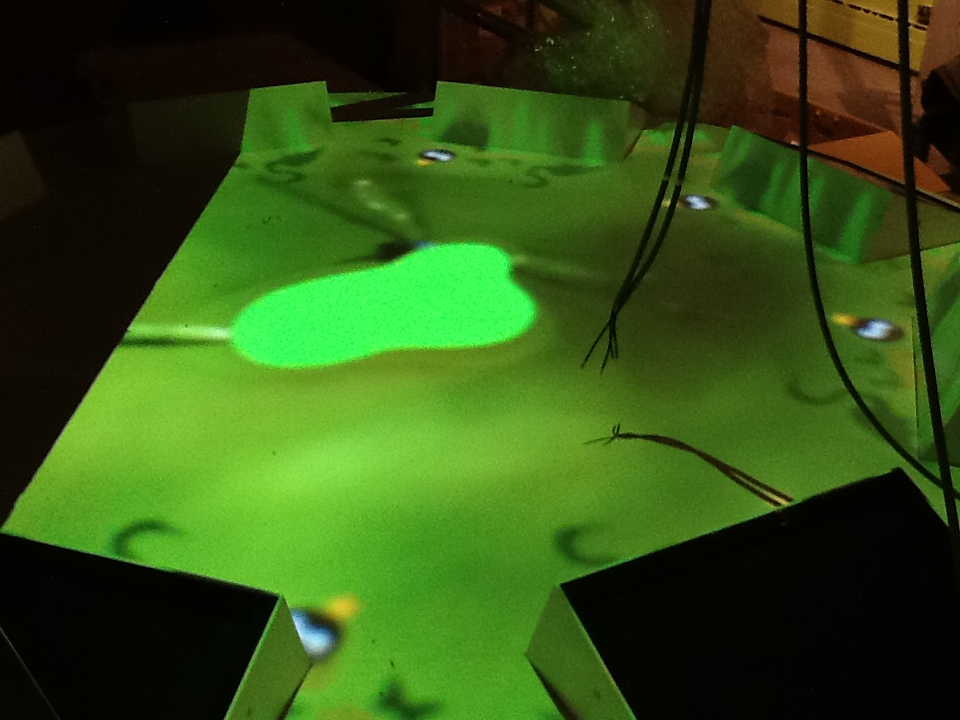
The second image shared here shows the unfocused, rough, first image from the projector onto the table. The green blob is the algae. None of the touch screens are active yet, but when they are connected, they will form a seamless part of the image.

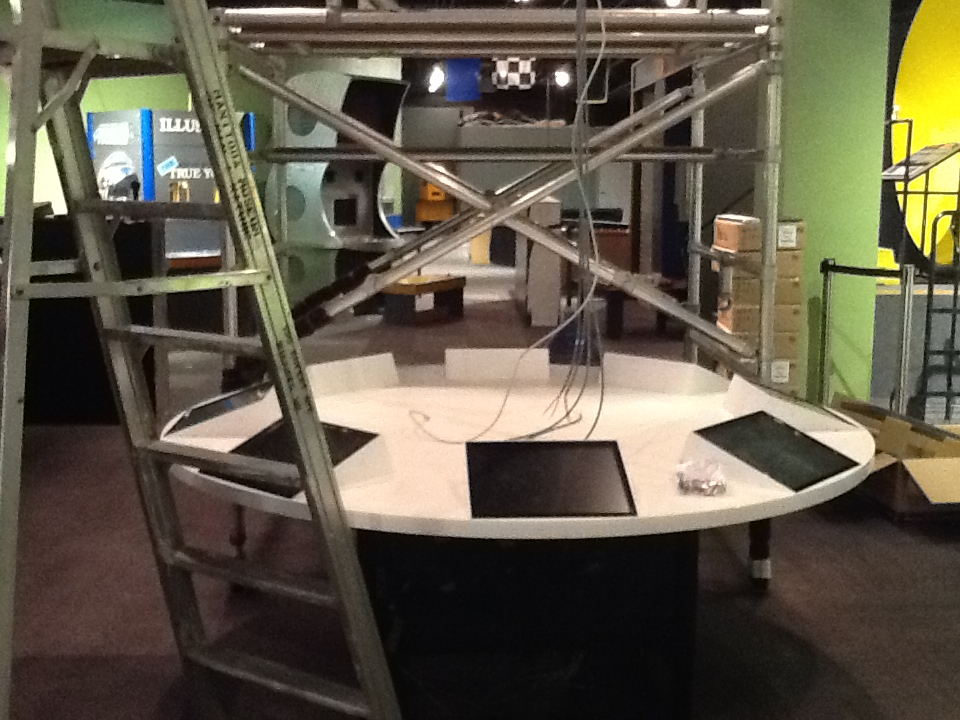
A circular table with eight digital touchscreens embedded around the surface. Ladders and scaffolding are on either side of the table as wires hang down from above.

Installing the Lake Winnipeg Shared Solutions simulator table in the Science Gallery.

A round table with eight digital touchscreens embedded around the surface. A green light illuminates the tabletop with a "blob" near the centre brighter than the rest.

“First Light” on the simulator table – needs focus and alignment, but it works!

Scott Young

Scott Young

Planetarium Astronomer

Scott is the Planetarium Astronomer at the Manitoba Museum, developing astronomy and science programs. He has been an informal science educator for thirty years, working in the planetarium and science centre field both at The Manitoba Museum and also at the Alice G. Wallace Planetarium in Fitchburg, Massachusetts. Scott is an active amateur astronomer and a past-President of the Royal Astronomical Society of Canada.

New Science Gallery Exhibit Takes Shape!

It’s been a while since I have updated this blog, because I have been working on the next big exhibit for the Science Gallery. “Lake Winnipeg: Shared Solutions” is scheduled to open in March 2014, but a big piece of it is being installed this week so we can do on-site testing and evaluation of the prototype. The exhibit addresses the health of Lake Winnipeg and what feeds into that (complicated) issue.

The exhibit is a partnership between The Manitoba Museum and the International Institute for Sustainable Development, with support from a diverse group of stakeholders. The completed exhibit will have images, text panels, a live aquarium, and insect and plant specimens, but the centrepiece is the Watershed of the Future simulator. Basically, we have built the Lake Winnipeg Watershed in a computer, and visitors will be able to become Lake Stewards, controlling all of the decisions in Manitoba that impact the health of the lake. It’s a hugely complicated piece of exhibitry, with eight touch screens, a giant projector table, and a rack of computers, running custom software developed in concert with a huge group of experts and stakeholders from around the province. To make sure we have gotten it right, and also that it is a fun experience for the average person, the simulator is being installed this week, and we’ll be opening it up for testing over the coming month so we can refine the experience.

This is the first time we’ve been able to do a “Beta” test of an exhibit like this. It’s a great way to make sure the exhibit works properly, but also allows us to refine things like the timing of the experience, clarity of instructions, and complexity of the experience. We’ve spent a long time making this as accurate an exhibit as we can; now we want to make sure it is also as fun and interesting as it can be.


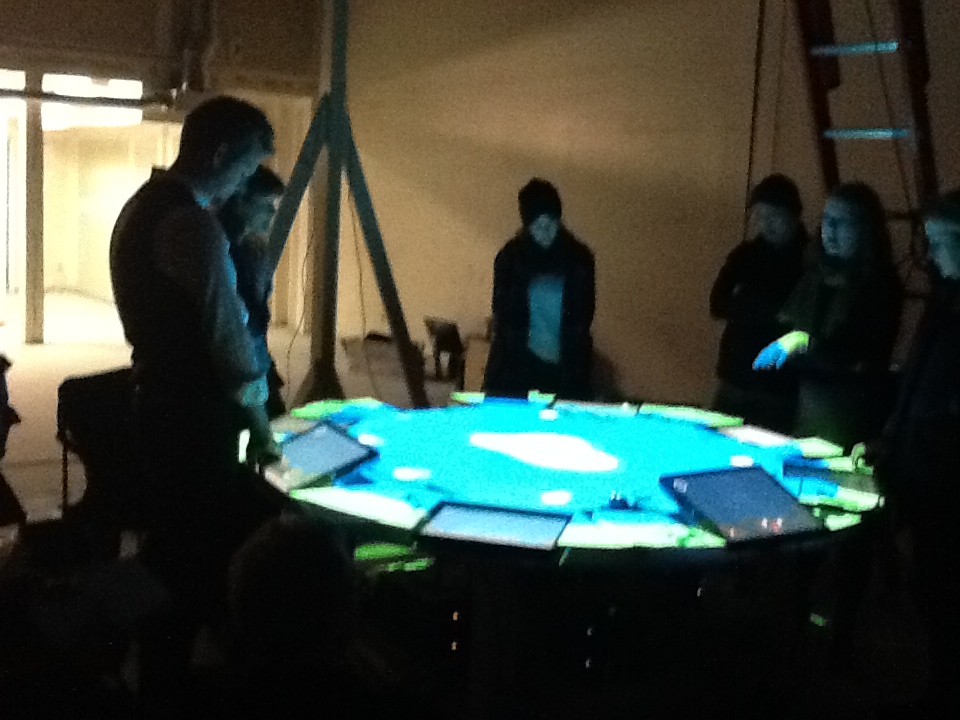
Six people stand around a brightly illuminated round table in a dim room.

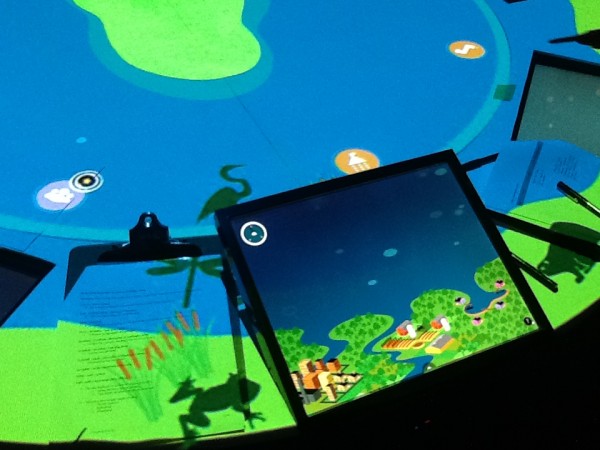
A brightly illuminated section of a rounded table with a digital touchscreen embedded in the surface. On the table itself and the touchscreen, illustrations of a lake and small creatures like frogs, herons, and fish.

The Alpha version of the Watershed of the Future simulator in the workshop in Vancouver.

I’ll be posting more about Lake Winnipeg Shared Solutions in the coming weeks as the exhibit is installed and testing continues. We’ll be bringing in the experts and stakeholders who helped develop the simulator, but we’re also interested in feedback from the Museum’s regular visitors: school groups and the general public. If you’d like to be a part of our testing process, drop me an email and we’ll hook you up.

Scott Young

Scott Young

Planetarium Astronomer

Scott is the Planetarium Astronomer at the Manitoba Museum, developing astronomy and science programs. He has been an informal science educator for thirty years, working in the planetarium and science centre field both at The Manitoba Museum and also at the Alice G. Wallace Planetarium in Fitchburg, Massachusetts. Scott is an active amateur astronomer and a past-President of the Royal Astronomical Society of Canada.

Rocket lands in Science Gallery

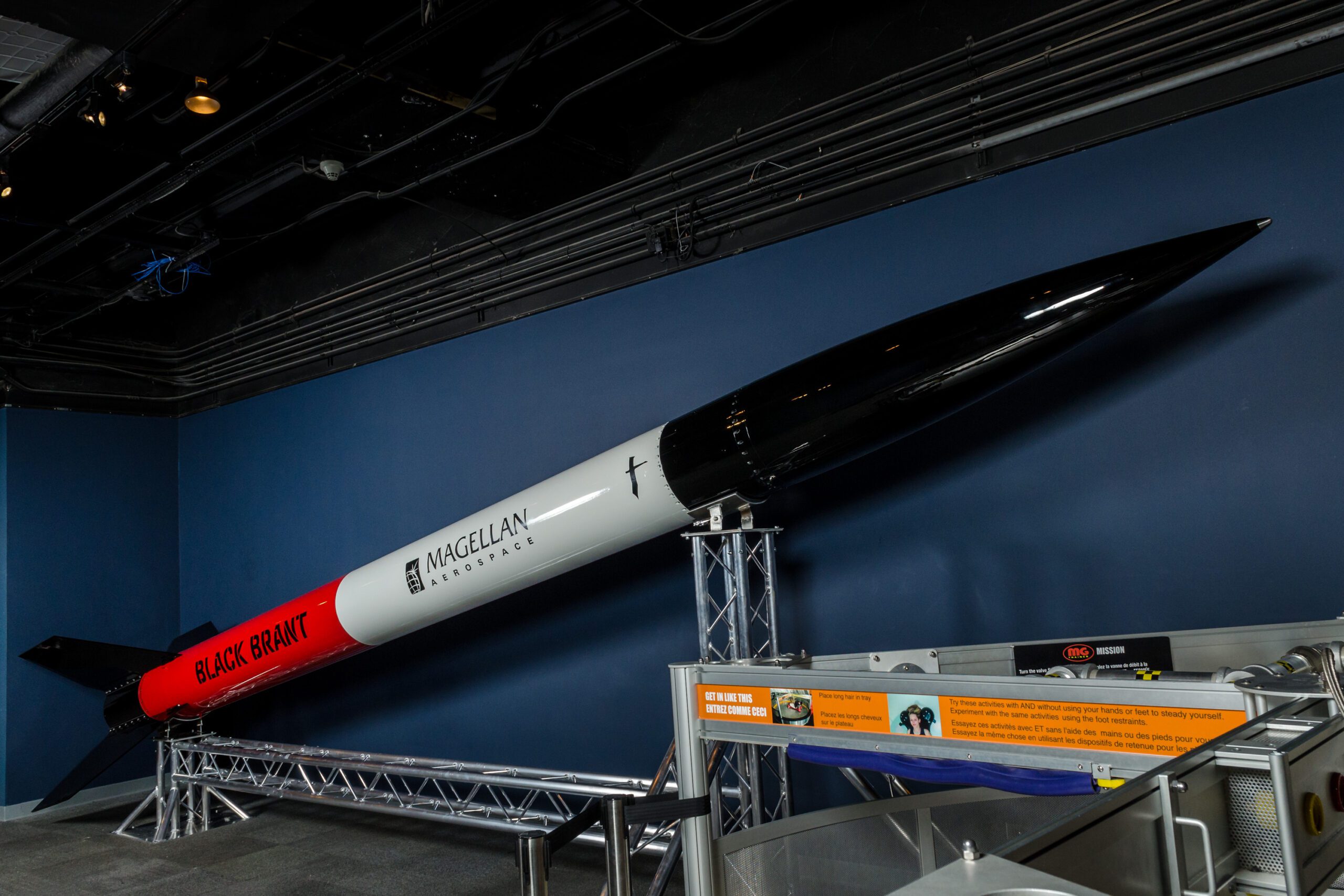
Did you know that one of the most successful small rocket programs in the world is run from right here in Winnipeg? Magellan Aerospace (formerly Bristol Aerospace) builds the Black Brant series of sounding rockets for customers around the world. Payloads launched by Black Brants have been studying the upper atmosphere and near-space environment for over 50 years, and have even been launched from right here in Manitoba (at the Churchill Rocket Range on the northern coast of Manitoba). So it’s no surprise that we’ve always wanted a real rocket for the Science Gallery. Well, now we have one!

Black Brant 5C Rocket in the Science Gallery.

Magellan has loaned the Manitoba Museum a real Black Brant 5C rocket, and it was delivered and installed in the Science Gallery on February 4, 2013. It was a big job getting the rocket into the building, since even disassembled the main motor case wouldn’t fit into the elevator. A team of engineers from Magellan and Museum staff carried it through the parkade and down the stairs to its final resting place. At 9.5-metres (31′) long and nearly 360 kilograms (800 lbs.), this is the single largest artifact in the Science Gallery.

The Black Brant exhibit will officially open this March, with interpretive panels and video footage of the rocket in action. However, you can see the rocket in place now, in the Science Gallery’s space wing next to the Planetarium entrance.

Fairly Scientific Community Science Fair

If you’re like me, we probably look back on your elementary school days with a mixture of nostalgia and dread. Yes, your hair really was that bad back then! However, there were likely some standout moments as well. For me, it was the annual science fair – the time of the year it was OK to be a science geek. I remember the brainstorming for topics, the hand-lettered backboards with pencil crayon drawings, the obligatory volcano and solar system model made of Styrofoam balls. For me, the science fair led me to a career in science communication – now I have a nicer backboard and better pencil crayons, but essentially I get to do science fairs every day!

A poster for the Fairly Scientific community science fair on Saturday, April 9, 2011.

Most people think they can’t do that sort of thing anymore – but now you can. “Fairly Scientific” is a community science fair open to anyone. Your project must be on a standard tri-fold cardboard or foam core backboard, but other than that you can do any sort of project you want (well, no explosives, toxic fumes, or injuries allowed). There will be a volcano contest for those who don’t want to do a full-on project.

So, who is this for? Well, students who want to continue their school science fair projects for one, but it’s especially aimed at the people who don’t get to do science fair projects any more. Folks who watch “Mythbusters” and always wanted to try something like that; grad students who want to take their thesis topic and have some fun with it for a public audience; basement tinkerers or inventors who want to show off their latest creation; it’s all appropriate for the science fair.

The projects will all be on display in the Planetarium Concourse downstairs at The Manitoba Museum on Saturday, April 9 as part of our Yuri’s Night celebrations. To get involved, contact Fairly Scientific.

Scott Young

Scott Young

Planetarium Astronomer

Scott is the Planetarium Astronomer at the Manitoba Museum, developing astronomy and science programs. He has been an informal science educator for thirty years, working in the planetarium and science centre field both at The Manitoba Museum and also at the Alice G. Wallace Planetarium in Fitchburg, Massachusetts. Scott is an active amateur astronomer and a past-President of the Royal Astronomical Society of Canada.

Welcome to The Science Gallery and Planetarium blog!

Welcome to The Science Gallery and Planetarium blog! I’ll be keeping you up to date on what’s going on at The Manitoba Museum’s Science Gallery and Planetarium, what exhibits we’re working on, and what science stories our staff has found most interesting each week.

First, some introductions: My name is Scott Young, and I’m the Manager of Science Communications and Visitor Experiences at The Manitoba Museum. (Try saying that three times fast!) I came to the Science Gallery as a visitor on the day it opened in 1986 (as “Touch the Universe”), and thought it was the coolest place ever. I started working at the Museum in 1990 in the Planetarium, eventually becoming the Managing producer of the theatre, and became Manager of the Science Gallery as well in 2001 or so. Now I oversee the exhibits and interactives side of the Science Gallery, produce Planetarium shows, and work on Museum exhibit teams as well.

In the mid-2000’s we were able to give the Science Gallery a facelift, one exhibit at a time, a process that is still underway. Nevertheless, we’ve managed to replace about two-thirds of the old exhibits with some new and very cool stuff: a race track where you can build your own car, a self-sustaining ecosystem with plants and animals, a microgravity simulator, and exhibits on math, meteorites, and many other subjects. We have some exciting new exhibits currently in development that I’ll tell you about in future posts. And we want to hear from you: what exhibits do you love or hate? What would you like to see as we renovate the Gallery and retire older exhibits? Let us know.

Scott Young

Scott Young

Planetarium Astronomer

Scott is the Planetarium Astronomer at the Manitoba Museum, developing astronomy and science programs. He has been an informal science educator for thirty years, working in the planetarium and science centre field both at The Manitoba Museum and also at the Alice G. Wallace Planetarium in Fitchburg, Massachusetts. Scott is an active amateur astronomer and a past-President of the Royal Astronomical Society of Canada.