



Hey - Who's that Mann?

Hey – Who’s that Mann?

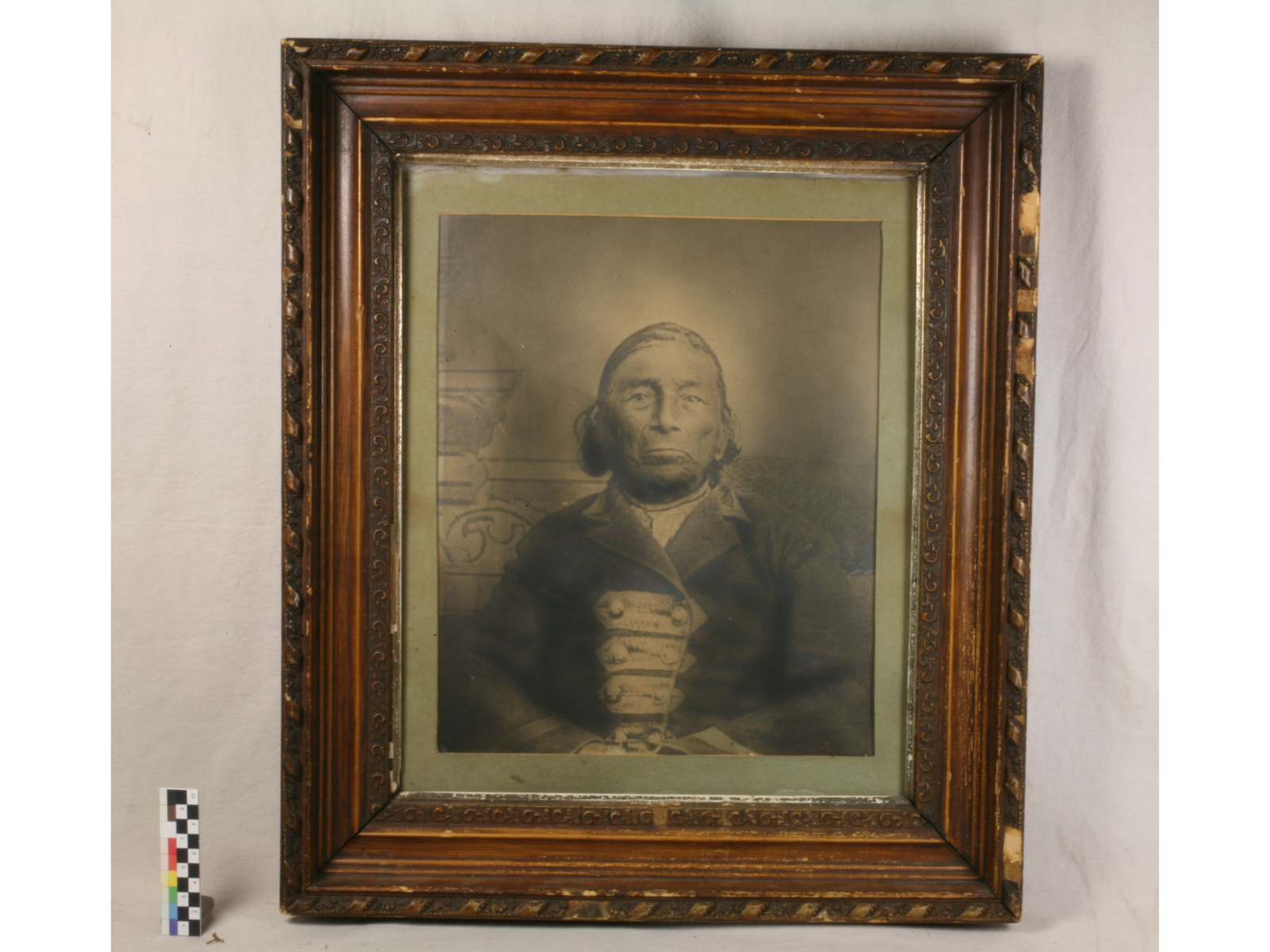
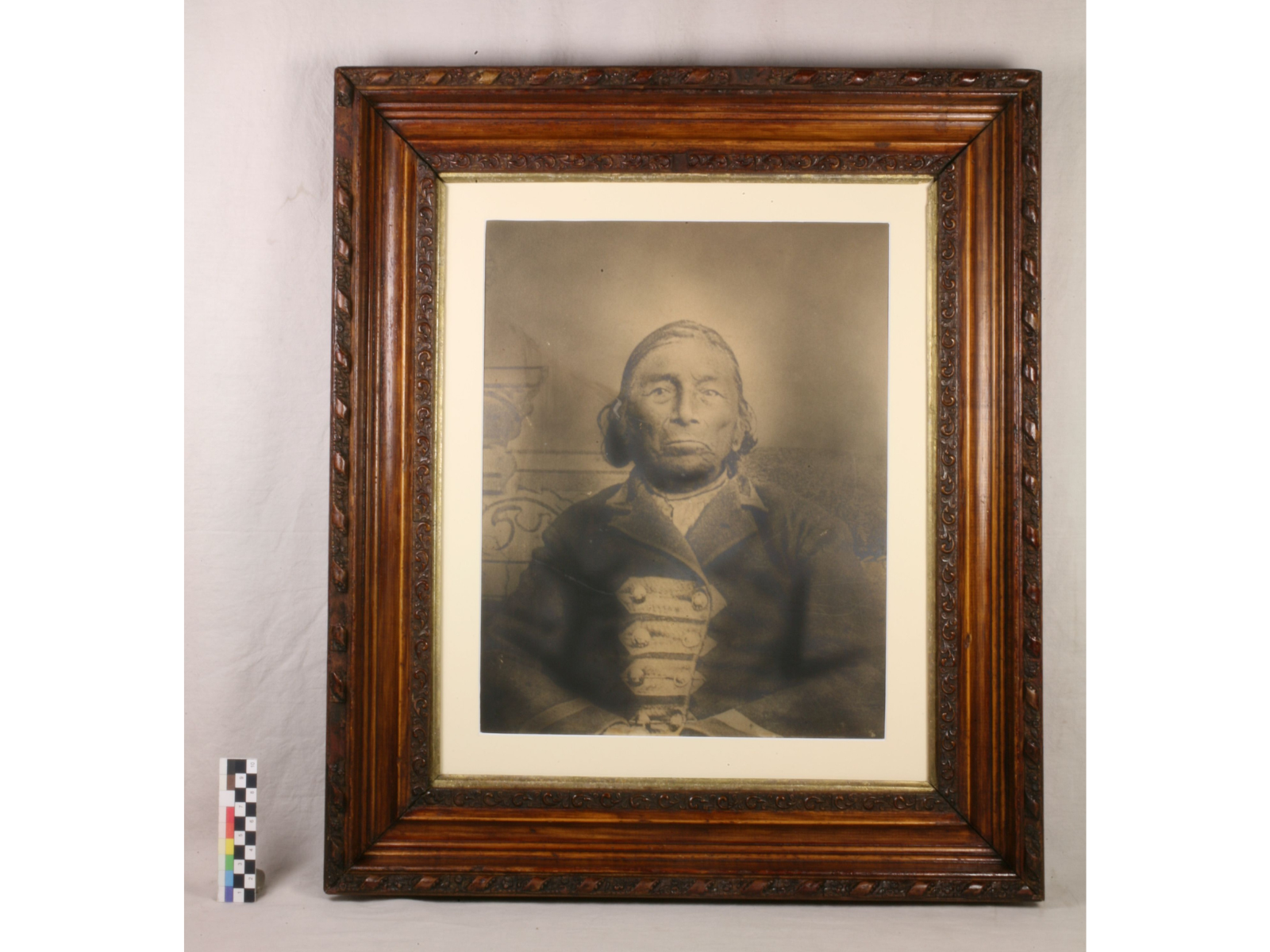
There are two new exhibits opening this summer in our Parklands/Mixed Woods Gallery here at the Manitoba Museum and we couldn’t be more excited to soon be able to share our work! The Conservation lab has been working hard these past few months to get everything documented, cleaned, and mounted for its grand debut, including a very important Mann. Yes, this Mann was in fact a man, more fully known as William Mann, William Pennefather or Chief Kakekapenais, who signed Treaty No. 1 at Lower Fort Gary on behalf of the Fort Alexander Band (now Sagkeeng First Nation).

An original photographic silver-gelatin print of William Mann taken around the same time as the signing of Treaty No. 1 in 1871 was recently acquired by the Museum; however, the condition of the photograph was quite poor. As the Manitoba Museum is on Treaty No. 1 land, it is important for us to display such a prominent figure and significant artifact in our galleries; but to ensure its long term preservation, it first required a careful touch from our conservators before it could be hung on the wall.

Smoke, water, and mould damage, as well as acidic backing materials and pollutants in the air causing the photograph to have a mirrored finish, were all contributors to the poor condition of the Mann photograph. The frame was also very dirty and had numerous areas of broken plaster molding. So we said – hey, let’s fix it all!

But with many artifacts there are challenges a conservator faces and this artefact proved to be one of them. As much as we want to be able to clean and revive artifacts to their former glory, sometimes certain conditions do not make it possible. After several spot tests on the front of the photograph it was found that we wouldn’t be able to clean it without risking more damage to the emulsion (the photo-sensitive side of a photograph). In this case the best thing to do was nothing!

The cleaning and repair of its original frame proved to be much more successful. After swabs and swabs of grime were removed and the gaps filled, the frame looks like a million bucks. We re-matted the photograph with acid free materials for its long term care and at the end – to our complete surprise – the features and contrasts in the photograph actually became more visible, even though we hadn’t intervened at all. Sometimes prevention is the best form of conservation.

With a few more weeks to go before this new exhibit opens, I have provided a few before and after images of the Mann photograph as a sneak peak of what changes are coming to our galleries.

A sepia toned formal photograph of a serious-faced man, seated against a faint backdrop and where a military-style coat. The photograph is in a ornate wooden frame. Both frame and photograph look aged, and a little worn and torn. The matte around the photograph has aged to a greenish colour.

The Mann photo before treatment.

A sepia toned formal photograph of a serious-faced man, seated against a faint backdrop and where a military-style coat. The photograph is in a ornate wooden frame. The frame and glass have been cleaned, and the matte replaced with a fresh white one, making the features and contrasts of the image clearer.

The photo after treatment.

Carolyn Sirett

Carolyn Sirett

Senior Conservator

Carolyn Sirett received her B.A. in Anthropology from the University of Manitoba, Diploma in Cultural Resource Management from the University of Victoria, and Diploma in Collections Conservation and Management…
Meet Carolyn Sirett

How do I love the prairie? Let me count the ways!

Once again I will be spending a few weeks out at the Nature Conservancy of Canada’s fescue prairie preserves, south of Riding Mountain National Park, studying plant-pollinator interactions. Last week was my first trip of the year. Before I left the city I was feeling apprehensive: were the mosquitoes going to be bad, would I get Lyme disease from a tick bite, eaten by a bear, stuck in the mud? However, all that nervousness melted away as I came to my first plot and remembered what it is I love about doing field work:

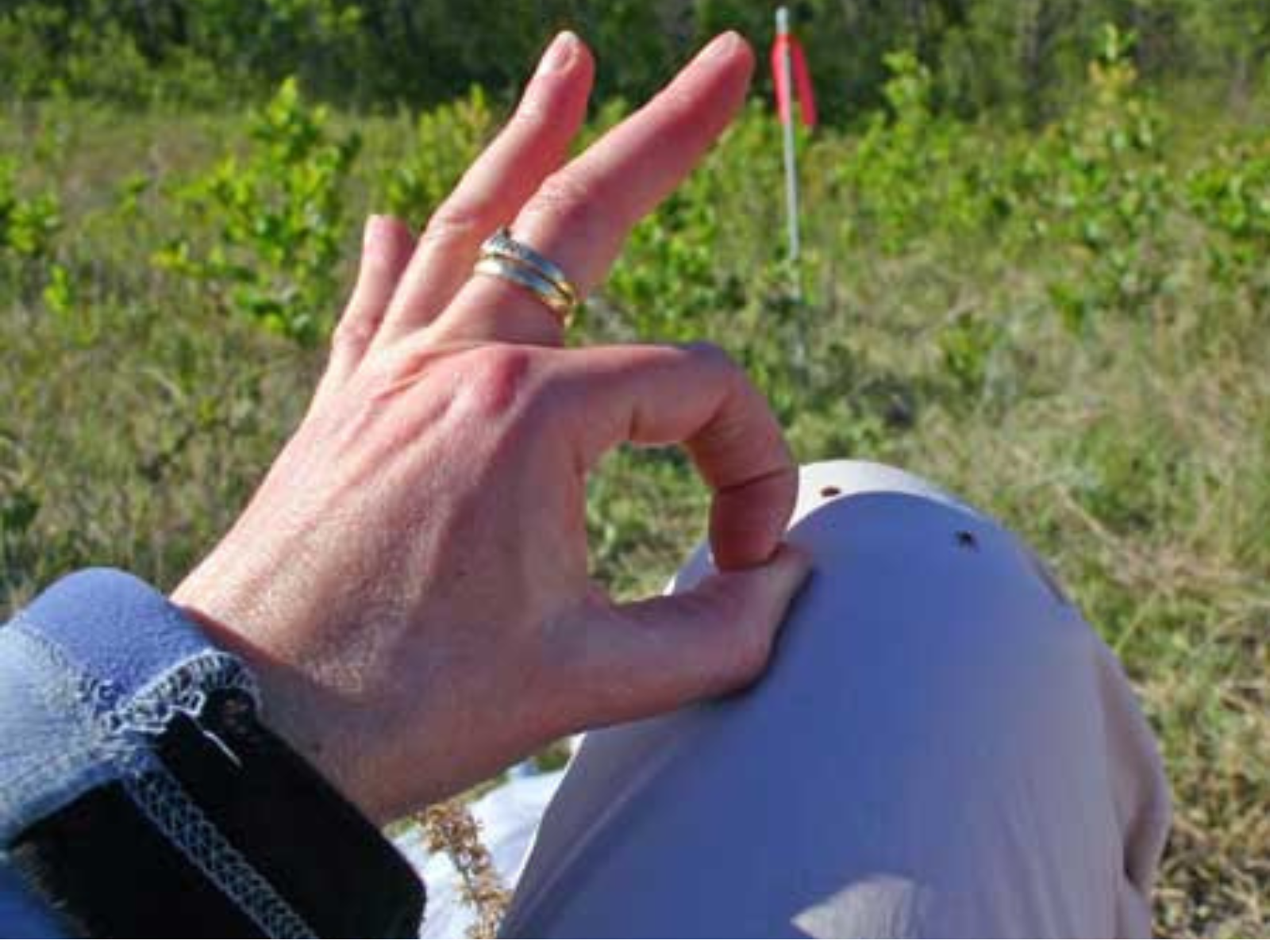
5. Doing the tick flick.

A hand poised to flick one of two ticks off of knee of the person's light coloured pants.

All the ticks at the Elk Glen preserve would line up on Dr. Robson’s knee for one of her famous airplane rides (thanks for the idea for that caption Gary Larson!).

There’s nothing more satisfying than capturing a tick, putting it on your knee and flicking it into the stratosphere with your fingers (take that you lousy parasite!)

4. The view.

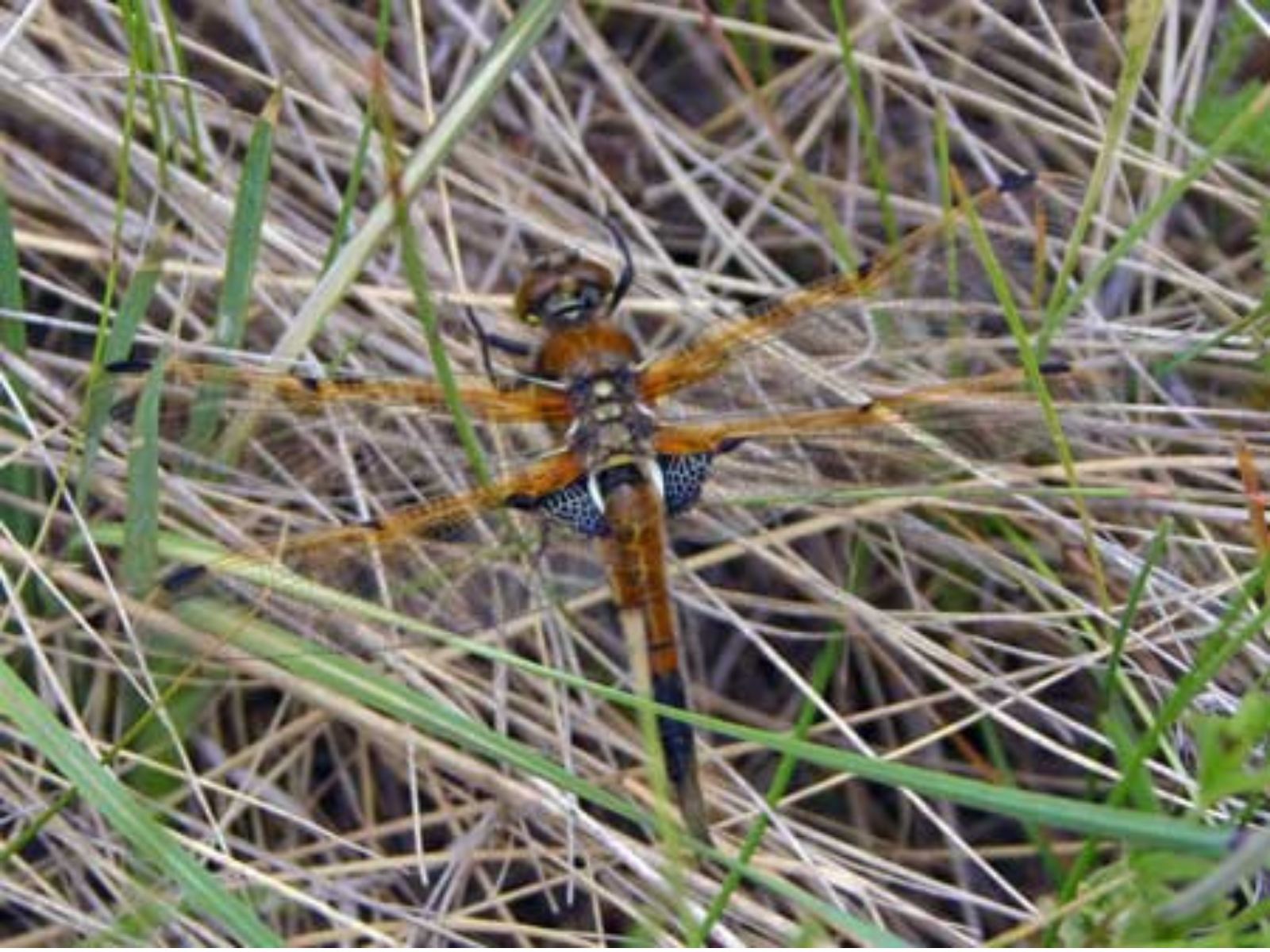
A striking orange dragonfly, low to the ground among dried grass.

There were tonnes of cool dragonflies to look at this spring.

In Winnipeg my office window faces a parking lot (which I think used to be paradise). Out on the prairie I get to look at leaves trembling in the breeze, colourful wildflowers and funky dragonflies.

3. Getting to know the neighbours.

A chunky woodchuck near a compact blue car parked on the grass.

The woodchuck that lives under the field house was inspecting my car.

I love the look on animals’ faces when they know they’re being watched. I startled a thirteen-lined ground squirrel, a family of Canada geese, a chipmunk, a skunk, a woodchuck and a black bear this trip. I’m just sorry I didn’t have a telephoto lens on my camera to capture their priceless expressions of shock!

2. That prairie smell of chokecherry flowers, crushed wild bergamot leaves, and dried grass.

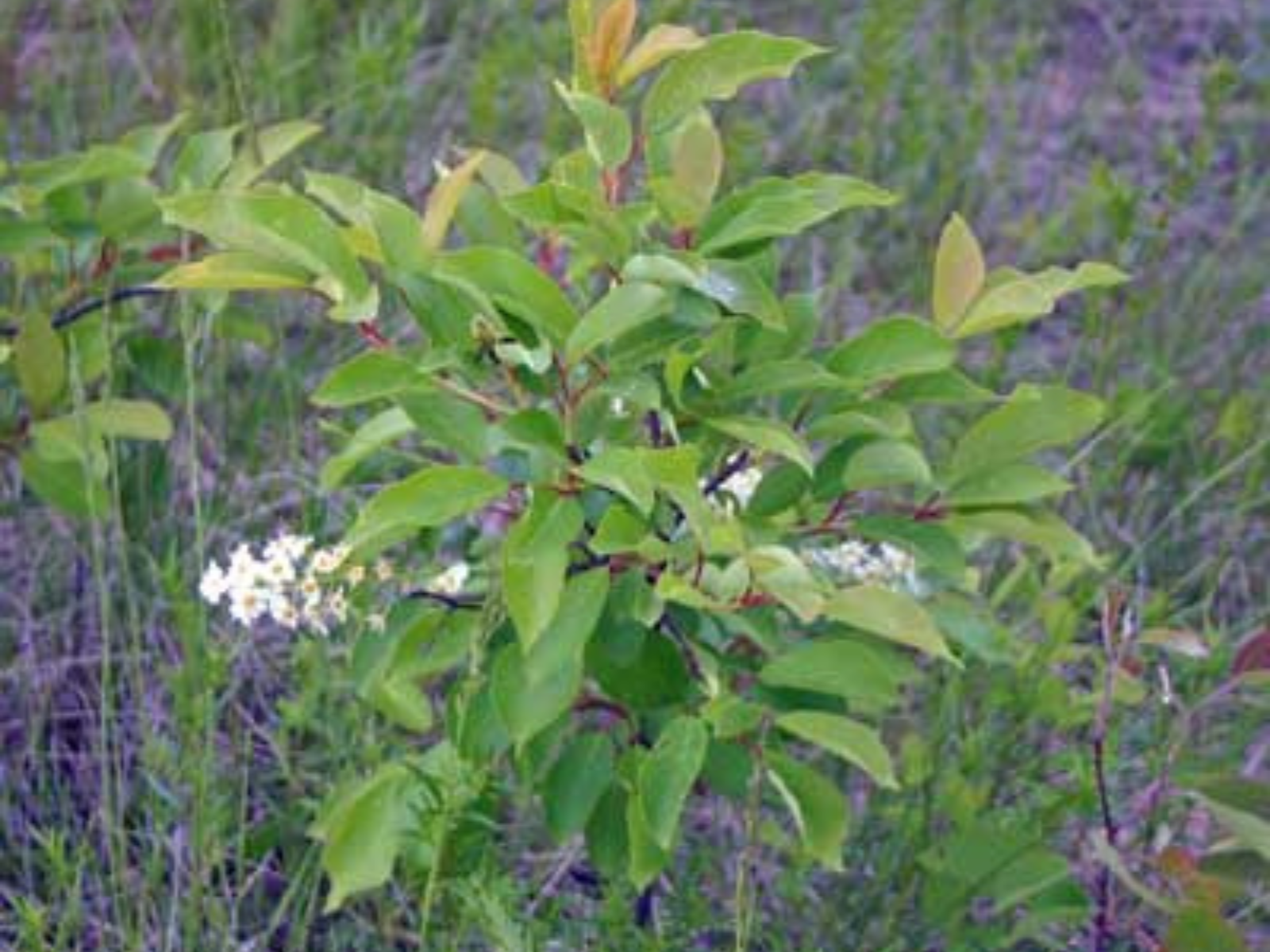
A small shrub (chokecherry) with a few clusters of small white flowers.

Chokecherry (Prunus virginiana) flowers smell amazing!

If only I could bottle it and sell it.

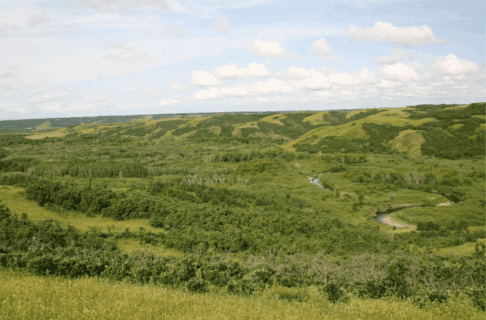
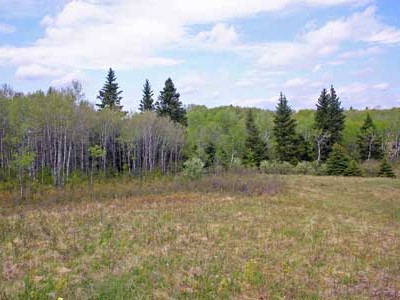
An expanse of prairie grassland with a distant tree line composed of mainly aspens and evergreens.

1. The lack of noise, noise, noise, noise!

When you live in the city you get used to the noise, although it still irritates you on some level. What I hate most about the city are gas powered lawn mowers. Constantly. And always just as you sit down on your deck to read a book. When I go to the preserve the almost complete absence of human-caused noise makes me feel like I don’t want to throttle someone anymore.


Somewhat regretfully I am back in noisy Winnipeg, staring at that parking lot again. And ironically this morning my neighbour fired up his gas mower just as I sat on my deck to have my coffee. But in just a few more weeks I’ll be listening to those lovely mourning doves again and smelling the roses, quite literally as they should be in bloom by the time I get there. Till then, that thought will have to sustain me.


Image: The sound of trembling aspen (Populus tremuloides) leaves in the breeze is sublime.

Dr. Diana Bizecki Robson

Dr. Diana Bizecki Robson

Curator of Botany

Dr. Bizecki Robson obtained a Master’s Degree in Plant Ecology at the University of Saskatchewan studying rare plants of the mixed grass prairies. After working as an environmental consultant and sessional lecturer…
Meet Dr. Bizecki Robson

Top Ten Best First Nations Foods – Part 2

Last time I blogged, I listed five of the most popular food plants that were cultivated by America’s First Nations peoples. Today I bring to you the final five.

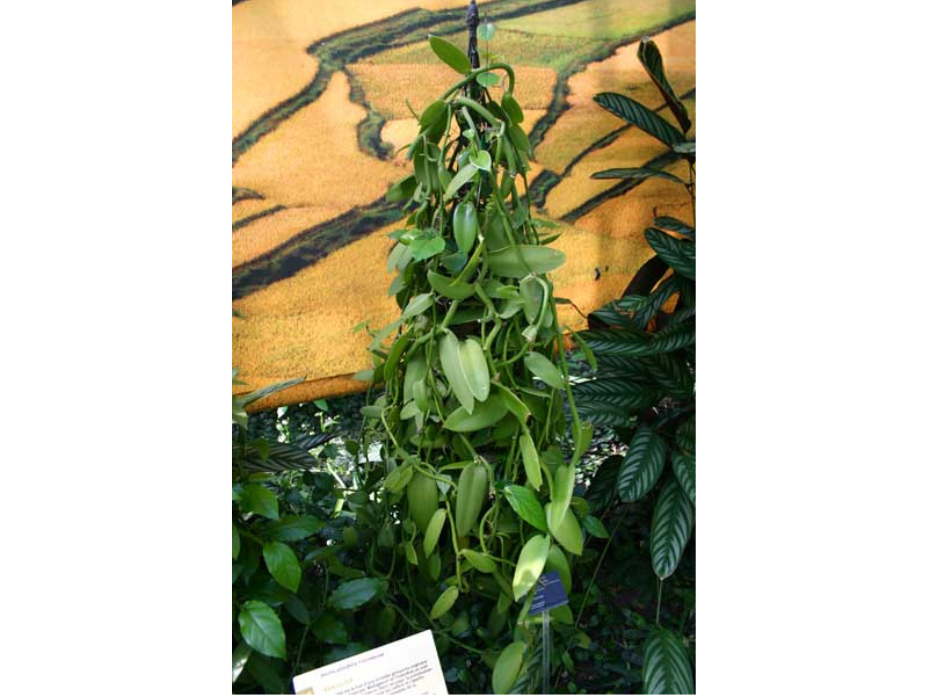
A climbing plant with elongated green leaves growing up a plant spike.

5. Vanilla (Vanilla planifolia)

Vanilla is considered to be the world’s most popular spice as well as the most popular ice cream flavour. It was the Totonac peoples of eastern Mexico who first began cultivating vanilla; eventually this spice was taken to Europe by Hernán Cortéz in the 1520’s. Initial attempts to cultivate vanilla orchids outside of central and South America were unsuccessful because the plant can only be pollinated by wild, stingless bees. Once hand pollination was discovered, vanilla plantations outside the Americas were created. Although we call the vanilla fruits “beans” they are not related to the legume family at all; vanilla fruits are actually capsules.


Image: A vanilla orchid plant growing in the greenhouse at the Montreal Botanical Garden.

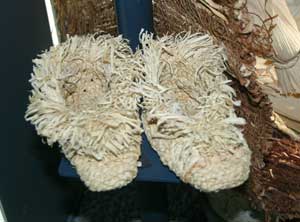
A pair of shoes made of corn plants, with a frilly fringe around the shoe entrance.

4. Corn (Zea mays)

What visit to a movie theatre would be complete without a big bag of popcorn? Corn is the most widely grown plant in the world. It was originally cultivated in central America starting about 7,600 years ago. Archaeological evidence indicates that corn was being cultivated by Manitoba’s First Nations in the 1400’s (Learn more about Manitoba’s First Farmers here). Corn is eaten directly as a fresh vegetable, and dried as cornmeal or flour. Indirectly it is an ingredient in many processed foods. When not overly processed, corn is healthy, containing fibre and polyphenols.


Image: Corn plants were traditionally used by First Nations to make shoes and dolls. These shoes are in the First Nations Garden at the Montreal Botanical Garden.

3. Tomatoes (Lycopersicon esculentum)

Imagine a world with no pizza, no ketchup, no salsa, no ratatouille, no chilli! It would be awful! It is precisely because tomatoes have been absorbed into the cuisines of so many cultures that we tend to forget that they came from central and South America. Ironically, the healthfulness of the much lauded Mediterranean diet is at least partly due to the embrasure of this American plant as a key ingredient in many dishes.


2. Potatoes (Solanum tuberosum)

The most widespread and important vegetable in the world is the humble potato. Cultivated for over 7,000 years by the Incas of South America, potatoes were brought to Europe by the Spanish. Many Europeans were initially suspicious of the potato because it is in a plant family with many poisonous species. But once they accepted it there was no turning back. Potatoes have found their way into just about every cuisine and are prepared in a multitude of ways. Let’s see, there’s boiled potatoes, fried potatoes, mashed potatoes, sautéed potatoes, potato pancakes, potato curry…

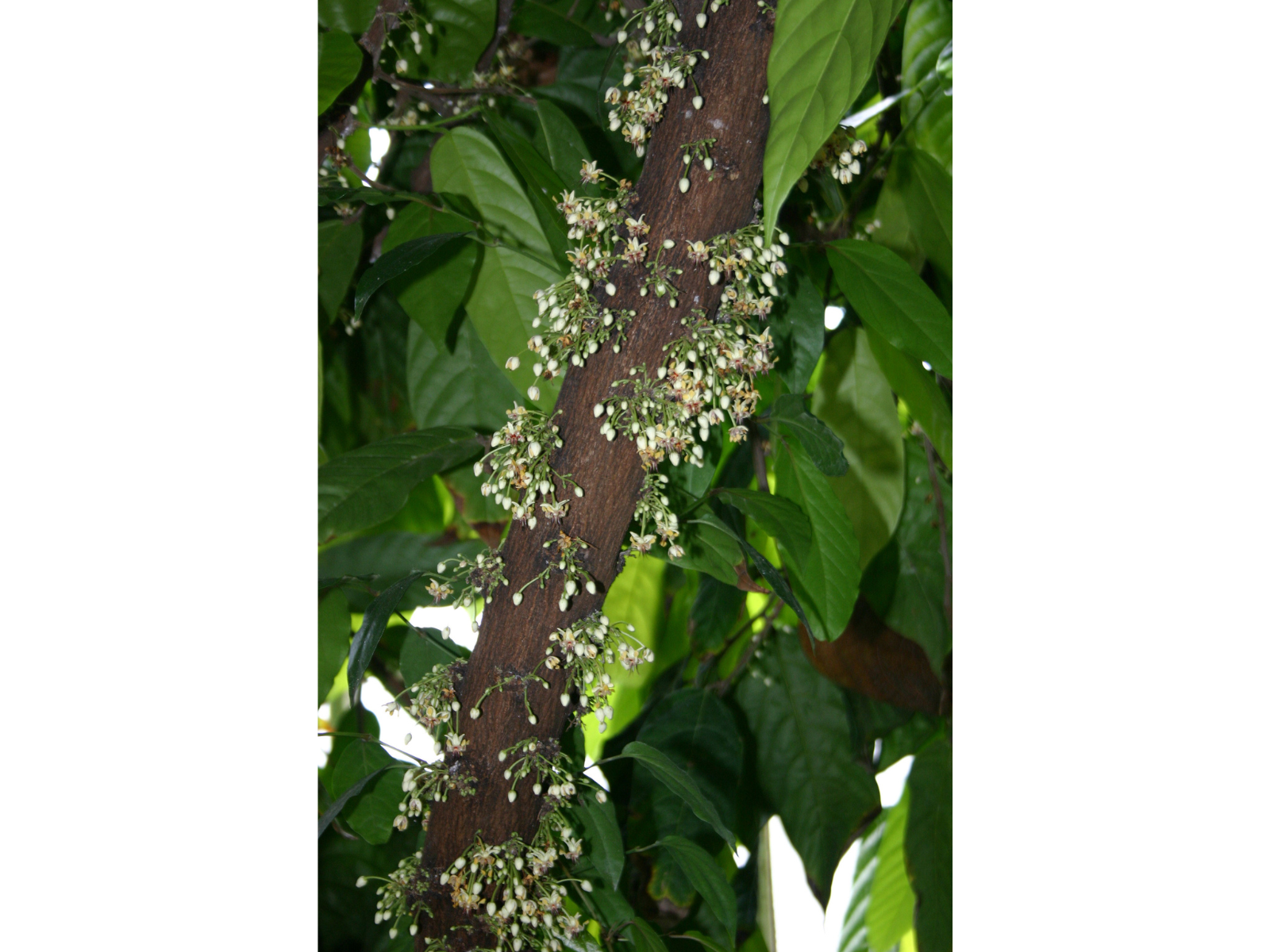
A dark brown branch covered in small white buds on little green stalks.

1. Chocolate (Theobroma cacao)

Quite probably the most loved food plant of all for its ability to induce feelings of bliss, chocolate was discovered and cultivated in Amazonia and Mexico over 2,000 years ago. Traditionally cocoa was mixed with corn, chillies, vanilla, and water to make a spicy beverage. The Spaniards brought chocolate to Europe in the 1500’s but the chocolate bar as we know it wasn’t invented until the late 1800’s. Nowadays dark chocolate is considered healthy due to its high polyphenol content (woo hoo!), and hot chocolate has become the traditional beverage for winter sporting events.


Image: These are the flowers of the cocoa tree. Soon they will become cacoa beans. Mmmm cacoa, most beloved of beans!

I haven’t exhausted the list of First Nations crop plants that are still being cultivated today which includes allspice, amaranth, avocado, papaya, pecans, sunflowers, and sweet potatoes to name a few. Clearly, world cuisine would be much poorer without the crop breeding efforts of the First Nations.

Dr. Diana Bizecki Robson

Dr. Diana Bizecki Robson

Curator of Botany

Dr. Bizecki Robson obtained a Master’s Degree in Plant Ecology at the University of Saskatchewan studying rare plants of the mixed grass prairies. After working as an environmental consultant and sessional lecturer…
Meet Dr. Bizecki Robson

Top Ten Best First Nations Foods – Part 1

In my opinion, one of the greatest impacts that America’s First Nations have had on the world was through their crop breeding. Unfortunately, most people don’t know much about food history and sadly the contributions of First Nations to world cuisine are often taken for granted. But First Nations crop plants have provided us with many of the most widely eaten and nutritious foods in existence (as well as some of the tastiest). So here is part one of my list of the top ten best foods from the Americas (in order of my own personal preference-it is my blog after all!).

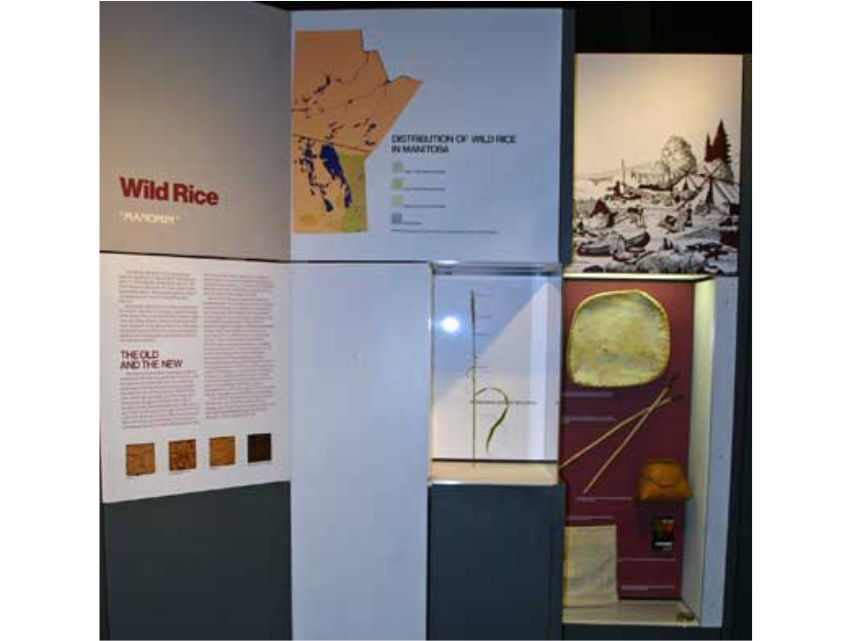
A wild rice exhibit showing a map of growth distribution, a labelled stalk of wild rice and various tools used to harvest and prepare rice.

10. Wild Rice (Zizania aquatica)

The only grain native to Canada, wild rice has been harvested by First Nations for several thousand years. The Boreal Forest gallery at the Manitoba Museum displays a birchbark bowl and knocker that was used traditionally to harvest the rice. Recently, wild rice has become popular due to its high protein and fibre content, and lack of gluten. Wild rice is popular in pilafs, casseroles, and salads, and wild rice flour can be used to make a variety of baked goods.


Image: Wild rice exhibit in the Boreal Forest Gallery of the Manitoba Museum.

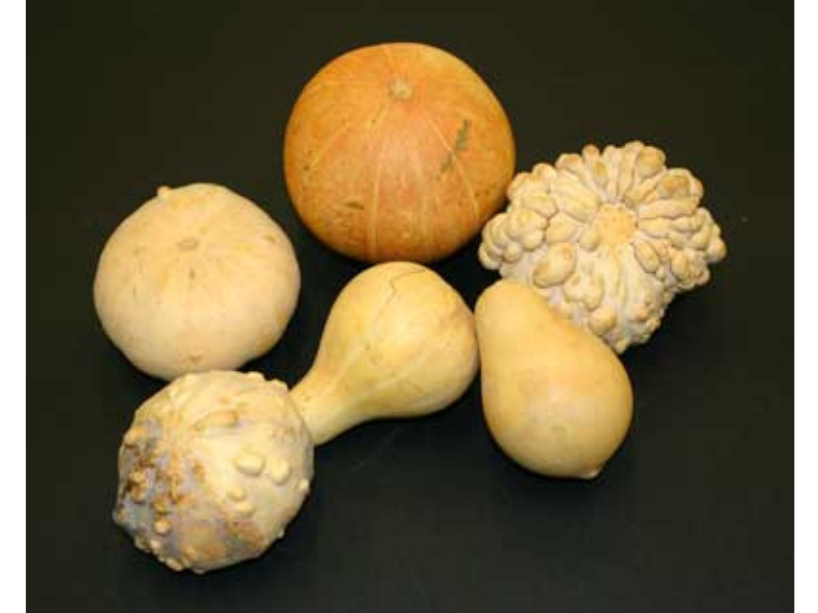
A selection of six various squashes and gourds laying on a black surface.

9. Squash (Cucurbita spp.)

All of the squashes (acorn, butternut, gourd, hubbard, pumpkin, and zucchini) came from central and South America. In fact, squashes are one of the oldest known crops being found in 10,000 year old archaeological sites in Mexico. These vegetables are a good source of vitamins, minerals, and carotenes. Although often eaten in sweet dishes in North America (pumpkin pie, zucchini cake or muffins), squashes are popular in many savory dishes in Mexico (chilli, soup), Europe (ratatouille) and Asia (curry).


Image: Squashes and gourds were originally grown by America’s First Nations.

8. Quinoa (Chenopodium quinoa)

Hailed as a super food by vegans and vegetarians for its complete protein levels, this seed has increased in popularity partly because it is a healthy, whole grain. Quinoa has been eaten by South Americans for about 7,000 years. However, Quinoa production plummeted for a time as Spanish conquistadors in South America forbade the Andean peoples from cultivating it due to its association with traditional religious ceremonies. Fortunately, some of the Andeans continued to grow quinoa because it tolerates dry, somewhat saline soils at high altitudes where other crops cannot thrive. Quinoa is everywhere now, stuffed into vegetables, pilafs, grain salads, and even breakfast cereal.

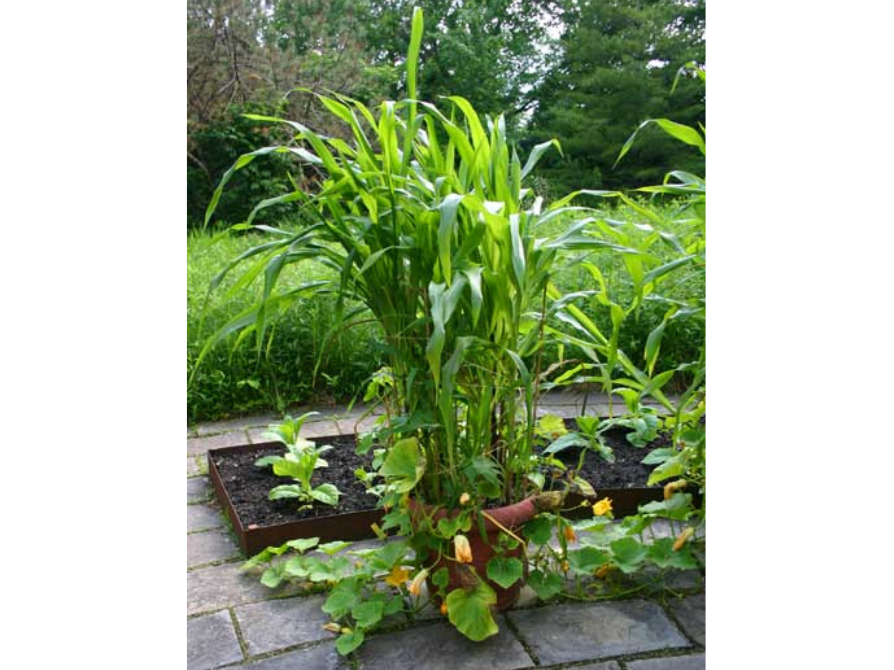
A planter pot with corn, beans, and squash growing together in it.

7. Legumes – Beans (Phaseolus lunatus & P. vulgaris) & Peanuts (Arachnis hypogaea)

Nothing keeps your intestines happier than the musical fruit! Legumes like beans and peanuts are an excellent source of protein and fibre. Bean varieties were bred in both Mexico (~7,000 years ago) and Peru (~8,000 years ago). Beans, along with corn and squash were part of the classic Three Sisters agriculture practiced by First Nations in Canada and the United States. Beans are eaten fresh, canned, or frozen as green beans and dried in soups and stews or cooked in savory sauces. Native to Argentina and Boliva, peanuts have been cultivated for over 3,500 years. Peanut butter is popular on bread, in sauces, stews, and curries, and in candy bars and cookies. Nowadays peanuts are grown in many tropical and subtropical countries around the world.

6. Peppers (Capsicum spp.)

Peppers have been giving humans a spicy thrill for over 5,000 years. Whether you like them sweet or hot, all peppers (also called capsicums or chilis) were first cultivated in central and South America. Peppers became most popular in warmer climates such as the Mediterranean and southeast Asia where they benefit from the long growing season. Rich in vitamin A and C peppers are enjoyed raw, powdered as a spice, or cooked in sauces.


Stay tuned for the final five foods coming in May!

Dr. Diana Bizecki Robson

Dr. Diana Bizecki Robson

Curator of Botany

Dr. Bizecki Robson obtained a Master’s Degree in Plant Ecology at the University of Saskatchewan studying rare plants of the mixed grass prairies. After working as an environmental consultant and sessional lecturer…
Meet Dr. Bizecki Robson

The Fossils Surround Us 

By Dr. Graham Young, past Curator of Palaeontology & Geology


Those of us who live in Winnipeg know that fossils are never far away. Many Winnipeg structures feature surfaces clad in Tyndall Stone, a fossil-rich dolomitic limestone of Late Ordovician age (about 450 million years old). Tyndall Stone covers public buildings such as the Manitoba Legislative Building and the Winnipeg Art Gallery, and commercial buildings in the downtown core, but it can also be seen in thousands of homes in Winnipeg: in walls, steps, and fireplaces. 

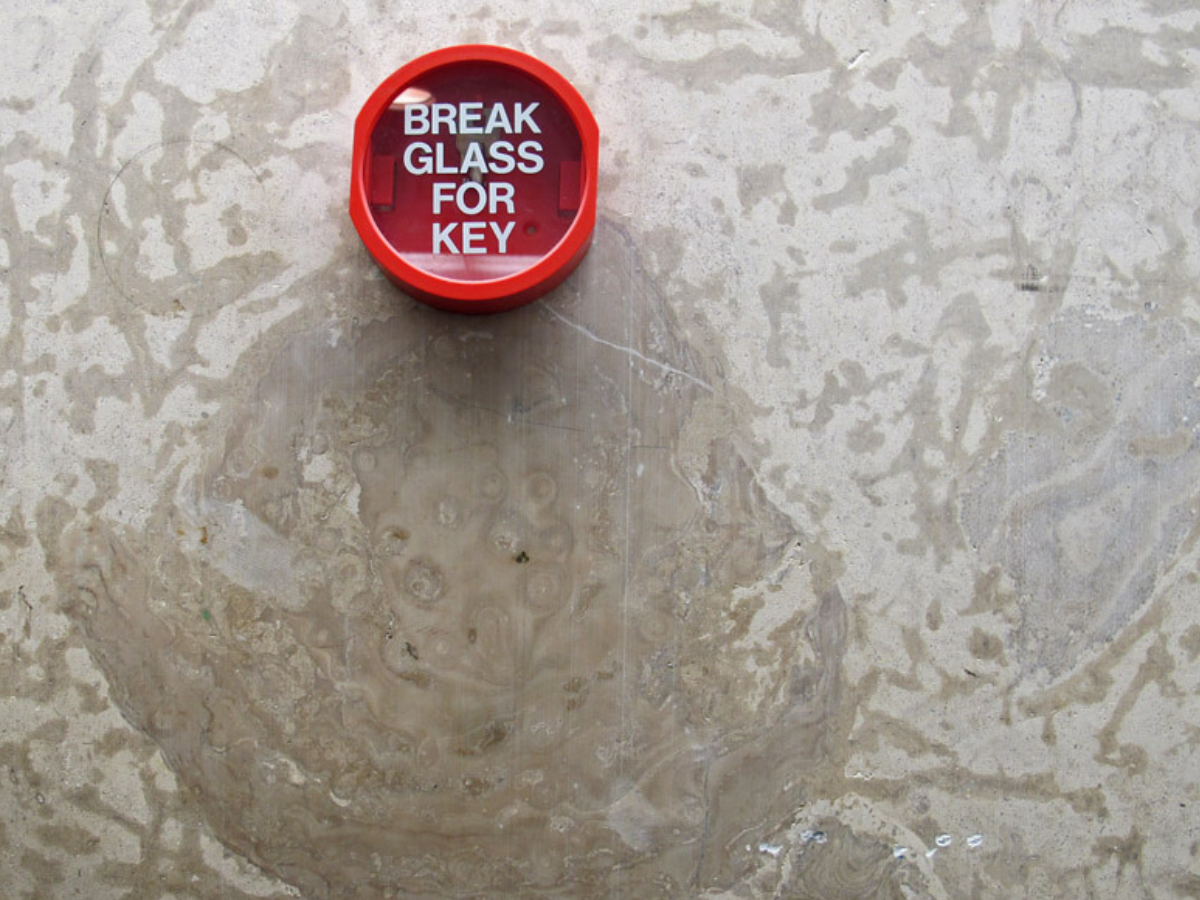
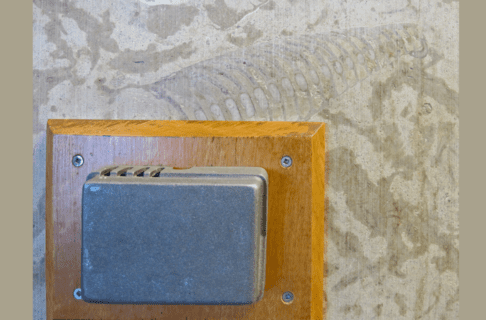
Thus, it is hardly surprising that the Museum and the adjacent Centennial Concert Hall both use Tyndall Stone inside and out. Of course Tyndall Stone fossils are represented in our Earth History Gallery, but if you think about it, it is odd that there are so many more “museum-grade specimens” exposed to the weather on the outside of the building. On the inside, as these photos show, we sometimes cover up beautiful fossils with the detritus of everyday existence: signs, fountains, alarms, and thermostats. In part, this is because the fossils are so abundant that it is hard to avoid them when placing objects, but it may also be that they are so commonplace here that people ignore them and take them for granted. 

Maybe someday we will add interpretative signage to some of the better and more accessible fossils on and in the Museum, but that would be a big project to undertake. In the meantime, here is a sampling of a few of the good ones.

Photograph of a Tyndall Stone wall with intermitant fossils embedded in it, and an EXIT sign in the upper right corner.

The hallway near the elevators may look like an unprepossessing remnant of the 1960s, but those mottled walls are thin slabs of Tyndall Stone. This stone, quarried by Gillis Quarries Limited at Garson, Manitoba,  is rich in fossils representing life from an ancient tropical seafloor. 

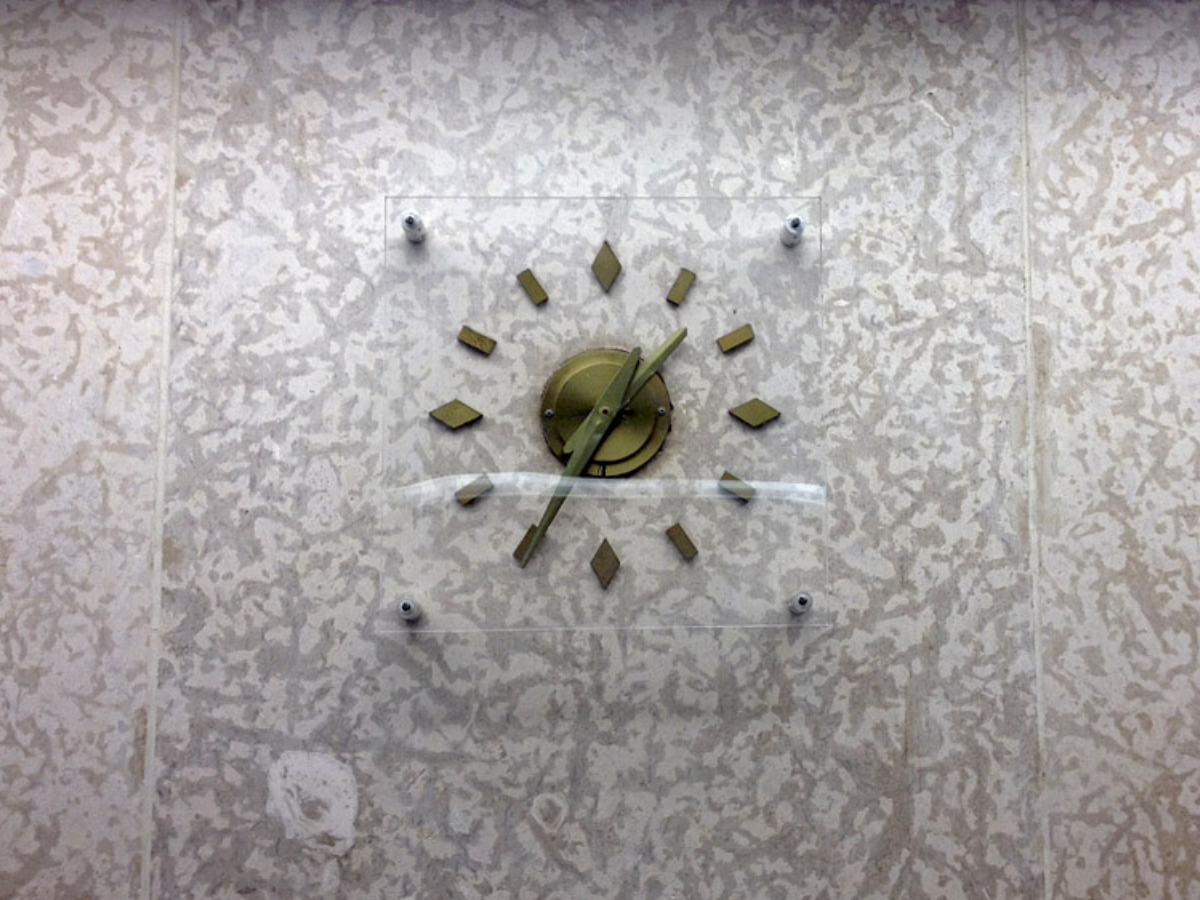
Close-up of a clock fixed to a Tyndall Stone wall with a white fossil under the bottom left corner of the clock.

Geologically, Tyndall Stone is part of the Selkirk Member of the Red River Formation; this bedrock formation underlies much of southern Manitoba, but it is only exposed in certain places such as in cliffs along Lake Winnipeg, and in the Tyndall Stone Quarries at Garson. Behind this clock, the darker mottles represent burrows in the ancient seafloor, made by millions of little arthropods or worms. The white structure to the lower left is the colonial coral Protrochiscolithus. 

Close-up on a emergency “Break Glass for Key” fixture attached to a Tyndall Stone wall. Beneath the fixture is a large rounded fossil of a stromatoporoid sponge.

The big brown blob beside the elevator is a stromatoporoid sponge. To its lower right, a smaller dome-shaped stromatoporoid (brown dome) was encrusted by the tabulate coral Protrochiscolithus (white), and to the right is a honeycomb rugose coral (Crenulites?). 

Close-up photo of a Tyndall Stone wall. On the left, edge a red fire alarm box is fixed to the wall. To the right, is a horn-shaped fossil of the chain coral Catenipora.

The pattern in the upper right represents the chain coral Catenipora, which grew on the ancient seafloor (a place with no risk of fire!). 

Close-up of a water fountain. On its left, at the edge of the frame, is a small, light-coloured fossil.

The white thing beside the water fountain is an excellent example of a rugose coral (horn coral). 

Close -up of a light and bell alarm fixture in a Tyndall Stone wall. Below is is a dome-shaped fossil of the colonial coral Protrochiscolithus.

The ancient seafloor was mostly soft and muddy, but many of the creatures required firm or hard substrates. Since substrate was at a premium, animals often grew on top of one another. The dome-shaped structure to the lower left in this photo represents the colonial coral Protrochiscolithus (white part), which grew on top of a stromatoporoid sponge (brown part). 

Close-up of a thermostat fixed to a Tyndall Stone wall partially covering a horn-shaped fossil cephalopod.

As common as dirt: there are so many fossils in these walls that some very good ones, such as this cephalopod, have been covered by things like this thermostat. 

Photograph looking up a tall exterior wall made of Tydnall Stone.

Since there are so many fossils in the relatively small area of the foyer walls, imagine how many there are on the outside of the Museum! 

Inspiring Daphne Odjig mural back to its original glory

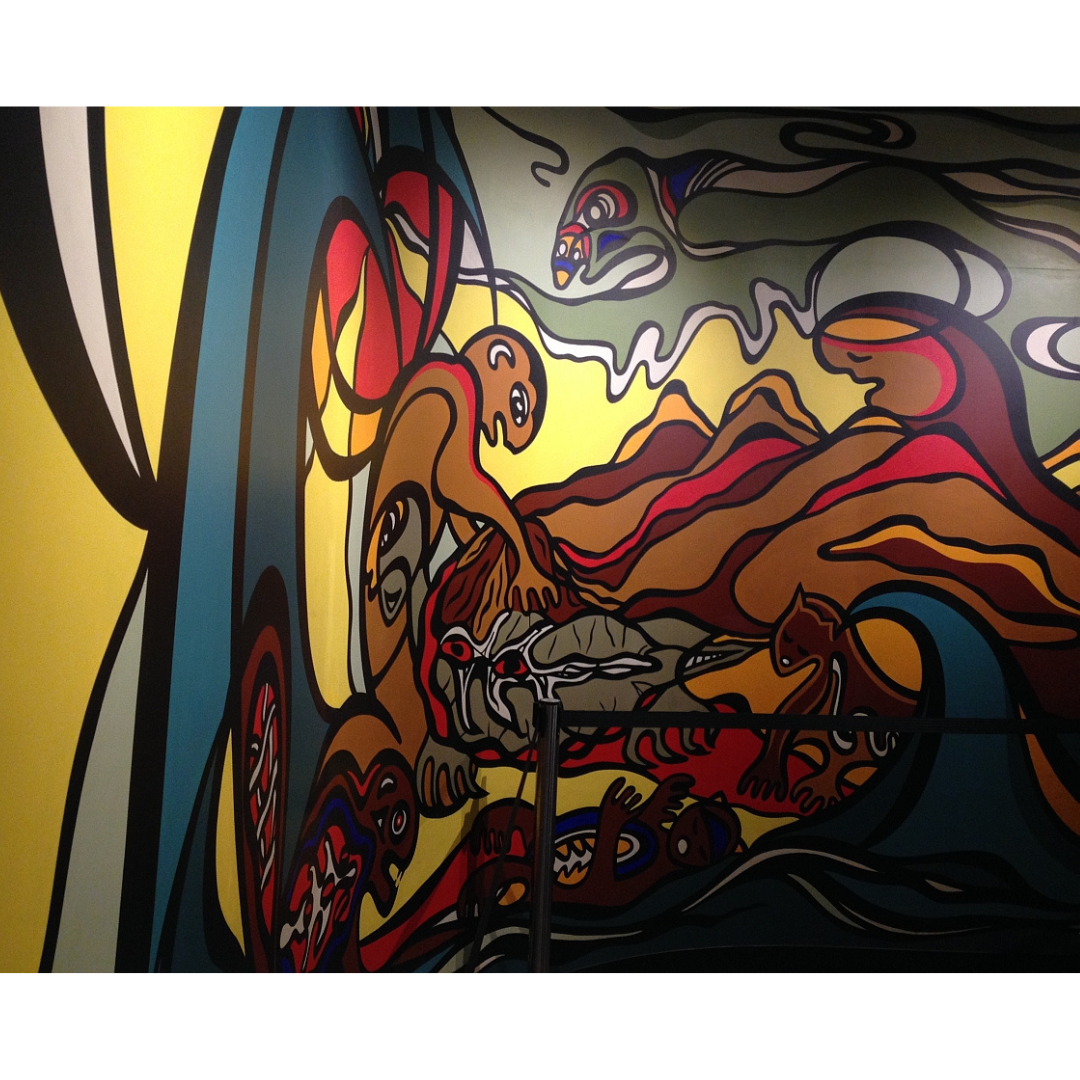
When people ask me what inspired me to work in the museum field, I can pinpoint my answer to a single visit to The Manitoba Museum when I was twelve years old. That summer we spent our vacation touring around Manitoba on day trips, packed into our Pontiac 6000 station wagon, visiting small local museums and landmarks that set one little town apart from the next (here’s looking at you, Sara the Camel!). On the roster of things to see was The Manitoba Museum of Man and Nature (as it was called back then). Thanks to my babysitting job, I was armed with a newly purchased camera and ready to capture every moment of our visit. Rounding the corner away from the bison that greeted us in the first gallery, I stopped. There it was, colourful and bold, larger than life. The mural. Snapping a photo, I decided at that moment, I needed to work at a museum. I still can’t say for certain what it was about that mural that led me to this epiphany, but twenty years later, here I am, working at the museum, blogging about it.

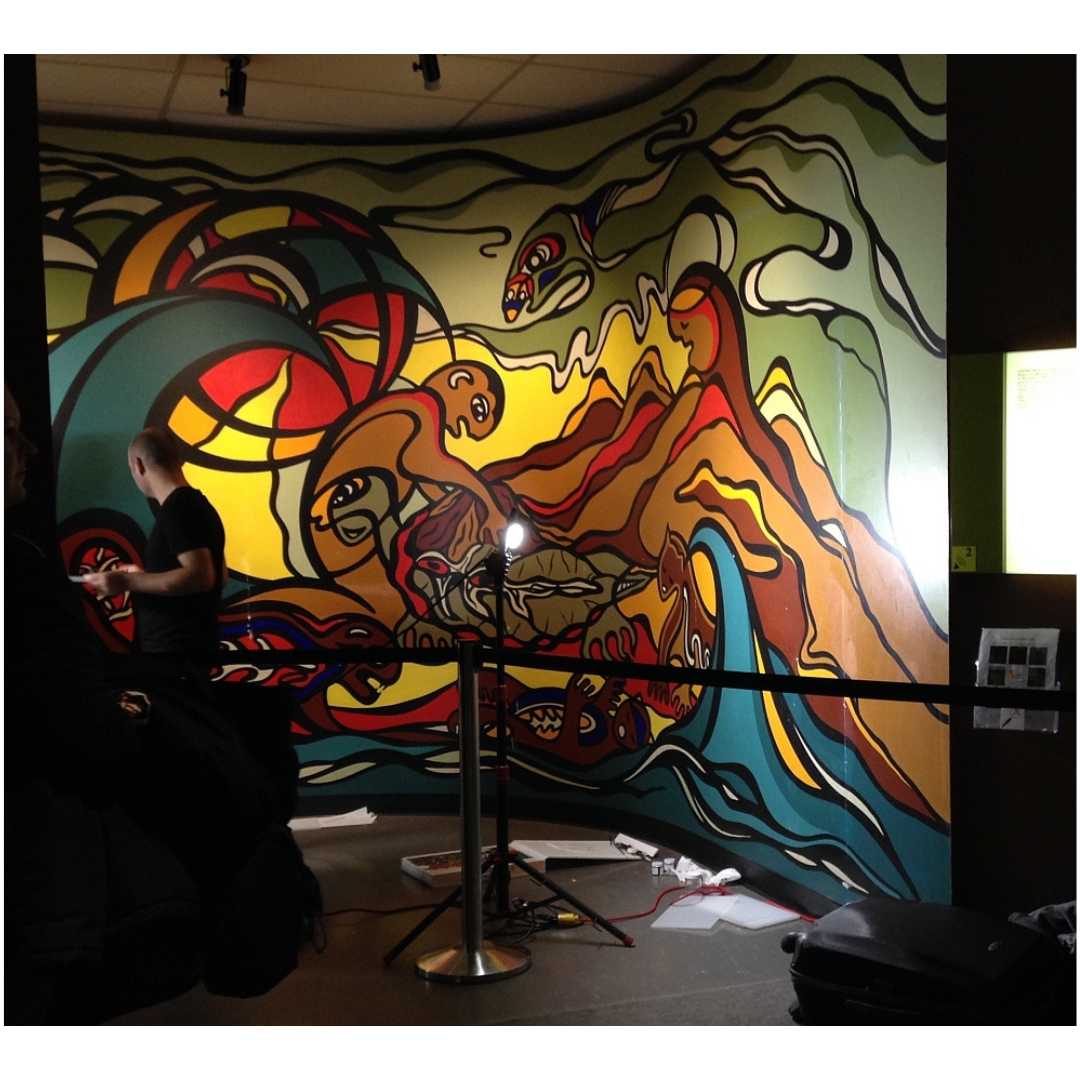
Daphne Odjig, a Potawatomi artist from Ontario, was commissioned to paint the mural, “The Creation of the World”, in 1972 as part of the Earth History gallery. Odjig was living in Manitoba at the time and later went on to cofound the Professional Native Indian Artists Incorporated with artists such as Jackson Beardy, whose works also appear at The Manitoba Museum. As I studied Odjig’s larger oeuvre in university, I came to appreciate the uniqueness of “The Creation of the World”, both in its subject matter and execution. Odjig’s paintings often depict human relationships, focusing on mothering, with images composed of darker, more muted colours bordered by softer lines while still harkening to the Woodlands School style “Creation” celebrates.

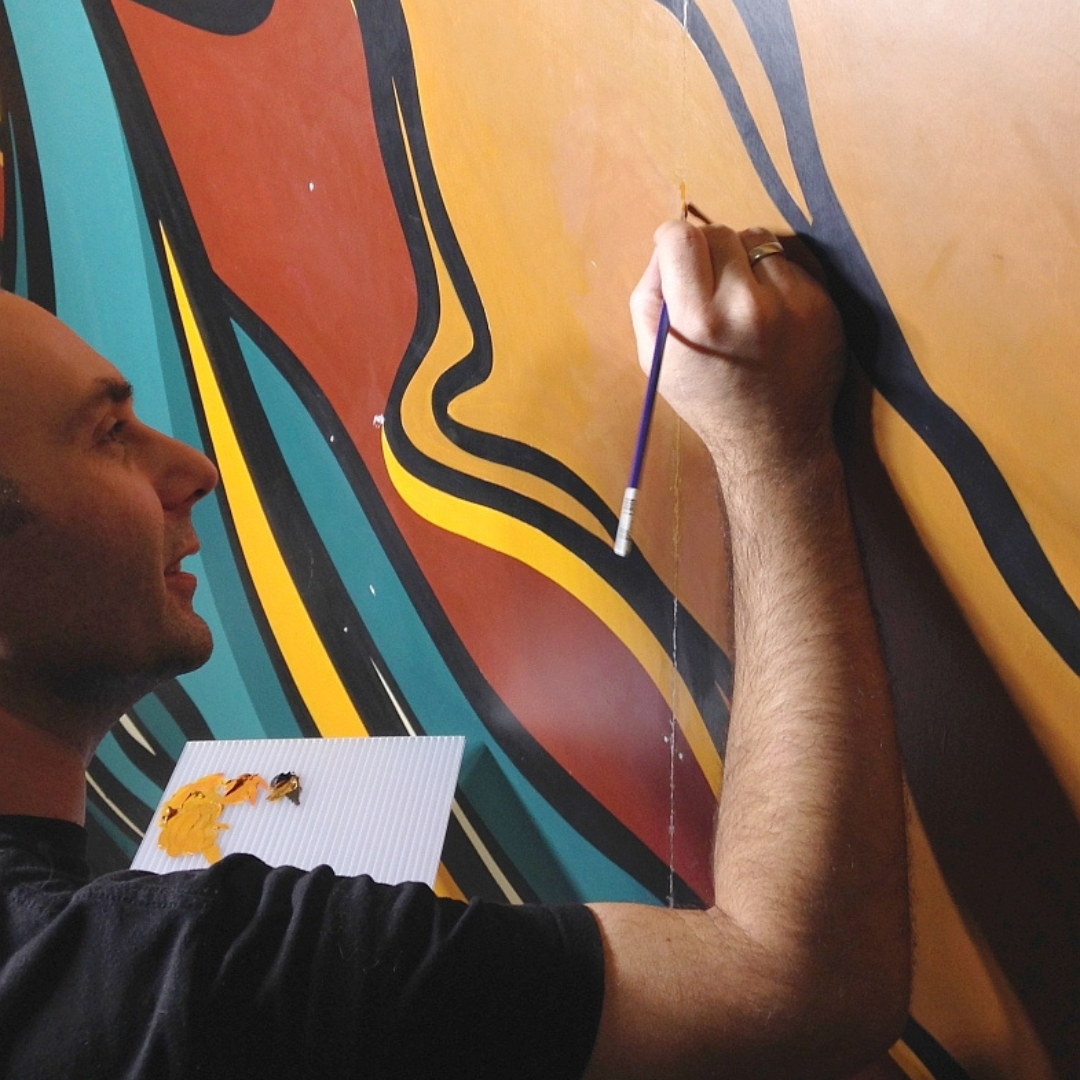
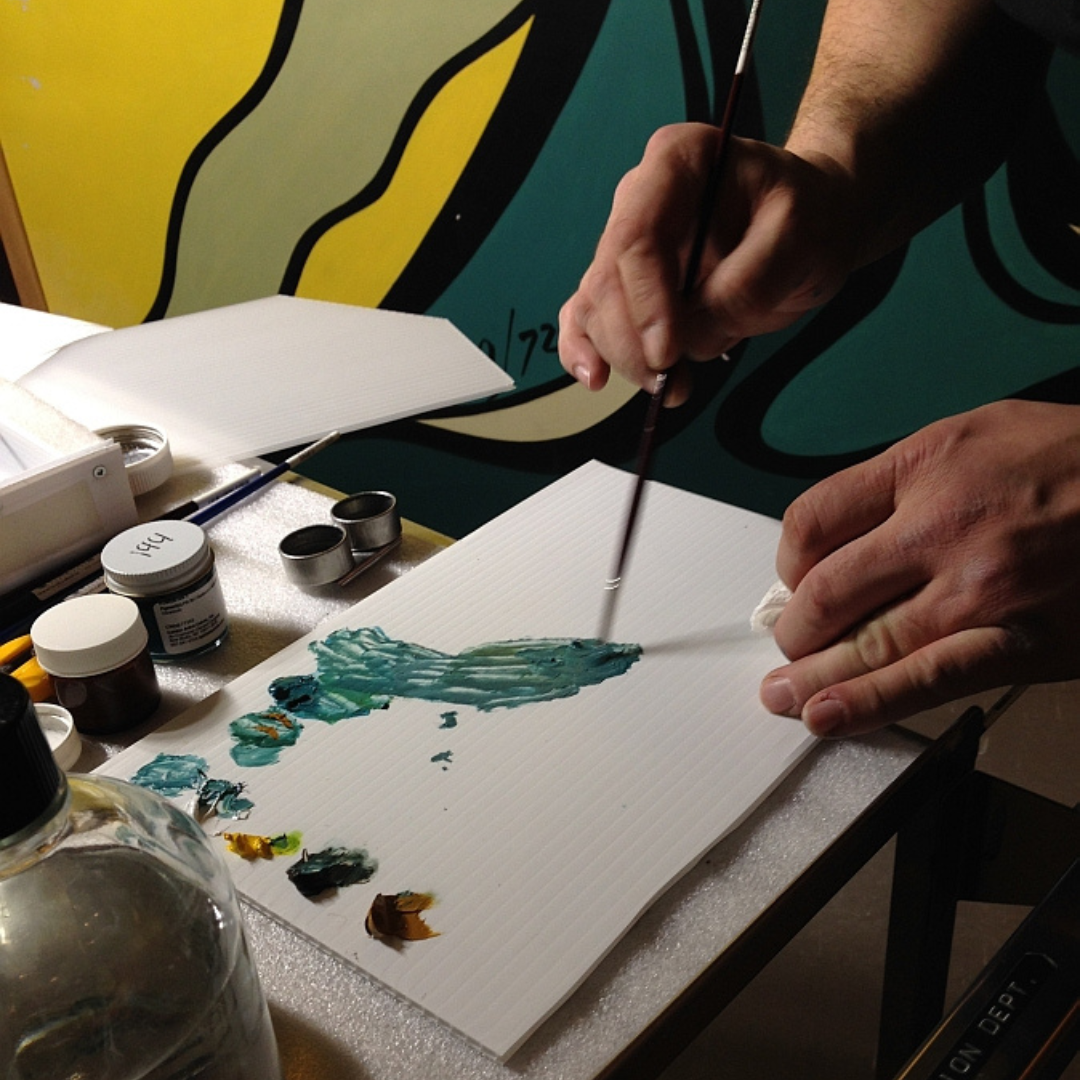
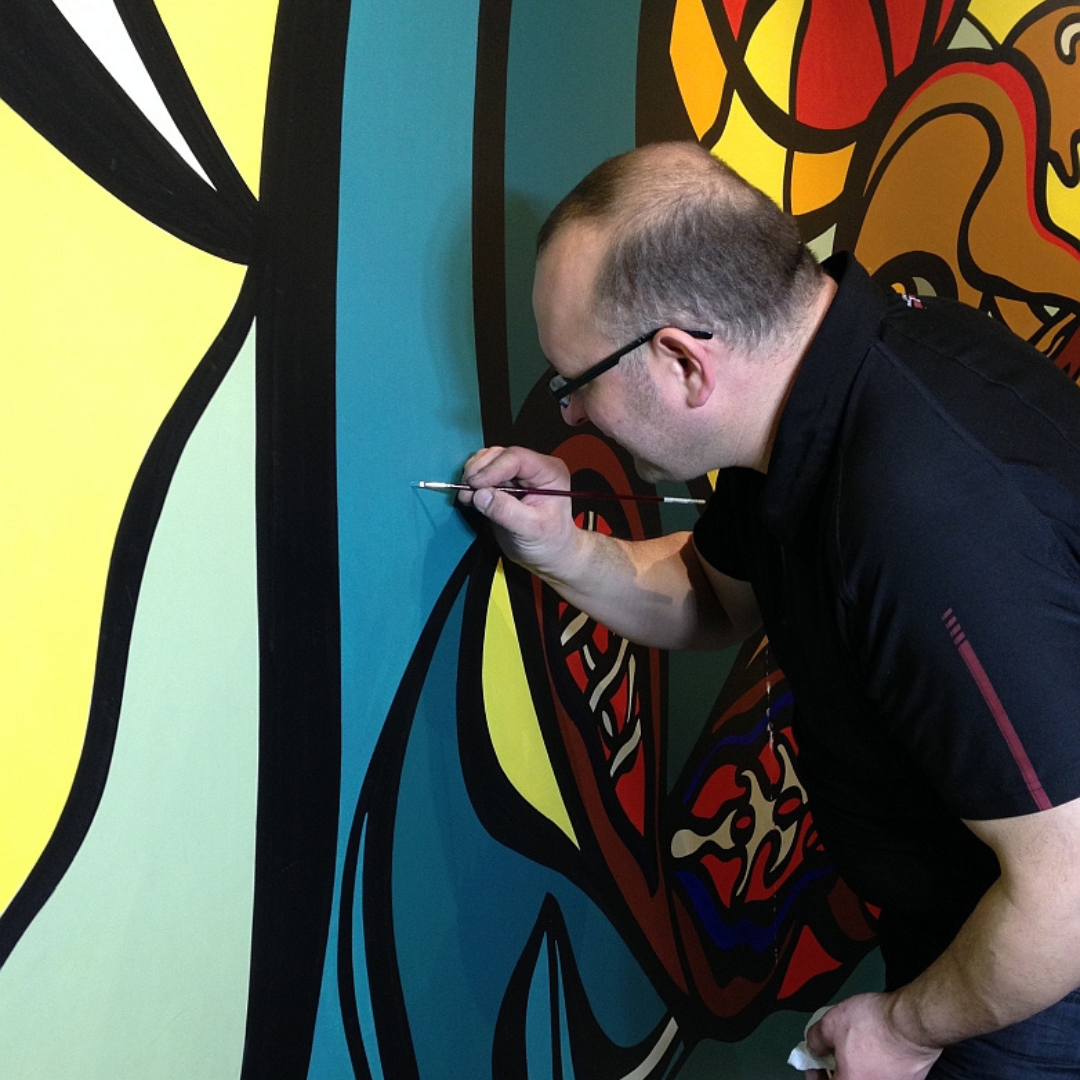
Forty-two years on display had begun to show on the face “The Creation of the World”…pencil marks, gouges from countless strollers crashing into the curved wall, cracks from the shifting plywood have marred the surface of Odjig’s beautiful contribution to the museum. On Valentine’s Day, art conservator Radovan Radulovic and his assistant Vitaliy Yatsewych began a three day restoration of the mural, a process of cleaning, filling in holes, and painting. Radulovic describes the work as trial and error; creating a colour by mixing acrylic paints, painting a spot, letting it dry, deciding if the colour matches the original and starting again, if necessary. The aforementioned cracks, however, are impossible to repair without going in behind the mural or removing it altogether. For the time being, Radulovic and Yatsewych, by all accounts, have brought “Creation” back to its former glory. The addition of a rail guard will prevent errant strollers and carts from damaging the mural and new exhibit panels will put further emphasis on this cherished piece.

A brightly coloured wall mural on a concave wall. Stantions are set up in front of it with lights on tripods, so facilitate the conservators' work.

Work begins on the mural.

Close-up from behind and to the side on a person holding a paint palette and a paintbrush, touching up a orange portion of the mural.

Conservator Radovan Radulovic works on large crack in mural.

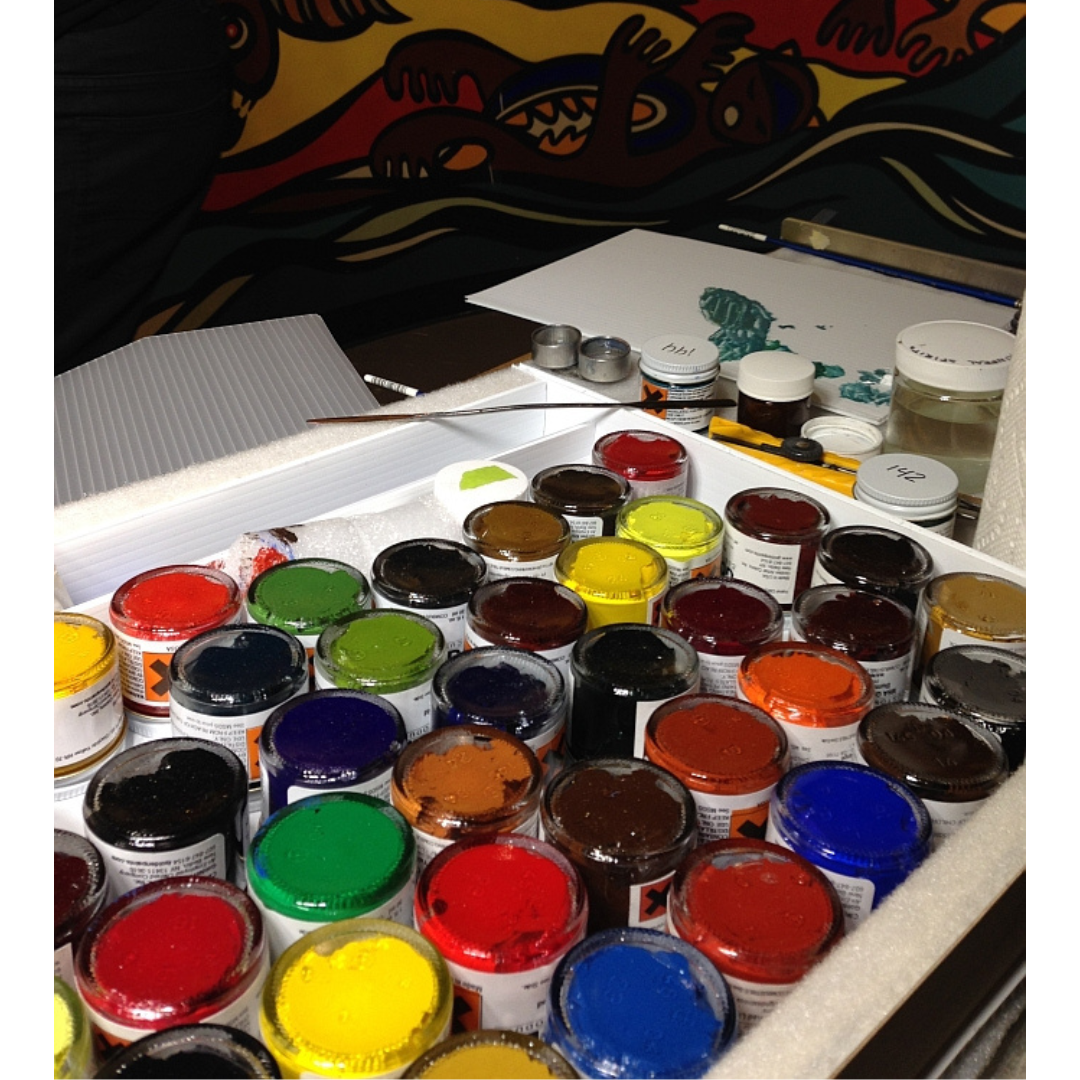
A tray of paint pots in a range of bright colours, with greens, reds, blues, browns, yellows, and more.

A paintings conservator’s tool kit.

Close up on a person's hands as they mix a custom teal blue-green colour of paint on a board.

Vitaliy Yatsewych mixes colours to create the perfect match.

A person painting a very small test spot on a portion of medium blue on the mural.

Yatsewych tests out the colour he created on the mural.

The retouched "Creation of the World" mural, in bright colours on a concave curved wall.

The finished product.

Have a good look at “The Creation of the World” the next time you visit The Manitoba Museum. Marvel at its scale. Absorb the colours. Take a photo. Appreciate its creator and those who continue to preserve it for future museum-goers (so, don’t touch it, ok?).

Cortney Pachet

Cortney Pachet

Collections Technician – Human History

Cortney Pachet started working at the Manitoba Museum in 2001 as a tour guide while earning her a BA (Honours) from the University of Winnipeg. She quickly realized that she wanted a career in museums…
Meet Cortney Pachet

Smile Big for the Camera

Okay, so artifacts can’t really smile but they are regularly involved in photo shoots, and with the right photographer these pieces of history can really shine.

One way we preserve our collections is by properly documenting the artefacts through photography. We can then use these photos for research, exhibits, publications, and to provide a visual in our database.

Taking pictures of artifacts is not easy. You’d think it would be because the thing doesn’t move around like a human or animal subject, but trust me when I say it’s not. That’s why I hire a professional to assist when I want high-quality photographs of the HBC Museum Collection.

Rob Barrow is a Winnipeg photographer with extensive experience running photo shoots for artifacts. Recently I asked him to come in to snap some pictures of artifacts that are currently on display in the HBC Gallery since the cases were being opened for regular cleaning and maintenance.

Although I know artifacts aren’t the only thing Rob photographs, he has a real knack for this. He gets the lighting just right, knows where to zoom in for some detailed shots, and can even make the most mundane piece shine like a star. He might even put the artifacts at ease…although I have yet to hear him utter cliche phrases like “work it, work it” or “you’re a tiger” but maybe he waits until I’m gone to offer such motivation. As someone who speaks to the artifacts in her collection I am not judging one bit!

Check out these recent photos and see for yourself.

A pair of binoculars set on the objective lens.

Binoculars that belonged to George Simpson McTavish Jr., Chief Factor for HBC in 1880s.

A cubic-based clear glass bottle coming to a corked neck at the top.

A cubic-based clear glass bottle coming to a corked neck at the top.

Close-up on the deatils of a woven fabric in red, blue, green, cream, and white.

Detailed shot of ceintre fleeche owned by Jean Baptiste Lagimodiere (1778-1855).

Close up on a painting of running bison. In the background a rider on a horse chases some distant bison.

Detailed shot of bison in one of Peter Rindisbacher’s paintings (ca. 1822-1824).

Dr. Amelia Fay

Dr. Amelia Fay

Curator of Anthropology & the HBC Museum Collection

Amelia Fay is Curator of Anthropology and the HBC Museum Collection at the Manitoba Museum. She received her BA in Anthropology from the University of Manitoba (2004), an MA in Archaeology…
Meet Dr. Amelia Fay

A lichen by any other name would be just as confusing

Scientists have spent many decades arguing with each other about lichens. It’s a plant! No, it’s a fungus! No, it’s an alga. It’s a fungus parasitizing an alga. No, it’s an alga parasitizing a fungus! Nobody’s parasitizing anybody! They’re living in harmony like a bunch of hippies in a commune! I prefer to think of a lichen as an organism with an identity crisis. No wait, that’s not very flattering. Perhaps they are more like legless organism support groups. Or maybe they’re akin to exclusive nightclubs with a “no animals allowed” sign on the door.
Green and yellow lichen growing on the bark of an oak tree.

Lichens growing on a rocky surface.

A cluster of flat-topped mushrooms growing directly off the trunk of a tree.

For a long time no one knew anything about the true nature of lichens. Back in the days before microscopes the only organisms that people could see were creatures that moved (animals) and creatures that didn’t move (plants). Fungi and lichens could not move and were thus considered “plants” albeit unusual ones as they were not green.

Eventually scientists began to realize that the natural world was much more complex than they could possibly have imagined. After microscopes were invented they realized that there were lots of “mini-organisms” and eventually a third Kingdom, the Protista, was proposed. However, it wasn’t until 1969 that Robert Whittaker’s five kingdom classification that considered “fungi” to be separate from plants, was published in the journal “Science”. When The Manitoba Museum opened in 1970, fungi were still broadly considered by the public to be “plants” as most biology textbooks did not incorporate the new five kingdom classification right away. This system of classification is still referred to in some of the Museum’s older galleries such as the “Lichens: The Good Partners” exhibit in the Arctic-Subarctic Gallery. A lack of funding for gallery renewal has prevented us from updating these old exhibits.

Image: Fungi were still considered to be primitive plants when the Museum first opened.

In reality, lichens cannot be classified as anything because they are composite organisms containing species from (probably) four different kingdoms. The scientific name of the lichen is based on the name for the fungal host (Kingdom Fungi) but lichens also contains photosynthetic organisms called “photobionts”. The photobiont is usually a green alga (Kingdom Plantae) but sometimes a golden or brown alga (Kingdom Chromista) or a cyanobacteria (Kingdom Bacteria). Some lichens, like the dog lichens (Peltigera spp.), have both green algae and cyanobacteria in them (it’s the party spot of the lichen world cause the cyanobacteria mix a mean nitrogen smoothie!). Some biologists even consider lichens as “self-contained mini-ecosystems”.

Lichens growing on a rocky surface.

You’d think with our high powered microscopes, fancy computers, and DNA analysis that we would have this classification thing all worked out. But the more things change the more they stay the same, and scientists are still arguing about how we should classify the organisms on our planet. Whatever we decide call them, there’s one thing for certain-the lichens are completely indifferent to our puzzlement over their true nature.

Dr. Diana Bizecki Robson

Dr. Diana Bizecki Robson

Curator of Botany

Dr. Bizecki Robson obtained a Master’s Degree in Plant Ecology at the University of Saskatchewan studying rare plants of the mixed grass prairies. After working as an environmental consultant and sessional lecturer…
Meet Dr. Bizecki Robson

National Anthropology Day

By Maureen Matthews, past Curator of Cultural Anthropology 


Today is National Anthropology Day and as the Museum’s Anthropologist, I have been participating in a number of public events. Most recently I assisted with one of three winning designs in this year’s Warming Huts Competition, organized annually by the University of Manitoba, School of Architecture. This entry, Recycled Words, is the work of KANVA, a team of young architects in Montreal. These are the ski/chairs you see down on the Riverwalk, each painted a bright salmon pink with two words stenciled on each so that at rest the chairs can be used like fridge-magnet words to create little sentences. My contribution was the words on the chairs. Because we could use so few words and because the idea was to combine them to make little thoughts, I made up a list of words that do double duty as nouns and verbs, words like canoe, skate, ski, etc. We added place names, a few connecting words and some French words as well.

Maureen Matthews, bundled up in winter clothes, standing outside on a cleared forzen river path beside a number of red chairs with skiis along their feet. On the two chairs closest to her, the words "Goonika" and "Gisinaa" are written on the chair backs.

Because I work with Anishinaabe people to emphasize the importance of the Anishinaabe language, I made sure, in addition to words like Métis, Cree and Ojibwe, that we included Anishinaabe words. Anishinaabe was beyond the letter limit for the chairs as were a great many other appropriate Anishinaabe words but there are two: Gisinaa (It is very cold) and Goonika (There is a lot of snow). The Ojibwe words were very efficient for this purpose. Because of the structure of the language, one word contains the elements of an entire sentence in English, so one chair is a sentence all by itself. The chairs project thus takes advantage of the “talents” of both language families. In French and English you could say that the kind of sentences which can be constructed are endless– in Anishinaabemowin there is no end to the words that can be created – each word as the famous linguist Edward Sapier used to say, a “tiny imagist poem.”

This week I have had visitors here from Arviat and when I told them about my Anishinaabe contribution to the chairs, they laughed because one of the words sounds like Inuktitut for “someone is kissing someone” – appropriate I suppose since it was Valentine’s Day.


Links:

KANVA website

CTV News report on the chairs

American Anthropological Association contacts

http://bit.ly/NationalAnthropologyDay

Social Hashtag: #nationalanthropologyday

Tag AAA on Twitter (@AmericanAnthro) and

Facebook (American Anthropological Association) and we’ll share your posts.

Public Archaeology Press

By Kevin Brownlee
Past Curator of Archaeology

Over the course of the past year I have been involved with a few publications highlighting Archaeology. Each is quite different, from public outreach to academic article to education online resources.

The first is a book published by the Manitoba Museum called Stories of the Old Ones from the Lee River, Southeastern Manitoba: The Owl Inini, Carver Inini and Dancer Ikwe (2014). The publication is the result of many years of work by the Museum and our community partner Sagkeeng First Nation. The lead author E. Leigh Syms retired Curator of Archaeology along with a diverse group of contributors including the late Elder Mark Thompson. The book is publically written and includes over 150 images, maps, drawings and paintings. I was the project manager for the publication.

Buy a copy from the Manitoba Museum Gift Shop.


The second publication is an academic journal article on quartz characterization which examines artifacts from the Manitoba Museum collection in relation to quartz quarries documented in northern Manitoba. The article was published in the prestigious journal Archaeometry vol 56, issue 6 pages 913-926 (December 2014). The results indicate quartz from quarries on Granville Lake were transported up to 200km away. The lead author is a brilliant young PhD, Rachel ten Bruggencate who worked on the Granville Lake Social Science and Humanities Research Council Project that was run through the Museum. Read the abstract online.

The last publication was an online resource put together by the Centre for Research in Young People’s Texts and Cultures the authors on the guide were Margaret Dumas and Deborah Schnitzer. The teachers guide was for the book Pīsim Finds Her Miskanow and written for the Grade 5 Manitoba Curriculum. Find the guide here.