
Watershed of the Future simulator update - Day Three of install

Watershed of the Future simulator update – Day Three of install

Things are shaping up – all of the computers and speakers are connected, and all eight touch screens are working. Basically, the simulator prototype is operational. Today will be spent installing the latest software updates and making sure everything is networked properly.

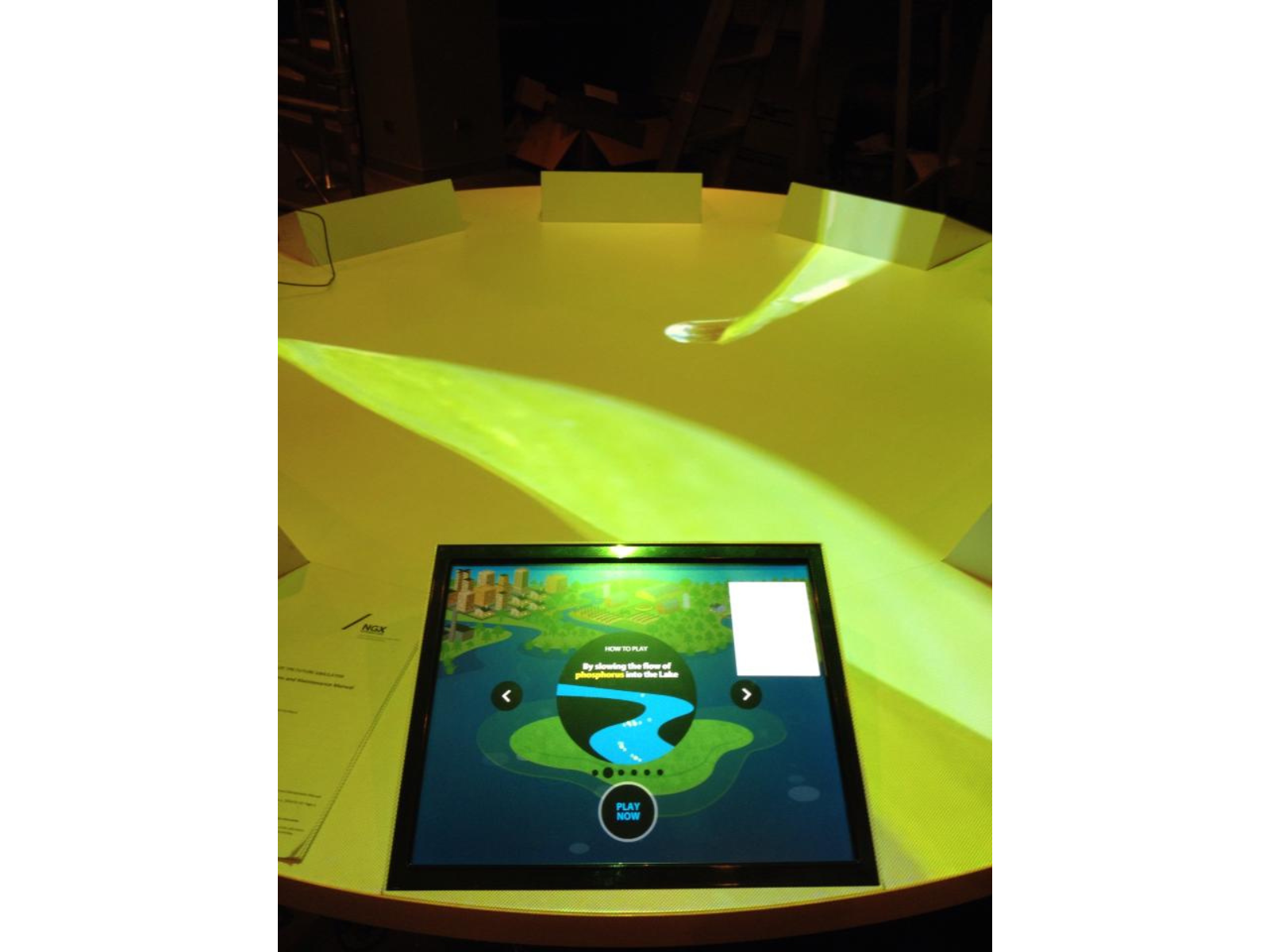
The first image below shows the simulator in “single-player mode” – this is our default experience, where a visitor can come up to the table and use any one of the eight touchscreens to have their own experience. A series of problems are available for you to examine, and each problem has three possible “projects” – these are different ways to address the problem. Each potential project will affect the health of the Lake, and also carry an economic and social cost or benefit. As you make choices, you are shown the results of each choice and warned if you are reaching a critical point.

In single-player mode, everything you do feeds your own version of the Lake, and so your results won’t depend on any other people at the table. It’s a great way to explore some of the issues facing the health of Lake Winnipeg. The central projection surface is used to show various lake images, and also when a big event like a storm or flood occurs – these events hit every player at the table, although your results will depend on what you have done in the game so far.

Looking at a touchscreen embedded in a round table lit with green. The screen shows a "How to Play" graphic.

The “Watershed of the Future” simulator prototype, installed and (almost) ready for testing.
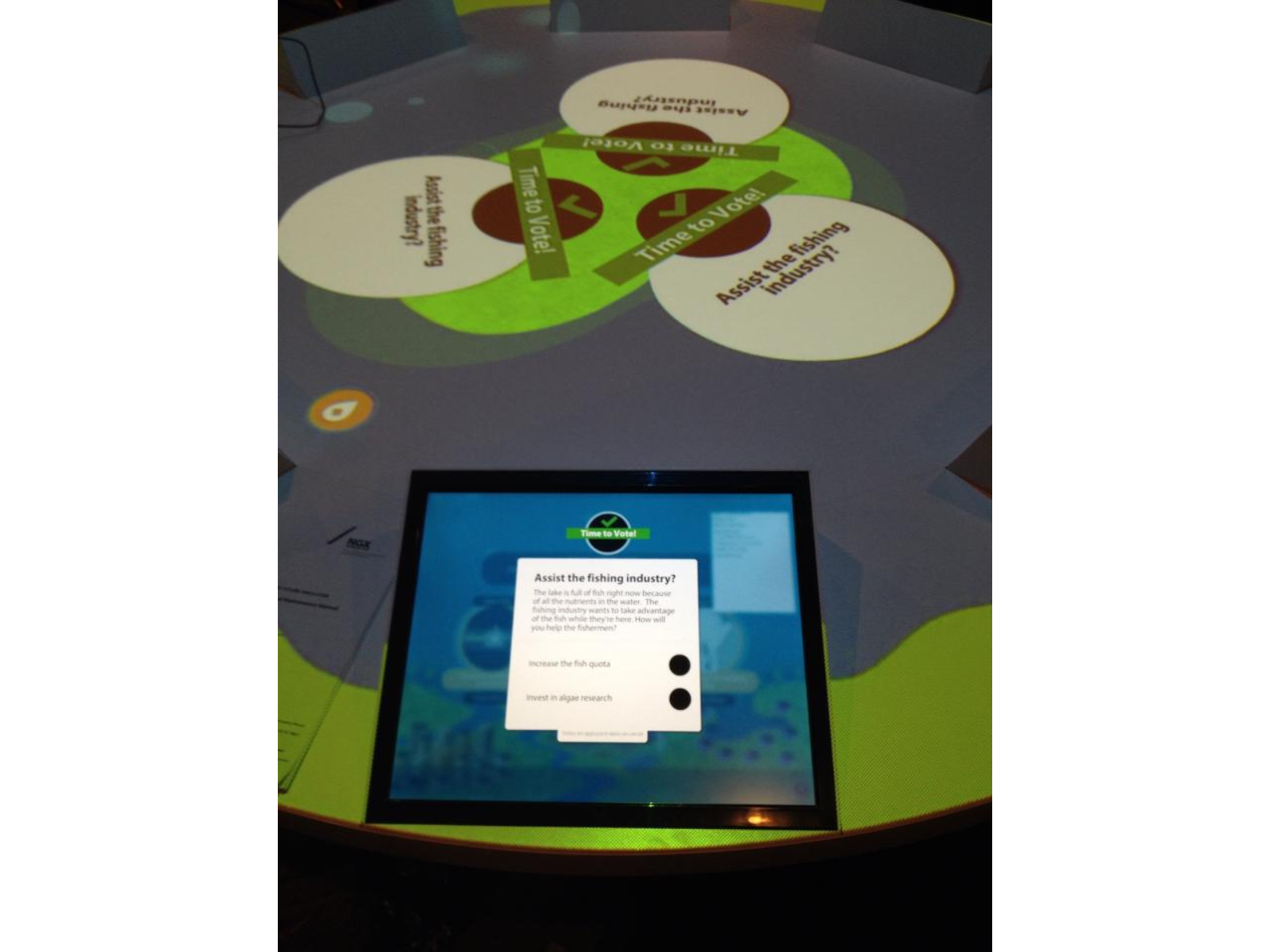
Looking at a touchscreen embedded in a round table., In the centre of the table projections ask the vote question "Assist the fishing industry?". The screen shows the same question with selectable options to "Increase fish quota" or "Invest in algae research.

Watershed of the Future simulator in multi-player mode, showing one of the polls.

The simulator also has a “multi-player mode” – we’ll be using this when we have school groups booked, or when we can have a program leader interpreting the exhibit. In this case, all eight screens feed a single model of the Lake shown using the central projection, and so the results depend not only on what you do, but what others at the table do as well. The program leader can encourage discussion and debate, and just like in real life, good results depend on everyone working together.

In multiplayer mode, there is also a new feature we’re calling “polls”. Some issues are too broad to be narrowed down into projects, and these show up in multi-player mode as a question on the main projection surface. Everyone is asked to vote on a given poll issue, and the majority vote determines which option is fed into the model. Again, having a program leader present can help spark debate and discussion, leading to informed voting and a deeper understanding of the issues.

Once the simulator is installed, we will be running it through testing to make sure it works as intended, and also to make sure it is fun to play. If you are interested in volunteering as a tester, contact me at scyoung@manitobamuseum.ca and I’ll provide more information. This is a volunteer opportunity, but you can help us make this important exhibit the best it can be!

Scott Young

Scott Young

Planetarium Astronomer

Scott is the Planetarium Astronomer at the Manitoba Museum, developing astronomy and science programs. He has been an informal science educator for thirty years, working in the planetarium and science centre field both at The Manitoba Museum and also at the Alice G. Wallace Planetarium in Fitchburg, Massachusetts. Scott is an active amateur astronomer and a past-President of the Royal Astronomical Society of Canada.

First Light on our New Exhibit!

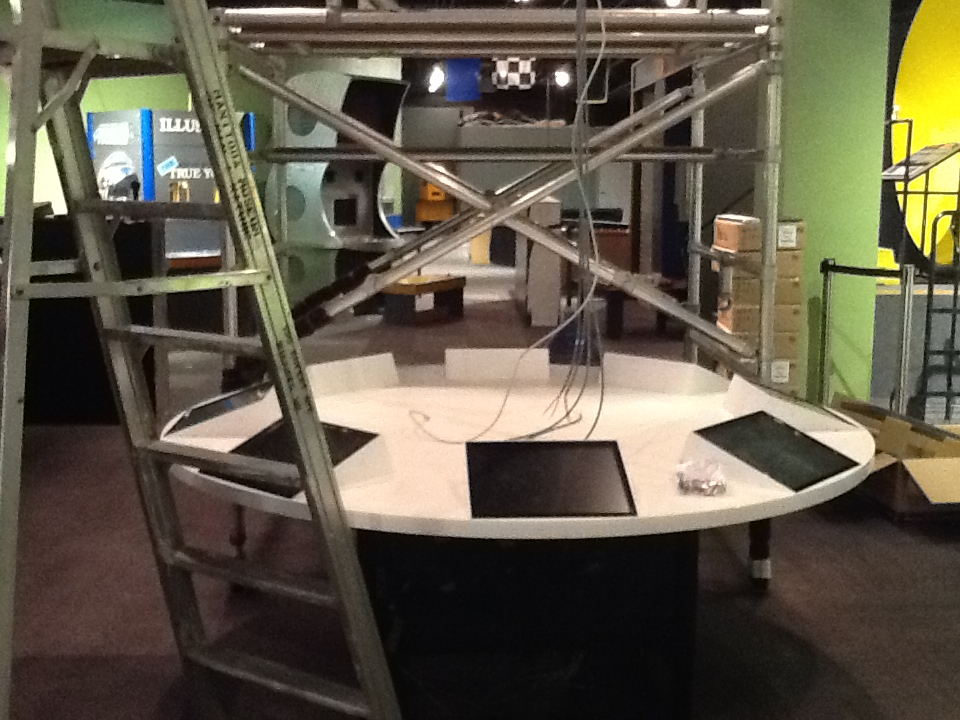
Day Two of the Lake Winnipeg: Shared Solutions simulator installation, and we have first light from the projection system! The simulator comprises a table with eight individual touch-screens, surrounding a large projected image covering the table. In regular mode, visitors can take control of their own version of the Lake at each station, without being affected by what other visitors do. Big shared events like floods and storms will show up on the central projection, and affect everyone at the same time.

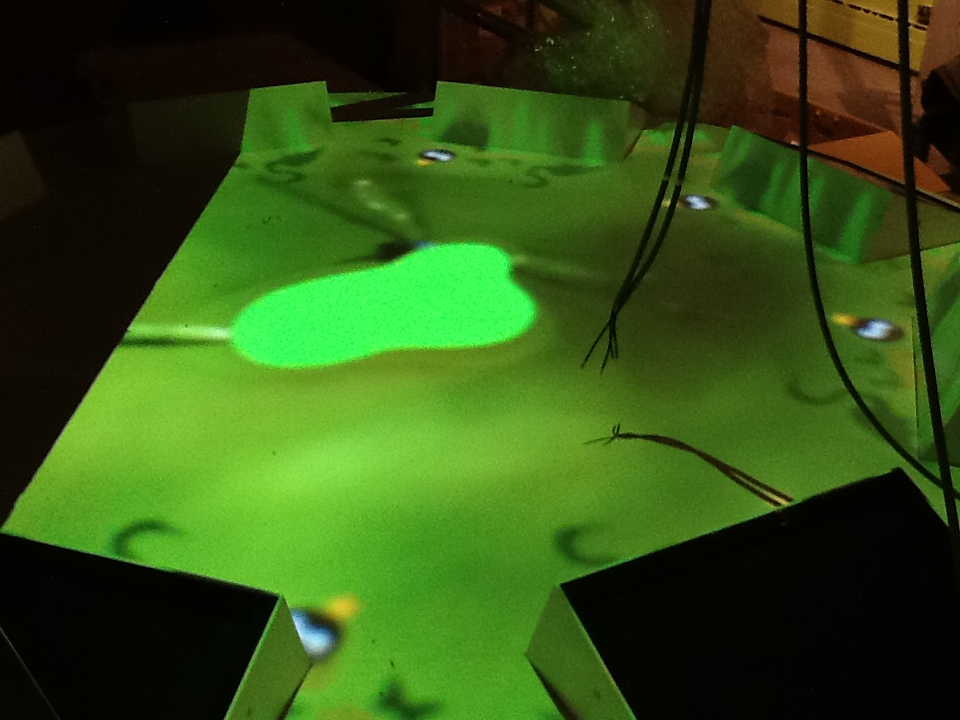
We can also run the experience for a group, where all eight stations are playing in the same Lake. All of their choices will feed into a central lake, and the effects will be displayed using the central projection screen. The “score” is depicted using a green algal bloom. The bigger the algal blob, the worse the health of the Lake.

The second image shared here shows the unfocused, rough, first image from the projector onto the table. The green blob is the algae. None of the touch screens are active yet, but when they are connected, they will form a seamless part of the image.

A circular table with eight digital touchscreens embedded around the surface. Ladders and scaffolding are on either side of the table as wires hang down from above.

Installing the Lake Winnipeg Shared Solutions simulator table in the Science Gallery.

A round table with eight digital touchscreens embedded around the surface. A green light illuminates the tabletop with a "blob" near the centre brighter than the rest.

“First Light” on the simulator table – needs focus and alignment, but it works!

Scott Young

Scott Young

Planetarium Astronomer

Scott is the Planetarium Astronomer at the Manitoba Museum, developing astronomy and science programs. He has been an informal science educator for thirty years, working in the planetarium and science centre field both at The Manitoba Museum and also at the Alice G. Wallace Planetarium in Fitchburg, Massachusetts. Scott is an active amateur astronomer and a past-President of the Royal Astronomical Society of Canada.

New Science Gallery Exhibit Takes Shape!

It’s been a while since I have updated this blog, because I have been working on the next big exhibit for the Science Gallery. “Lake Winnipeg: Shared Solutions” is scheduled to open in March 2014, but a big piece of it is being installed this week so we can do on-site testing and evaluation of the prototype. The exhibit addresses the health of Lake Winnipeg and what feeds into that (complicated) issue.

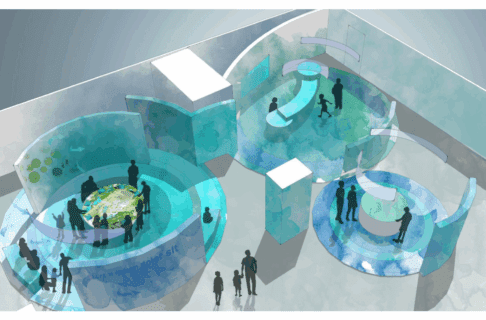
The exhibit is a partnership between The Manitoba Museum and the International Institute for Sustainable Development, with support from a diverse group of stakeholders. The completed exhibit will have images, text panels, a live aquarium, and insect and plant specimens, but the centrepiece is the Watershed of the Future simulator. Basically, we have built the Lake Winnipeg Watershed in a computer, and visitors will be able to become Lake Stewards, controlling all of the decisions in Manitoba that impact the health of the lake. It’s a hugely complicated piece of exhibitry, with eight touch screens, a giant projector table, and a rack of computers, running custom software developed in concert with a huge group of experts and stakeholders from around the province. To make sure we have gotten it right, and also that it is a fun experience for the average person, the simulator is being installed this week, and we’ll be opening it up for testing over the coming month so we can refine the experience.

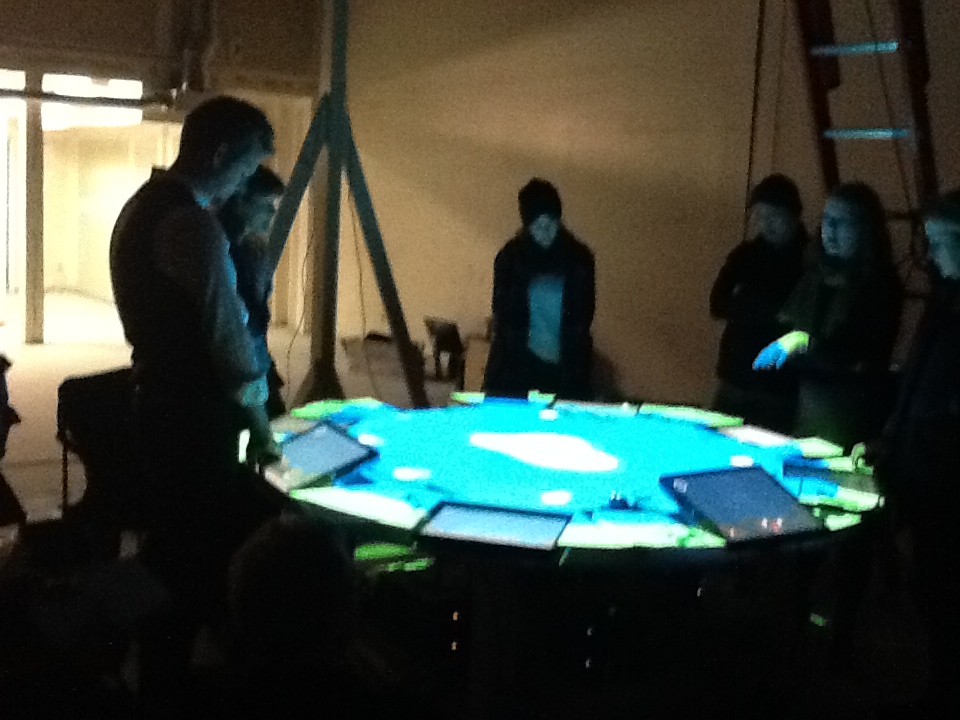
This is the first time we’ve been able to do a “Beta” test of an exhibit like this. It’s a great way to make sure the exhibit works properly, but also allows us to refine things like the timing of the experience, clarity of instructions, and complexity of the experience. We’ve spent a long time making this as accurate an exhibit as we can; now we want to make sure it is also as fun and interesting as it can be.

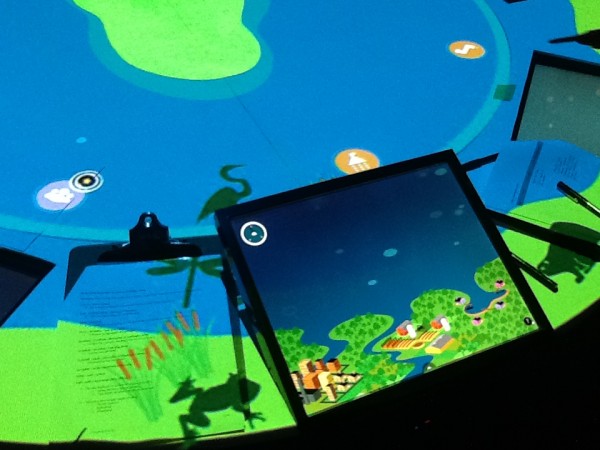
Six people stand around a brightly illuminated round table in a dim room.

A brightly illuminated section of a rounded table with a digital touchscreen embedded in the surface. On the table itself and the touchscreen, illustrations of a lake and small creatures like frogs, herons, and fish.

The Alpha version of the Watershed of the Future simulator in the workshop in Vancouver.

I’ll be posting more about Lake Winnipeg Shared Solutions in the coming weeks as the exhibit is installed and testing continues. We’ll be bringing in the experts and stakeholders who helped develop the simulator, but we’re also interested in feedback from the Museum’s regular visitors: school groups and the general public. If you’d like to be a part of our testing process, drop me an email and we’ll hook you up.

Scott Young

Scott Young

Planetarium Astronomer

Scott is the Planetarium Astronomer at the Manitoba Museum, developing astronomy and science programs. He has been an informal science educator for thirty years, working in the planetarium and science centre field both at The Manitoba Museum and also at the Alice G. Wallace Planetarium in Fitchburg, Massachusetts. Scott is an active amateur astronomer and a past-President of the Royal Astronomical Society of Canada.

Christmas in the Collections

A few weeks ago, as my family was setting up our Christmas tree, I hesitated putting up a small number of glass balls, passed down to me from my grandma many years ago, remnants of my dad’s childhood in Winnipeg’s North End. These ornaments have been a staple on my tree for a decade since striking out on my own –the delicate painted glass balancing out my beloved childhood favourite, an A&W Bear on a green felt sled. This year, however, I am The Mother Of A Toddler. Little, excited hands grasping and pulling at the ornaments I have lovingly toted move after move! Finally, after some encouragement from my spouse, the glass balls were cautiously placed at the top of the tree, where Toddler Hands McStickyfingers can’t reach them, despite her efforts to stand on her toes, arms outstretched, saying “Reach! Reach!” (Nice try, kid.)

Thankfully, safely in the storage room at The Manitoba Museum, our History collection’s complement of Christmas ornaments remains out of the grasp of toddlers. Whenever handled, these ornaments receive the “White Glove Treatment”, meaning we don cotton gloves to protect the artifacts from oil present on our skin. In instances where an object is particularly delicate or small, I prefer to wear blue nitrile gloves, so I can best hold artifacts as I examine them for cataloguing or photographing.

Delving into the collection to photograph Christmas artifacts, a few pieces stood out to me, reminiscent of ornaments –both old and new– decorating my tree at home. Carefully preserved by generations of family members, many of these artifacts were collected to decorate the Urban Gallery each year, featured on the Christmas tree in the dentist’s parlour as part of an exhibit called In Winnipeg at Christmas.

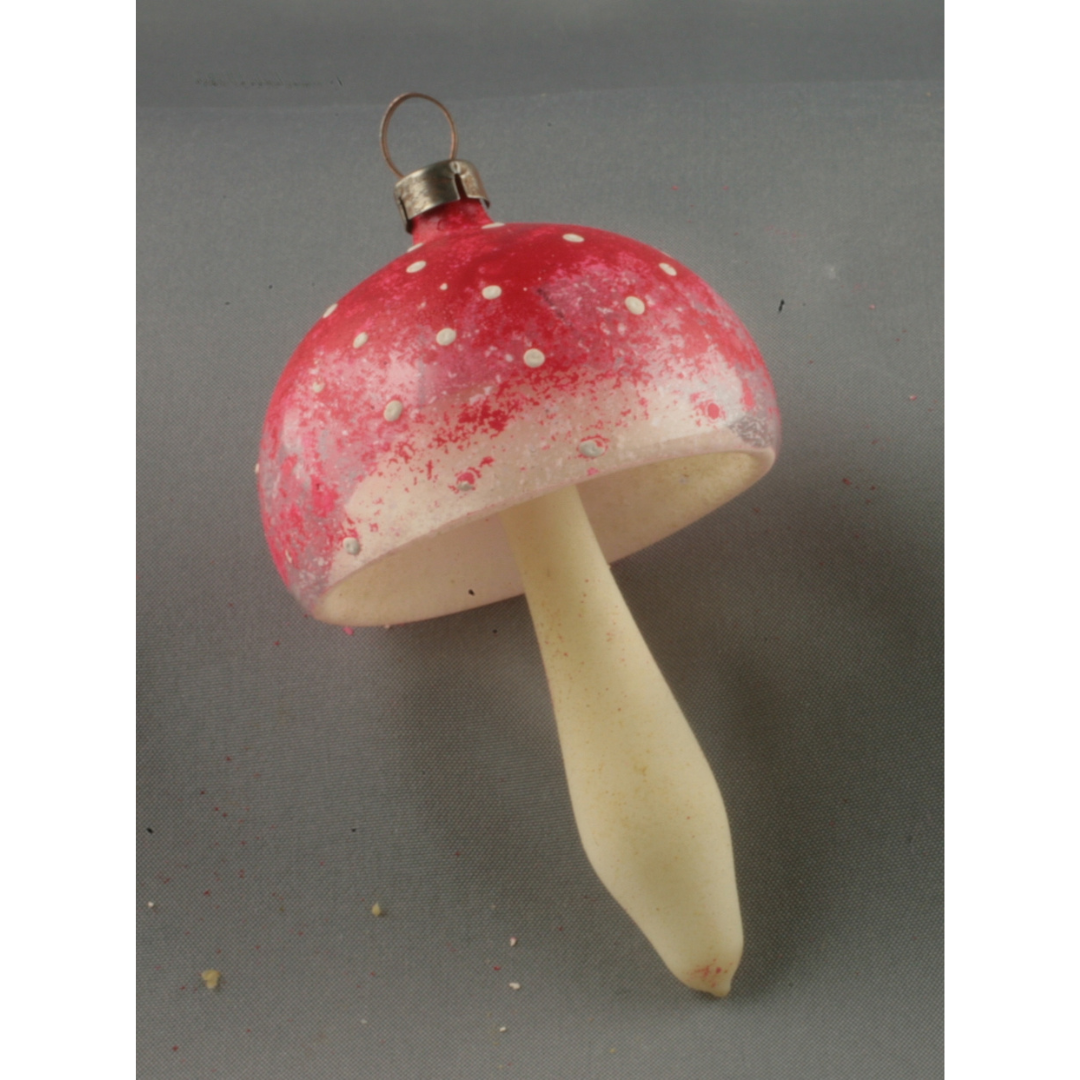
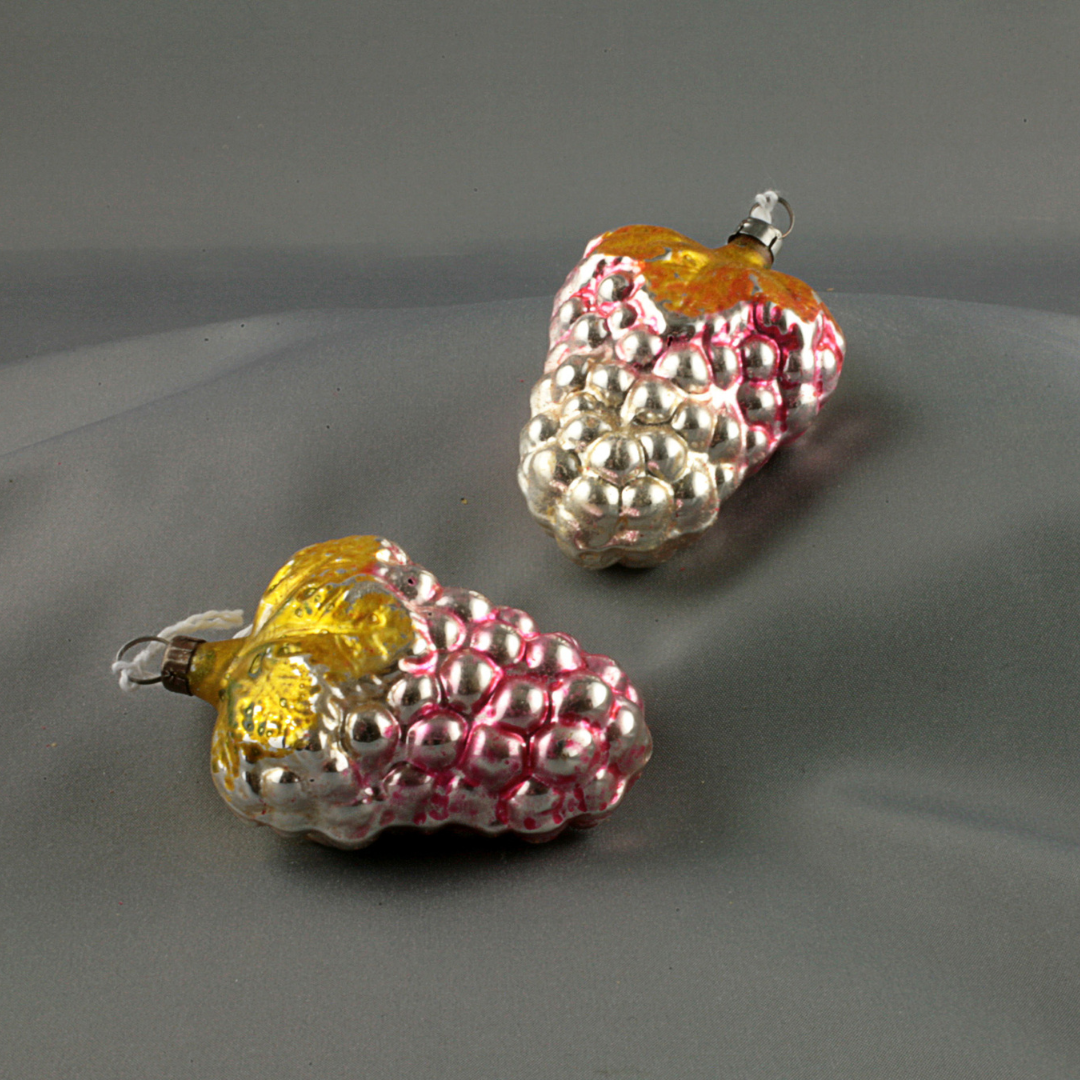
This delicate toadstool and its pair date to the mid-1920s, donated to The Museum along with a few dozen other ornaments of the period, including a hot air balloon, birds and fruit, like these bunches of grapes. Originally, these ornaments decorated the tree of a young Winnipeg couple, married in 1925.

A delicate glass ornament shaped like a mushroom with a hollow red cap and white stem.

Two small red and gold raspberry Christmas tree ornaments.

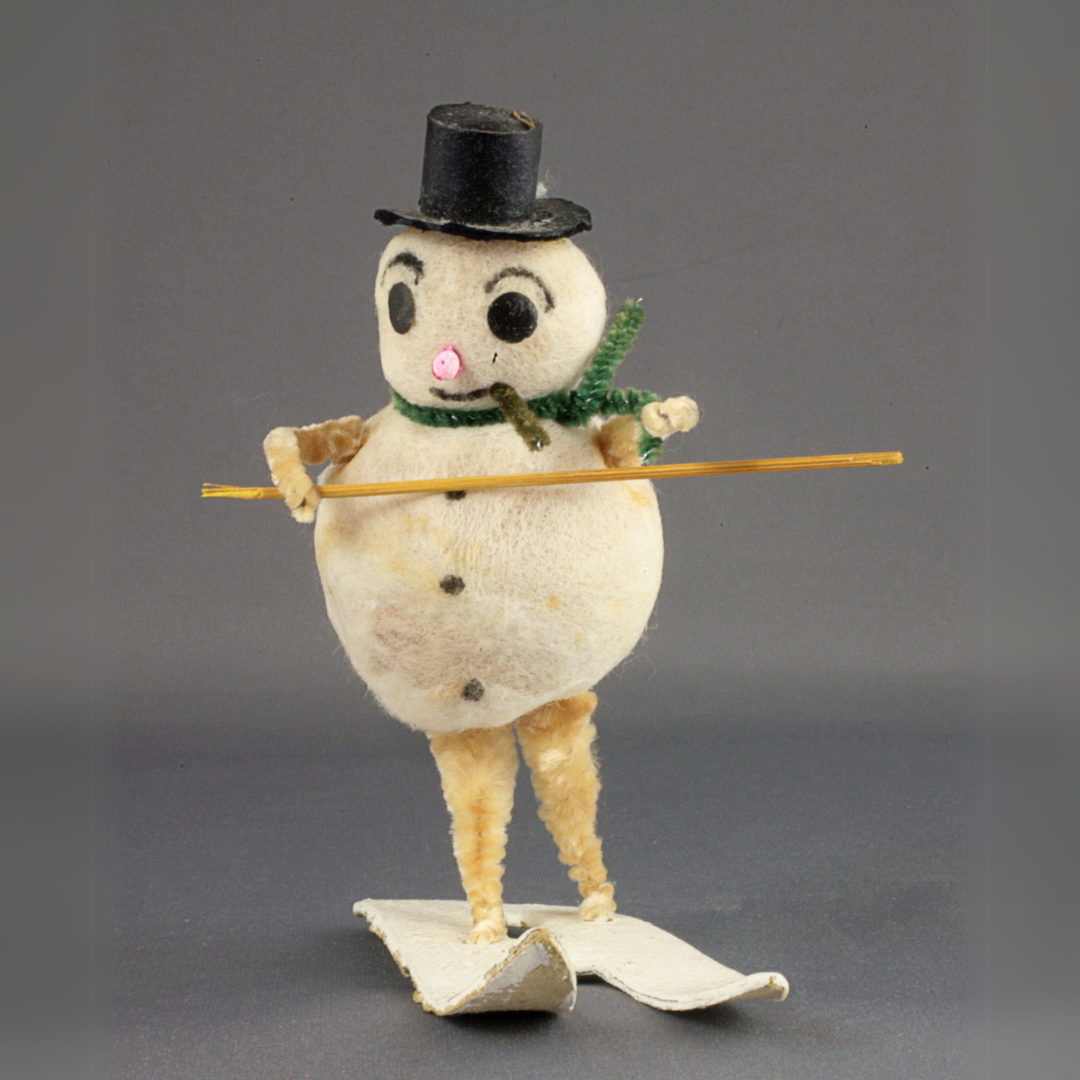
The skiing snowman, made of cotton and pipe cleaners, was donated to the collection after his original owners loaned him to the Manitoba Museum for In Winnipeg at Christmas.

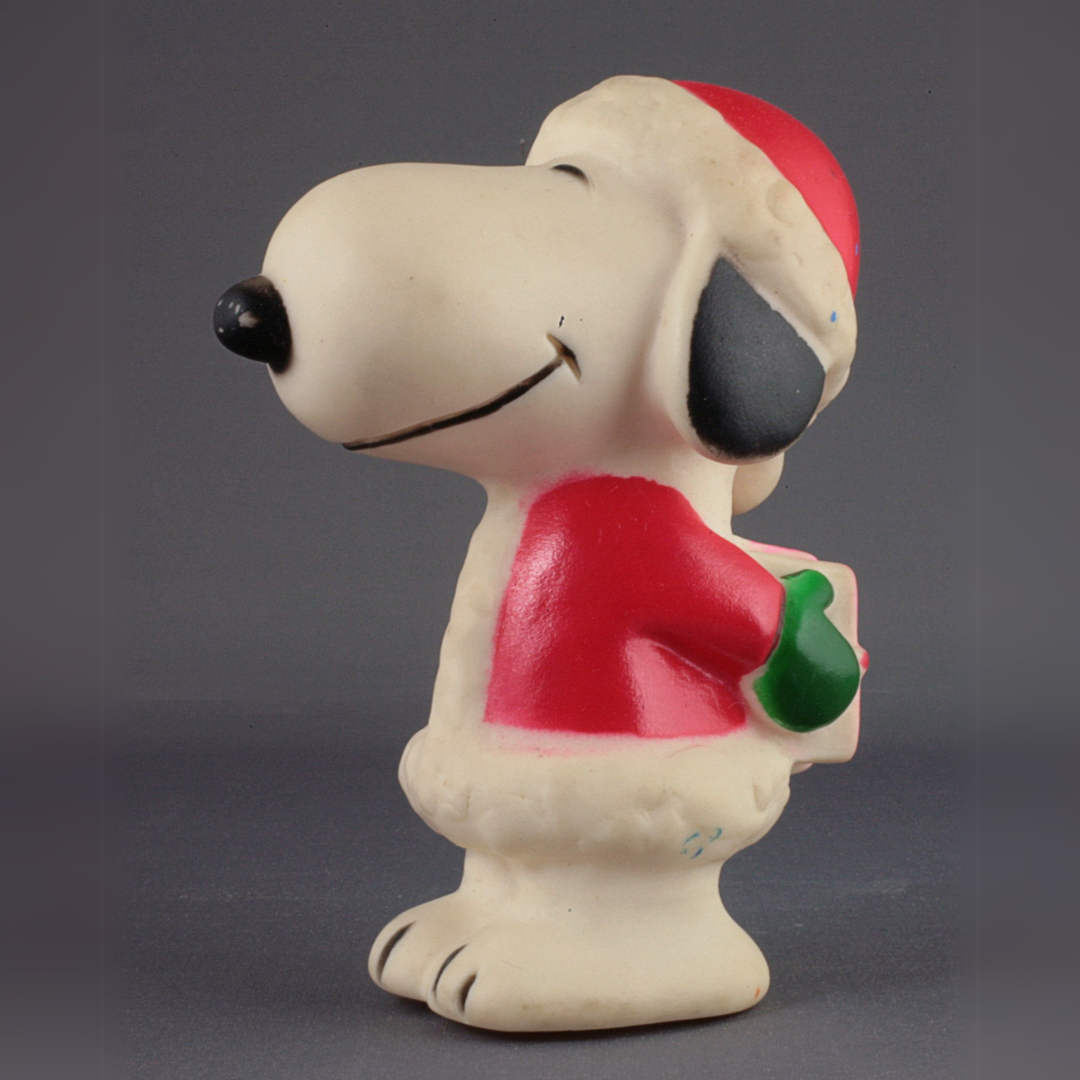
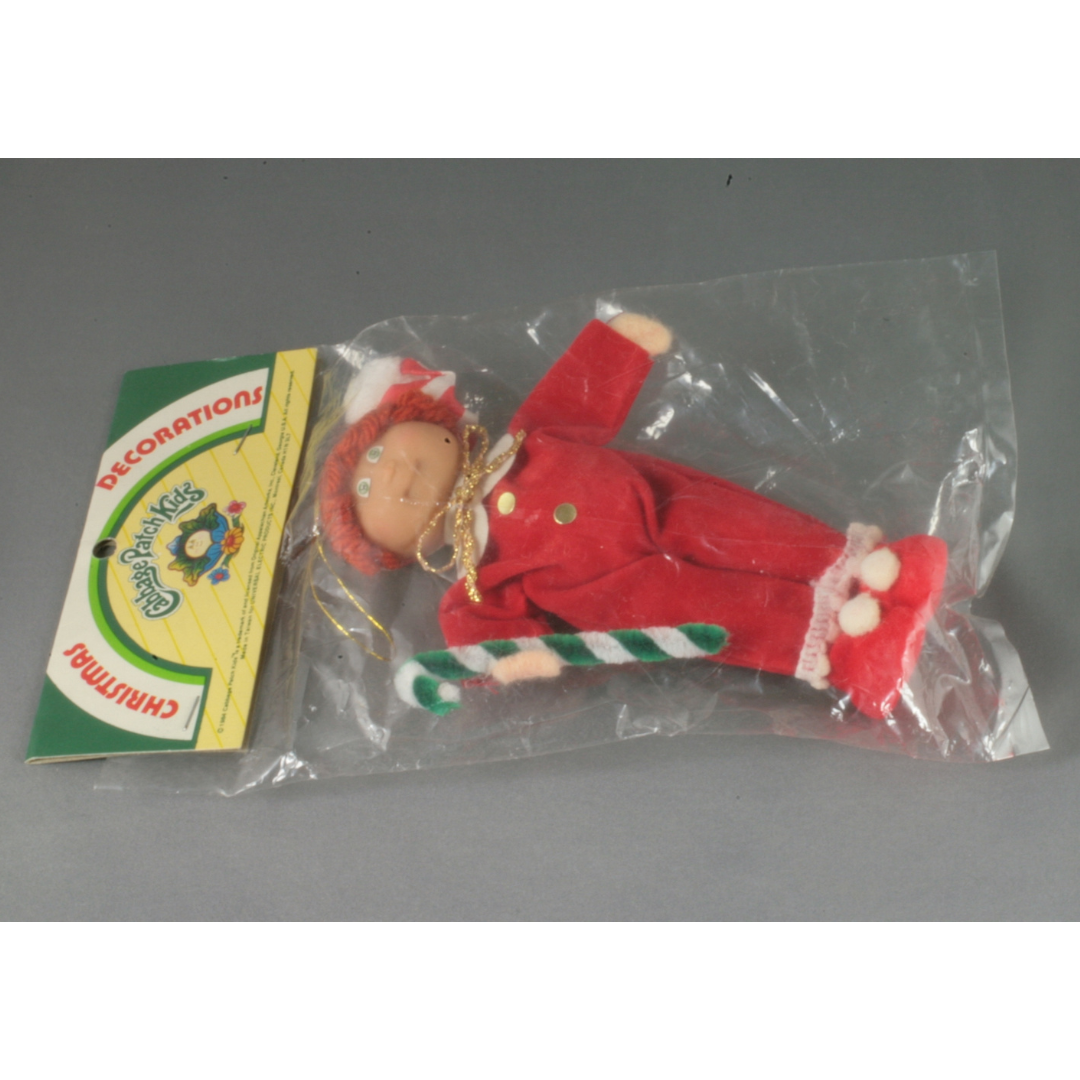
Our Christmas holdings, however, are not limited to the 1920s. For those who prefer the A&W sledding bear over the filigreed glass ball, the collection has plenty to offer. One former curator had an eye for objects that reflected the contemporary popular culture of the 1980s, picking up pieces like a Snoopy squeeze doll –yes, that’s its official name in our collections database– and a staple for most people born in the late 1970s or early 1980s, a Cabbage Patch Kid tree ornament.

A vintage Frosty the Snowman decoration showing a snowman with legs and arms riding a set of skis while wearing a black top hat and green pipe cleaner scarf.

Toy in profile of Snoopy the dog wearing a red and white Santa coat and hat and green mittens, and holding a gift behind his back.

A small Cabbage Patch Doll wearing a red onsie pyjama set, red shoes with white bobbles, and a red bonnet. The ornament is still in the original packaging.

As I put these ornaments back in their boxes and return them to their shelves in the storage space, I can’t help but wonder whether one day my ornaments will meet a similar fate, becoming part of an exhibit like In Winnipeg at Christmas in the 1980s, but with a snappier title. Provided I can keep them safe from the toddler ‘til then.

Cortney Pachet

Cortney Pachet

Collections Technician – Human History

Cortney Pachet started working at the Manitoba Museum in 2001 as a tour guide while earning her a BA (Honours) from the University of Winnipeg. She quickly realized that she wanted a career in museums…
Meet Cortney Pachet

Guest Blog – HBC Intern

If you have been reading the HBC Blog, you are probably aware of some of the work involved with being a curator. Have you ever wondered what it would be like to experience the job firsthand, to see if it is really as great as Amelia makes it sound? My name is Kristina, and for the past couple of months, I have been able to do just that. I am a Masters student studying Curatorial Practices at the University of Winnipeg, and I am working at The Manitoba Museum as an Intern. So far it has been an amazing experience.

It is fascinating to get a behind-the-scenes look at everything it takes to keep an institution like The Manitoba Museum running. While most of my time is spent job shadowing with Amelia,  I have also had a chance to visit several departments to see the roles they play in creating exhibits, designing educational programming, and keeping our artifacts safe from damage.

Aside from job shadowing, I am also working on a couple of projects for the Museum. One of these projects involves exhibit renewal within the HBC Gallery. Presently, there are several props being utilized, along with the many artifacts on display.  Ideally, we would like to be able to identify which objects are props and which are artifacts, so that we can eventually replace the props with actual artifacts from the collection. As mentioned in some of our earlier blogs, the HBC Museum Collection is much larger than what is currently on display in the gallery. We simply don’t have the space to display all of the artifacts.

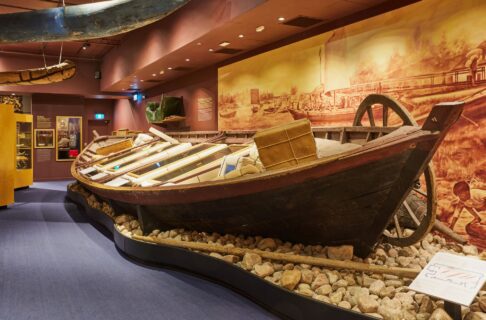
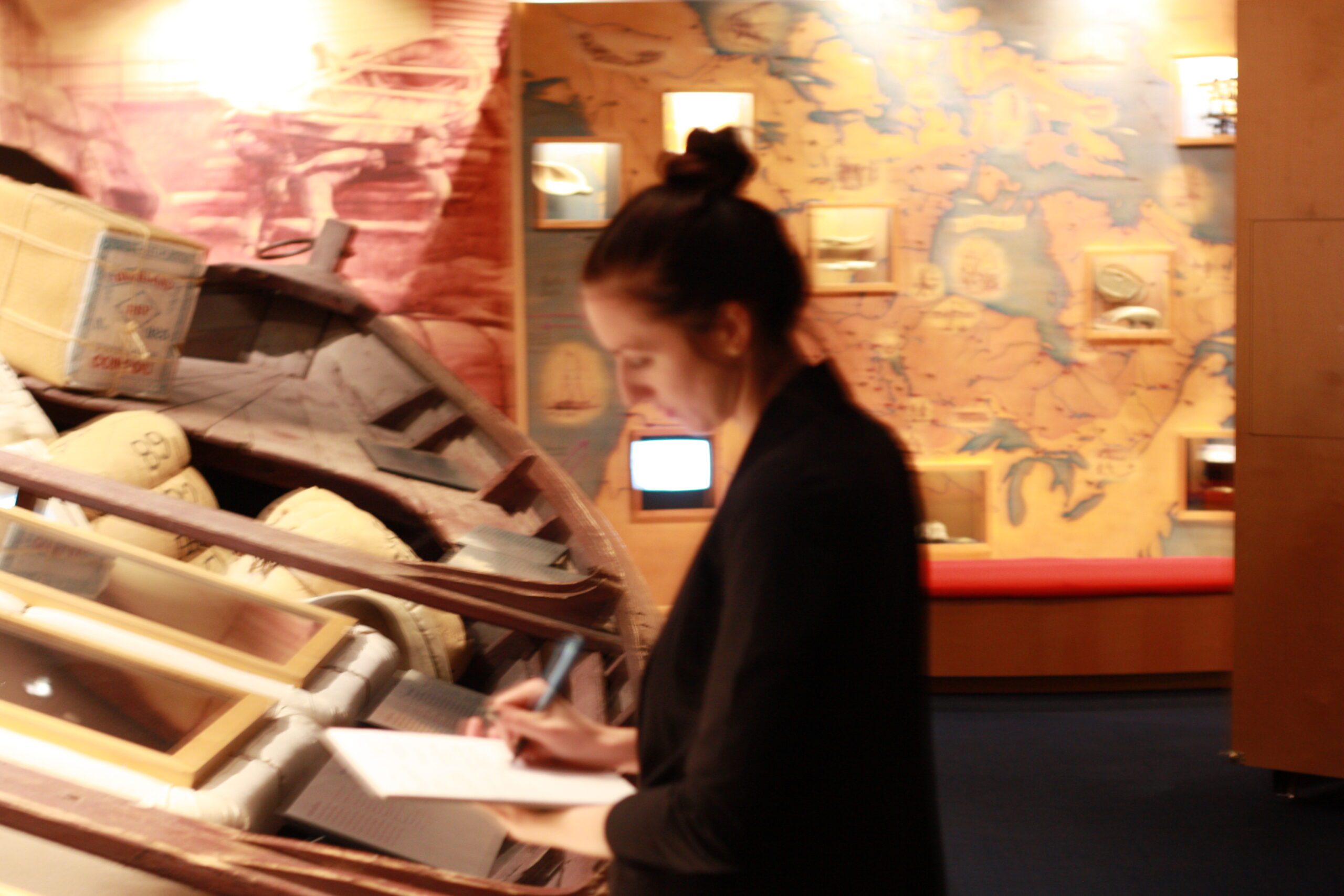
An individual standing in front of a large York Boat on display in the Hudson's Bay Museum Collection Gallery. They are holding a notepad and writing something on it.

At this point, I have completed the first stage of the project. Armed with the inventory binders, I spent a morning just looking at what was on display, recording any discrepancies and identifying which objects were props. The next step will be to make sure that the props are entered into our database so that we have a better record of exactly what is on the floor at any given time. Once this is all done, I will be able to complete my report, listing recommendations as to how to better use the existing collection by replacing props with actual artifacts. The main goals of this project are to make sure we can optimize the visitor experience, as well as showcasing more of our incredible HBC Museum Collection.


Image: Identifying artefacts in the York Boat.

Occupy Main Street

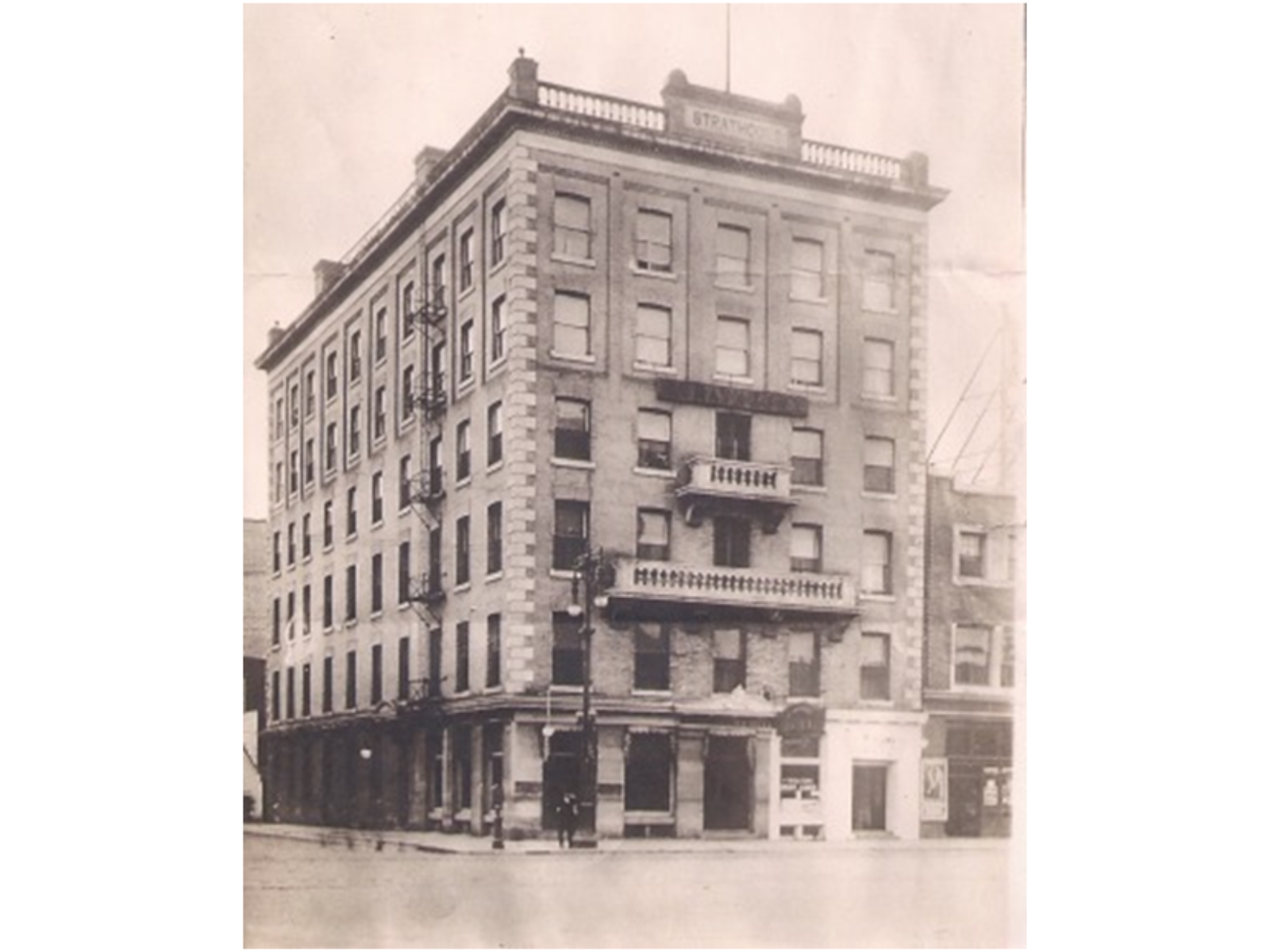
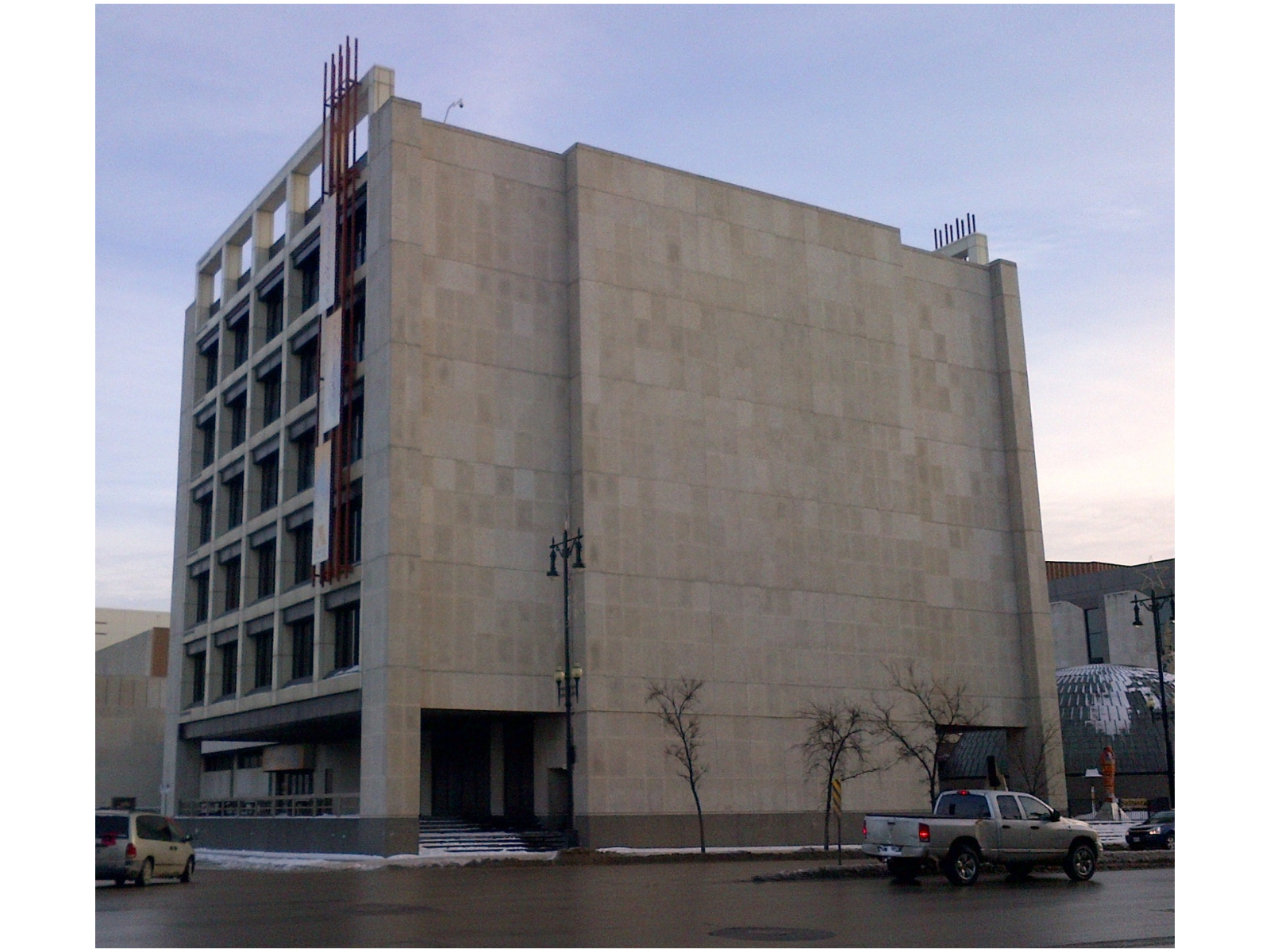
The Manitoba Museum was built in the late 1960s, occupying the site of the former Strathcona Hotel, built in 1905 on the south-east corner of Main St. and Rupert Ave. This intersection featured a hotel on three corners, all built in the first decade of the 1900s to house a massive influx of settlers, new urban workers and would-be entrepreneurs. The Strathcona was also the scene of labour resistance during the 1919 Winnipeg Strike.

Jacob and Rachael Rosenthal and their infant son moved to Canada from Russia in 1891. They settled in Manitoba and took part in the life of the local Jewish community. By 1898 Jacob was running a small general store in the North End. Eventually he also sold cattle, and started a clothing store. Jacob must have done fairly well, because he was able to build and own the 6-storey, 100 room Strathcona Hotel, which opened on November 9, 1905. In the next eight years the population of Winnipeg doubled to 150,000, and business was booming. This changed abruptly in 1916 with the passing of prohibition: the bar was the most profitable part of the hotel, and Jacob also ran a wholesale liquor sales business.

One of the most notable events to take place in the hotel was the occupation by the Labour Café during the Winnipeg General Strike of 1919. Women were a driving force in the strike movement. Lacking wages and with the city paralyzed, it was difficult to find food for all the female strikers, who at the best of times were eating cheap meals at small cafés and restaurants. The Women’s Labour League organized the Labour Café in the Strathcona Hotel, which the Rosenthals allowed and supported. For twenty-two days, over 1200 free meals a day were given to women and a discount was provided for rooms. Men were also welcome to eat at the Labour Café, either by payment or with a ticket provided by the Relief Committee. After this period the Rosenthals politely asked the Labour Café to leave the premises, probably due to the new presence of “Special Constables” (riot police) in the Police Station next door, which would have increased tensions and the potential for violence.

A sepia-toned photograph of a six-storey building with many windows.

The Strathcona Hotel (later the Cornwall), 1905-1965.

The Manitoba Museum from across the intersection of Rupert Avenue and Main Street. A multi-storey building built of Tyndall Stone.

The Manitoba Museum, 2013, viewed from the same angle as the Strathcona Hotel photograph.

While The Manitoba Museum currently occupies the site of the former Strathcona Hotel, it also stands on the site where strikers occupied the hotel in an act of organized resistance.

Thanks to David Watson for his research into the Rosenthal family and the hotel. Special thanks also to the descendants of the Rosenthal family, now living in New York, who visited The Manitoba Museum last spring.

Dr. Roland Sawatzky

Dr. Roland Sawatzky

Curator of History

Roland Sawatzky joined The Manitoba Museum in 2011. He received his B.A. in Anthropology from the University of Winnipeg, M.A. in Anthropology from the University of South Carolina, and Ph.D. in Archaeology…
Meet Dr. Roland Sawatzky

A blog about a (yule) log: Plants of Christmas

The use of plants during Christmas arose from pagan Yuletide celebrations of the winter solstice in ancient times. The pagan beliefs have become interwoven and associated with the Christian festival of Christmas, which occurs during the same season. Those plants which remained green, flowered, or bore fruit in the darkest season of the year were felt to have special powers. These powers could be invoked by appropriate ceremonies and could renew the vigour of family and herds, and ensure abundant crops during the coming year.

Yule Log

The tradition of the Yule Log in Europe goes back to prehistoric tree worship and the custom of re-kindling the hearth-fire each year. A log burnt on Christmas Eve was believed to give protection from ill-luck for the following year. The ashes of the log were strewn on the fields to promote good crops and charcoal from it was believed to heal many ills. In many parts of Europe and Britain, an elaborate ceremony of bringing in the Yule Log, “greeting” it with corn and wine and accompanying it with carols has been followed for centuries.

A close-up on a sprig of dried and pressed dwarf mistletoe.

Mistletoe

Revered by the Druids of ancient Britain, mistletoe was believed to have magical powers. Called “all-healer”, it protected against poison and made barren cattle fruitful. Kissing under the mistletoe is an old English custom, perhaps associated with the belief that the plant would transfer its protection to the person kissed. European Mistletoe (Viscum album) is only partially parasitic on evergreen trees; it still produces green leaves and manufactures some of its sugar. In Canada, we only have Dwarf Mistletoe (Arceuthobium) which is completely parasitic and much less pretty.


Image: Dwarf mistletoe is entirely parasitic unlike its European counterpart that is only partially parasitic and has leaves.

Holly and Ivy

These evergreen plants, which bear fruit in winter, were considered examples of the continuing vitality of the plant world. Originally used as Christmas decorations in England, they were believed to transfer their vitality to the people whose homes they graced. In ancient legends, holly (Ilex) represented the male and ivy (Hedera) the female.

A small sheaf of grain tied in a bunch with a red and green ribbon.

Yule Straw

In Sweden and Poland, it was the custom to place straw under the Christmas Eve tablecloth. Sometimes a sheaf of grain was also brought in to stand in a corner, bringing the wholesome influence of the corn spirit into the home. The straw was then used to bind fruit trees or as feed for cattle to make them fruitful.


Image: Yule straw was an important part of European winter celebrations.

A dried Lodgepole pine specimen in a museum storage box. A dense bush of branches grows out of a splitting cone with spreading roots.

The Christmas Tree

Evergreens have always been considered special or sacred trees because they remain green throughout the year. Long before the Christmas tree as such became a part of the Christmas tradition, garlands and boughs of evergreens were used to decorate houses and other buildings at that time of year.

Legend has it that Martin Luther set up the first real Christmas Tree, a fir decked with candles for his children. Whether this is true or not, the Christmas Tree is indeed of German origin and was first mentioned specifically in 1605. In Germany, it is called “Weinachtsbaum” (Sacred Night Tree) or Tannenbaum (Fir Tree). In Canada Christmas trees are typically spruce (Picea), pine (Pinus) or fir (Abies) trees.


Image: Pines are popular Christmas trees. This is a specimen of Lodgepole Pine in the Museum’s collection.

Dr. Diana Bizecki Robson

Dr. Diana Bizecki Robson

Curator of Botany

Dr. Bizecki Robson obtained a Master’s Degree in Plant Ecology at the University of Saskatchewan studying rare plants of the mixed grass prairies. After working as an environmental consultant and sessional lecturer…
Meet Dr. Bizecki Robson

Crowd Control

A museum exists to share artifacts, not hide them. Artifact loans are therefore a crucial part of any museum’s activities. The Manitoba Museum and the Canadian Museum for Human Rights (CMHR) have recently agreed to work together when it makes sense to join forces.

Our first “handshake” was the loan of some of our artifacts related to the Winnipeg General Strike of 1919 to the CMHR. Some of you may have seen this on television recently: there were speeches, photo-ops, and the media’s flare for cool optics. But behind the scenes, there were some serious discussions about which objects were best suited to tell the story of labour rights in Canada, not to mention the safety of display conditions (could the artifacts be harmed by too much light or moisture?) , the period of the loan (two years), and so on.

A wooden club with a strap at the base, against a grey background.

The police club is a potent symbol of the Winnipeg General Strike, and in particular it is symbolic of the people that feared and opposed labour unrest. The club pictured here was used for crowd control by a “Special Constable” during the strike.  On May 15, 1919, 30,000 Winnipeggers supported a local metal-trades union strike by walking off the job, thus beginning the largest labour resistance movement in Canada. It lasted six weeks, but on June 26, 1919 the resistance was ended violently by police forces.


Image: Special Constable Club, 1919. Photograph by Nancy Anderson.

The forces were not made up of actual Winnipeg police however, since they in fact supported the strike and were relieved of their duties by the Police Commission. The forces involved in Bloody Saturday were made up of “Special Constables” (citizens deputized by the mayor), and the Royal Northwest Mounted Police. The “Specials”, as they were known, were mostly young men identified by badges and armbands. They wielded clubs, like the one pictured above, for crowd control. The Special Constables were paid three times more than police officers from funds provided by the Citizens Committee of One Thousand, a group of Winnipeg elite who opposed the strike.

Dr. Roland Sawatzky

Dr. Roland Sawatzky

Curator of History

Roland Sawatzky joined The Manitoba Museum in 2011. He received his B.A. in Anthropology from the University of Winnipeg, M.A. in Anthropology from the University of South Carolina, and Ph.D. in Archaeology…
Meet Dr. Roland Sawatzky

My First Acquisition

Even though the HBC collection is full of amazing treasures, I’m always interested in acquiring other special items with an HBC connection. Curators at The Manitoba Museum can’t just add items willy-nilly, we go through a process with our Collections Committee to make sure that we’re acquiring items that are significant to Manitoba (or in my case, significant to the HBC, which has a much broader geographic scope). I had some help navigating this pre-acquisition process from our Curator of History, Roland Sawatzky, who had been in touch with the donor prior to my arrival, and he showed me the ropes.

An individual holding up a carved piece of horn with a lid affixed to the top.

I’m sure you’re dying to know what I’ve picked up for the HBC collection, and I literally picked it up as the donor lives in Toronto and I happened to be there to meet with the HBC History Foundation.  Following my meetings I met up with Stewart Scriver, he’s a fascinating guy who owns a cool vintage shop (if you’re in Toronto check it out, Courage my Love in Kensington Market) and has a personal collection of some really neat things from all over the world.

An engraved horn with a flat bottom and lid affixed to the top.

What’s he holding?

Why that’s a scrimshawed horn!

Scrimshaw is an art form that involves engraving ivory, bone, teeth (typically from sperm whales) or horn.  The practice originated with whalers who had access to these marine mammal parts.   A black pigment is rubbed into the etching to bring it out, traditionally this would have been soot (lampblack) but later ink was used.  We have lots of great scrimshawed pieces in the HBC collection, but none quite like this.


Image: The horn standing upright, note the detail on the brass lid.

What makes this one so special?

Well, for one it’s a horn and not a piece of marine mammal. Its function is also uncertain, it has a wooden base and brass lid so it must have been used to contain something but it’s not like a traditional powder horn. If you have ideas on what this might have been used for please leave them in the comments!

Close-up view on an engraving on the side of a horn container depicting individuals rowing in a boat.

Close-up on the other side of a horn cannister with an engraving depicting an individual on a horse.

One part of the scene depicts men rowing a York Boat, the other side is a man on a horse smoking a pipe.

The base of the horn cannister with "M. McKay Fort York" carved into the base.

What’s the HBC connection?

Take a close look at the bottom, see that name?  M. McKay?  There was an M. McKay (Malcolm) who worked for the HBC, he started out at York Factory from 1841-1842.  Yes, I know it says ‘Fort York’ not York Factory, but in the early days it was probably called Fort York (and we all know how names can stick).  The donor also had the horn looked at by a Curator in Toronto and, based on the engraved images, he determined that it couldn’t possibly be the Fort York in Ontario.

I still have some research to do, but I wanted to share my first acquisition with you because I’m pretty pumped about it. More to come!

Dr. Amelia Fay

Dr. Amelia Fay

Curator of Anthropology & the HBC Museum Collection

Amelia Fay is Curator of Anthropology and the HBC Museum Collection at the Manitoba Museum. She received her BA in Anthropology from the University of Manitoba (2004), an MA in Archaeology…
Meet Dr. Amelia Fay

Pīsim finds her Miskanow 

By Kevin Brownlee
Past Curator of Archaeology 

I have to share with you about the results of a wonderful project that I have been working on for the past 6 years… actually more like 20…

Open pages of the book Pīsim Finds her Miskanow showing text with diagrams, and artistic illustrations.In 1993, the remains of a woman were found at Nagami Bay (Onākaāmihk) west shore of Southern Indian Lake. The following year, community members from South Indian Lake and archaeologists worked together to recover our ancestor in a respectful and honourable way. The story of her miskanow, life journey, was pieced together from her remains and her belongings and told in the book Kayasochi Kikawenow, Our Mother from Long Ago, which I co-authored with E. Leigh Syms.

After Kayasochi Kikawenow shared her teachings, she was respectfully brought home for reburial in the community of South Indian Lake in 1997. Now, 16 years after her reburial, her story is being retold in a new way for young people. Using historical fiction, William Dumas brings Kayasochi Kikawenow to life as the main character, Pīsim, in Pīsim Finds Her Miskanow. This book shares a week in the life of Pīsim as a 13-year-old living on Southern Indian Lake during the mid 1600s just before Europeans arrived into the region. The book was reviewed by renowned archaeologist Brian Fagan, Emeritus Professor of Anthropology, University of California) who states the book is the result of brilliant teamwork between archaeologists, the Cree, and an accomplished storyteller… the book promises to be a classic of Canadian history. 

Councilor Esther Dysart speaking into a microphne at a podium. Kevin Browlee stands to the side.

In September the Museum hosted a book launch that brought together the research team, members from O-Pipon-Na-Piwin Cree Nation (South Indian Lake) including youth, the author and illustrator and many dignitaries including a councilor from the community. It is rare to have over 200 people attend a book launch but this is no ordinary book. Buy your own copy from the Manitoba Museum gift shop.

Image: Kevin Brownlee and Councilor Esther Dysart at book launch.