

Christmas Nuts

Christmas Nuts

For many people, roasting chestnuts and snacking on fresh nuts is a Christmas tradition. Besides humans, the only other animals that can effectively crack the shells of nuts are those with strong, chisel-like teeth, namely rodents. Rodents, like squirrels, harvest nuts in the fall and store them for the cold winter months just like we do. Nuts are a good source of protein and contain many vitamins, minerals, and healthy fats. Not all nuts are alike; some nuts, like hazelnuts, are fruits with thick outer shells. Other nuts, like almonds and walnuts form a hard pit in the centre of a fruit called a drupe, like a peach or a cherry. Sadly, many people in North America have developed life-threatening allergies to nuts.

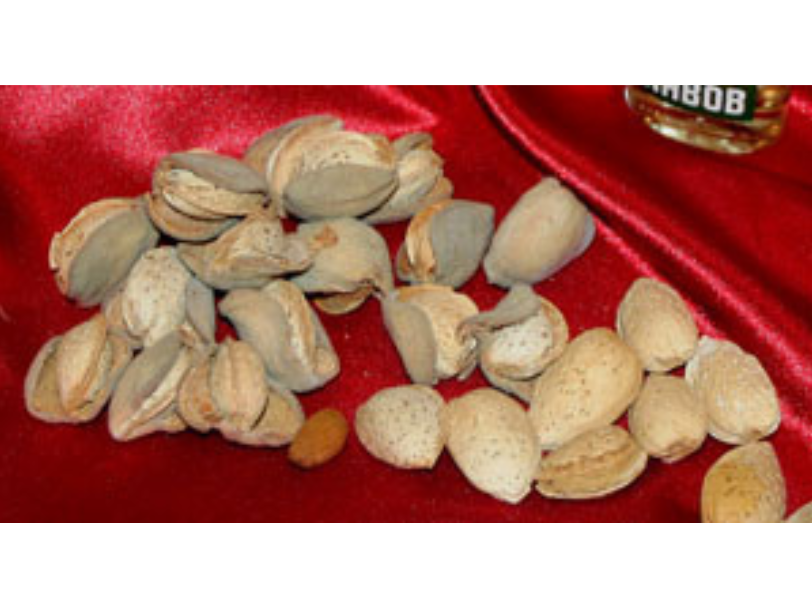
A small pile of almonds on a silky red fabric.

Almond

(Prunus dulcis)

Almond is a small tree related to plums, peaches and apricots.  The fleshy coats of almond fruits crack open, releasing the nut inside.  Sweet almonds are edible, while bitter almonds, which contain toxic prussic acid, are used to obtain almond oil.  Originally from Asia and North Africa, almond has been planted in semi-tropical areas all over the world.  Almonds need to be insect-pollinated; nearly half of all honey beehives in the U.S.A. are located in almond plantations.  Almonds are used in many traditional Christmas desserts including Scottish Dundee cake, Greek Kourabiethes and French Galette des Rois.  Almond paste is placed in the middle of the traditional Dutch and German fruit breads Kerststol and Stollen.


Image: Almonds are encased in a rough husk.

Brazil Nut

(Bertholletia excelsa)

Brazil nuts grow in clusters of 12-24 inside coconut-like capsules. Native to South America, Brazil nuts are popular snacks in Europe and North America. Brazil nuts are not commercially grown outside South America as they perform poorly in monocultures, relying on wild bees for pollination. One of the only animals that can eat Brazil nuts is the Agouti, a large rodent. Agoutis use their sharp incisors to open the hard capsule and shell. Since Agoutis hide nuts they don’t eat, they disperse them into new habitats. Brazil nuts are commonly added to South American fruitcakes.

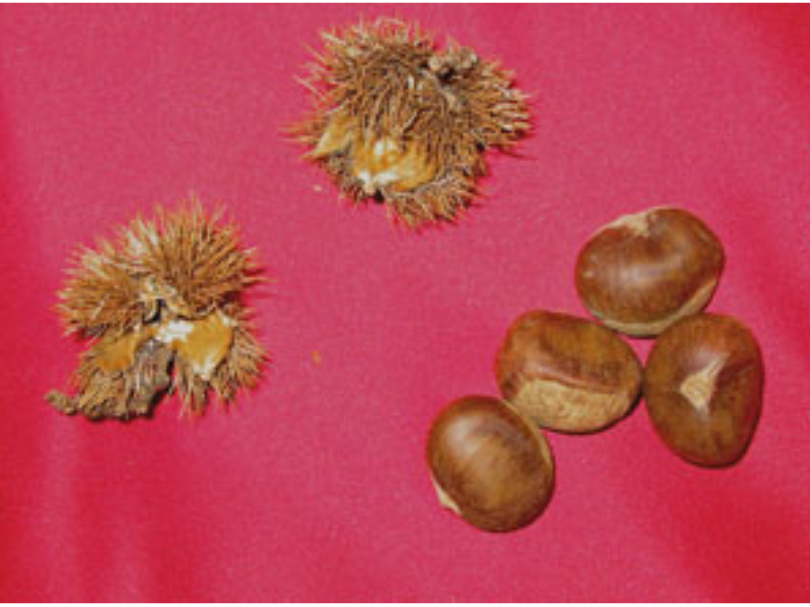
Two chestnuts in their prickly husk, and four unhusked chestnuts grouped together on a red background.

Chestnut

(Castanea spp.)

Sweet Chestnut (C. sativa) is a wind-pollinated, deciduous tree native to southern Europe. American Chestnut (C. dentata) grew abundantly in eastern deciduous forests of North America but, sadly, the introduction of chestnut blight disease (Cryphonectria parasitica) in 1904 destroyed almost all the trees on this continent. Three chestnuts grow inside each prickly husk. Roasting chestnuts splits the shell so the nut can be easily removed. Chestnuts are used to make the traditional Italian dessert, Dolci de Cucchiaio and the Russian pudding Nesselrode.


Image: Chestnuts grow inside a prickly husk.

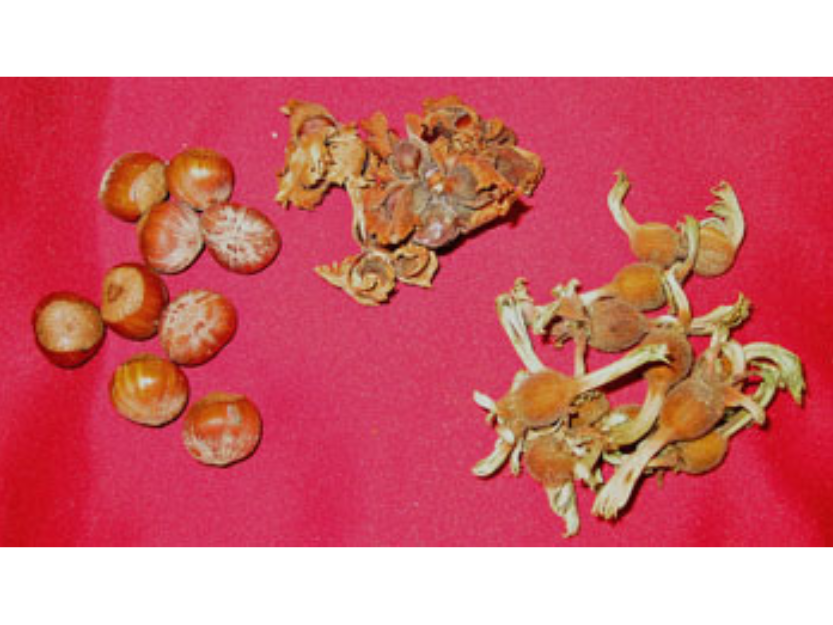
Three small piles of various hazelnut types on a red background.

Hazelnut/Filbert

(Corylus spp.)

The species of hazelnut we purchase in the store (Corylus avellana) is native to Asia minor and Europe but there are two edible Canadian species: beaked hazelnut (C. cornuta) and American hazelnut (C. americana).  Hazelnuts are wind-pollinated deciduous shrubs or small trees.  The nuts are encased in a greenish-coloured husk.  Hazelnuts were traditionally roasted and eaten by the Indigenous peoples of North America.  In Europe, hazelnuts are often used to make chocolates, chocolate butter spread and cakes like the Italian Panforte and German Lebkuchen.


Image: Three different hazelnut species (from left to right): European, American, and beaked.

(Carya illinoensis)

Pecan is a large, wind-pollinated deciduous tree native to North America that can reach heights of 170 ft. The nut is encased in a leathery, green husk that cracks open when ripe. A single tree can yield over 400 lbs of pecans each year. Pecans were harvested extensively by eastern Indigenous peoples. European settlers quickly embraced the pecan, eating them plain, spiced, or in baking. Pecan pie, often served at American Thanksgiving and Christmas dinners, is a classic example of pioneer “fusion” cooking. Pecans are sometimes added to Canadian butter tarts instead of raisins, as well.

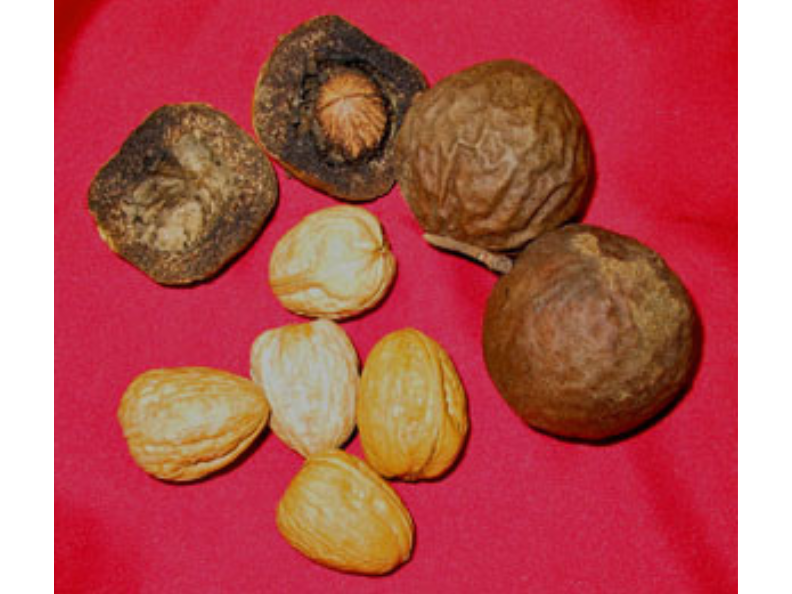
Two leathery round fruits, next to two round dried fruits, and five dried walnuts on a red background.

Walnut

(Juglans spp.)

There are several edible species of walnuts: English walnut (J. regia) grows in south-eastern Europe and western Asia, while black walnut (J. nigra) and butternut (J. cinerea) grow in the forests of eastern North America. Walnut trees are valued for their timber as well as their nuts. The walnut, like the almond, is a drupe; the nut is encased in a fleshy, green husk. Walnuts are used in such Christmas treats as Spanish Pastel de Navidad and Hungarian nut bread Beigli.


Image: Walnuts occur in the center of a leathery fruit that dries to a brown colour.

This blog is part of a series on The Botany of Christmas. Learn more in:

Christmas Spices

Christmas Fruits

Dr. Diana Bizecki Robson

Dr. Diana Bizecki Robson

Curator of Botany

Dr. Bizecki Robson obtained a Master’s Degree in Plant Ecology at the University of Saskatchewan studying rare plants of the mixed grass prairies. After working as an environmental consultant and sessional lecturer…
Meet Dr. Bizecki Robson

The Botany of Christmas

I come from a long line of European women who did a lot of baking: fresh bread and buns, pies, squares, cookies, and strudels. Although my mother and grandmother baked throughout the year, Christmas was my favourite time because that’s when the really special treats were made, things that you didn’t eat just every day: hot roasted chestnuts, fruitcake, butter tarts, honey cake, shortbread, and chocolate Yule logs.

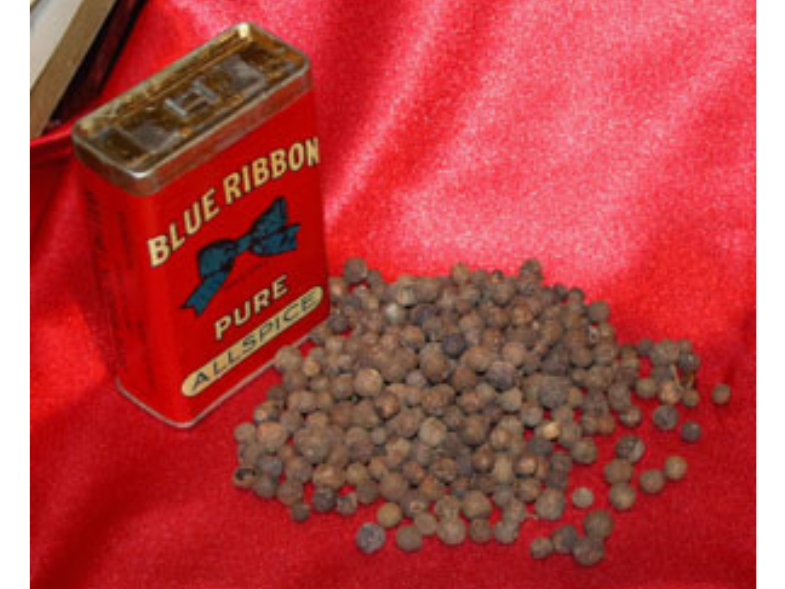
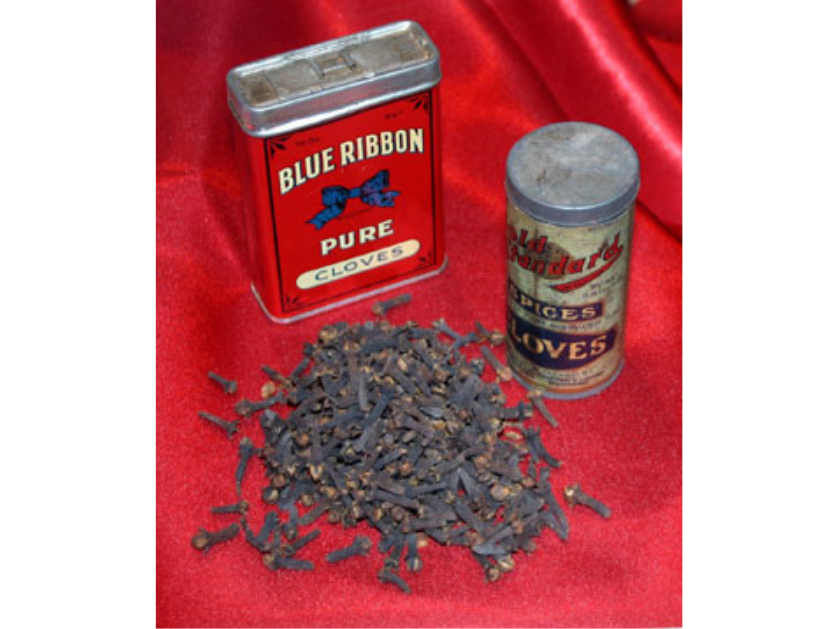
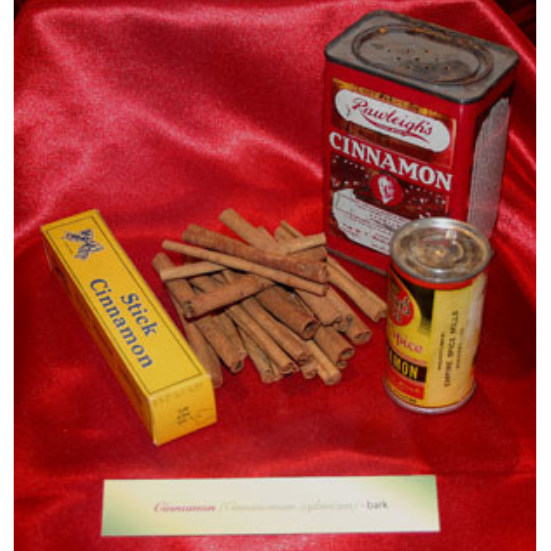
Three containers of various forms of cinnamon on a silky red backdrop accompanied by a small stack of cinnamon sticks.

As I grew older, I began to wonder why so many Christmas desserts and snacks featured nuts, dried fruits and lots of spices.  As I learned more about these traditional Christmas foods, I realized that nuts and dried fruits were some of the only food items available in the northern hemisphere in winter.  We tend to forget nowadays that 150 years ago just about everyone was on the 100-mile diet (no Mandarin oranges for Christmas back then!).  Spices were too expensive for common people to use frequently, so they were saved for special occasions, like weddings and holidays.

In this series of blogs, I will be talking about some of the plant foods that tend to show up in traditional Christmas baking.  First up, get ready to learn more about Christmas nuts (and no, I’m not referring to your crazy uncle Joe).


Image: Cinnamon sticks and old spice jars from the 2004 exhibit “A Natural History of Christmas Foods.”

Dr. Diana Bizecki Robson

Dr. Diana Bizecki Robson

Curator of Botany

Dr. Bizecki Robson obtained a Master’s Degree in Plant Ecology at the University of Saskatchewan studying rare plants of the mixed grass prairies. After working as an environmental consultant and sessional lecturer…
Meet Dr. Bizecki Robson

Beneath the Streets of Wolseley…

By Dr. Graham Young, past Curator of Palaeontology & Geology


The following is modified from a piece I wrote for the Museum’s newsletter Features, with the addition of several images that would not fit into the print version.

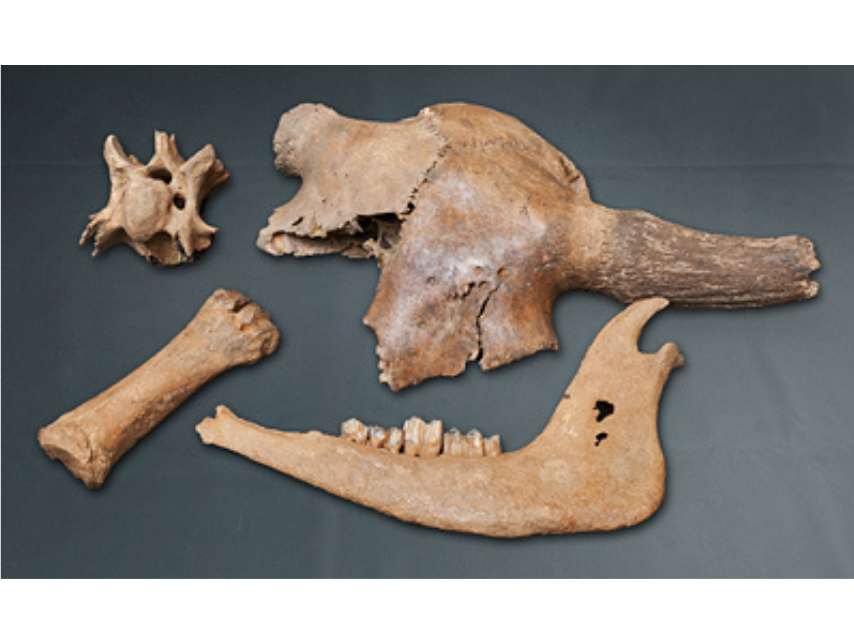
A selection of recovered bones from an excavation including a partial bison skull, a bison mandibles, and two other skeletal bones.

Walking through the streets of Winnipeg, I have sometimes imagined the sediment and rock beneath. First the soil, then the old river deposits, beneath them the lakebed clays of Lake Agassiz, and then layer after layer of ancient limestone extending downward toward the Precambrian Shield.

Although we know all of those things are present, we rarely get to see them unless something is brought to the surface by some lucky coincidence. Each of those lucky coincidences can help us to understand the past that is preserved beneath our feet.


Image: A selection of the bones found at the Ruby Street site (photo: Hans Thater).

In November, 1969, workers were excavating a sewer in the Wolseley area of Winnipeg, near Ruby Street and Palmerston Avenue. At the bottom of a 10.7 metre (35 foot) deep trench, a stiff blue clay was found. Above the clay were sand and gravel containing bison bones, along with clams and pieces of wood.

Tipped off by an anonymous phone call, Dr. George Lammers, the Museum’s first Curator of Geology and Paleontology (and my predecessor in this job), visited the site and collected the fossils. Since then, these unusual pieces have resided in the Museum’s collection, where they have provided much information about Winnipeg’s distant past.

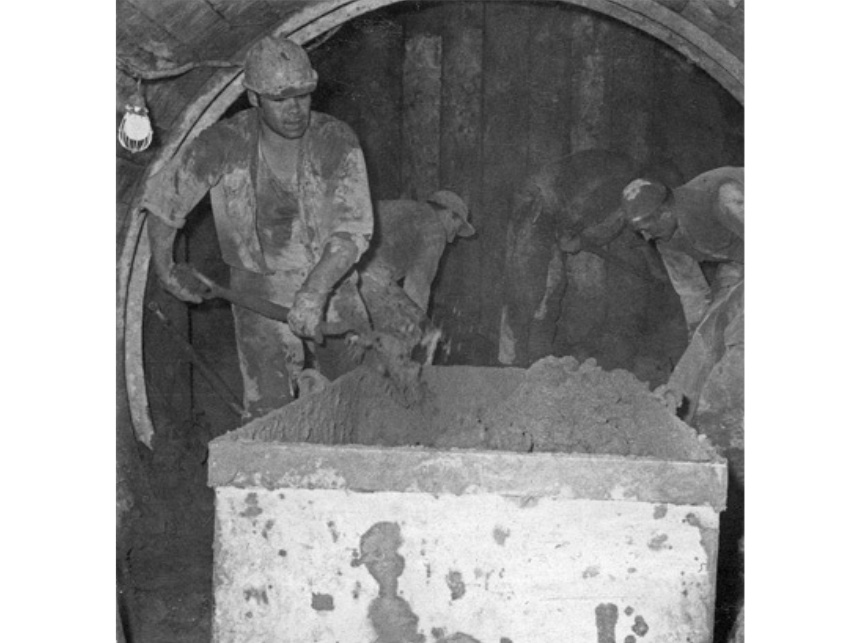
A black and white photograph of workers excavating a sewer in 1969 with shovels and a rail cart.

Crew working on the sewer excavation under Ruby Street.

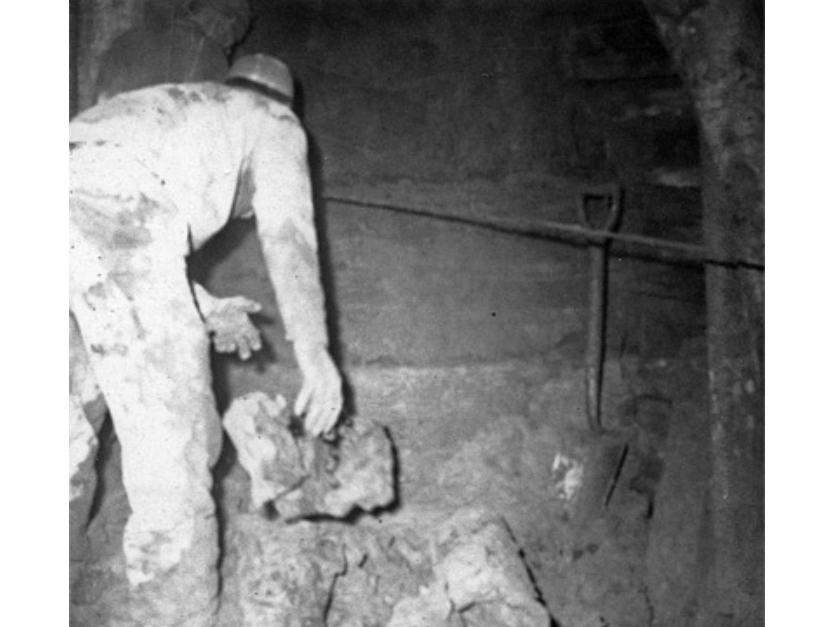
A black and white photograph of a construction worker in 1969 working on a sewer evacuation.

It looks as though sewer excavation was dirty, unpleasant work forty-one years ago (as I’m sure it still is today).

Some of the wood from deep in the trench was radiocarbon dated at about 7,500 years old (7,490 ± 80 years before the present). The bison parts include a portion of a robust skull, probably of the extinct species Bison antiquus occidentalis. This species, which became extinct about 5,000 to 4,000 years ago, had horns that were significantly larger than those of modern bison. We know that the bones came from more than one bison, because they include two left mandibles (jaw bones).

There are other bones that are probably elk, and it is quite likely that all of the skeletal parts belong to animals that had been broken up by decomposition, water flow and scavengers. One of the most interesting associated pieces is a log that had been gnawed by a beaver!

Handwritten notes on a piece of paper.

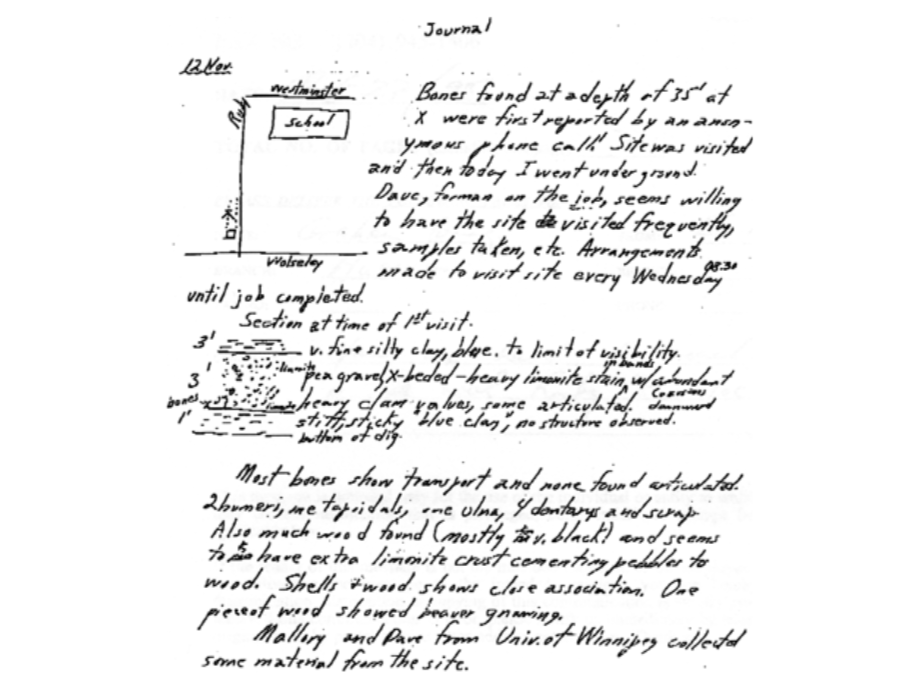
This page of field notes above was written by my predecessor as curator, George Lammers, when he first visited the Ruby Street site in November, 1969. If you go looking for this place, please be aware that Erik Nielsen, of the Manitoba Geological Survey, sent me a note in the 1990s suggesting that the actual site was at the corner of Ruby and Palmerston, as the school is on Wolseley, not Westminster.

The age information, together with the sediments and fossils, tells us a lot about prehistoric events in this area. The sand and gravel have features of an ancient river bar, in which the clams lived, and onto which the wood and the bison were deposited. We can imagine a spring flood carrying pieces of wood from oak and larch trees, along with the occasional carcass of an animal that fell into the water upstream.


Image: Field notes from George Lammers.

The clay at the bottom of the trench was probably deposited in Lake Agassiz, the giant lake that covered much of Manitoba as the glaciers melted at the end of the last Ice Age. Lake Agassiz receded from this area by 8,000 years ago, and this site tells us that the ancient Assiniboine River had already cut a  valley within a thousand years after the lake had left the area.

Sometimes we don’t have to travel far to find evidence of long past worlds!

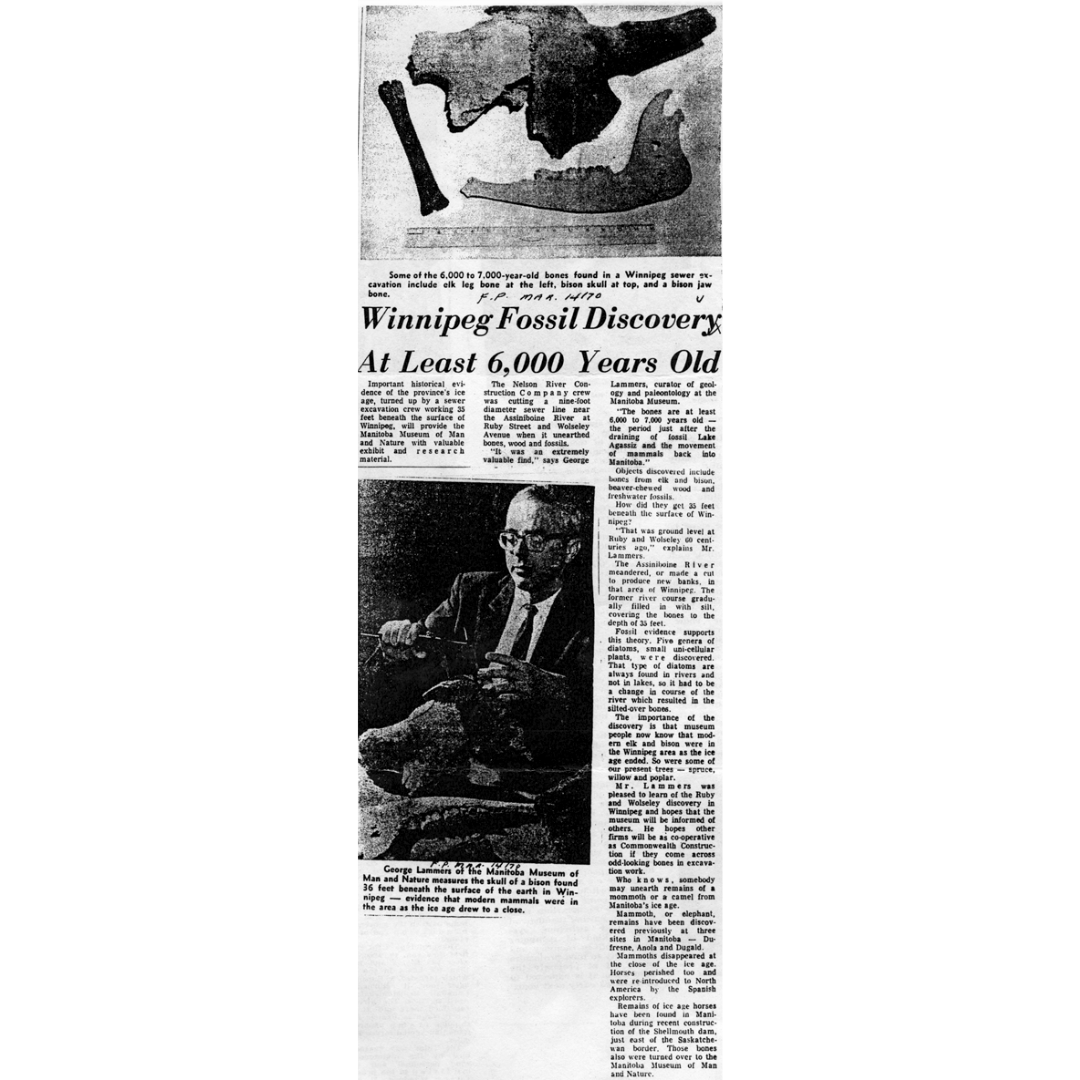
Newspaper clipping with black and white photographs and the headline "Winnipeg Fossil Discovery at Least 6,000 Years Old".

References:

Lammers, G. 1969. Unpublished field notes for 12 November, 1969. Manitoba Museum of Man and Nature.

Winnipeg Free Press. 1970. Winnipeg fossil discovery at least 6,000 years old (March 14, 1970).

Nielsen, E., W.B. McKillop, and G.G. Conley. 1993. Fluvial Sedimentology And paleoecology Of Holocene alluvial deposits, Red River, Manitoba. Géographie Physique et Quaternaire, 47(2): 193-210.


Image: This article from the Winnipeg Free Press of March 14th, 1970, shows how exciting the Ruby Street find was considered at the time!

Installing the Paul Kane Exhibit

When an exhibit comes down, our Productions staff open up the cases for us, then Collections and Conservation staff remove the artifacts and/or specimens and put them back in storage, or take them for treatment by freezing or carbon dioxide fumigation. Then the next exhibit can go in.

For this exhibit, the same large cases were used as for the previous exhibit.  The case in the centre of the room was removed, and a small square case was added on one wall.  Productions staff does all the moving of cases for us. Before any objects are put in, Productions also installs the graphics panels with text and images on the walls.

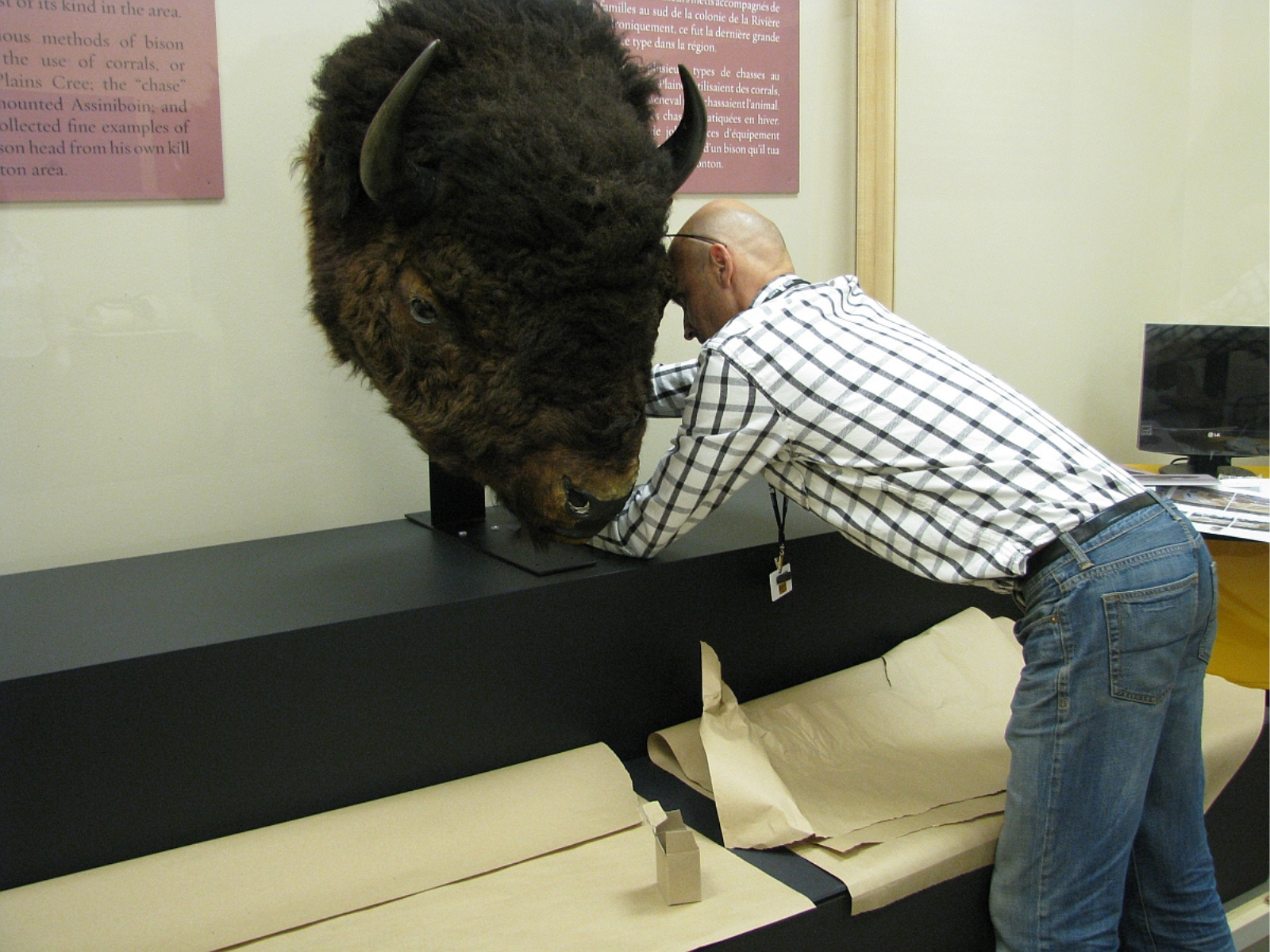
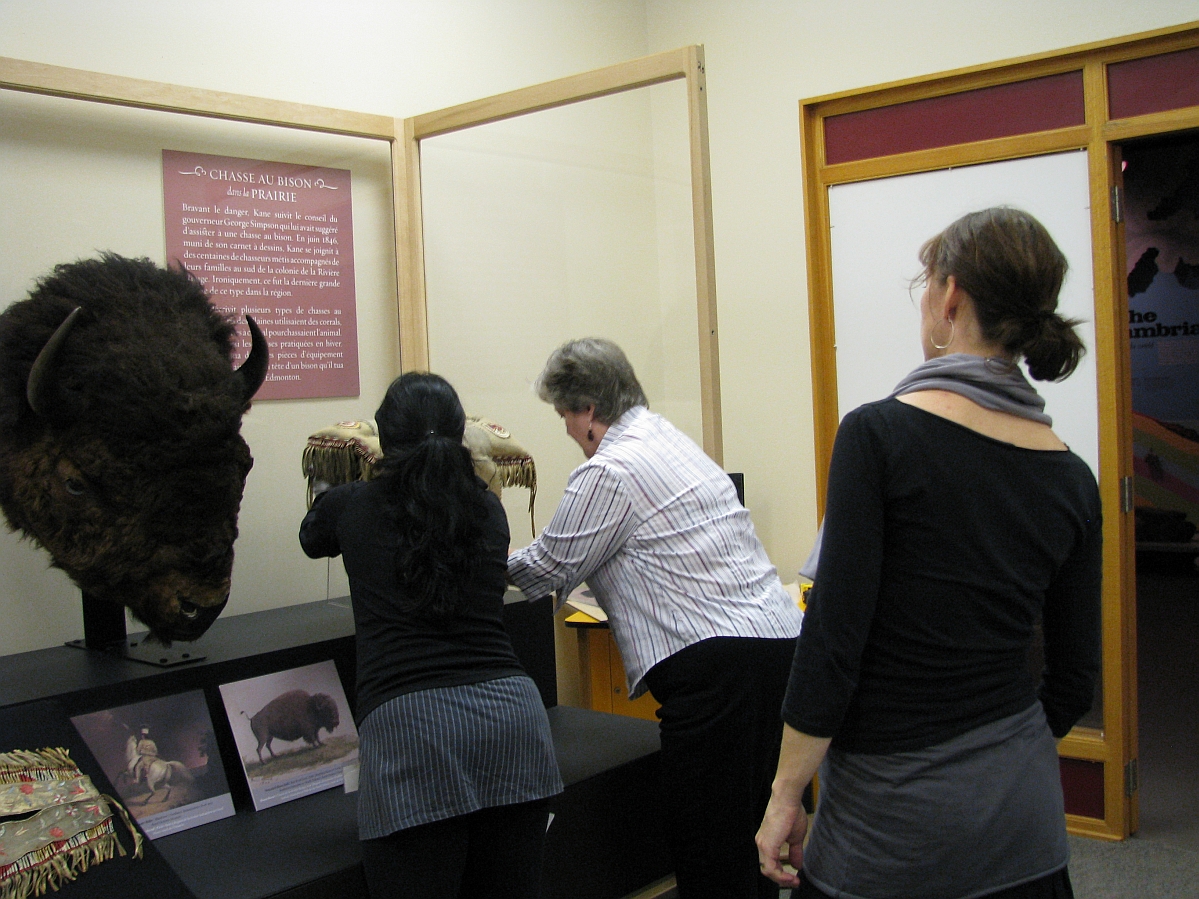
The first thing installed was a bison head. Technical Supervisor Bert Valentin oversaw the installation; the mount is heavy and needed to be screwed into the plinth it sat on.

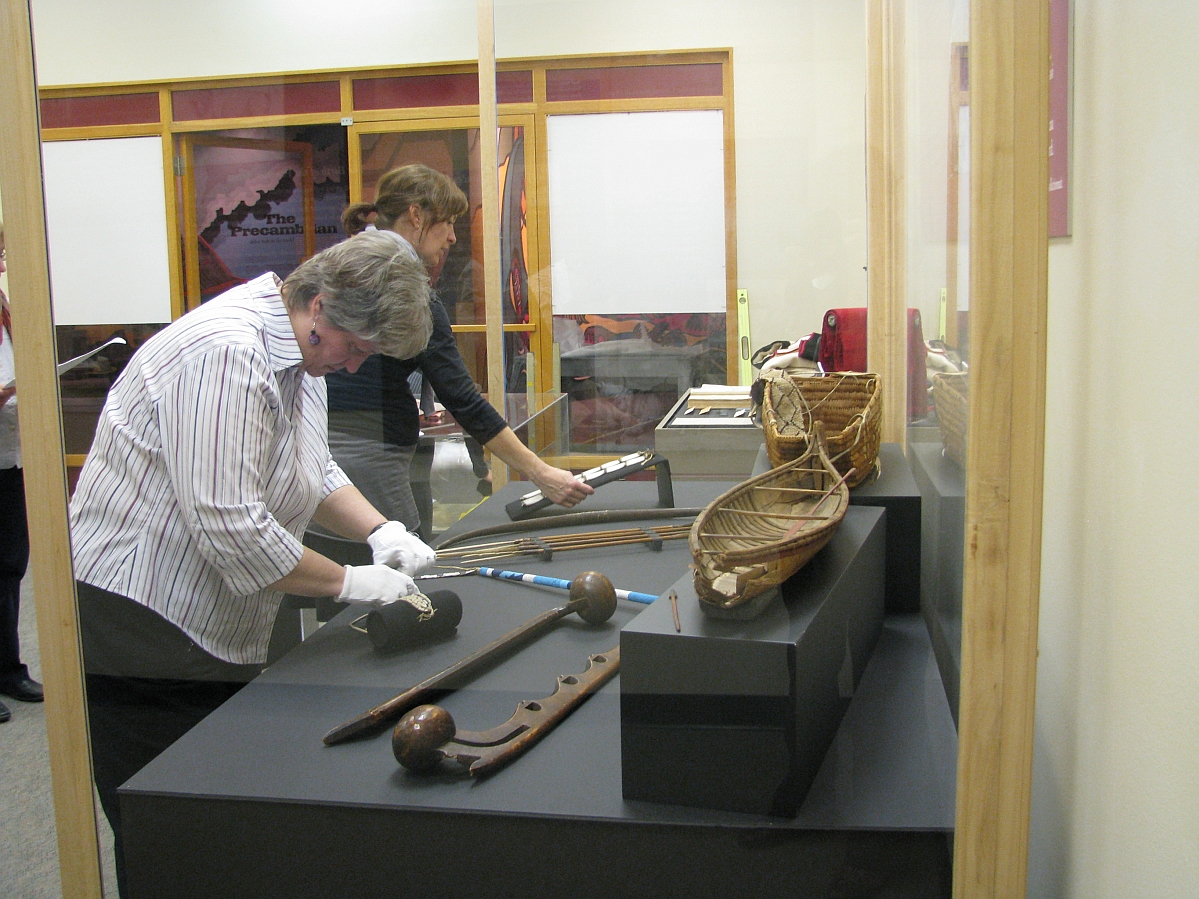
After that, it was a matter of placing the artifacts in their cases according to the layout Designer Stephanie Whitehouse had drawn up.

A person leaning out over a base attaching a large mounted bison head.

The mount is screwed down to the plinth.

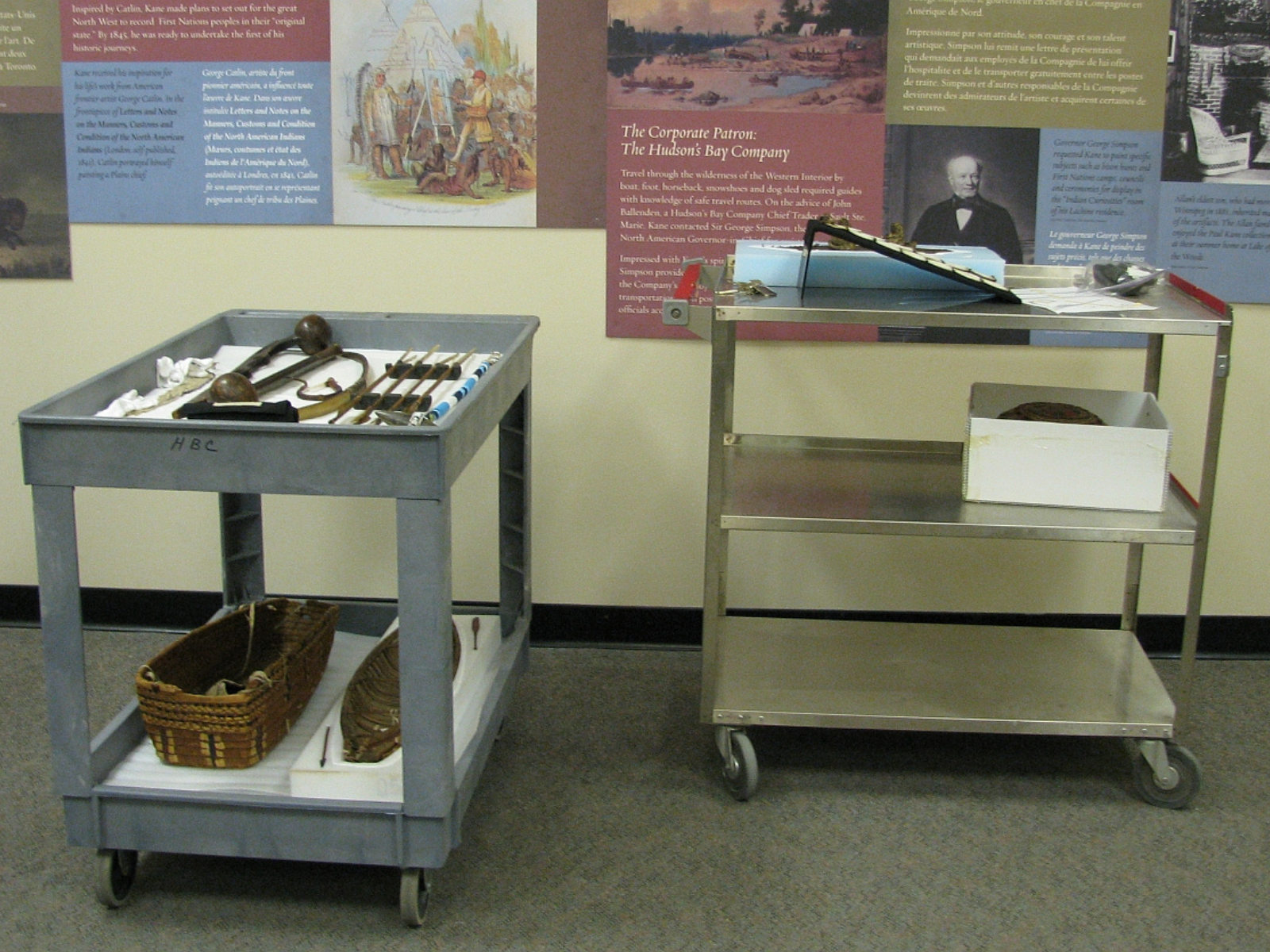
Two rolling carts with artifacts and objects laid out on their shelves.

Artifacts on carts, ready to install. Some of them have storage mounts.

Three people around a display case, two of whom are adjusting a piece on a mount as the other looks on.

Conservator Lisa May and Collections Assistant Nancy Anderson adjust a saddle while Designer Stephanie Whitehouse looks on.

Two individuals placing artifacts into display cases.

Nancy and Stephanie placing artifacts.

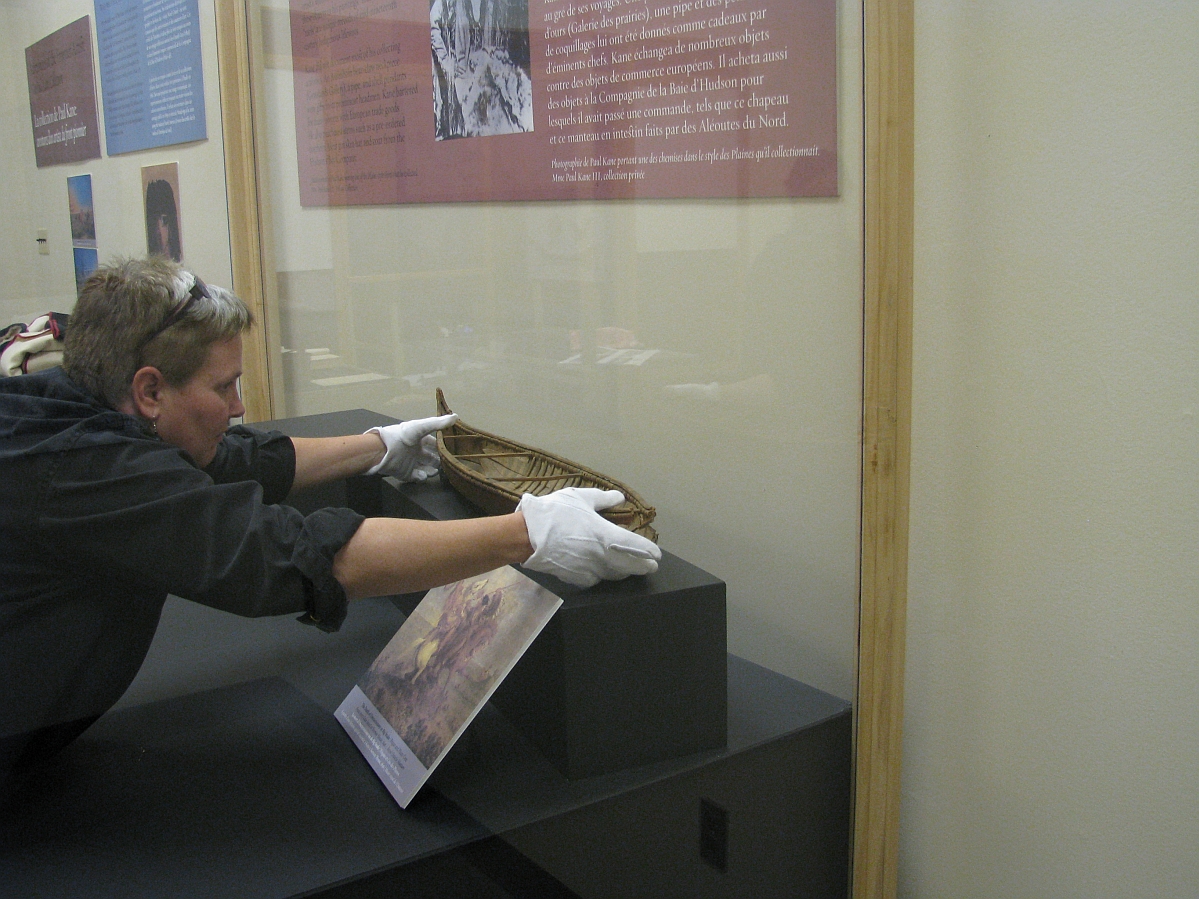
A museum staff person reaching into a display case, placing a model canoe in place.

A model canoe is carefully put in place. The staff wear cotton gloves to protect objects from dirt and oils that may be on their hands.

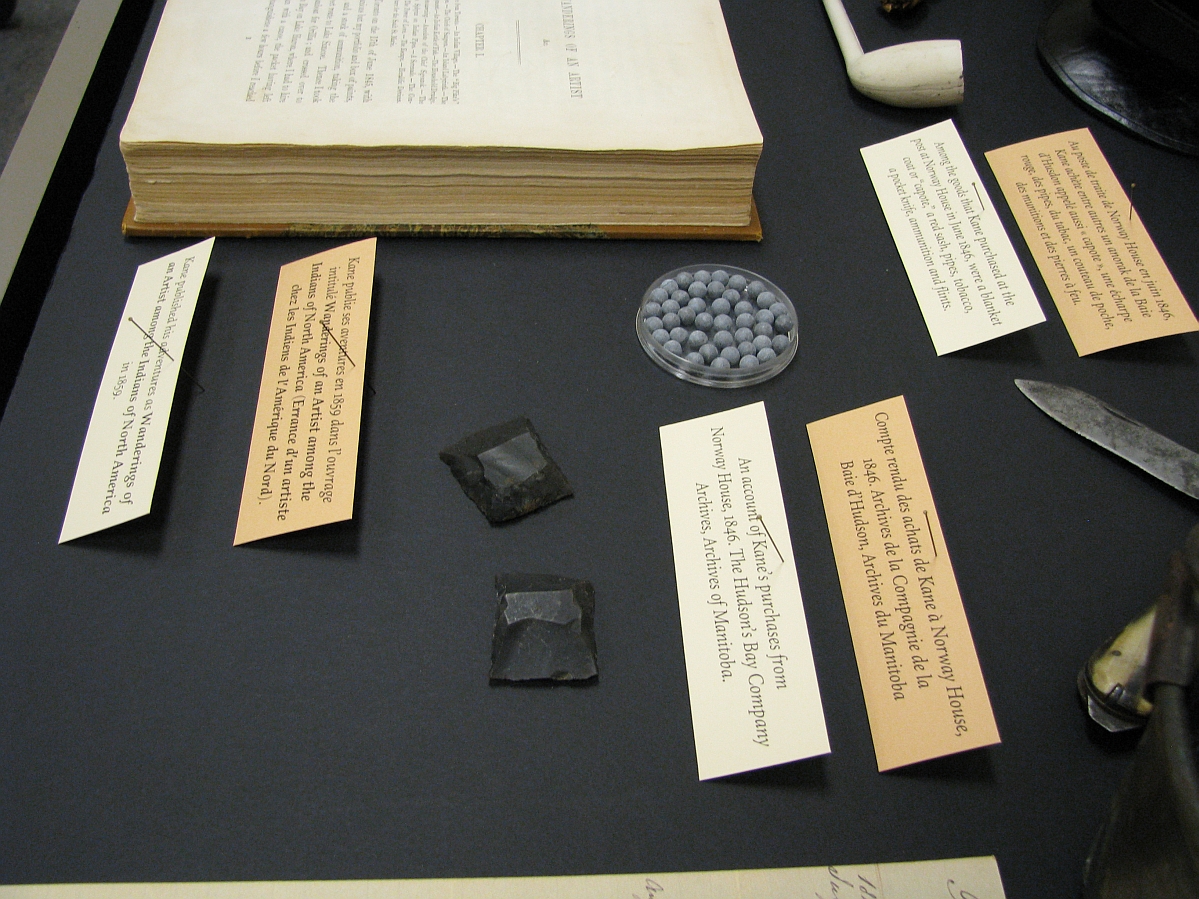
Labels propped up and placed in a display case next to objects.

Labels also have to be placed in the cases. These are supported simply on pins.

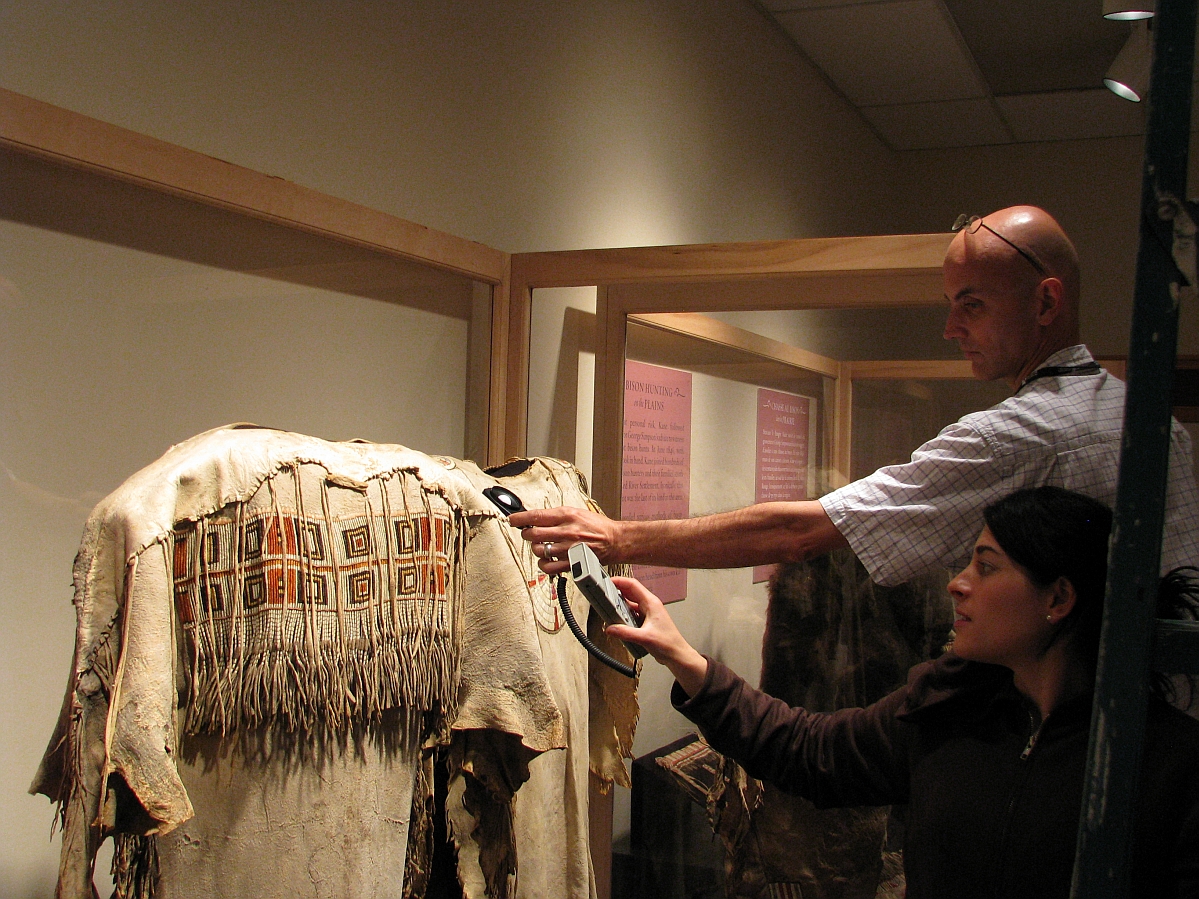
Two museum staff persons holding either end of a light reader over an object in a display case.

When all the artifacts and labels were in place, Conservator Lisa May checked light levels. Too much light can be damaging to objects; we try to restrict light exposure by using lower wattage lamps, turning down dimmers, aiming lights away from very sensitive things, and in general limiting exhibit times and storing collections in the dark as much as possible.

The final step was the closing up of the cases, done again by Productions staff.

Come down to the Museum to see the finished exhibit! It’s up until April 2011.


Image: Taking a reading with the light meter. The sensor is connected by a cord to the rest of the meter.

The Uglier the Better

When people find out that I study and collect wild plants I suspect that they have visions of me tromping through the woods to study beautiful orchids and majestic wildflowers. The fact of that matter is that attractive plants, orchids in particular, are pretty well-studied compared to many other groups.

Orchids attract a devoted cult of nature lovers who, for fun on their weekends and vacations, wander through bogs and remote forests in the hopes of discovering new species or taking a perfect photograph of a rare Lady’s-slipper. In fact Manitoba has three non-profit organizations (Nature Manitoba, Native Orchid Conservation Inc. and Conserve Native Plant Society Inc.) that are involved in some way or another in the appreciation, documentation and conservation of orchids. So I’m not too worried about the orchids-I know that they are being meticulously documented by their legions of fans.

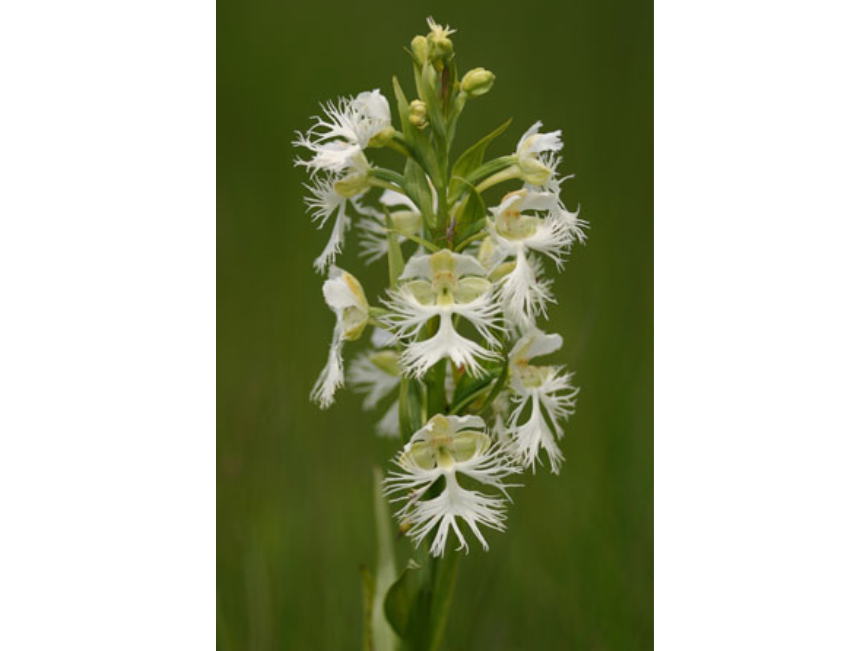
Close-up on the top of a plant with small fringed white flowers.

A stunning Western Prairie Fringed Orchid (Platanthera praeclara).

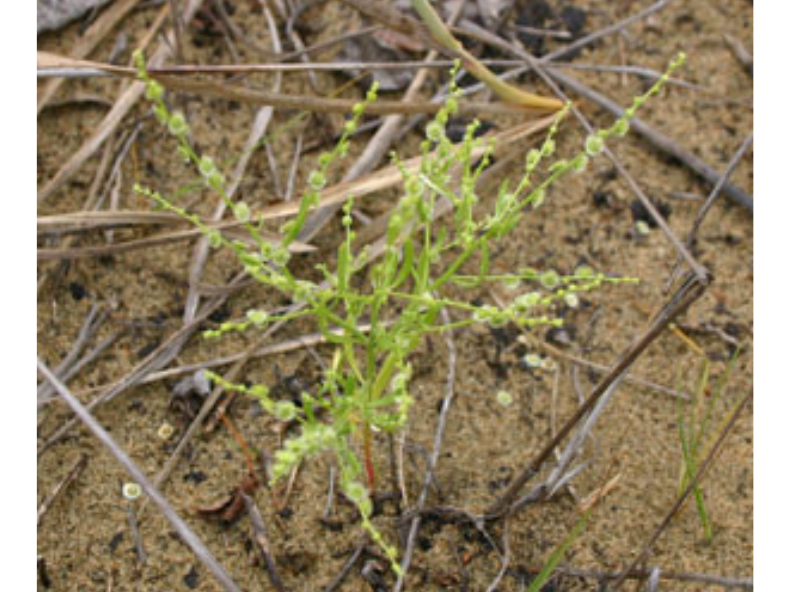
Close up on a small wispy plant growing in the ground.

We know very little about the rare annual Winged Pigweed (Cycloloma atriplicifolium).

What I am worried about are the ugly plants-the wind-pollinated ones with tiny flowers that grow in very specific microhabitats. These plants are either completely overlooked or regarded as weeds and stepped on. They are like neglected younger siblings in a large family that only get attention when they do something bad, like grow in someone’s garden or in a crack in the sidewalk. We don’t know much about the distribution and ecology of these ugly species and since they are unattractive and sometimes hay-fever inducing, no one loves them enough to study them. No one but me. I’ve developed and odd fondness for these homely plants because they are a challenge to locate and identify. I find it very satisfying to be able to identify plants that most amateur and even some professional botanists ignore.

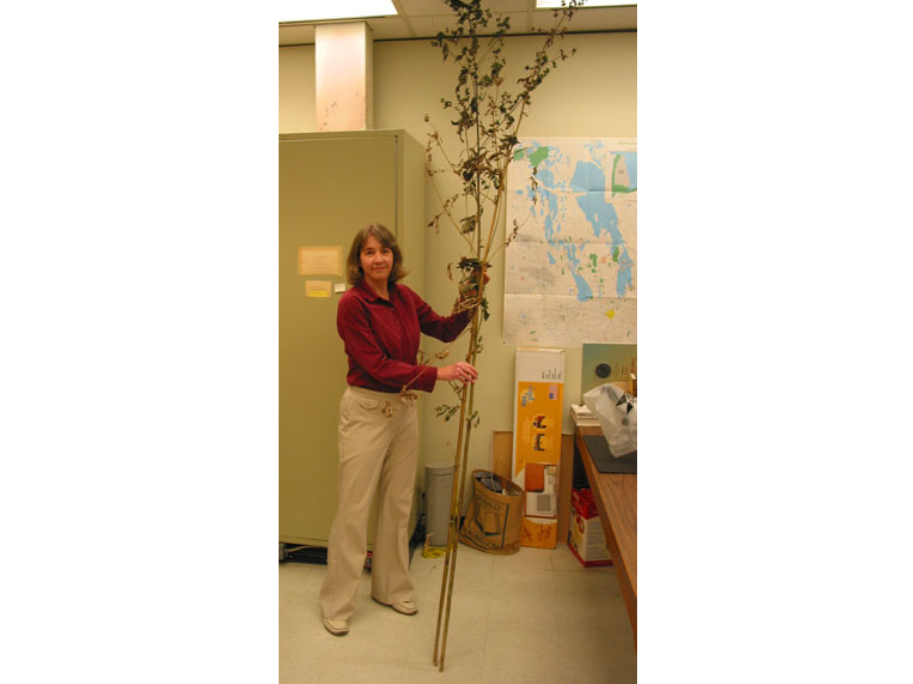
Dr. Diana Bizecki Robson in the botany lab holding a large ragweed specimen, taller than herself.

This ugly Giant Ragweed (Ambrosia trifida) specimen that was recently donated is 3 m tall.

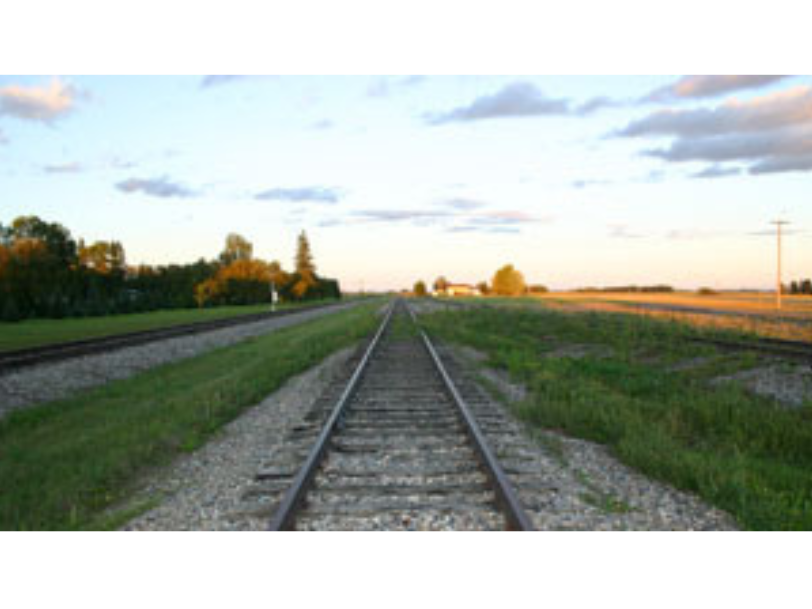
View looking down a set of railroad tracks with grass growing on both sides.

Abandoned railroad tracks are a great place to collect exotic weeds!

One of my recent projects has been to identify “taxonomic gaps” in the botanical collection here at the Museum. I prepared a list of plants that I know have been found in Manitoba but that we don’t have many (or any) specimens of. Most of them were “ugly” wind-pollinated sedges, rushes, grasses or exotic, naturalized “weeds.” Others were rare native annuals that don’t germinate every year and can be hard to find. Some were at the edges of their North American ranges and not present in high numbers. Quite a few are aquatic plants (like pondweeds) that grow in lakes, sloughs and rivers. Not a single native orchid though is unrepresented in our collection. In addition to our collection of specimens we also have a slide collection which features mostly pretty plants; there are 300 photographs of orchids but only one slide of goosefoot plant.

So I don’t really need a lot beautiful wildflowers in my collection (unless they are from a part of the province that hasn’t been visited before). What I DO need are the weeds growing by the side of the road, the pondweeds that cling to your leg when you’re going for a swim in the lake and the grass-like plants that grow in damp, muddy areas. But no orchids please, they’re just not ugly enough.

Dr. Diana Bizecki Robson

Dr. Diana Bizecki Robson

Curator of Botany

Dr. Bizecki Robson obtained a Master’s Degree in Plant Ecology at the University of Saskatchewan studying rare plants of the mixed grass prairies. After working as an environmental consultant and sessional lecturer…
Meet Dr. Bizecki Robson

Exhibit Preparation – Making Mounts

Our exhibit process starts months ahead of a scheduled opening. The initial meeting of an exhibit team reviews the theme and broad content description, and confirms dates for milestones such as public opening, label copy completion, etc.

Once the Curator has finalized artifacts and/or specimens that will be used, Collections and Conservation staff go into action. The Collections Assistant pulls the objects from storage so the Designer can start working on a layout. The Designer, Curator and department Manager (me) meet to look at the laid-out objects to discuss required mounts and any conservation concerns. The Conservators complete condition reports and start on the mounts. Usually, the Conservators make all soft mounts-that is, mounts made from foam, Coroplast or matboard- while our Productions staff makes mounts that need to be metal or Plexiglas. For the Discovery Room exhibit that just opened, Conservators Lisa May and Ellen Robinson made mounts from Coroplast and Ethafoam; Gallery Technician Wayne Switek made a painted steel mount for a large taxidermied bison head, which is quite heavy and needed the strength and rigidity of a metal mount.

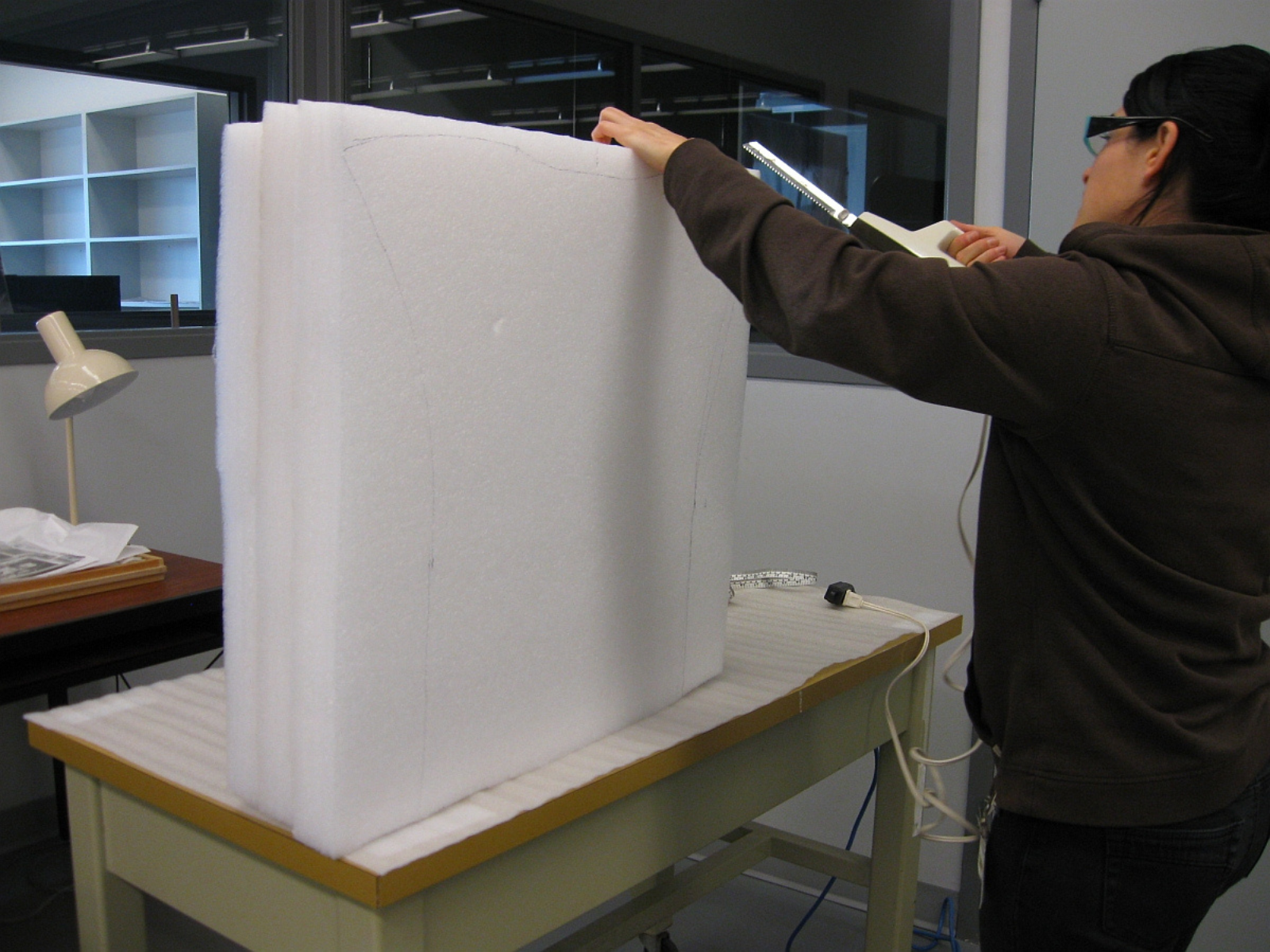
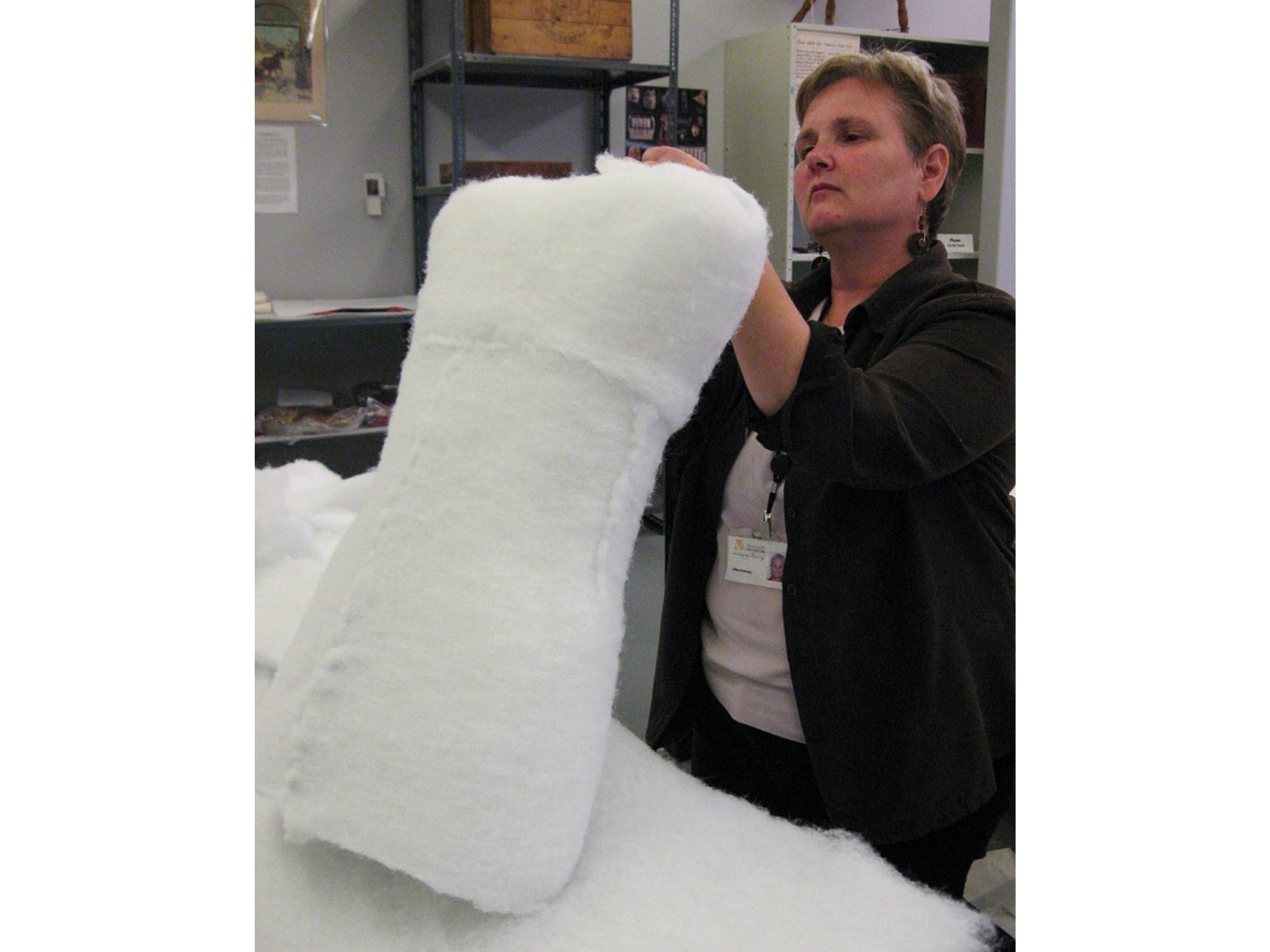
To make mounts for the hide shirt and dress in the exhibit, Lisa and Ellen used Ethafoam, a brand name for extruded, closed cell polyethylene foam widely used by museums. The Ethafoam comes in 2 foot by 8 foot planks. Two inches is the thickest available, so slabs are cut roughly to size and glued together with water based contact cement.

An individual using a hand tool to carve off a section of a large square of foam on a table.

Lisa starts cutting to shape with an electric knife.

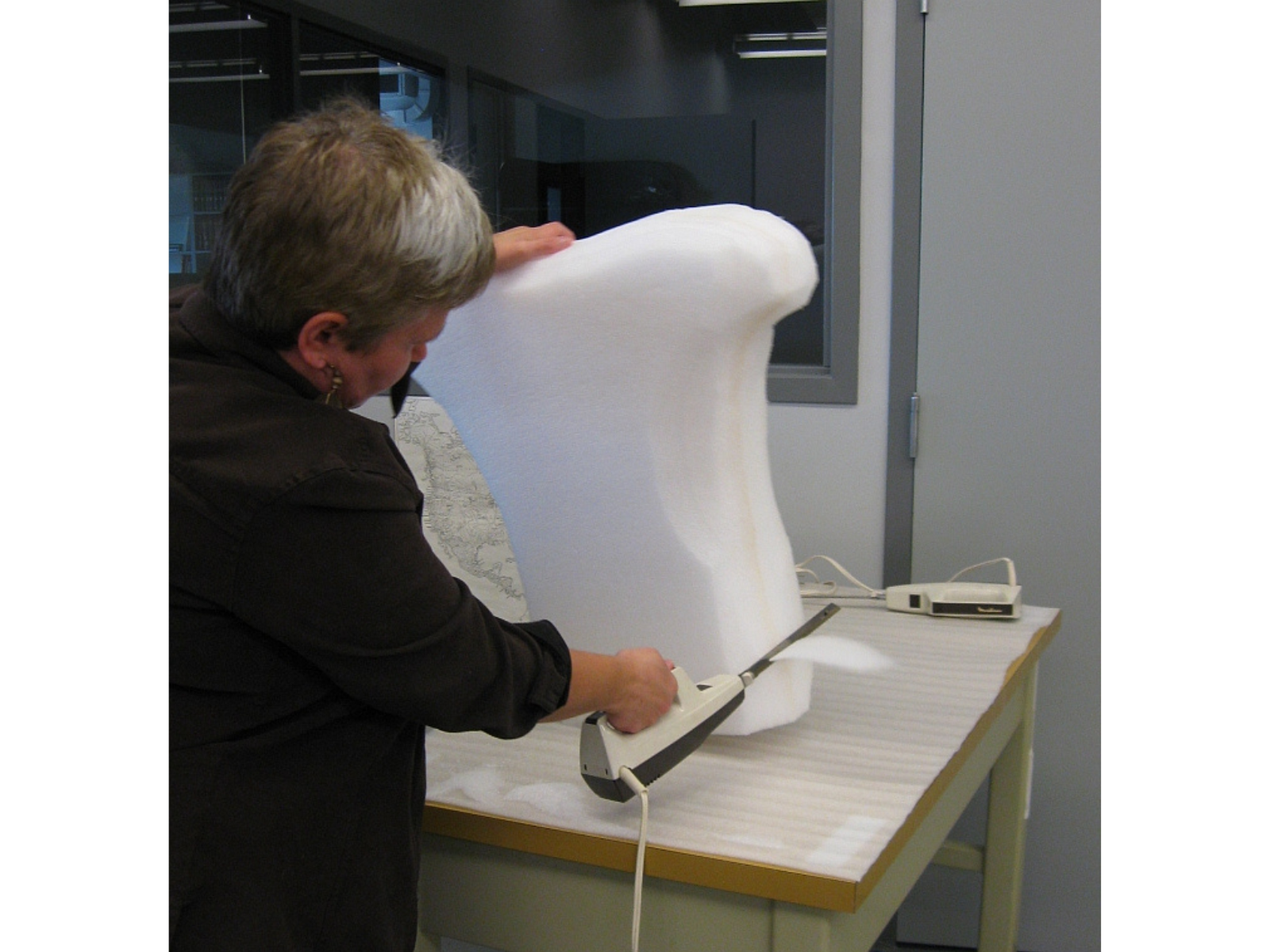
An individual using an electric knife hand tool shaping a large piece of foam on a table top.

Often, a lot of trimming is required.

An individual wrapping a carved piece of foam in white cotton batting.

Next, a layer of polyester quilt batting is added for padding.

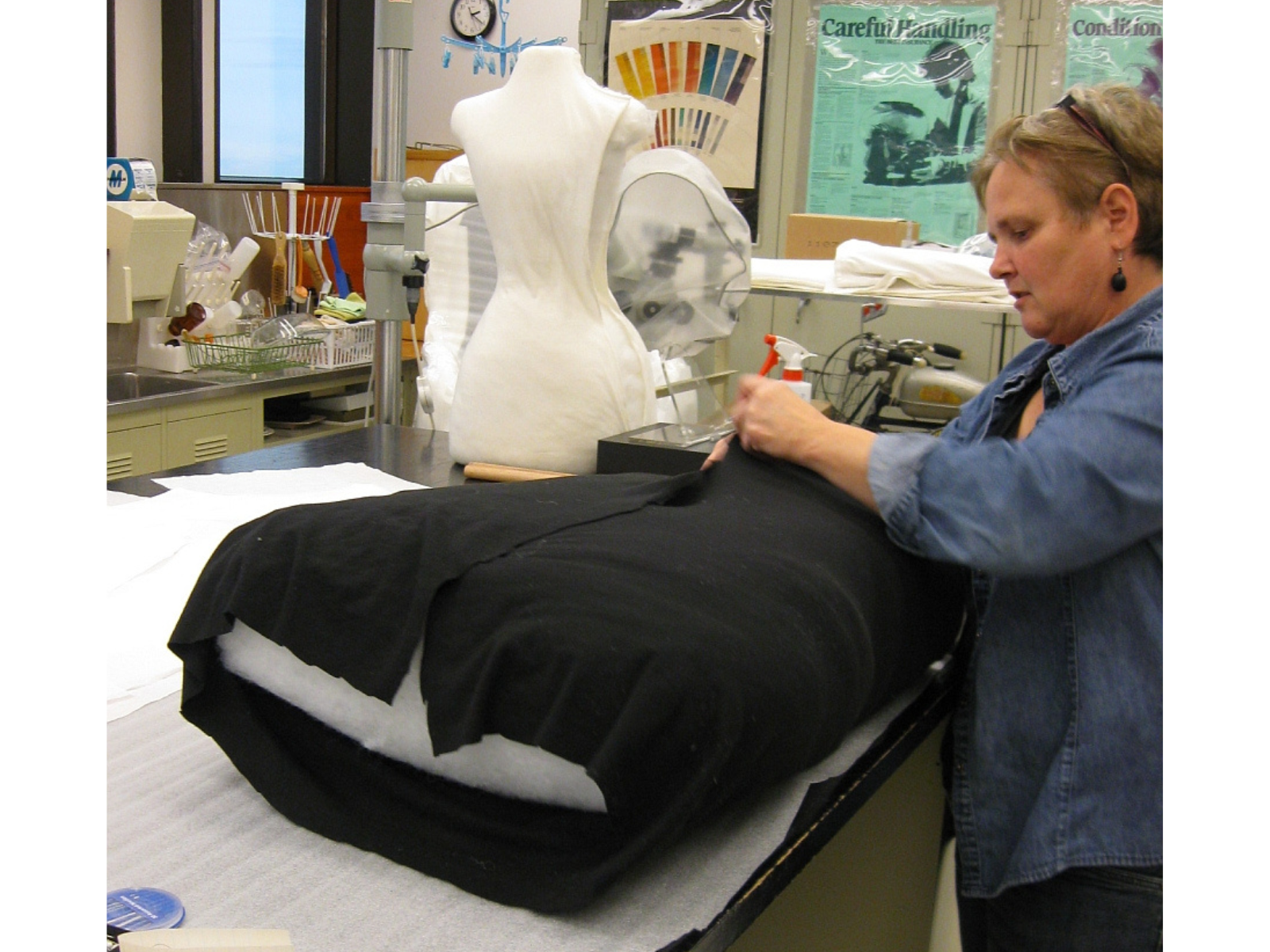
A layer of dark fabric being wrapped around a large carved block of foam on a table top.

Poly/cotton stretch knit fabric makes a final covering.

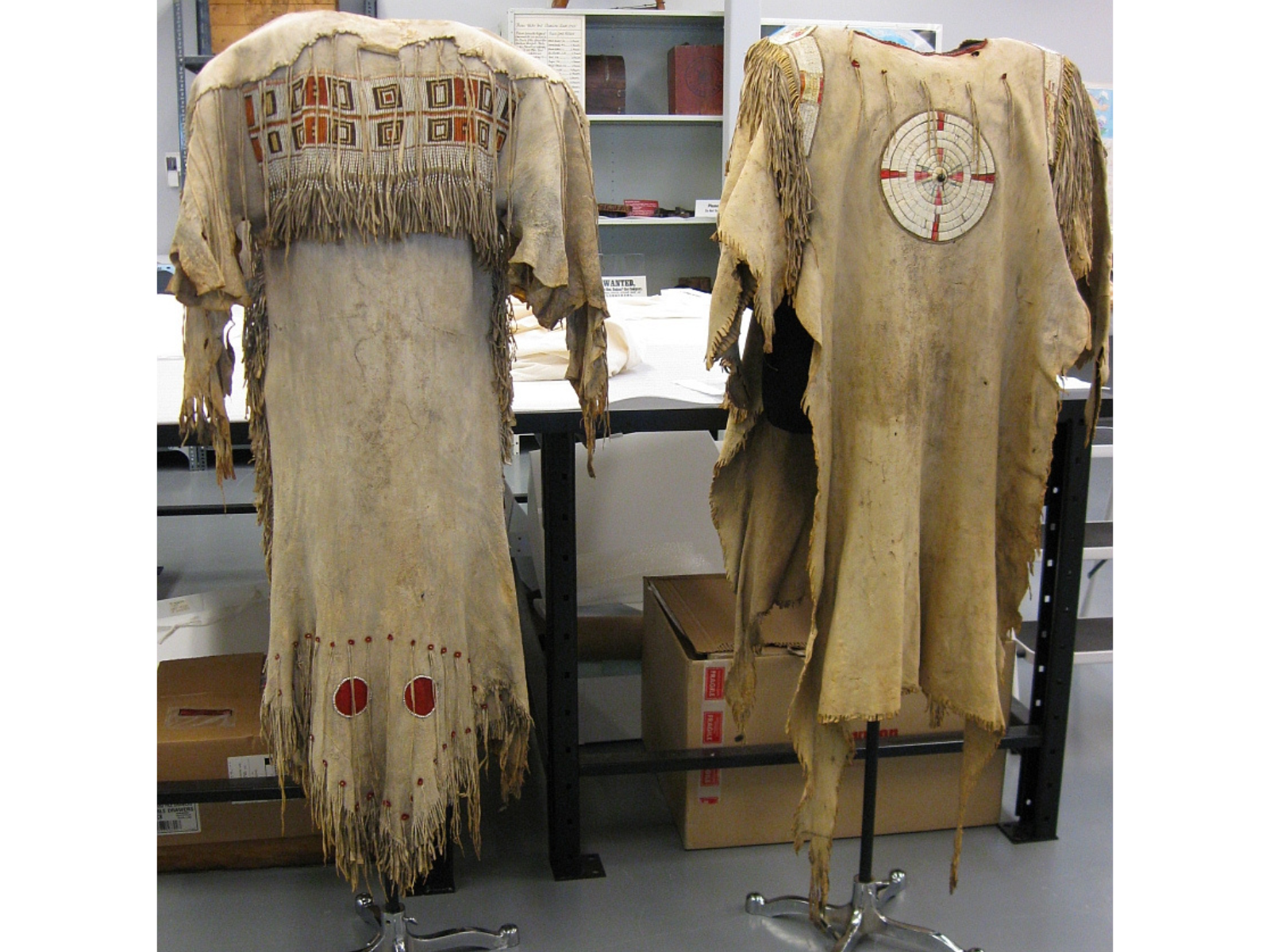
A beaded and fringed hide dress and shirt each placed on standing mannequin stands.

The dress and shirt on their mounts, ready for installation.

Next time, I’ll show you some pictures of us putting the artifacts in their display cases.

The Exhibit Collaboration

By Dr. Graham Young, past Curator of Palaeontology & Geology


An exhibit is a group invention. A curator devises and develops the content of the exhibit, deciding what specimens and other materials should be shown, and writing text about those materials. But most successful exhibits evolve through collaboration, in which the curator is but one player.

At this Museum, we have a well-defined process in which exhibits go through distinct development stages. Many people are involved as key decisions are made, and as work is carried out. There are, of course, the directors and administrators who ensure that schedules are followed and money is spent wisely, and who review the plans to ensure that they meet institutional standards and mandate. And there are the production experts who build casework, install lighting, create mounts, or make models. If specimens or artifacts are to be installed, then the collections and conservation staff will handle and treat them with the care they deserve. And there are meticulous editors who work diligently to check that “i”s are dotted and the “t”s are crossed, and not the other way around.

A section of the final time line layout.

This is a section of the final time line layout. The time line gives a very quick “Cook’s Tour” through key events in the first four billion years of Earth history.

A timeline graphic with notes and images for the exhibit.

If the exhibit depends on a spatial configuration of objects and information, then the curator may produce a sketch. This layout above was my first stab at fitting together materials for the exhibit. As with so many curatorial exercises, this first go had too many words!

Stephanie’s first draft layout is mostly concerned with where the big “blocks” of design will be located. The key considerations at this point are technical issues such as the height of exhibits relative to the viewer, the design of cases, and where access doors will be located.

A designer mock-up of an exhibit with silhouettes of visitors.

A first draft layout of an exhibit with blocks of text and images.

An initial layout with most of the content is rather “blocky”, and some details are higher on the wall than Stephanie would like. From my point of view, there are issues that some content is nowhere near where it should be on the time line. We like the colours and the overall feel, but there is a long way to go.

Draft titles have now been added, and the content has been shifted around so that it better matches the timeline. So now I am much happier, but Stephanie finds this way too busy, as do other staff. Images and text must be cut, and we are going to have to do some serious horse trading to come up with something that is acceptable to all concerned.

A designer mock-up of an exhibit with silhouettes of visitors.

A initial layout of an exhibit with blocks of text and images.

An final layout of an exhibit with blocks of text and images.

This one is nice and simple, but now a lot of content has been removed, and we will have to find a way to fit it back in.

The (almost) final design is radically different from what we started with. It is simpler, cleaner, yet it distills all the key points of exhibit content. There are still some place holder titles and images here, which will be modified in the final design as it goes to print.


Image: The final design of the exhibit.

Looking for the Invisible

By Kevin Brownlee, past Curator of Archaeology


I have long marveled at the beautiful stone woodworking tools that are in the archaeology collection at the Manitoba Museum and wondered what they were used for. It may seem like an odd question as these tools were obviously used for working wood. I wonder what past peoples made with these tools. Since understanding how all tools were used in the past is important for archaeologists, we are often searching for the invisible or the material culture that does not preserve. This is a major issue for archaeologists as we can only recover and study the durable material culture (stone, ceramic, bone). Non-durable items are rarely recovered and include items made from wood, bark, and hide. Although we can only study the durable material we must keep in mind the non-durable items that were used in the past.

An oblong carved stone tool with sharpened edges.

Stone Aaze from TMM collection.

An oblong carved stone tool with sharpened edges.

Stone adze from TMM collection.

An oblong carved stone tool with sharpened edges.

Stone adze from TMM collection.

The question remains… what were they making with these stone woodworking tools? Of course wood was very important to past people for constructing lodges; hide stretching frames and smoking racks. We also assume that finer items were carved including ladles, spoons, and bowls. Larger items were also manufactured including toboggans, snow shoe frames, paddles and canoes. By being aware of the non-durable materials and how durable items were used in the making of such items you can better appreciate the past and better interpret archaeological material.

A black and white photo of a hide stretched on a frame.

Moose hide on rack (TMM).

A black and white photo of a person using a tone tool to carve a wooden paddle.

John B. Moose making paddle (TMM).

One of many sophisticated technologies developed by First Nation people was the birch bark canoe. How long ago these were developed is unknown but populating the dense boreal forest of northern Manitoba 7,000 years ago would have been impossible without some form of water transportation.

Birch bark canoes were encountered by Europeans at contact and were far superior to any European water craft. Europeans quickly abandoned their boats in favour of First Nation made bark canoes, which were light and easily navigated the rivers and lakes of the interior.

On the left, two red antler pieces shaped into a pick and wedge. On the right, a charcoal drawing of a bone awl.

Contemporary birch bark canoe makers use a variety of tools including metal awls, axes, wooden wedges, froes, metal chisels, draw knives, and crooked knives. In the past bone awls, stone, antler and wood wedges, stone axes and adzes, bone chisels, and beaver incisors were used. We have found stone axes and adzes (woodworking tools), stone and antler wedges, bone awls, bone chisels at ancient camp sites and these may have been used in the manufacture of birch bark canoes. I had the good fortune this August to have the opportunity to participate in the making of a birch bark canoe. Although it was made during my vacation it gave me a better appreciation of this technology and how to interpret the archaeological collections at the Manitoba Museum.


Image: (Left) Antler pick and wedge (TMM), (Right) Moose bone awl drawing (TMM).

Stay tuned for my next blog that documents my experience in making and using a birch bark canoe.

It’s a Gas: Fumigation is an important tool to protect collections

We are in the process of fumigating some of our collections. All of the Natural History specimens that were on exhibit in the Discovery Room, as well as some taxidermied mounts (ie. stuffed animals), have been placed in our fumigation bubble to be treated. This is a regular procedure for objects that are susceptible to insect attack.

The Manitoba Museum has a large enclosure (“the bubble”) made of heavy duty plastic, with a steel frame inside, that is used to treat objects with carbon dioxide gas. The bubble is filled with carbon dioxide to at least a 60% level, to displace the oxygen. The resulting low level of oxygen, if maintained for 14 days, will kill insects at all life stages – adult, larva or egg.

A rectangular shape covered with a bright blue tarp.

Here is a picture of our fumigation bubble.

Three grey tanks of carbon dioxide standing against a wall in front of a smaller grey metal box.

Here are the tanks of carbon dioxide.

This treatment has been conducted many times over the ten years that we’ve had the bubble in place. It is completely effective in eradicating any insects found on museum objects. The procedure is a preventive measure that is used as part of an Integrated Pest Management program, in order to keep our collections free of damage from museum pests.

Whenever circumstances pose a risk to objects, such as receipt of new acquisitions from outside, return of loans to other institutions, or removal from display in the galleries, they are put through some kind of treatment against pests. Usually, it’s freezing, which is a simple, effective way to kill insects in most circumstances. It’s not always appropriate, though. Very large objects (such as a muskox) can’t fit into any of our freezers. Thick objects also don’t freeze well, because by the time the center of the object is frozen, the insect has adapted to the temperature change and isn’t killed (they’re quite amazing that way!) Also, if we have a large number of objects, freezing isn’t logistically feasible. In these cases the fumigation bubble is ideal.

Whom to be Thankful to on Thanksgiving

Ask anyone if they can name a type of Ukrainian food and they will immediately answer perogies. Italian food is clearly spaghetti and meatballs while spicy, peanut-based curries are classic Thai fare. But ask someone to name a Canadian or American dish and most people will either draw a blank or perhaps mutter something about hamburgers and hot dogs (which are actually German) or pizza (which is Italian). It is unfortunate that so many of us forget that a traditional Thanksgiving dinner features some of the many foods that are native to the Americas.

First of all what do I mean by a traditional Thanksgiving dinner? I tend to think of roast turkey, cranberry sauce, wild rice and chestnut stuffing, cornbread, mashed potatoes, sweet potatoes, baked squash and, for dessert, pumpkin, blueberry, maple sugar, and/or pecan pie. What is unknown to many people is that the main ingredient in each of these foods is native to the Americas.

Museum display case of wild rice.

Manitoba Museum exhibit on wild rice in the Boreal Gallery.

A selection of six gourds of various shapes and textures.

Gourds and winter squash are native to the Americas.

Turkeys were found wild all over North America. Cranberries and blueberries are low shrubs that grow in the boreal forests of Canada and the southern United States; they are now raised commercially. Wild rice is grown and harvested by First Nations in the wetlands of northeastern Canada. Pecan, maple, and American chestnut trees dominated the eastern deciduous forests in Canada and the United States. Although pecan and maple trees are still common, the American chestnut is almost extinct, the victim of a disease (i.e. Chestnut blight) accidentally brought to the Americas from Asia. Corn and squashes (including pumpkins) were originally bred by the indigenous peoples of Mexico and Central America, while potatoes were a staple of the Peruvian Inca.
The trade of seeds and migration of indigenous peoples throughout the Americas resulted in the spread of these food crops far from their centers of origin. When Europeans first arrived, corn, beans, and squash (called “the three sisters” by First Nations) were being grown in North America in a unique polycultural system. The corn acts as a pole for the beans to climb up, the beans fix nitrogen in the soil for the corn and the squashes suppress weeds and help the soil retain moisture. Eaten together, these three foods are also highly nutritious and complementary, giving you all your amino acids, many vitamins and fiber. In the 1980’s Manitoba Museum archaeologist Leigh Syms (now retired) discovered seeds of corn in storage chambers near Lockport and Snyder, evidence of pre-European agriculture in Manitoba. Eventually “new world” food crops spread to other continents after Europeans reached America and are now being grown all over the globe. In fact, one is hard pressed to find a type of cuisine that hasn’t been impacted by American food plants. Ukrainians weren’t stuffing their perogies with potatoes before 1,500 AD. Italians didn’t have any pizza or marinara sauce before then either as tomatoes are also a “new world” crop. And spicy Thai curries that rely on peanuts and hot peppers were also non-existent; both plants are native to Mexico. Desserts were also pretty boring before 1492 since the indigenous peoples of Central America discovered two of the most popular flavorings: chocolate and vanilla.


Image: Museum specimen of American Chestnut.

A small pile of brown cocoa nibs on a black backdrop.

Cocoa nibs from the Museum’s botany collection.

A Museum exhibit  with three sides and benches for seating to engage and read material.

First Farmers exhibit in the Museum’s Grasslands Gallery.
An examination of the history of agriculture and world cuisine reminds us that culture, far from being static, is constantly in flux. So the next time you encounter a foreigner who asks about Canadian culture mention the significance of the Thanksgiving dinner and all of the cultures whose world cuisines were forever changed by the plants of this continent and the First Nations who began cultivating them. Happy Thanksgiving!
Dr. Diana Bizecki Robson

Dr. Diana Bizecki Robson

Curator of Botany

Dr. Bizecki Robson obtained a Master’s Degree in Plant Ecology at the University of Saskatchewan studying rare plants of the mixed grass prairies. After working as an environmental consultant and sessional lecturer…
Meet Dr. Bizecki Robson