


Posted on: Wednesday November 10, 2010
When an exhibit comes down, our Productions staff open up the cases for us, then Collections and Conservation staff remove the artifacts and/or specimens and put them back in storage, or take them for treatment by freezing or carbon dioxide fumigation. Then the next exhibit can go in.
For this exhibit, the same large cases were used as for the previous exhibit. The case in the centre of the room was removed, and a small square case was added on one wall. Productions staff does all the moving of cases for us. Before any objects are put in, Productions also installs the graphics panels with text and images on the walls.
The first thing installed was a bison head. Technical Supervisor Bert Valentin oversaw the installation; the mount is heavy and needed to be screwed into the plinth it sat on.
After that, it was a matter of placing the artifacts in their cases according to the layout Designer Stephanie Whitehouse had drawn up.
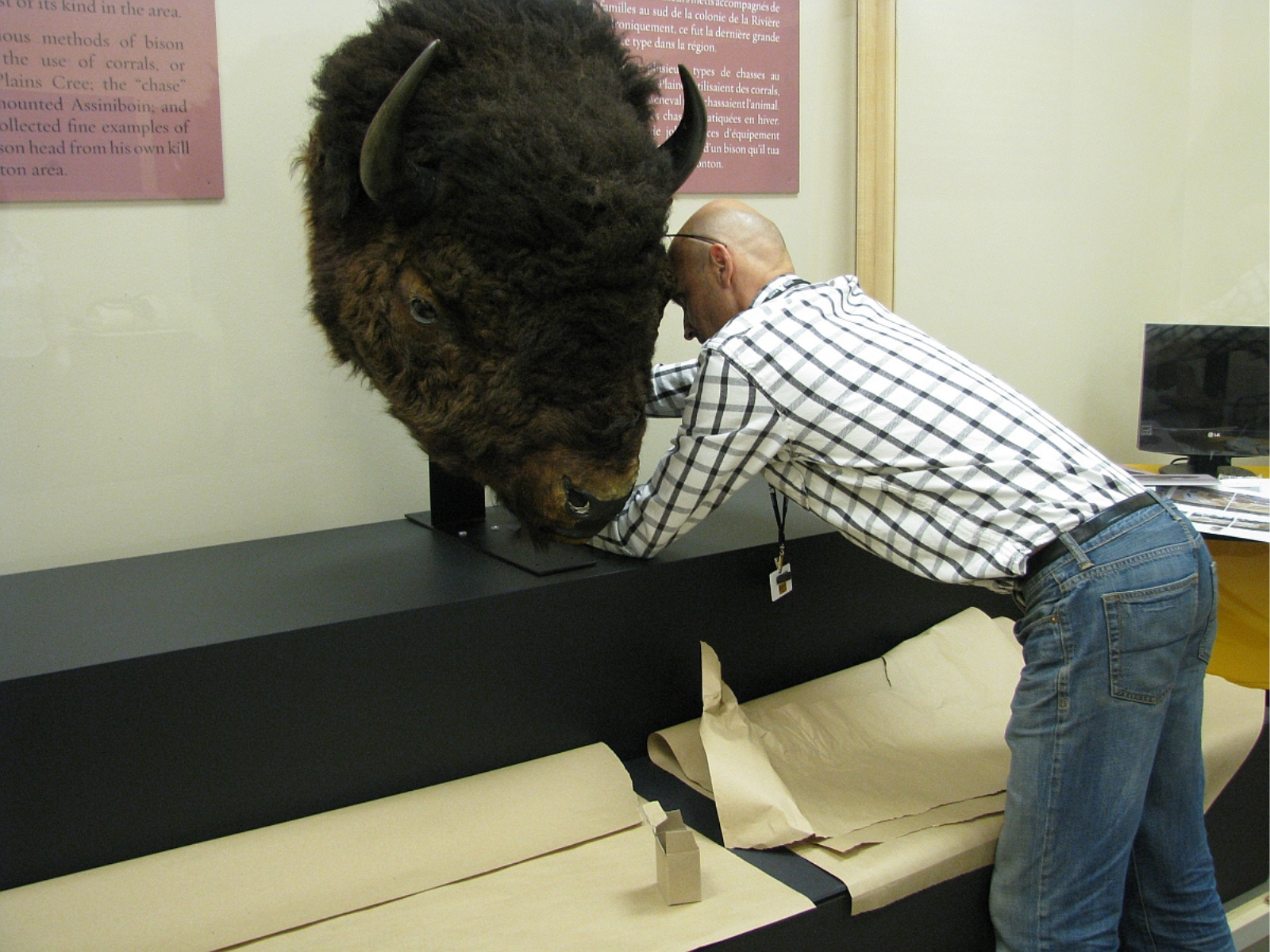
The mount is screwed down to the plinth.
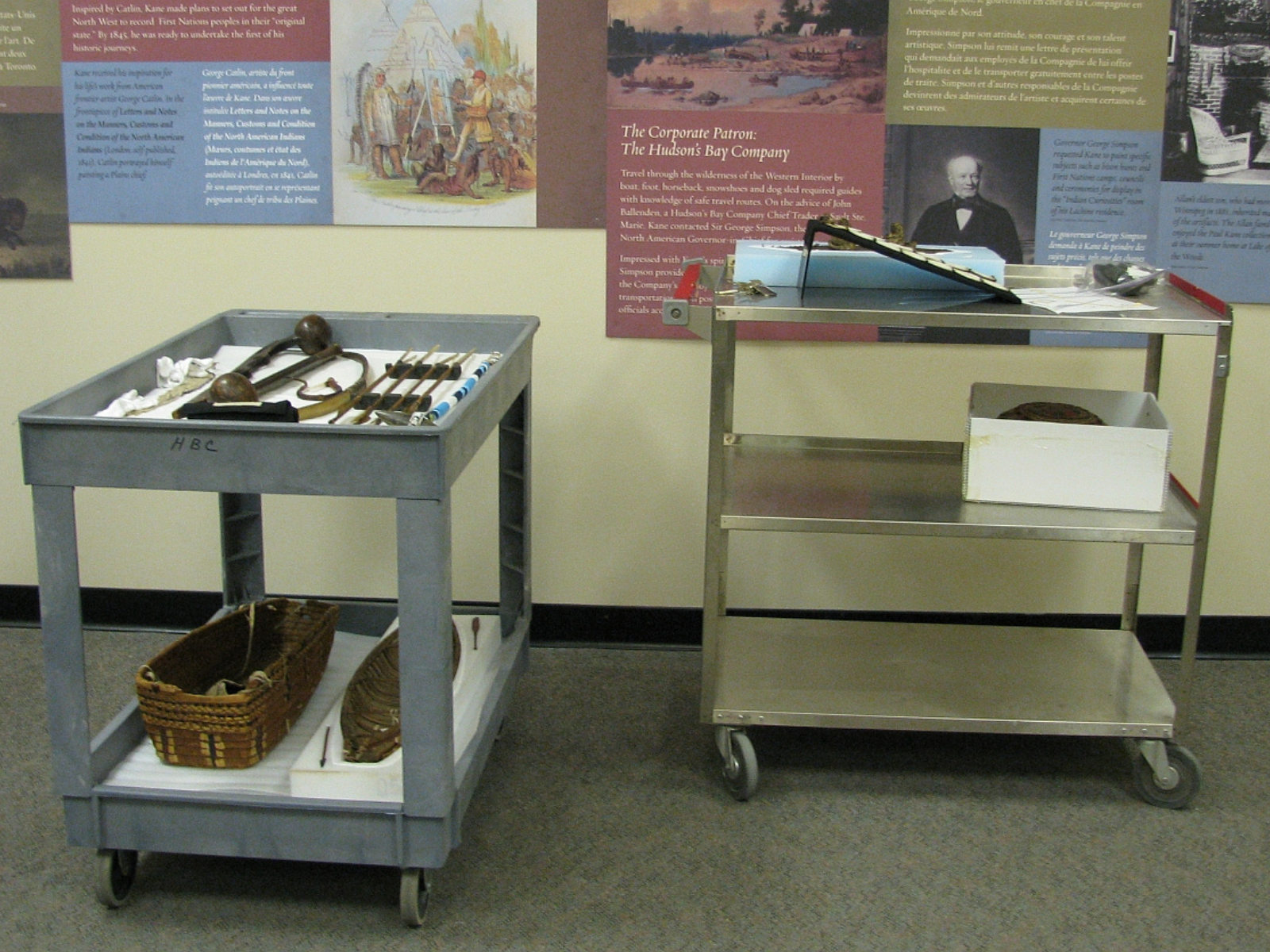
Artifacts on carts, ready to install. Some of them have storage mounts.
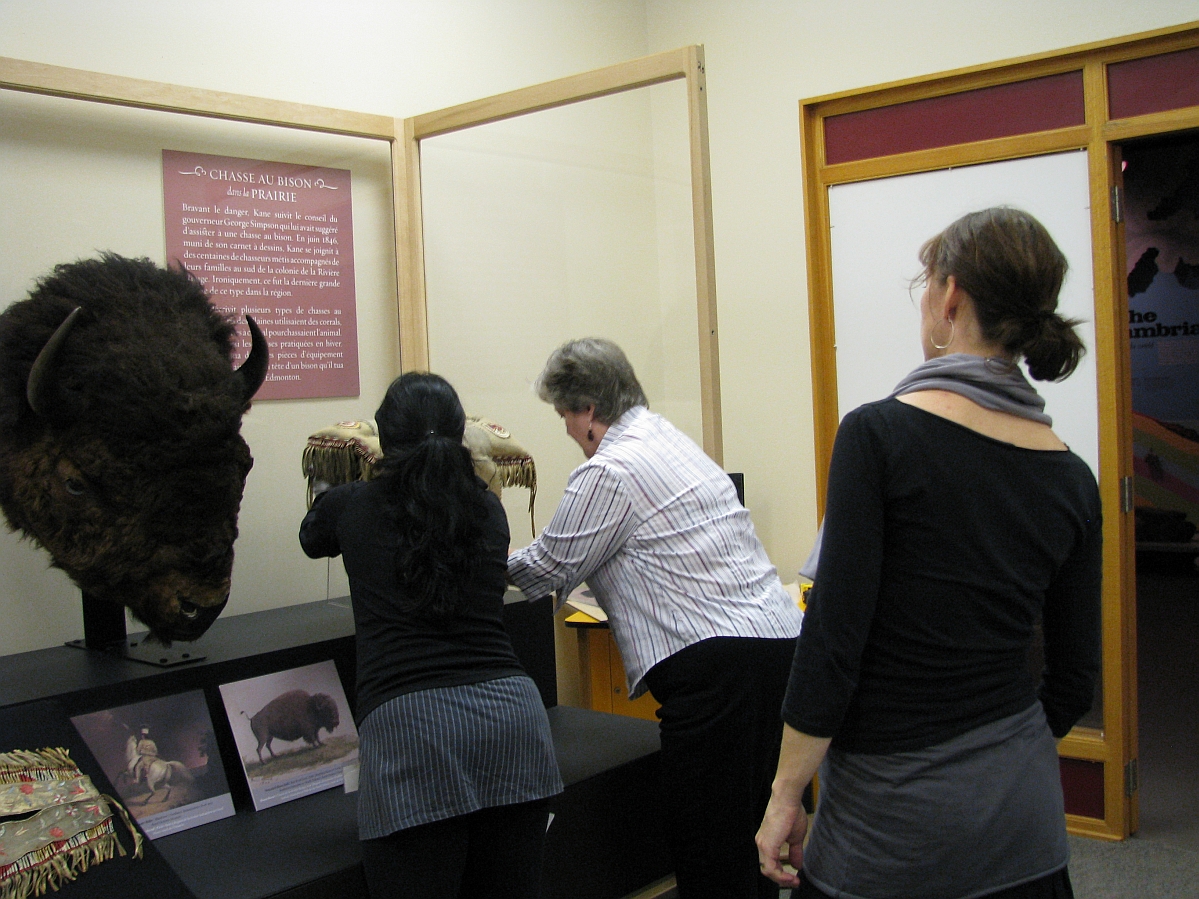
Conservator Lisa May and Collections Assistant Nancy Anderson adjust a saddle while Designer Stephanie Whitehouse looks on.
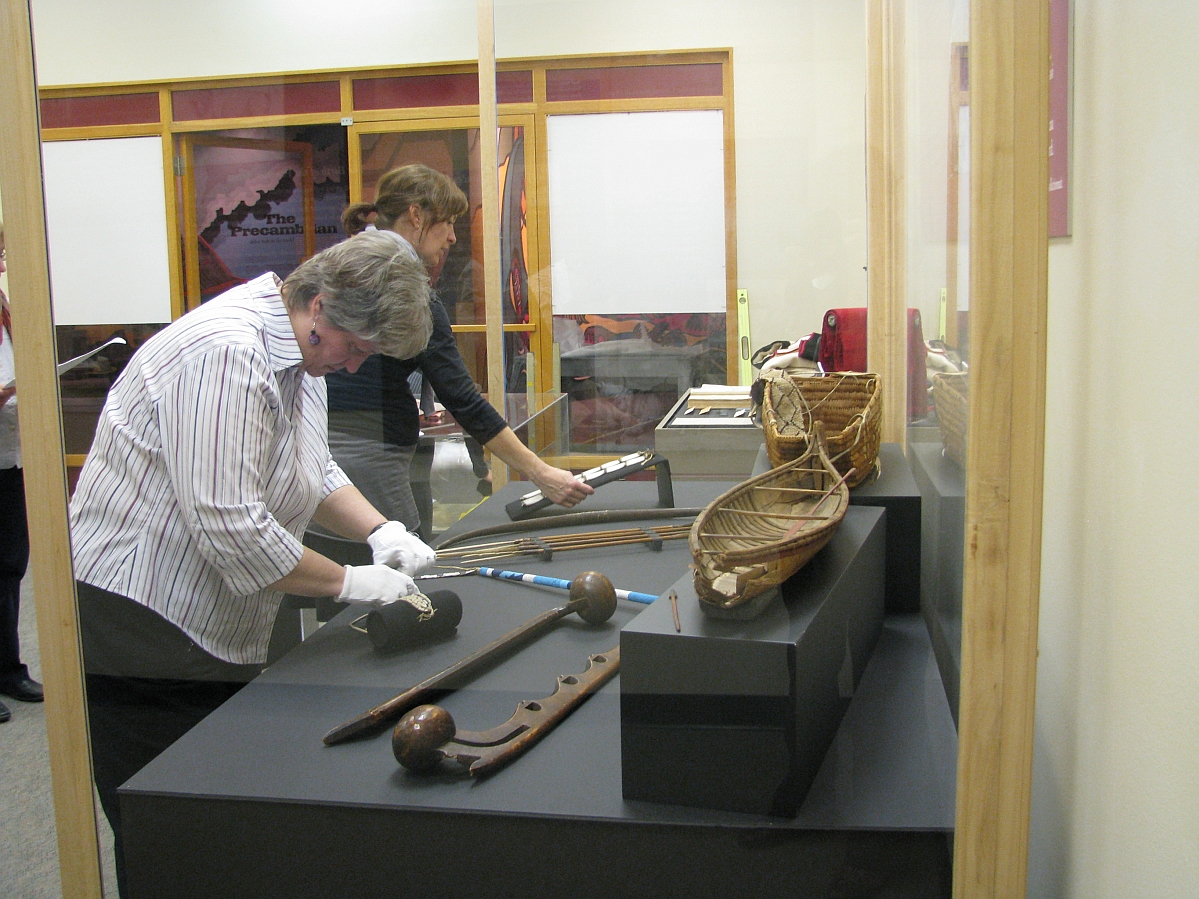
Nancy and Stephanie placing artifacts.
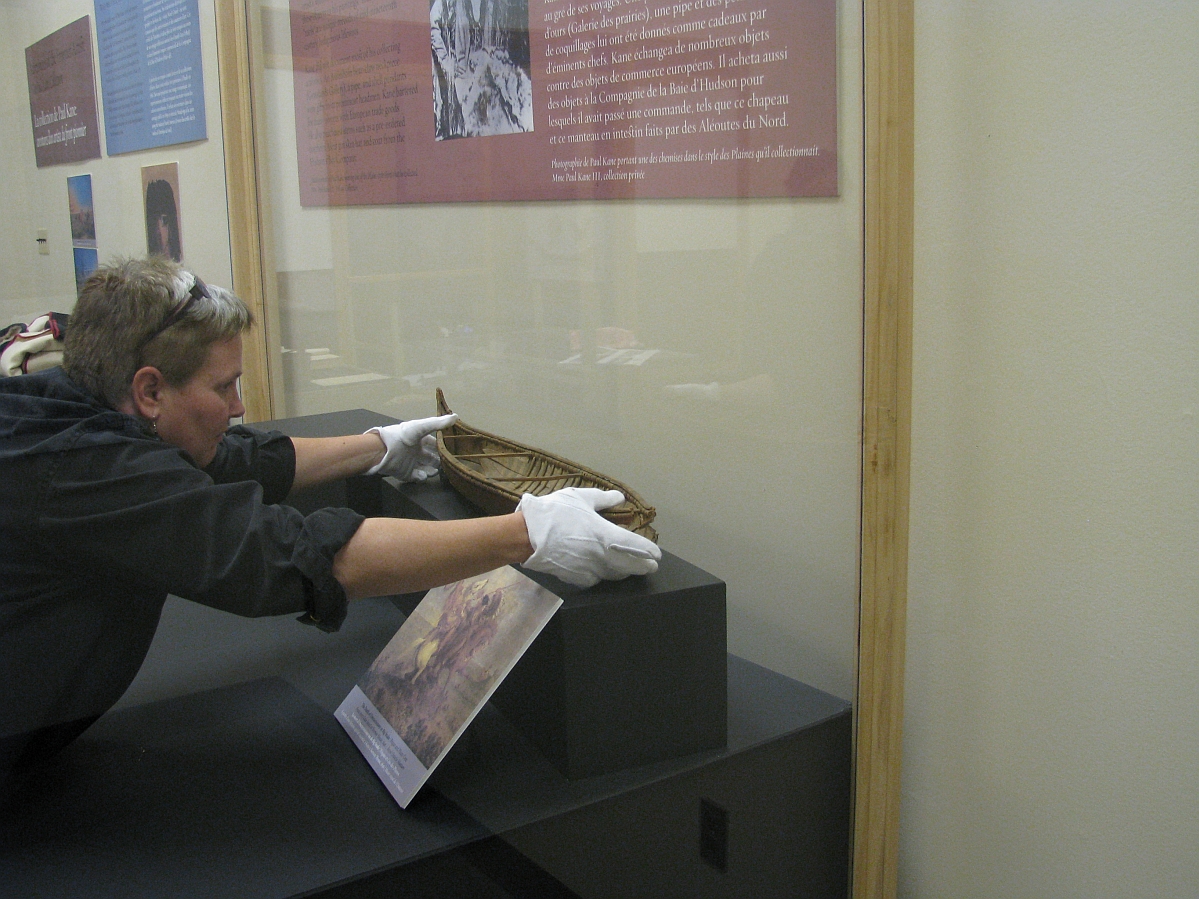
A model canoe is carefully put in place. The staff wear cotton gloves to protect objects from dirt and oils that may be on their hands.
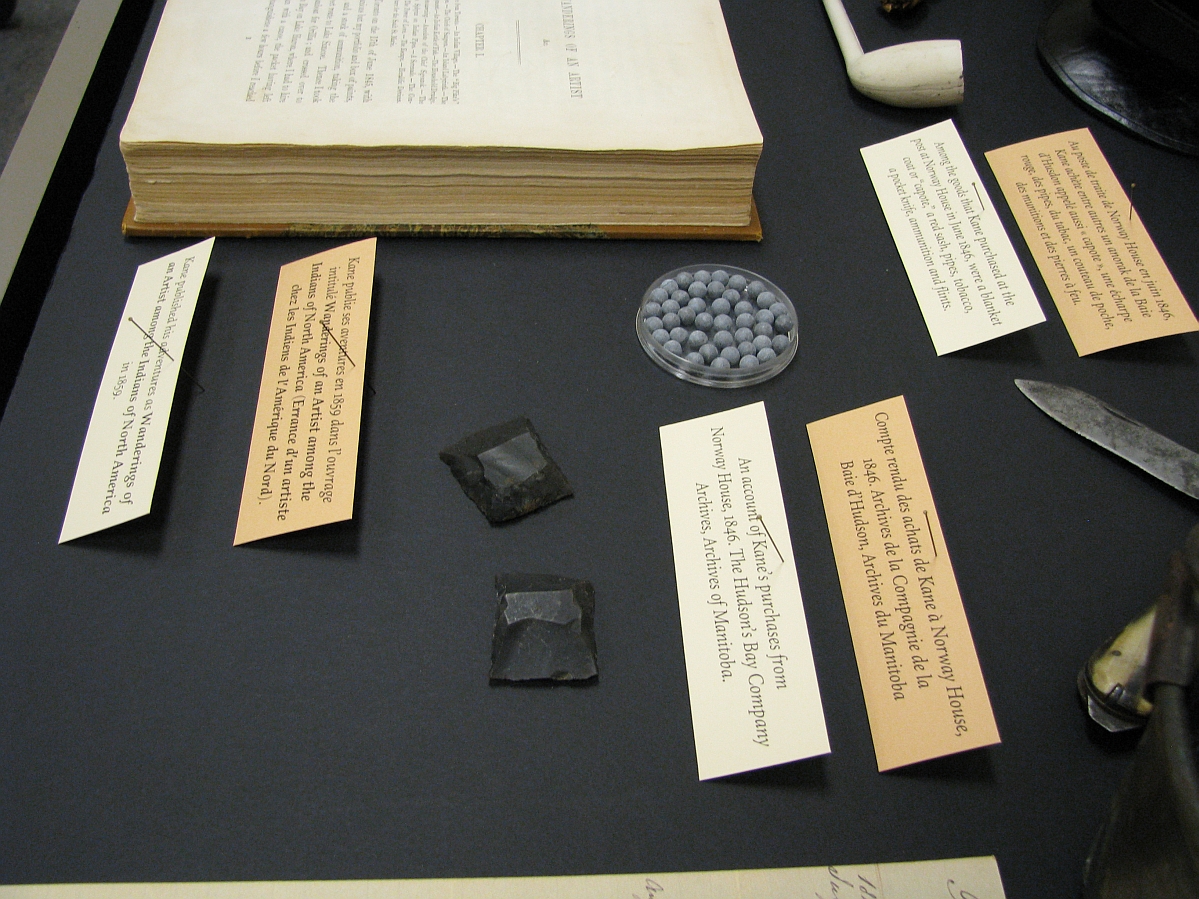
Labels also have to be placed in the cases. These are supported simply on pins.
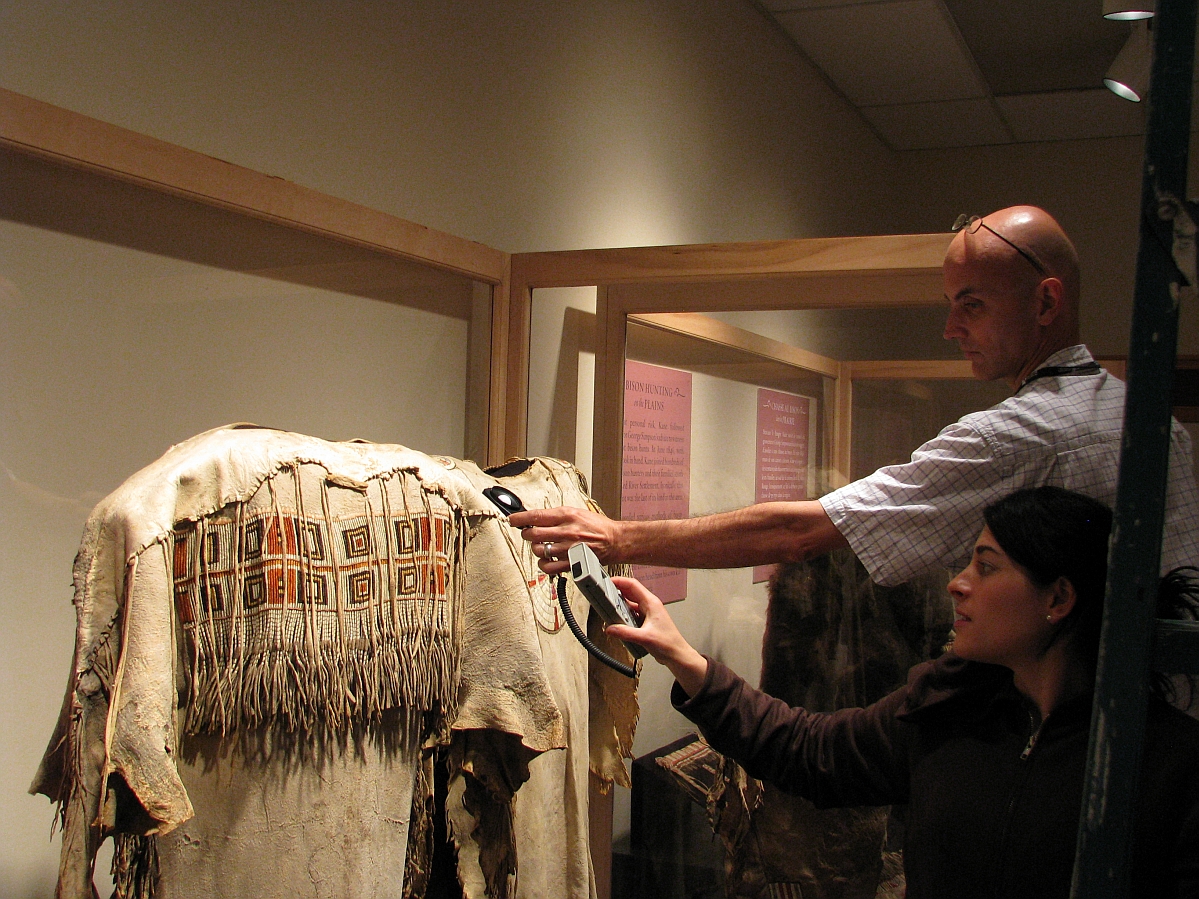
When all the artifacts and labels were in place, Conservator Lisa May checked light levels. Too much light can be damaging to objects; we try to restrict light exposure by using lower wattage lamps, turning down dimmers, aiming lights away from very sensitive things, and in general limiting exhibit times and storing collections in the dark as much as possible.
The final step was the closing up of the cases, done again by Productions staff.
Come down to the Museum to see the finished exhibit! It’s up until April 2011.
Image: Taking a reading with the light meter. The sensor is connected by a cord to the rest of the meter.