

Guest Blog - The Tupper Quilt and Canadian Confederation

Guest Blog – The Tupper Quilt and Canadian Confederation

By Kelly Burwash, Practicum student, Master of Arts in Cultural Studies/Curatorial Practices, University of Winnipeg


One of the great things about museums is that they can help foster relationships with (so-called) distant historical events. My placement at the Manitoba Museum involves doing research for an upcoming exhibition on the 150th anniversary of Confederation.

As a new resident of Manitoba, it has been especially interesting for me to research what Confederation means to the province’s unique context. Manitoba was, of course, not part of the original four provinces that became Canada on July 1, 1867. At the time, Canada consisted of Ontario, New Brunswick, Nova Scotia and Quebec. This does not mean that Manitoba was unaffected by actions in the East. During the discussions of the Quebec Conference leading up to Confederation, the politicians did not forget about this area. They decided future seats in the House of Commons would be set aside for the North West when it was brought in to Confederation. The politicians in the East thought that this would be an easy unification. Although this was not the case, the West was a part of Confederation in 1867 in conversation if not in result.

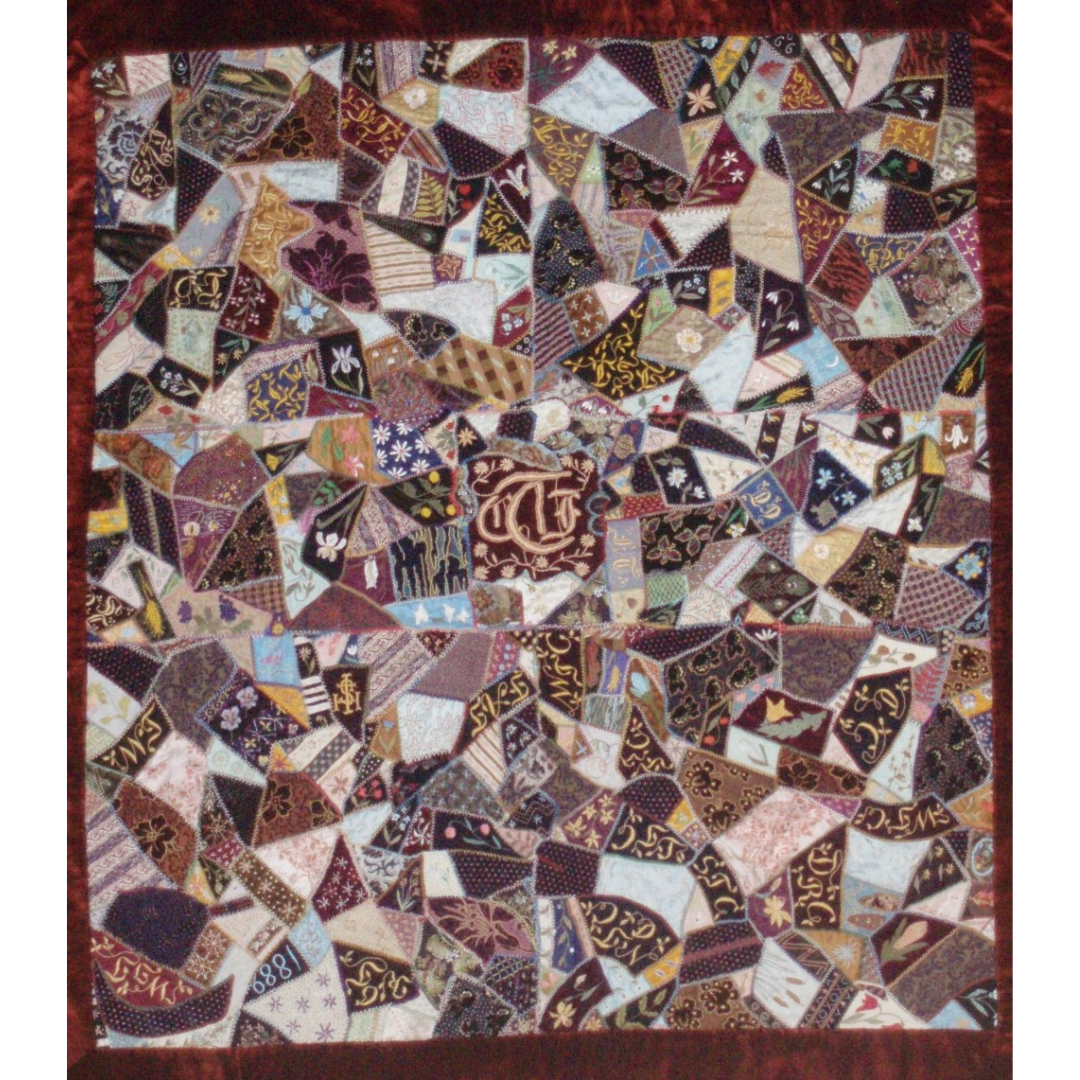
A patchwork quilt made from patches of varying shapes in browns, reds, creams, blues, blacks, and yellows.

Another interesting part of my research on Confederation has been my examination of the Tupper Quilt. This quilt was almost certainly made in Winnipeg by Ada Tupper, daughter-in-law to Charles Tupper. Charles Tupper was briefly prime minister of Canada, as well as premier of Nova Scotia and one of the Fathers of Confederation. You might think, “What does this have to do with Manitoba? Why is this quilt here?”  I confess, I had the same initial thoughts. It turns out the Tupper family is firmly entrenched in Winnipeg history. James Stewart Tupper and William Johnston Tupper, two of Tupper’s sons, formed a law firm in Winnipeg with Hugh John MacDonald. Tupper’s son-in-law, Donald Cameron, was one of the chief commissioners for the Boundary Commission and lived in Dufferin while mapping the 49th parallel.


Image: The Tupper Quilt was made ca. 1889 by Ada Tupper, daughter-in-law of Charles Tupper, one of the Fathers of Confederation. Photograph by Anne E. Dawson.

Charles Tupper himself came to Winnipeg in 1869 to secure the release of luggage belonging to his daughter Anna and son-in-law Donald Cameron, which had been seized by the Red River Resistance. In order to get the luggage back, he met with Louis Riel who agreed to return their belongings. The pair parted on good terms. These are just some of the stories that are found on the crazy quilt. Each of the many symbols tells a different story. It has been fascinating to research and amazing to find all these local connections to Confederation.

The Tupper Quilt is on loan from a Private Collection. Contributing research done by Anne Dawson.

Seeds of Days Past

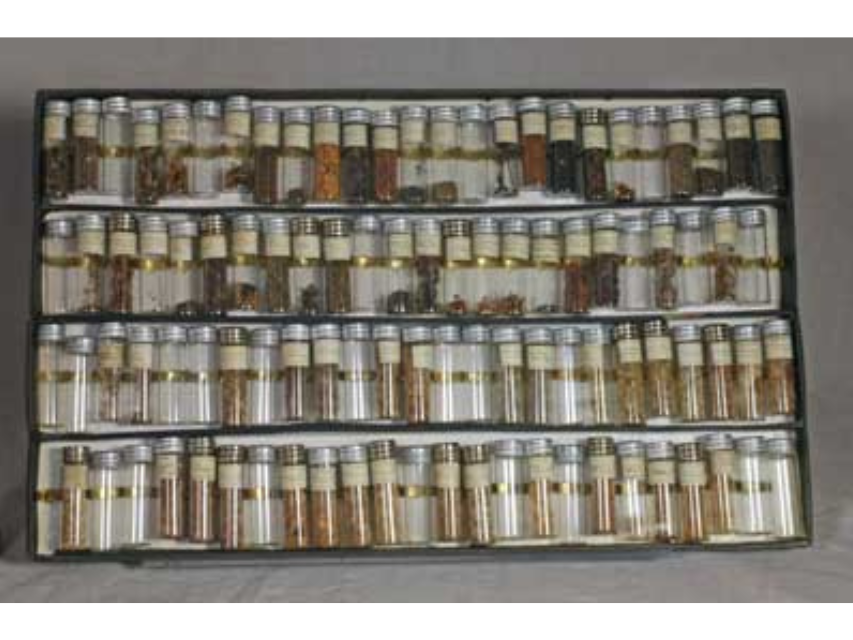
Recently I became aware of a hundred year old collection of seeds located not in the Botany collection at the Museum but in the History collection. What were 100 years old seeds doing in the history lab? It turns out that they were donated in 1991 along with many other artifacts and specimens from the famous Criddle family (learn more about the Criddles, here) but not thoroughly catalogued.

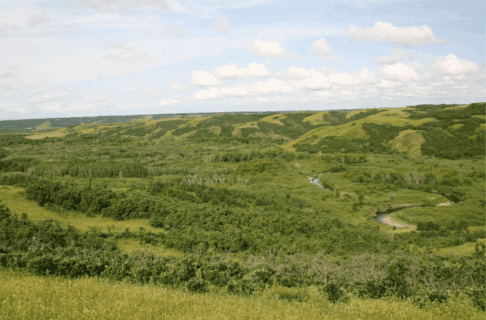
Questions about proper seed preservation recently came up and our History Cataloguer asked me about them, assuming that I knew this collection existed, which I didn’t. I looked closely at the five boxes of tiny vials of wildflower and weed seeds from Manitoba and was absolutely thrilled. The Criddles were amateur naturalists who collected scientific specimens of seeds, mammals, and insects and recorded meticulous weather data in the late 1880’s to early 1900’s. I immediately realized that some of the seeds were of species that have become rare due to the stabilization of the Carberry sand dunes. These seeds are some of the first specimens of these rare plants to ever be collected in Manitoba and will be important for their status assessment.

A shallow box filled with four rows of small vials of seeds, each carefully labelled.

Image: Seed collections are valuable references for identifying unknown seeds. TMM H9-23-142.

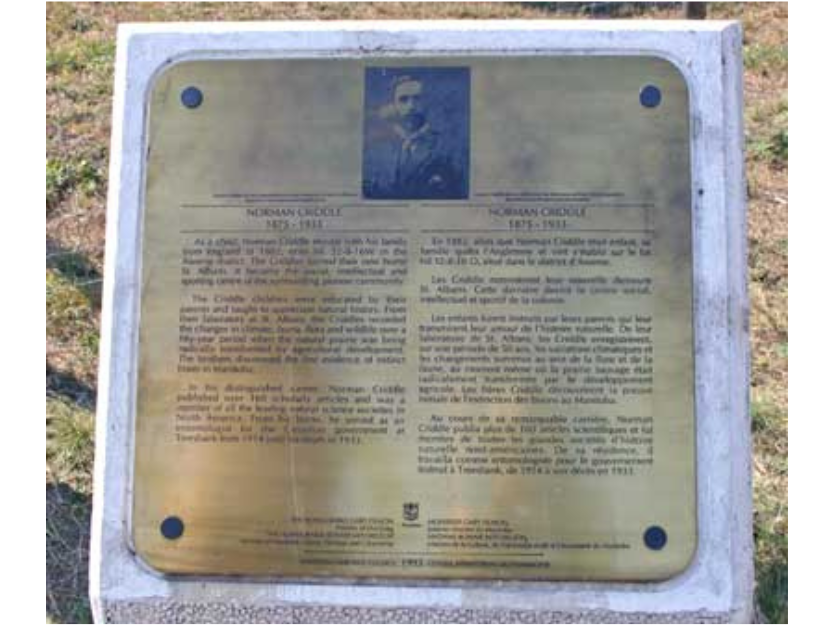
An outdoor plaque sharing some of the history of Norman Criddle in both English and French.

Plaque about Norman Criddle at the Criddle-Vane National Historic site.

In recent years, seed preservation has become increasingly important because of concerns about the loss of genetic diversity in crop seeds, as well as the loss of species in the wild. In fact you may have heard of the so-called “Doomsday Vault” located in an underground bunker in Svalbard (learn more here). They protect the most diverse collection of crop seeds in the world in case natural (or human-caused) disasters eliminate the plants in their agricultural settings.

Here at the Museum we don’t have such a dramatic seed collection as we simply don’t have the high-tech cold storage space to permanently house and protect wild plant seeds. The main purpose of our collection is to act as a reference for identifying unknown species of seeds. Our seed collection has been used to identify the gut contents of dead animals (read blog “CSI Manitoba: The Case of the Broken Beak” here), and preserved seeds dug up in ancient archaeological sites among other things.

So why did it take so long for me to discover this collection? The Museum usually receives more donations of artifacts and specimens than we can process in any given year. When the staff is busy with projects such as new gallery exhibits, a backlog of specimens builds up. This seed collection, having received a bit of care when it first came in, could simply not be thoroughly catalogued until recently. I wonder what other interesting things are in the Museum’s backlog waiting to be rediscovered?

Dr. Diana Bizecki Robson

Dr. Diana Bizecki Robson

Curator of Botany

Dr. Bizecki Robson obtained a Master’s Degree in Plant Ecology at the University of Saskatchewan studying rare plants of the mixed grass prairies. After working as an environmental consultant and sessional lecturer…
Meet Dr. Bizecki Robson

Guest Blog – First hand impressions of the 1919 General Strike

By Jessica Adam, Practicum student, Master of Arts in Cultural Studies/Curatorial Practices, University of Winnipeg


In 2019, it will be the one hundredth anniversary of the Winnipeg General Strike, a movement that had major social and political repercussions across Canada. To commemorate this dramatic episode in Winnipeg’s history, The Manitoba Museum is researching a potential exhibition about the strike, and specifically, the experience of what it was like to be there – on the streets, in the crowds, part of the events. My role in this, as a student researcher working towards my MA in Curatorial Practices, has focused on first-hand accounts, archival photographs and materials from the Archives of Manitoba, as well as The Manitoba Museum’s collection of recorded oral histories. The recollections of people who personally witnessed these events add an extra dimension to the colourful history of Winnipeg, as they create a tangible link to the past. As I have worked my way through this research, I have become acutely aware of how connected we are to the past, overall. In many ways, this is part of what museums do –facilitate this connection for everyone through exhibitions and education.

A young adult posing for a photo while leaning against the bar of the Urban Gallery cafe in the Manitoba Museum.

Researching and listening to oral histories, especially, has furthered my appreciation for Winnipeg’s local history, and placed it into the larger context of Canadian history. The importance of these kinds of historical accounts, as well, cannot be overstated. They are exciting, original, and engaging, and they can make us feel like we are sharing the experience of being there, as it’s all happening. This kind of primary source research can be slow and time-consuming, but is well worth it. I’ve heard stories I never thought I’d get to hear, read sensational accounts, and admired amazing pictures taken during incredibly important moments. As a history nerd, I feel like this has been a bit of a dream come true.
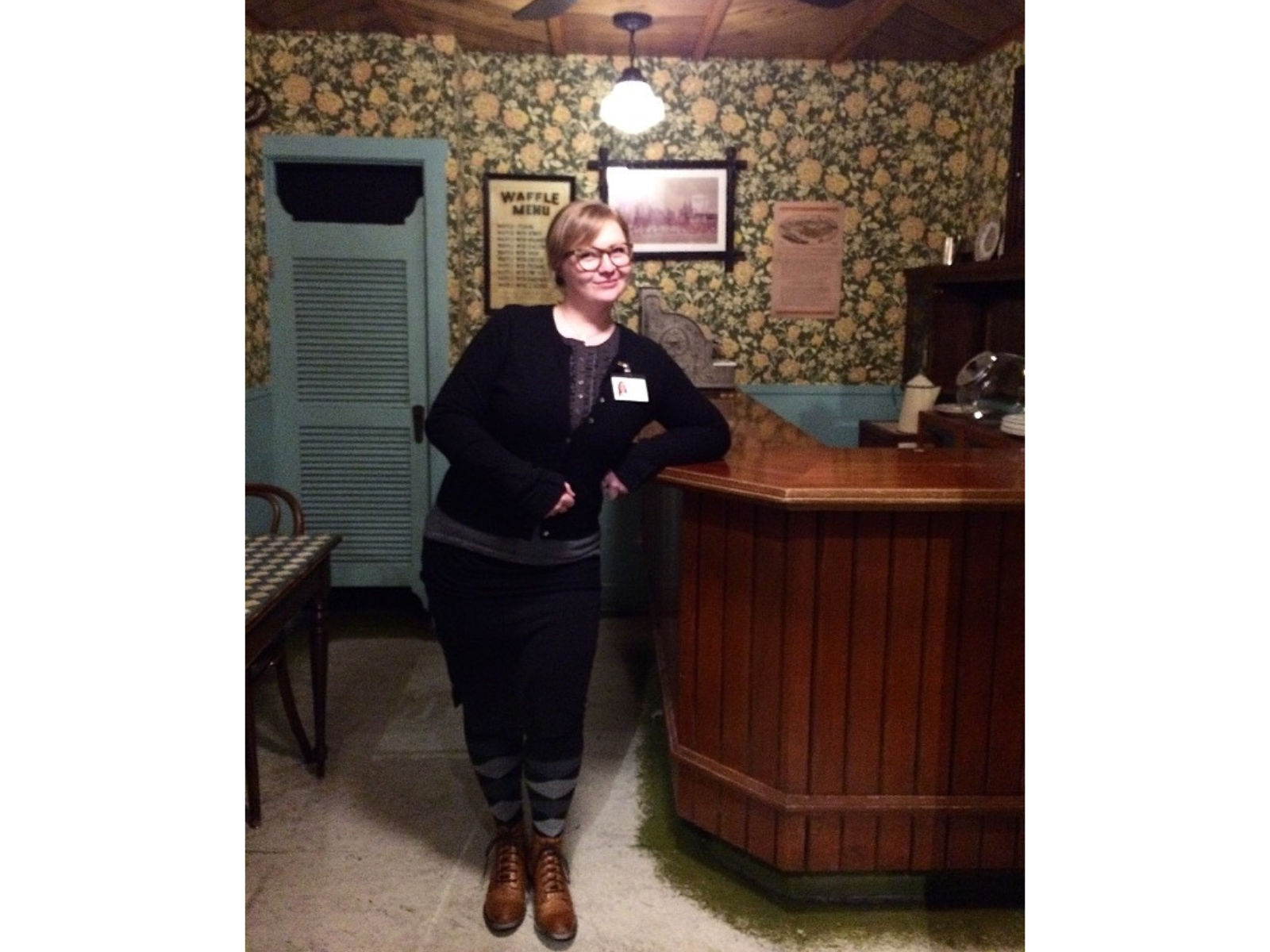
 

Image: Master’s student Jessica Adam in the Urban Gallery café. The gallery represents Winnipeg in 1920, one year after the events of the General Strike.

Finally, I’ll end with an example. While there are many compelling stories in The Manitoba Museum’s oral history collection, I found Mr. Leslie Paulley’s description of the infamous Bloody Saturday very thrilling. In this brief segment, he discusses the violence that erupted on the streets of Winnipeg between the strikers and the Mounted Police:

They turned around and they recharged the crowd, this time with revolvers drawn. Previously, as I recall, they were only swinging batons. They swept down upon the crowd, and as they approached the gathering in front of the City Hall, they fired shots at it. One man dropped dead with a bullet through the heart on William Avenue, quite close to Main Street. Another man was shot through the head. And a third man died later in hospital of wounds to the chest. There were scores of people injured, some of them, of course, being the mounted men engaged in the charge. (Paulley, Leslie 110 – 38:45-39:34)
The Botany of Valentine’s Day: If people reproduced like plants

With Valentine’s Day just around the corner, flower sales are set to soar. Men give flowers to women to increase the chances that they’ll get some lovin’ but they don’t typically think about the fact that in doing so they’ve already helped something reproduce-namely the plant. Flowers are the sexual organs of plants and their methods of reproduction are both fascinating and bizarre. However, plants can be complicated so to make this easier to understand, I’m going to describe how people would have babies if we were like plants.

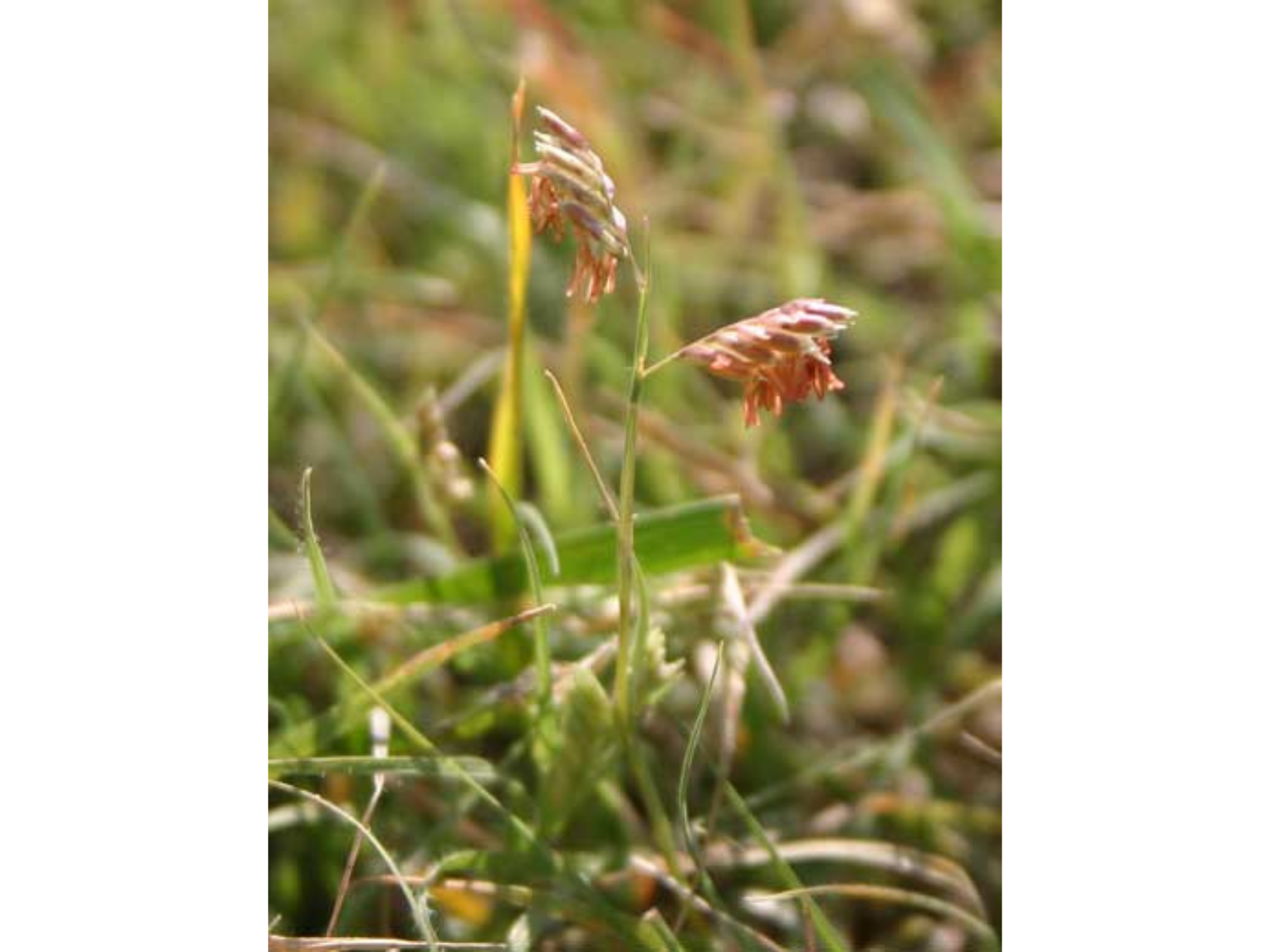
Close-up on a stalk of Buffalograss, a single stalk splits into two, with either end having a fan of stamens.

If people were like plants most of us would be hermaphrodites (both male and female). Very few plant species have separate males and females; buffalograss (Buchloe dactyloides) is one of the only ones in Manitoba. Most plants (~90%) have both male (stamens) and female (pistils) organs either on the same flower or the same plant. Hermaphroditic plants are either receptive to receiving pollen or actively releasing pollen but not usually doing both at the same time to prevent inbreeding. Some plant species can even switch from being male to female part way through their lives.


Image: Buffalograss (Buchloe dactyloides) is one of the few Canadian species that has separate male and female plants.

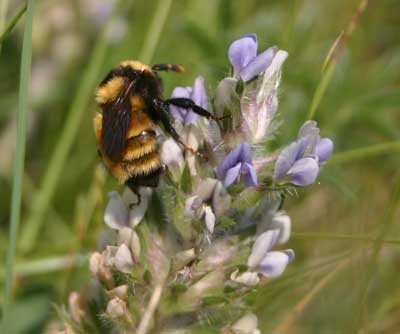
Close up on a bumble bee on a plant with a bunch of small purple flowers at the top.

If people were like plants, in-vitro fertilization would be the norm. Most plants rely on a third party, such as an insect or bird, to help them reproduce. The animal removes pollen from the stamens of one flower and transfers it to the pistil of another flower. Humans also sometimes fill this role, hand pollinating crop plants like vanilla (Vanilla planifolia) when insect pollinators are not available.

If you couldn’t find a mate and really wanted to have a baby, you could just fertilize yourself! The baby would be a clone that is genetically identical to the mother. Many plants can fertilize themselves in case they are not visited by pollinators. Self-fertilization isn’t ideal as inbreeding can produce individuals that are less healthy but at least all the effort spent producing eggs and pollen is not completely wasted.


Image: This bumblebee (Bombus) is fertilizing a breadroot (Pediomelum esculentum) plant. The bee gets paid with a delicious drink of nectar.

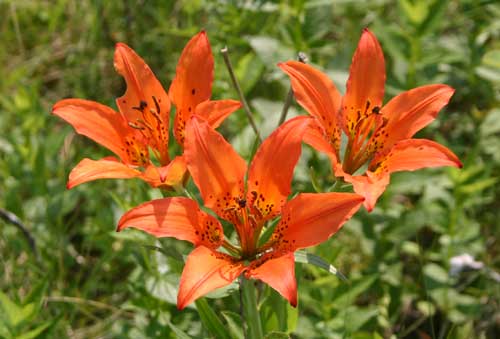
Close-up on three orange lilies.

If you wanted a child but didn’t want to give birth, you could just grow a little doppelganger of yourself on your foot. Once the baby was big enough, it would fall off and start running around. Hooray! No 16-hour labour to go through! This type of reproduction (asexual) is quite common in perennial plants. Some plants produce bulbs or tubers which eventually break away from their parents, forming separate but genetically identical new plants. Other species, such as sod grasses and aspen (Populus) trees produce long underground stems from which new plants emerge. This strategy can be very successful if there is no suitable habitat for a seed to germinate in.


Image: Many lilies, such as this prairie lily (Lilium philadelphicum) reproduce asexually by creating bulbs.

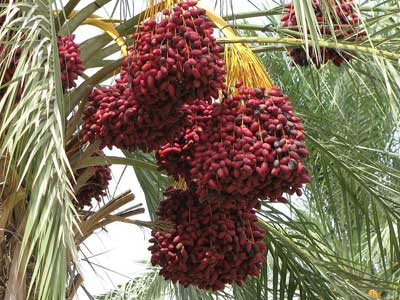
A palm tree weighed down by large bunches of red dates.

If people were like plants everyone would have several thousand children every year. Unfortunately, about half of them would be eaten by lions; seed predation is high in plants with 40-50% losses to birds, rodents, and insects being common. The seeds that do survive might spend decades living in a vegetative state before resuming a normal life and reproducing; this is sort of like having teenager who does nothing but play video games all day. The oldest seed ever successfully grown was a Judean date palm (Phoenix dactylifera) that was about 2,000 years old. Talk about a failure to launch!

So when you’re purchasing or appreciating your Valentine’s Day flowers this year remember that at the very least, the plant has gotten lucky!

Dr. Diana Bizecki Robson

Dr. Diana Bizecki Robson

Curator of Botany

Dr. Bizecki Robson obtained a Master’s Degree in Plant Ecology at the University of Saskatchewan studying rare plants of the mixed grass prairies. After working as an environmental consultant and sessional lecturer…
Meet Dr. Bizecki Robson

Five planets; Nine planets?

This has been a busy week for solar system news. For early risers, you can see all five of the naked-eye planets at the same time before sunrise. This week also saw the announcement of some new research suggesting there may be an undiscovered planet out there, way out past Neptune.

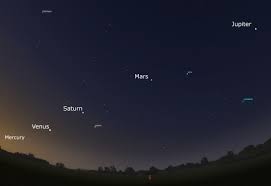
Sky map showing the approximate locations of the five planets visible in the pre-dawn sky.

We’ll start with the easy one. There are five planets in our sky that can be easily seen with the unaided (or “naked”) eye – without a telescope or binoculars, but most of the time only two or three are visible at any given time. For the next several weeks, though, you can see all five at once. Just wait for a clear morning, get up early, and head to a location where you have a clear horizon to the south and southeast. You’ll want to observe about 45 minutes before the sun comes up, while the sky is still dark enough.

The first thing you will notice is Venus, shining brightly in the southeast. Venus has been visible before dawn for months now, and since it is the brightest object in the sky after the Sun and Moon, a lot of people have noticed it in the southeast as they get up for work or school before the sun rises. The next-brightest object in the sky is the planet Jupiter, which was close to Venus last fall but has since migrated across the sky towards the southwest. That’s two planets.

In between Venus on your left and Jupiter on your right, there are a bunch of bright-ish objects. About halfway between the two, and higher up in the south, is a fairly bright object that you might notice has a slightly red-orange hue. That’s Mars, planet number three on our list of targets.

Between Mars and Venus is number four: the ringed planet Saturn. Saturn’s rings aren’t visible without a telescope, but it is the most distant planet you can see with your unaided eye, at over 1.5 billion kilometres away from Earth.

Number five on our list is the most difficult one. The planet Mercury is tough to see, because it is so close to the sun we can only see it in the brightening twilight sky. Mercury appears to the lower left of Venus and very close to the horizon. As the days pass, it will rise higher in the sky as it orbits the sun, and then drop back down below the horizon again. You probably will only have a couple of weeks to see Mercury unless we have very clear skies and you have very good eyes, since the lower it gets the harder it will be to find. Binoculars can help you track it down in the twilight.

If you want to add a sixth planet, just look around: the Earth is a planet, too. And the moon will move through the seen in the first week of February, along the path from Jupiter to Mercury in our sky. It’s a great time to watch the morning sky!

Now, the other “planet” announcement this week, which suggests a new planet has been “discovered”. It hasn’t – at least, not yet. As usual, the social media sites blow everything out of proportion. Some new research suggests that some of the odd observations of objects at the very edge of the solar system could be explained if there were an undiscovered planet orbiting the sun at an incredible distance, far beyond Neptune. The trouble is, we don’t have a lot of data on what’s out there, so there are many possible explanations for the strange stuff we’re seeing. Definitely a story worth following, but don’t change the textbooks just yet.

Scott Young

Scott Young

Planetarium Astronomer

Scott is the Planetarium Astronomer at the Manitoba Museum, developing astronomy and science programs. He has been an informal science educator for thirty years, working in the planetarium and science centre field both at The Manitoba Museum and also at the Alice G. Wallace Planetarium in Fitchburg, Massachusetts. Scott is an active amateur astronomer and a past-President of the Royal Astronomical Society of Canada.

The Log Cabin Gets a 21st Century Upgrade

The Grasslands Gallery was developed as one of the first galleries at The Manitoba Museum when it opened 45 years ago. The Log Cabin exhibit in this gallery has been used intensively by our school programs ever since, and hundreds of thousands of visitors have enjoyed its pioneer flavour.

Whenever you hear someone say “pioneer flavour”, you know it’s time for a change.

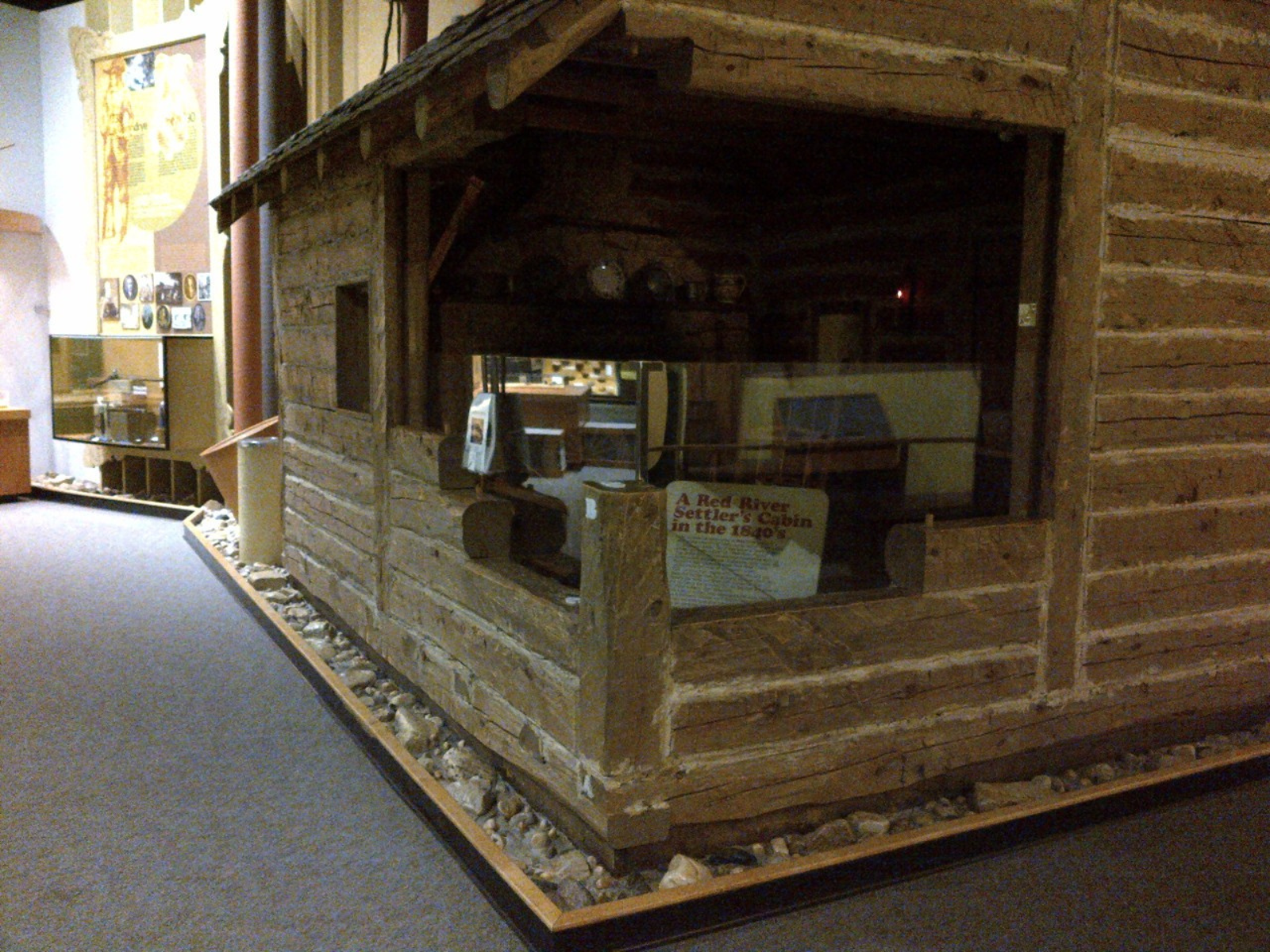
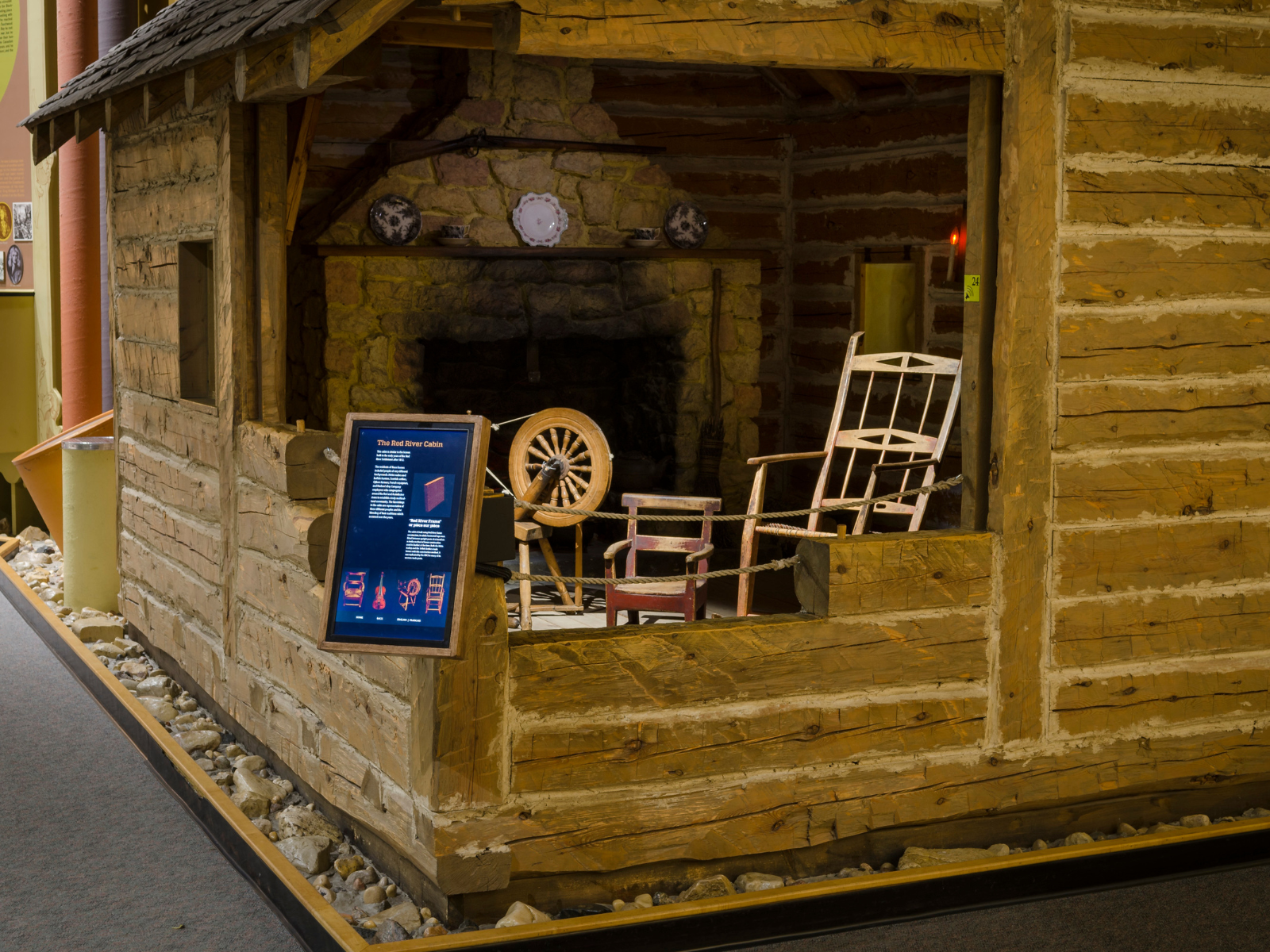
A log cabin in the Grasslands Gallery, with the close corner "cut out" to reveal inside the cabin. Inside is dimly lit and from this distance, not much detail can be seen.

The Log Cabin exhibit before changes.

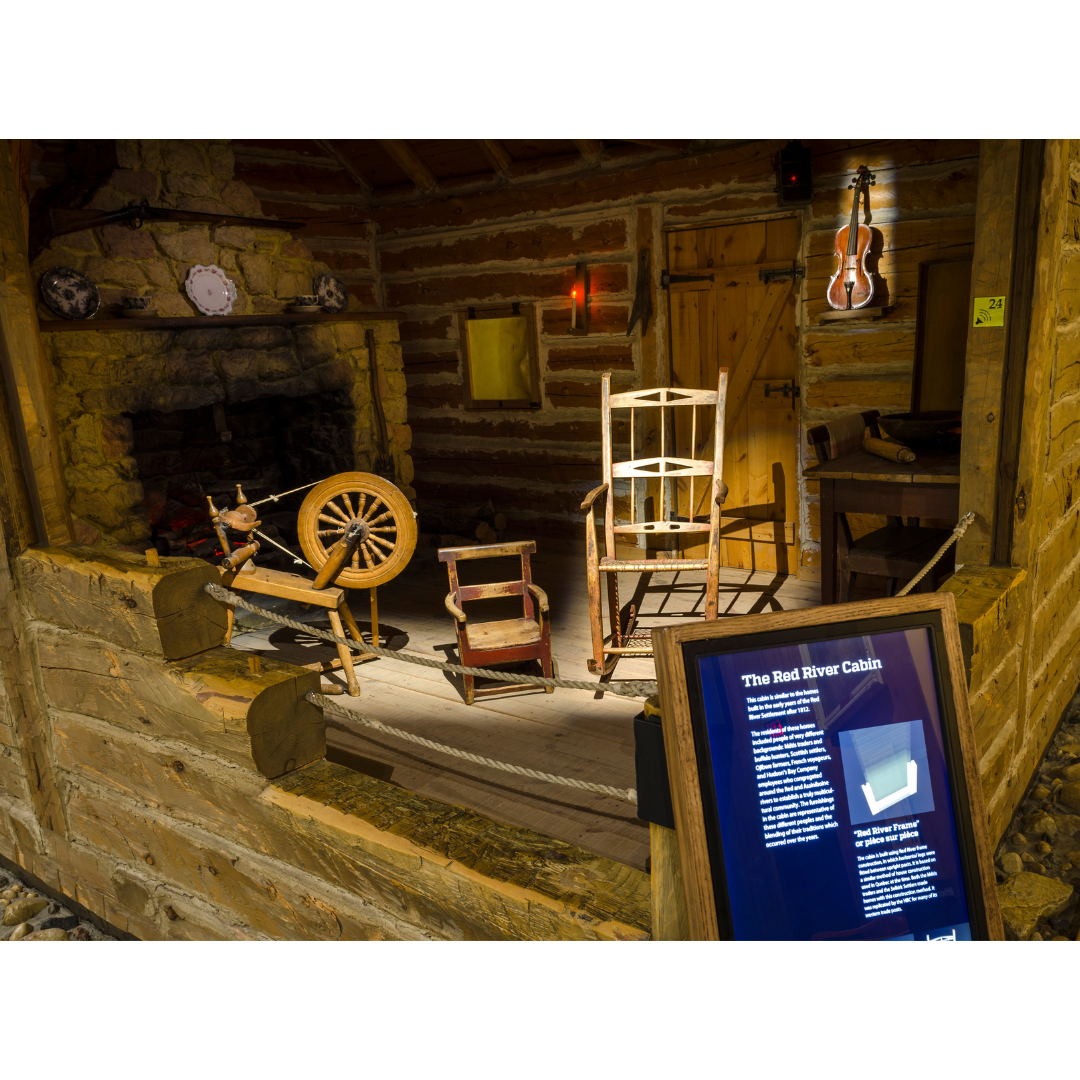
A log cabin in the Grasslands Gallery, with the close corner "cut out" to reveal inside the cabin. Inside is strategicly lit to show a fire place, rocking chair, spinning wheel, and more. At the exterior of the opened corner a digital display is mounted for visitors to engage with.

The Log Cabin exhibit after changes.

The Log Cabin just didn’t seem as engaging as it could be, so we put in new spotlights and removed a plex-glass wall that was meant to protect the artifacts, but really just created a visual barrier. But most of all, I wanted our visitors to learn about the amazing artifacts in the cabin. Some of them had been there for almost half a century, but had never had their stories shared with the public.

The Log Cabin represents the lifestyle of people in the Red River Settlement between 1812 and the 1860s. This included people of various backgrounds, including Métis, Scottish settlers brought by Lord Selkirk to start an agricultural colony, First Nations, HBC workers, French Canadians, and more. While there were certainly some distinct cultural traditions among these different groups, there was also a good amount of blending, and this can be seen in some of the artifacts. In fact, by the 1860s you could say the Red River Settlement was as much a blended society as it was multi-cultural colony.

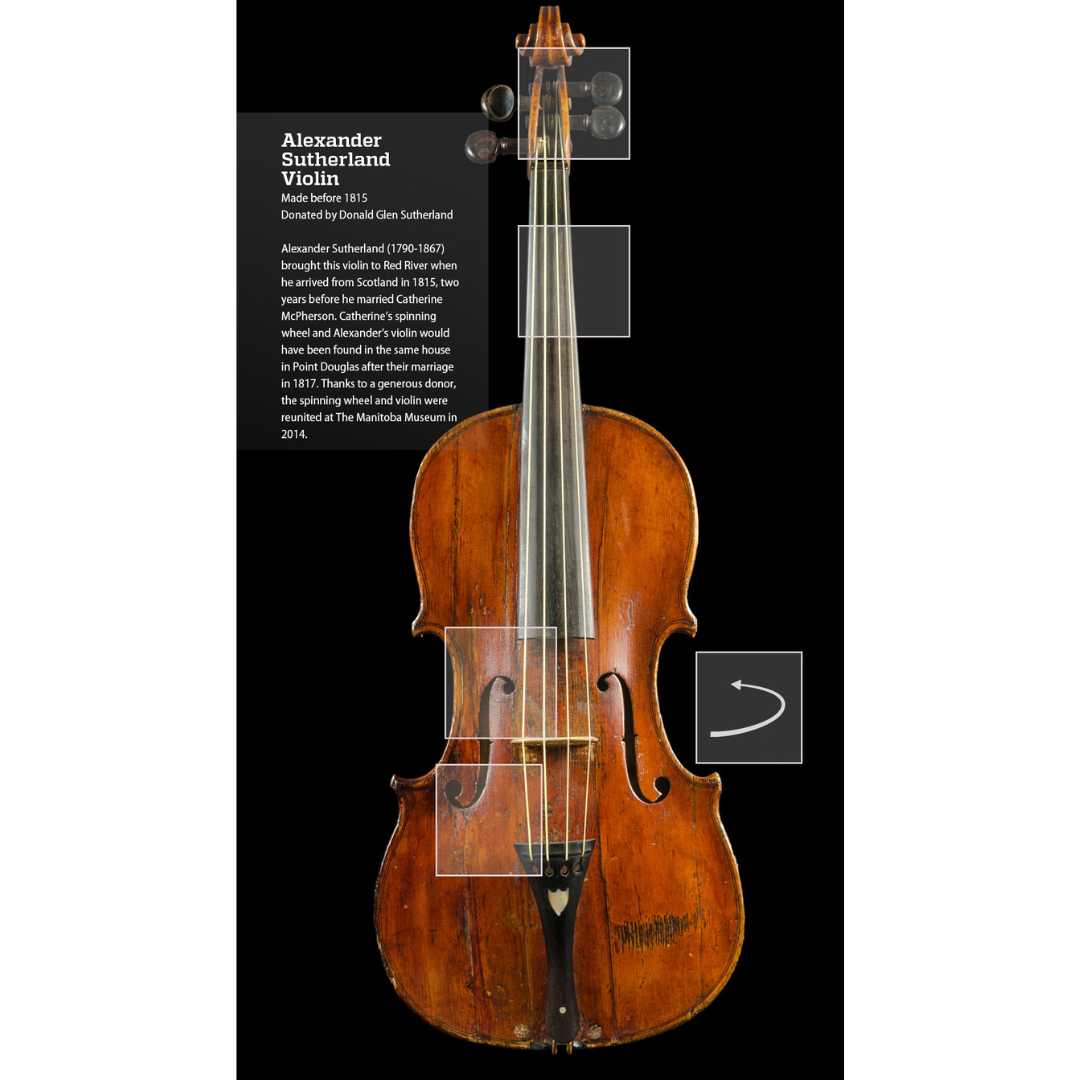
Some of these artifacts include the Alexander Sutherland Violin, which is more than 200 years old; the Catherine McPherson Spinning Wheel, made for her in the 1830s and based on a French model provided by the Bishop at St. Boniface; and the Rupert Franks chair, which was made for little Rupert when he was one year old in 1837.

Closer view into the interior of the cabin exhibit in the Grasslands Gallery. In front of a fireplace artifacts can be seen in the room such as a spinnin wheel, a small chair, a rocking chair, and a violin, which is mounted on the far wall. In the foreground part of a digital screen is visible, where visitors can learn more about the artifacts.

The Log Cabin exhibit after renewal.

A view of a page on the digital exhibit screen that accompanies the Log Cabin in the Grasslands Gallery. There is a high quality image of the violin along with details about the owner, Alexander Sutherland, and the violin itself.

Screen shot of the Alexander Sutherland Violin.

When I started researching the objects in some depth, I was reminded again that the small details were important, and actually quite fascinating. How could we show folks the wear and tear produced by tiny feet on the footrest of the Rupert Franks chair? Also, how would our visitors be able to see the label inside the violin, a label which tells its own interesting story?

We decided that a high-definition touch screen with high resolution, beautiful images, would let visitors explore and see what the curators were seeing. I always remind myself that the museum and its stories belong to all Manitobans. So come to the museum and explore your artifacts! As you do so, you’ll learn about the amazing stories of people who lived hundreds of years ago and in their own way helped make the province that we live in today.


The Manitoba Museum would like to acknowledge the financial support provided for this project by the Province of Manitoba through the Heritage Grants Program.

Dr. Roland Sawatzky

Dr. Roland Sawatzky

Curator of History

Roland Sawatzky joined The Manitoba Museum in 2011. He received his B.A. in Anthropology from the University of Winnipeg, M.A. in Anthropology from the University of South Carolina, and Ph.D. in Archaeology…
Meet Dr. Roland Sawatzky

John Macoun: The Botanist Who Changed the Map of Western Canada

Last year an interview I did for the BBC Northern Ireland documentary Brave New World – Canada aired on television (see more here). This documentary, by journalist William Crawley, is about the Irish Ulster immigrants that came to Canada and shaped our nation. I was asked to talk about John Macoun, an Irish-Canadian botanist who explored Western Canada in the late 1800s. As only a small portion of my interview aired, I wanted to post a full response to all the questions I was asked to provide some additional insight into John’s life and character.

What sort of man was John Macoun?

John was a man who was obsessed with botany, with collecting plants in particular. The thrill of discovering a new species of plant really drove him. This obsession meant that he was willing to endure a lot of physical discomfort in order to find new species.


Why is he such an important figure in Canadian history?

People like to say that Macoun changed the map of western Canada. Prior to his expeditions with Sanford Fleming in the 1880s, the planned railway route through western Canada was going to go through the Parklands along the historic Carlton trail, parts of which eventually became the contemporary Yellowhead highway. Macoun’s explorations, reports and speeches led people to believe that the southern parts of Alberta and Saskatchewan were just as fertile as the more northern parts. As a result, the railway went along a more southern route and many of the largest cities in the prairies, like Brandon, Regina and Calgary sprung up along it. Had the railway gone along the original route these cities may not have existed at all, or may be substantially smaller than what they are today.

Formal black and white posed photograph of John Macoun, an older man wearing a suit and bow tie, with a full beard, bushy eyebrows, and hair thinning on top.

Joohn Macoun, Irish-Canadian botanist.

An 1877 Canadian Pacfici Railway map of Canada with a small photograph of John Macoun in the bottom right hand corner.

The original 1877 Canadian Pacific Railway was set to go along a more northerly route.

A dry, desert like landscape with some very low-growing green-brown vegetation on sandy ground and dunes.

Why did people think Manitoba and Saskatchewan so unsuitable for farming?

Peoples’ impressions of the prairie were largely based on a report by Captain John Palliser who travelled through the southern prairies from 1857 to 1860. Palliser described an area in southwestern Saskatchewan and southeastern Alberta as being a desert but he did have some good reasons to call it that. Palliser travelled through the area during a severe drought. His route took him through several large active sand dune complexes. Migratory Bison were still grazing the area and keeping the grasses short. To top it all off he encountered several large grass fires in the area. So the mixed grass prairies would have looked fairly desert-like at the time.


Image: Captain John Palliser travelled through dry, desert-like areas in western Canada during a drought.

Did Macoun set out to prove them wrong, or was he surprised by what he discovered?

Initially he seemed to be holding back judgement until he saw the area for himself. He was certainly happy to discover that the prairies were full of lush grasses and seemed suitable for agriculture. It was not at all like the desert he heard of. Of course had he travelled the area when Palliser did his impressions would have been different, perhaps a bit more cautionary and less enthusiastic.


What did he find as he travelled through Manitoba and Saskatchewan?

The prairies that Macoun saw were already different from what they had been when Europeans first arrived. Populations of wild Bison, Plains Grizzlies, and Passenger Pigeons were in decline. Antelope and Elk populations were also decreasing. In fact, he encountered a group of First Nations people in Saskatchewan that were on the verge of starvation because the Bison were gone. He also travelled through the area during a historic wet period. The high moisture and lack of grazing animals would have resulted in a much lusher prairie than Palliser would have seen.

A Red River Cart on display in a museum gallery. A wooden cart with two large wheels on either side and two hitching posts stretching out in front to attach to an animal.

What did Macoun do on this and subsequent journeys through the prairies?

John liked to get up early in the morning to collect and press plants. The plants would have been sandwiched in between blotting paper and cardboard to provide air circulation. John often spent the entire day walking to spare their pack animals, which would have been hauling plant presses, and supplies in Red River carts. Sometimes he travelled by canoe which was quite dangerous as he wasn’t particularly skilled at handling a boat. He spent a lot of time looking for areas that were appropriate for agriculture, and noting where you could get good water and timber. He recorded his observations in a journal along with comments on the weather and the distance he travelled each day.


Image: John travelled across the prairies with a Red River cart, such as this one in the Grasslands Gallery at the Manitoba Museum, to carry provisions and plant specimens.

A poster showing a boy crawling between sheaves of bundled wheat in a wheat field during harvest under a clear blue sky. Text reads, "Canada West / Canada - the New Homeland".

What was his conclusion as to how fertile the land was and it’s suitability for agriculture?

Most Canadians were accustomed to farming under wetter conditions or using irrigation, as most were originally from wetter areas in Europe like England, Scotland, and France. They didn’t have much experience with dryland farming so they considered the prairies too dry for agriculture. Macoun recognized that adequate soil moisture is usually present in the spring when wheat needs it the most so he thought that cultivation of this crop was possible. Unfortunately, he underestimated the frequency and severity of droughts and during the dirty 1930s much of the farmland in the driest areas of the prairies was abandoned.


Did the government act on his report?

They sure did! Politicians were very eager for settlement to occur in the southern prairies as they were concerned about American expansion into Canada. They also wanted the wealth that would be created if farmers were to grow crops for export. So the Canadian Government launched an advertising campaign to encourage mostly European immigrants to settle the prairies.


Image: The Canadian Government tried to lure European settlers to the prairies with posters such as this one.

A pressed buttercup specimen with plant and collection details noted on the lower right corner of the page.

What in your opinion has been Macoun’s legacy?

In his lifetime, Macoun collected over 100,000 plant specimens for Museum collections and about 48 species were named after him including Macoun’s Buttercup (Ranunculus macounii) and Macoun’s Gentian (Gentianopsis macounii). His prediction that the prairies would become the breadbasket of Canada was also true and prairie people are proud of that achievement.

But the flip side is that less than 20% of the original mixed grass prairie, less than 5% of the fescue prairie and less than half a percent of the tall grass prairie still remains in Canada. The prairies have more endangered species than just about any other ecological region in the country. In fact, I study endangered prairie plants and try to prevent them from going extinct in part because of John. So as a prairie lover I have mixed feelings about him. On the one hand I respect him for his scientific achievements but on the other, if he hadn’t been quite so enthusiastic about the agricultural potential of the prairies, perhaps there would be more of it left today.


Image: This buttercup species was named after John: Macoun’s Buttercup (Ranunculus macounii). TMM-B-37290.

Dr. Diana Bizecki Robson

Dr. Diana Bizecki Robson

Curator of Botany

Dr. Bizecki Robson obtained a Master’s Degree in Plant Ecology at the University of Saskatchewan studying rare plants of the mixed grass prairies. After working as an environmental consultant and sessional lecturer…
Meet Dr. Bizecki Robson

Christmas at York Factory

Yes, I still have York Factory on the brain. I have many more photos and stories from our trip to share but those shall have to wait until the new year. Instead I thought I’d share some of my recent thoughts on Christmases past, what was Christmas like during the fur trade?

A beautifully written journal page of the "York Fort America 1714" Featuring short entries for each of the days from December 19 to 28, 1714

Fortunately for me the HBC Archives has started digitizing some of the post journals, saving me a long trek through the snowy streets of Winnipeg to go and explore early journals from York Factory. I found this gem on their website, written by James Knight in 1714, and you can see that Christmas day is just one little notation along with all the others.

A closer look, and a good squint to read his beautiful handwriting, reveals a rather nice message on the 25th:

I gave the men a hogshead of strong beer and some provisions extraordinary to enjoy themselves with this Christmas…prayers today and was celebrated with the [two words I can’t decipher!]

Although I can’t figure out those final two words, I think celebrating with a hogshead (a large cask, roughly 238 litres) of strong beer sounds like a pretty good way to spend the day!


UPDATE!  Thanks to my boss (Adele Hempel) and good friend and colleague (Amanda Crompton) I now know what those last two words are:

I gave the men a hogshead of strong beer and some provisions extraordinary to enjoy themselves with this Christmas…prayers today and was celebrated with the usual solemnity.

For more on Christmas during the fur trade check out this article from Canada’s History, originally published in The Beaver in 1941.

Happy Holidays dear readers, and all the best in 2016!

Dr. Amelia Fay

Dr. Amelia Fay

Curator of Anthropology & the HBC Museum Collection

Amelia Fay is Curator of Anthropology and the HBC Museum Collection at the Manitoba Museum. She received her BA in Anthropology from the University of Manitoba (2004), an MA in Archaeology…
Meet Dr. Amelia Fay

Your Voice

One of the goals for our new exhibit “Nice Women Don’t Want the Vote”, about the 100th anniversary of the right to vote for women in Manitoba, was to elicit visitors’ opinions about the vote for women and women’s rights today, and display these opinions in the exhibit itself. In just over three weeks we’ve put up over 150 comment cards on the exhibit wall. We asked visitors to respond to their choice of three statements and here are some results:

The “Nice Women Don’t Want the Vote” exhibit, with a branded ballot box and three panels along the wall, each with response cards stuck to it by visitors.

The “Nice Women Don’t Want the Vote” exhibit.

Three response cards with the question, "If you could say one thing to a suffragist from 100 years ago, what would it be?" The first reply says "Things get better keep fighting!", the next, "You go girl! keep on fighting!", and the last, "Thank you for leaning your voice so that we are able to speak out TODAY!"

If you could say one thing to a Suffragist from 100 years ago, what would it be?

Four response cards with the question "What is one issue facing Canadian women today that has yet to be resolved?". The four responses read, "Missing and murdered 1st nations", "murders + missing woman and children", "Missing and murdered indigenous women", and "Aboriginal women and unsolved disappearances".

What is one issue facing Canadian women today that has yet to be resolved?

Seven response cards with the question "What is one issue facing Canadian women today that has yet to be resolved?". Each of the seven cards has a response with a varying version of equal pay, wage equality, or gender pay gap.

What is one issue facing women today that has yet to be resolved?

Three response cards with the prompt "I want to vote because...". The responses reads, "I believe I am worthy. I am beautiful. My voice matters. xo", "It means that your are free", and "It's 2015!".

I want to vote because…

Dr. Roland Sawatzky

Dr. Roland Sawatzky

Curator of History

Roland Sawatzky joined The Manitoba Museum in 2011. He received his B.A. in Anthropology from the University of Winnipeg, M.A. in Anthropology from the University of South Carolina, and Ph.D. in Archaeology…
Meet Dr. Roland Sawatzky

CSI Manitoba: The Case of the Broken Beak

Members of the public sometimes bring dead birds to the Museum, which we incorporate into our collection to learn more about their habitat and biology. Our preparator Debbie Thompson recently came to me with a mystery: a dead Bohemian Waxwing (Bombycilla garrulus). Careful examination of the bird and its stomach contents, along with access to a great collection of preserved plants here at the Museum, helped us piece together the last few hours of its life.

A Bohemian waxwing perched on a branch above a cluster of red berries.

A Bohemian Waxwing.

A study skin of a waxwing lying belly up in a collections storage box, with a label attached to its feet.

Study skin of a Bohemian Waxwing (Bombycilla garrulus). TMM Z-1-2-5512.

Our first piece of evidence was a broken beak. This suggests that the animal ran into something, hard. Could it have been a car, a tree, a window? And why would this normally agile bird have run into something?

Our second clue was the intestinal contents of the bird. Debbie reported finding lots of ground up flesh inside the birds’ crop along with several large seeds. I examined the contents closely under my microscope. The fruits were large-larger than most of our native species of shrubs. A thick wall surrounded the seeds and reminded me of the firm flesh around apple seeds. Lastly, what appeared to be a stem with thick sepals around it was found. After comparing this material to herbarium specimens of dried fruits and seeds, I was positive that the bird had been feeding on a species of crab apple (Pyrus  sp.) before it died.


Image: A preserved herbarium specimen of crab apple (Malus  sp.) in flower. TMM B-27846.

Close up on the end of a Mountain ash branch with green berries.

Not much later she was preparing yet another Waxwing with a broken beak. This one had lots of ground up orange-coloured flesh inside the crop. The colour of the fruit made me think about an incident that happened long ago. One winter day I came across a huge flock of Waxwings gently pipping in a tree. I paused to admire them and was puzzled to hear an unusual plunking sound. I looked at the snow under the tree and saw that it was covered with orange-coloured poop from the mountain ash (Sorbus  sp.) berries the Waxwings were eating. The plunking sound was that of bird poop landing in the snow. Furthermore, I was standing directly in the line of fire! Admiration quickly turned to panic and I dashed out of target range. A quick examination of dried mountain ash berries in our collection helped me confirm my educated guess.


Image: Mountain ash (Sorbus sp.) tree with green fruits. The fruits turn bright orange when ripe.

But why did they crash? The collection dates were in winter so the fruits they were eating were not fresh-they had been hanging on the tree for many months, a long enough period of time in fact to result in partial fermentation. I had the answer! They were drunk on the natural, potent cider from fermenting fruit. The intoxicated birds likely flew right into a window or other hard stationary object, breaking their beaks and causing serious enough brain trauma to kill them.

So as it turns out humans are not the only ones guilty of “driving drunk”, or in this case “flying drunk”. However, drunken Waxwings only kill themselves while drunken humans tend to kill others. So remember to drive safe this holiday season!

Dr. Diana Bizecki Robson

Dr. Diana Bizecki Robson

Curator of Botany

Dr. Bizecki Robson obtained a Master’s Degree in Plant Ecology at the University of Saskatchewan studying rare plants of the mixed grass prairies. After working as an environmental consultant and sessional lecturer…
Meet Dr. Bizecki Robson