


Welcome to the Twenty-Metre Blog

Welcome to the Twenty-Metre Blog

By Dr. Graham Young, past Curator of Palaeontology & Geology


Some time ago, it was suggested that The Manitoba Museum would be adding curatorial blogs to our website, as a feature that would take visitors “behind the scenes.” This seemed like a fantastic idea, but I also wondered how I would approach this; I already have a blog in which I talk about paleontology, geology, and landscape, and it attracts a reasonable and steady following. It is a lot of fun to have personal blog in which I am free to muse about what I see as I wander around the world. Certainly Ancientshore is relevant to my work, but it also is not limited to my work or to this region of the world, and it is largely a collection of pieces about my personal travels.

So how could I develop another blog that would complement the existing one without conflicting with it? I was sitting at my desk, here in the perennially chaotic curatorial office, when I realized that the answer lay all around me.

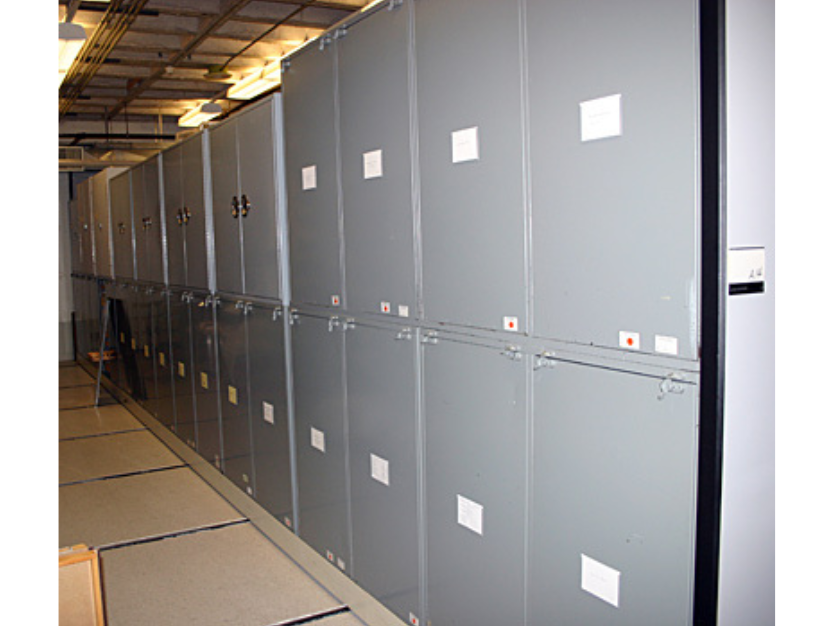
Looking down a row of metal cabinets in Museum collections storage.

A bank of cabinets in the Natural History Collections Room.

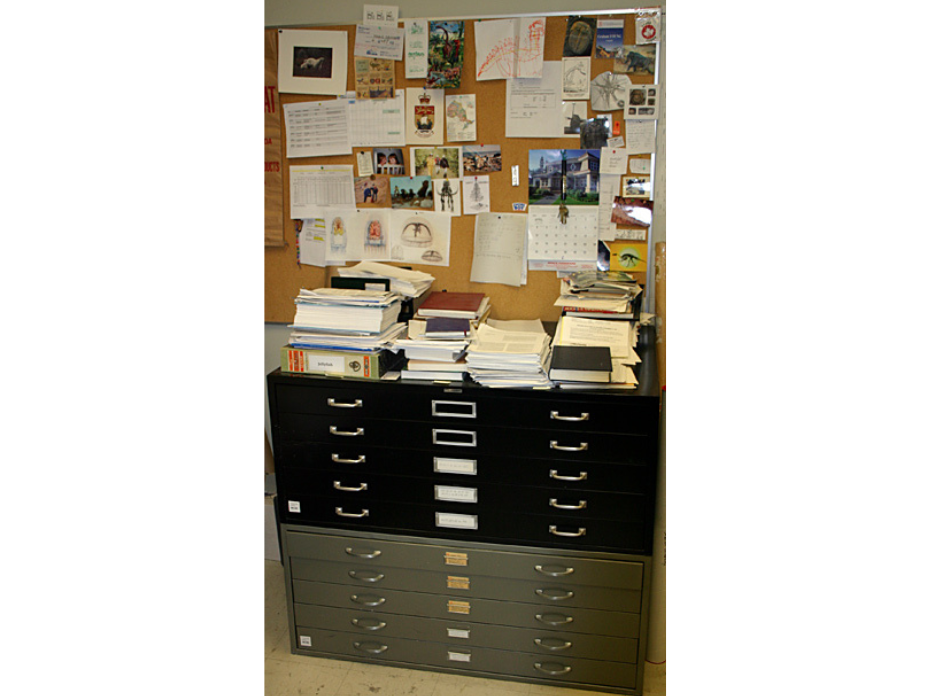
Two stacked cabinet with thin drawers against a wall below  bulletin board filled with pinned papers and images.

Story cabinet: this cabinet in my office stores jellyfish and other unusual fossils, while the bulletin board above holds endless stories.

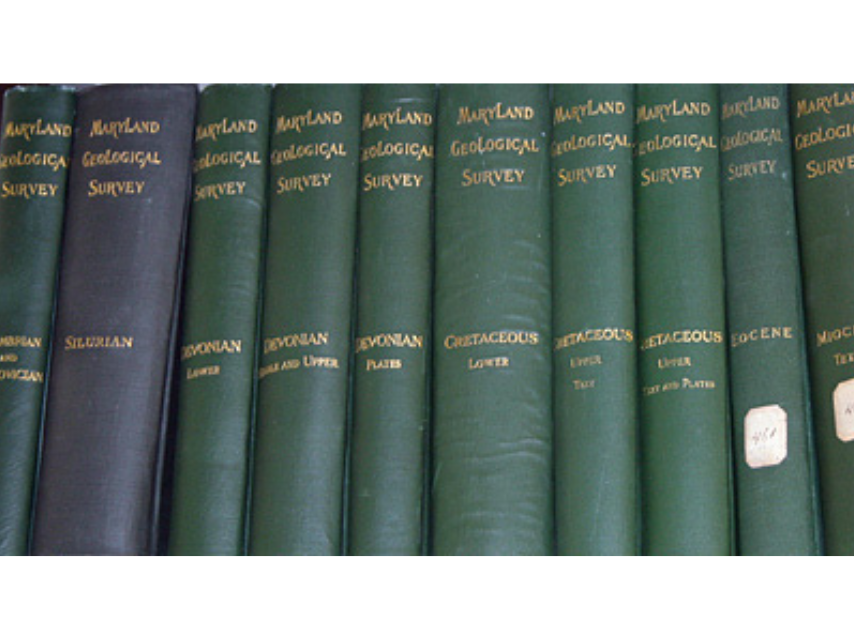
Close-up on the spine of a row of green and navy books in the series of the Maryland Geological Society.

We are living in an age where we are constantly encouraged to recognize our local environment, and our commitment to it, by eating locally, shopping locally, thinking locally. So why not blog locally? And in this particular instance, I am thinking very locally. I sit in an office where I am surrounded by strange and remarkable things: corals from the south Pacific, fossils from the Grand Rapids Uplands, antiquarian paleontology books, and ancient lamp shells that I pulled out of a ditch in England. Next door is the Geology Lab, filled to the brim with an endless variety of rocks and fossils, and right across the hall, in the Natural History Collections Room, I can open drawers to examine many thousands of objects, everything from mammoth tusks to meteorites to marcasite.

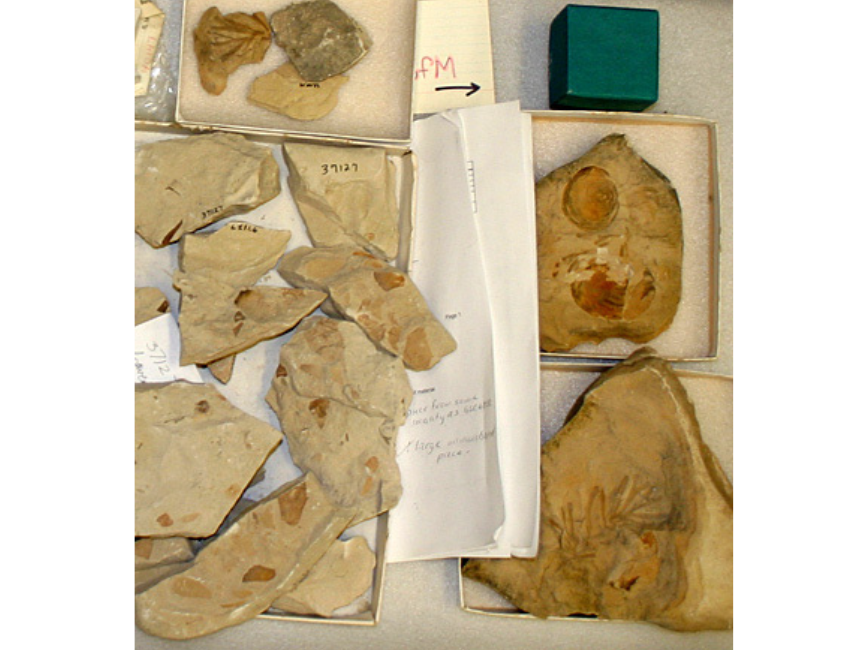
Fossil specimens laid out closely on a cart-top.

A cart in my office holds an array of unusual Ordovician fossils from the Cat Head area, Lake Winnipeg (on research loan from the Geological Survey of Canada). On the lower right is an example of Winnipegia, one of the seaweeds depicted in our Ancient Seas exhibit.

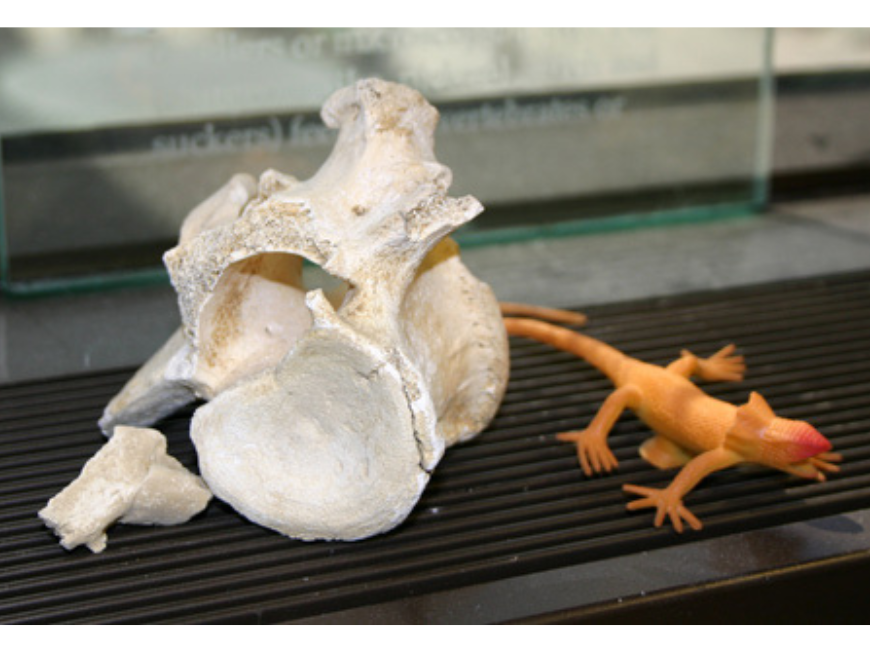
A white vertebrae bone next to a small orange plastic toy lizard.

Flotsam and jetsam that have washed up on my windowsill over the years. The vertebra belongs to a cow crushed by a collapsing hoodoo in the Alberta Badlands. The lizard has its own story, which may turn up here at some point.

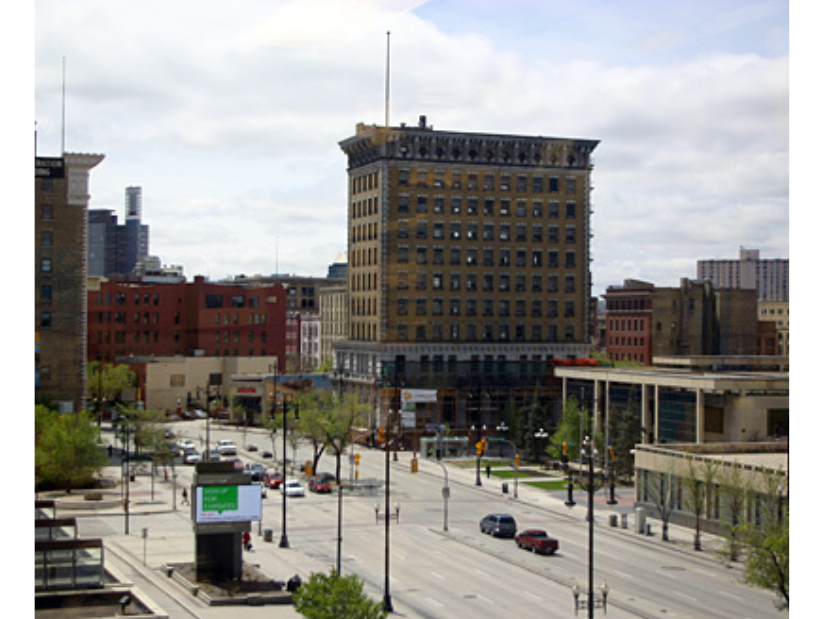
View looking south on Main Street towards the Winnipeg City Hall. The road is quiet under the midday sky.

Flotsam and jetsam that have washed up on my windowsill over the years. The vertebra belongs to a cow crushed by a collapsing hoodoo in the Alberta Badlands. The lizard has its own story, which may turn up here at some point.

Every one of these objects has at least one story, and many of them hold remarkable tales: tales of Arctic exploration, heroism, bizarre field events, exhibits, even politics. By limiting myself to writing about things that are within 20 metres of this computer, I am forcing myself to consider and develop those wonderful stories. But I do not consider this to be at all limiting, since so many will reach outward to explanations of fieldwork and other travels. It would not be at all difficult to write for a year just about items that I can reach from this comfortable chair, so extending the reach to 20 metres, or about 60 feet, could permit a lifetime of writing!

This Museum is a fascinating place. I hope you will revisit this page to see some of the stories behind our collections and exhibits.

Final Launch of Space Shuttle Atlantis – 1:20PM CDT today

After 25 years, 31 missions, more than 282 days in space and 17 visits to two different space stations, the space shuttle Atlantis is on the pad for its final flight. NASA-TV and spaceflightnow.com are providing live coverage of Atlantis’ final launch, scheduled for 1:20 pm Central Daylight Time today (14 May 2010). Atlantis will launch on a 12-day mission to attach the Rassvet Russian research module to the International Space Station and swap out six massive batteries which have been on station for several years. After the flight, Atlantis will be prepared as the “rescue” shuttle for a contingency launch in case of a problem with future flights of the other two orbiters, Discovery and Endeavour. Assuming that’s not necessary, Atlantis will be retired, and museums across the United States are having gunfights over who will get her for display.

Atlantis has been the vehicle for some of the major milestones of the U.S., Canadian, and International space programs. Atlantis docked with the Russian space station Mir 7 tmies, building a base of experience that would result in today’s International Space Station. Canadian astronaut Chris Hadfield was board the first flight (STS-74) to Mir in 1995, and colleague Steve Maclean also flew aboard Atlantis in 2006 on mission STS-115 to the International Space Station. Atlantis has also launched several significant satellites: the Galileo probe to Jupiter, the Magellan radar mapper to Venus, and the Compton Gamma Ray Observatory, a space telescope that observes very high-energy radiation from space.

Godspeed, Atlantis, and we thank you.

Scott Young

Scott Young

Planetarium Astronomer

Scott is the Planetarium Astronomer at the Manitoba Museum, developing astronomy and science programs. He has been an informal science educator for thirty years, working in the planetarium and science centre field both at The Manitoba Museum and also at the Alice G. Wallace Planetarium in Fitchburg, Massachusetts. Scott is an active amateur astronomer and a past-President of the Royal Astronomical Society of Canada.

Recipe for a Perfect Field Day

With field season right around the corner I find that I spend a lot of time reminiscing about my past field work, and musing about what makes a perfect field day. I would say that it goes something like this:

  • 1 reliable vehicle
  • Good, dry roads and trails, to taste
  • 1 part nice weather: 20-24°C with a gentle wind
  • 1 beautiful landscape
  • 1 (or more) exciting discoveries or observations
  • 0 irritating insects

Close-up on a bumble bee on a purple Hairy Prairie Clover flower.

A bumblebee pollinating a rare Hairy Prairie Clover plant was a great field discovery.

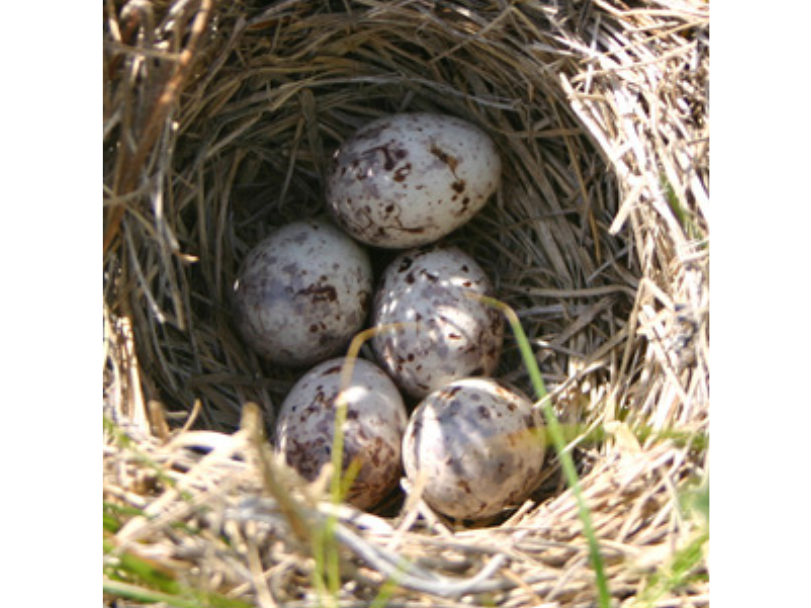
Close-up looking into a birds nest with five white speckled eggs.

It’s always thrilling to find a bird’s nest hidden in the prairie grasses.

I had a perfect field day once. I was in the Frenchman River Valley of southern Saskatchewan surveying potential routes for a new highway. My plan was to walk the entire length of one route to document the vegetation and identify rare plants. My car didn’t break down or get stuck in mud on the way there. The weather was perfect and the view spectacular. There were thousands of beautiful wildflowers covering the hillsides. Meadowlarks were singing. I found a really cool snakeskin and bird’s nest. There were no mosquitoes. Ah if only every field day was this good.

Sadly most field days are not perfect. Just about anything that can go wrong has gone wrong for me at one time or another. I’ve dropped my portable computer on a rock and lost a morning’s worth of data. I’ve spend an entire day taking pictures only to realize later that I had forgotten to put my card in the camera. I’ve nearly gotten lost. My vehicle has broken down in the middle of nowhere (on several occasions). I’ve locked my keys in the car, miles from a gas station, in an area with no cell phone coverage. I’ve gotten blisters and bug bites and heat exhaustion. I’ve done field work in pouring rain, frosty August mornings (one of Mother Nature’s cruel jokes) and blistering heat.

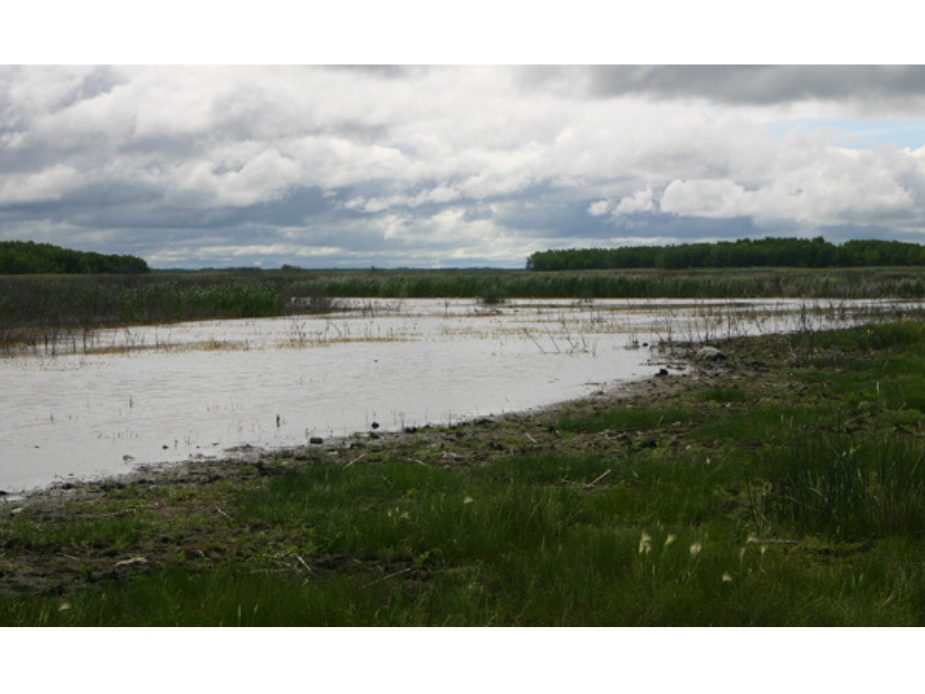
Landscape view looking out over a marshy body of water and low growing vegetation along the banks.

Every field scientist that I’ve met likes to tell these sorts of “field stories”. It’s almost like a competition where each person tries to outdo the other in terms of the degree of discomfort experienced. One of my favourites was when a friend of mine was rescuing an injured hawk and the bird sunk its talons straight through his hand (and no, he wasn’t exaggerating-I saw the holes). Another is when a gale-force wind blew my husbands’ tent and nearly all his belongings right into Lake Winnipeg. He stood on shore and watched it float away. About a month later I got a call from the RCMP, asking if I knew where my husband was because they found his tent washed up on shore and thought he might have drowned. He was fine but had to spend an uncomfortable night in an old fishing cabin waiting for a plane to pick him up.

Image: I spent a cold, rainy June morning collecting plants at West Shoal Lake, Manitoba.

Like many field scientists I’ve had numerous uncomfortable days but fortunately no real tragic ones. Tragedies do happen on occasion so it is important to be as prepared for disaster as you can be. I’ve known at least three biologists who died in helicopter or plane crashes. Another friend was nearly killed by a black bear. Yet another consumed food that was likely contaminated with mycotoxins while working abroad and eventually died of liver cancer.

So by now you might be thinking I’m a bit crazy and that maybe a nice desk job would have been a better career choice. Despite all of the discomforts that I have to put up with I would never have chosen another career. The thrill of exploring the wild areas of our planet, discovering new things and being able to see animals up close and personal rather than through the lens of a camera is amazing. I’ve never been more at peace than I have been sitting on a grassy hillside over a valley or swimming in a remote lake. Even the most miserable day has a few perfect moments in it: seeing morning dew on a spider web, watching the sun shine through the clouds, looking into the eyes of another animal being (as Jane Goodall would call them).

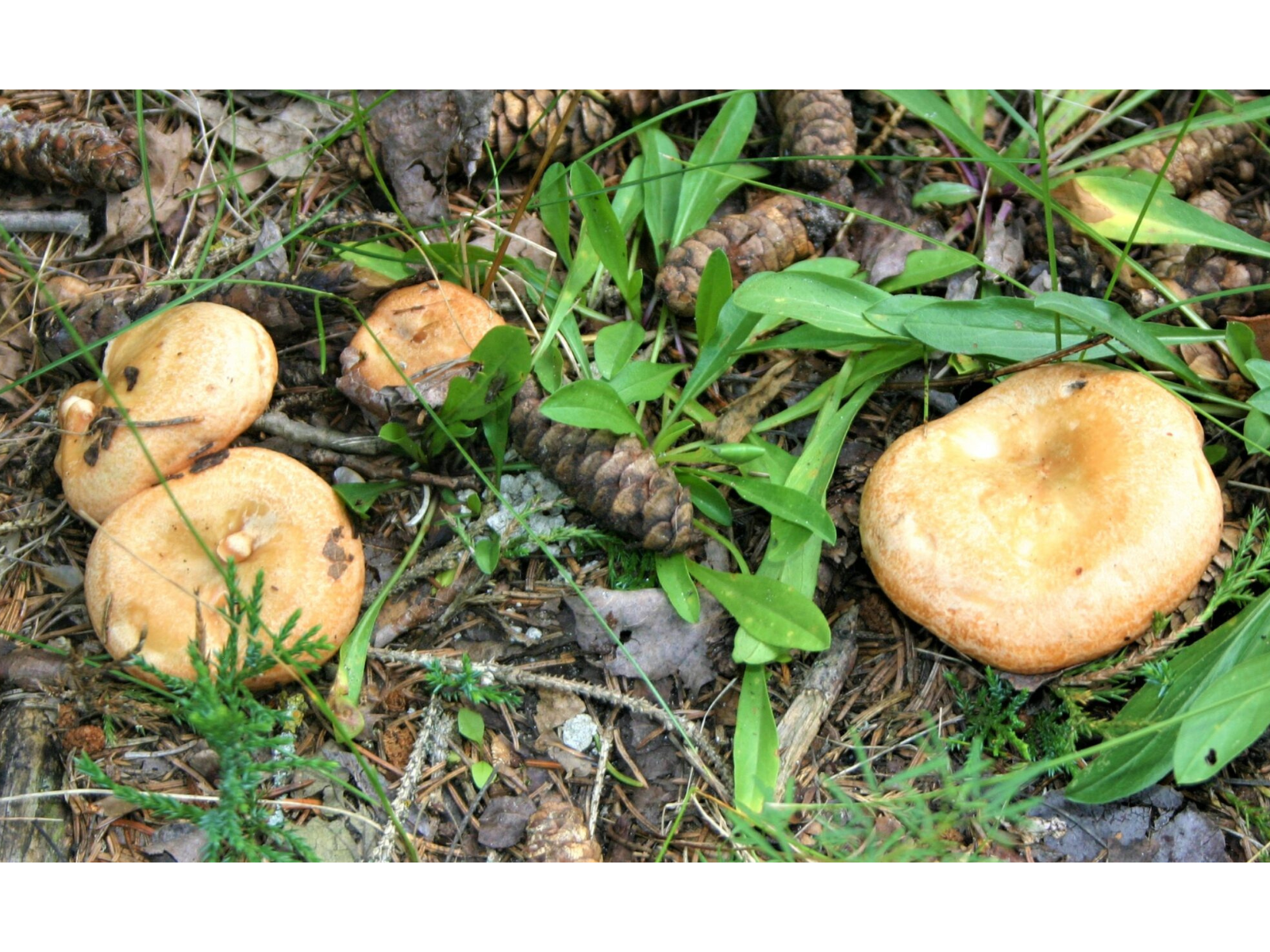
Close up on several tan-coloured mushrooms growing low to the ground.

I got eaten alive by mosquitoes while collecting fungus in late September in 2009.

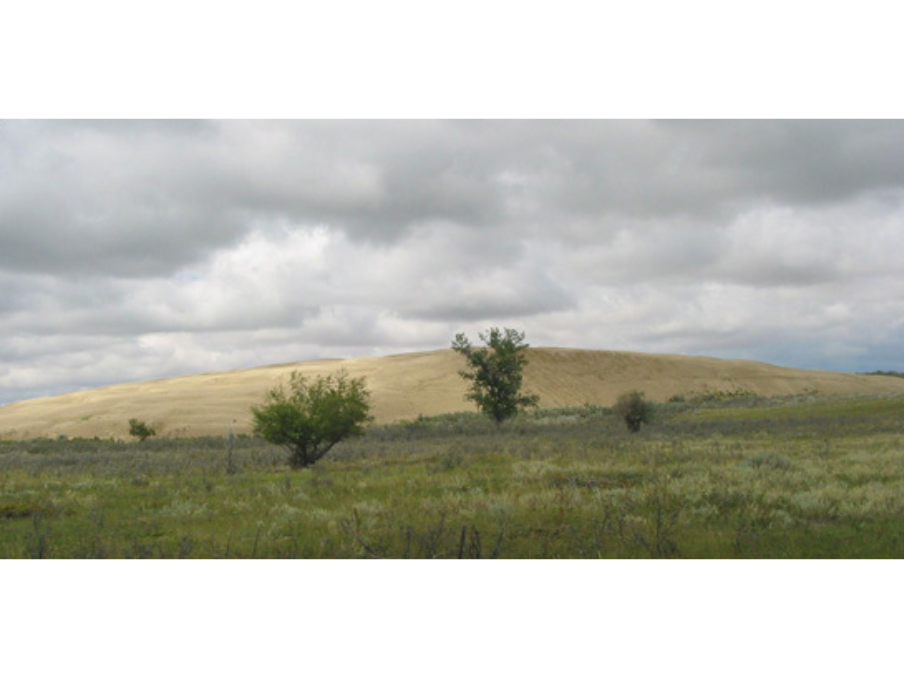
A landscape with gently rolling hills and lone trees and bushes.

I had a wonderful time looking for rare plants in the Great Sand Hills of Saskatchewan.

Furthermore I find that experiencing some adversity makes you more appreciative of the good things in life. I’ll never forget the time I had to hike for 40 minutes through wind and pouring rain to harvest seeds in Grasslands National Park, Saskatchewan. I was cold, wet and my back and knees were aching from hunching over research plots all day. I was never more appreciative of the simple luxuries of life than I was that night: a bath, dry clothes, hot tea, a warm meal, and a soft bed to sleep in. Most people (at least in what we call the “developed world”) would not consider these things to be luxuries, but I do. For this reason, experiencing hardship, even a little bit, can make you a more compassionate, less materialistic, and ultimately happier person. I spend my days being grateful for what I have, rather than obsessing about what I don’t. So I don’t begrudge the bad field days. At the very least they make good story to tell.

Dr. Diana Bizecki Robson

Dr. Diana Bizecki Robson

Curator of Botany

Dr. Bizecki Robson obtained a Master’s Degree in Plant Ecology at the University of Saskatchewan studying rare plants of the mixed grass prairies. After working as an environmental consultant and sessional lecturer…
Meet Dr. Bizecki Robson

Upcoming Planetarium Show: Earth – An Oasis in Space

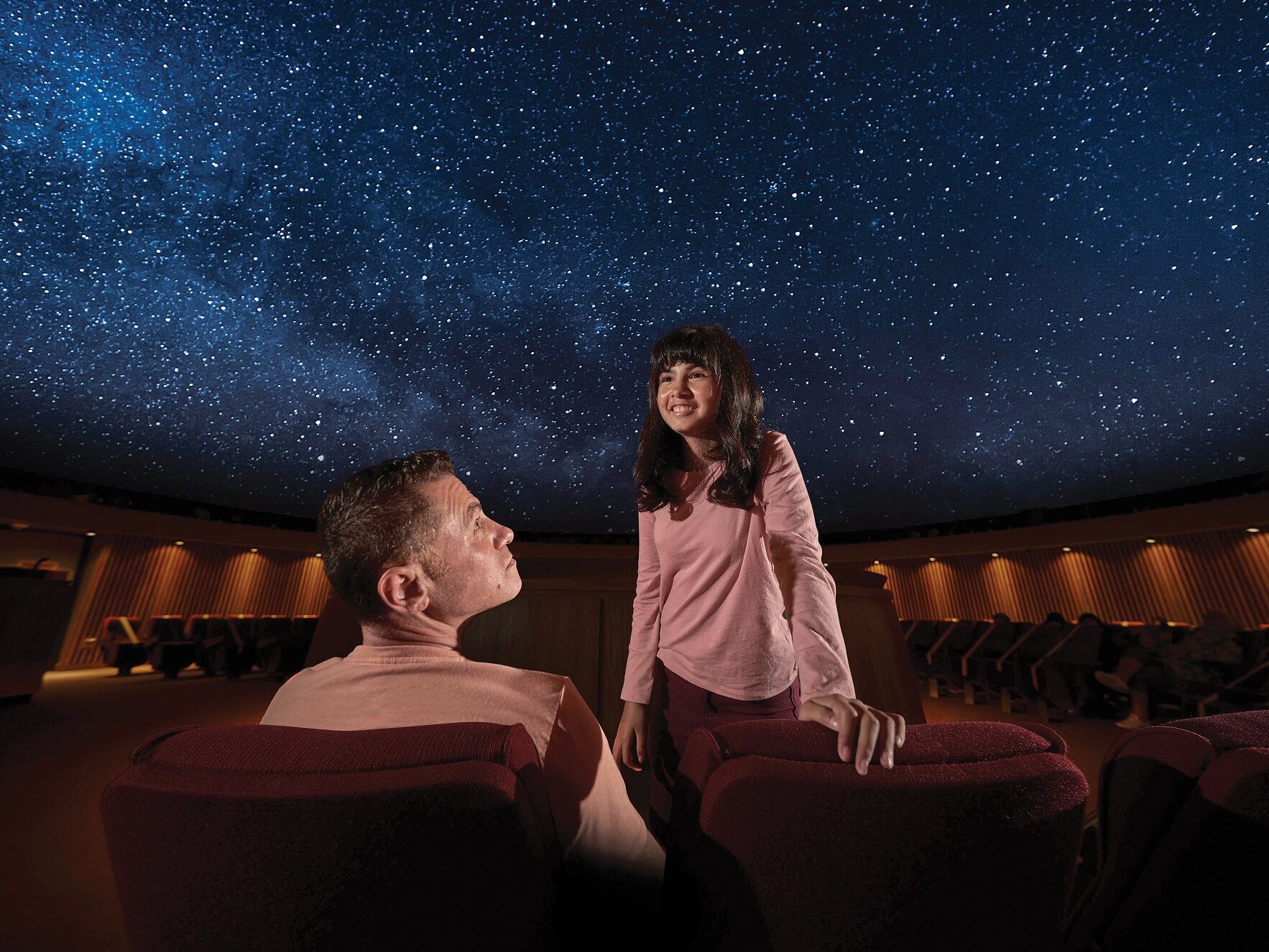
I’ve been listening to the soundtrack for our upcoming planetarium show, “Earth: An Oasis in Space”, and it’s gotten me thinking. The show is all about life in the universe, and how liquid water is a key ingredient for life as we know it. This is what makes Earth an oasis – we have buckets of the stuff. But if we find liquid water elsewhere in the solar system, what does that tell us about life elsewhere? “Necessary but not sufficient” is the way my science profs would have put it – but finding places with liquid water would certainly narrow the search for life. (This show opens at the end of June, by the way… you should come see it!)

So here’s the question: why are we so interested in finding life beyond Earth? From NASA scientists to the UFO “true believers” and everyone in between, the idea of finding life elsewhere seems to be almost universally popular. Is it a desire to not be alone in the vastness of space? Is it a hope that aliens will come and save us from all the problems we face on earth, essentially a big cry for Mommy? Is it pure curiosity, that driving force of humanity that has forged our civilization for millennia?

Of course, we’re not all looking for the same sorts of life. Most scientists in the field expect that the most common sort of life we might find out there will be non-technological: slime molds, bacteria, and other primitive forms of life. And ocean life tends to be non-technological, too: you don’t see dolphins or whales building space probes or sending radio signals into space like humans do, despite their obvious intelligence. Even if the universe is teeming with life, most of it will be totally invisible to us until that first astronaut steps off the ladder and pokes it with their finger – and that’s a *really* long way off technology-wise.

There are several places within our own solar system that may have once harbored primitive life: Mars, for example. There are even a couple, like Jupiter’s moon Europa, that may have life currently there right now, just waiting for us to find it. Until then, the search continues… sort of. Listening for aliens via radio will only detect the most advanced civilizations out there, while ignoring the much larger number of worlds with potential primitive life. Space telescopes can find planets with oxygen atmospheres and water vapour as likely candidates, but until we start sending robots or people out into space again, we’re not going to *know*.

This is why some of the long-ranged plans are pretty exciting. NASA and the European Space Agency are thinking about a big mission to the Jupiter system using two spacecraft sometime in the 2020’s. The Europa Jupiter System Mission would determine if any of Jupiter’s moons are habitable worlds – but it’s not funded yet and it’s a long way off. The Mars Science Laboratory will give Mars another once-over, and be able to do more on-site science than previous missions, including trying to figure out where all the carbon comes from – on Earth, it comes from the actions of life. There are lots of other ideas on the drawing boards for the late 2010’s and 2020’s. Until then, inquiring minds still want to know but are left to wonder.

This is why some of NASA’s upcoming missions are exciting.

Scott Young

Scott Young

Planetarium Astronomer

Scott is the Planetarium Astronomer at the Manitoba Museum, developing astronomy and science programs. He has been an informal science educator for thirty years, working in the planetarium and science centre field both at The Manitoba Museum and also at the Alice G. Wallace Planetarium in Fitchburg, Massachusetts. Scott is an active amateur astronomer and a past-President of the Royal Astronomical Society of Canada.

Zombies in Space

OK, not really – it’s a zombie satellite, though, which is still a bit creepy. Seems a solar storm took out the Galaxy 15  satellite last month, and now it’s wandering around in orbit under no one’s control. The worry is that it’s actually more of a vampire than a zombie, since it may start to suck the signals out of other satellites it gets near… full story at Space.com.

Gunter Wendt, 1924-2010

Gunter Wendt, one of the driving forces of the American space program, passed away earlier this week at age 85. Wendt was the pad leader at Kennedy Space Centre throughout the Mercury and Gemini days, the last face that astronauts saw before heading into space. Always concerned with the safety of his astronauts, Wendt earned the nickname “pad fuhrer” due to his thick German accent and firm rules. He was one of most endearing characters in Tom Hanks’ HBO miniseries “From the Earth to the Moon”. Click here for more details.

Scott Young

Scott Young

Planetarium Astronomer

Scott is the Planetarium Astronomer at the Manitoba Museum, developing astronomy and science programs. He has been an informal science educator for thirty years, working in the planetarium and science centre field both at The Manitoba Museum and also at the Alice G. Wallace Planetarium in Fitchburg, Massachusetts. Scott is an active amateur astronomer and a past-President of the Royal Astronomical Society of Canada.

Mysterious Bead Damage

Recently, our Curator of Native Ethnology Katherine Pettipas contracted a photographer to take photos of the varied artifacts in the Paul Kane collection. Paul Kane was an artist who, in 1847, was sent by the Hudson’s Bay Company to travel across the Canadian wilderness, drawing and acquiring objects along the way. One of the spectacular men’s hide shirts from that collection is currently on exhibit in our Grasslands Gallery. When Conservators Lisa May and Ellen Robinson went into the case to remove the shirt for photographing, they noticed that several pieces of bright blue beads were on the floor of the case. They wrapped the shirt on its mount in a white cotton sheet to bring it to the photo studio. When they unwrapped it, a few more beads fell off in pieces. They then called me to take a look at the condition of the shirt.

A hide shirt on a mannequin with elaborate beadwork going down the sleeve in a display case.

Several beads broke off this sleeve.

A collar of black velvet with light coloured beads. Some of the beads are a cloudy, whitish colour.

Usually, beads with glass disease look whitish.

There is a phenomenon called “glass disease” that causes glass to deteriorate. It’s basically the result of an improper mix of ingredients when the glass was made – not using the ingredients in the right proportion. It‘s often accelerated by high humidity, and it’s irreversible – the glass can’t be “fixed”. The glass beads on this hide shirt seem to be spontaneously falling apart. The most likely cause is glass disease, but the beads don’t have the characteristic white surface coating usually seen in the process. Is it glass disease, or something else? We may have to get the beads examined and tested.

If it is glass disease, there’s not much we can do to stop it. The chemical reaction could be halted by putting the beads in an oxygen-free environment, but that involves either building a specialized exhibit case filled with an inert gas, removing the shirt from display and putting it in an oxygen-free container or bag, or removing the beads from the shirt. None of these are simple solutions. Alternatively, we could monitor the condition of the beads – so far, only a few are affected- and attach a covering of (almost-invisible) silk crepeline over the area of the sleeves where the blue beads are found, so they don’t actually fall off.

Looking down to the lower section of a dress on a mannequin and the caret below it.

It was hard to see the bead pieces against the carpet.

A clear resealable bag with several small blue beads kept inside. A label on the bag reads, "Paul Kane shirt horse culture case".

We will try to get the pieces examined and tested.

It’s something that probably wouldn’t have been noticed if the shirt hadn’t been taken out for photos. The bead pieces were barely noticeable on the carpeted floor of the case, and there weren’t many of them. Now, we should determine if the beads do, in fact, have glass disease. If they don’t, why did they break and fall off? The sinew they were strung on is intact. If they do have glass disease, what do we do? So far, only a few beads on one side are affected. I’m thinking we should just monitor the condition, and possibly cover the beaded part with crepeline. Even that isn’t simple, as there is little to sew to on that panel, but we might be able to use an adhesive. We had no idea there was a problem with this artifact, but now I have to research and consult with colleagues to decide on the best thing to do.

Space Shuttle Lite?

As NASA winds its space shuttle program down, the US Air Force is poised to launch its first space shuttle tonight. The X-37B unmanned space shuttle will launch from Kennedy Space Centre at 6:52 pm Winnipeg time on a classified test flight. The Air Force isn’t saying much about the spacecraft or its possible uses, but it is a reusable shuttle which will land at a runway and could conceivably be used to carry military payloads to and from orbit, or stay in space for weeks at a time. Follow the launch at spaceflightnow.com.

Scott Young

Scott Young

Planetarium Astronomer

Scott is the Planetarium Astronomer at the Manitoba Museum, developing astronomy and science programs. He has been an informal science educator for thirty years, working in the planetarium and science centre field both at The Manitoba Museum and also at the Alice G. Wallace Planetarium in Fitchburg, Massachusetts. Scott is an active amateur astronomer and a past-President of the Royal Astronomical Society of Canada.

Happy Earth Day

Well, it’s Earth Day, a movement that started 40 years ago after the first colour pictures of Earth from space were returned by the Apollo astronauts. Astronauts had always said that seeing the planet from space was a life-changing experience, but when Apollo 8 sent back this picture of the Earth rising over the surface of the moon in 1968, everyone was able to see how fragile our planetary life support system was. In 1969, Apollo 11 landed on the moon, and in 1970 Apollo 13 went through its dramatic “successful failure”, turning attention again to how unforgiving and harsh space is. In April 1970, days after Apollo 13 splashed down, the first Earth Day was celebrated, and the Apollo images of the Earth became the icon of this new sense of environmental awareness.

Earth Day isn’t supposed to be like St. Patrick’s Day, where most people do stuff they would never do the rest of the year – it’s a yearly reminder of the importance of taking care of the planet every day. Despite recent findings of planets around other stars, there is no other known planet humans can move to even if we had the technology to get there. With the ongoing debate about climate change, a lot of people find themselves genuinely uncertain what to believe – alas, a victory for the climate change deniers, who spend big money to sow this sort of dissent. People love to believe the science that supports them not having to do anything different, so it’s an easier sell than the science that tells us we’re going downhill in a rocket-powered handcart. But this debate actually masks the broader point.

It doesn’t actually matter if climate change will cause a global temperature rise of only 1 degree or as much as 5 degrees, or whether it’s over the next 20 or 50 or 100 years; it doesn’t matter if the science is still uncertain, or that there are other effects like solar activity which are beyond our control. Whether climate change will affect this generation or the next, or whether it will be some other environmental issue like ozone depletion, or smog, or the cumulative garbage of an increasing population living in a disposable world – that doesn’t really matter either. The basic fact is this: The way we live our lives now will affect our children’s lives, and their children’s lives. They have no other place to go, and we’re leaving a big mess to be cleaned up.

I ask my two-year old to clean up her toys before bed, not because they will continue to pile up until they drive us out of our house, and not because they pose a hazard to our continued existence in the house, but because her mess affects other people and it’s just the right thing to do – and she gets that. I hope that humanity can find the wisdom of a two-year old in its Earth Day celebrations this year.

RESTRICTED ACCESS… Come on in!

Close-up on the fourth floor button of an elevator panel. The label reads,

Welcome to the Zoology blog! This little corner of the Museum website will be a small window into the “restricted access” world of the 4th floor where specimens are housed and scientific research is undertaken that provides the foundation for exhibits on display in the public galleries. It often comes as a surprise to even frequent Museum visitors that less than 2% of our collections are on display at any one time. A tour of the zoology holdings would reveal a dimly-lit space with densely-packed shelves brimming with what might seem a grisly accumulation of mammal skins and skulls, bird mounts, pinned insects, and gruesome cocktails of fishes and frogs preserved in alcohol. Why all the dead stuff in a museum otherwise dedicated to the celebration of life and the natural world? Why so many? And how did they get here? These are some of the questions that will be explored during the development of this blog.

Looking down an aisle of storage cabinets. A number of drawers are pulled open along the row revealing numerous preserved rodent specimens.

A sample of the collection’s rodents.

Close-up on a shelf holding numerous sealed jars with white labels and red tape sealing the top. The closest jar, which is largest is rotated to show several preserved toad specimens inside.

Toads preserved in alcohol.

The collection shelves are not as lifeless as they at first appear. Although the specimens are no longer physically alive, a good collection is a dynamic and exciting place. Researchers like myself, and others from around the world, examine the Museum’s collections to identify species new to science, to determine where and how various species live, and to uncover Manitoba’s and the world’s rich biological history – all important steps to understanding and conserving nature’s diversity.

Each specimen has two stories to tell: one biological that outlines what species live where, when, how, and with whom, the other a human story intimating the trials and tribulations of fieldwork often under difficult circumstances in interesting places or providing a taste of life in a different era.

Close-up on a shelf holding numerous sealed jars with white labels and red tape sealing the top. The closest two jars, which are larger, are rotated to show small, preserved fish specimens inside.

Alcohol-preserved fishes – what stories might they hold?

Three wooden drawers of a storage cabinet pulled open to different degrees showing a variety of pinned butterfly specimens.

Who collected and studied these butterflies? What motivated them?

For a zoology curator, picking up a jar of fishes conjures up an image of a research team slogging through marshes or hauling a trawl in heavy seas, whereas an aging pinned butterfly might bring to mind a monocled Victorian naturalist peering closely at that same specimen at a rolltop desk by kerosene lamp.

Future entries will examine specimens from biological and human perspectives and investigate the how and why of Museum collections.

Hope you join me.

Dr. Randy Mooi

Dr. Randy Mooi

Curator of Zoology

Dr. Mooi received his Ph.D. in zoology from the University of Toronto working on the evolutionary history of coral reef fishes. Following a postdoctoral fellowship in the Division of Fishes of the Smithsonian Institution…
Meet Dr. Randy Mooi