



Bugs in Birds Hill

Bugs in Birds Hill

Although I am a botanist by training, over the last six years I developed a real passion for insects. It all started when I planted a wildflower garden in my back yard. I would sit on my patio after work, drink iced tea and watch an amazing variety of insects visit my flowers. When I started working here at the Museum I decided to pursue this interest by studying the pollinating insects in one of Manitoba’s rarest ecosystems, the tall-grass prairie.

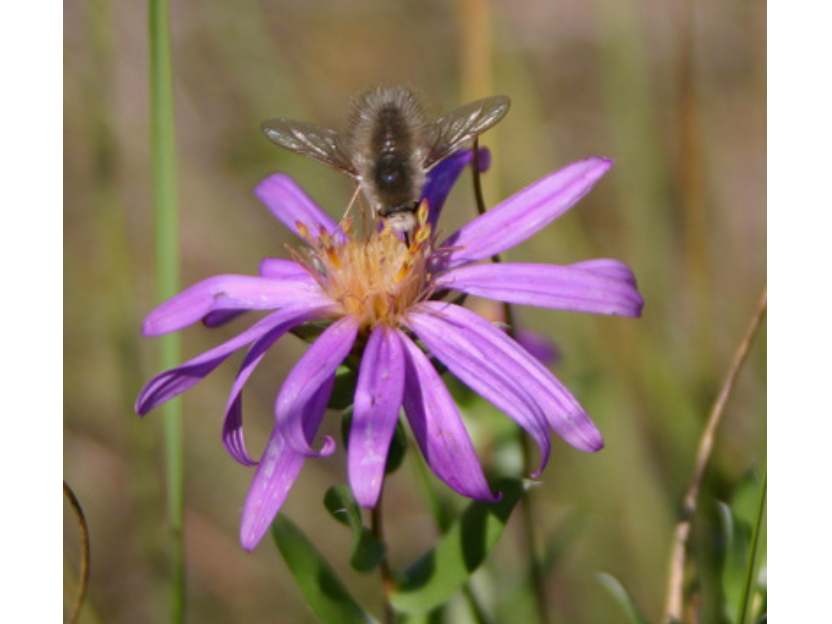
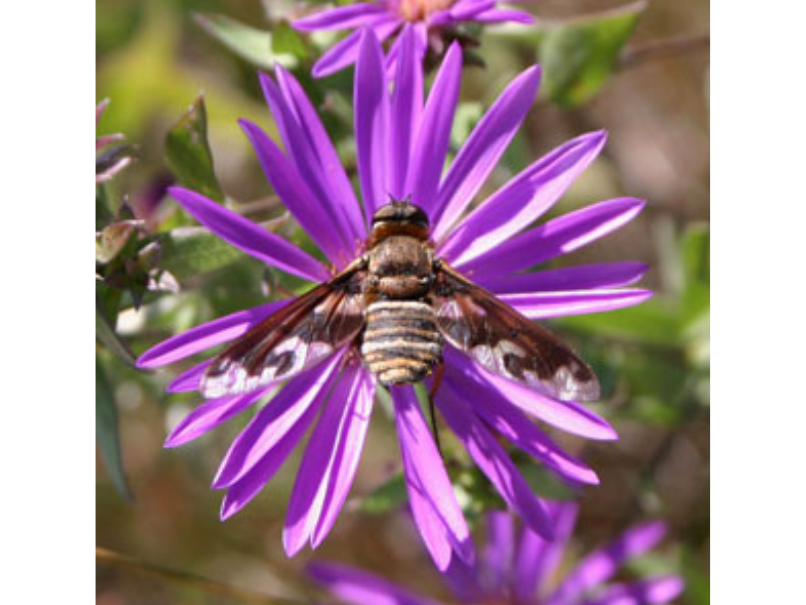
For the last two weeks I’ve been sitting quietly on a stool in various places in Birds Hill Provincial Park to record the visitation sequences of pollinating insects. My favourite fly (I don’t imagine too many people can say they have one of those) is a little bee fly called Anastoechus. They look like tiny little pussy willows with wings and I think they’re adorable! They feed on the nectar of Western Silvery Aster and other flowers with their long proboscises, and parasitize grasshoppers by laying their own eggs on grasshopper eggs. The bee fly larvae then hatch and eat the grasshopper larvae. Cool! Gross too!

Close-up on a flower with long purple petals with an insect perched near the yellow centre.

Bee fly on Western Silvery Aster.

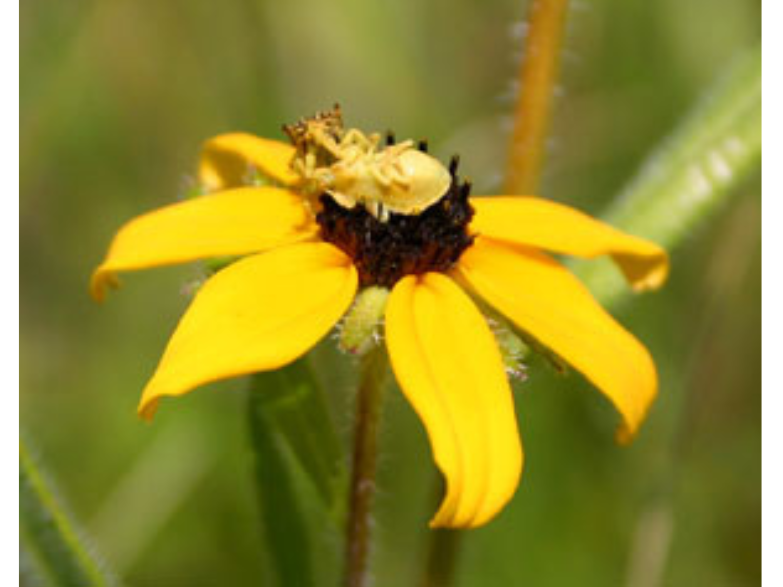
Close-up on a flower with yellow petals and a dark centre. A pale yellow insect sits on the centre.

Ambush bug canabalizing another.

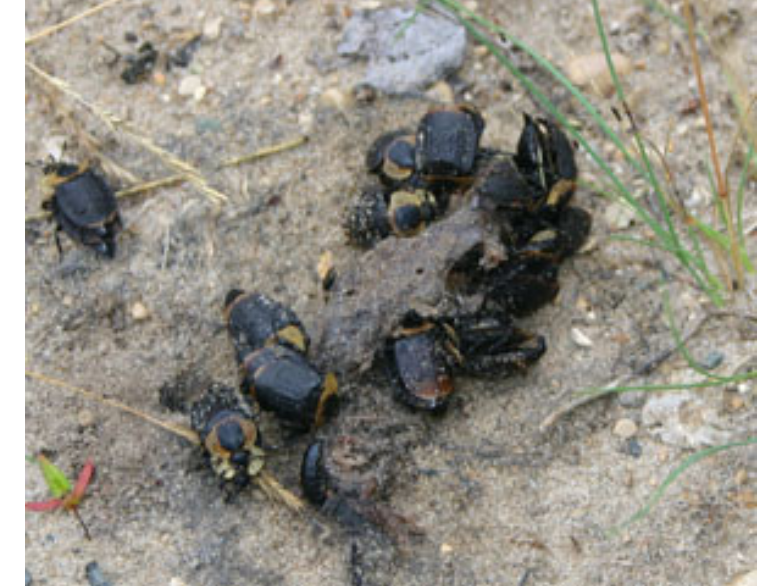
A small group of beetles gathered on a piece of dung.

I’m also rather fond of (or more accurately fascinated and repulsed at the same time) by ambush bugs (Phymata spp.). I remember the first time I saw one. I was recording the visitation sequence of a bee when all of a sudden it stopped moving. After a minute went by I moved closer to see what had happened to it. A strange bug had captured and appeared to be eating it. I contacted Rob Roughley at the University of Manitoba (sadly, he passed away in 2009), to see if he knew what this insect was. Being the fount of entomological knowledge that he was, he immediately identified it for me. Turns out that ambush bugs produce a paralytic poison to subdue their prey very rapidly. Then they inject digestive enzymes into the exoskeleton of the insect to liquefy the goo inside so they can suck it out. Sometimes they share their meals with each other and sometimes if they’re really hungry, they cannibalize each other. Cool! Gross too!
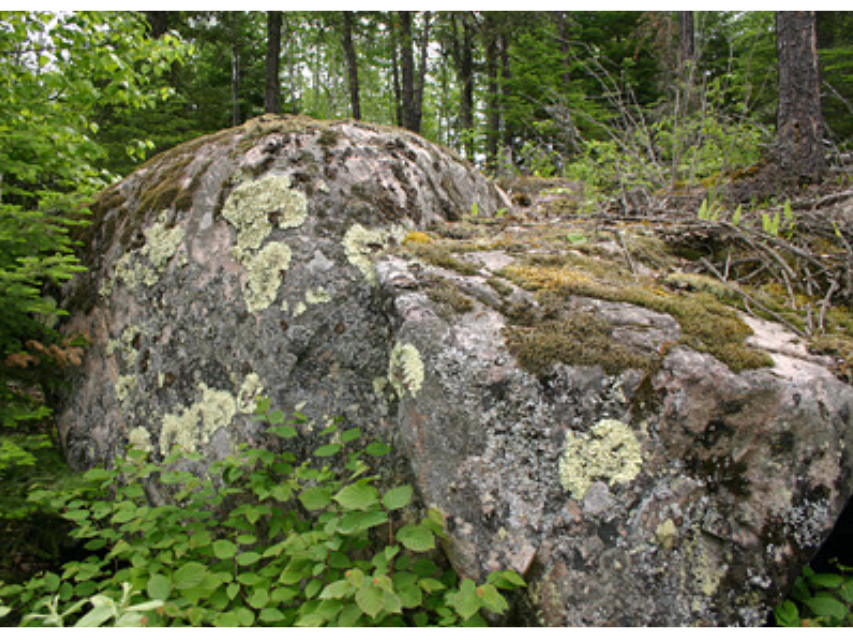
 

Image: American carrion beetles on, you guessed it, carrion!

Rob also identified a strange beetle that I had seen on prairie roses. I was doing field work at Living Prairie Museum when I observed male beetles chewing off all the stamens of rose flowers, which I thought was a bit odd. Later on I saw beetles mating on the emasculated flowers. Rob told me it was a “rose-emasculating beetle” (a pretty fitting name), and that the males trimmed the stamens to make a little “love nest” to attract females. So I guess it’s not just humans that use roses to attract mates.

Much less attractive scents -from our point of view at least- get other beetle species in the mood for love, namely the smell of rotting meat. I was hiking along a trail in the park to get to some of my research plots when I saw a congregation of about 20 mating beetles crawling over what looked like part of a carcass. I hypothesized that they were probably interested in laying eggs in or near the meat. A bit of research led me to conclude that they were likely American Carrion Beetles (Necrophila americana). Turns out that if you’re an American Carrion Beetle, carcasses are the equivalent of night clubs; males hang out there and wait for attractive females to show up. Then when the females arrive, they pounce on them so they can’t meet any other guys! Pretty clever!

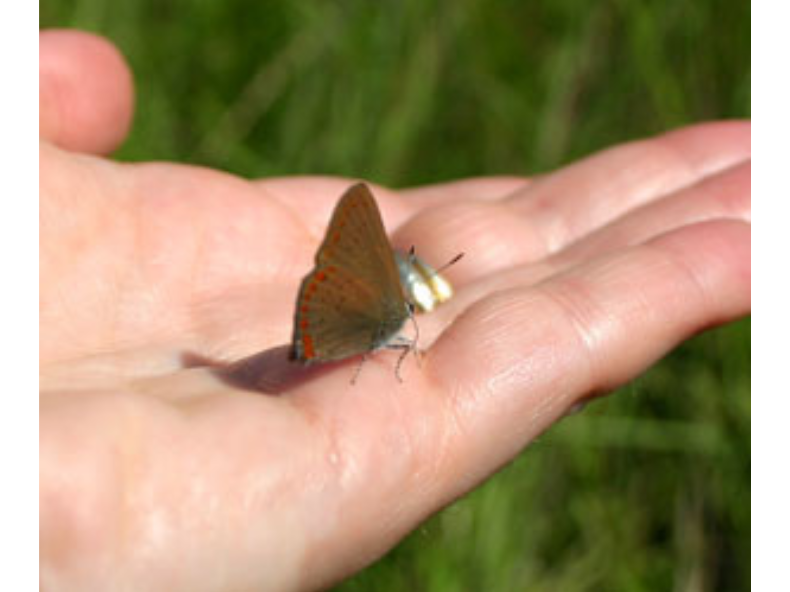
A small brown butterfly perched on the palm of an extended hand.

A Coral Hairstreak butterfly lapping up the salty sweat on my hand.

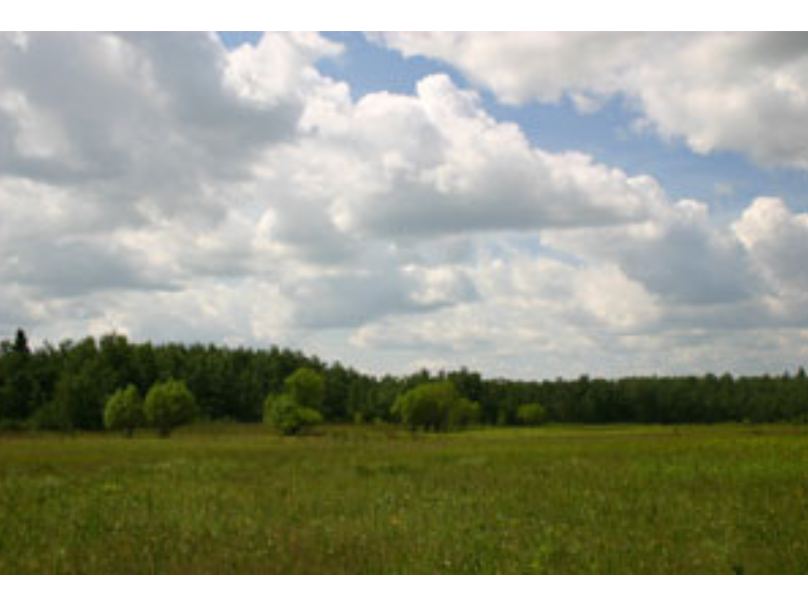
Expanse of grass with dense trees in the background, below a blue sky with many fluffy, white clouds.

A lovely day in Birds Hill Provincial Park.

This week I became a willing donor of bodily fluids to one of the local Hairstreak (Satyrium) butterflies. It landed on my hand while I was monitoring one of my plots and proceeded to lap up my sweat (given the heat this week there was no lack of it), presumably to get the salts. It licked my hand for about 30 minutes and even continued to do so while I walked to my car. I’ve also, in times past, donated salt to the local sweat bees. For this reason I usually pause before slapping something on my limbs lest I accidentally squish a friendly butterfly or bee instead of a mosquito (I’m not too keen on donating blood since I get horrible itchy welts).

The more I learn about insects through my observations of them, the more fascinated I become. Hopefully some of my fascination has now rubbed off on you. Now get off your computer and go look at some bugs!
Dr. Diana Bizecki Robson

Dr. Diana Bizecki Robson

Curator of Botany

Dr. Bizecki Robson obtained a Master’s Degree in Plant Ecology at the University of Saskatchewan studying rare plants of the mixed grass prairies. After working as an environmental consultant and sessional lecturer…
Meet Dr. Bizecki Robson

“All I know is that I know nothing”

I didn’t really understand this quote by Socrates until I started working on my Master’s degree. I soon discovered that no matter how much I learned, there was always much more TO learn. Although it is fair to say that scientists find answers, it is just as accurate to say that we discover questions.
Research sounds pretty simple. You start by asking an interesting question about how the world works, and then formulate an idea regarding what the answer will be based on your knowledge of the subject and a literature review (a hypothesis in scientific speak). If you’ve designed your study well, you should soon have an answer to your question. However, the answer you get usually creates additional questions that you hadn’t even thought to ask. Questions that need to be answered before you can publish your research, and send you to “back to the ol’ drawing board” to write yet another grant proposal. Science is kind of like cutting off the head of the mythical hydra: more heads (questions) keep popping up to replace the ones you’ve already dealt with. Ultimately this isn’t a bad thing as it ensures that good science gets done, but sometimes it can make you feel like you’re running on an unstoppable treadmill.

Close-up on a bee fly resting in the centre of a flower with purple petals.

A good example of this is my recent research on Western Silvery Aster. This nationally rare plant can be found in nearby Birds Hill Provincial Park. I discovered that very little was known about its pollination ecology, my personal area of research interest, so I embarked on a plan to identify its pollinators in the hopes of providing useful information to help government scientists prepare their recovery plan.

While conducting the pollination study, I observed that flower production was higher in some areas of the park than others. I began to wonder whether this difference was due to heavier competition with other species for soil resources such as nitrogen. The following year I attempted to answer this question by establishing some study-plots to determine the impact of fertilization on flower production. Although there was a slight increase in flower production in fertilized plots, the impact was not as high as I thought it would be, which suggests that there is some other limiting factor at work, perhaps water or phosphorus. I have yet to design a study to answer that question because I also wanted to know if other plants facilitate pollination of Western Silvery Aster by providing nectar to its pollinators earlier in the year. Next week I will begin conducting these pollination surveys so if you’re out in Birds Hill Park and see someone sitting on a stool in the middle of the prairie with a white hat and butterfly net-that’s me!


Image: A bee fly (Exoprosopa sp.) on a Western Silvery Aster flower.

One of things that can greatly affect the interpretation of data is the weather. One manuscript of mine was rejected because the reviewers deemed that only one year of data was insufficient to make any generalizations about pollinator communities. Collecting another year’s worth of data allowed me to demonstrate that insect and plant communities can vary substantially in terms of their abundance from year to year due to differences in the weather. I was fortunate to be able to compare a relatively cool summer (2004) to one that was more typical (2005). In general, it seems to take at least two field seasons (and ideally more) to detect meaningful patterns in nature due to variability in the weather. I’ve learned that a scientist has to build flexibility and redundancy into his/her research plans to obtain at least some good data and take advantage of serendipitous observations.

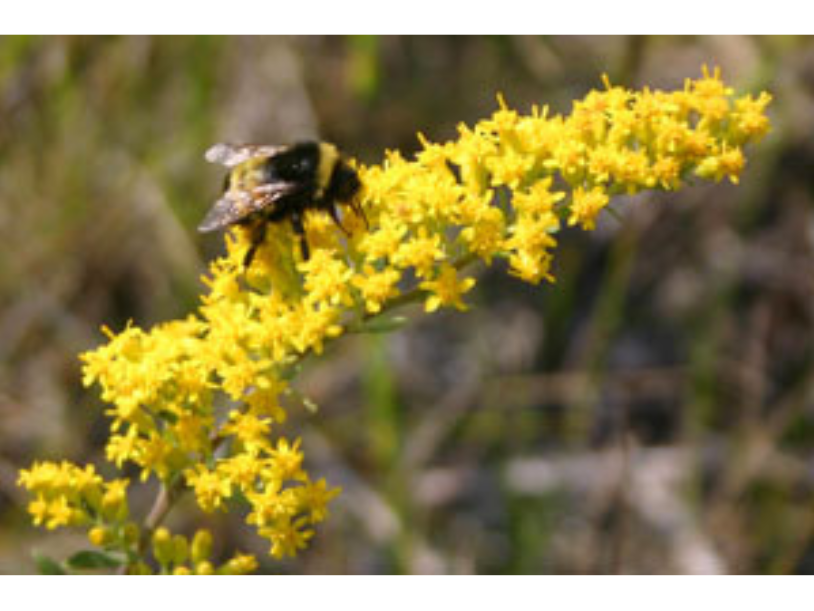
A bumblebee on a long extended yellow flower.

Despite the problems I’ve encountered, my efforts have met with success.  The results of my pollination research on Western Silvery Aster, “A comparison of flower-visiting insects to rare Symphyotrichum sericeum and common Solidago nemoralis (Asteraceae)” were published in the scientific journal Botany.  A second article, “Reproductive ecology of the western silvery aster Symphyotrichum sericeum in Canada”, was recently published in the open access journal Endangered Species Research (http://www.int-res.com/articles/esr2010/12/n012p049.pdf).  You can also check out my earlier paper, “The structure of the flower-insect visitor system in tall-grass prairie”,  in the journal Botany.


Image: Bumblebee (Bombus sp.) on Showy Goldenrod.

Dr. Diana Bizecki Robson

Dr. Diana Bizecki Robson

Curator of Botany

Dr. Bizecki Robson obtained a Master’s Degree in Plant Ecology at the University of Saskatchewan studying rare plants of the mixed grass prairies. After working as an environmental consultant and sessional lecturer…
Meet Dr. Bizecki Robson

Wandering in the Whiteshell

Ah it’s a beautiful day here in Whiteshell Provincial Park. It’s warm and sunny; perfect weather for lying on the beach. Unfortunately that’s not what I did today because I am not here on vacation: I am working. After a quick breakfast I was on a hiking trail near Falcon Lake, where no botanist (at least to my knowledge) has gone before. What was I doing? After putting on my nearly impenetrable mosquito-proof clothing and gloves, and my backpack full of gear, I set out to collect spring fungi, lichens, mosses and plants (mostly sedges and ferns) that had not been collected in the area before. If you’re wondering why I’m doing this, go back and read my blog “41 Uses for a Dead Plant.”

Even though the trail I was on was only 5 km long, it took me 3.5 hours to reach the end. Botanists spend a lot of time staring intently at the forest floor and periodically crawling around on it to find tiny little plants and lichens. I spent half an hour in one little patch of birch and fir collecting a bewildering diversity of Cladonia lichens. The only problem with pausing for so long is that all the mosquitoes, horseflies and black flies find you. The hike back was not so buggy as I stopped only occasionally to collect a few plants that I missed.

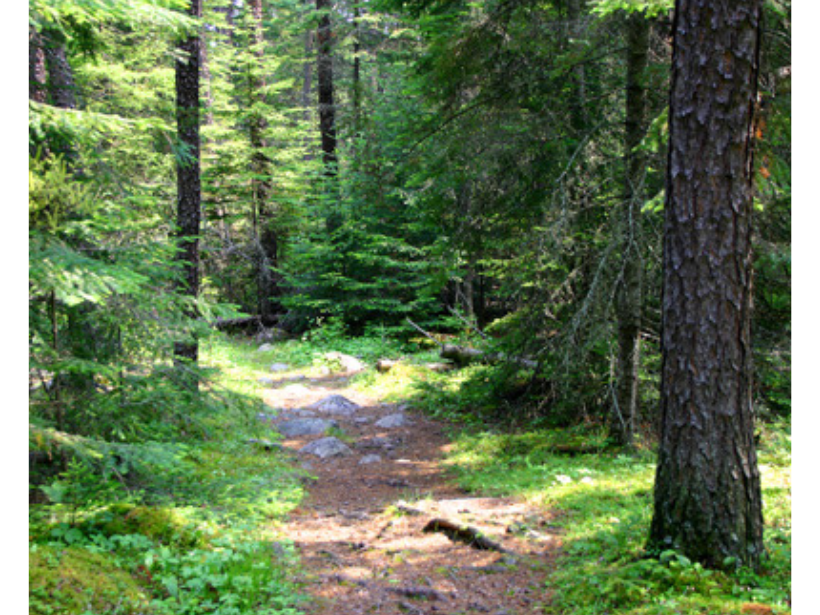
An uneven path through a wooded area.

Hiking trail in the Whiteshell.

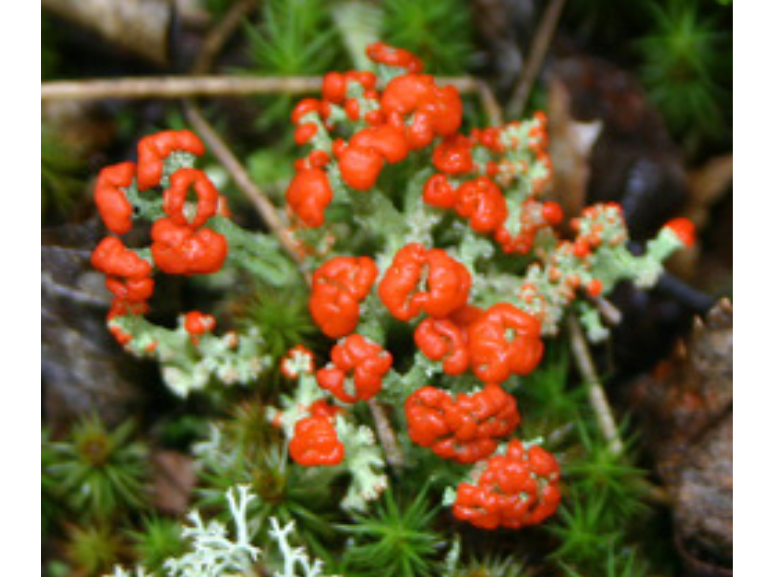
Close-up on a low-growing plant with lots of small red flowers.

A pixie-cup (Cladonia) lichen.

At one point I stopped to collect some mushrooms from an old log. Breathing deeply, I was enchanted by the scent: the rich smell of decaying wood combined with the resinous scent of fir needles and the crispness of moss. It smelled like life. I wondered briefly how many species of insects, fungi and bacteria were in a single handful of this humus? Probably millions. Urban soils, poisoned and stripped of all their diversity, just don’t have the same odor. I’m not sure why people insist on ripping out the native vegetation at their cabins and replacing them with lawn; it just doesn’t smell as good.

At the end of my hike, I was sweating profusely (it was very humid), hungry, thirsty and experiencing “the willies” from being surrounded by the various insects that were intoxicated by the large quantities of carbon dioxide I was exhaling (I’m not in peak hiking condition yet). Once I got to my car, I headed back to the cabin for a late lunch and a much needed shower. After lunch I hiked along the shore of the lake to collect some aquatics. The remainder of the day was spend carefully pressing and labeling my specimens, making spore prints, putting mushrooms in the dehydrator and recording field notes. Tomorrow I get to do this all over again.

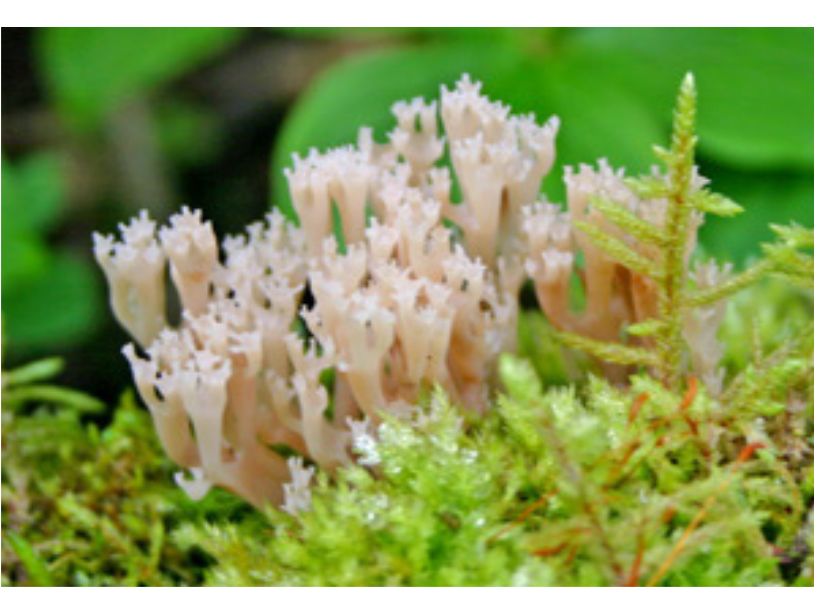
Close-up on a pale pink-white coral like plant growing from a green surface.

A beautiful coral (Ramaria) fungus I found.

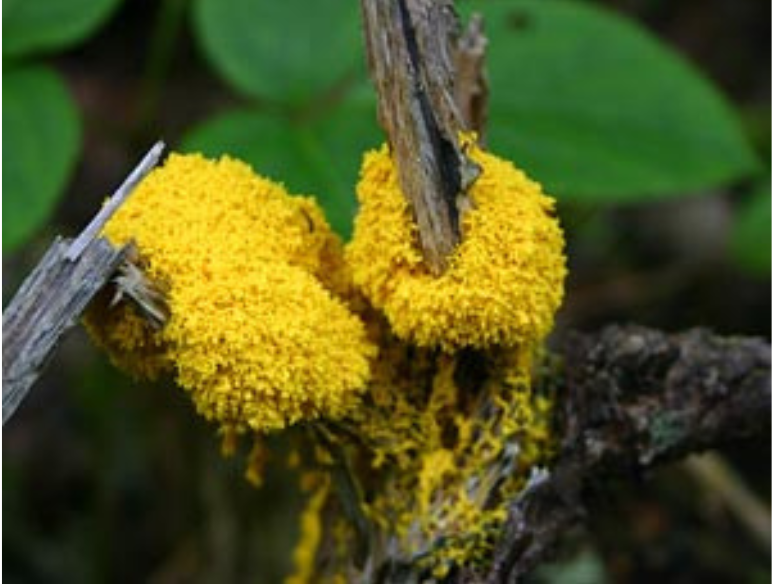
A textured, bright yellow mold growing around a slim branch.

A spectacular slime mold!

Given the choice between being out here and being in my office at the computer, I would much rather be out here. I’ve seen several deer, leopard frogs, a great blue heron, butterflies, lots of birds and a really cool bright yellow slime mold! At night the local pair of loons serenades me to sleep.

Dr. Diana Bizecki Robson

Dr. Diana Bizecki Robson

Curator of Botany

Dr. Bizecki Robson obtained a Master’s Degree in Plant Ecology at the University of Saskatchewan studying rare plants of the mixed grass prairies. After working as an environmental consultant and sessional lecturer…
Meet Dr. Bizecki Robson

Botanical Black Holes

Next week I will be going out to Whiteshell Provincial Park to do some collecting. Why you might ask? I’m trying to fill in Manitoba’s botanical black holes.

While looking through several recent botanical publications I noticed an odd pattern. The Canadian distribution for quite a few species was listed as being: British Columbia, Alberta, Saskatchewan, Ontario, Quebec and Newfoundland but not Manitoba. Since the species’ were found on “rock outcrops in the boreal forest” or “acidic bogs”, a lack of appropriate habitat was probably not the reason why they had not been found here. The answer, quite simply, is that no one has ever collected samples of those species in Manitoba before, even though they are probably quite common. In total, there are at least 74 species of lichens and 85 species of moss that likely occur here, but are undocumented, representing a black hole in our knowledge of the provinces’ biodiversity. If we, as a society, are to protect our nation’s biodiversity we need to know what exists here. Although we know which birds, mammals, fish, amphibians, and reptiles are native to Manitoba, our understanding of the invertebrate, fungal, and botanical diversity is still very incomplete.

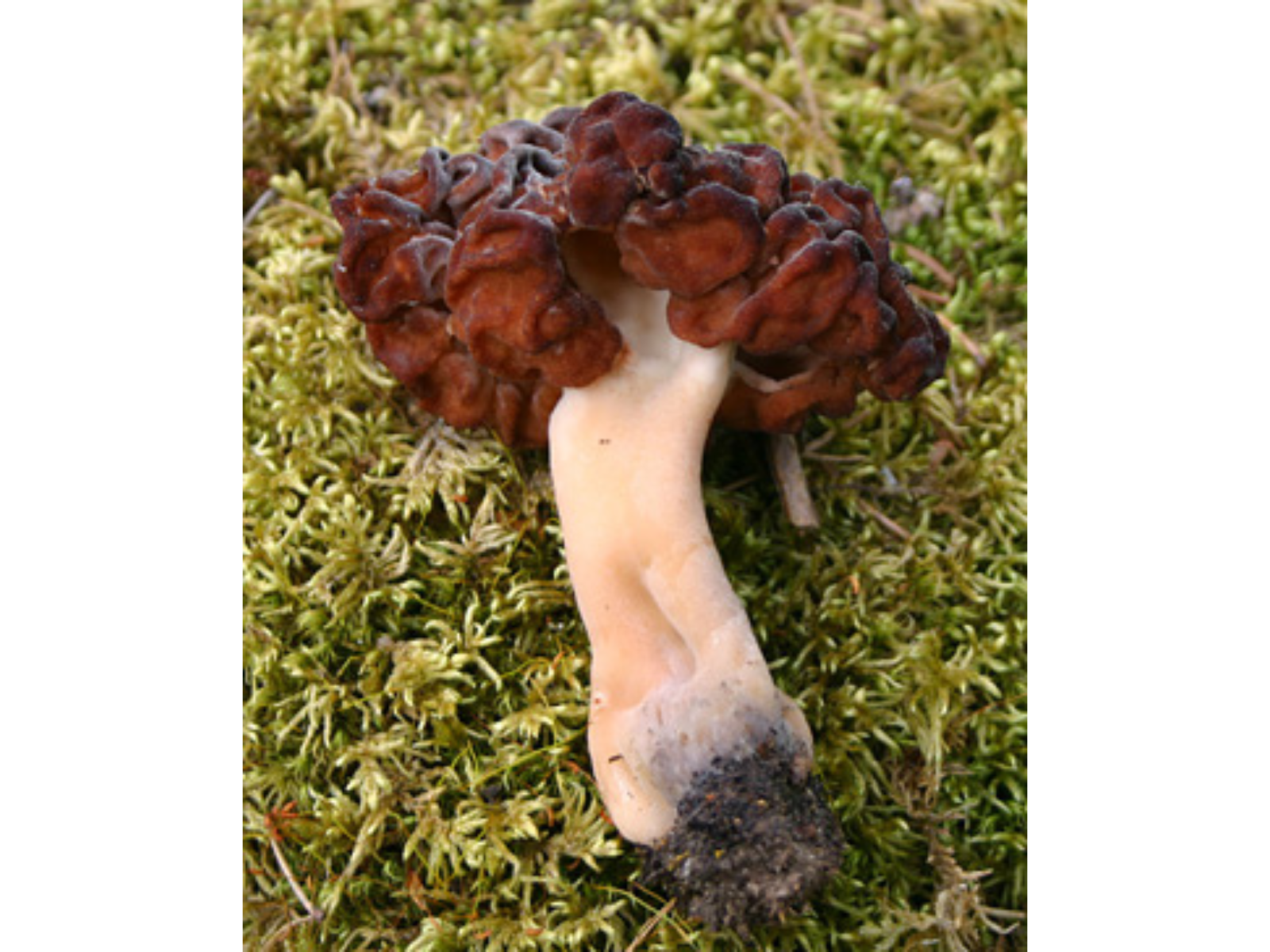
A mushroom with a ridged, brown cap and a light-coloured stem lying on green moss.

The distribution of fungi like this false morel are poorly known.

A large rock covered in lichen and mosses in a wooded area.

Rock outcrops are covered with a diverse assemblage of lichens and mosses.

For anyone out there worried that I “kill” plants when I collect them, you can stop worrying. I only collect a single branch with a few flowers and/or fruits, leaving the root system intact and the plant still very much alive. Since the bulk of fungi consist of subterranean “roots” called hyphae, collecting a few mushrooms does not kill the fungi. I do much less damage to wild plants when I collect them than the various wild herbivores do when they eat and trample them. Further, I do not collect any species that are protected under federal or provincial legislation, or that are rare and present in small numbers.

One of my latest endeavours is to try and complete The Manitoba Museum’s botanical collection by obtaining at least one specimen of every species found in the province. In 2008 it was estimated that the Museum possessed slightly less than 83% of all vascular plants, 45% of all lichens, 21% of all bryophytes, 4% of all fungi and less than 1% of all algae. Further, the Museum possesses fewer than five specimens of 45% of our vascular plant species and of most non-vascular plants and fungi. This means that we simply don’t know how widely distributed our native species are or whether their distribution has changed over the years.

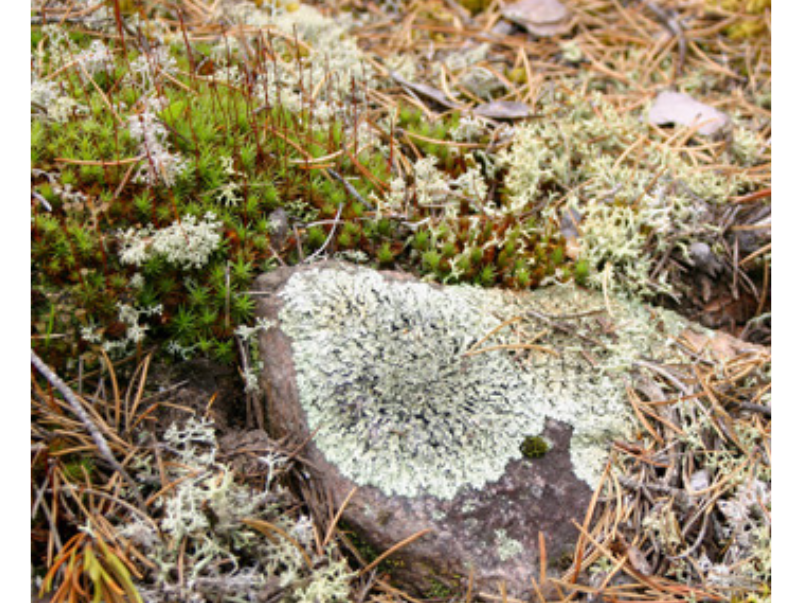
Close-up on a stone with lichen and mosses growing on and next to it.

Lichens and mosses are undercollected in Manitoba.

Close up looking down at damp, sandy/rocky soil with lichens and algae growing from it.

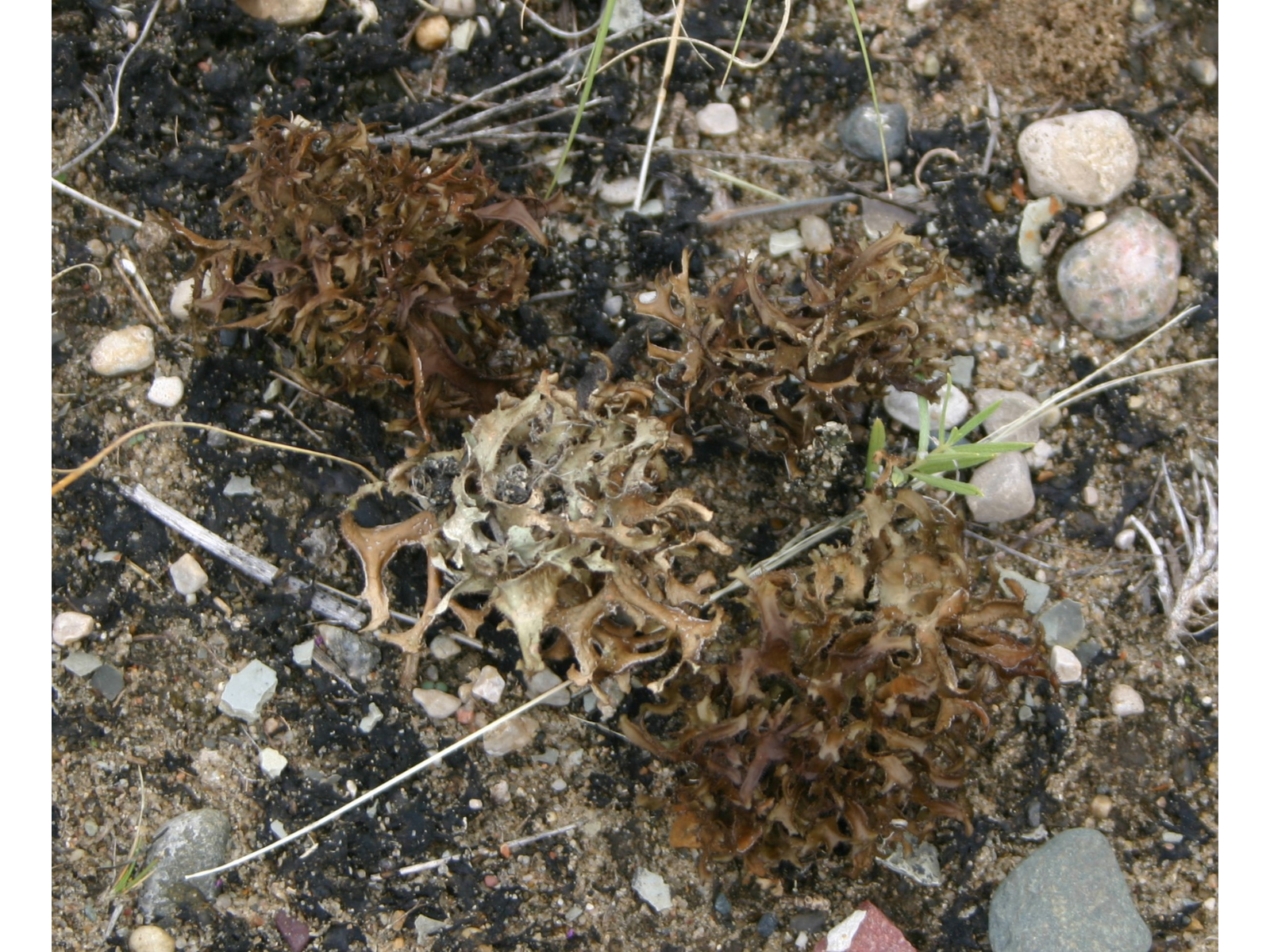
Lichens and blue-green algae are early colonizers of bare soil and rock.

The fact of the matter is that this project will likely never be completed during my stint as Curator here. Documenting biodiversity simply isn’t “sexy” enough to attract the large amounts funds that are needed to do the job properly. I would need to spend several months every year hiking around in the bush with a team of field assistants to achieve this goal. Then I would need staff to properly preserve and catalogue the specimens, and additional collection space to store them in. This year I can only spend 13 days in total to do my field collecting. Given the lack of funding to document the provinces’ biodiversity, the most I can expect to do is make the hole a little bit smaller.

Dr. Diana Bizecki Robson

Dr. Diana Bizecki Robson

Curator of Botany

Dr. Bizecki Robson obtained a Master’s Degree in Plant Ecology at the University of Saskatchewan studying rare plants of the mixed grass prairies. After working as an environmental consultant and sessional lecturer…
Meet Dr. Bizecki Robson

Historical Event in Cross Lake

By Kevin Brownlee, past Curator of Archaeology


I recently returned from the community of Cross Lake with a great experience I want to share.

We experimented with cooking a meal inside a replica clay pot over a campfire. It wasn’t until we were cooking that we realized that it has probably been over 300 years since a meal was cooked inside a clay pot in northern Manitoba.

The pot was made by Grant Goltz (Minnesota) copying one from Minnesota that is over 900 years old. Grant generously loaned the pot so we could cook a meal.

You may ask “how is this relevant to archaeology?”. Broken pot sherds are often found at ancient camp sites and we have thousands in the collection in The Manitoba Museum. We were doing experimental archaeology, which is basically trying to see how things were done in the past through experimentation.

In this case we cooked up a meal of moose meat and wild rice. Before we began I worried that the pot may break in the campfire, food would stick and the pot would always boil over. To my surprise the pot did not break, none of the food stuck to the pot and when the pot boiled over once we just moved the fire away from the pot and it kept a gentle boil until the food was cooked.

While the pot we experimented with is a copy from one found in Minnesota the same style of pots are found in Manitoba.

In the end, thirteen of us enjoyed a wonderful meal cooked the old way. Now when any of us talk about pottery found at an archaeological site we can tell people how well these pots cook a meal.

Scientific Hero Worship

Attending conferences can provide scientists with wonderful opportunities to network, develop new insights into natural phenomenon, refine research, and initiate new partnerships. As a Museum professional I also get to visit Museums and develop ideas for new exhibits and programs at my own institution. On the lighter side, scientists also share a few drinks, commiserate with each other (I had my funding cut too!), meet old friends, exchange field stories, and sometimes even get funky on the dance floor after the conference banquet.

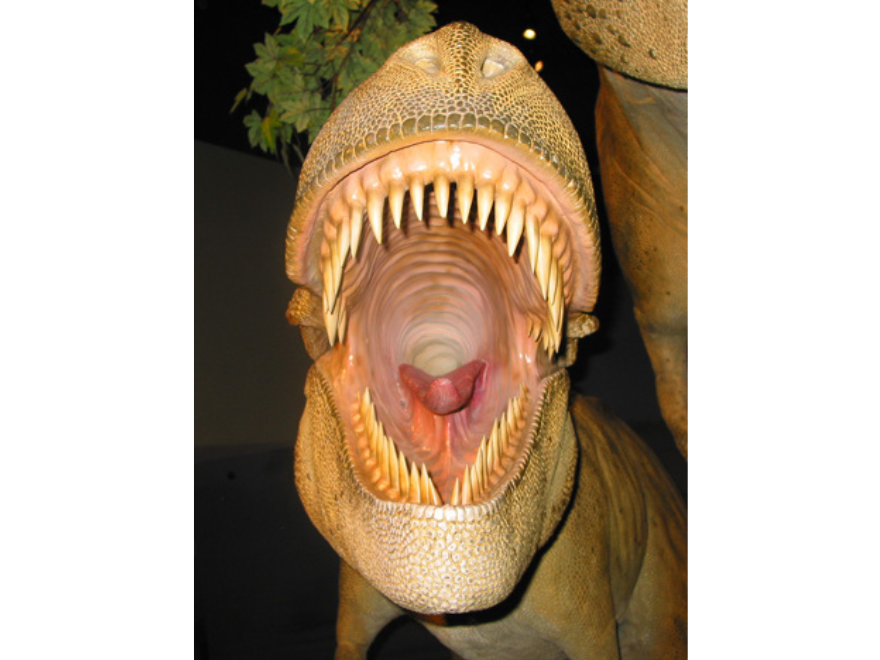
Photo looking into the open mouth of a large T-Rex model.

One of amusing things that goes on at conferences is scientific hero worship. Many a young graduate student has fantasized about meeting a famous scientist, dazzling them with their impressive knowledge of natural history, and then forming a fruitful lifelong research partnership (I’d love to spend three years in the jungles of Borneo collecting plants with you and discovering a cure for cancer). In reality, I suspect that this rarely happens. There’s something about meeting a distinguished scientist that makes young scientists go completely blank.


Image: I was inspired by the new exhibits at the Canadian Museum of Nature.

I got to meet the late Stan Rowe (the Canadian ecologist who wrote “Home Place”) when I was a twenty-something graduate student. Instead of saying something impressive, I smiled and stared at him blankly like I was an imbecile for a few seconds before eventually remembering to ask him to sign my copy of his book. It reminded me of that scene in “A Christmas Story” when Ralphie finally meets Santa but can’t remember that he wants a Red Rider BB Gun for Christmas.

A colleague of mine recounted a similar tale of how he met the late Stephan J. Gould, one of the most famous palaeontologists in the world. He was visiting the field museum over the lunch hour of a conference but didn’t realize they were serving food, instead choosing to drink three bottles of free beer on an empty stomach. It was in this slightly inebriated state he ran in Stephan. Instead of the witty banter that he would have liked to have engaged in with the world’s most preeminent palaeontologist, he muttered something nearly unintelligible and completely forgettable. Ah such is life!

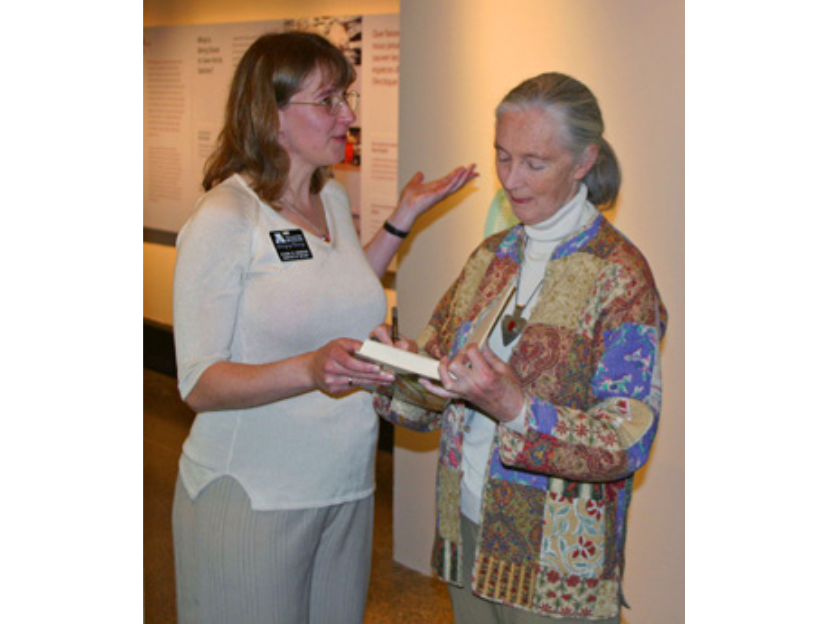
Dr. Diana Bizecki Robson handing a book to Dr. Jane Goodall.

I was reasonably coherent when I met Jane Goodall (she signed my book!).

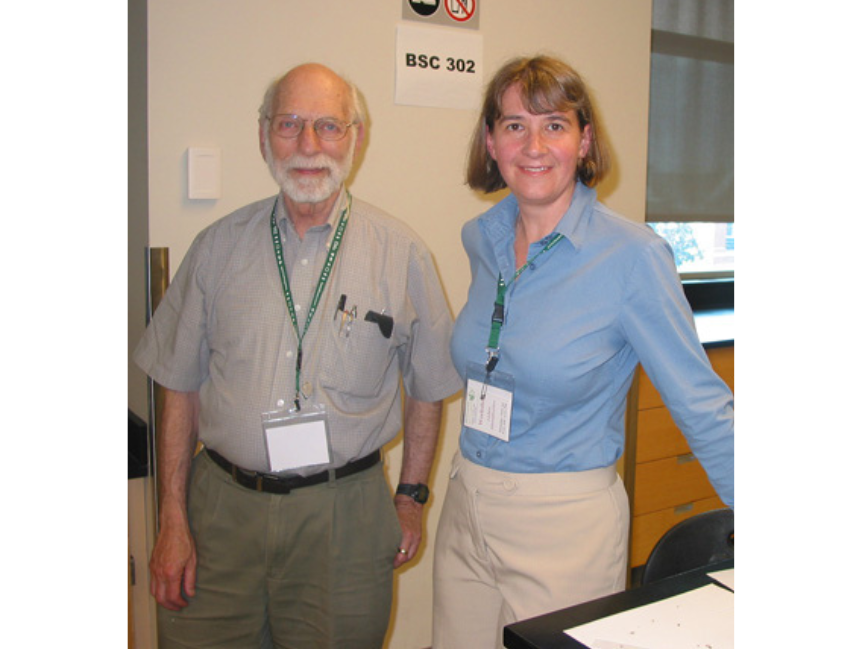
Dr. Diana Bizecki Robson posing for a photo with Dr. Brodo, an older gentleman.

Dr. Brodo helped me learn to identify lichens.

As you get older you clam up a lot less, probably because you actually have some original research of your own to discuss with other scientists. I had a wonderful time chatting with Jane Goodall when she came to the Museum in 2005 for the Chimpanzee exhibit that we hosted. At the Canadian Botanical Association conference this year I was able to meet Irvine Brodo, the Canadian lichenologist that I have admired ever since reading his book on lichens of North America. Who knows? Perhaps one day I’ll know what it’s like to be on the receiving end of the clumsy yet heartfelt admiration that young scientists have for their older colleagues.

Dr. Diana Bizecki Robson

Dr. Diana Bizecki Robson

Curator of Botany

Dr. Bizecki Robson obtained a Master’s Degree in Plant Ecology at the University of Saskatchewan studying rare plants of the mixed grass prairies. After working as an environmental consultant and sessional lecturer…
Meet Dr. Bizecki Robson

Collections in Crisis

Last week I attended the Canadian Botanical Association/Society for the Preservation of Natural History Collections joint conference in our nation’s capitol. I was able to meet Curators and Collection Managers from Museums all over the world, as well as attend a tour of the collections facilities at the Agriculture Canada Central Experimental Farm and the Canadian Museum of Nature.

Just about every person I talked to told me about how they are storing specimens in their hallways due to lack of space, losing knowledgeable Curators and collections staff at their institutions (sometimes only half their original staff is left), and scrounging for funding to digitize their collections and facilitate biodiversity research around the world.

A museum staff person holding up a glass-covered museum storage drawer to a group of people.

Some of the insect specimens at the Experimental Farm have to be stored in the hallway.

A museum staff person holding up a sheet of specimens from a museum storage drawer.

The fungal collection at the National Mycological Herbarium has not been digitized.

A lichen specimen laid out with collection notes on a sheet of paper in front of a storage bag.

It is ironic that at the period in time when biodiversity is in the most crisis, humanity is cutting the funding of the very people and institutions who know the most about it, and possess the knowledge to conserve it. Or perhaps it is not ironic at all, since we are living at a time when we are more interested in technological innovations than in the species we share our planet with. Most people can identify fewer than 10 native plants but more than 100 corporate logos. Biodiversity is valued less and less as we retreat into our digital worlds, oblivious to and seemingly unaffected by the loss of wild species. This is an extremely dangerous disconnect. After all, iPods don’t make oxygen for us to breathe-plants and protists do. Cell phones don’t cure cancer but plants can. HD-TV’s don’t pollinate the food you eat-animals, mostly insects, do.


Image: This lichen at the Canadian Museum of Nature was collected in 1898 and can help us monitor air quality.

I don’t have a problem with technology per se; I use the internet and e-mail daily, and I record field data using a PDA and a GPS. But lots of people can’t seem to stop using technology (e.g. cell phones) and become blind to everything else around them (e.g. innocent pedestrians). I once heard about a woman who fell into an open manhole because she was too busy sending a text message to actually pay attention to where she was going!

Oscar Wilde once said that “we know the price of everything but the value of nothing.” The fact that so little money is spent on even the most basic biodiversity work (we don’t even know the number of species on the earth within an order of magnitude) suggests that we as a society do not value it at all, even though it is the most valuable thing on earth. Perhaps the ecological and economic catastrophe that BP (and in fact everyone who drives a car) is responsible for in the Gulf of Mexico will help to change our minds about what is truly important: thriving, functioning ecosystems that help to feed and employ millions of people, or cheap oil for our gas-guzzling SUV’s? Subsidies for big corporations or money for scientific research and conservation? The choice is ours to make.

Dr. Diana Bizecki Robson

Dr. Diana Bizecki Robson

Curator of Botany

Dr. Bizecki Robson obtained a Master’s Degree in Plant Ecology at the University of Saskatchewan studying rare plants of the mixed grass prairies. After working as an environmental consultant and sessional lecturer…
Meet Dr. Bizecki Robson

On My Scanner

By Dr. Graham Young, past Curator of Palaeontology & Geology


This week I have been working on an exhibit about the early history of life on Earth. We have selected several specimens for this exhibit, including examples of stromatolites, mat-like structures formed by bacteria and Cyanobacteria (blue-green algae). Some of the Precambrian specimens in our collection had been cut and polished, so I have been putting them on my flatbed scanner to produce images.

Modern scanners are very sophisticated digital imaging devices. Most people don’t seem to consider using them for anything other than photos and documents, but I know many paleontologists who scan flat fossils and microscope slides.

A reddish-brown fossil containing the polished surface of small finger-like stromatolites, mounds made by Cyanobacteria (blue-green algae) and other microorganisms.

A polished surface of small finger-like stromatolites, mounds made by Cyanobacteria (blue-green algae) and other microorganisms. This specimen is 1.9 billion years old, from the Gunflint Formation, Lybster Township, northwest Ontario (The Manitoba Museum, B-129; all scales are in millimetres).

Close-up of a reddish-brown fossil containing the polished surface of small finger-like stromatolites, mounds made by Cyanobacteria (blue-green algae) and other microorganisms.

A detail of part of the specimen shown in the previous image. The layers were produced as the microbes bound limey sediment on the seafloor (TMM B-129).

I have been doing this for years; I used to put a sheet of mylar on the glass to protect it from scratching, but I found that produced weird light effects (or “artifacts”). So nowadays I am just very careful, and place the fossil on the end of the scanner bed opposite the part usually used for photos.

Scanners are generally better than cameras when you want to photograph items that are flat or nearly flat; any imperfections in these images come from the way in which the rocks were polished.

A grey-blue specimen with flecks of gold-coloured material. The clotted and layered microbial textures in a specimen.

Clotted and layered microbial textures in a specimen from the Gunflint Formation at Schreiber Channel, northwest Ontario (TMM B-130). This is the same site from which Tyler and Barghoorn described microscopic examples of early bacteria.

Cream coloured thin section (microscope slide) of a layered structure from Schreiber Channel.

Thin section (microscope slide) of a layered structure from Schreiber Channel.

The Gunflint Formation (or “Gunflint chert”) is a succession of iron-rich sedimentary rocks exposed in northwest Ontario and northern Minnesota. This unit, dating from about 1.9 billion years ago in the Proterozoic Eon of the Precambrian, yielded some of the first-known well-preserved Precambrian microfossils.

41 Uses for a Dead Plant

Does anyone remember the book “101 Uses for a Dead Cat” that came out in the 1980’s? I know, I know animal rights activists accused the cartoonist of encouraging cruelty to animals but I can’t imagine that anyone took it seriously. I mean who would ever turn a dead cat into a pencil sharpener or a pair of roller blades?

Dr. Diana Bizecki Robson seated at a desk with a selection of botanical samples laid out in front of her by a microscope.

Anyway, it turns out that dead plants are even more useful than dead cats. In fact, next week I will be attending a conference called “Biodiversity 2010 and Beyond” in which the participants will be spending five whole days extolling the virtues of dead plants. Although everyone that I am sure to meet at this conference will be familiar with the multitude of uses for dead plants, most people almost certainly don’t. In fact, a recent survey of our visitors revealed that very few people even know that The Manitoba Museum has a collection of dead, dried plants and fungus (called a herbarium) up in the tower.


Image: Studying, organizing and expanding the Museum’s collection of dead plants is part of my job.

So in the interest of education, here’s my own take on the what-to-do-with-a-dead-something theme, with the goal of letting everyone know some of the things that dead plants at The Manitoba Museum, and at other Museums and Universities, are really used for.

A dried and pressed botanical specimen on a sheet of paper accompanied by the collection and specimen details.

1. Documenting the existence of new species. All new species must have a type specimen (=a dead plant) designated at the time of publication and preserved in a Museum or University for all time.

2. Documenting the validity of ecological research. Without voucher specimens, scientific research is not publishable because there is no way of proving that the observations were really made.

3. Determining the population sizes and rarity status of species. Endangered species lists around the world are prepared by studying Museum collections.

4. Creating status reports and conservation plans for endangered species.


Image: This is a type specimen of a new species of bugseed from the Canadian Museum of Nature.

Four walnut specimens against a light-coloured backdrop. The top two are green, and the lower two are brown and split in half.

5. Documenting changes in the climate by comparing flowering dates and changes in distribution over time.

6. Documenting the spread and alternate hosts of plant diseases.

7. Documenting changes in air quality over time; lichens will die if air quality is bad.

8. Aiding in the production of Environmental Impact Assessments for development projects.

9. Acting as a storehouse of DNA for projects such as the DNA barcoding project at the University of Guelph.

10. Providing DNA for crop breeding.


Image: DNA from herbarium specimens, like these walnuts can be used for crop breeding.

11. Documenting the ecological relationships between plants, animals, and fungi.

12. Documenting changes in ecosystems over time (i.e. sand dune stabilization rates).

13. Documenting the location of illegal marijuana and poppy fields.

14. Documenting the mutations that occur when native plants are bombarded with gamma radiation (we have an entire collection of mutant plants from the Whiteshell Nuclear Research Establishment stored here).

15. Determining the authenticity of wooden artifacts (e.g. did this wooden necklace really come from a lost tribe in New Guinea? Not if it’s made of Bur Oak!).

A variety of mushroom specimens laid out on a wooden surface.

16. Documenting the spread of illegal aliens (i.e. plants that are alien to Canada and potentially threaten our agricultural production and native ecosystems).

17. Aiding in the instruction of students.

18. Helping people identify plants and fungi that are edible.

19. Determining the food requirements of wild animals. I used the Museum’s collection to identify the seeds found in food caches of Ord’s Kangaroo Rats (an endangered rodent found on sand dunes in Saskatchewan and Alberta).

20. Aiding in the identification of potentially poisonous plants and fungi.


Image: Dead mushrooms stored in a Museum can be used to identify edible and poisonous ones.

21. Indicating water quality. The presence of certain plants indicates salinity in the groundwater.

22. Documenting the kinds of plants that were used by ancient peoples and how they were used. I’ve had to identify fossilized seeds found in clay pots during the Museum’s archaeological digs.

23. Determining which wild plants are ancestral to our modern cultivars.

24. Helping scientists identify plants that may produce useful chemicals for modern medicine and other industrial applications.

25. Determining the distribution of species.

26. Determining the habitat requirement of species (this is useful information for reclamation scientists).

27. Indicating the location of certain metals such as nickel.

28. Acting as a reference collection for the identification of species.

A variety of cone specimens laid out on individual sheets of paper with identifications on a large table top.

29. Documenting the variability in appearance of plants due to habitat differences or mutations.

30. Determining how species are related to each other (=systematics).

31. Determining the genetic structure of a species.

32. Determining the normal fire cycles of forests.

33. Reconstructing past environments (using tree and lichen rings).

34. Determining the level of genetic contamination from genetically modified organisms.


Image: These cones were displayed in the Museum’s “Travelling Plants” exhibit.

35. Determining how plants distribute their seeds.

36. Aiding in forensics investigations. Museum collections have been used to identify plant materials found at crime scenes and on the clothing of suspects.

37. Preparing manuscripts, books, floras, field guides and DVD’s that facilitate the identification of plant species by farmers, agronomists, consultants, government employees, students and naturalists.

Historical specimens dried and pressed on sheets of yellowed paper with specimen details in the lower right corner of each sheet.

38. Aiding professional artists in creating realistic illustrations of plants.

39. Helping diorama artists create life-like models of native plants.

40. For putting on display in Museum galleries.

And lastly,

41. Providing future citizens of the world with the opportunity to study and utilize these specimens for whatever their future needs may be.


Image: These specimens were collected over a century ago and can help us detect climate changes.

When the great British explorer William Dampier began collecting plants back in the late 1600’s he had no idea that his specimens would be used for the purposes that I have just listed. I am humbled to think that the specimens that I collect will someday be used in marvellous and completely inconceivable ways to help our species’ collective descendants solve some of the problems they will inevitably be faced with.

Dr. Diana Bizecki Robson

Dr. Diana Bizecki Robson

Curator of Botany

Dr. Bizecki Robson obtained a Master’s Degree in Plant Ecology at the University of Saskatchewan studying rare plants of the mixed grass prairies. After working as an environmental consultant and sessional lecturer…
Meet Dr. Bizecki Robson

Astronaut Bob Thirsk Coming to Visit!

Canada’s most experienced astronaut, Dr. Robert Thirsk, will be visiting the Museum tomorrow to give a public presentation on his six months in space aboard the International Space Station. I’m lucky enough to be hosting him – I’ll post some pictures after our event tomorrow. The event is at 10 am in the Auditorium at the Manitoba Museum – you can get in by contacting me through the Museum switchboard to put your name on the list.

Scott Young

Scott Young

Planetarium Astronomer

Scott is the Planetarium Astronomer at the Manitoba Museum, developing astronomy and science programs. He has been an informal science educator for thirty years, working in the planetarium and science centre field both at The Manitoba Museum and also at the Alice G. Wallace Planetarium in Fitchburg, Massachusetts. Scott is an active amateur astronomer and a past-President of the Royal Astronomical Society of Canada.