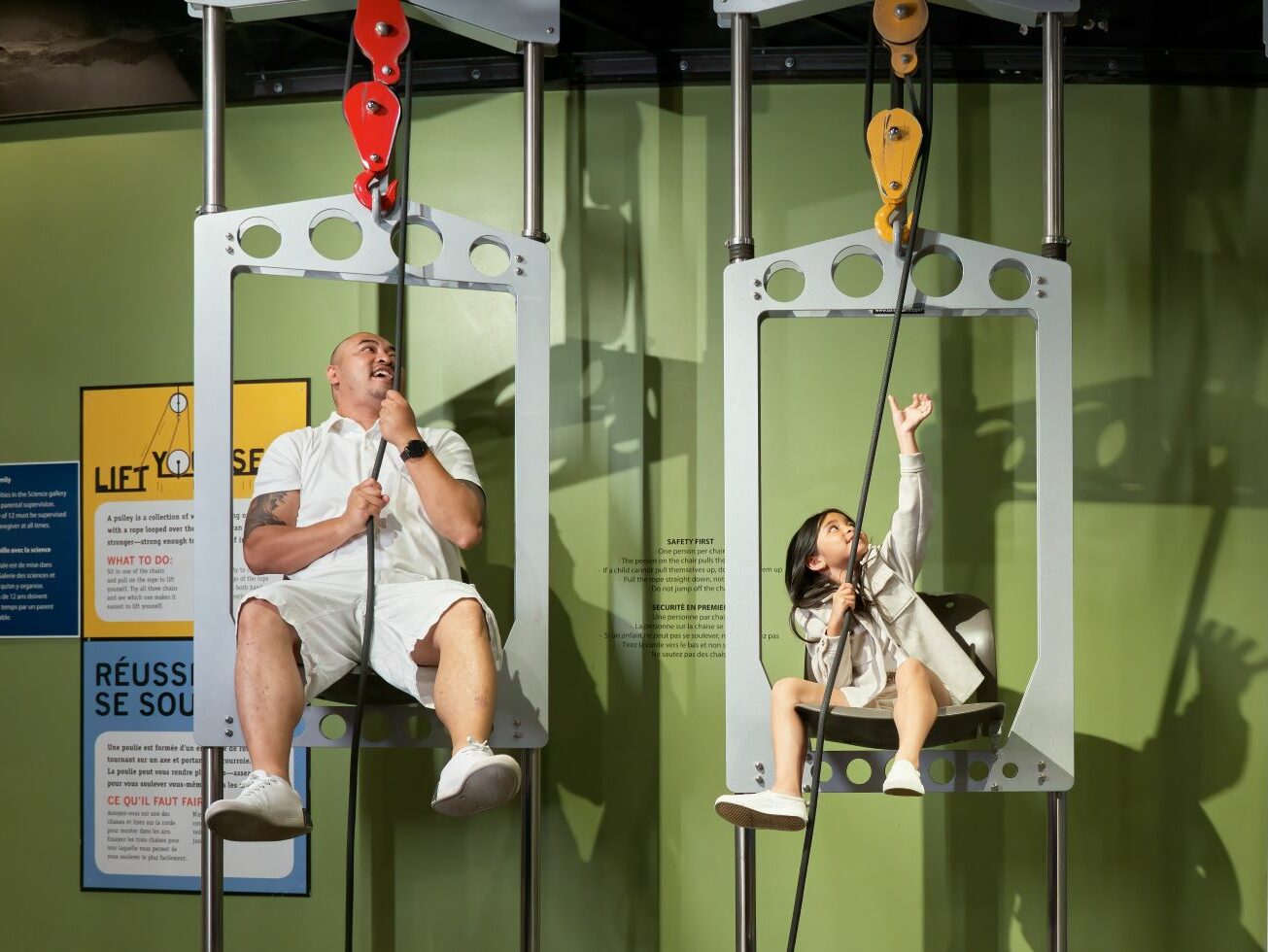

Creating Natural Wonders

Creating Natural Wonders

When I started working here at the Museum I used to spend part of my lunch break peeking into cabinets in the natural history collections room. I was amazed at the variety of organisms we have here: trays upon trays of tropical butterflies, huge beetles, giant fungi, exquisite fossils of long-extinct plants and sea creatures. One day I even came across a stuffed duck-billed platypus; an Australian mammal that I’ve been fascinated with since I read about its’ bizarre physiology (they lay eggs yet nurse their babies) in a textbook long ago. When I heard that 2010 was going to be the International Year of Biodiversity, and that we needed a new exhibit in the Museum’s Discovery Room, I thought that it would be a wonderful opportunity to show some of these amazing organisms to people who are not so lucky in their employment opportunities as I am. I’ve been working on this exhibit with the other Natural History Curators, Dr. Randy Mooi and Dr. Graham Young, for the last six months or so and am pleased that it is now open to the public.
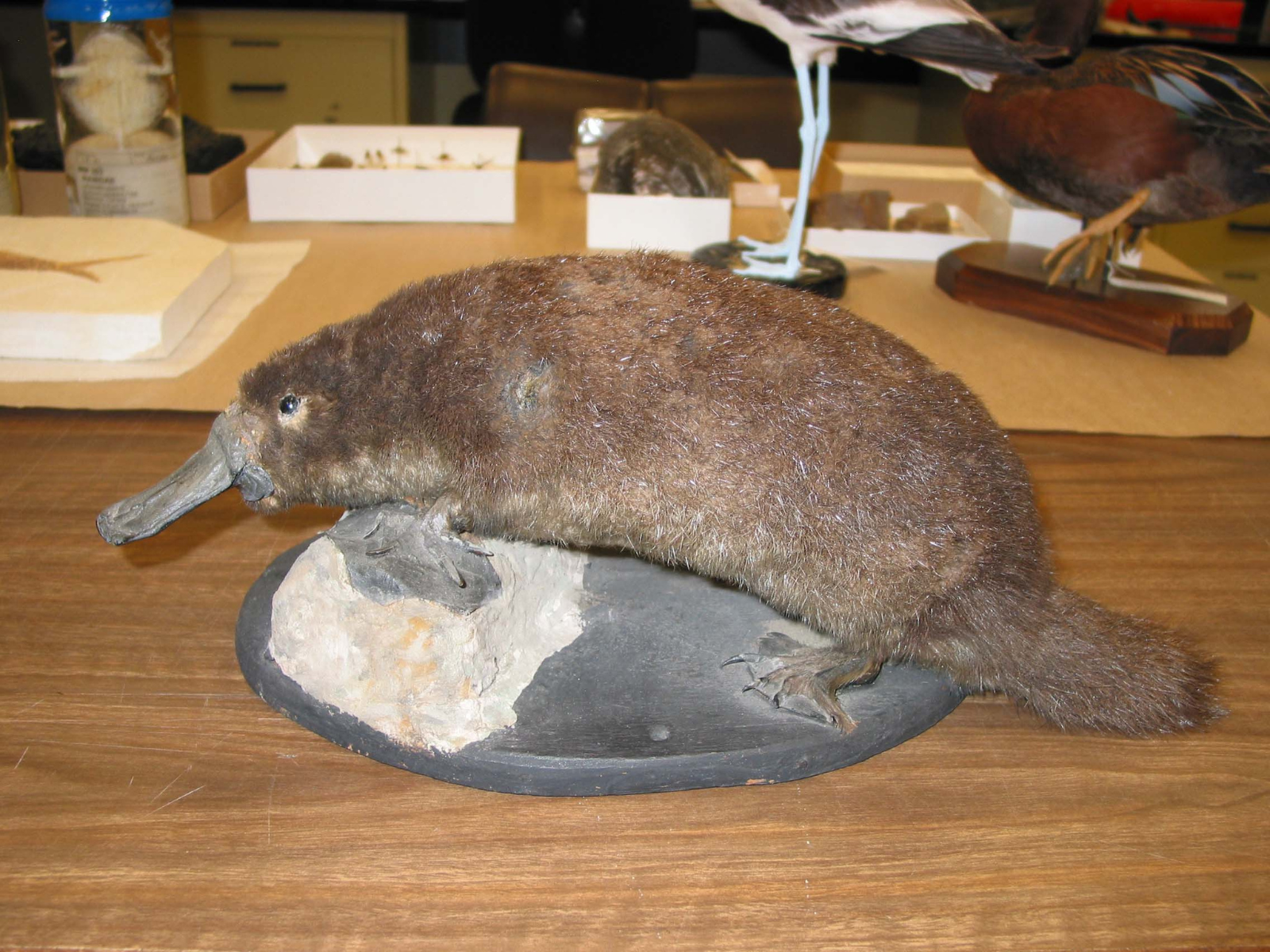
A duck-billed platypus mounted on a dark-coloured base on a woorden-topped desk.

The Museum’s duck-billed platypus specimen.
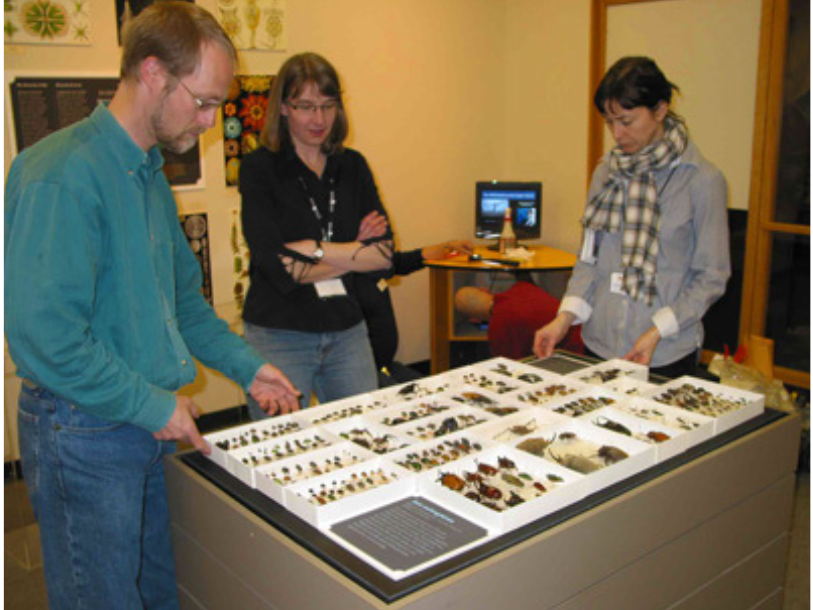
Three individuals standing around a rectangular base filled with small trays with beetle specimens.

Dr. Randy Mooi, me and designer Stephanie Whitehouse setting up the beetles case. Bert Valentin is setting up the monitor.

Biodiversity is simply the variation of all life forms on earth. Scientists have documented nearly 1.9 million different species, and estimate that there could be more than 50 million that are still unknown to science. Over 1200 new species of flies alone are described every year. Helping to document new species and preserving specimens that scientific descriptions are based on, is one of the main purposes of museums. Museum specimens are used by scientists to study all sorts of things: climate change, disease transmission, and the status of endangered species to name a few. We also care for many specimens that were donated by amateur naturalists and collectors, the source of most of our exotic specimens.

Amazingly, one fifth of all known species are beetles. To illustrate this point, we prepared a display case that contains just beetles, mostly exotic ones, including several huge Rhinoceros beetles. Another goal of this exhibit was to display as wide a variety of organisms as possible, so in addition to the spectacular giant clam and golden pheasant, we included some unusual species that we don’t normally exhibit, like parasites and blue-green algae. To remind people that the biodiversity that exists today evolved from earlier life forms, we’re displaying some fossil specimens, mainly aquatic invertebrates and plants. Several newly acquired specimens-including a very yummy smelling chicken-of-the-woods fungus that nearly ended up on my dinner plate-are displayed as well.
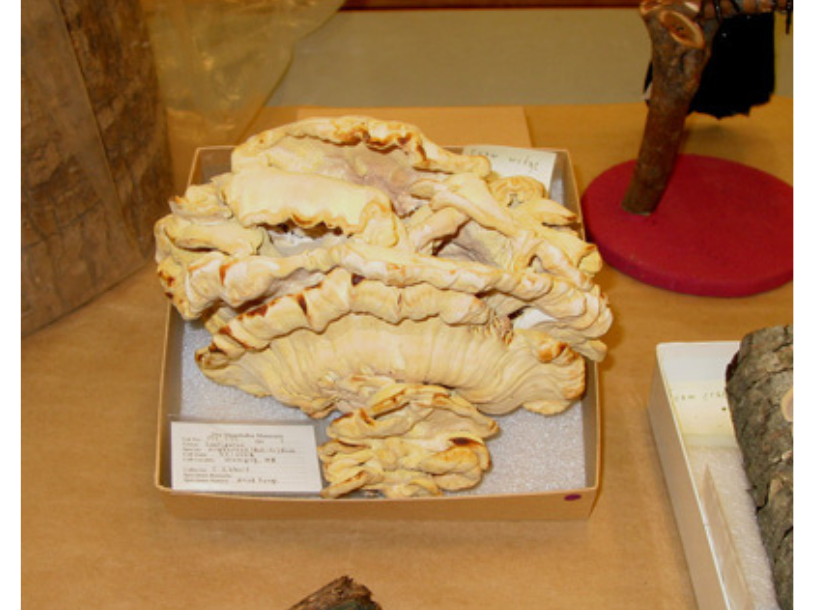
A large chicken-of-the-woods fungus specimen in a collections box.

Carol and Bob Hibbert donated this beautiful chicken-of-the-woods fungus to the Museum.
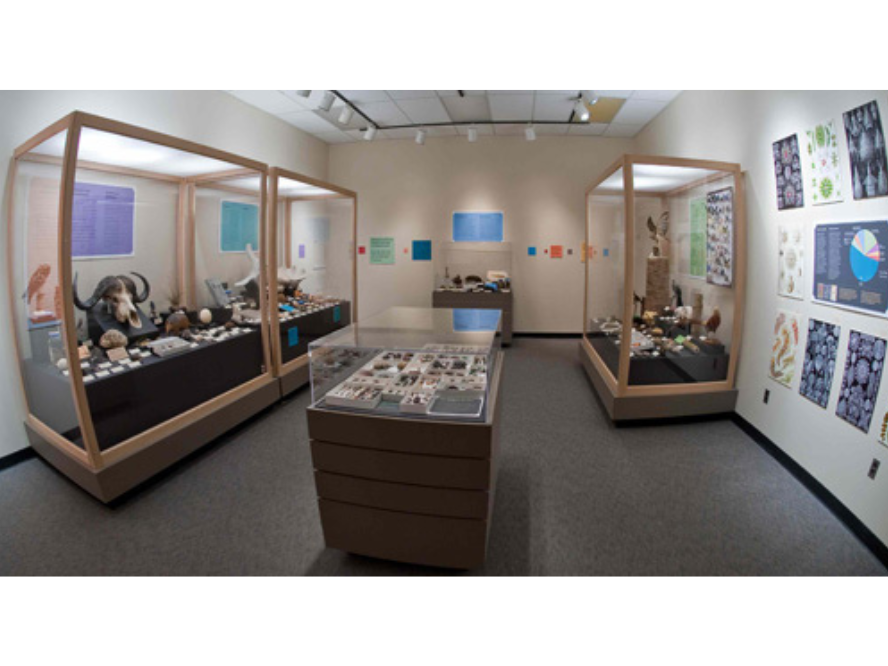
A Museum exhibit with a number of display cases with a variety of specimens on display.

The completed Natural Wonders exhibit in the Museum’s Discovery Room.

The more I study and observe nature, the more fascinating I find it. I think Charles Darwin expressed this sentiment most elegantly in the last sentence of On the Origin of Species: “…from so simple a beginning, endless forms most beautiful and most wonderful have been, and are being evolved.” I invite you to come to the Museum this summer to appreciate the beauty of nature and marvel at those endless forms in our new exhibit Natural Wonders: A Celebration of Biodiversity. And yes, my beloved duck-billed platypus is there for you to see.

Dr. Diana Bizecki Robson

Dr. Diana Bizecki Robson

Curator of Botany

Dr. Bizecki Robson obtained a Master’s Degree in Plant Ecology at the University of Saskatchewan studying rare plants of the mixed grass prairies. After working as an environmental consultant and sessional lecturer…
Meet Dr. Bizecki Robson

Shuttle Lands – Last Flights Imminent

The space shuttle Discovery landed at Kennedy Space Centre this morning, ending mission STS-131 to the International Space Station. Under current plans, this means that the next three flights will each be the last flight of an orbiter before retirement. Atlantis launches May 14 on missions STS-132 and will be retired thereafter – this is the shuttle that Chris Hadfield flew on to the Russian space station Mir. Endeavour’s last flight is scheduled for a July 29th launch – this is the shuttle that has carried the most Canadian astronauts into orbit of all of the shuttles. The last shuttle flight ever is scheduled to be Discovery’s flight in September. If you’ve never seen a shuttle launch, these are your last chances ever! Definitely worth the trip, even if the launch is scrubbed or rescheduled – Kennedy Space Centre is a great place for space enthusiasts. Plan to spend two full days there if you want to take the (highly recommended) behind-the-scenes tours.

Scott Young

Scott Young

Planetarium Astronomer

Scott is the Planetarium Astronomer at the Manitoba Museum, developing astronomy and science programs. He has been an informal science educator for thirty years, working in the planetarium and science centre field both at The Manitoba Museum and also at the Alice G. Wallace Planetarium in Fitchburg, Massachusetts. Scott is an active amateur astronomer and a past-President of the Royal Astronomical Society of Canada.

Museum Curation: More Than Mummies and Man-Eating Plants

I suspect that when people hear that I’m a Museum Curator they think of that evil Curator of the British Museum who resurrects the mummy Imhotep from the dead in “The Mummy Returns”. Sadly, my job doesn’t entail raising any long-dead Egyptian priests. Nor do I nurse giant man-eating plants with my own blood and the occasional visitor to my lab a la “The Little Shop of Horrors”. In this blog I will be describing in a bit more detail what a Curator of Botany really does do all day. I’ll be writing about the exhibits that I’m working on, the research that I’m doing and the collections that I’m studying.

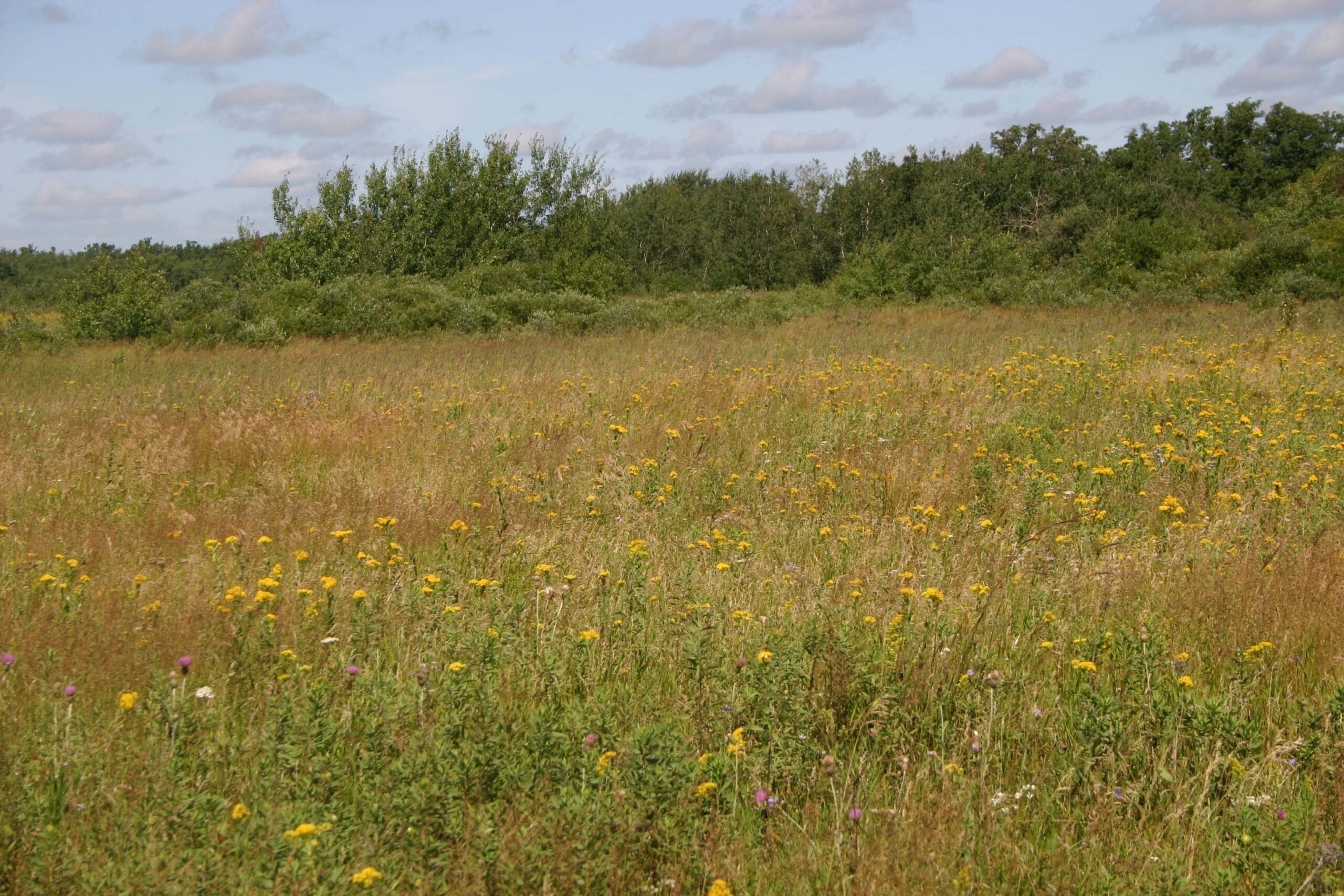
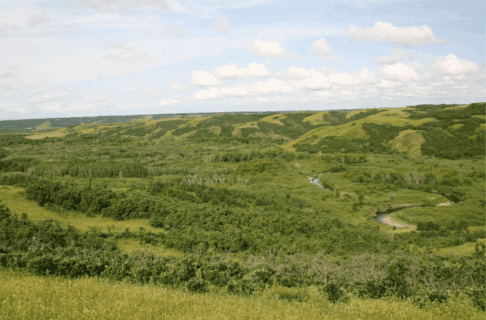
Looking out over a prairie landscape with grasses and distant trees and bushes.

But first of all you may be wondering who I am and how I ended up here. I grew up in Saskatoon, Saskatchewan and it was there that I developed a passion for biology and a love of grasslands, spending many hours of my youth riding my bike along the paths bordering the South Saskatchewan River Valley. I proceeded to get a Bachelor’s degree, then a Masters, then a (glutton for punishment that I am) Ph.D. Ultimately all the hard work was worth it because I was offered my dream job here at The Manitoba Museum in 2003. Moving to Manitoba gave me an opportunity to study the rare tall-grass prairies-an ecosystem that I had never seen before. I will be sharing a bit of what I’ve learned about them with you in this blog.


Image: The Tall-grass Prairie Preserve in southern Manitoba.

So if your curiosity is aroused I hope that you will check out my blog on a regular basis. Summer will soon be here and I’ll be able to tell you all about my field work. In June I’m going mushroom and lichen hunting in Whiteshell Provincial Park. In July and August I’ll be studying pollinators in Birds Hill Provincial Park, and in September I’ll be hunting for some rare plants along the lakeshores and sand dunes of southern Manitoba. Till then you can check out my soon to be posted blog on an exhibit I just helped to prepare called “Natural Wonders: A Celebration of Biodiversity.”

Dr. Diana Bizecki Robson

Dr. Diana Bizecki Robson

Curator of Botany

Dr. Bizecki Robson obtained a Master’s Degree in Plant Ecology at the University of Saskatchewan studying rare plants of the mixed grass prairies. After working as an environmental consultant and sessional lecturer…
Meet Dr. Bizecki Robson

Meteor Shower Update

The Lyrid meteor shower peaks on the night of April 21-22 this year. The Lyrids aren’t a major meteor shower, but we haven’t had a good one since last December’s Geminids, so it’s worth taking a look for. The Lyrids can be a decent sight, but only if you’re willing to maximize your viewing circumstances.

There are two secrets to getting the best view. First, get out of town – leave the lights of the city behind you. Light pollution from the city will blind you from most of the meteors that occur – you’ll only see the very brightest ones.

Second, stay up late or get up early. All meteor showers are much better after midnight, since at that time our part of the earth is on the “bow” of the earth as it sails around the sun – we’re heading right into the cosmic dust that causes the shower.  You can expect about 10-20 meteors per hour during the peak viewing time before dawn on Thursday, April 22. Before and after that date, the rates drop considerably.

With all of this effort, is it worth going out to see? Well, maybe. Occasionally, the Lyrids surprise us with outbursts of several times the regular rate. In 1945 and again in 1982, rates jumped up to over 100 meteors an hour – that’s more than one a minute. This activity happens when the earth goes through a clump of dust in the comet’s tail – sort of an interplanetary dust bunny. Unpredictable, but pretty cool if you see it – like so many things in the sky.

Scott Young

Scott Young

Planetarium Astronomer

Scott is the Planetarium Astronomer at the Manitoba Museum, developing astronomy and science programs. He has been an informal science educator for thirty years, working in the planetarium and science centre field both at The Manitoba Museum and also at the Alice G. Wallace Planetarium in Fitchburg, Massachusetts. Scott is an active amateur astronomer and a past-President of the Royal Astronomical Society of Canada.

Welcome to The Science Gallery and Planetarium blog!

Welcome to The Science Gallery and Planetarium blog! I’ll be keeping you up to date on what’s going on at The Manitoba Museum’s Science Gallery and Planetarium, what exhibits we’re working on, and what science stories our staff has found most interesting each week.

First, some introductions: My name is Scott Young, and I’m the Manager of Science Communications and Visitor Experiences at The Manitoba Museum. (Try saying that three times fast!) I came to the Science Gallery as a visitor on the day it opened in 1986 (as “Touch the Universe”), and thought it was the coolest place ever. I started working at the Museum in 1990 in the Planetarium, eventually becoming the Managing producer of the theatre, and became Manager of the Science Gallery as well in 2001 or so. Now I oversee the exhibits and interactives side of the Science Gallery, produce Planetarium shows, and work on Museum exhibit teams as well.

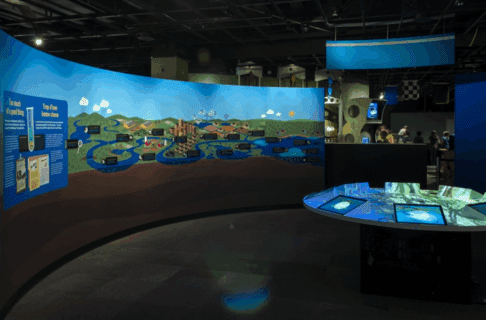
In the mid-2000’s we were able to give the Science Gallery a facelift, one exhibit at a time, a process that is still underway. Nevertheless, we’ve managed to replace about two-thirds of the old exhibits with some new and very cool stuff: a race track where you can build your own car, a self-sustaining ecosystem with plants and animals, a microgravity simulator, and exhibits on math, meteorites, and many other subjects. We have some exciting new exhibits currently in development that I’ll tell you about in future posts. And we want to hear from you: what exhibits do you love or hate? What would you like to see as we renovate the Gallery and retire older exhibits? Let us know.

Scott Young

Scott Young

Planetarium Astronomer

Scott is the Planetarium Astronomer at the Manitoba Museum, developing astronomy and science programs. He has been an informal science educator for thirty years, working in the planetarium and science centre field both at The Manitoba Museum and also at the Alice G. Wallace Planetarium in Fitchburg, Massachusetts. Scott is an active amateur astronomer and a past-President of the Royal Astronomical Society of Canada.