

Death caps, stinkhorns and honey mushrooms

Death caps, stinkhorns and honey mushrooms

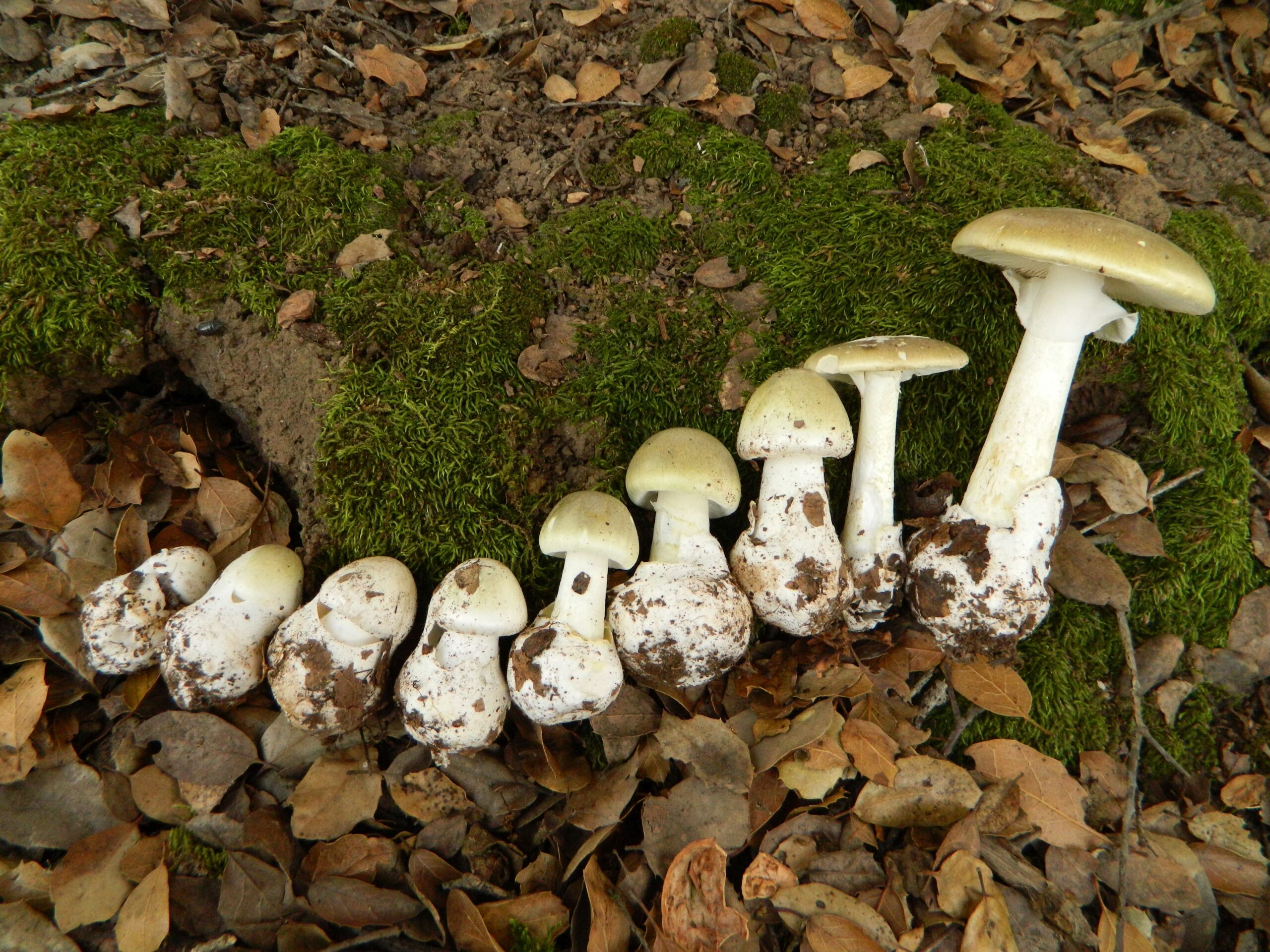
A line of capped mushrooms at progressive states of development.

Late fall is when a number of interesting Canadian fungi produce mushrooms. Some are edible, some are smelly, and some are deadly. It was with great sadness that I read of the recent death of a 3-year old Canadian boy who ate a poisonous mushroom (click here for CBC article). It appears that he ate the most deadly species in the Amanita genus: the Death Cap (Amanita phalloides), shown in the photo to the right in various stages of development (image from Wikimedia Commons). His unfortunate demise serves as a warning to anyone who is interested in foraging for wild mushrooms: be absolutely, 100% certain of the identity of any wild mushroom before you eat it. For starters, this means investing in some good mushroom field guides and books, and familiarizing yourself with the parts of mushrooms (e.g. cap, gills, veil etc.). Then you need to learn to identify not just the edible mushrooms in your area, but also the deadly ones they could be confused with. When foraging, carefully examine and cut through every mushroom, dig up the base, cut the gills to see if any latex leaks out, and make a spore print (a process that can take a few hours). The North American Mycological Association has good instructions on how to make spore prints (click here for details), and lists some good books.

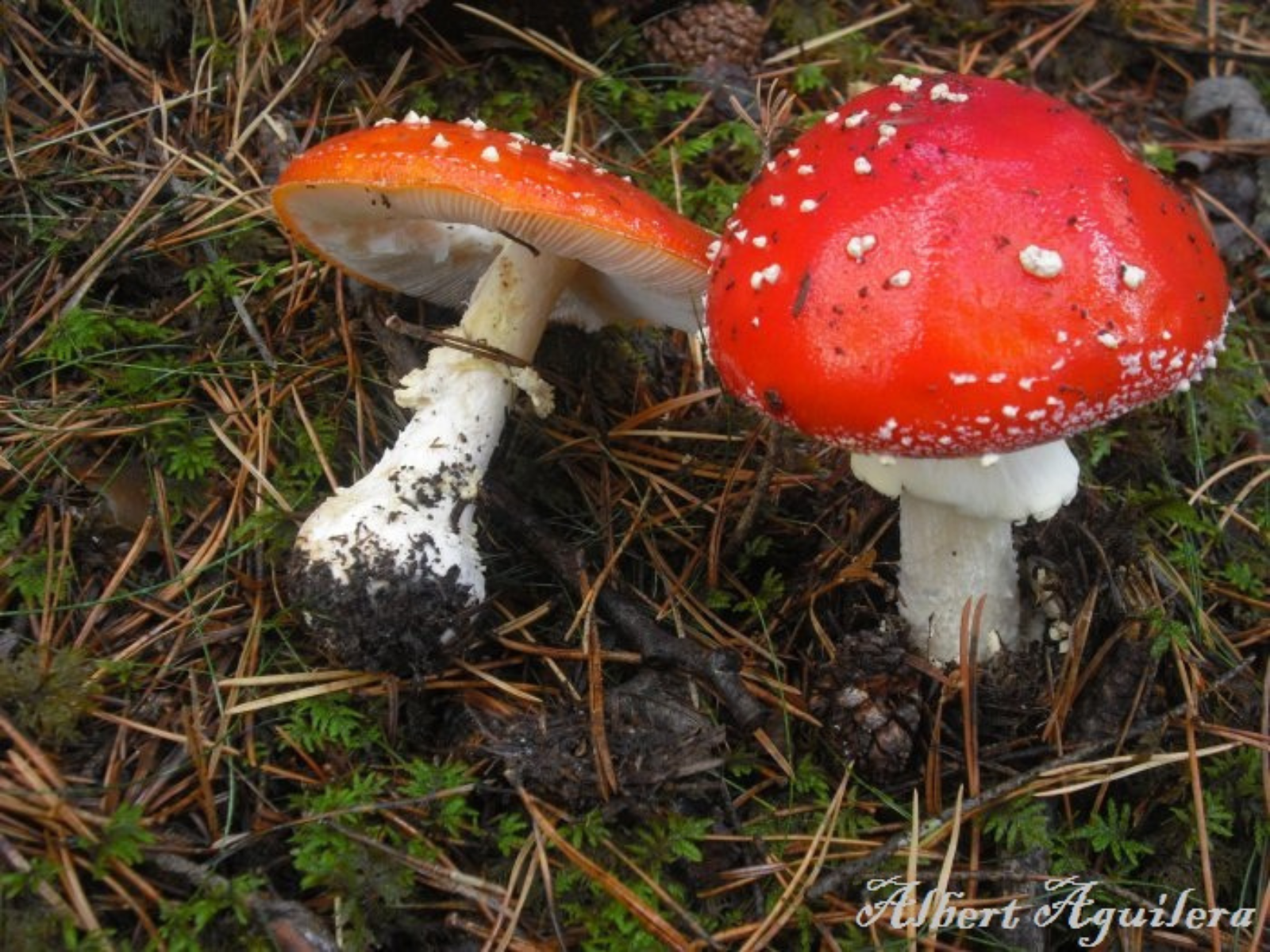
The fact of the matter is there are no reliable “rules of thumb” when it comes to identifying edible mushrooms. Many people mistakenly think that poisonous mushrooms are brightly coloured like the Fly Agaric (Amanita muscaria) but many Amanitas are white, creamy, or brownish. A veil on the stem and scales on the cap, other characters used to identify Amanitas, are not always present. Some mushrooms are edible only when they are young and cooked. However, cooking does NOT destroy all of the toxins in Amanitas. People may assume that poisonous mushrooms will taste bad, but the last words of a man who died of Amanita poisoning were reportedly “that was the tastiest mushroom I ever ate”. And you can’t trust squirrels either; they can reportedly eat Amanitas without dying. The fact is, to the untrained, it is easy to confuse an Amanita with a number of edible species such as Button Mushrooms (Agaricus silvicola), certain Milkcaps (such as Lactarius volemus), or Puffballs (Lycoperdon) especially when they are young.

Two bright red-capped mushrooms, one in the ground, and one plucked and laying beside it.

The poisonous Fly Agaric (Amanita muscaria) is brightly coloured but not all poisonous mushrooms are. From Wikimedia Commons.

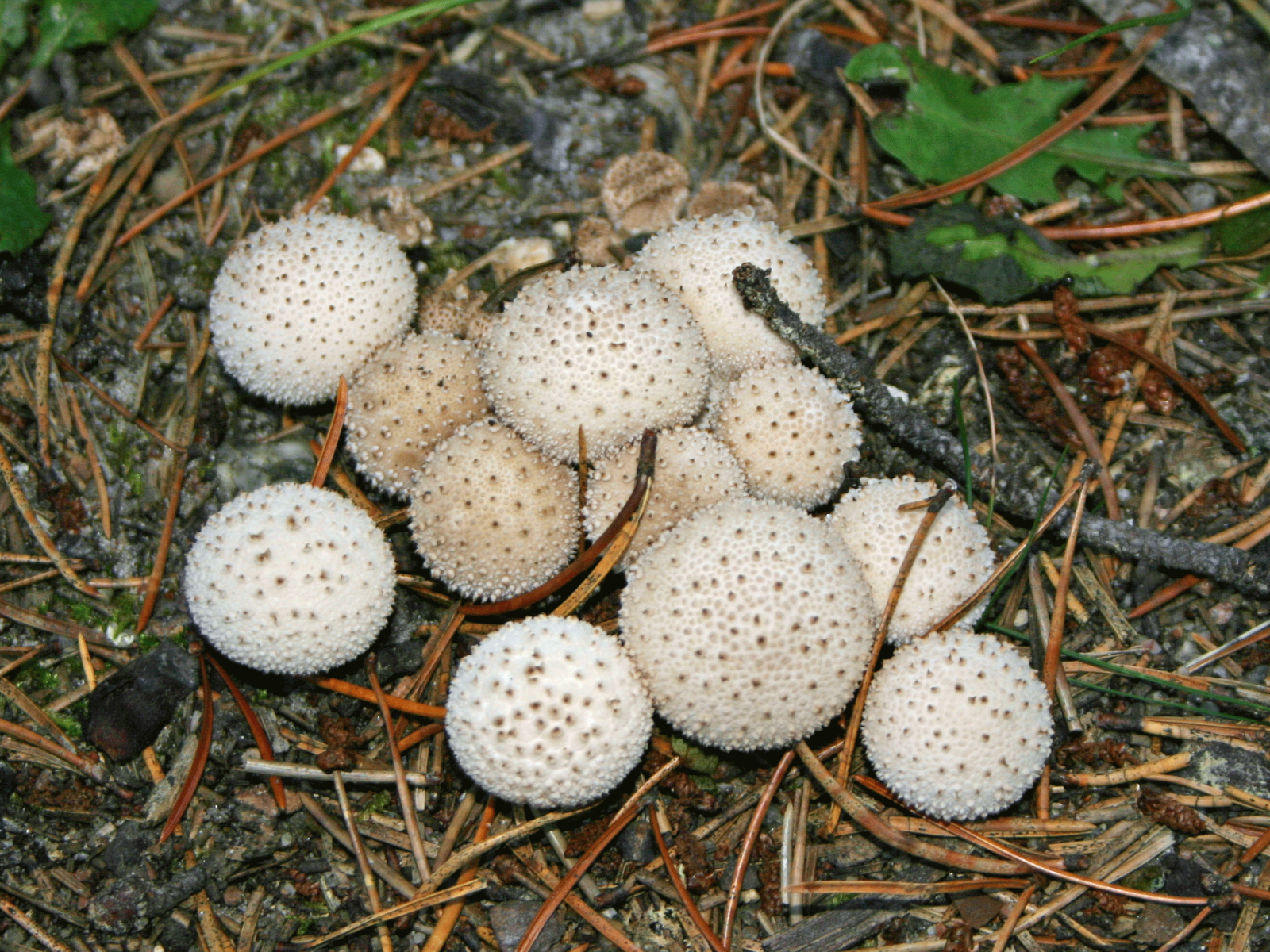
A cluster of white, bulbous mushrooms growing low to the ground.

Young Amanita mushrooms may be confused with edible puffballs (Lycoperdon). Cutting through the center can help you differentiate one from the other.

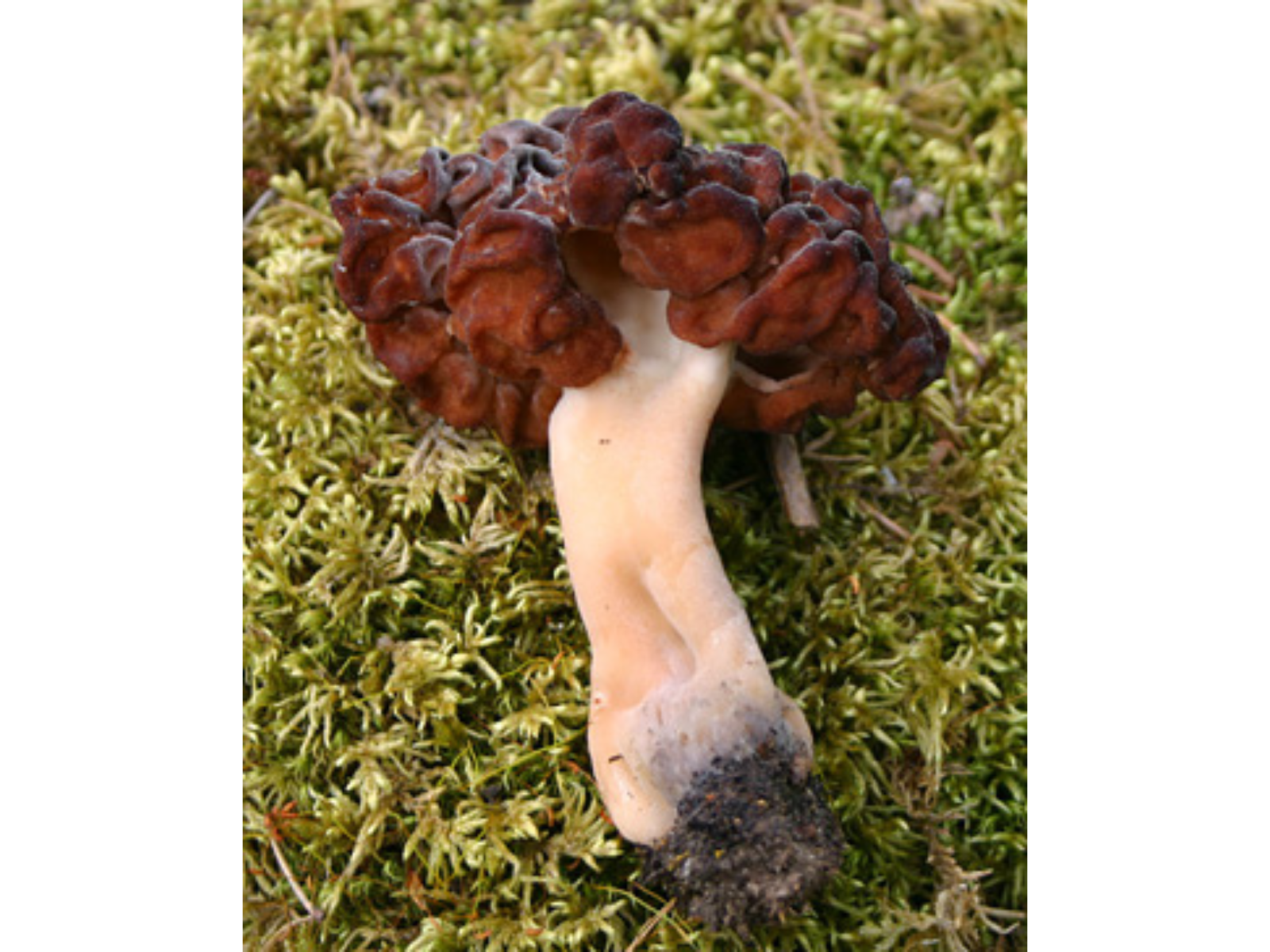
A mushroom with a ridged, brown cap and a light-coloured stem lying on green moss.

Amanitas are not the only poisonous mushrooms in North America (although none are as deadly as them). Other potentially poisonous genera include: Clitocybe, Collybia, Galerina , Gyromitra, Inocybe, and some Russula and Lactarius species to name a few (see more here). Consuming alcohol with certain normally edible mushrooms (such as Coprinus) can also cause illness. Recent immigrants to Canada should be especially cautious when foraging as species that are poisonous here may look similar to edible species in their homeland. For example, the paddy straw mushroom (Volvariella volvacea) looks very similar to death caps, but the former species has pink spores while the latter has white ones. Paddy straw mushrooms are common in southeast Asia but are NOT found in Canada. Making things more complicated, there are a number of Amanita species that grow on other continents (including Africa and Europe) that are edible and could be confused with the poisonous North American ones.


Image: The poisonous False Morel (Gyromitra esculenta) has been mistaken for edible Morels (Morchella spp.)

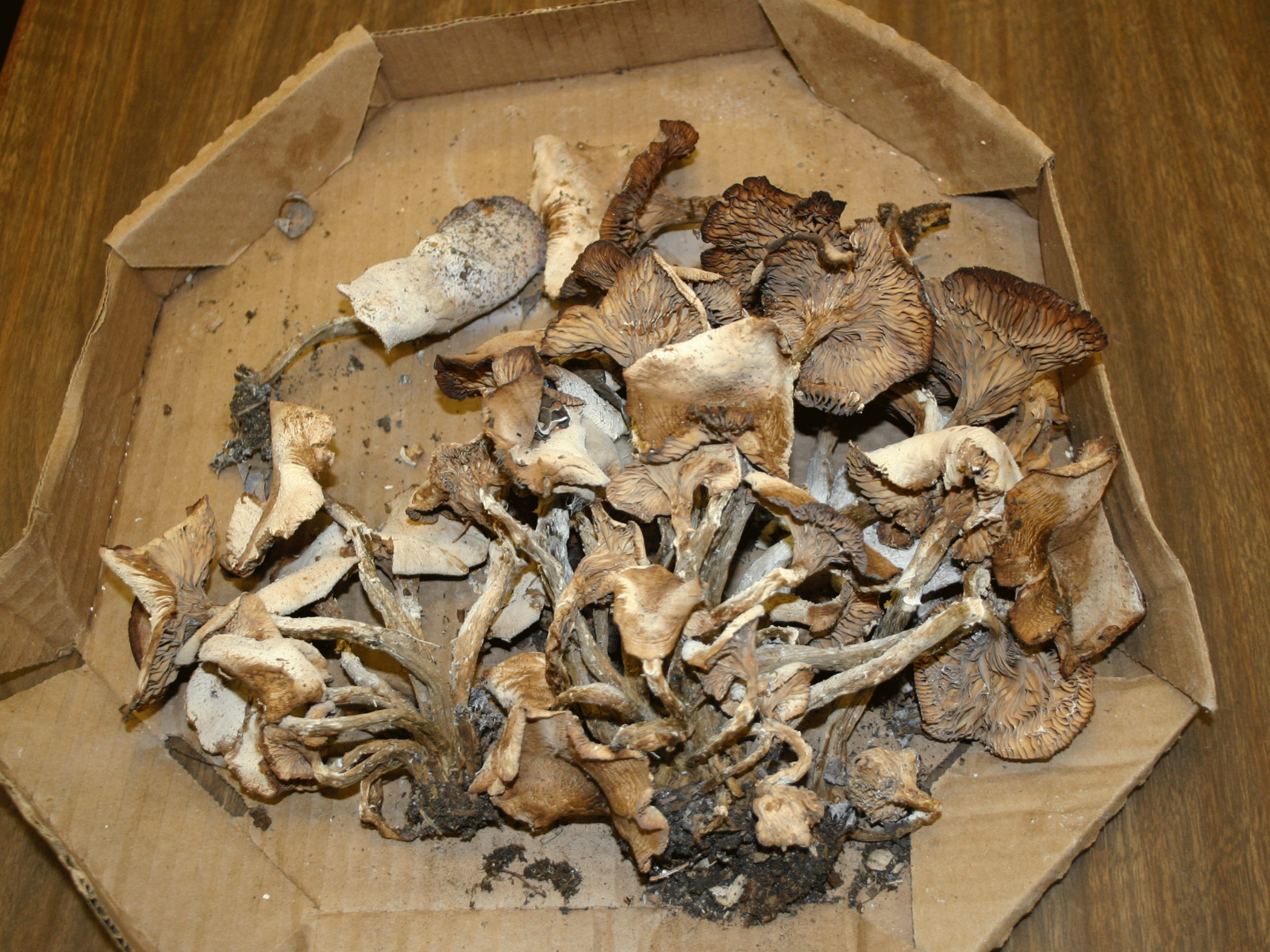
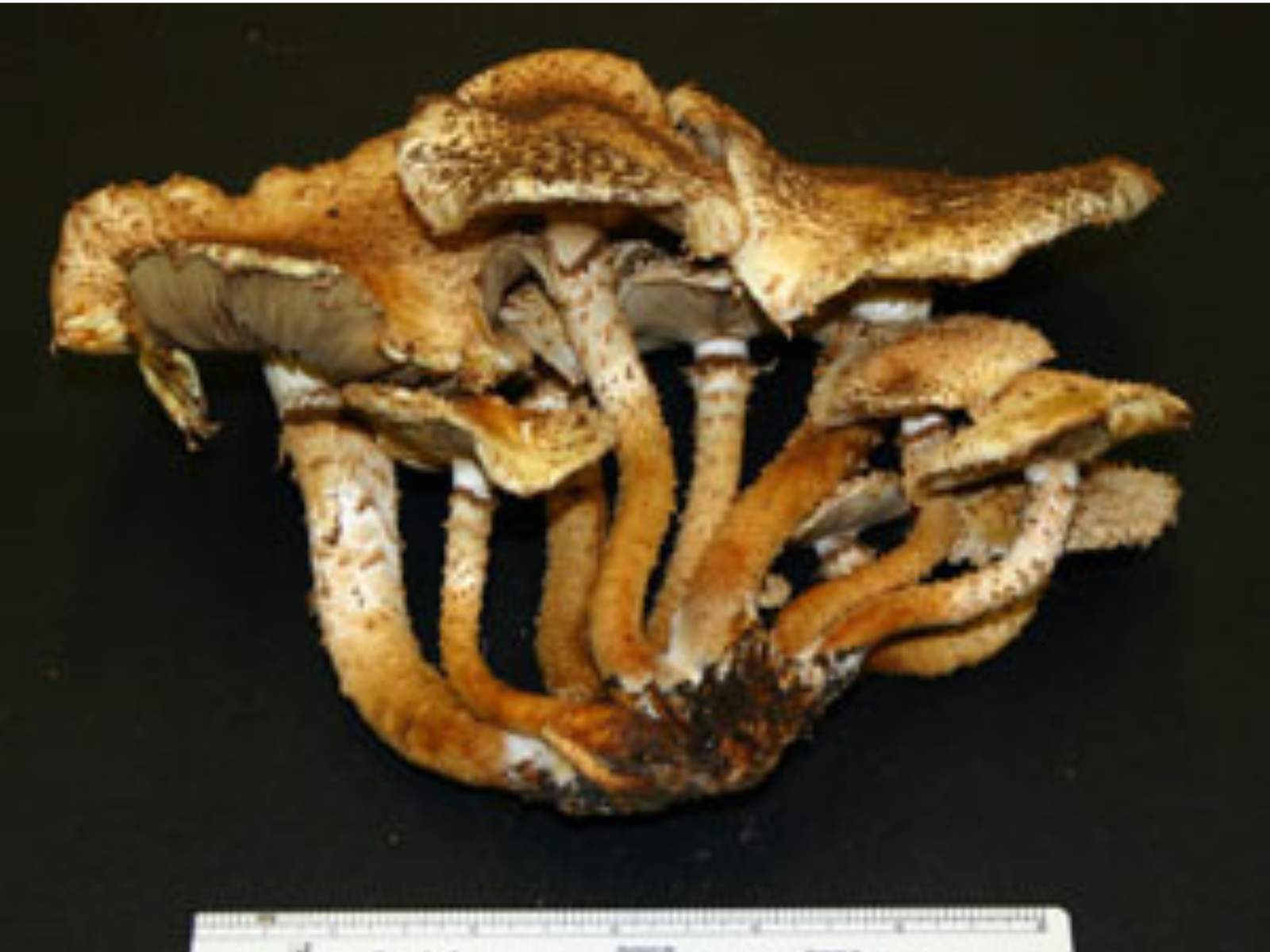
One of the most common edible and prized mushrooms growing right now is the Honey Mushroom (Armillaria mellae). This species is actually a parasite on trees and is often found at the base of tree stumps. However, the similar Shaggy Scalycap (Pholiota squarrosa) grows in the same habitat but is poisonous, more so when consumed with alcohol (although usually not fatally) so pickers beware!

A cardboard tray full of picked Honey Mushrooms.

Honey Mushrooms (Armillaria mellae) are among the most popular edible fungi in the province. But beware the impostor…

A Shaggy Scalycap mushroom, picked and against a black background.

…Shaggy Scalycap (Pholiota squarrosa) which looks similar but is poisonous!

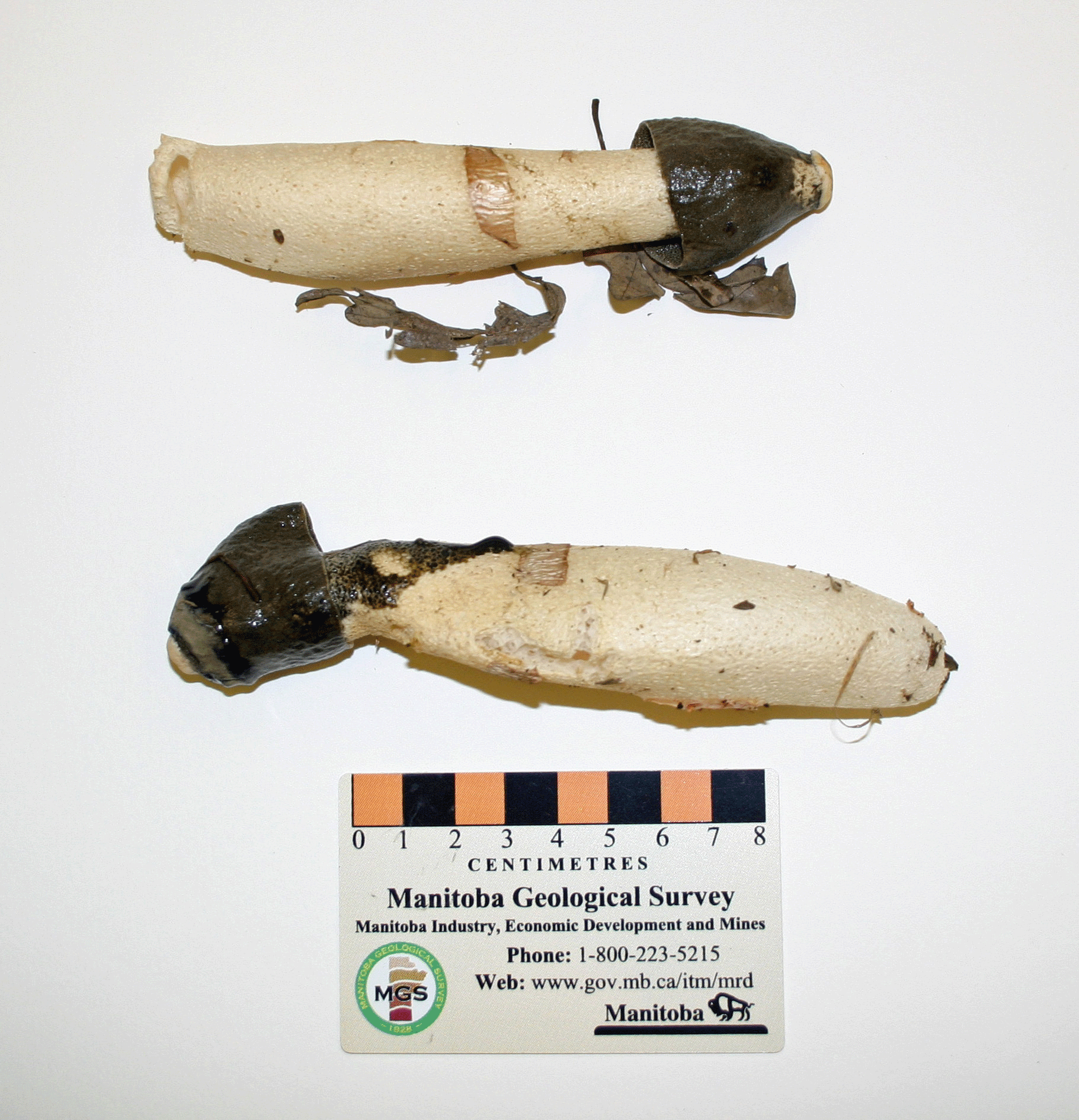
Two phallic shaped mushrooms with thick cream-coloured stems and dark hooded tips lying on a white surface.

Another interesting inedible species growing right now is the extremely smelly stinkhorn (Phallus impudicus) fungus. A Museum volunteer recently brought me some specimens of this species and it really stunk up the room. Many of my colleagues thought it smelled tasty but I found the slight undercurrent of rotting flesh to be a bit overwhelming.

Mushroom hunting can be a fun and rewarding activity, not to mention tasty. Some people even make their livelihood from collecting certain wild mushrooms, like Morels (Morchella). But it is not an endeavor that should be taken lightly, as a mistake can cost you your life. The only way to safely collect mushrooms is to know how to identify them. Be smart and be safe!


Image: These stinkhorn fungi (Phallus impudicus) really stunk up my lab!

Dr. Diana Bizecki Robson

Dr. Diana Bizecki Robson

Curator of Botany

Dr. Bizecki Robson obtained a Master’s Degree in Plant Ecology at the University of Saskatchewan studying rare plants of the mixed grass prairies. After working as an environmental consultant and sessional lecturer…
Meet Dr. Bizecki Robson

Pollination: A Comparison of Prairies

It was with some sadness that I finished my last field work of the season at the Nature Conservancy’s Yellow Quill Prairie. It will be many long, cold months before I get to go out again. However, I was eager to get back to the office to crunch some numbers and see how the pollinator community in mixed grass prairie differed from the fescue and tall grass prairies that I’ve studied previously.

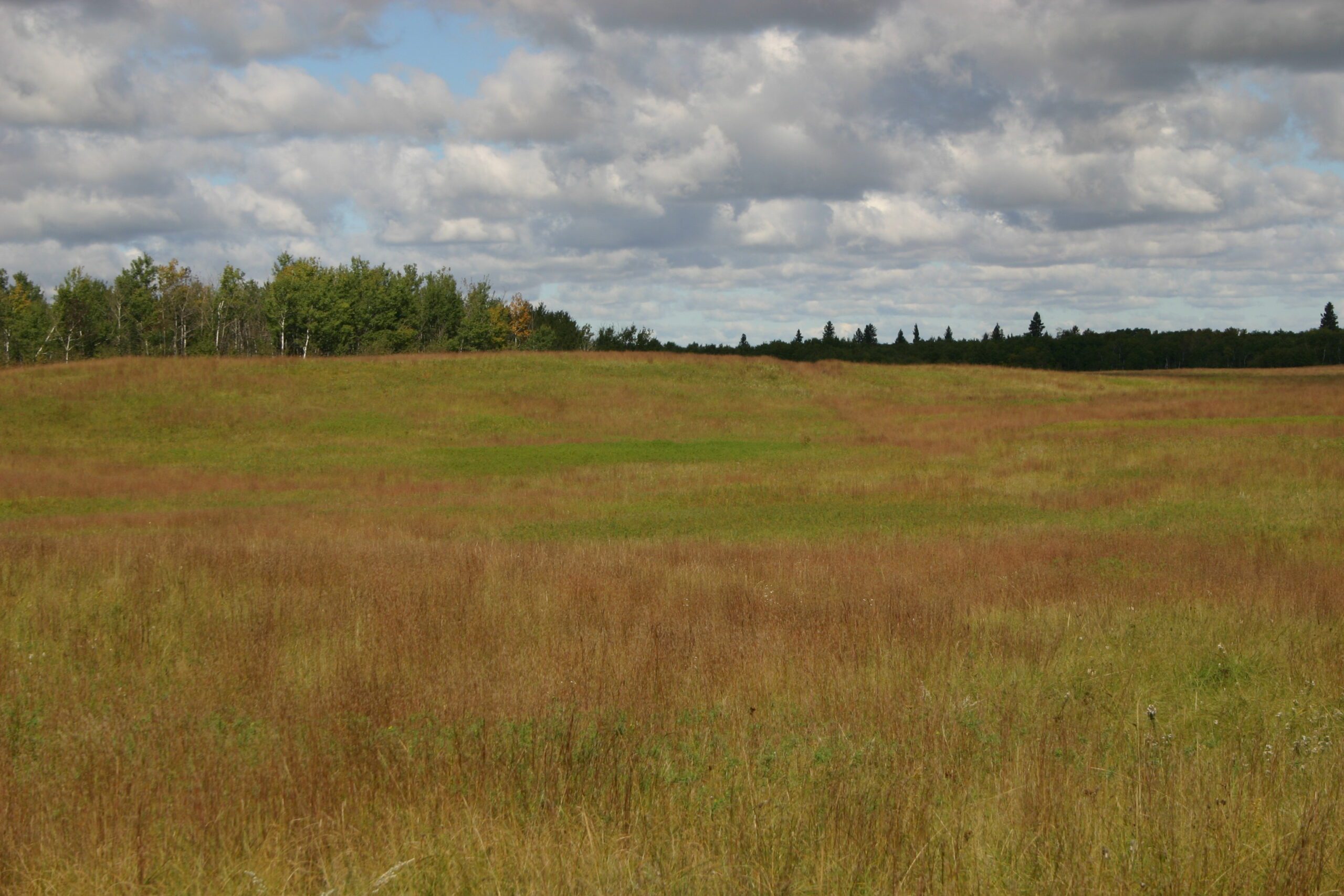
View over a prairie landscape, with a dark tree line in the distance.

The little bluestem (Schizachyrium scoparium) had turned a lovely reddish purple by September.

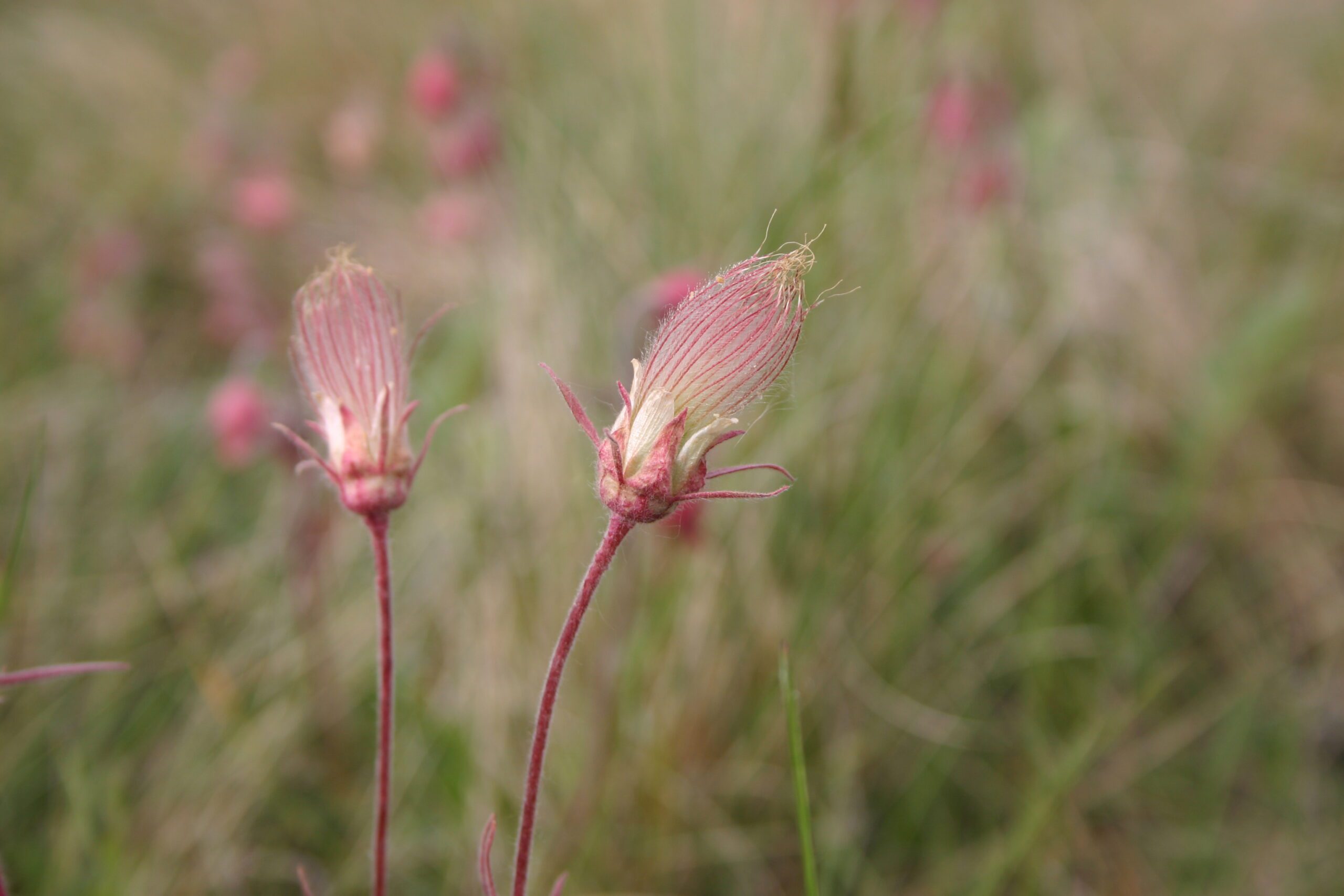
Two pinkish flowers, gone to seed, growing among tall grass.

The three-flowered avens (Geum triflorum) were mostly in seed by the time I started my surveys.

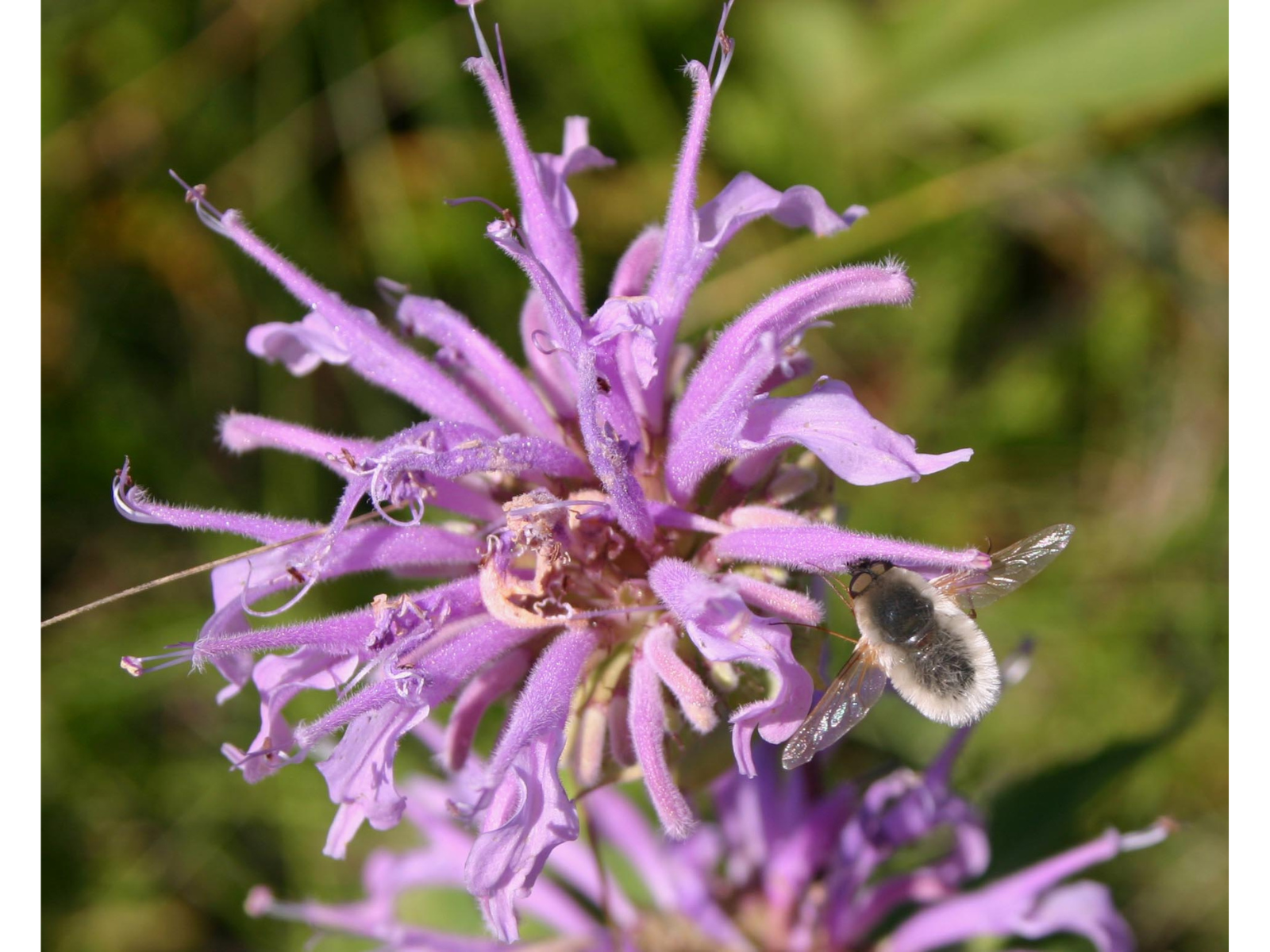
The most commonly visited plant in the mixed grass prairie was wild bergamot (Monarda fistulosa), receiving just over a quarter of all observed visits, mainly from bees and butterflies. This species received only 3.6% of all visits in fescue prairie and less than 1% in the tall grass prairie. You may be familiar with this species because it is often available for sale at greenhouses.

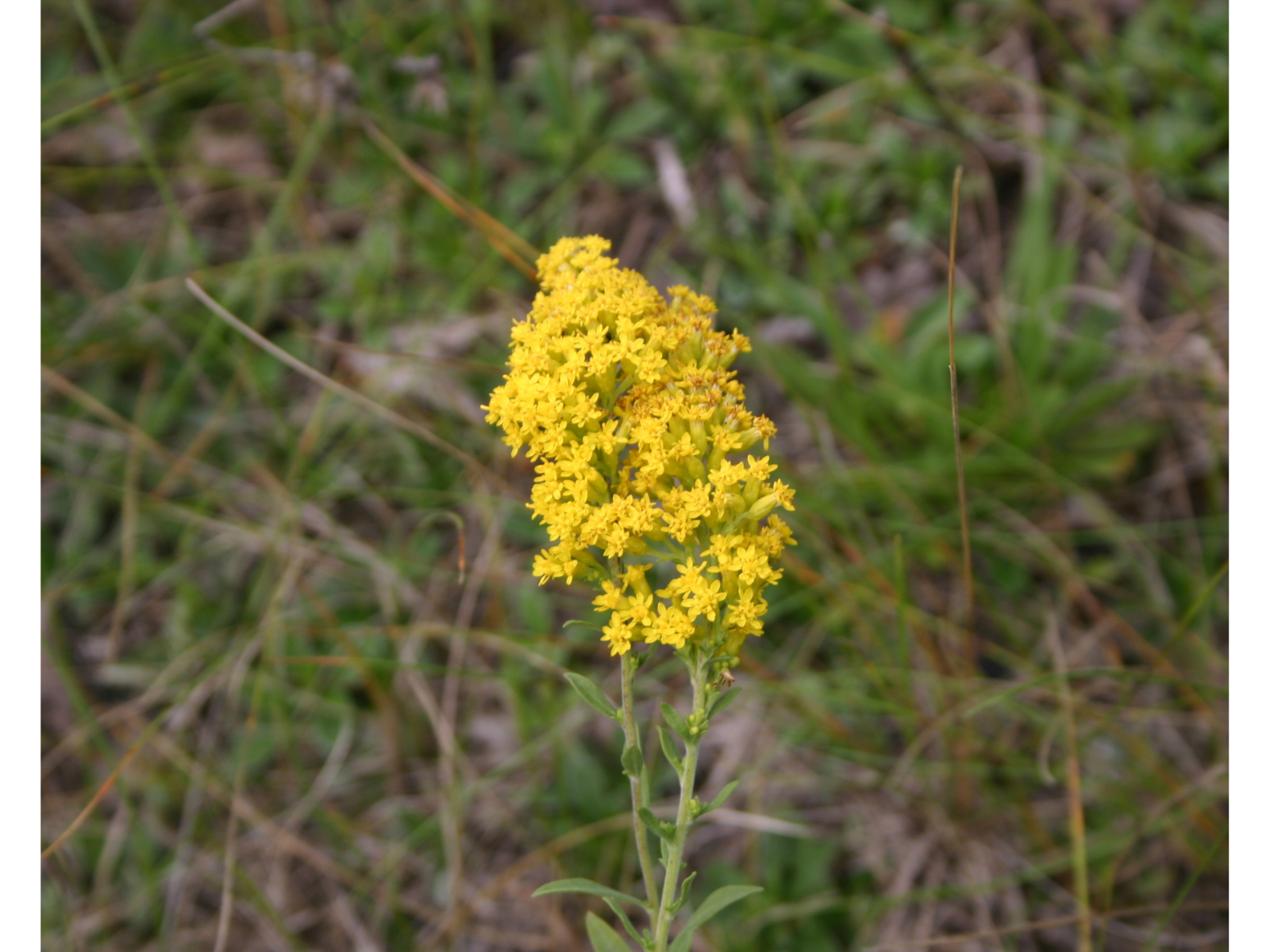
Showy goldenrod (Solidago nemoralis) was an interesting species because it is one of the top visited plants in all three prairie types. This suggests that it would be a particularly useful plant for prairie reclamation because of its widespread distribution and popularity with a wide number of pollinators.

Close-up on a frilly, purple flower.

Wild bergamot (Monarda fistulosa) was the most commonly visited flower, here being visited by a bee fly (Anastoechus sp.)

Cluster of yellow flowers at the top of a Showy goldenrod plant.

Showy goldenrod (Solidago nemoralis) was a popular plant in mixed, fescue and tall grass prairie.

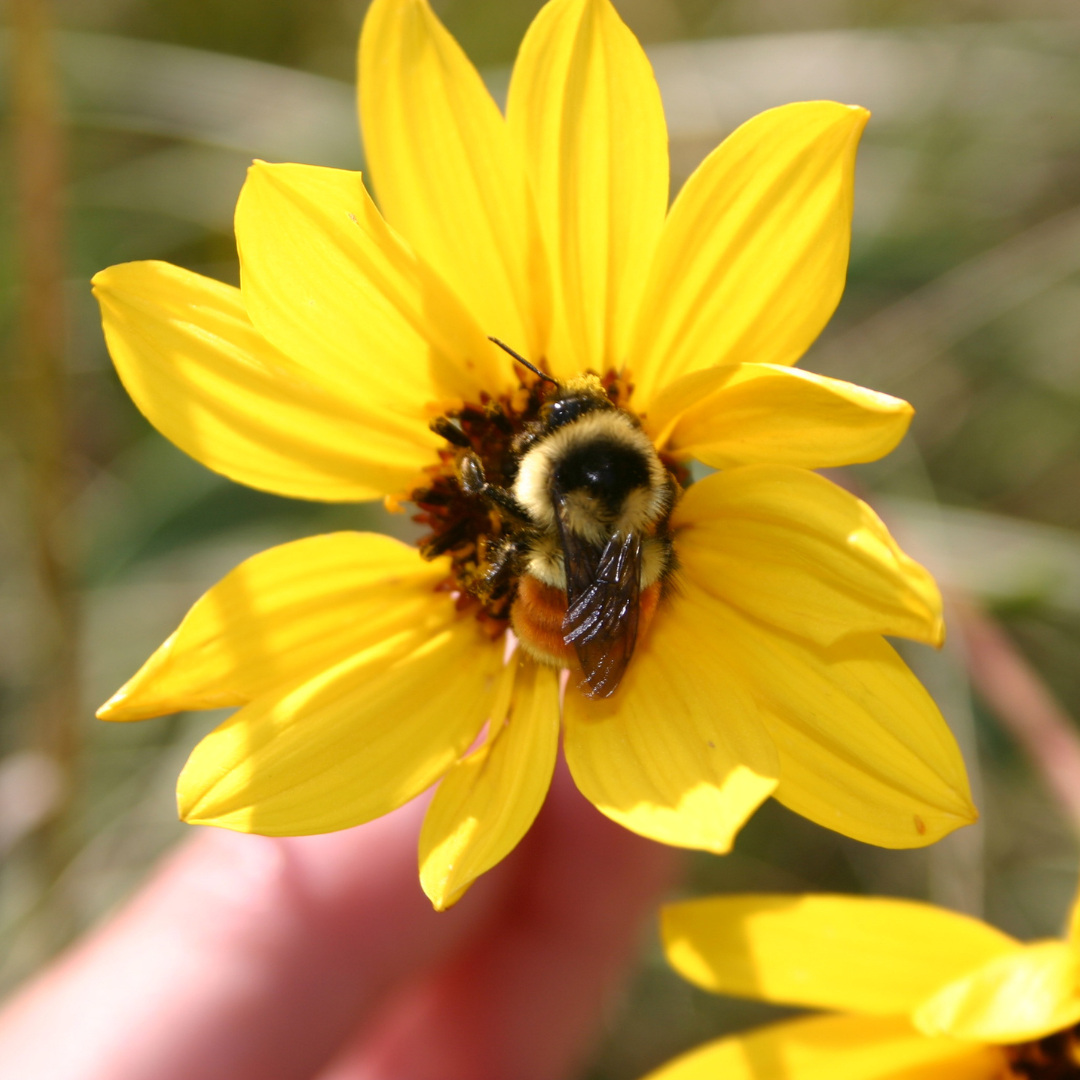
A bumblebee in the centre of a yellow sunflower.

In terms of the pollinating insect community, mixed grass prairie was more similar to fescue than tall grass prairie. Bees and wasps were the dominant pollinators in mixed grass and fescue prairie whereas flies dominated in tall grass prairie, likely due to differences in moisture. Another difference was that butterflies and moths were more common pollinators in the mixed grass prairie, performing about 10% of all visits compared to 4.3% and 0.9% in fescue and tall grass prairie respectively.

The most common pollinators were bumblebees (Bombus sp.); they made almost half of all visits in the mixed grass prairie. In contrast, bumblebees were slightly more active in fescue prairie making 60% of all visits and slightly less common in tall grass prairie making 25%.


Image: Bumblebee (Bombus sp.) visiting a sunflower (Helianthus sp.)

Until next year I’ll be enjoying looking at my photographs, and remembering the smells and sounds of the prairie.

Dr. Diana Bizecki Robson

Dr. Diana Bizecki Robson

Curator of Botany

Dr. Bizecki Robson obtained a Master’s Degree in Plant Ecology at the University of Saskatchewan studying rare plants of the mixed grass prairies. After working as an environmental consultant and sessional lecturer…
Meet Dr. Bizecki Robson

A lasting legacy of a bird’s untimely death

Blog by Debbie Thompson, past Diorama and Collections Technician (Natural History)

Note: This blog contains descriptions and images that may not be suitable for sensitive individuals.

Most people pass by a dead bird, rarely giving it a second thought and leaving it where it lies. But there are many members of the public who notify the Manitoba Museum of the dead birds they do find, often from fatal encounters with windows. The Manitoba Museum appreciates the opportunity to salvage these, as it does not hunt birds to add to its Ornithology collection.

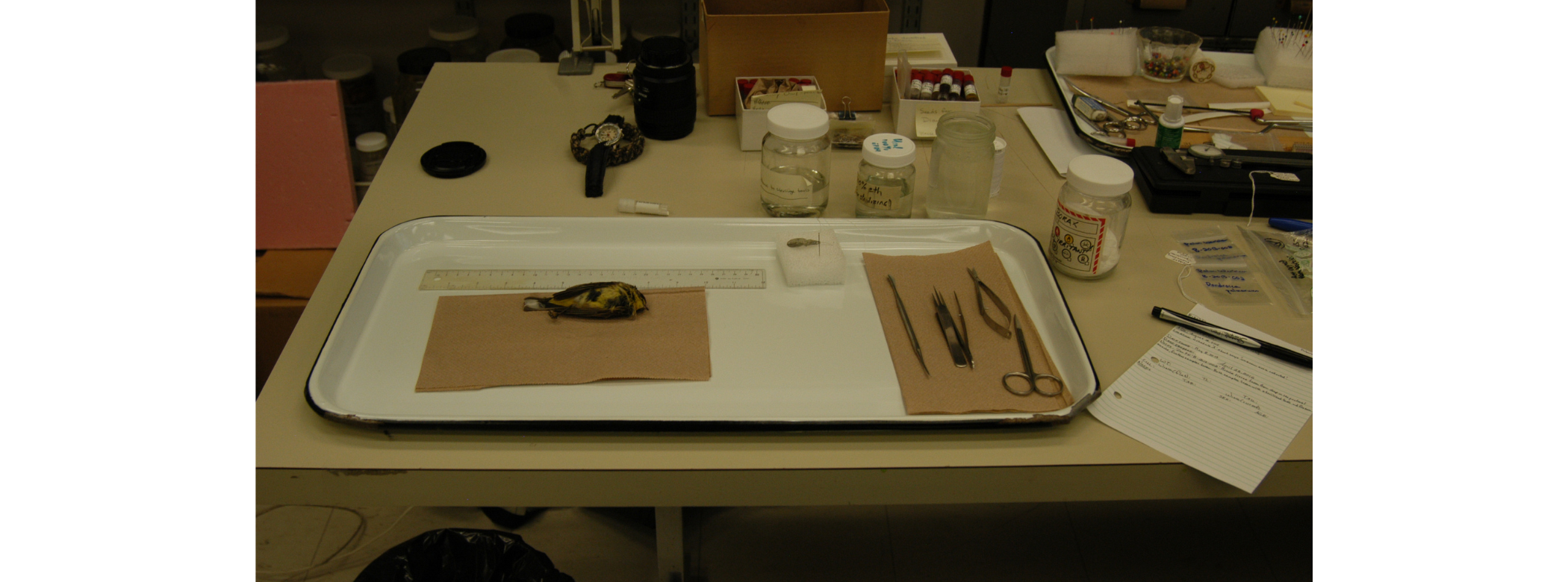
Before I start to process a bird, notes are taken: donor, collector, location, date of acquisition, when it was found and prepared; observations (broken bones, external parasites, molting, etc.); then scientific data, including weight, total length, tail length, wing size, beak and leg length. If possible, sex and age are determined by plumage and feather conditions, which are later confirmed through dissection. I use tools ranging from a simple ruler to surgical blades and scissors.

A small bird specimen laid out on a tray alongside a number of tools.

Tools laid out before beginning work on Palm Warbler. © Manitoba Museum

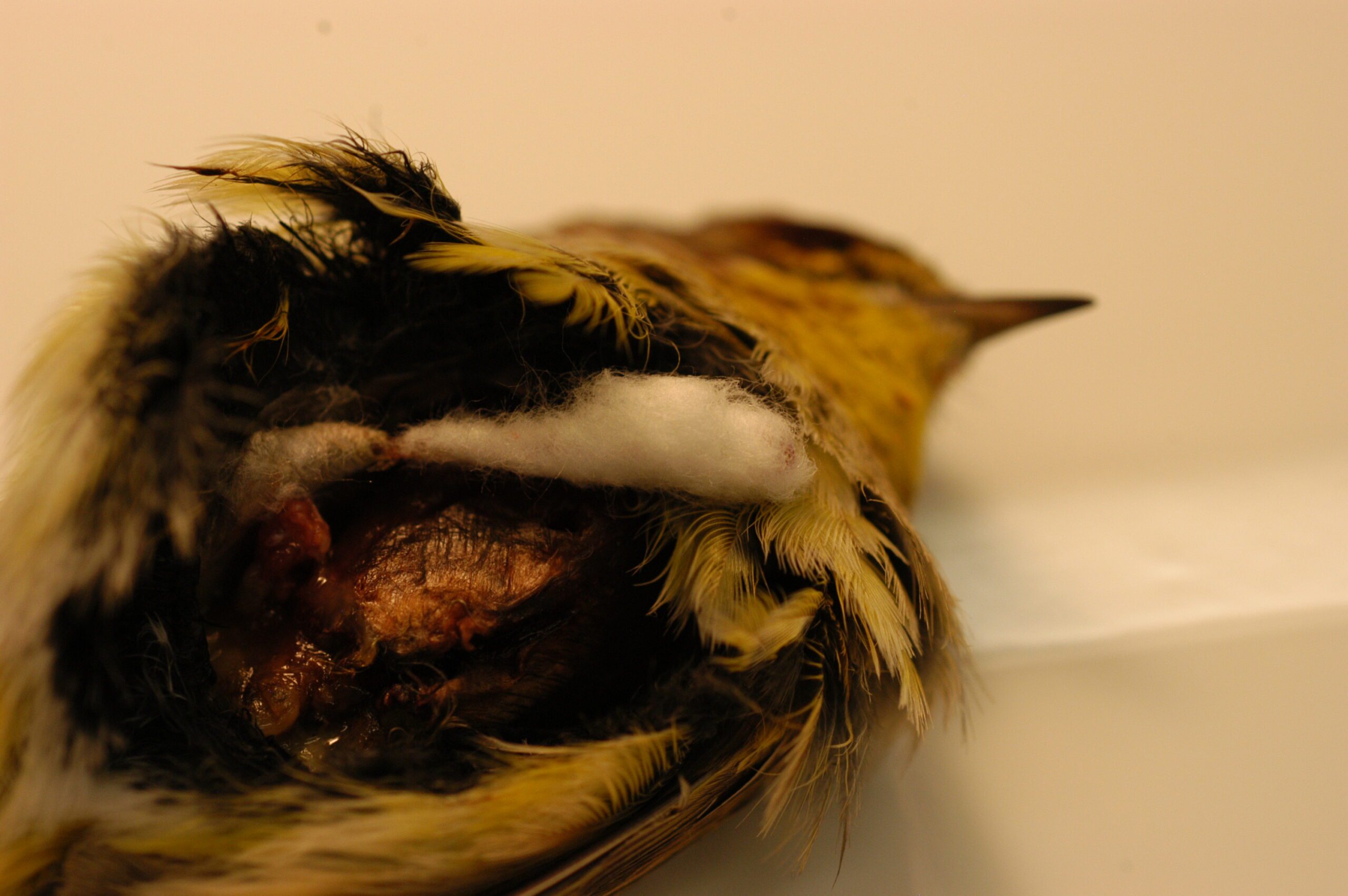
Close up on a yellow and black bird specimen, with its femur wrapped in white cotton.

The first incision is along the breast bone, and then I free the skin from the abdominal cavity without puncturing the abdomen. I carefully free one leg at a time, removing muscle from the femur (= thigh bone) and then wrapping it in cotton and pushing it back into place with a bit of borax. The cotton recreates the muscle I have just removed to retain the bird’s natural shape. The borax aids in drying and preservation.

Once both legs are done, I work to free the skin from the rump/back, and then cut through below the pelvic area. The wings are done much the same as the legs. During this whole time, I am constantly taking notes on the amount, colour and location of fat deposits, locations of molting, any old injuries and internal parasites and anything else that may be out of the ordinary.


Image: Femur wrapped in cotton. © Manitoba Museum

The pattern on the top of the skull can reveal the age of the bird. If a large area is soft and transparent, the bird is a juvenile; if it’s hard and opaque, it indicates an adult. The brain and the eyes are removed and the skull filled with cotton.

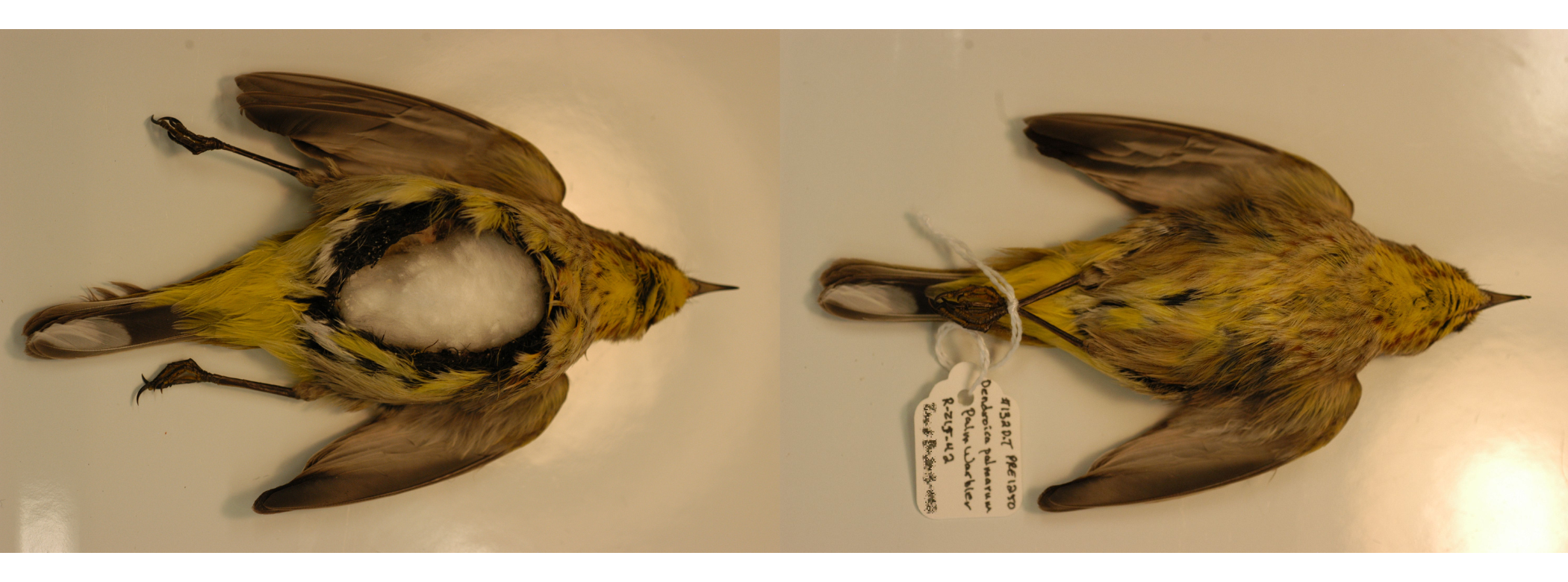
The body is reshaped with cotton wrapped around a wooden dowel and the skin is pulled up around it. The incision along the breast bone and abdomen is sewn up. Often, the feathers need a gentle cleaning, with special attention to primp the plumage. The bird study skin is wrapped in a cloth ribbon to hold the wings in place and is pinned to a foam sheet to dry in a special drier.

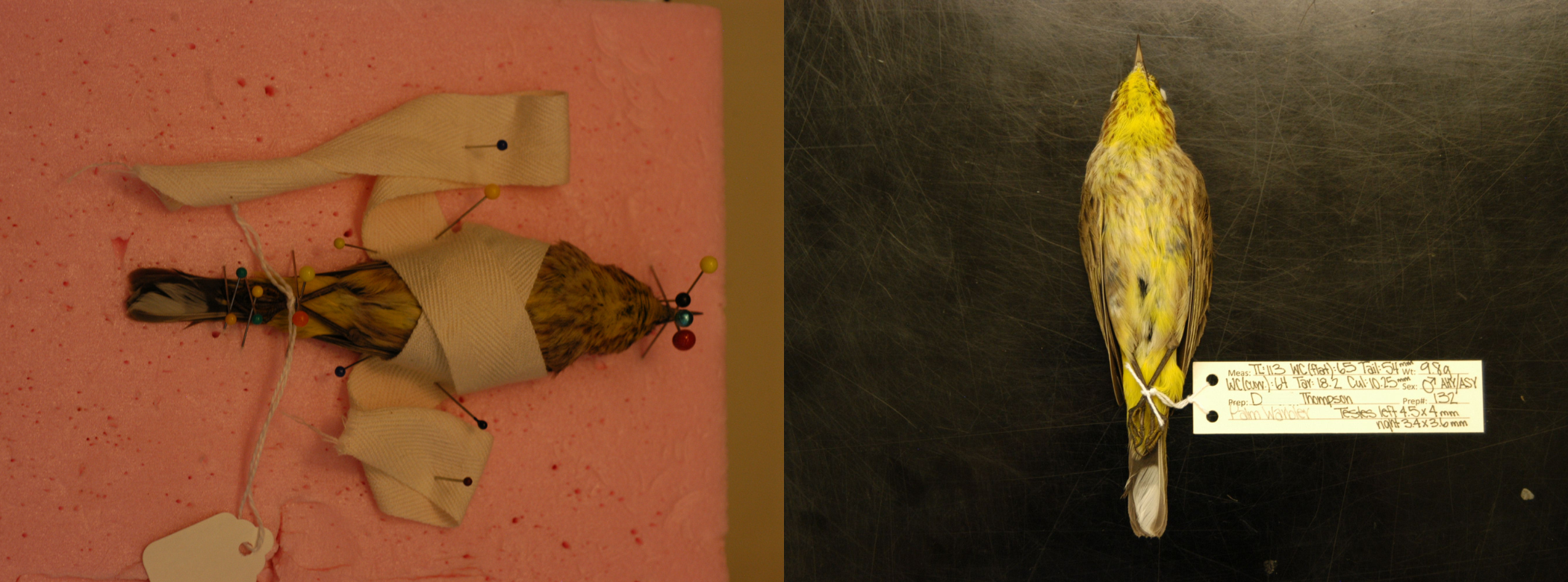
Two photos of a Pal Warbler specimen side by side. On the left the bird's innards have been removed and replaced with white cotton batting. On the right, the cavity has been sewn back up.

Left to right: Palm Warbler (#132 DT) – body cavity filled with cotton; body cavity sewn closed and feathers primpted. © Manitoba Museum

Two photographs of a Palm Warbler specimen side by side. On the left, the bird is wrapped an pinned to foam for drying. On the right is the finished bird specimen, it's yellow feathers bright against a black background, with a small identification label attached to one of its legs.

Left to right: Palm Warbler (#132 DT) – study skin wrapped and pinned to foam; finished bird study skin. © Manitoba Museum

Using a microscope, I confirm the sex of the bird and measure the testes or ovary. Determining whether the female bird has laid eggs, I search for the nearly invisible oviduct. If it’s straight, then the female hasn’t laid a clutch, but if it appears convoluted, she has laid eggs. I also look for internal parasites (such as roundworms), and then examine the stomach contents, noting everything found within. By far, the scariest of the stomach contents have to be spiders. Eye to eye and larger than life under a microscope, I jump every time I find one!

With patience and respect, it takes about 3 ½ hours to prepare a bird the size of a warbler. The study skin and data collected will aid researchers in the future, and any and all information I am able to collect is invaluable, a lasting legacy of a bird’s untimely death. The contributions to research are greatly enhanced when the public becomes involved, sharing with us their own discoveries and interest in the environment around them.

Dress Shop Adventure: Hats, Handkerchiefs, and a “Hair Tidy”!

By Ellen Stothers, Collections and Conservation Assistant (YCW summer student)


Over the last few weeks, I have been assigned the task of doing inventory, cataloguing, and condition reporting artifacts in “Amy Galbraith’s Dress Shop,” in the Museum’s Urban Gallery. I have also cleaned and photographed the objects. Through this process I have been delighted to learn more about the history behind the artifacts that we see in this 1920’s shop. I thought you might enjoy some of my findings!

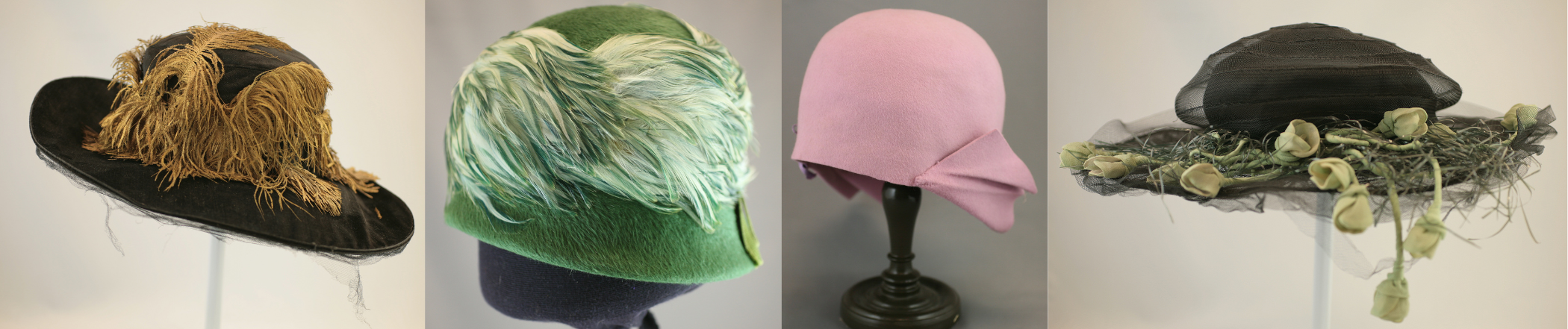
Hats were a staple of the 1920’s wardrobe. The Dress Shop has nine hats that help to portray life and style during the 1920’s. Some of the hats stand out in my memory just because of where they are from. For example, the hat with gold feathers [H9-8-396 (1)] is from Holt Renfrew and the green hat [H9-38-496] is from Eaton’s. With some of the hats, we are lucky enough to have a more detailed recorded history. The pink hat [H9-4-451B(1)], which you can see in the window of the Dress Shop, is also from Eaton’s and it was worn by Miss Hazel McMillan as maid of honour at her twin sister’s wedding in 1929. The one with green chiffon roses [H9-5-147] was worn by Mrs. James A. Richardson during a visit to Buckingham Palace in 1919. These generous donations, which the Museum received in the 1970’s, help us to understand and imagine Winnipeg in the 1920s.

Four photographs of vintage women's hats. L to R, a wide brimmed black aht with gold featers, a green cloche hat with feathers wrapping around, a pink cloche hat with some detailing on the lower back, a widew brimmed flat hat with light green chiffon roses around the brim.

From left to right: H9-8-396 (1), H9-38-496, H9-4-451-B (1), H9-5-147. © Manitoba Museum

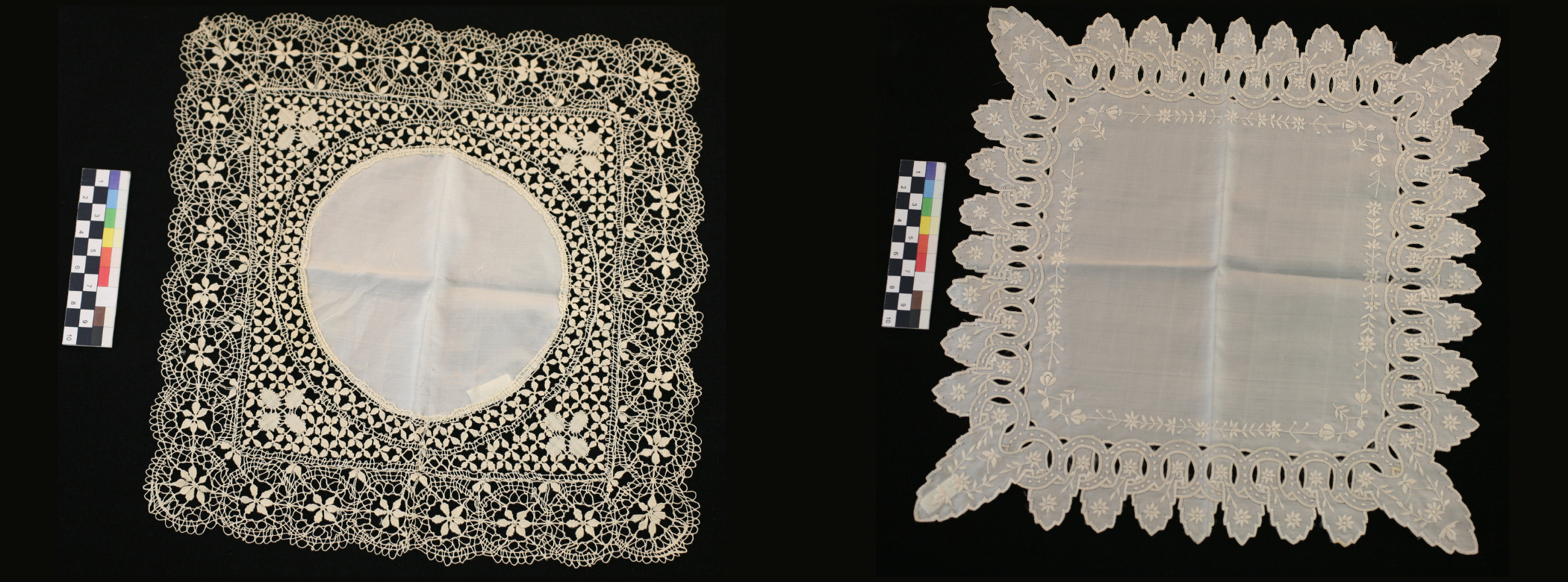
Strolling through the Urban Gallery, one may not at first realize how many artifacts are in each room. Take another look! Each room is an incredibly detailed portal into Manitoba’s past. The Dress Shop has a number of smaller objects that help to complete the room. These items include hatpins, hairpins, mirrors, shoes, sewing supplies and handkerchiefs. On the counter, there are a number of handkerchiefs. Here are some pictures of some of the handkerchiefs that help add to the 1920’s feel of the room.

Two intricate white lace handkerchiefs against a black background.

From left to right: H9-5-4-h, H9-5-4-d. © Manitoba Museum

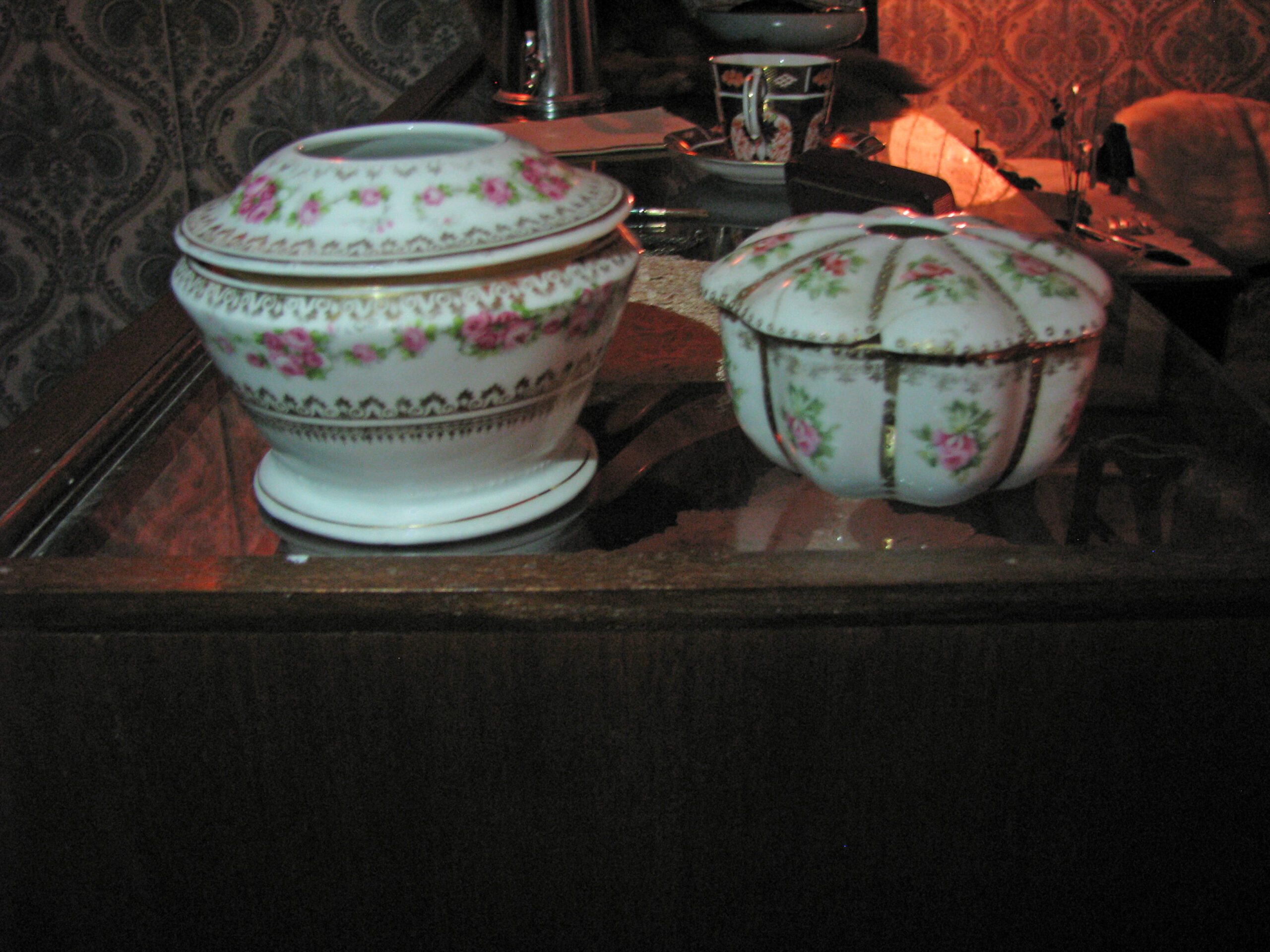
Two decorative bowls with pink rose patterns and small holes in the top of the lids.

My time at the Manitoba Museum has been filled with learning. Sometimes these moments happen in unexpected places. For me, the Dress Shop has something I had never heard of before. The small bowl with a hole in the centre was a common dressing table item, called a “hair tidy” or “hair receiver”  [H9-3-720]. Women used these items to store hair that came out in their brushes or combs. This hair would then be used for different purposes. One thing women would use their hair for was to create hair pieces, or “ratts.” These pieces would be added to the elaborate hairstyles of the 1920’s to help give a natural volume. A second thing women would use their hair for was to make pin cushions, as hair is less prickly compared to pinfeathers and the natural oil from the hair would keep the pins in good working order.


Image: Hair Tidy, H9-3-720. © Manitoba Museum

Next time you pass by the rooms in the Urban Gallery make sure to stop and look, you might be surprised at some of the interesting artifacts you can see!

Earth-like planet discovered around closest star

A new planet has been discovered outside our Solar System. That wouldn’t normally be big news, since astronomers have discovered about 3,200 exoplanets, or planets that orbit stars other than the Sun. This one is rather special, though.

First, it’s about the size of our planet Earth. That generally means it is made up of the same sort of things that the earth is made up of – rocks, not gasses. It’s probably solid, like our own planet.

Second, the new planet orbits its star in the “Goldilocks zone”. That’s the area that isn’t too hot or too cold for liquid water to exist. That means, if the planet has an atmosphere, that there could be liquid water on its surface – and that opens up the possibility of life.

Even more exciting: this new planet orbits the closest star to the Sun – it’s literally as close as a planet could be to our Solar System. The star is called Proxima Centauri, which is part of the Alpha Centauri star system. It’s about 4.2 light years away – so, it’s still REALLY far away. If you tried to go there in any of the rockets we have now, it would take more than 100,000 years to get there. Long trip, better bring a book.

But, radio waves travel at the speed of light – and so a radio signal could get there in about 4.2 years. (That’s basically the definition of the term “light year” – the distance that a beam of light travels in one year. It works out to about ten trillion kilometers, give or take.)

Here’s an artist’s conception of what it would look like from the surface of Proxima B. The bright star is Proxima, and the two fainter ones in the background are Alpha Centauri A and B, which are part of the same triple-star system.

The new planet was found by European astronomers, using a technique first pioneered by Canadian astronomers Gordon Walker, Bruce Campbell, and Stephenson Yang back in the 1970’s at the Dominion Astrophysical Observatory in Victoria, B.C. The technique, which measures the wobble in the star due to the gravity of an unseen planet, has only recently become precise enough to detect tiny Earth-sized planets.

As of now, we have no idea if the planet has water, or an atmosphere, or aliens, or bacteria, or anything. We just don’t know. What we do know is that there’s nothing about the planet which automatically rules out the possibility of life. It has the right temperature range for water, its star isn’t too violent, there are no other factors which tell us that no life can exist there.

We may have discovered our nearest neighbours in the galactic metropolis. Or, it may just be an empty lot next door to us that we can expand into. Either way, this is probably the most significant exoplanet discovery thus far, and seeing what comes next will be exciting.

Scott Young

Scott Young

Planetarium Astronomer

Scott is the Planetarium Astronomer at the Manitoba Museum, developing astronomy and science programs. He has been an informal science educator for thirty years, working in the planetarium and science centre field both at The Manitoba Museum and also at the Alice G. Wallace Planetarium in Fitchburg, Massachusetts. Scott is an active amateur astronomer and a past-President of the Royal Astronomical Society of Canada.

The mystery of the moving cow pie

Usually cow pies are extremely uninteresting features of a prairie landscape (and one to usually avoid) but this month something funny was happening with them at the Nature Conservancy’s Yellow Quill Prairie that made me look twice. For starters, one day I saw a cow pie moving.

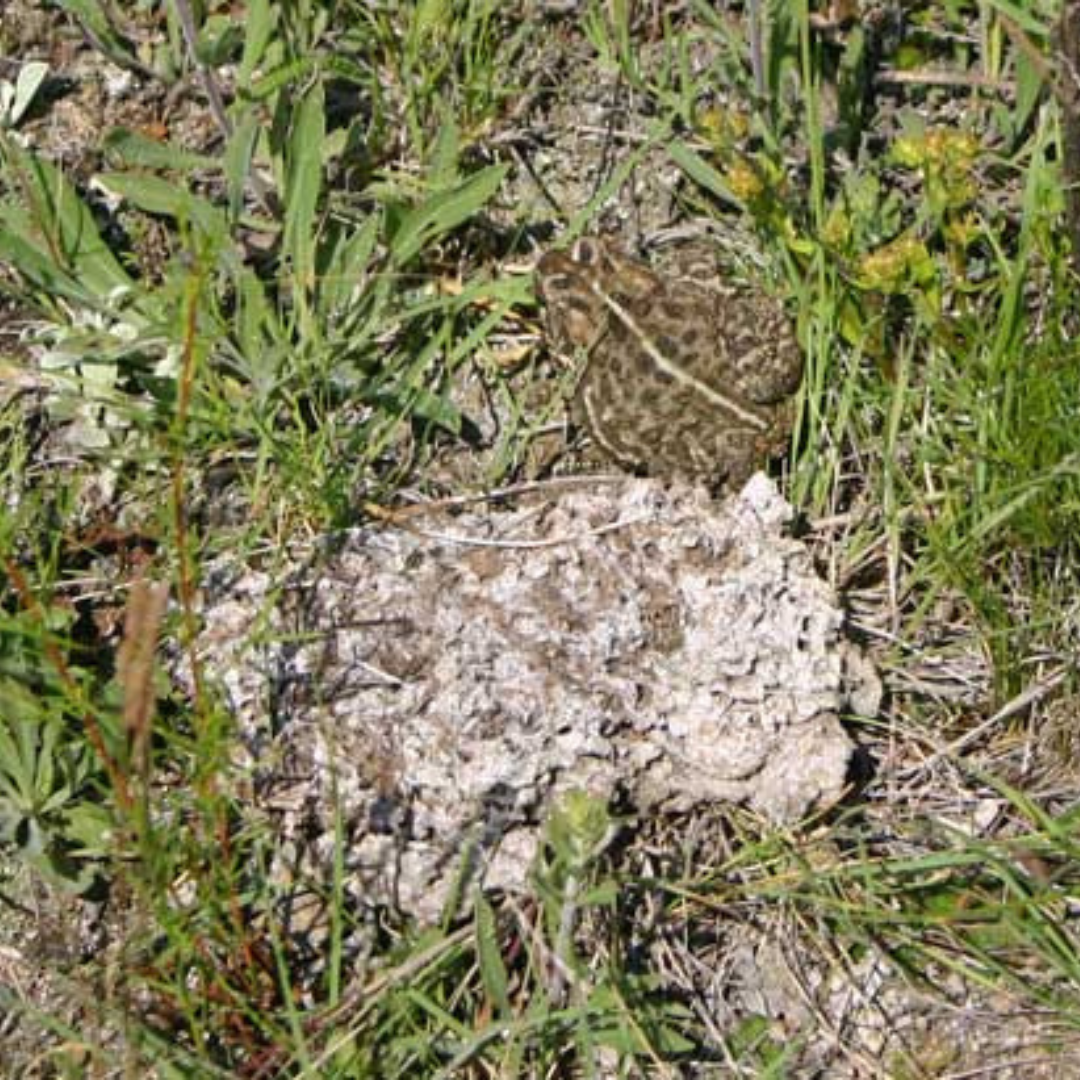
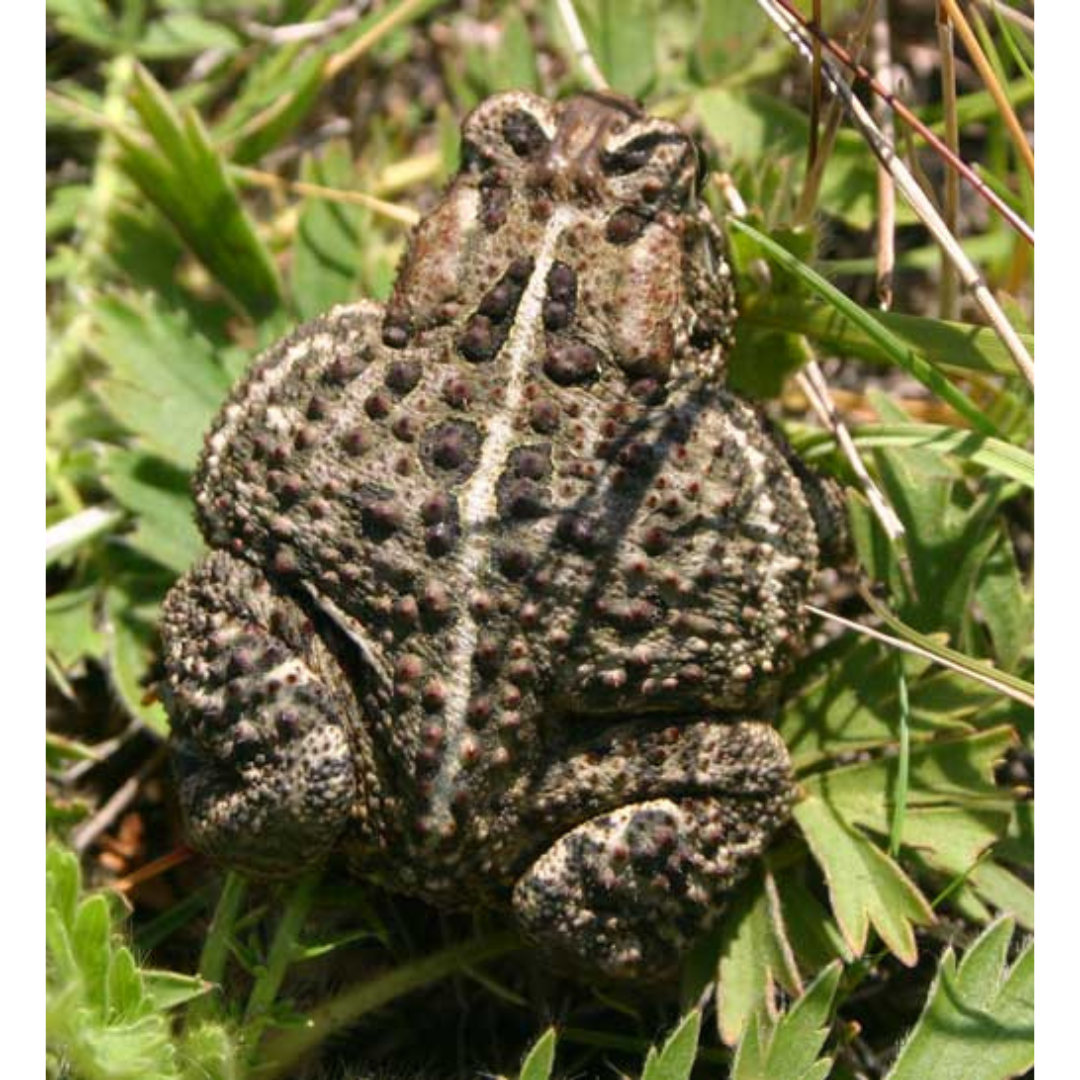
As it turns out though, it wasn’t really the cow pie that was moving: it was a toad, a Canadian Toad (Anaxyrus hemiophrys) to be specific. As I stepped next to a cow pie in one of my research plots, the aforementioned toad made a short hop. It took me a few seconds to actually find the toad as it blended in with the cow pies and dried grass quite magnificently. I had never really appreciated how well the colour of these creatures helps them to blend in with their surroundings. The toad looked hot and, as I was leaving for the day and no longer needed the water in my bottle, I decided to give him a shower. To my surprise he made a happy chirping sound and wiggled his back. Good deed for the day completed!

A dried cow pie on the ground with a toad blending in next to it.

I thought the cow pie was moving when this little toad hopped away!

Close up on the back of a Canadian Toad.

This Canadian Toad (Anaxyrus hemiophrys) really appreciated the shower I gave it.

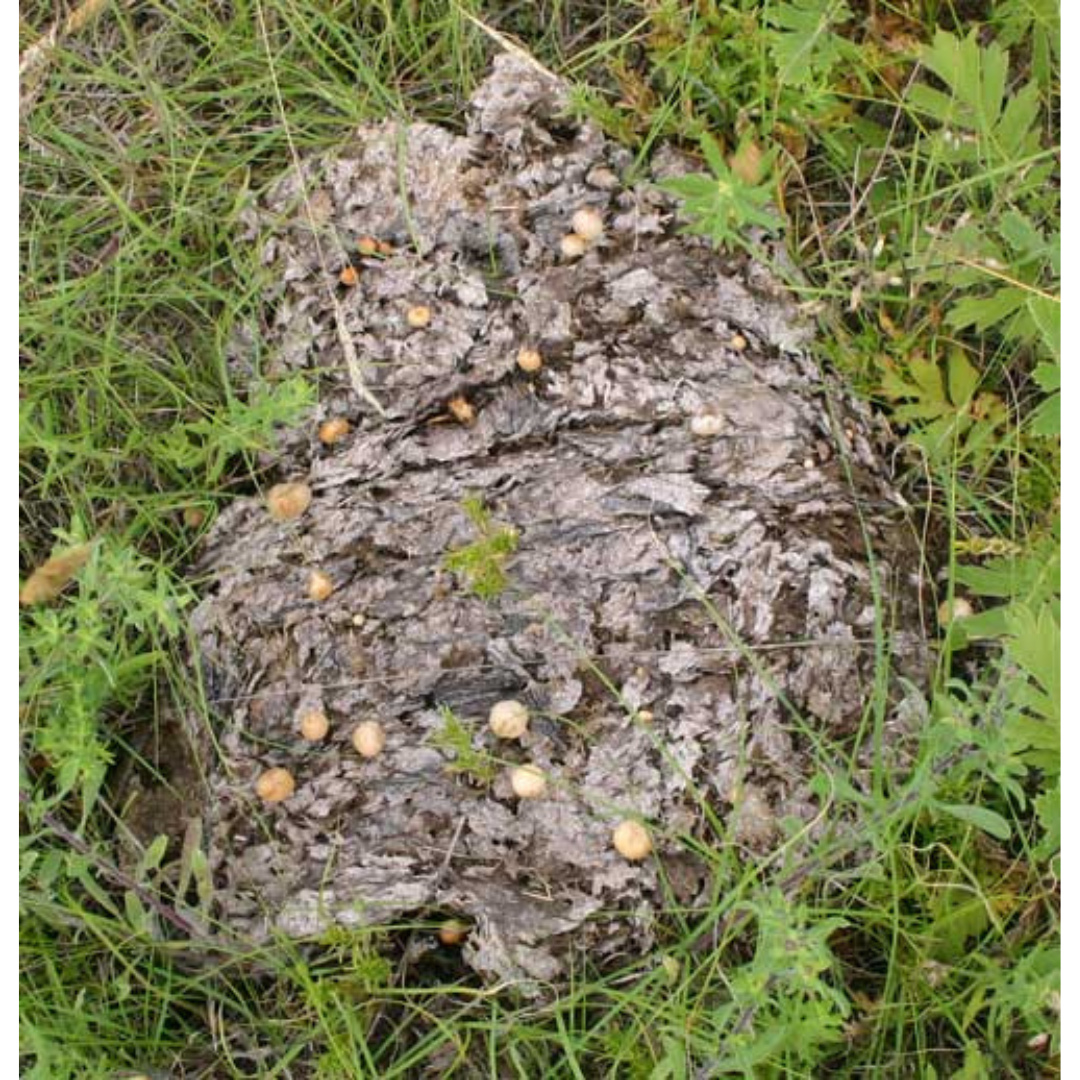
A drying cow pie with small, light brown mushrooms growing out of it.

The other interesting thing happening to the cow pies was that they were becoming fungal gardens. We rarely appreciate the fact that the soil beneath our feet is just as (actually, probably much more) biologically diverse as the world above ground. Prairie soils are loaded with all kinds of insects, bacteria, nematodes, and fungi living in and around the prolific plant roots, some of which go down five meters! So the part of the prairie plants that you actually see is only their “head”; the rest of their “body” is underground.

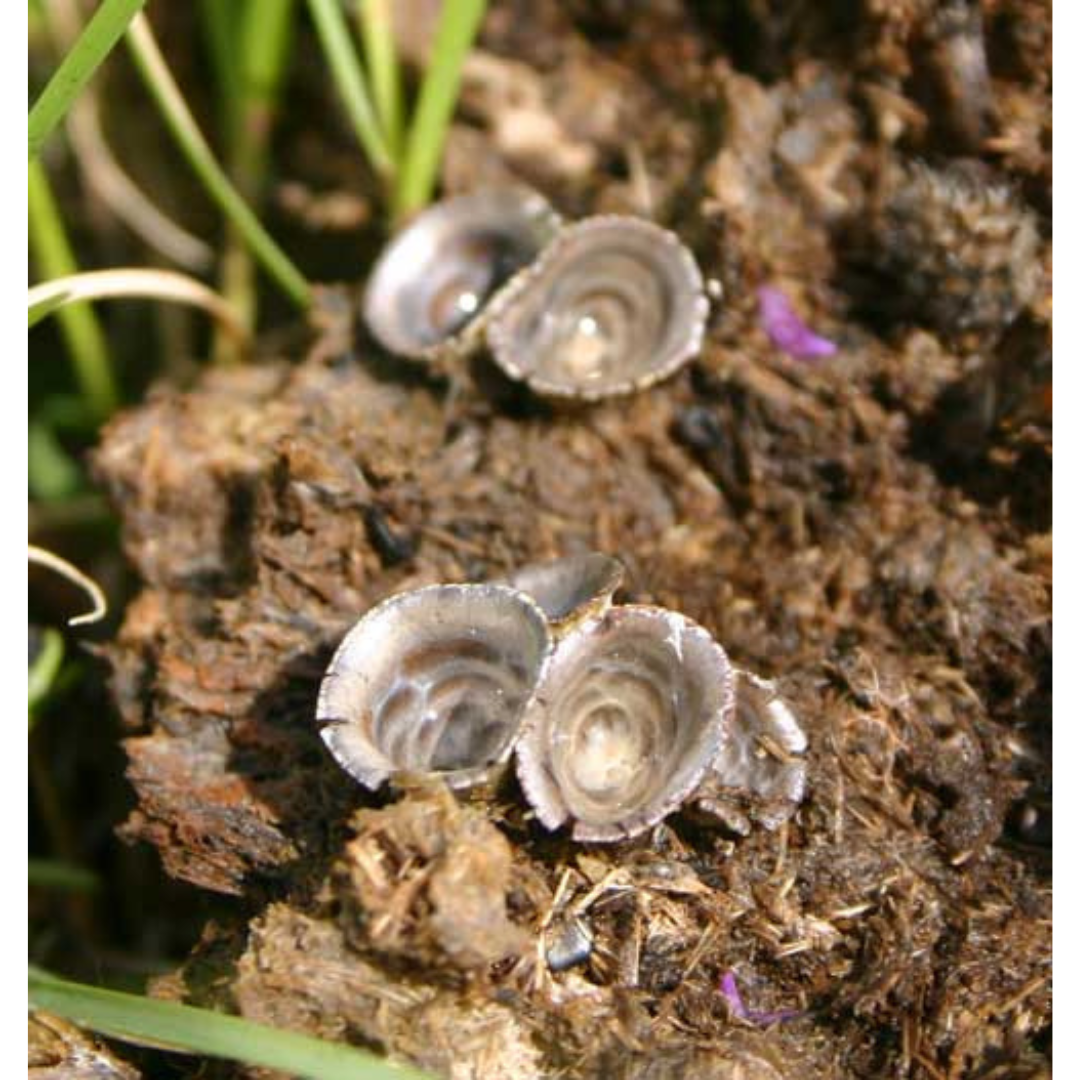
Fungi live most of their lives as hyphae which are the fungal equivalent of “roots” so during dry years, you won’t even know that they exist. But when it gets wet (like it did the day I started my field work), the reproductive stage of the fungi is triggered and they begin producing mushrooms. The wet weather this year combined with the high nutrient cow pies resulted in a prolific “mushrooming” of the prairie. On one cow pie I saw a species that we have almost no specimens of in our collection: a Bird’s Nest Fungus (Cyathus sp.). There was no way around it; to get a specimen of this fungus I would have to pry the tiny cups out with my hands. Would I stick my fingers in feces for science? As it turns out the answer is YES! Fortunately, I always bring hand sanitizer and gloves with me.


Image: All the cowpies at Yellow Quill Prairie were covered with mushrooms this July.

Small bird's nest or shell-shaped mushrooms growing on the top of a drying cow pie.

This little Bird’s Nest Fungi (Cyathus sp.) will make a great addition to the Manitoba Museum’s fungal collection.

A cluster of smooth, brown capped mushrooms growing in a dry cow pie.

The warm wet weather provided the perfect growing conditions for coprophilous fungi like this one.

The Yellow Quill Prairie is currently being sustainably grazed by cattle, which is why the cow pies are even there. Doing so increases the fungal diversity of the prairie as some species are strictly coprophilous (e.g. poop-loving) and would not otherwise be there. Although these fungi would have initially evolved to decompose Bison pies, cow pies are not much different from them, and therefore cattle fill a similar ecological role.

As the prairie dried out the mushrooms, having completed their spore-dispersal goal, began to wither away in the heat of the day. But I won’t forget the brief glimpse that I got of the diversity that lay beneath my feet.

Dr. Diana Bizecki Robson

Dr. Diana Bizecki Robson

Curator of Botany

Dr. Bizecki Robson obtained a Master’s Degree in Plant Ecology at the University of Saskatchewan studying rare plants of the mixed grass prairies. After working as an environmental consultant and sessional lecturer…
Meet Dr. Bizecki Robson

Perseid meteor shower shines above Manitoba

Updated 8 August 2016 9:29 CDT

Every year, the annual Perseid meteor shower occurs around August 11 and 12. This year, though, is predicted to be a much more active shower than in previous years. What can we expect, why is it happening, and how can you see it yourself?

As the earth orbits the sun, it crashes into bits of rock, ice, and dust which are left over from the formation of the solar system. These tiny fragments hit the earth’s atmosphere at cosmic velocities, quickly heating up due to friction and vaporizing tens of kilometers above the ground in a flash of light. These flashes are called meteors, and are also known as shooting stars or falling stars. On a typical night, if you can avoid any sources of light from cities and the moon, you can see a handful of these every hour. The trick is, to be watching the sky for that entire hour, because meteors are literally visible for a second or two and then gone. Don’t blink!

In addition to these sporadic meteors, several times a year the earth travels through a denser trail of dust left behind by a comet. Comets are icy bodies that orbit the sun, growing a long tail when they get close enough to the sun. These comets leave a trail of ice and dust in their wake, and when the earth passes through the trail we get many more meteors than usual. This is called a meteor shower, and they occur about the same time every year. One of the best known showers is the Perseids, which usually peak around August 11th and 12th.

This particular year, the earth is predicted to be going through an especially dense part of the meteor trail left behind by Comet Swift-Tuttle. This means we can expect more meteors than normal this year for the Perseids.


So what does this mean?

First, don’t be mislead by some of the images floating around social media – the stars won’t fall like rain. If you go out at the right time, you will see a lot of meteors, but a lot depends on your local conditions. Here’s how to maximize your chances.

  1. Meteor showers always are best after midnight. Due to the geometry involved, when your part of the earth is experiencing “evening”, the meteors are hitting a glancing blow. Not many can catch up to the Earth in its orbit, so you will see fewer meteors than the predicted amounts. The silver lining here is that the few meteors you will see are usually the bright fast ones that leave a trail across the sky. Before-midnight viewing is definitely about quality, not quantity.
  2. Avoid city lights. Meteors are faint compared to streetlights, advertising signs, and other artificial lights. From inside the city, you may see a handful of meteors, but you’ll miss most of them. The best views are to be had from under dark country skies. Head out of the city, and set up with your back towards the brightest lights you can see.
  3. Avoid telescopes. Meteors can happen anywhere around the sky and only last for a few seconds – you won’t have time to point a telescope at them. Telescopes have very small fields of view, so you are only looking at a fraction of the sky at once. This is one type of astronomy that is perfect for the low-tech approach. The most useful piece of equipment is a reclining lawn chair or blanket to lay back on.
  4. Avoid the moon. This is usually the big variable between one year’s shower and the next. If the moon is full, you have a big source of light pollution that you can’t just drive away from. Luckily, this year, the moon is not full, but it’s close. For Manitobans, the moon will set around 1 a.m. on the night of the 11th/morning of the 12th, giving us a solid three hours of dark skies until the twilight begins.

Suggested viewing plan: Head out of town the evening of Thursday, August 11. Find a place where you can observe that avoids as many lights as possible. Ensure that you’re not too near a road or other hazard. (Make sure you choose a place that is not private property unless you have permission from the owner!) Set up your lawn chair with your back facing towards the brightest lights you can see, and just look up. Keep all lights off, so you eyes can adapt to the dark. If you look at a light (like your mobile device) for even a split-second, you will kill your night vision for several minutes. Even if the device is set to red, it is much too bright. Watch the sky for as long as you can, and just count the meteors!

If you want to try capturing a meteor image on your camera or turn your observations into science, visit the International Meteor Organization’s web page – they have further details on how to make meteor counts and take images of meteors.

Scott Young

Scott Young

Planetarium Astronomer

Scott is the Planetarium Astronomer at the Manitoba Museum, developing astronomy and science programs. He has been an informal science educator for thirty years, working in the planetarium and science centre field both at The Manitoba Museum and also at the Alice G. Wallace Planetarium in Fitchburg, Massachusetts. Scott is an active amateur astronomer and a past-President of the Royal Astronomical Society of Canada.

Water-lilies and Wetlands

Close up on several low-growing pitcher plants, one of which is consuming a fly.

Wetland plants are the least commonly collected and photographed plants in Manitoba for good reasons. For starters they’re protected by the most vicious gangs of thugs you can imagine: bloodthirsty mosquitoes and black flies. I’ve taken many blurry photographs in my day because I was too busy swatting mosquitoes to focus properly. No matter how good the bug jacket is, the pests always seem to find a way in. Wetland work can be utterly exhausting: walking in a bog is like taking a stair climbing class taught by Satan! I got heatstroke from doing bog work once. Further, unless you’ve got a magical inflatable boat that shrinks to the size of a wallet, collecting wetland plants often means one thing: getting wet and muddy, and, if you’re in a bog, potentially sinking to your doom!


Image: Mosquito-eating Pitcherplants (Sarracenia purpurea) and Sundews (Drosera spp.) are a welcome sight (note the fly in the lower pitcher).

There are only two occasions where I thoroughly enjoyed botanizing in wetlands. One was during my field work to find a new species of water-lily (Lori’s Water-lily or Nymphaea loriana) in northern Manitoba. Manitoba Hydro offered to fly my companion John Wiersema and I up to Jenpeg, and to have a few locals take us out on a motorboat to look for it. The great thing about being on a boat is that it is windy enough on the open water to keep the bugs down. On that trip we collected plant specimens for DNA analysis which eventually led to my recent publication in the Canadian Field Naturalist (Read more here).

The other day of enjoyable wetland botanizing happened just last month at the brand new Brokenhead Wetland Interpretive Trail (Find more details here). This gorgeous 1.83 km trail (less than an hour north of the city) runs parallel to the Brokenhead Wetlands Ecological Reserve. If you’ve ever wanted to see rare orchids or carnivorous plants, this is the best way to do it. Almost the entire trail is boardwalk so your feet never get wet and you don’t have to worry about sinking and turning into a bog mummy!

View out across a wetland from on the water. On the banks grow greenery and trees.

Boreal wetlands are best visited by boat.

View down a wooden boardwalk flanked by wetland greenery and water, with trees growing further to the side.

The boardwalk through the fen at the Brokenhead Wetlands Interpretive Trail.

The trail first passes through a fragrant white cedar (Thuja occidentalis) swamp before reaching the more open fen habitat. I was easily able to see four species of carnivorous plants: pitcherplants (Sarracenia purpurea), round-leaved and oblong-leaved sundews (Drosera rotundifolia and D. anglica), and common bladderwort (Utricularia vulgaris). Although it was lovely to see Dragon’s-mouth orchid (Arethusa bulbosa), grass-pink (Calopogon tuberosus), spotted coralroot (Corallorrhiza maculata), and several species of bog-orchids (Platanthera spp.), the bell of the ball was definitely the spectacular showy lady’s-slipper (Cypripedium reginae). One was growing right next to the trail facilitating a perfect photograph!

Close up on a Showy Lady's-slipper flower - a flower with three white upper petals and a larger, pinkish, cup-like lower petal.

This Showy Lady’s-slipper (Cypripedium reginae) was growing right next to the trail.

Close-up on Grass Pink orchid, a small pink-purple flower with triangular-shaped leaves.

The lovely Grass Pink orchid (Calopogon tuberosus).

I love how the trail was interpreted with a First Nations perspective that included information about traditional Ojibway uses of local plants. It was lovely to be able to visit a wetland where I could appreciate the plants up close. This trail is a must see for nature lovers as it lets you experience a world that you may never see.

Dr. Diana Bizecki Robson

Dr. Diana Bizecki Robson

Curator of Botany

Dr. Bizecki Robson obtained a Master’s Degree in Plant Ecology at the University of Saskatchewan studying rare plants of the mixed grass prairies. After working as an environmental consultant and sessional lecturer…
Meet Dr. Bizecki Robson

Ancient pottery making described in new Anishinaabemowin translation

By Maureen Matthews, past Curator of Anthropology


Jacob Owen of Pauingassi was always cheerfully willing to explain the complexities of Ojibwe history and philosophy with stories from his own life. Margaret Simmons, who conducted this interview, was the Director of Education in Pauingassi at the time. She is a warm and open person with a positive genius for respectfully conversing with old people and her unique talent made my visits to Pauingassi and over 300 hours of Anishinaabe language recordings possible. The equally brilliant and even more patient Anishinaabe linguist, Roger Roulette, has been gradually transcribing and translating the Pauingassi recordings. He just finished this one today and it contains a remarkable discussion in Anishinaabemowin about the old Anishinaabe and their skill at making pots out of clay.

A black and white portrait of a seated older man from the side, smiling and laughing behind his hand.

Jacob was over 90 at the time of the interview, the oldest man in the community. He spoke very little English and had lived his whole life in Pauingassi. He most definitely had not read scholarly reports about archaeological discoveries of 500 year old clay pots made by his ancestors and yet, here he is, talking about how incredibly skillful his ancestors were at making these beautifully decorated pots. The conversation veers off after this, in part because Margaret, a very good modern speaker, doesn’t know the word for “clay, waabigan” but this short quote from Jacob’s conversation is an indication of the extent to which one can rely on First Nations oral historical accounts for the truth about the distant past. By the way, Roger says that the verb to fire a pot is zakizo (va) to burn an animate thing. The idea of a kiln is expressed in the verb boodawaash (ca) which means to superheat something animate.


Image: Jacob Owen, Pauingassi Manitoba. 1996.

Original (Anishinaabemowin)Translation (English)
JO: Daabishkoo, gigikendaan ina ‘iwe gaa-ijigaadeg, aadizookaanag gaa-ijigaadeg?JO: It’s like…you know what they mean by that, what they mean by aadizookaanag (legendary heroes)?
MS: Eya’.MS: Yes.
JO: Daabishkoo mii gaa-inendaagoziwaad igiweniwag Anishinaabeg nishtam gaa-gii-bimi-ayaawaad. Bigo gegoon gaye ogii-ozhitoonaawaa’. Wiinawaa bigo.JO: The first Anishinaabeg that existed, this is what they’re comparable to (the legendary heroes). Also, they were able to make anything. They, themselves.
Nashke aya’aa, akik. Waabigan gaa-onji-ayaawaad. I’iya’aawan nda gii-onizhishiwag. Eji-, eji debakamig gidaa-ikid e-gii-mookaakizowaad. Ndawaaj gii-onizhishiwag.For instance, a pot (vessel) (noun animate). They made them from clay. My, they were beautiful. You would have said they were incredible. The visible images (on the pots), undoubtedly, they were beautiful.
MS: Aaniin dino akikwag? Asiniiwi-akikwag?MS: What kind of vessel? Stone vessels?
JO: Bibagiziwag. Gii-bibagiziwag. Waabigan daabishkoo. I’iwe dash waakaa-aya’ii gii-mazine’aawaad gaye, ndawaaj gii-onizhishiwag.JO: They’re thin. They were thin. It was the nature of clay. However, they had images/patterns around (the pot). My, but they were beautiful.
Zhigwa ayi’ii naanaagadawendamaan, awegodogwen gaa-omookomaaniwaad nishtam?Well, when I think about it, I wonder what they used for a knife (to incise the designs) at that time, at the outset?

200 Years Later: The Battle of Seven Oaks

Yesterday (June 19th) marked the 200th anniversary of the Battle of Seven Oaks, the boiling point of years of conflict (not always violent) between the Hudson’s Bay Company and North West Company in the Red River settlement region.

Like any historic event, isolating the details of June 19th, 1816 is a disservice to both parties involved, so I strongly encourage readers to take a look at the resources listed at the end of this post to get the context, and garner multiple perspectives on what happened.

Many scholars have debated what to call this event: battle; massacre; incident; skirmish. Joe Martin’s article on the Manitoba Historical Society’s website weighs in on this semantic discussion here. I noticed that popular media, like recent CBC articles, seem to use ‘battle’ so that’s what I’ve stuck with here.

I searched through the HBC Museum Collection to find an artifact connected to this event. The only thing related to it is this calendar print, produced by the HBC as a marketing tool to promote their retail activities and highlight the Company’s history. You can read up on the history of the HBC calendars on the HBC Heritage Services website.

A calendar page for January 1914. At the top is a painting of the Battle of Seven Oaks, showing two sides of the fight charging and shooting at one another. Below that is a monument and two flags - the Hudson's Bay Company flag and the North West Company flag.

The 1914 HBC Calendar shows the Battle of Seven Oaks, painted by Charles William Jefferys.

Close-up on a painting of the Battle of Seven Oaks, showing two sides of the fight charging and shooting at one another. Below that is a monument and two flags - the Hudson's Bay Company flag and the North West Company flag.

A closer look.

This painting, like all calendar paintings, was commissioned by the HBC. What’s depicted here is likely not how things played out at the time, but is a representation of how people (specifically the HBC) felt about the event nearly 100 years later. It’s interesting to compare this image to how we think about it today, 200 years later.

Online Resources

Canadian Encyclopedia: The Battle of Seven Oaks

Canada’s History: Selkirk Settlers, Cuthbert Grant & the Battle of Seven Oaks

Coutts, Robert and Stuart, Richard (eds.) The Forks and the Battle of Seven Oaks in Manitoba History, Manitoba Historical Society (1994).

Dick, Lyle (1991) “The Seven Oaks Incident and the Construction of a Historical Tradition, 1816 to 1970”, Journal of the Canadian Historical Association 2(1):91-113.  PDF available here.

Print Resources

Barkwell, Lawrence J. (2010) The Battle of Seven Oaks : a Métis perspective. Winnipeg : Louis Riel Institute.

Bumsted, J.M. (2008)  Lord Selkirk: a life. University of Manitoba Press.

Bumstead, J.M. (2003) Fur Trade Wars: The Founding of Western Canada.  Great Plains Publications.

Dr. Amelia Fay

Dr. Amelia Fay

Curator of Anthropology & the HBC Museum Collection

Amelia Fay is Curator of Anthropology and the HBC Museum Collection at the Manitoba Museum. She received her BA in Anthropology from the University of Manitoba (2004), an MA in Archaeology…
Meet Dr. Amelia Fay