
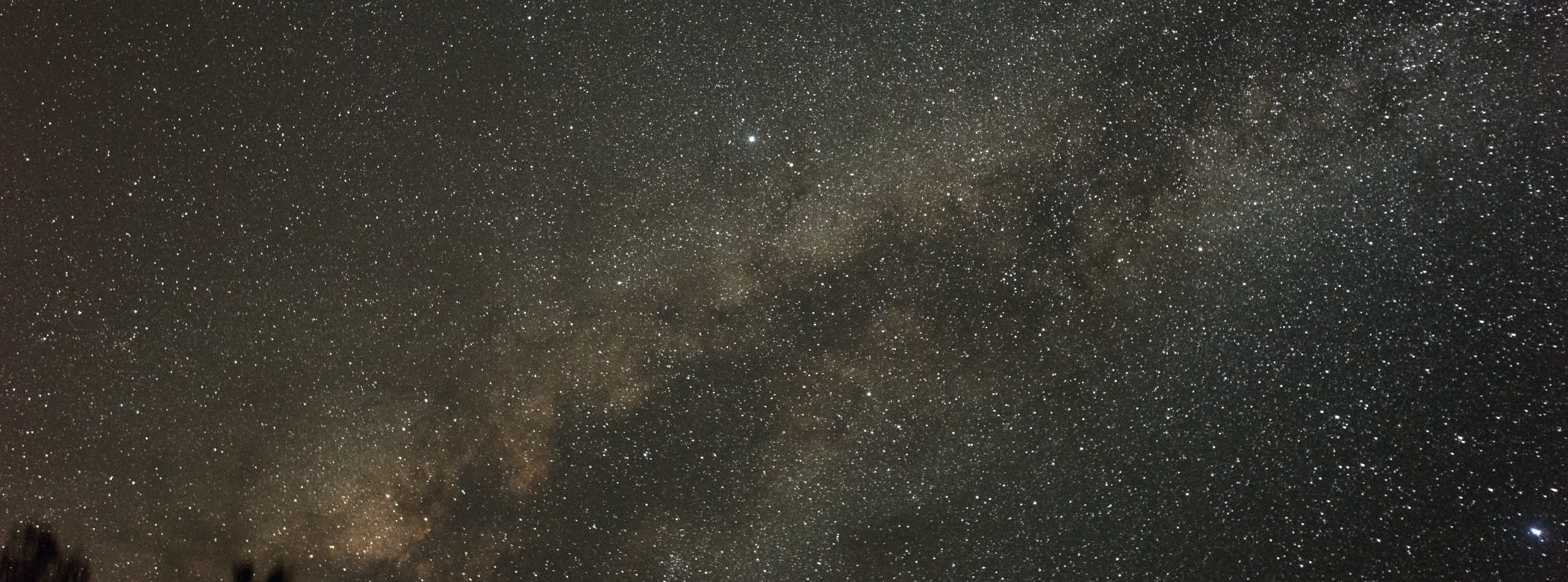
Photo taken looking up into the Milky Way from the ground below. A hazy band of light and stars stretching across the night sky.

Manitoba's Summer Skies

Manitoba’s Summer Skies

Away from the lights of cities and towns, the sky at night is a stunning sight. Sadly, many people can only see this wonder of nature when visiting a cottage or camping over the summer, when the nights are short and the sun sets very late. It’s totally worth staying up for!

As darkness falls, look for the Summer Triangle high in the southeast. It’s made of three of the brightest stars in the sky, including Vega, which is almost straight overhead. It looks like a big slice of pizza that stretches halfway to the horizon, with lots of other stars around it.
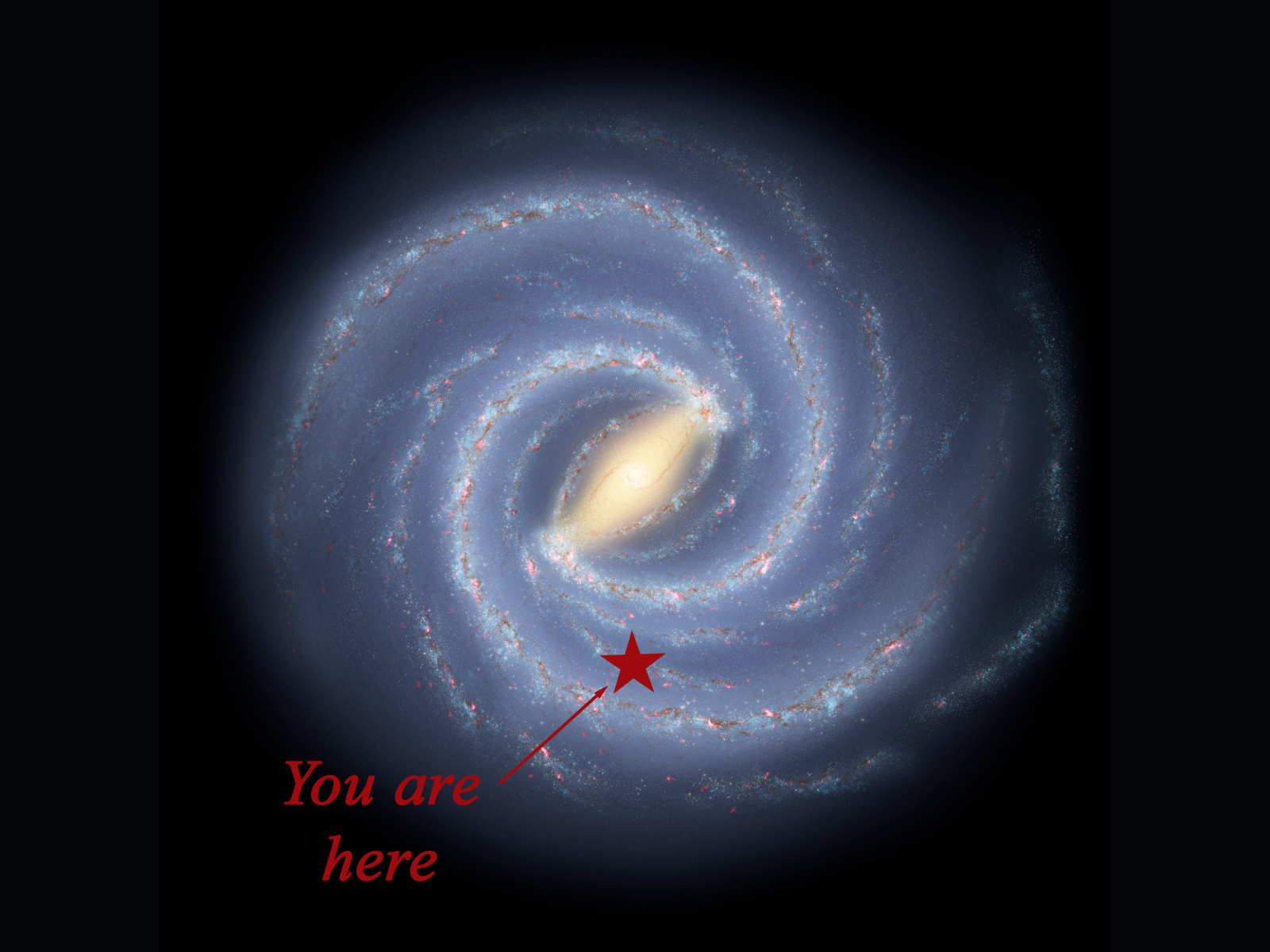
An image of the swirl of the Milky Way wth a bright yellow centre and swirling blue "wings". A red star illustration is labelled "You are here.".

The Milky Way as seen from the outside – a huge spiral of stars, dust and gas. The Sun (circled) is just one of 400 billion stars in the Milky Way. © NASA/JPL/Caltech/R. Hurt
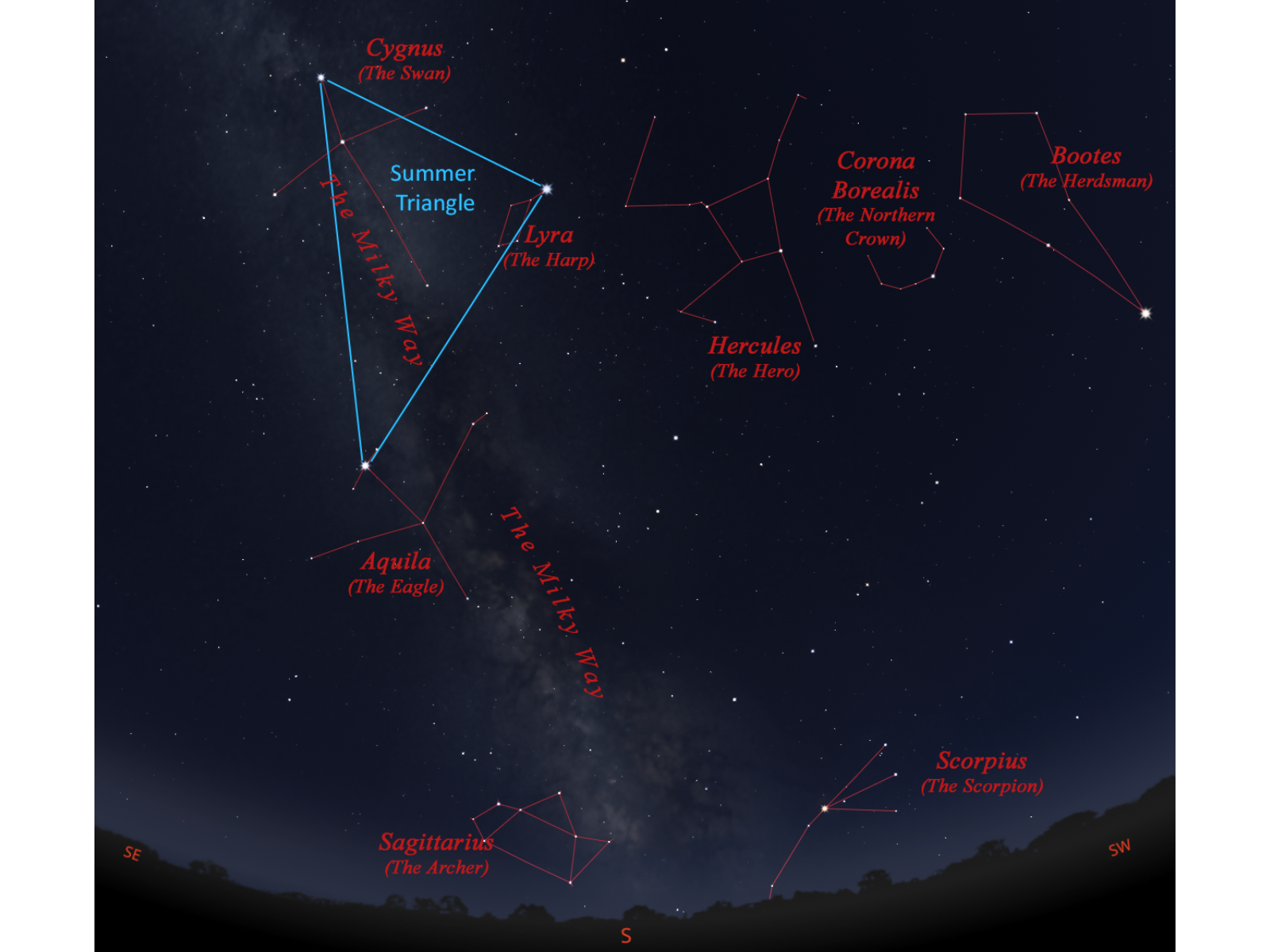
A star map showing common constellations seen in the Southeastern to Southwestern sky on summer nights. Several constellations are outlined in red, with the Summer Triangle outlined in blue.

The Summer Triangle is high in the south during the summer, with the Milky way passing through it and towards the “teapot” shape of Sagittarius.

Photo of the view into a nebula with text on the front reading, "The Milky Way LIVE / Tour the galaxy!".

If you are away from city lights and the Moon isn’t in the sky, you will see a faint, hazy band of light stretching through the Summer Triangle down to the southern horizon – the Milky Way. This is our view of our own galaxy from the inside. This area is full of little star clusters and wisps of gas, perfect for scanning with ordinary binoculars or a small telescope as well as to the unaided eye.

The Milky Way is visible every night of the summer, provided it is clear, and the bright Moon doesn’t interfere. The Planetarium’s show Milky Way Live, showing daily at 2:15 pm throughout the summer, will guide you to the best times and highlight other celestial events like meteor showers and planetary parades.

For full details on all of the Planetarium’s summer offerings, visit the Planetarium webpage or follow @ManitobaMuseum on Facebook and Instagram.

The Planetarium: A Window to the Stars

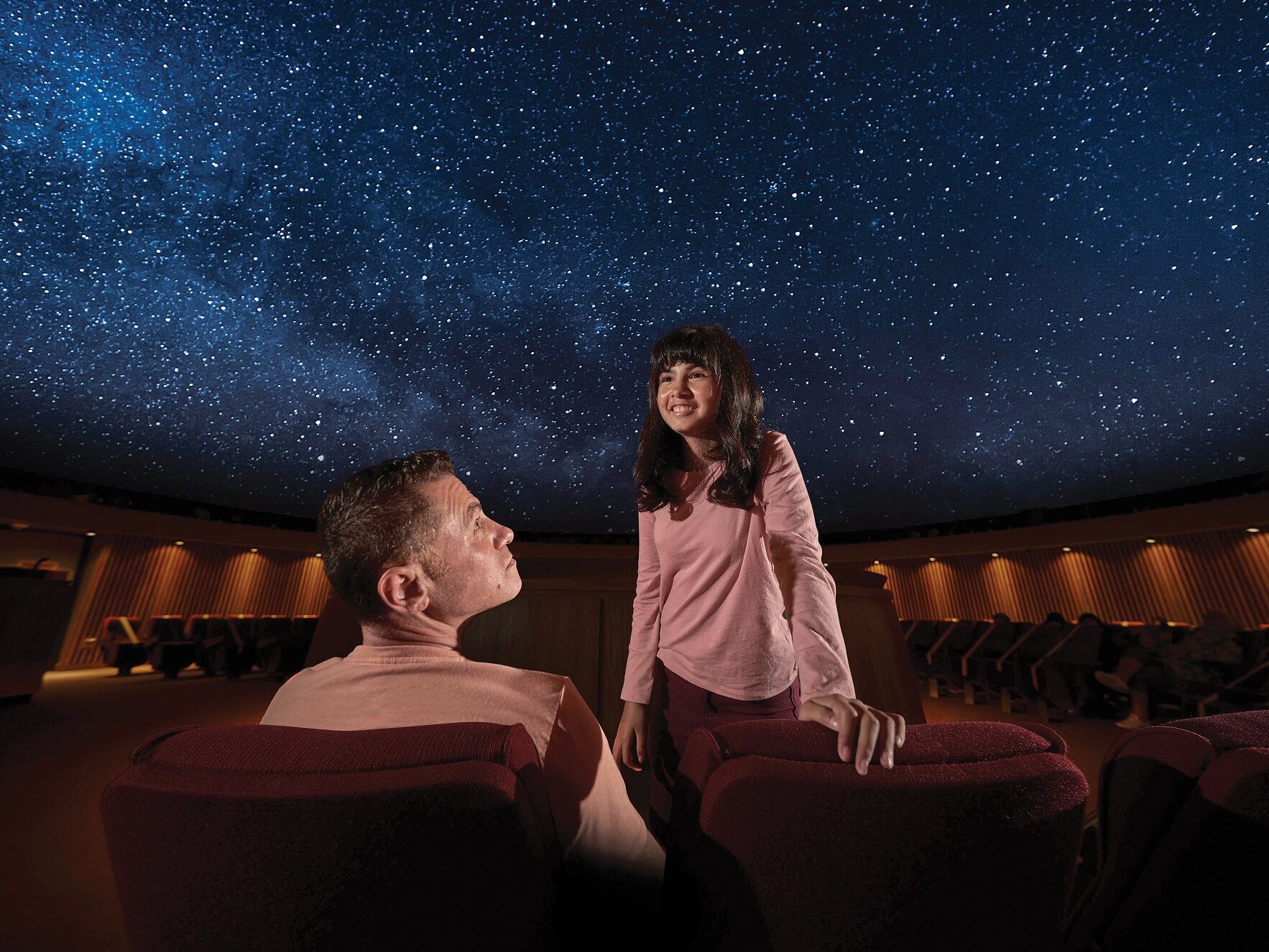
It’s the 100th anniversary of the world’s first planetarium show! Join Scott Young, our Manitoba Museum Planetarium Astronomer, in the theatre to learn a bit more about how our Planetarium works to show audiences the Universe.

Was the “Charlie Chaplin Theatre” a real place?

Have you ever stopped to watch a short film at the Allen Theatre in the Winnipeg 1920 Cityscape? Affectionately referred to as “The Charlie Chaplin Theatre” in “The Old Town”, like many businesses in the Cityscape, the theatre actually represents a real place in 1920 Winnipeg!

Join Erin in this video to learn more about the Allen Theatre.

Crafting Custom Artifact Storage

What do our conservators do when there isn’t a box the right size to fit a particular artifact? They make one of course! These custom boxes are designed to fit each item perfectly, supporting its conservation for years to come. In this video, join Assistant Conservator Estelle in the lab to learn how she makes these precise pieces.

DYK About this Famous Winnipegger?

Zara Nelsova was known as the Queen of the Cello, but did you know she was from Winnipeg? Learn more about the life of this famous cellist and get a close look at three of her performance gowns in Cortney’s latest video.

How Does Hydroelectricity Work? Earth Day 2025

Happy Earth Day! Renewable energy is critical to having a healthy planet. Here in Manitoba we have a lot of rivers and stream, which we harness to create hydroelectricity! But how does it work?

Join Mike in the Science Gallery to watch a demo with our hydroelectric generator.

Have you heard of Clarence Tillenius?

The immersive dioramas at the Manitoba Museum are many people’s favourite part of the Museum. Did you know that five of the classic dioramas were designed and painted by iconic Canadian artist Clarence Tillenius?

Learn more about his process in this video with Erin.

DYK Prepping a Fossil

What goes into preparing a fossil between when it’s found in the field and when it ends up on display or being used for research? In this video, join Fossil Preparator Urgon in the lab to see some of the tools he uses to reveal fossils like the ones on display in our galleries.

Do bees use GPS to get home?

When we’re travelling, we may use a compass and map, a GPS, or the position of the sun to guide us home. But how do animals do it?

Join Corinne in this video to learn about the sixth sense of a bee and how it works as internal compass for them while they travel around their world.

Indigenous Languages Day 2025

It’s Indigenous Languages Day!

In this video, Tashina brings us an update on our upcoming language game, Anishinaabemowin with Amik, and shares some of the images that have been created for it by local artist Micaela Gilbert. To challenge herself, she’s sharing this update in the Anishinaabe language, which she has been learning.

We can’t wait to share this game with you all!