


Posted on: Monday January 12, 2026
In our everyday lives, glass tends to be categorized as a basic material that can be used for many things such as windows, cups, cellphone screens, doors, and pickle jars. Glass is a fan favourite material for recyclers, up cyclers, and mother nature in general, and truly has many different purposes. The glass collection in the Manitoba Museum is filled with a historic variety of objects throughout time, but there are some interesting secrets in this collection and the challenges that come with its preservation.
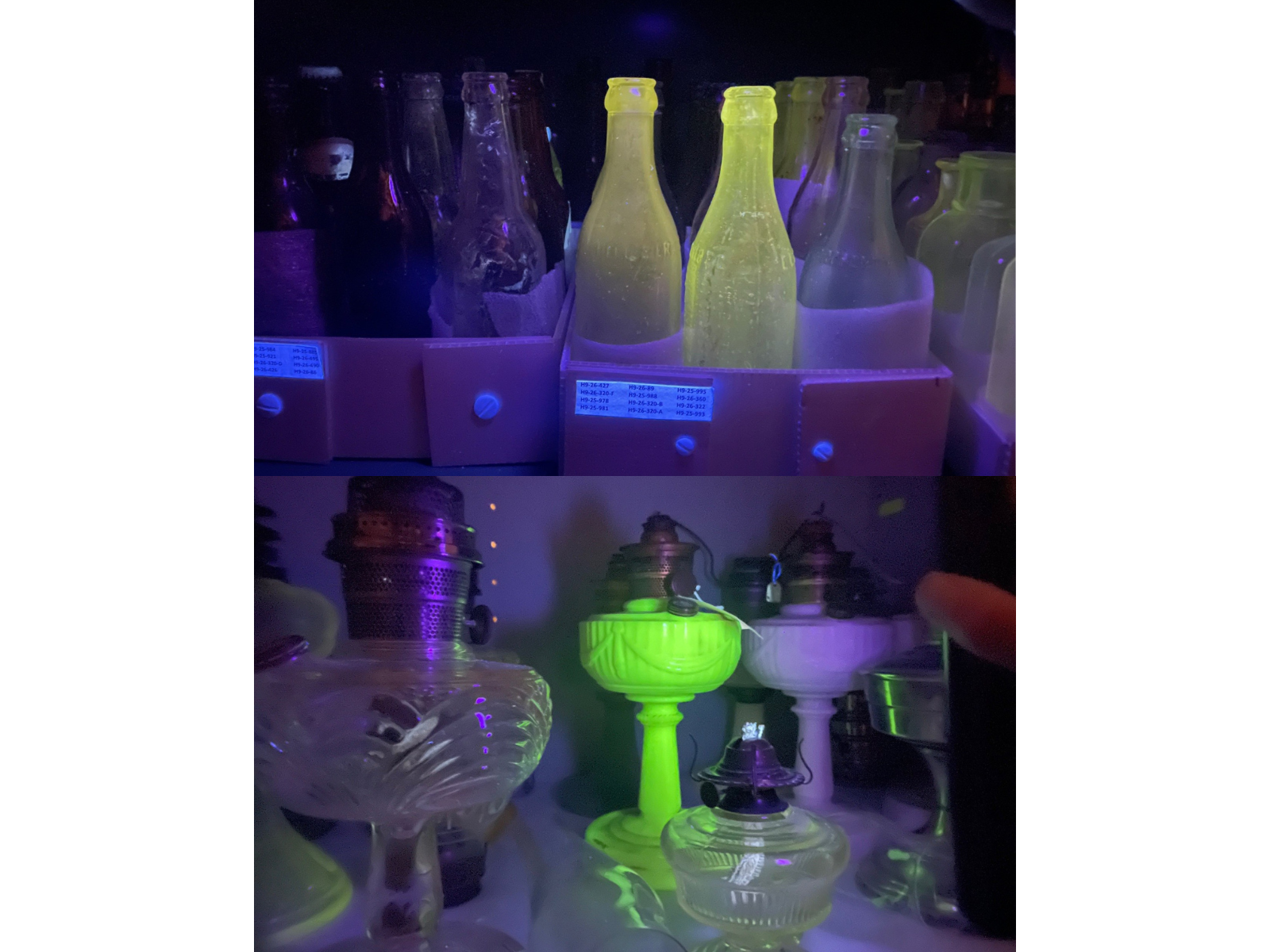
You would never know at first glance, but the unassuming glass objects in the images on the right are glowing because they are radioactive. In some historic glass objects, uranium was added during the manufacturing process to give glass a fluorescent appearance or colouring effect. How do we know it has uranium in its make-up? We set the mood in the room like a late-night bowling alley and hit those objects with a black light! The glowing fluorescence under blacklight is indicative that there is uranium, and although considered to be radioactive, exposure to these collections is safe for staff as the measured concentration is very low.
Images: Glass bottles and glass lamp bases in the Museum Collection viewed under a black light. Not everything that glows under UV contains uranium. Manganese in glass can glow a dull not very bright green, cadmium can also be found which can glow yellow to orange. If selenium is added to glass it will glow pink and lead sometimes can glow blue!
Did you know that there is also something called glass disease? Not in the viral sense, but this descriptive term is given to glass objects that show a few irreversible degradation signs. Glass disease can look like a rainbow effect on clear glass as you spin it in the light, it can make glass tacky or sticky, there might be a hazy cloudy appearance, and in some cases such as glass beads, the glass will split or physically breakdown. The root cause of glass disease in an object is that poor quality materials went into its manufacture and with time and shifts in fluctuating environmental conditions such as higher relativity humidity, the salts in the glass begin to leach to the surface creating all the oddities described above.
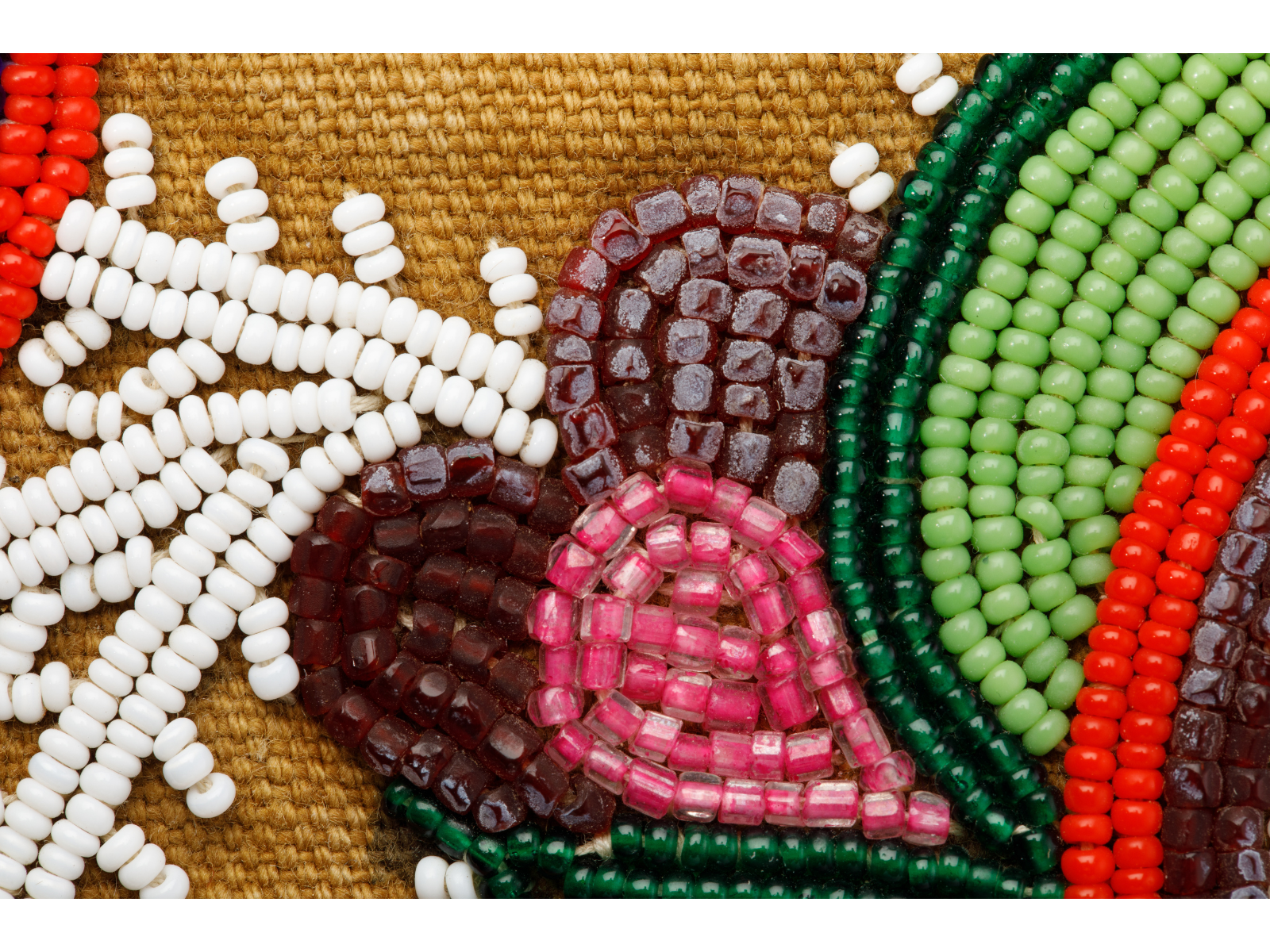
An example of glass disease that has developed on a piece of beadwork in the collection.
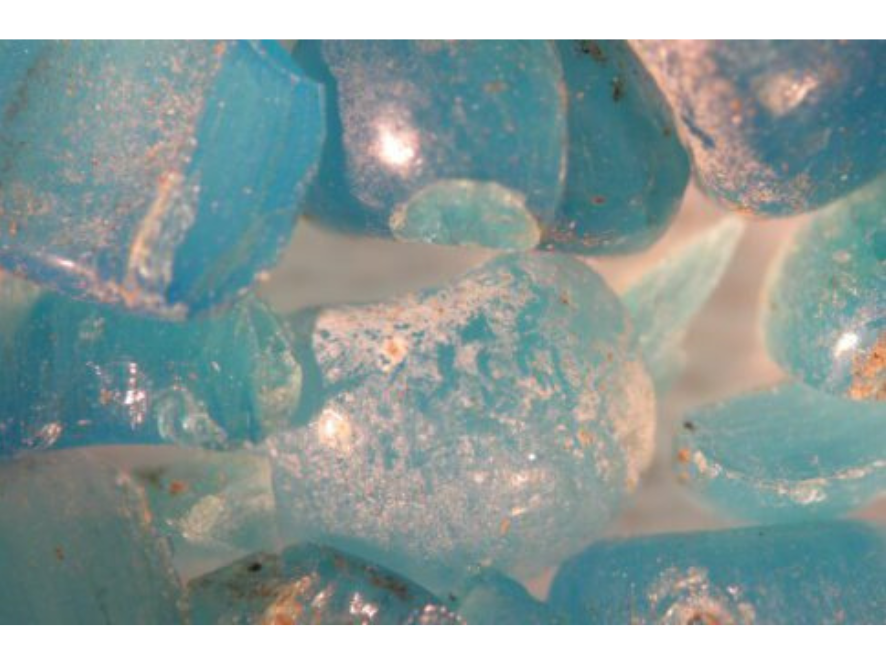
Microscopic image of glass disease on historic glass beads.
The last and somewhat unfortunate part of glass is when two sides need to be put back together if there is an accident. Glass is a very challenging material to repair due to its refractive index. What does this mean? It means that when light hits the glass where the break has occurred, air can get trapped between the two joints, and the light shines in a different direction through the clear surface, making it visible where the crack or break happened. Conservators use optically matched adhesives and epoxies to repair glass objects to try to minimize this refractive index magic, but it is very difficult to make a completely seamless repair.
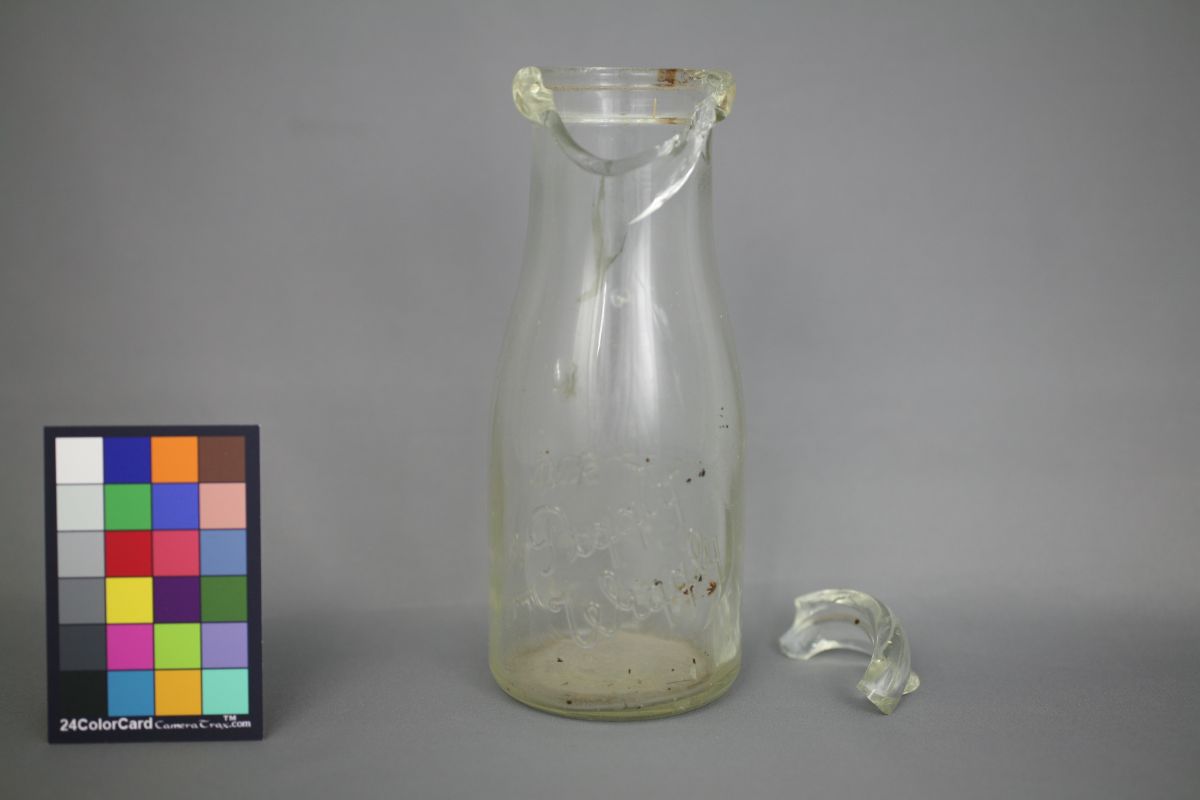
A glass bottle in the collection before conservation treatment for its broken section and cracked portion.
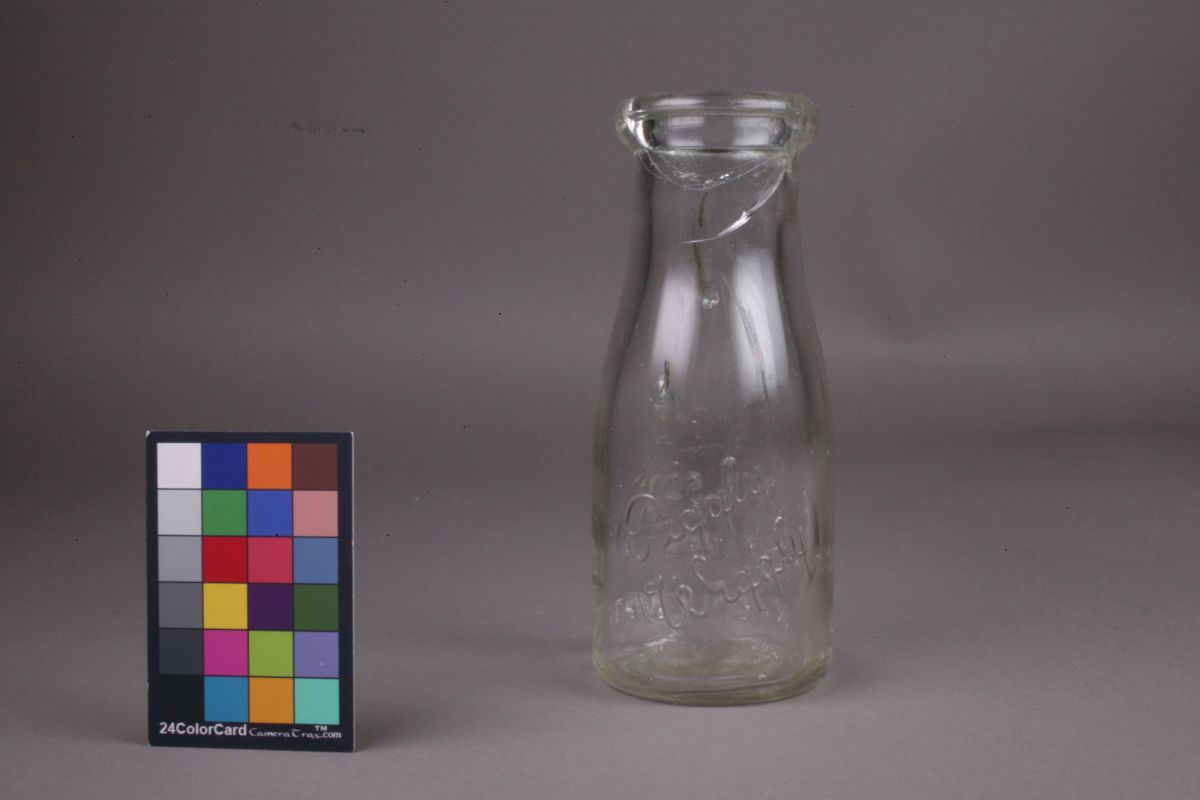
The same glass bottle after conservation treatment. While the broken section has been repaired, the crack and location of the original break are still visible.
Our glass and ceramics storage vault holds a lot of fun histories and secrets that we continue to passionately study. The next time you look at a glass object, remember, you never know what it might be hiding!