Fairly Scientific Community Science Fair

Fairly Scientific Community Science Fair

If you’re like me, we probably look back on your elementary school days with a mixture of nostalgia and dread. Yes, your hair really was that bad back then! However, there were likely some standout moments as well. For me, it was the annual science fair – the time of the year it was OK to be a science geek. I remember the brainstorming for topics, the hand-lettered backboards with pencil crayon drawings, the obligatory volcano and solar system model made of Styrofoam balls. For me, the science fair led me to a career in science communication – now I have a nicer backboard and better pencil crayons, but essentially I get to do science fairs every day!

A poster for the Fairly Scientific community science fair on Saturday, April 9, 2011.

Most people think they can’t do that sort of thing anymore – but now you can. “Fairly Scientific” is a community science fair open to anyone. Your project must be on a standard tri-fold cardboard or foam core backboard, but other than that you can do any sort of project you want (well, no explosives, toxic fumes, or injuries allowed). There will be a volcano contest for those who don’t want to do a full-on project.

So, who is this for? Well, students who want to continue their school science fair projects for one, but it’s especially aimed at the people who don’t get to do science fair projects any more. Folks who watch “Mythbusters” and always wanted to try something like that; grad students who want to take their thesis topic and have some fun with it for a public audience; basement tinkerers or inventors who want to show off their latest creation; it’s all appropriate for the science fair.

The projects will all be on display in the Planetarium Concourse downstairs at The Manitoba Museum on Saturday, April 9 as part of our Yuri’s Night celebrations. To get involved, contact Fairly Scientific.

Scott Young

Scott Young

Planetarium Astronomer

Scott is the Planetarium Astronomer at the Manitoba Museum, developing astronomy and science programs. He has been an informal science educator for thirty years, working in the planetarium and science centre field both at The Manitoba Museum and also at the Alice G. Wallace Planetarium in Fitchburg, Massachusetts. Scott is an active amateur astronomer and a past-President of the Royal Astronomical Society of Canada.

Jupiter and Mercury Visible After Sunset This Week

If you head outside a half-hour after sunset this week, you can spot the largest and smallest* planets in our solar system right next to each other. The giant planet Jupiter is just ending its months-long appearance in the sky, slipping slowly down towards the sun. This week, the tiny planet Mercury is moving upwards from the horizon, putting in a quick appearance before also disappearing into the sun’s glare. On March 14 and 15, the two planets will be about 2 degrees apart – that’s only about the width of four full moons in the sky. They’ll easily fit into the field of view of pretty much any household binoculars.

If you watch them from night to night, you’ll see the clockwork dance of the heavens: Mercury and Jupiter will change their relative positions from night to night, not just due to their own motion but that of our planet as well. The ground you’re standing on is part of this ballet, orbiting the sun along with Mercury and Jupiter.

The best nights to see this are March 14th and 15th, but Mercury should still be visible for another week or so after that. SkyNews Magazine rates this one of the top 11 celestial events this year.


*Yes, Mercury is the smallest planet which orbits the Sun; Pluto is still a “dwarf planet” along with Eris and Ceres.

Scott Young

Scott Young

Planetarium Astronomer

Scott is the Planetarium Astronomer at the Manitoba Museum, developing astronomy and science programs. He has been an informal science educator for thirty years, working in the planetarium and science centre field both at The Manitoba Museum and also at the Alice G. Wallace Planetarium in Fitchburg, Massachusetts. Scott is an active amateur astronomer and a past-President of the Royal Astronomical Society of Canada.

Shuttle Discovery’s Final Flight Today

The space shuttle Discovery is on the pad right now, awaiting its launch at 3:50 pm Central time. Discovery’s flight has been delayed several times, most recently due to cracks in the massive external fuel tank. The cracks were repaired and strengthened, and the tank has been fueled and is holding pressure, so it looks like it was the right decision. We’ll be updating this blog throughout the preparations for launch.

Scott Young

Scott Young

Planetarium Astronomer

Scott is the Planetarium Astronomer at the Manitoba Museum, developing astronomy and science programs. He has been an informal science educator for thirty years, working in the planetarium and science centre field both at The Manitoba Museum and also at the Alice G. Wallace Planetarium in Fitchburg, Massachusetts. Scott is an active amateur astronomer and a past-President of the Royal Astronomical Society of Canada.

50 Years Ago Today: Bold Steps in Space

50 years ago today, during the height of the Cold War, Americans and Russians were head-to-head in a competition to put the first human into space. At the same time, both nations were trying to send robotic probes to the Moon and the other planets. On February 3, 1961 (in North American time zones), the Soviet Union launches a four-stage version of their R-7 rocket. Earlier versions of the R-7 had launched Sputnik and the dog Laika, the first living being to orbit the Earth. With the added fourth stage, the target this time was the planet Venus. The Venera series of robotic probes would eventually land on Venus and provide the first images of its cloud-shrouded surface, but in 1961 the rockets were not up to the task yet.

The R-7 launched into a starry sky, and performed flawlessly throughout its first three stages. The new fourth stage, however, failed to ignite, and the probe remained in Earth orbit. To cover up the failure, the Soviets called the mission “Sputnik 7” and said it was only a test of a heavier spacecraft design, the Iron Curtain equivalent of “I meant to do that”.

Despite being a failed space mission, the launch did prove to the Americans that the Soviet Union could place an 8-tonne payload into orbit – and therefore, could also lob an 8-tonne H-bomb to hit any target in the world.

Scott Young

Scott Young

Planetarium Astronomer

Scott is the Planetarium Astronomer at the Manitoba Museum, developing astronomy and science programs. He has been an informal science educator for thirty years, working in the planetarium and science centre field both at The Manitoba Museum and also at the Alice G. Wallace Planetarium in Fitchburg, Massachusetts. Scott is an active amateur astronomer and a past-President of the Royal Astronomical Society of Canada.

Cosmomania Exhibit Takes Shape

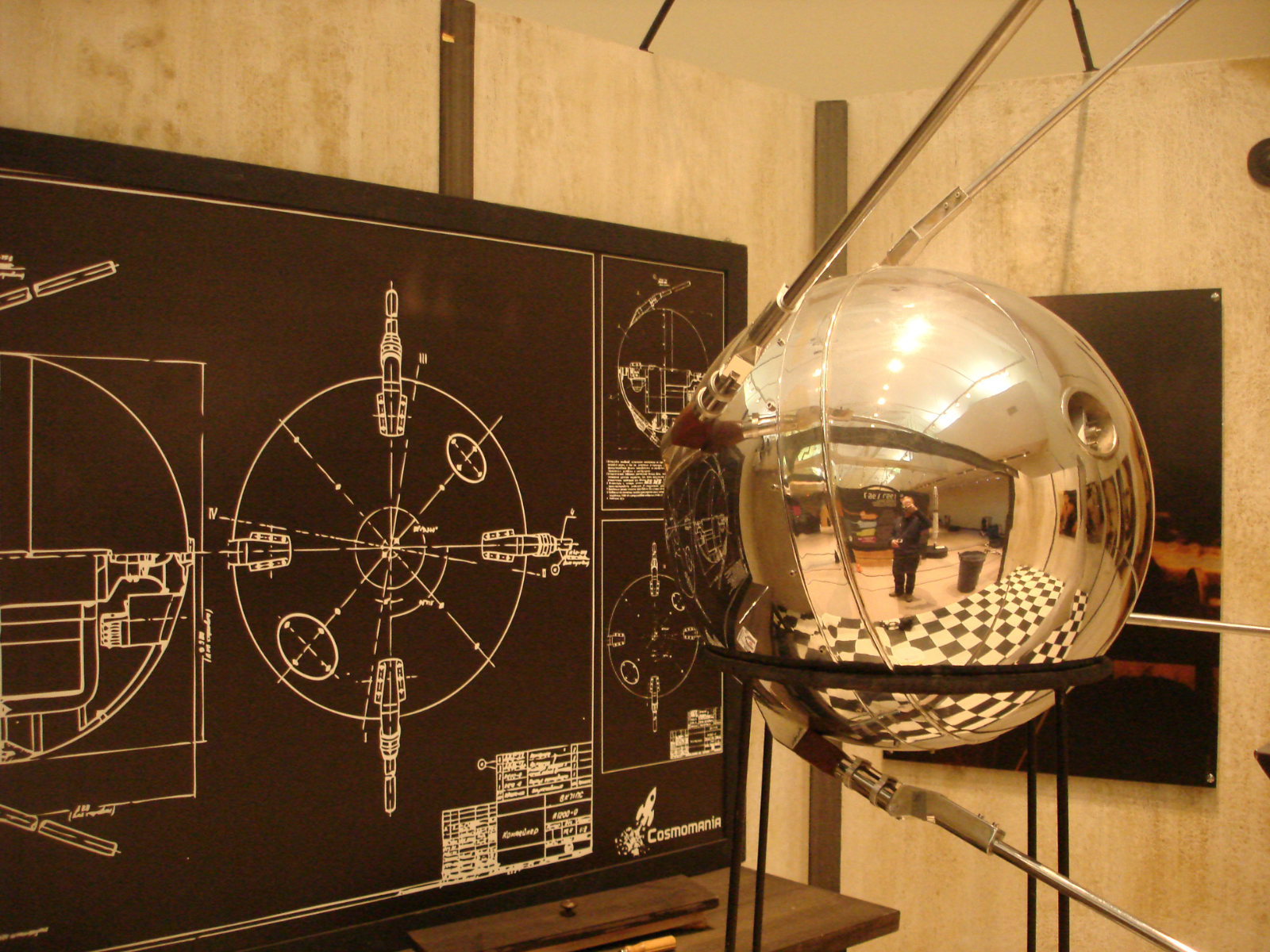
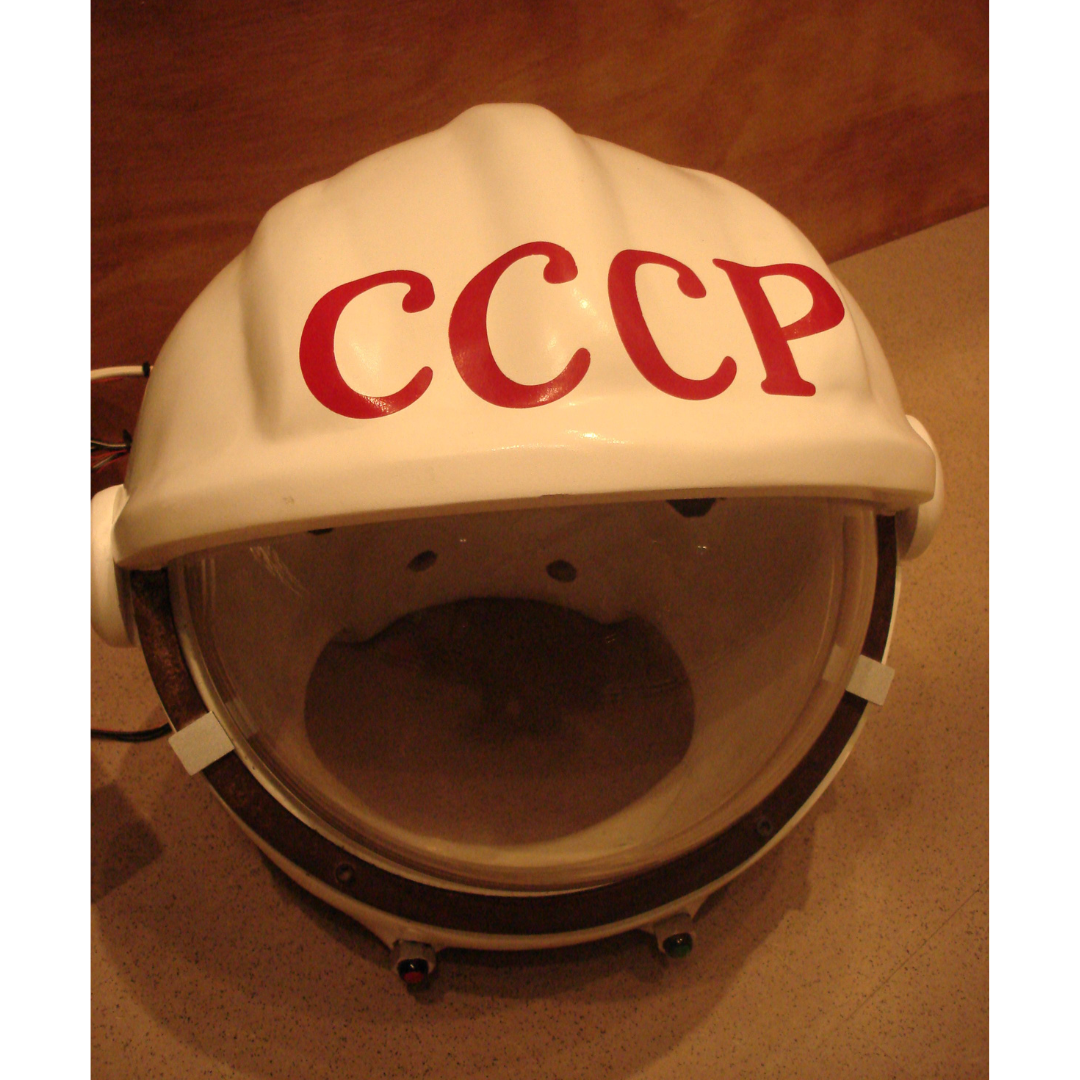
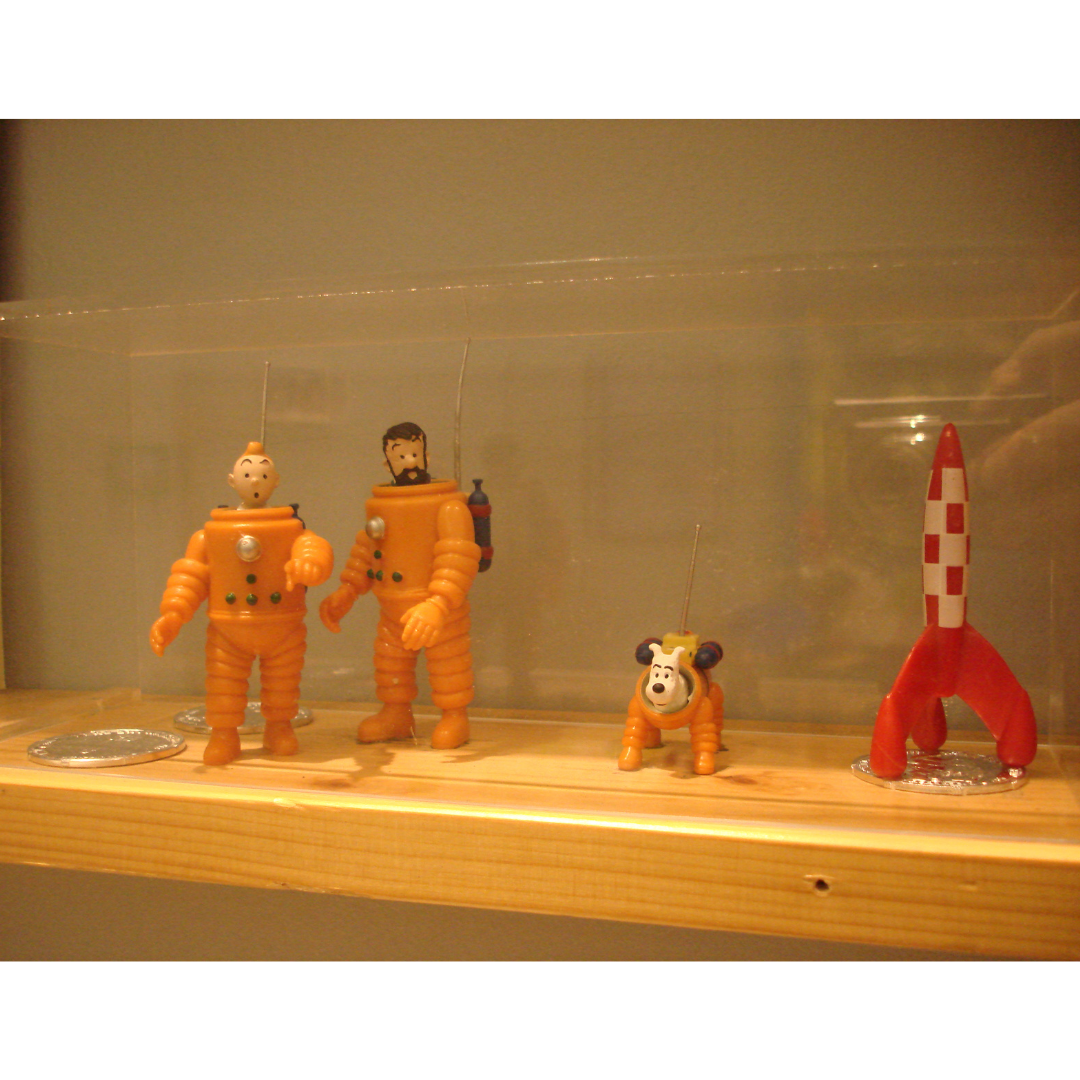
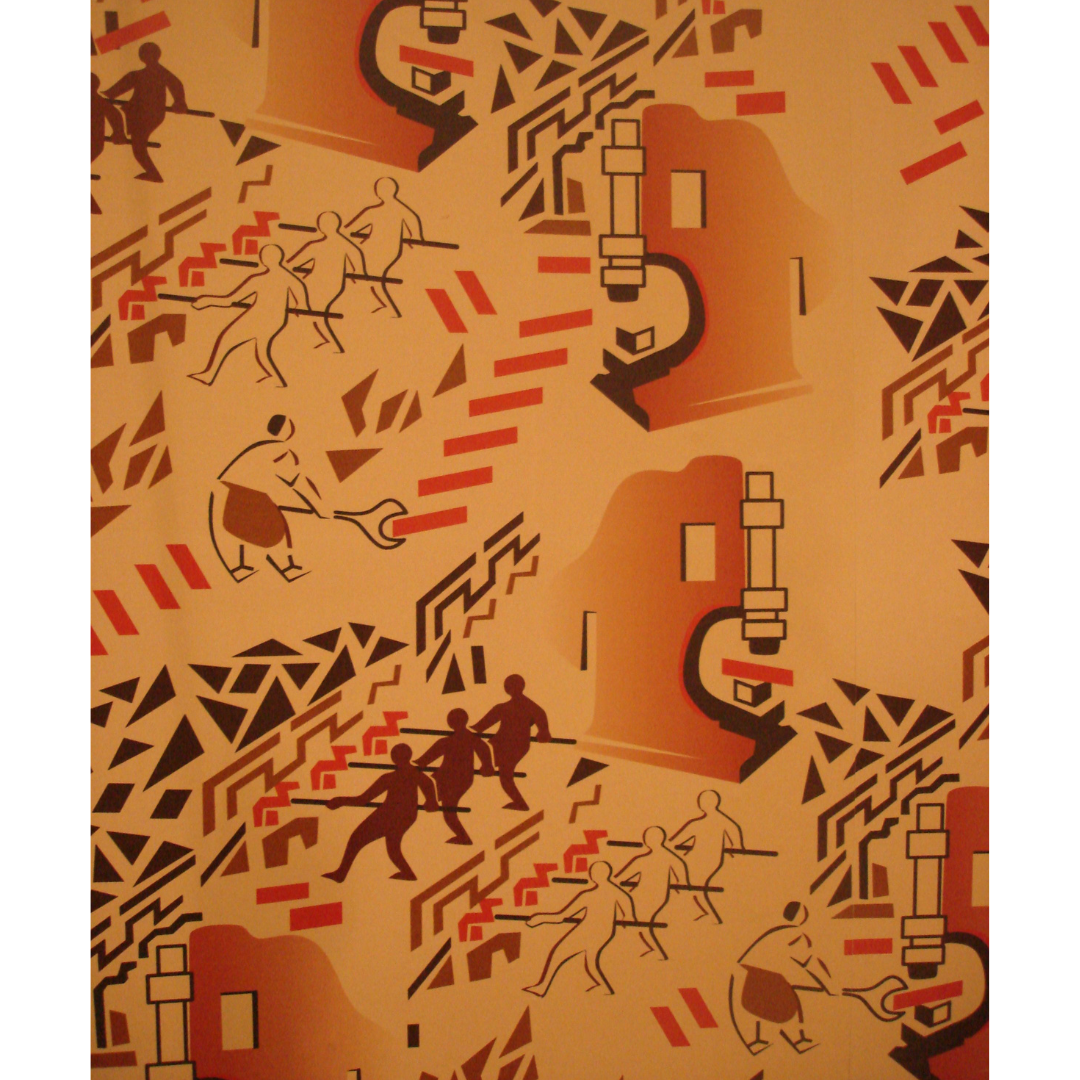
We’re deep in the installation of our upcoming exhibit, “Cosmomania: The Great Space Adventure”. Here are a few images from the exhibit, which opens February 4 and is FREE to the public (thank you to the Canadian Space Agency for supporting its cross-Canada tour).

A sign with writing "cnythnk / spoutnik 57".

Sputnik 1957 banner.

A reflective metal orb on a stand in front of a chalkboard like sign with blueprints on it.

Sputnik workshop, 1957.

A white space helmet with red letters across the top reading CCCP.

Yuri’s Helmet.

Figures of Tintin, Captain Haddock, and Snowy the dog in orange space suits next to a red rocket.

Tintin astronaut figures.

Close up on a wallpaper pattern in reds, oranges, and browns, showing microscopes and humanoid figures working with tools like wrenches and poles.

Communist wallpaper, Soviet Union c. 1961.

Scott Young

Scott Young

Planetarium Astronomer

Scott is the Planetarium Astronomer at the Manitoba Museum, developing astronomy and science programs. He has been an informal science educator for thirty years, working in the planetarium and science centre field both at The Manitoba Museum and also at the Alice G. Wallace Planetarium in Fitchburg, Massachusetts. Scott is an active amateur astronomer and a past-President of the Royal Astronomical Society of Canada.

Goodbye Mars Hoax… for another year, anyway

Yet another August has brought yet another rendition of the Great Mars Hoax. A viral email telling people Mars would be as big as the Moon on August 27 derailed several days of work while I answered hordes of public inquiries about what would be seen. (Short answer: nothing.)

Don’t get me wrong, I love answering questions from the public. It’s a chance to interact one-on-one with people interested in science and astronomy, genuinely curious about the night sky. Unfortunately, in this case I had to tell people that what they read on the internet just wasn’t true. A lot of people were disappointed in the answer, and in the sky in general.

Like any good hoax, this one grew around a nugget of truth. On August 27, 2003 (note the year!), Mars did pass about as close to Earth as it could get. We were out at Bird’s Hill Park for several public telescope nights back in 2003, and we had something over 10,000 people turn up to see the Red Planet. To the unaided eye, it looked like a really bright, reddish-coloured star – nowhere near as big as the moon, though. In fact, about 75 times smaller than the moon.

But somewhere, some astronomer with bad writing skills issued a press release or made a statement that went something like this: “On August 27, if you put a 75x eyepiece in your telescope, then you’ll see Mars appear about as big as the moon does to the unaided eye.” What should have been written was something like this: “On August 27 *2003*, if you put a 75x eyepiece in your telescope, Mars will appear *through your telescope* about as big as the Moon does *to the unaided eye*. ”

Those missing details were then helped along by some malicious person who added pictures of a total lunar eclipse (when the moon turns red), and the undated email now appears every year. It wasn’t true in 2003, and it’s not true now. In fact, it can never be true, since Mars can never get close enough to Earth to appear that big. I mean, the moon is only 374,000km away, and Mars is only about twice as big as the moon is. That means Mars would have to be less than 800,000 km away to appear that big. If Mars somehow broke out of its orbit and was moving closer to Earth, you can bet it would be *the* news item. Even if somehow all the astronomers in the world, professional and amateur, were involved in one of those giant government conspiracies that are always invoked to explain stupid things, we’d STILL find out about it. The tides would be affected, both in timing and size, so you’d have to get all the fishermen and sailors and everyone who lives near the ocean in on the conspiracy as well.

OK, enough ranting. The Mars Hoax does have a silver lining, though – I got to talk with a whole bunch of people who might not have called in otherwise, and I got to tell them where Mars really was in the sky – and Venus and Jupiter as well. Those folks got to see three planets in the sky that they might not have seen otherwise. For some of them, their personal universe got a little bigger because of it.

You can find out where the planets are – for real – on our “The Sky This Month” blog on the Manitoba Museum website. Visit

Yet another August has brought yet another rendition of the Great Mars Hoax. A viral email telling people Mars would be as big as the Moon on August 27th derailed several days of work while I answered hordes of  public inquiries about what would be seen. (Short answer: nothing.)

Don’t get me wrong, I love answering questions from the public. It’s a chance to interact one-on-one with people interested in science and astronomy, genuinely curious about the night sky. Unfortunately, in this case I had to tell people that what they read on the internet just wasn’t true. A lot of people were disappointed in the answer, and in the sky in general.

Like any good hoax, this one grew around a nugget of truth. On August 27th, 2003 (note the year!), Mars did pass about as close to Earth as it could get. We were out at Bird’s Hill Park for several public telescope nights back in 2003, and we had something over 10,000 people turn up to see the Red Planet. To the unaided eye, it looked like a really bright, reddish-coloured star – nowhere near as big as the moon, though. In fact, about 75 times smaller than the moon.

But somewhere, some astronomer with bad writing skills issued a press release or made a statement that went something like this: “On August 27th, if you put a 75x eyepiece in your telescope, then you’ll see Mars appear about as big as the moon does to the unaided eye.” What should have been written was something like this: “On August 27th *2003*, if you put a 75x eyepiece in your telescope, Mars will appear *through your telescope* about as big as the Moon does *to the unaided eye*. ”

Those missing details were then helped along by some malicious person who added pictures of a total lunar eclipse (when the moon turns red), and the undated email now appears every year. It wasn’t true in 2003, and it’s not true now. In fact, it can never be true, since Mars can never get close enough to Earth to appear that big. I mean, the moon is only 374,000km away, and Mars is only about twice as big as the moon is. That means Mars would have to be less than 800,000 km away to appear that big. If Mars somehow broke out of its orbit and was moving closer to Earth, you can bet it would be *the* news item. Even if somehow all the astronomers in the world, professional and amateur, were involved in one of those giant government conspiracies that are always invoked to explain stupid things, we’d STILL find out about it. The tides would be affected, both in timing and size, so you’d have to get all the fishermen and sailors and everyone who lives near the ocean in on the conspiracy as well.

OK, enough ranting. The Mars Hoax does have a silver lining, though – I got to talk with a whole bunch of people who might not have called in otherwise, and I got to tell them where Mars really was in the sky – and Venus and Jupiter as well. Those folks got to see three planets in the sky that they might not have seen otherwise. For some of them, their personal universe got a little bigger because of it.

You can find out where the planets are – for real – on our “The Sky This Month” section of the Planetarium’s website. Visit the Planetarium webpage here – there you’ll find all sorts of information on the sky, telescopes, and of course our shows and programs. Or you can always call me.


Scott Young

Scott Young

Planetarium Astronomer

Scott is the Planetarium Astronomer at the Manitoba Museum, developing astronomy and science programs. He has been an informal science educator for thirty years, working in the planetarium and science centre field both at The Manitoba Museum and also at the Alice G. Wallace Planetarium in Fitchburg, Massachusetts. Scott is an active amateur astronomer and a past-President of the Royal Astronomical Society of Canada.

Astronaut Bob Thirsk Coming to Visit!

Canada’s most experienced astronaut, Dr. Robert Thirsk, will be visiting the Museum tomorrow to give a public presentation on his six months in space aboard the International Space Station. I’m lucky enough to be hosting him – I’ll post some pictures after our event tomorrow. The event is at 10 am in the Auditorium at the Manitoba Museum – you can get in by contacting me through the Museum switchboard to put your name on the list.

Scott Young

Scott Young

Planetarium Astronomer

Scott is the Planetarium Astronomer at the Manitoba Museum, developing astronomy and science programs. He has been an informal science educator for thirty years, working in the planetarium and science centre field both at The Manitoba Museum and also at the Alice G. Wallace Planetarium in Fitchburg, Massachusetts. Scott is an active amateur astronomer and a past-President of the Royal Astronomical Society of Canada.

Final Launch of Space Shuttle Atlantis – 1:20PM CDT today

After 25 years, 31 missions, more than 282 days in space and 17 visits to two different space stations, the space shuttle Atlantis is on the pad for its final flight. NASA-TV and spaceflightnow.com are providing live coverage of Atlantis’ final launch, scheduled for 1:20 pm Central Daylight Time today (14 May 2010). Atlantis will launch on a 12-day mission to attach the Rassvet Russian research module to the International Space Station and swap out six massive batteries which have been on station for several years. After the flight, Atlantis will be prepared as the “rescue” shuttle for a contingency launch in case of a problem with future flights of the other two orbiters, Discovery and Endeavour. Assuming that’s not necessary, Atlantis will be retired, and museums across the United States are having gunfights over who will get her for display.

Atlantis has been the vehicle for some of the major milestones of the U.S., Canadian, and International space programs. Atlantis docked with the Russian space station Mir 7 tmies, building a base of experience that would result in today’s International Space Station. Canadian astronaut Chris Hadfield was board the first flight (STS-74) to Mir in 1995, and colleague Steve Maclean also flew aboard Atlantis in 2006 on mission STS-115 to the International Space Station. Atlantis has also launched several significant satellites: the Galileo probe to Jupiter, the Magellan radar mapper to Venus, and the Compton Gamma Ray Observatory, a space telescope that observes very high-energy radiation from space.

Godspeed, Atlantis, and we thank you.

Scott Young

Scott Young

Planetarium Astronomer

Scott is the Planetarium Astronomer at the Manitoba Museum, developing astronomy and science programs. He has been an informal science educator for thirty years, working in the planetarium and science centre field both at The Manitoba Museum and also at the Alice G. Wallace Planetarium in Fitchburg, Massachusetts. Scott is an active amateur astronomer and a past-President of the Royal Astronomical Society of Canada.

Upcoming Planetarium Show: Earth – An Oasis in Space

I’ve been listening to the soundtrack for our upcoming planetarium show, “Earth: An Oasis in Space”, and it’s gotten me thinking. The show is all about life in the universe, and how liquid water is a key ingredient for life as we know it. This is what makes Earth an oasis – we have buckets of the stuff. But if we find liquid water elsewhere in the solar system, what does that tell us about life elsewhere? “Necessary but not sufficient” is the way my science profs would have put it – but finding places with liquid water would certainly narrow the search for life. (This show opens at the end of June, by the way… you should come see it!)

So here’s the question: why are we so interested in finding life beyond Earth? From NASA scientists to the UFO “true believers” and everyone in between, the idea of finding life elsewhere seems to be almost universally popular. Is it a desire to not be alone in the vastness of space? Is it a hope that aliens will come and save us from all the problems we face on earth, essentially a big cry for Mommy? Is it pure curiosity, that driving force of humanity that has forged our civilization for millennia?

Of course, we’re not all looking for the same sorts of life. Most scientists in the field expect that the most common sort of life we might find out there will be non-technological: slime molds, bacteria, and other primitive forms of life. And ocean life tends to be non-technological, too: you don’t see dolphins or whales building space probes or sending radio signals into space like humans do, despite their obvious intelligence. Even if the universe is teeming with life, most of it will be totally invisible to us until that first astronaut steps off the ladder and pokes it with their finger – and that’s a *really* long way off technology-wise.

There are several places within our own solar system that may have once harbored primitive life: Mars, for example. There are even a couple, like Jupiter’s moon Europa, that may have life currently there right now, just waiting for us to find it. Until then, the search continues… sort of. Listening for aliens via radio will only detect the most advanced civilizations out there, while ignoring the much larger number of worlds with potential primitive life. Space telescopes can find planets with oxygen atmospheres and water vapour as likely candidates, but until we start sending robots or people out into space again, we’re not going to *know*.

This is why some of the long-ranged plans are pretty exciting. NASA and the European Space Agency are thinking about a big mission to the Jupiter system using two spacecraft sometime in the 2020’s. The Europa Jupiter System Mission would determine if any of Jupiter’s moons are habitable worlds – but it’s not funded yet and it’s a long way off. The Mars Science Laboratory will give Mars another once-over, and be able to do more on-site science than previous missions, including trying to figure out where all the carbon comes from – on Earth, it comes from the actions of life. There are lots of other ideas on the drawing boards for the late 2010’s and 2020’s. Until then, inquiring minds still want to know but are left to wonder.

This is why some of NASA’s upcoming missions are exciting.

Scott Young

Scott Young

Planetarium Astronomer

Scott is the Planetarium Astronomer at the Manitoba Museum, developing astronomy and science programs. He has been an informal science educator for thirty years, working in the planetarium and science centre field both at The Manitoba Museum and also at the Alice G. Wallace Planetarium in Fitchburg, Massachusetts. Scott is an active amateur astronomer and a past-President of the Royal Astronomical Society of Canada.

Zombies in Space

OK, not really – it’s a zombie satellite, though, which is still a bit creepy. Seems a solar storm took out the Galaxy 15  satellite last month, and now it’s wandering around in orbit under no one’s control. The worry is that it’s actually more of a vampire than a zombie, since it may start to suck the signals out of other satellites it gets near… full story at Space.com.