Gunter Wendt, 1924-2010

Gunter Wendt, 1924-2010

Gunter Wendt, one of the driving forces of the American space program, passed away earlier this week at age 85. Wendt was the pad leader at Kennedy Space Centre throughout the Mercury and Gemini days, the last face that astronauts saw before heading into space. Always concerned with the safety of his astronauts, Wendt earned the nickname “pad fuhrer” due to his thick German accent and firm rules. He was one of most endearing characters in Tom Hanks’ HBO miniseries “From the Earth to the Moon”. Click here for more details.

Scott Young

Scott Young

Planetarium Astronomer

Scott is the Planetarium Astronomer at the Manitoba Museum, developing astronomy and science programs. He has been an informal science educator for thirty years, working in the planetarium and science centre field both at The Manitoba Museum and also at the Alice G. Wallace Planetarium in Fitchburg, Massachusetts. Scott is an active amateur astronomer and a past-President of the Royal Astronomical Society of Canada.

Space Shuttle Lite?

As NASA winds its space shuttle program down, the US Air Force is poised to launch its first space shuttle tonight. The X-37B unmanned space shuttle will launch from Kennedy Space Centre at 6:52 pm Winnipeg time on a classified test flight. The Air Force isn’t saying much about the spacecraft or its possible uses, but it is a reusable shuttle which will land at a runway and could conceivably be used to carry military payloads to and from orbit, or stay in space for weeks at a time. Follow the launch at spaceflightnow.com.

Scott Young

Scott Young

Planetarium Astronomer

Scott is the Planetarium Astronomer at the Manitoba Museum, developing astronomy and science programs. He has been an informal science educator for thirty years, working in the planetarium and science centre field both at The Manitoba Museum and also at the Alice G. Wallace Planetarium in Fitchburg, Massachusetts. Scott is an active amateur astronomer and a past-President of the Royal Astronomical Society of Canada.

Happy Earth Day

Well, it’s Earth Day, a movement that started 40 years ago after the first colour pictures of Earth from space were returned by the Apollo astronauts. Astronauts had always said that seeing the planet from space was a life-changing experience, but when Apollo 8 sent back this picture of the Earth rising over the surface of the moon in 1968, everyone was able to see how fragile our planetary life support system was. In 1969, Apollo 11 landed on the moon, and in 1970 Apollo 13 went through its dramatic “successful failure”, turning attention again to how unforgiving and harsh space is. In April 1970, days after Apollo 13 splashed down, the first Earth Day was celebrated, and the Apollo images of the Earth became the icon of this new sense of environmental awareness.

Earth Day isn’t supposed to be like St. Patrick’s Day, where most people do stuff they would never do the rest of the year – it’s a yearly reminder of the importance of taking care of the planet every day. Despite recent findings of planets around other stars, there is no other known planet humans can move to even if we had the technology to get there. With the ongoing debate about climate change, a lot of people find themselves genuinely uncertain what to believe – alas, a victory for the climate change deniers, who spend big money to sow this sort of dissent. People love to believe the science that supports them not having to do anything different, so it’s an easier sell than the science that tells us we’re going downhill in a rocket-powered handcart. But this debate actually masks the broader point.

It doesn’t actually matter if climate change will cause a global temperature rise of only 1 degree or as much as 5 degrees, or whether it’s over the next 20 or 50 or 100 years; it doesn’t matter if the science is still uncertain, or that there are other effects like solar activity which are beyond our control. Whether climate change will affect this generation or the next, or whether it will be some other environmental issue like ozone depletion, or smog, or the cumulative garbage of an increasing population living in a disposable world – that doesn’t really matter either. The basic fact is this: The way we live our lives now will affect our children’s lives, and their children’s lives. They have no other place to go, and we’re leaving a big mess to be cleaned up.

I ask my two-year old to clean up her toys before bed, not because they will continue to pile up until they drive us out of our house, and not because they pose a hazard to our continued existence in the house, but because her mess affects other people and it’s just the right thing to do – and she gets that. I hope that humanity can find the wisdom of a two-year old in its Earth Day celebrations this year.


Shuttle Lands – Last Flights Imminent

The space shuttle Discovery landed at Kennedy Space Centre this morning, ending mission STS-131 to the International Space Station. Under current plans, this means that the next three flights will each be the last flight of an orbiter before retirement. Atlantis launches May 14 on missions STS-132 and will be retired thereafter – this is the shuttle that Chris Hadfield flew on to the Russian space station Mir. Endeavour’s last flight is scheduled for a July 29th launch – this is the shuttle that has carried the most Canadian astronauts into orbit of all of the shuttles. The last shuttle flight ever is scheduled to be Discovery’s flight in September. If you’ve never seen a shuttle launch, these are your last chances ever! Definitely worth the trip, even if the launch is scrubbed or rescheduled – Kennedy Space Centre is a great place for space enthusiasts. Plan to spend two full days there if you want to take the (highly recommended) behind-the-scenes tours.

Scott Young

Scott Young

Planetarium Astronomer

Scott is the Planetarium Astronomer at the Manitoba Museum, developing astronomy and science programs. He has been an informal science educator for thirty years, working in the planetarium and science centre field both at The Manitoba Museum and also at the Alice G. Wallace Planetarium in Fitchburg, Massachusetts. Scott is an active amateur astronomer and a past-President of the Royal Astronomical Society of Canada.

Meteor Shower Update

The Lyrid meteor shower peaks on the night of April 21-22 this year. The Lyrids aren’t a major meteor shower, but we haven’t had a good one since last December’s Geminids, so it’s worth taking a look for. The Lyrids can be a decent sight, but only if you’re willing to maximize your viewing circumstances.

There are two secrets to getting the best view. First, get out of town – leave the lights of the city behind you. Light pollution from the city will blind you from most of the meteors that occur – you’ll only see the very brightest ones.

Second, stay up late or get up early. All meteor showers are much better after midnight, since at that time our part of the earth is on the “bow” of the earth as it sails around the sun – we’re heading right into the cosmic dust that causes the shower.  You can expect about 10-20 meteors per hour during the peak viewing time before dawn on Thursday, April 22. Before and after that date, the rates drop considerably.

With all of this effort, is it worth going out to see? Well, maybe. Occasionally, the Lyrids surprise us with outbursts of several times the regular rate. In 1945 and again in 1982, rates jumped up to over 100 meteors an hour – that’s more than one a minute. This activity happens when the earth goes through a clump of dust in the comet’s tail – sort of an interplanetary dust bunny. Unpredictable, but pretty cool if you see it – like so many things in the sky.

Scott Young

Scott Young

Planetarium Astronomer

Scott is the Planetarium Astronomer at the Manitoba Museum, developing astronomy and science programs. He has been an informal science educator for thirty years, working in the planetarium and science centre field both at The Manitoba Museum and also at the Alice G. Wallace Planetarium in Fitchburg, Massachusetts. Scott is an active amateur astronomer and a past-President of the Royal Astronomical Society of Canada.

Welcome to The Science Gallery and Planetarium blog!

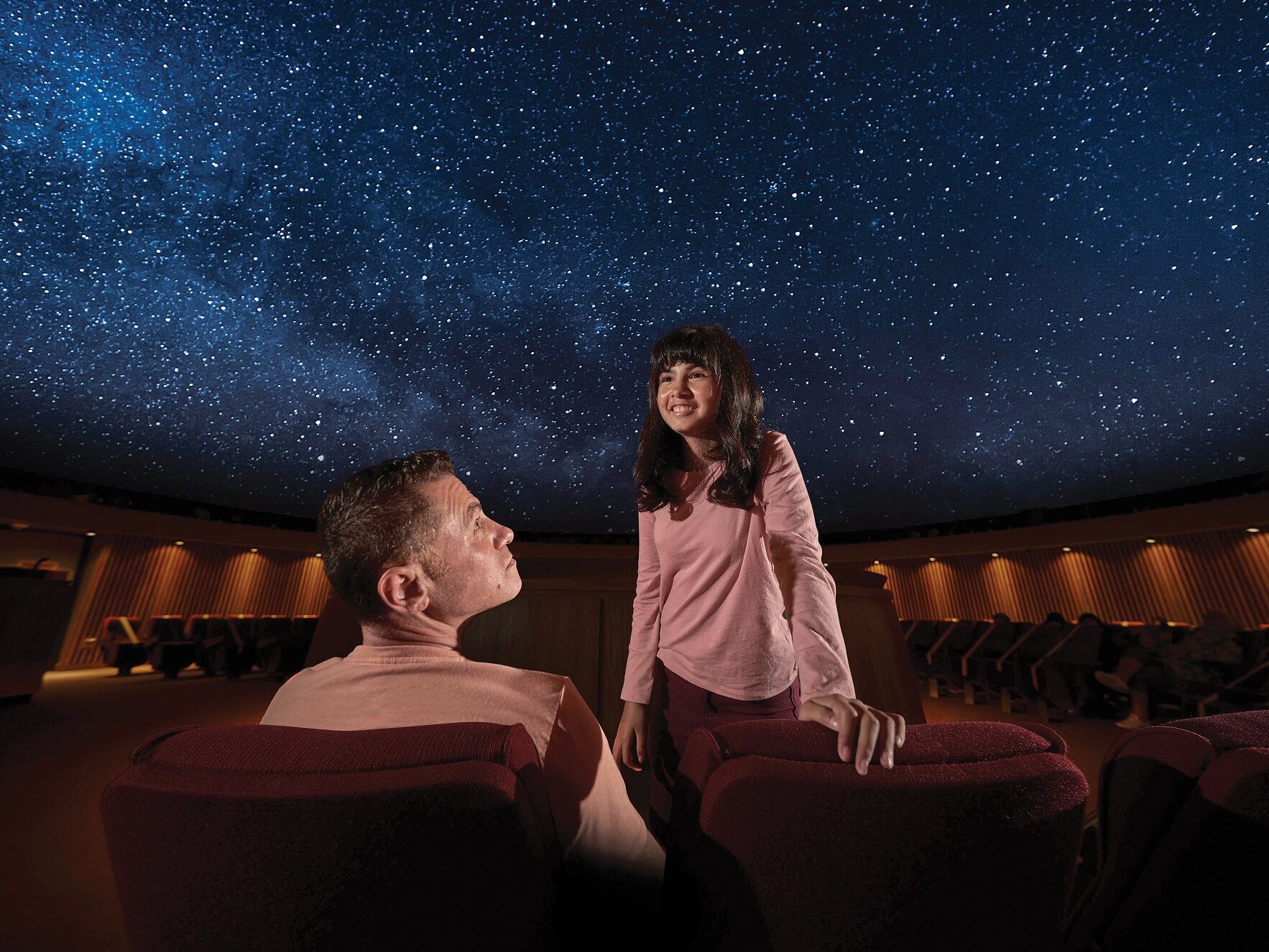
Welcome to The Science Gallery and Planetarium blog! I’ll be keeping you up to date on what’s going on at The Manitoba Museum’s Science Gallery and Planetarium, what exhibits we’re working on, and what science stories our staff has found most interesting each week.

First, some introductions: My name is Scott Young, and I’m the Manager of Science Communications and Visitor Experiences at The Manitoba Museum. (Try saying that three times fast!) I came to the Science Gallery as a visitor on the day it opened in 1986 (as “Touch the Universe”), and thought it was the coolest place ever. I started working at the Museum in 1990 in the Planetarium, eventually becoming the Managing producer of the theatre, and became Manager of the Science Gallery as well in 2001 or so. Now I oversee the exhibits and interactives side of the Science Gallery, produce Planetarium shows, and work on Museum exhibit teams as well.

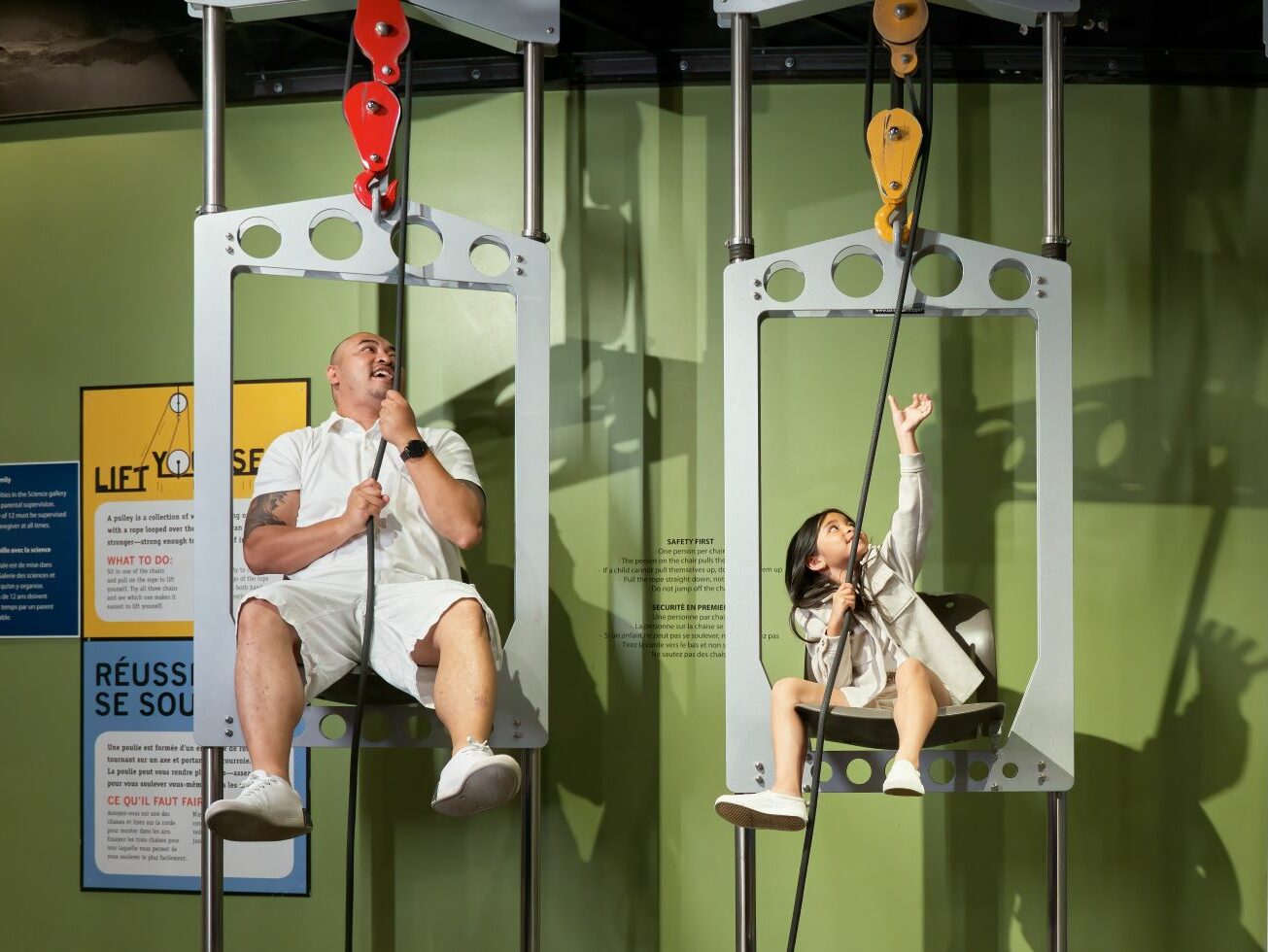
In the mid-2000’s we were able to give the Science Gallery a facelift, one exhibit at a time, a process that is still underway. Nevertheless, we’ve managed to replace about two-thirds of the old exhibits with some new and very cool stuff: a race track where you can build your own car, a self-sustaining ecosystem with plants and animals, a microgravity simulator, and exhibits on math, meteorites, and many other subjects. We have some exciting new exhibits currently in development that I’ll tell you about in future posts. And we want to hear from you: what exhibits do you love or hate? What would you like to see as we renovate the Gallery and retire older exhibits? Let us know.

Scott Young

Scott Young

Planetarium Astronomer

Scott is the Planetarium Astronomer at the Manitoba Museum, developing astronomy and science programs. He has been an informal science educator for thirty years, working in the planetarium and science centre field both at The Manitoba Museum and also at the Alice G. Wallace Planetarium in Fitchburg, Massachusetts. Scott is an active amateur astronomer and a past-President of the Royal Astronomical Society of Canada.