

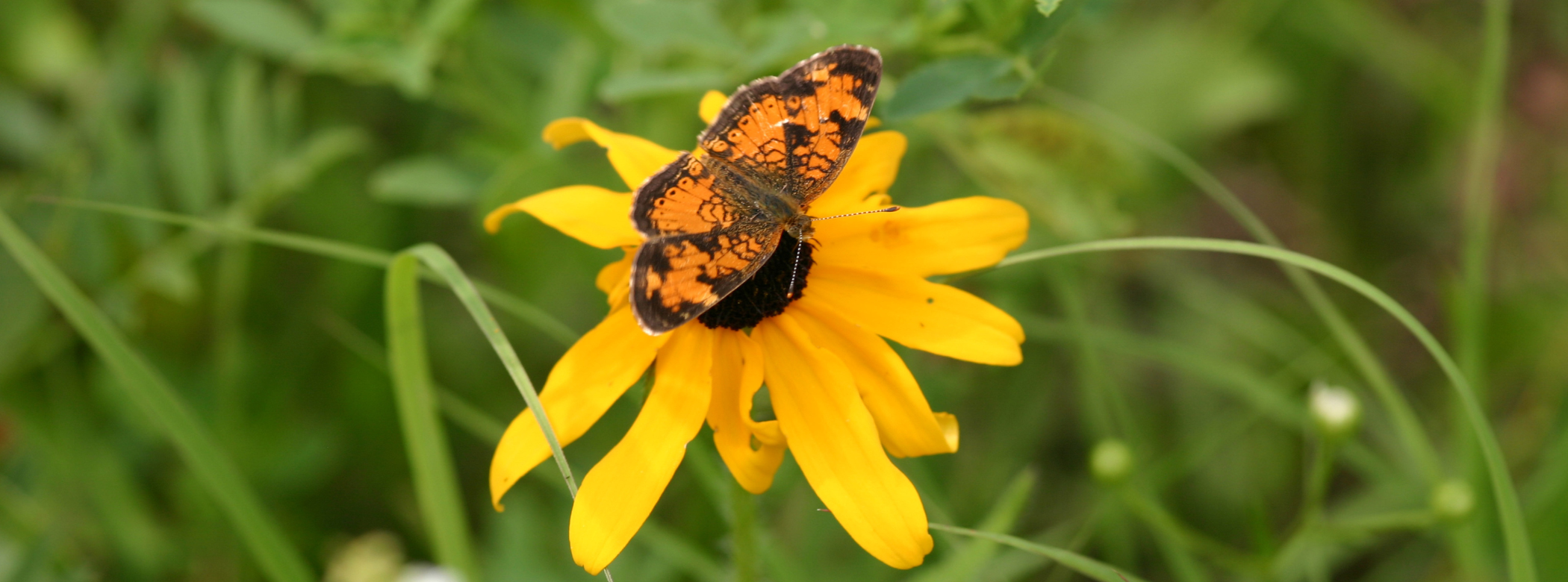
An orange and black butterfly on a flower with yellow petals and a black centre.

Prairie Pollination: Anatomy of a Virtual Exhibit

Prairie Pollination: Anatomy of a Virtual Exhibit

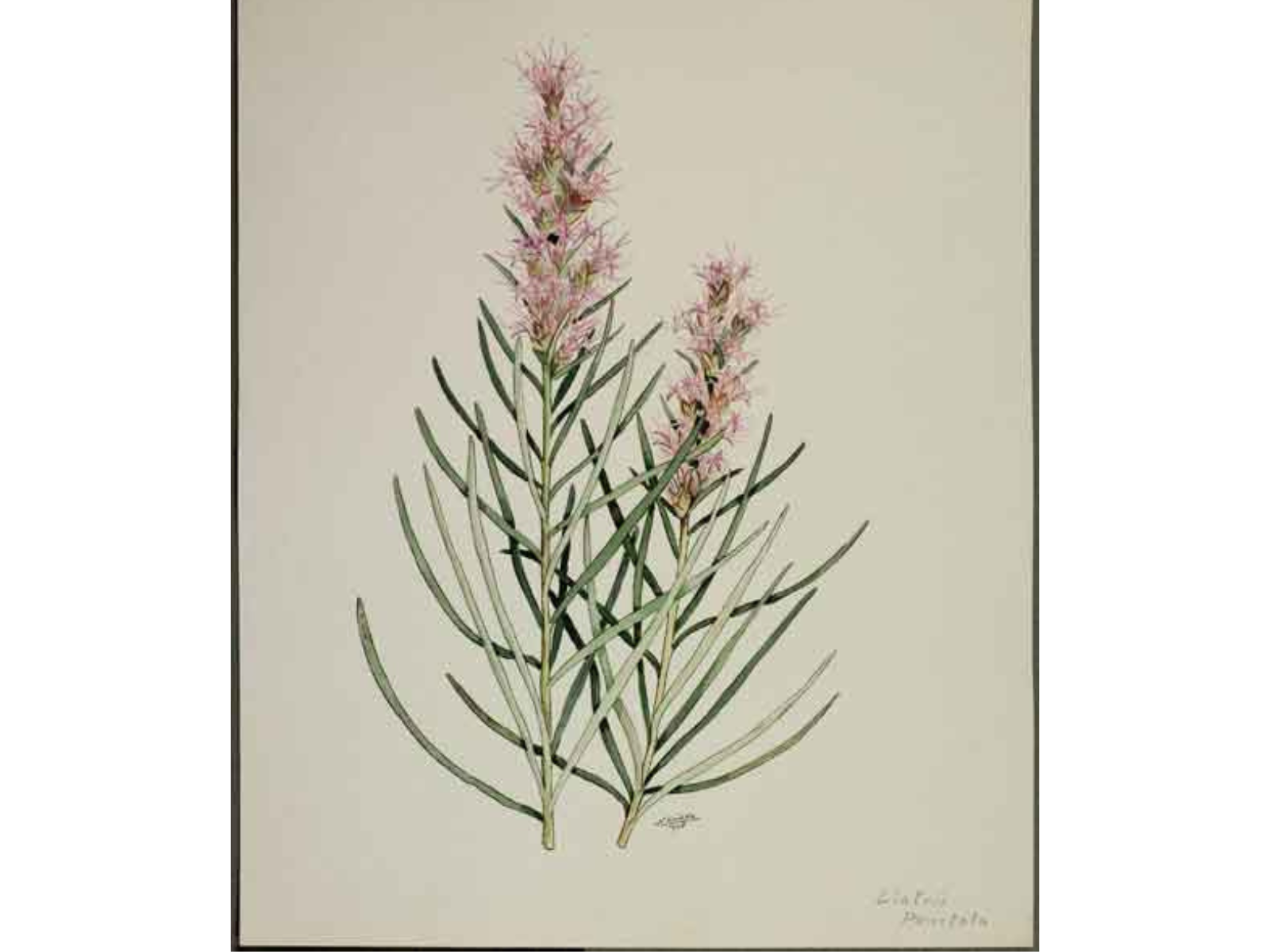
A watercolour painting of flowers with fluffy purple flowers at the top of stems with long thing leaves growing up it.

This month a project that I have been working on for almost three years (whew!) finally came to fruition: an exhibit on Prairie Pollination for the Virtual Museum of Canada (www.PrairiePollination.ca). This exhibit is the culmination of ten years of research on the pollinators that visit rare and common plants in Canada’s few remaining prairies. The exhibit features photographs of wild plants and pollinators, as well as some of the beautiful botanical watercolours in our collection made by artist and entomologist Norman Criddle (1875-1933). We even created an app called PlantSpotting that will enable people to photograph and map wildflowers that they themselves observe.


Image: A watercolour of dotted blazingstar by Norman Criddle.
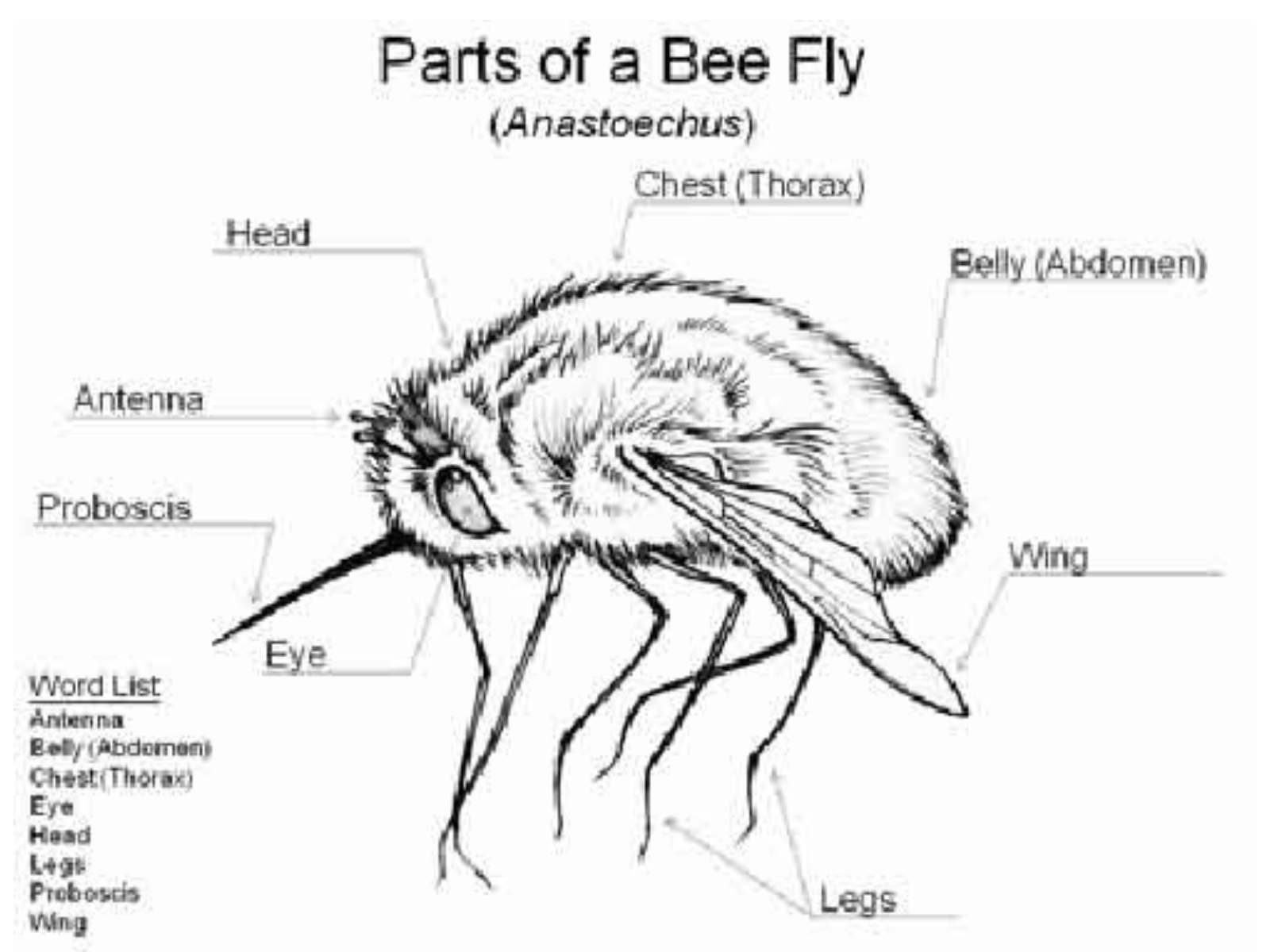
Diagram of a Bee fly with labels pointing out each of their parts.

Most people assume that bees and butterflies are the most important pollinators but during my research I found that-surprise, surprise-most flower visits are made by flies! Flower flies, bee flies, soldier flies, and parasitic flies are among the most common flower visitors in the prairies. Since the internet has lots of educational material about butterflies (particularly monarchs) and bees (particularly honeybees), I decided to focus one of my student lesson plans on pollinating flies (available at the Virtual Museum of Canada’s Teacher’s Learning Centre). Local artist Janet LaFrance created a great illustration of my favorite bee fly (Anastoechus) for one of the lessons that Educational Consultant, Angela Fey helped me develop.


Image: Worksheet on the parts of a bee fly for the Virtual Museum of Canada’s Teachers’ Learning Centre.

The highlight of the project was travelling to some of the remaining native prairies in Manitoba and Saskatchewan to film short videos with pollination biologists. One of the biggest problems with filming plants on the prairie is the unrelenting wind. Videographer Robert Zirk had to try to film flowers that kept flopping around, and insects that were getting blown off course. Further, the sound of the wind in the microphones sometimes made it difficult to hear what we were saying. Hauling equipment around in the brutal 30 degree heat during our trip to Spruce Woods Provincial Park wasn’t all that fun either.

Our worst luck occurred down at the Tall-grass Prairie Preserve where we very nearly missed the blooming of the rare Western Prairie Fringed Orchid. Although we did get some images of it, it was a very dry year and the poor little plants we found were looking a little parched! Fortunately, 2013 was a good year for another rare orchid we filmed a video on: Small White Lady’s-slipper.
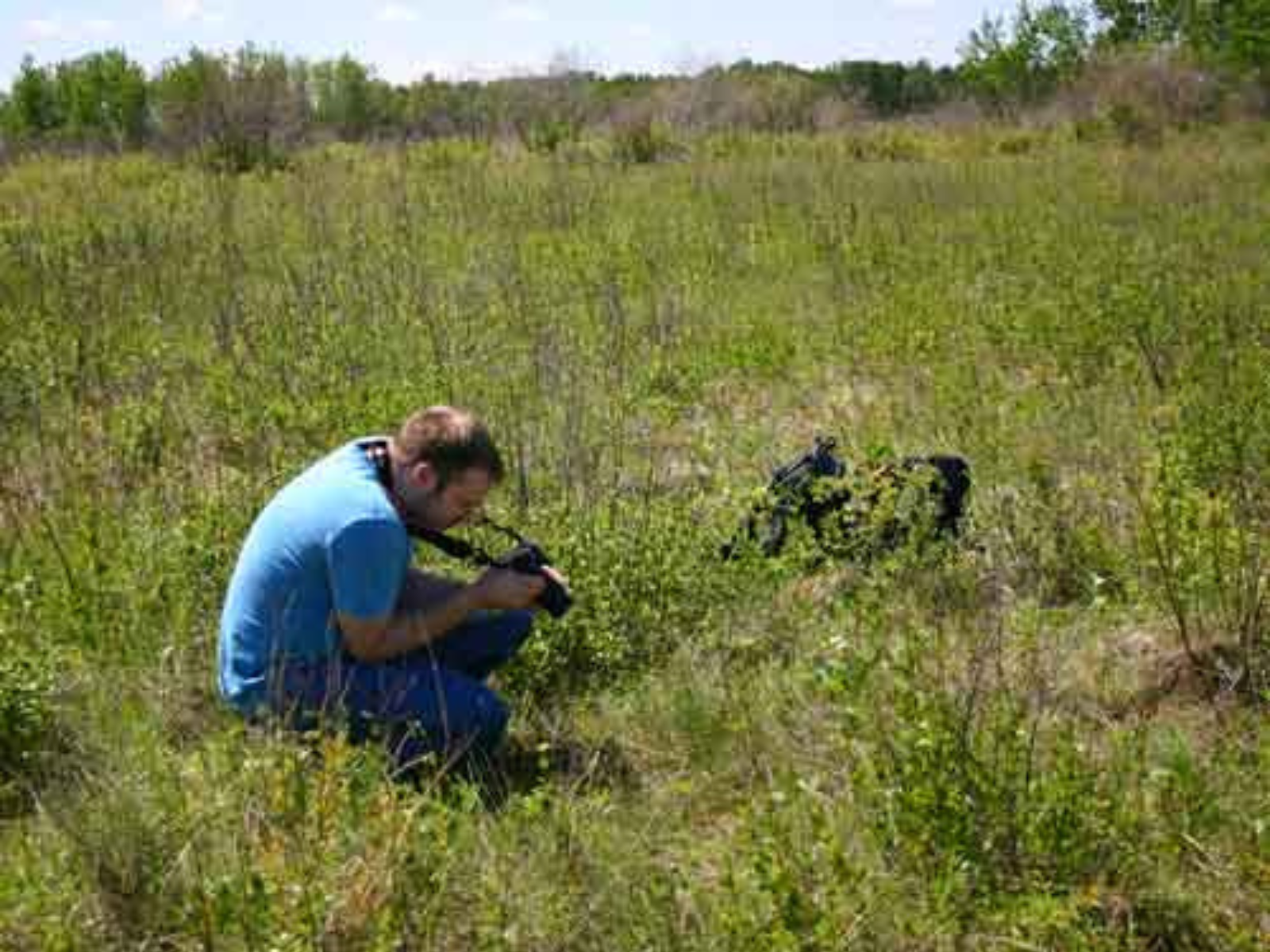
An individual crouched in a field with a DSLR camera, taking a photo of something in the field.

Videographer Robert Zirk, getting up close and personal with a lady… slipper’s-orchid.
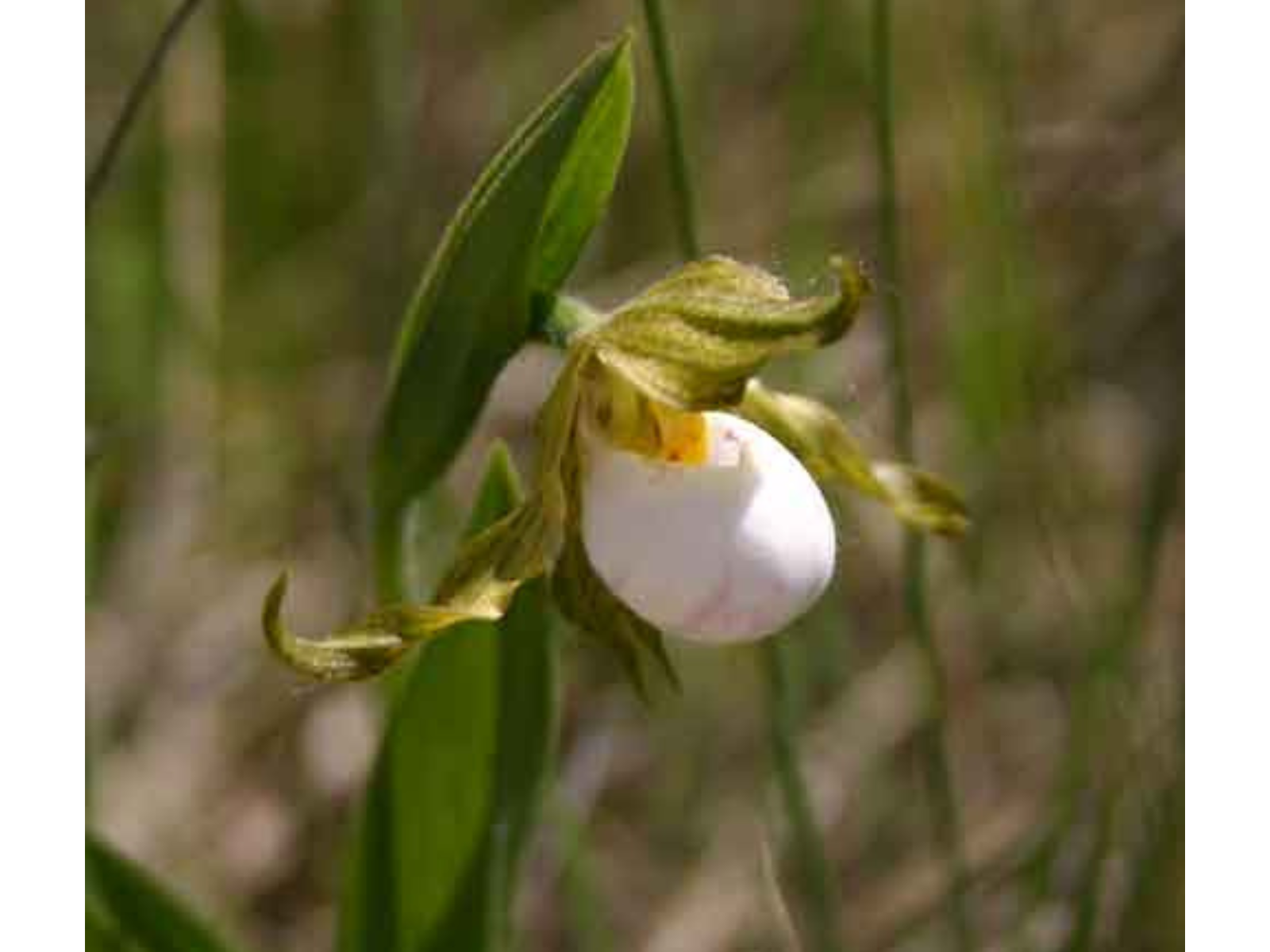
Close-up on a small white bulbous orchid.

The seductive small white lady’s-slipper orchid.
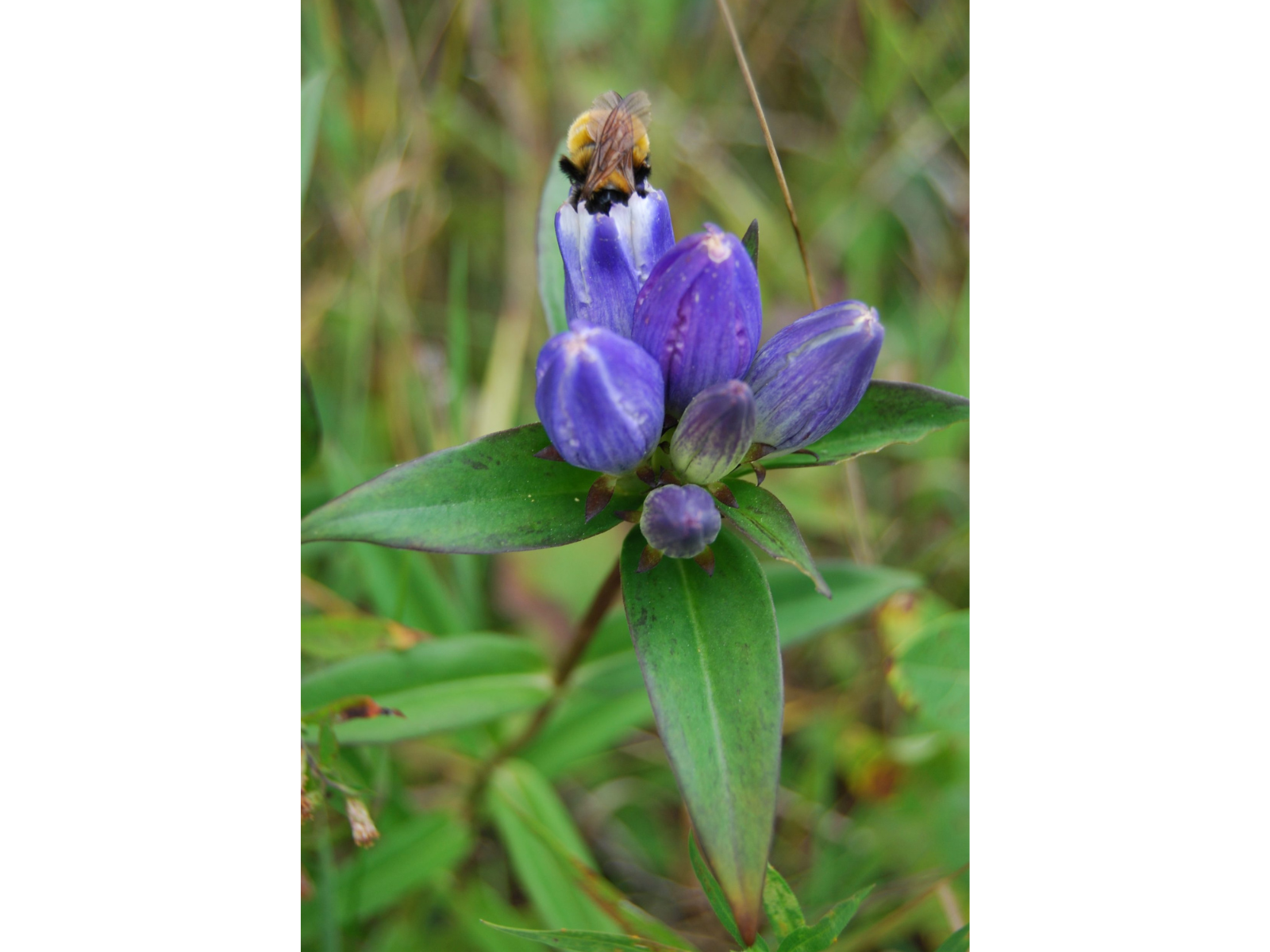
Close-up on a flower with a cluster of blue tubular flowers, with a bumble bee prying into one of them.

The field work was only a tiny part of the whole project (although the funnest part).  Many hours were spent researching and writing text, photographing and cataloguing specimens and, of course, designing the website. Fortunately I didn’t have to do it all myself (I would have gone crazy) and was able to rely on a team of talented interns (Melissa Pearn and Rebecca Bilsky), staff, consultants and many volunteers.

So if you share my passion for pollination and want to learn more, check out the Museum’s new exhibit.  Funding for Prairie Pollination was generously provided by the Virtual Museum of Canada (VMC), the Heritage Grants Program, Manitoba Culture, Heritage and Tourism Department of the Government of Manitoba and The Manitoba Museum Foundation Inc.


Image: Closed gentian can only be effectively pollinated by big, hairy bees.

Dr. Diana Bizecki Robson

Dr. Diana Bizecki Robson

Curator of Botany

Dr. Bizecki Robson obtained a Master’s Degree in Plant Ecology at the University of Saskatchewan studying rare plants of the mixed grass prairies. After working as an environmental consultant and sessional lecturer…
Meet Dr. Bizecki Robson

Prairie Pollination

Get to know your wild neighbours!

Two-thirds of our crop species worldwide depend on wild pollinators to some degree! Those pollinators need more than just crop plants to survive – they need wild plants too.

Staff at the Manitoba Museum have been quietly studying pollinators for over fifteen years. The Museum’s Curator of Botany, Dr. Diana Bizecki Robson notes that “we really don’t know much about how wild plants and pollinators interact with each other or whether their populations are declining. One of the interesting things I’ve discovered during my field work is that pollinators of crop plants like canola and sunflower also need to feed on prairie wildflowers to survive.”

Unfortunately, many of the Manitoba Museum’s plant and insect specimens are difficult to display in regular gallery exhibits and can only been seen during special behind-the-scenes tours or in temporary exhibits. But now thanks to a virtual exhibit you can learn more about these amazing creatures. The exhibit is called Prairie Pollination and can be found at www.PrairiePollination.ca.

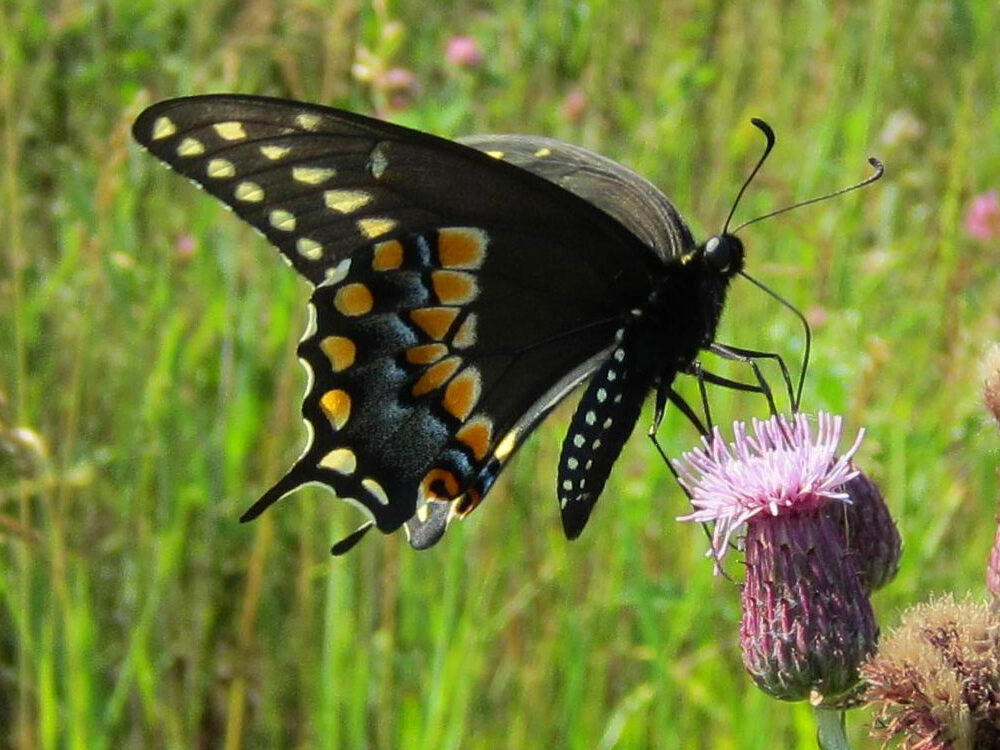
Dark butterfly with yellow, orange, and blue spots on it's wings perching on a small fluffy purple flower.

Beautiful photographs of endangered and common prairie plants, and their insect and bird pollinators, are shown in this exhibit. Watercolour illustrations of wild plants from the Museum’s famous Norman Criddle collection, and virtual tours of wild prairies with pollination scientists add depth and context to the specimens. “The great thing about the Prairie Pollination exhibit is that people can find out exactly which plants are attractive to the different kinds of pollinators. This information will be of great use to nature lovers, gardeners, farmers, students and beekeepers” says Dr. Bizecki Robson.

The Manitoba Museum gratefully acknowledges our project sponsors:

The Virtual Museum of Canada (VMC), an initiative of the Department of Canadian Heritage, was established in partnership with over 1,300 Canadian Heritage Institutions.

World War One: How did it all start?

Part I in a three-part series.


On August 6, 1:30 pm, the public is welcome to attend the opening of the exhibit “The Victoria Crosses of Valour Road” in the foyer of The Manitoba Museum. Many know the story of the three men from the 700 block of humble Pine Street: Corporal Leo Beaumaurice Clarke, Sergeant-Major Frederick William Hall, and Lieutenant Robert Shankland were each awarded a Victoria Cross during World War I for acts of valour.

Pine Street was renamed Valour Road and has become one of those talismans of Canadian memory that reminds us of the men and women that took part in the Great War, in which nearly 10 million soldiers died and about 20 million were wounded world-wide.

The Great War, the “War to End All Wars”, began on July 28, 1914 with a declaration of war on Serbia by Austria-Hungary. This was 100 years ago, and to many folks the reasons for the war are hazy at best. The world of 1914 seems so remote from today’s realities and some of the countries that participated no longer even exist. Yet that war continues to reverberate in geo-politics and even in our daily lives.

With the arrival of the Victoria Cross medals from the Canadian War Museum, I felt it was important to outline what the war was about. In Part I I’ll talk about what started the war and which countries got involved and why. In Part II we’ll explore how WWI unfolded and what part Canada played. Finally, in Part III I’ll talk about how it ended and what the war actually accomplished.

Part I

There were two main powerful alliances in Europe in 1914. Austria-Hungary was allied with Germany, and France was allied with Russia (and loosely with Great Britain).

And speaking of countries that no longer exist, the first real belligerent in this series of events was the Austro-Hungarian Empire/Dual Monarchy (a strange bi-national combination). On June 28, 1914, 19-year-old Gavrilo Princip assassinated the Austrian Archduke Franz Ferdinand in Sarajevo, which was part of Austria-Hungary. Princip was a Bosnian Serb and a citizen of the Empire, but he attacked Ferdinand as a terrorist in the name of Bosnian-Serbian independence. Austria-Hungary accused Serbia of assisting the killer (which in fact it did, with an organization called “The Black Hand”). Germany was Austria-Hungary’s main ally and with their backing war was declared on Serbia on July 28.

Why would Germany agree to this? The Germans felt they were threatened by various developments on the continent, something they called “encirclement”. They knew they were the most war-ready and powerful nation in Europe, but they were worried their advantage was slipping away. Basically they wanted a controlled zone of buffer states as protection against Russia and France. Austria-Hungary and Germany knew that an attack on Serbia might draw in the Russians. The Russians indeed mobilized, and Germany declared war on Russia and its ally France on August 1 and 3. The Germans then demanded that Belgium allow free transport of German troops, and this helped to draw in the British, who declared war on Germany on August 4. And of course Great Britain had a vast global colonial network from which to draw troops. Canada (which declared war on August 5), Australia, India, South Africa, and others all contributed to making the conflict a true world war. Meanwhile Italy joined the “Allies” and the Ottoman Empire joined the Germans.

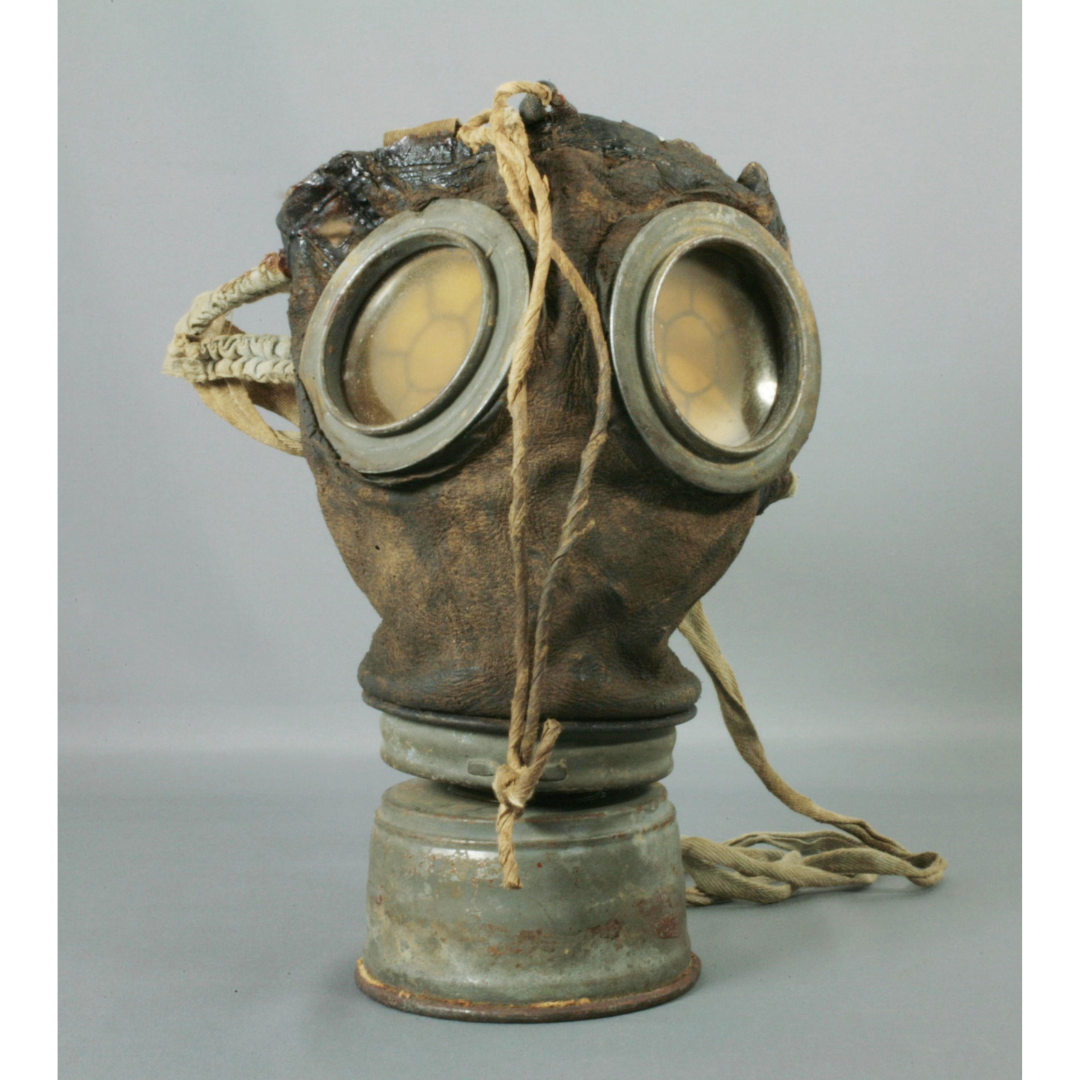
A gas mask with large screened eye windows and a tubular breathing vent.

So that is how it started – an assassination gave Austria-Hungary a pretext for declaring war, which drew in a host of allied states. But what no one knew was how the war would unfold or how it would end.

Coming up… Part II – technology changes everything; Canadian (and Manitoban) involvement; Russia crumbles; the USA attacks.


Image: This German gas mask was brought back to Canada as a souvenir by Lance Corporal Arthur E. Diplock, Canadian Expeditionary Force, 1914-1918. Diplock was born in Winnipeg in 1883 and served in the Boer War in South Africa. During WWI he was a sharpshooter and also played clarinet in the 1st Canadian Expeditionary Force Band. H9-21-622. Copyright The Manitoba Museum.

Dr. Roland Sawatzky

Dr. Roland Sawatzky

Curator of History

Roland Sawatzky joined The Manitoba Museum in 2011. He received his B.A. in Anthropology from the University of Winnipeg, M.A. in Anthropology from the University of South Carolina, and Ph.D. in Archaeology…
Meet Dr. Roland Sawatzky

Daytime Fireball spotted over Manitoba

UPDATE – 14 Jul 2014: We have received enough reports to tell that the fireball was well north of Winnipeg – the final burnout/explosion likely occurred near the Poplar River area of the eastern shore of Lake Winnipeg. Any surviving fragments of the meteor would have continued north or northeast of this location. Given the difficulty of finding anything in this terrain, we are no longer planning a search and recovery effort.


UPDATE – 10 Jul 2014: We’ve received more than a dozen reports from around southern Manitoba of this rare daytime fireball. Most observers saw it due north, heading almost straight down. This means it was likely quite far north and heading even farther north, although without more observations the details are still hard to pin down. We’re now interested in hearing from anyone who spotted this thing from north of Gimli or anywhere in Westman, or from spots along Lake Winnipeg and into the north. Email skyinfo@manitobamsueum.ca with your report as outlined below.


Original post – 9 Jul 2014: Details are still coming in, but we have multiple reports of an extremely rare daytime fireball seen in central Manitoba about 11 am Central Time today (Wednesday, 9 July 2014). We are actively seeking reports from people who saw this event, and once we get enough data we will organize a search for pieces.

If you witnessed this object, please email a report to skyinfo@manitobamuseum.ca and include the following information:

  • Your location (as precise as possible; using GPS or a map)
  • The direction you were looking at the time of the sighting (north, south, etc)
  • The motion of the object ( left-to-right or right-to-left)
  • The path of the object (“straight down and angled slightly to the right”, “45 degree angle to horizon”, etc),
  • A description of the sighting, including smoke trails, colour, sounds, explosions
  • Name and telephone number so we can contact you

You should also report your sighting to the American Meteor Society at http://www.amsmeteors.org/members/fireball/report-a-fireball and the International meteor Organization at http://www.imo.net.fireball/report

It is suspected that the parent object was a small asteroid or comet which burned up in the earth’s atmosphere, high enough to do no damage but low enough the pieces may have survived the fall to earth. Any such pieces are not dangerous, will not start fires or scorch the earth, and will not have bubbles or crystals in them.

Further details will be released as they become available.