
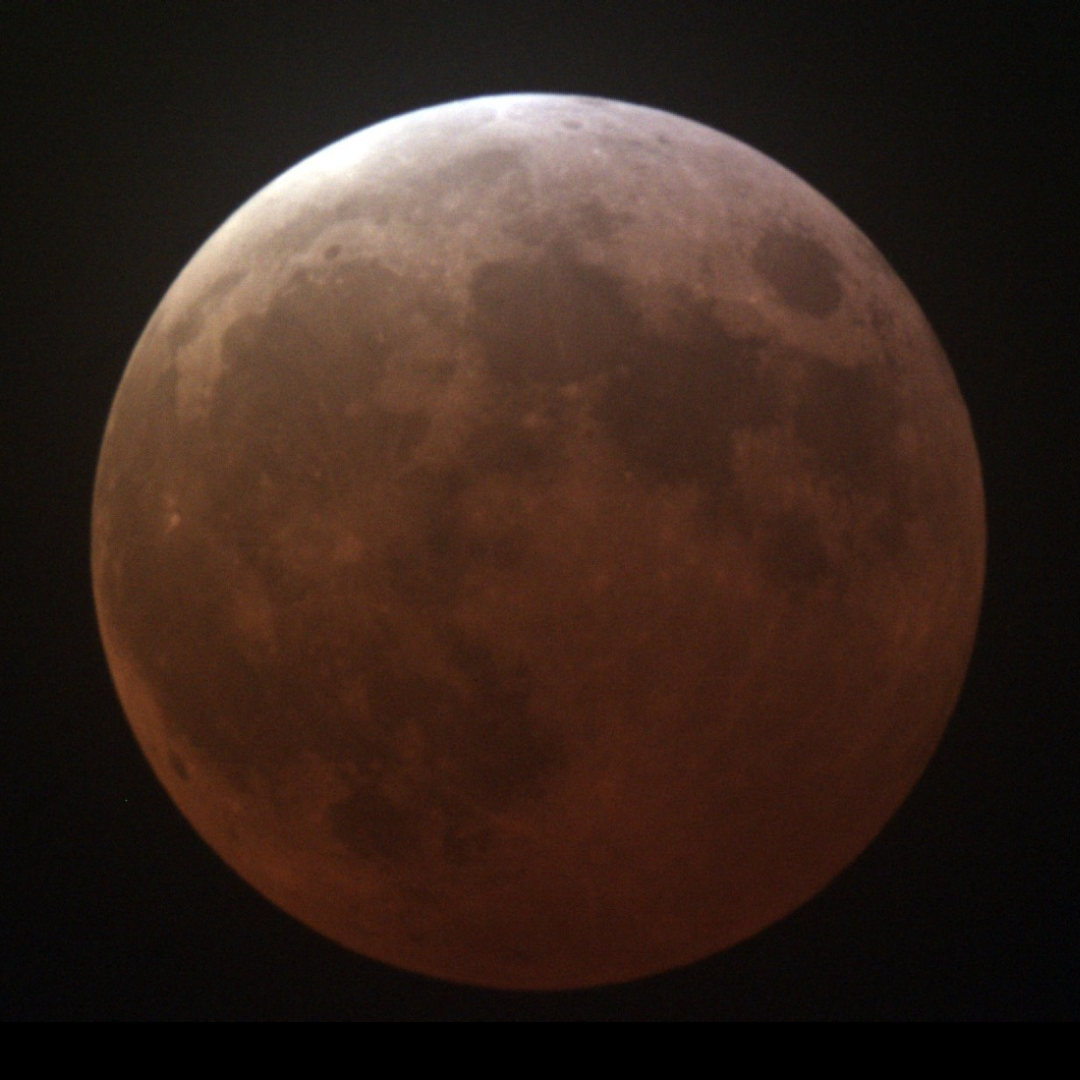
You should stay up late on Monday, March 2 – after midnight, or get up reeeally early on Tuesday, March 3. Manitobans (and most of North America) will witness a total lunar eclipse – which will probably be called the “blood worm moon” by the AI astronomy pages that saturate social media these days.
A total lunar eclipse is a very accessible celestial event. It’s widely visible – the entire half of the Earth that can see the Moon will get the same view of the eclipse. And it takes a while – even if we omit the less-interesting penumbral phase, March’s eclipse will last more than three-and-a-half hours from the start of the partial phase to moonset (here in Manitoba). That’s much more opportunity than a total solar eclipse provides – those only happen for a narrow path for a few minutes at most.
Manitoba viewers will see the early stages of the eclipse and all of the total phase, but the Moon will set before completely leaving Earth’s shadow. Viewers farther west will see more of the eclipse’s end, while eastern Canada only sees the very early stages before moonset.
A lunar eclipse has three phases. The first phase, the penumbral eclipse, occurs when the Moon begins to move into the tenuous outer shadow of the Earth, called the penumbra. This is followed by the partial eclipse, when the Moon enters the darker central shadow of the Earth, which is known as the umbra. The third phase, the total phase, occurs when the Moon is completely within the Earth’s umbra. This is the “blood moon” phase, since it is when the red colour of the eclipse is most visible. (It’s there during the partial phase as well, but glare from the bright uncovered portion of the Moon makes it difficult to see.)
Times of Lunar Eclipse Events for Western Canada
Event |
PST |
MST |
CST |
EST |
| Penumbral phase begins |
12:44:25 am. |
1:44:25 am. | 2:44:25 am. |
3:44:25 am. |
| Partial phase begins |
1:50:07 am. |
2:50:07 am. | 3:50:07 am. |
4:50:07 am. |
| Total phase begins |
3:04:34 am. |
4:04:34 am. |
5:04:34 am. |
6:04:34 am. |
| Maximum Eclipse |
3:33:46 am. |
4:33:46 am. |
5:33:46 am. |
6:33:46 am. |
| Total phase ends |
4:02:49 am. |
5:02:49 am. |
6:02:49 am. |
7:02:49 am. |
| Partial phase ends |
5:17:15 am. |
6:17:15 am. |
7:17:15 am. |
8:17:15 am. |
| Penumbral phase ends |
6:23:06 am. |
7:23:06 am. |
8:23:06 am. |
9:23:06 am. |
For southern Manitoba, the Moon sets within a minute or so of 7:00 a.m. CST. Items in shaded boxes occur after moonset in those time zones.
Where to Look
Usually finding the Full Moon isn’t difficult, but with possible clouds in the forecast it’s best to know roughly where to look. The Moon begins the eclipse very high up in the south for Manitobans. If you’re in eastern North America, the Moon will be progressively lower in the west the farther east you are. Similarly, the Moon will be farther east (and lower) the farther west you are in North America. Over the course of the eclipse, the Moon, like the Sun and most of the stars, will appear to move across the sky towards the western horizon, eventually setting in the west about 7:00 am CST for Manitobans. The Moon sets earlier the farther east you are, and later the farther west you are.
How to Observe
Total lunar eclipses are completely safe to view, unlike an eclipse of the Sun where the bright Sun can cause eye damage. During a total lunar eclipse, the brightest things get is a Full Moon, and it gets dimmer from there.
The best way to observe a total lunar eclipse is with an ordinary pair of typical binoculars, 7×35 or 8×42 or 7×50 or something similar. The binoculars make it easier to see the red colour, and also reveal some of the dark areas and even the larger craters on the Moon. If you have a telescope, you can of course use that as well, but use your lower magnification eyepieces so you can see the whole Moon at once.