
Century Eggs of a Different Flavour

Century Eggs of a Different Flavour

Century eggs are a Chinese tradition where eggs are placed in an exotic recipe of alkaline clay and brine solution over several months. This preserves them for later consumption, and the chemical changes in the egg proteins makes for an interesting flavour. Of course, these “century” eggs are not, in truth, one hundred years old. The Museum, however, does have actual century eggs that have been carefully prepared and preserved for later use, and can provide science with a very tasty treat.

I’m afraid I couldn’t help myself, and once I had found 100-year-old eggs in the collection for my last blog post, I thought I would see if we had others. The Museum has 8 sets of eggs that are 100 years old this year. And we do have even older-than-century eggs, with over 120 clutches collected before 1911. The oldest is a set of five Clapper Rail eggs collected in Louisiana in April 1880.

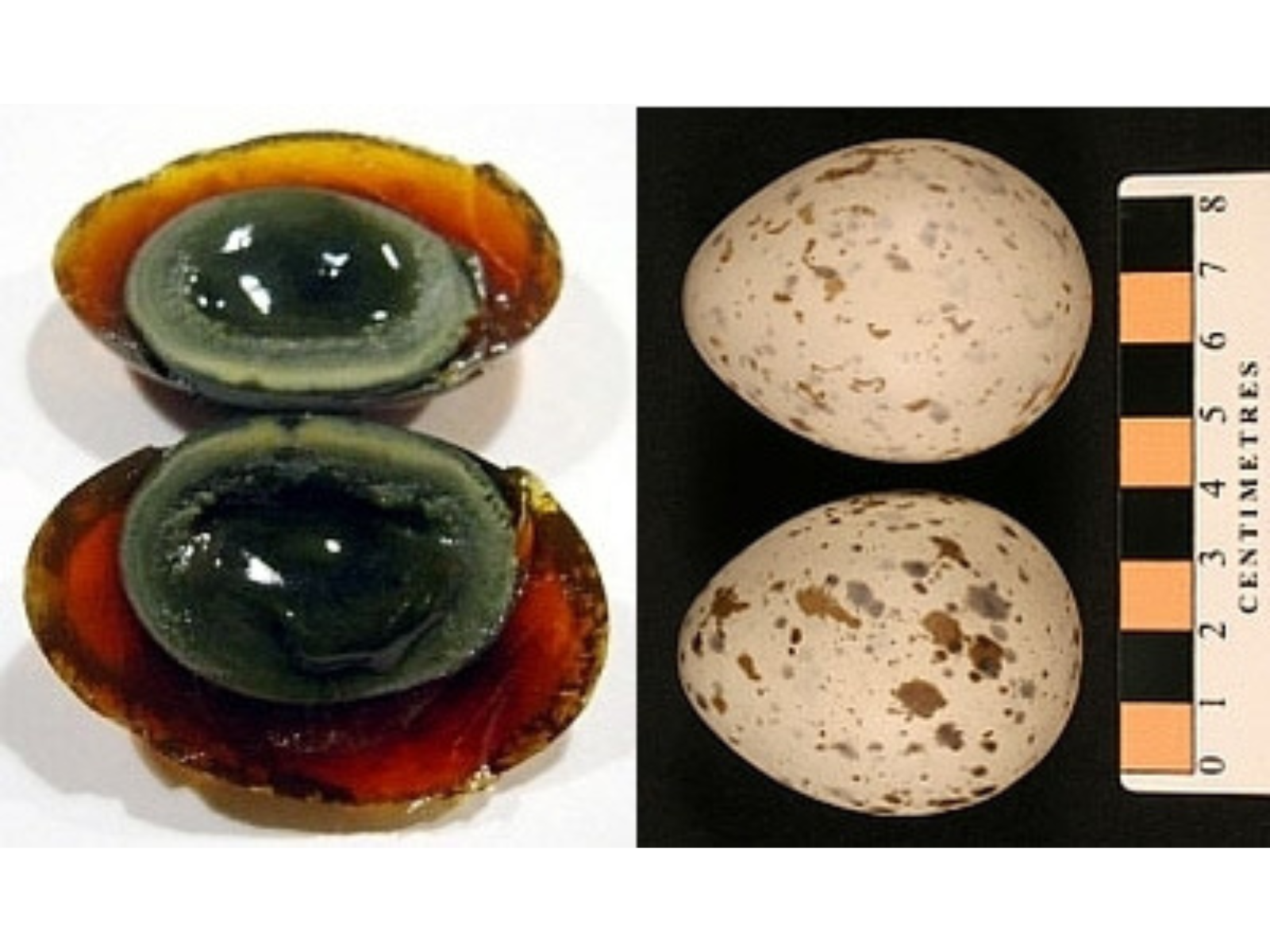
Two photos side-by-side of two century eggs each. The eggs on the left are both a deep green-black. The eggs on the right are white shells with brown flecks.

Century eggs. On the left, the Chinese version where colours should change to insure preservation (photo from Wikimedia Commons). On the right, The Museum version as exemplified by Black-legged Kittiwake eggs collected by A.C. Bent in 1911. Preserving the original colours and shapes are what makes museum eggs valuable.

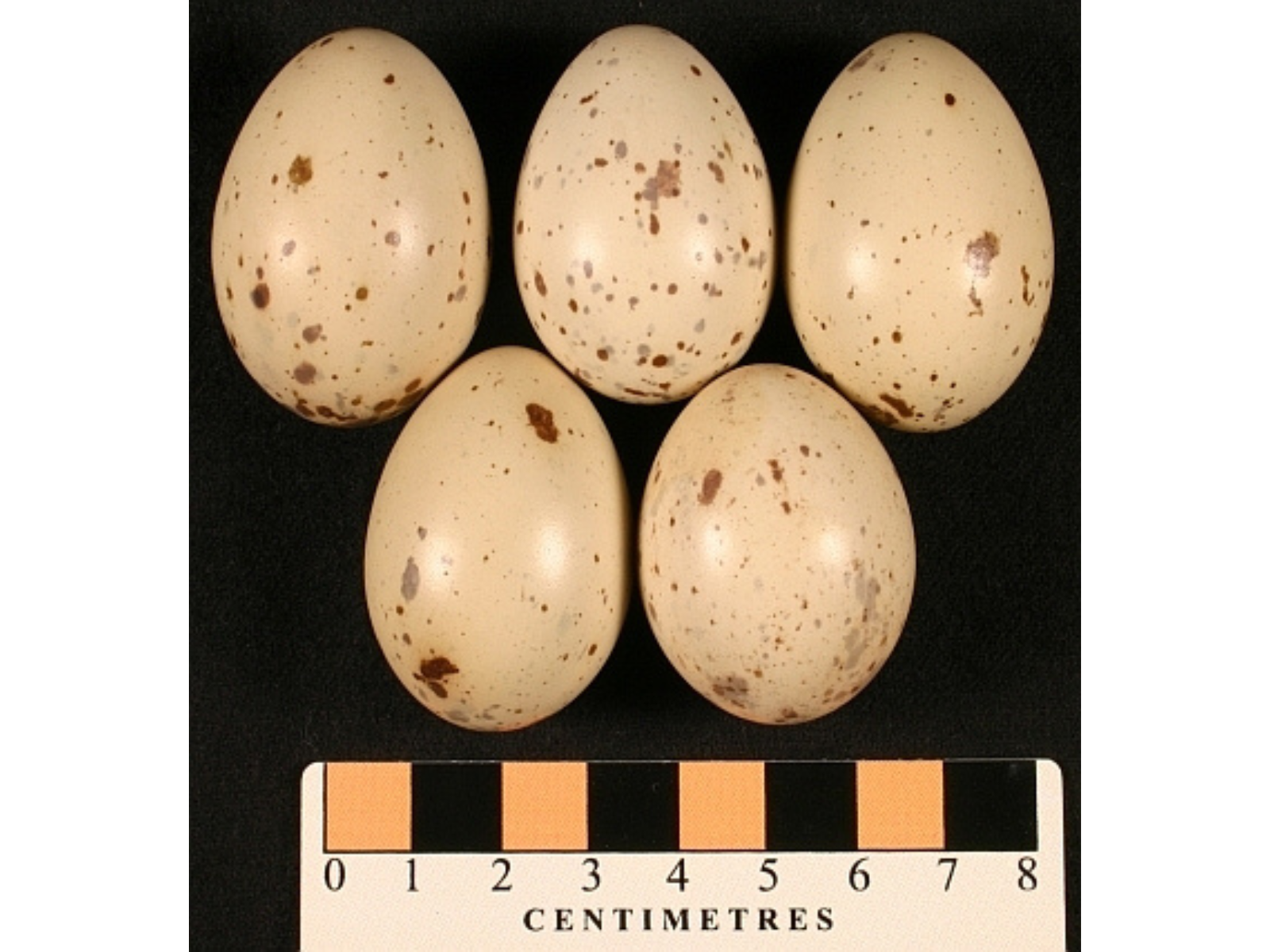
Five cream-coloured eggs with brown flecks placed together on a black background.

Clapper Rail eggs collected in New Orleans in April 1880 (MM1.21-160).

I’m afraid I couldn’t help myself, and once I had found 100-year-old eggs in the collection for my last blog post, I thought I would see if we had others. The Museum has 8 sets of eggs that are 100 years old this year. And we do have even older-than-century eggs, with over 120 clutches collected before 1911. The oldest is a set of five Clapper Rail eggs collected in Louisian in April 1880.

Of the actual century eggs in the Museum collection, two were collected by Arthur Cleveland Bent of Bent’s Life Histories fame, and examined in the last posting. Of the remaining sets, there is a Sandhill Crane from Alaska,  a Grey Heron from Scotland, a Double-crested Cormorant from Quebec, a Caspian Tern from California, a Clapper Rail from Virginia, and an Osprey from New Jersey.

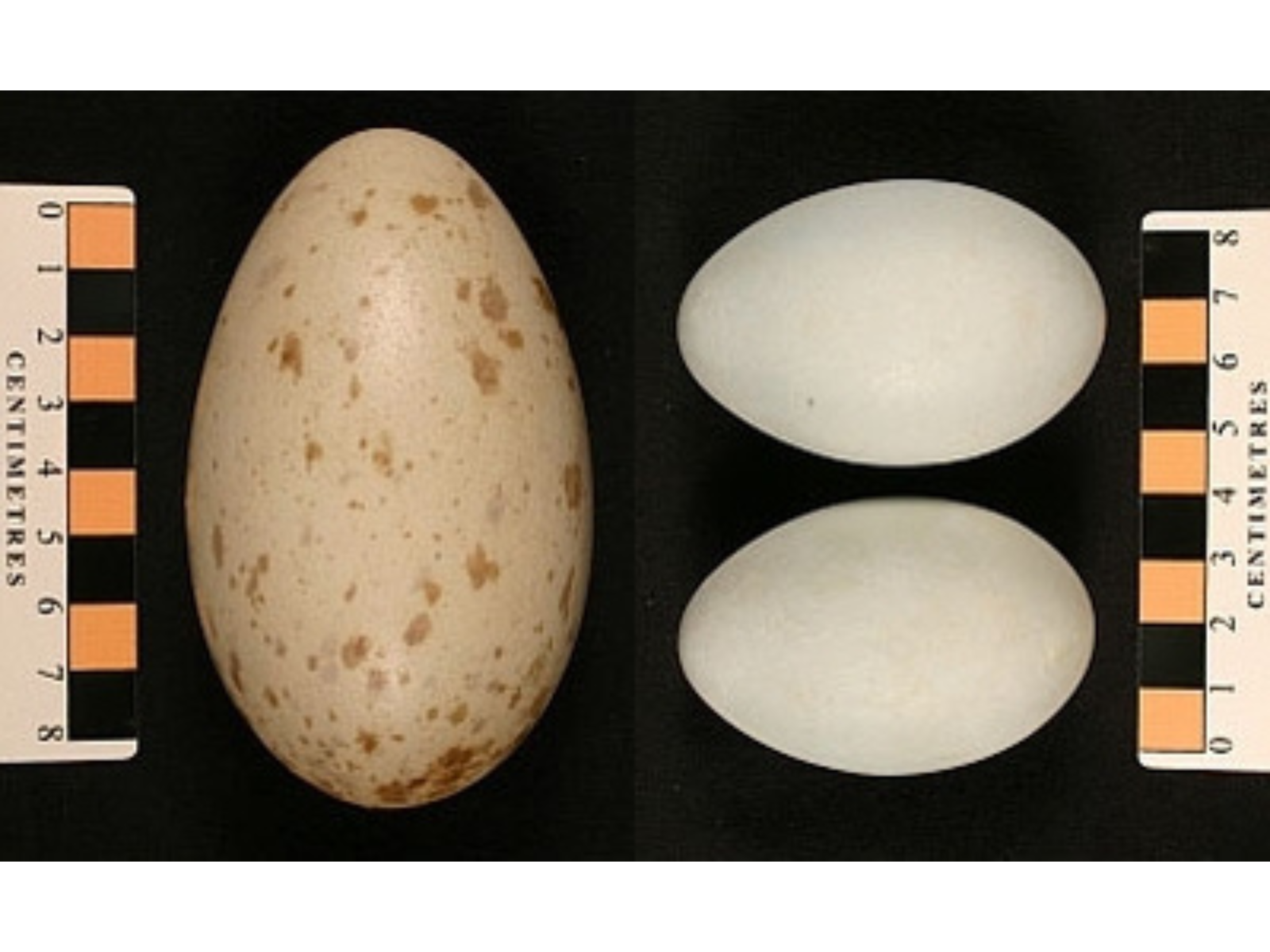
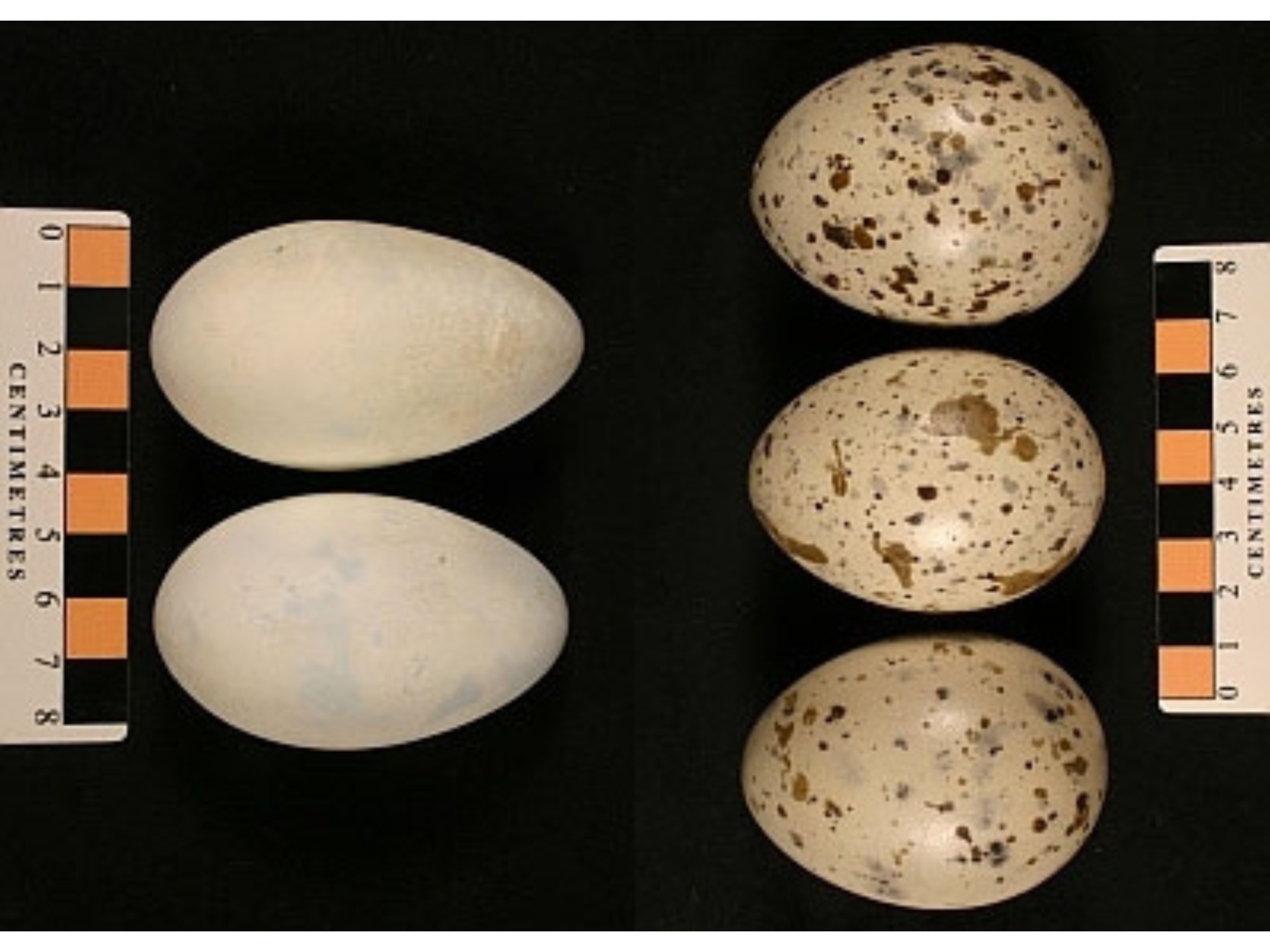
Three eggs on a black background. On the left an elongated cream-coloured egg with brown flecks, on the right-side are two average-sized white eggs.

A Sandhill Crane egg from Alaska at left (MM1.21-142) and two Grey Heron eggs from Scotland (MM1.21-129), all 100 years old.

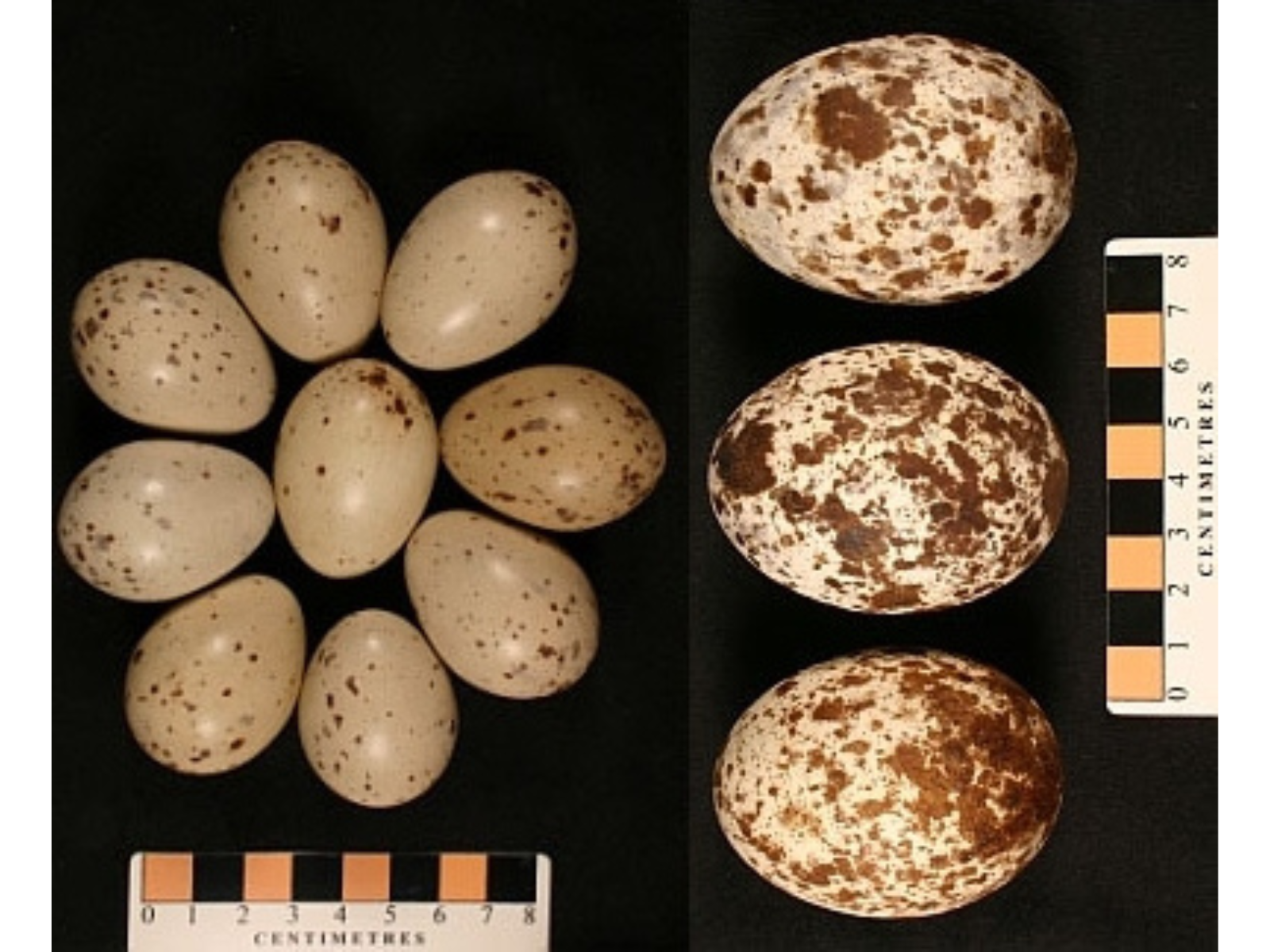
Five eggs against a black background. On the left are two white eggs and on the right are three cream-coloured eggs with brown flecks.

Century eggs of Double-crested Comorant at left (MM1.21.-106) and Caspian Tern at right (MM1.21-66).

Older specimens also provide an opportunity to examine ecosystems at the time they were collected – another Museum collection time machine.  Using various chemical analyses, scientists can determine how nutrients were cycled in an ecosystem in the past and compare how those same nutrients cycle today. Are the processes the same? If not, why not? Similarly, original background levels of various elements and chemicals can be determined from old specimens. Are today’s activities changing the levels of particular compounds in our environment compared to what they were 100 years ago?


Image: Clutches of Clapper Rail and Osprey eggs, each 100 years old and perhaps providing a record of environmental conditions at that time.

With an active and thoughtfully built museum research collection, the history and pattern of chemical signals in our environment as well as general ecosystem health and composition over the last 130 or more years can be studied and compared. This can help us better understand ecological processes and inform us on how to better manage our environment. It is worth keeping in mind, though, that the original collections were made not for some planned future application, but for the plain joy and fascination in the world around us. Taking an active interest in nature and exploring its riches just out of pure curiosity, just to know, will take us places and provide opportunities we would never have had otherwise.

I wouldn’t recommend making a meal of the Museum century eggs, but they certainly can give science and society a great deal to chew on.

Dr. Randy Mooi

Dr. Randy Mooi

Curator of Zoology

Dr. Mooi received his Ph.D. in zoology from the University of Toronto working on the evolutionary history of coral reef fishes. Following a postdoctoral fellowship in the Division of Fishes of the Smithsonian Institution…
Meet Dr. Randy Mooi

A Real Time Machine: Museum Collections

I’m sure you are familiar with this scenario: getting on the internet for a specific nugget of information and then finding yourself some significant time later on some odd, but interesting tangent, and wondering, “How did I end up here?!” Browsing the Museum collections can be a bit like a 3-dimensional internet search, where examining one specimen can bring you on a voyage across space and time to a fascinating and unexpected place.

I recently had that experience when checking our collection to see what material we had of Black-legged Kittiwake. In an earlier blog, I related my recent sighting of this gull species in southern Manitoba where it is very rarely seen. I was curious to see if we had any kittiwake specimens. As it turns out, we have no adult specimens, but I found that the Museum houses some kittiwake eggs!

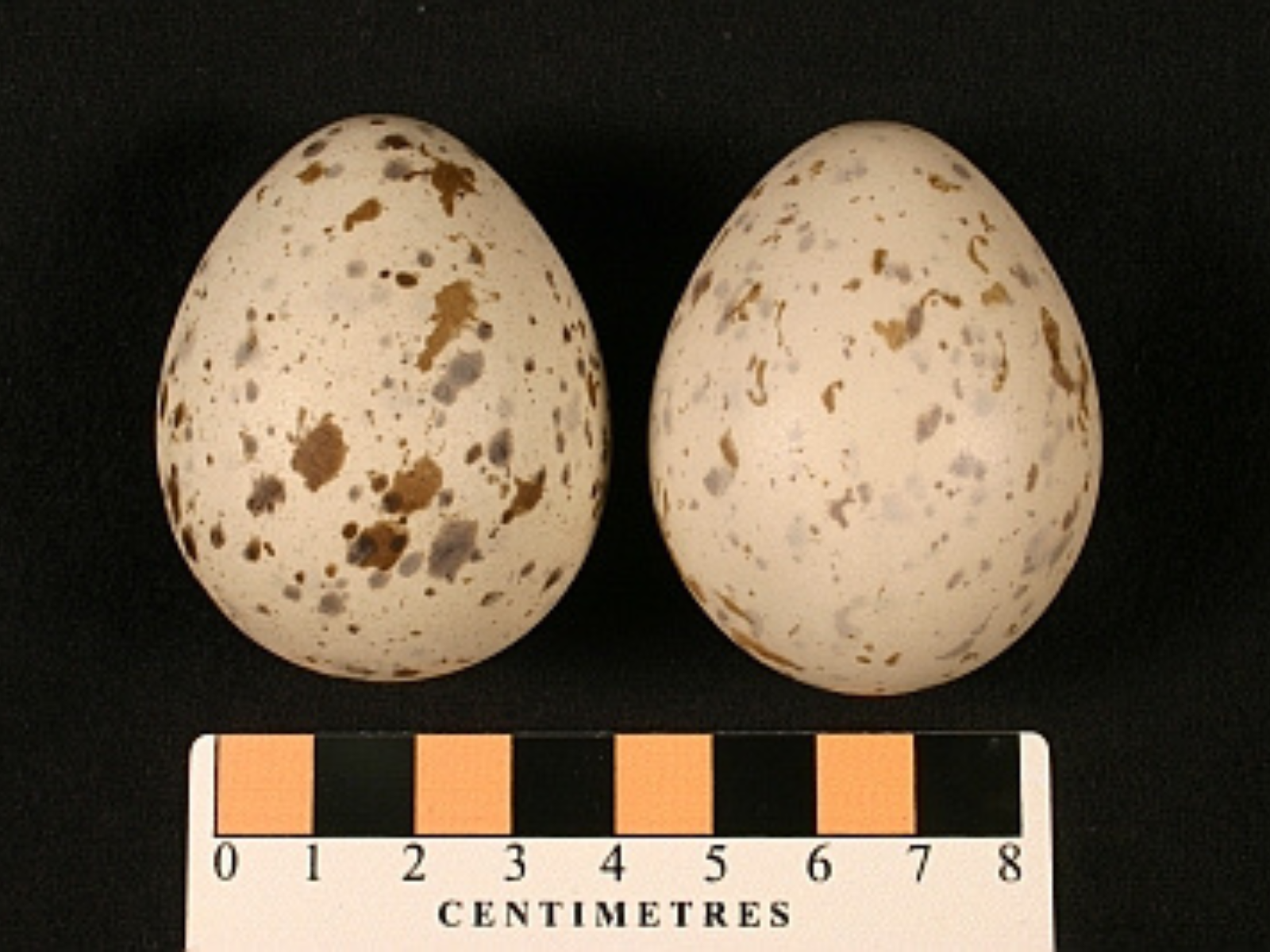
Two rounded cream-coloured eggs with brown flecks.

Kittiwakes do not breed in Manitoba, so of course these were not collected in the province. It is not all that surprising to find specimens from out-of-province in the collections; we use this material for reference and to put more local collections in a world context. The kittiwake eggs had come to the Museum as part of a Winnipegger’s private collection obtained in 1969, a collection that also happens to provide some of the earliest specimens of birds from Manitoba that the Museum has (Sandhill Crane and Bald Eagle, 1894). The fact that got me hooked on the kittiwake eggs was that they had been collected 100 years ago by none other than Arthur Cleveland Bent.


Image: Black-legged Kittiwake eggs collected 100 years ago by Arthur Cleveland Bent in the Museum collections (MM1.21-44).

Now, unless you are a student of ornithology or an avid birder, you are unlikely to recognize this name. Bent was a successful businessman with an interest in birds, and was commissioned by the Smithsonian Institute in Washington, D.C. to write a series entitled, Life Histories of North American Birds. This series became his own life history, as he eventually produced 21 volumes published from 1919-1968, with the last few completed posthumously from his notes. Although encyclopedic in nature and remaining a standard reference, these books are surprisingly entertaining to read and contain some wonderful natural history writing that gives an authentic account of what fieldwork and life (not just bird-life) was like in the early 1900’s, and shares the joy of discovery.

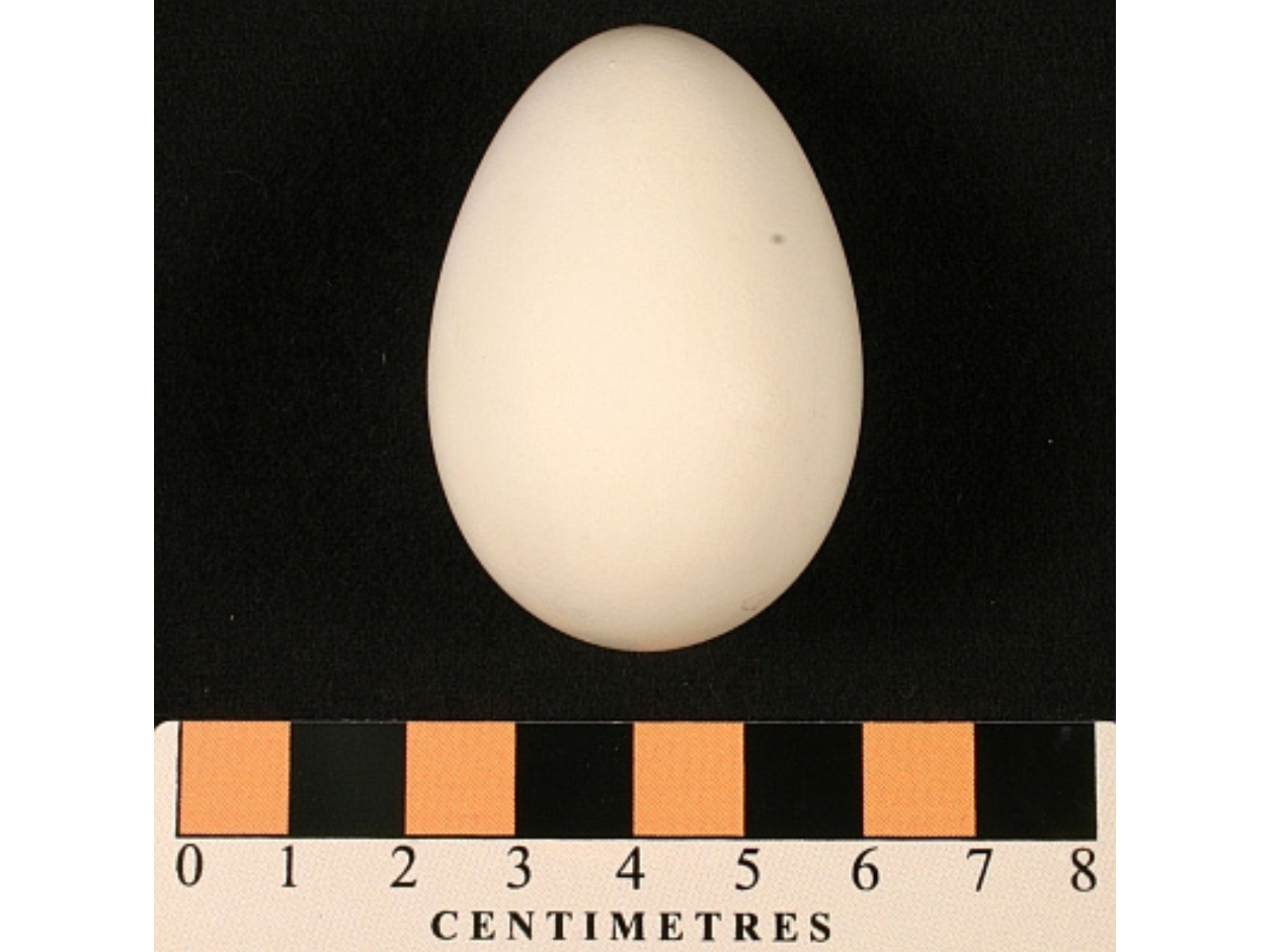
A white egg on a black background with a centimetre ruler along the bottom for scale.

And here in Winnipeg, we had kittiwake eggs collected by this same Arthur Cleveland Bent in 1911! Now curious, I checked and was rewarded to find that we also had an egg collected by him in that same year of the Parakeet Auklet, a mostly grey, puffin-like bird that lives in the northwest Pacific Ocean.

In two of his marvelous volumes (Diving Birds, 1919; Gulls and Terns, 1921), we find Bent’s original field notes describing the collection of the eggs we have in The Manitoba Museum. Both the kittiwake and auklet eggs were collected from tiny Walrus Island just off St. Paul Island in the Pribilof Group off Alaska. Bent described these birds as spending “…the greater part of their lives at sea and return[ing] to these lonely fog-bound islands in Bering Sea to rear their young, where they are wholly engrossed with the cares of reproduction.”


Image: Parakeet Auklet egg (MM1.21-18) collected by A.C. Bent in 1911 from Walrus Island in the Pribilofs.

Getting to the islands was an adventure in itself: “Our introduction to the famous fur-seal islands was characteristic of that dismal climate. We had been sailing by compass all night from Bogoslof Island, and morning found us still groping in the prevailing thick fog, which serves to keep the seals’ coats cool and moist, but is a menace to mariners. At last, when we had about concluded that we had missed our reckoning and had passed the islands, we began to see a few of these large white-breasted auklets flying past us to the eastward. Turning, we followed them, and before long we could hear the barking, roaring, and bellowing of the fur seals in their rookeries on St. Paul Island. Feeling our way carefully toward them until we could dimly see the outline of the cliffs, we crept along the shore into Village Cove [the main town].”

How about navigating by auklet instead of GPS!! That would sure cramp our style nowadays when we even have to punch in coordinates to find the local Tim Horton’s, never mind a tiny island in a northern sea!

Despite the initial doubtful outcome of the trip, Bent had no reservations about his work once there: “On July 7, 1911, I spent one of the most eventful afternoons of my life studying the nesting habits of this and the hosts of other sea birds that make their summer home on the wonderful, little, rocky islet of the Pribilof group, Walrus Island.”

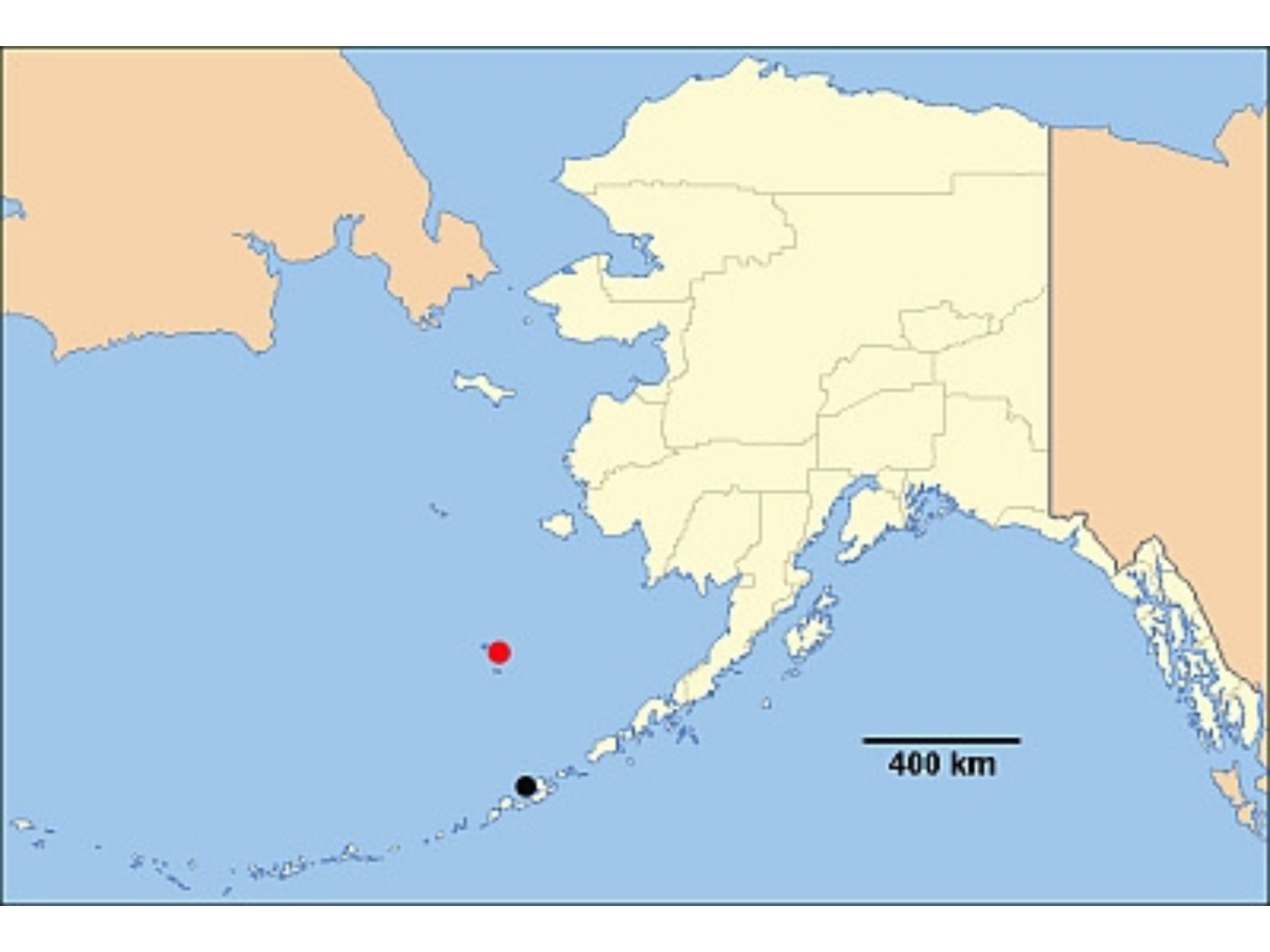
Close-up on a map of Alaska with red and black dots marking off particular islands off the coast.

A map showing the location of Walrus Island (red dot) in the Pribilofs and Bogoslof Island (black dot) in the Aleutians. Bent sailed from Bogoslof to St. Paul Island (the main island near Walrus), some 400 km, through a thick fog by compass only. They found the island by following sea birds.

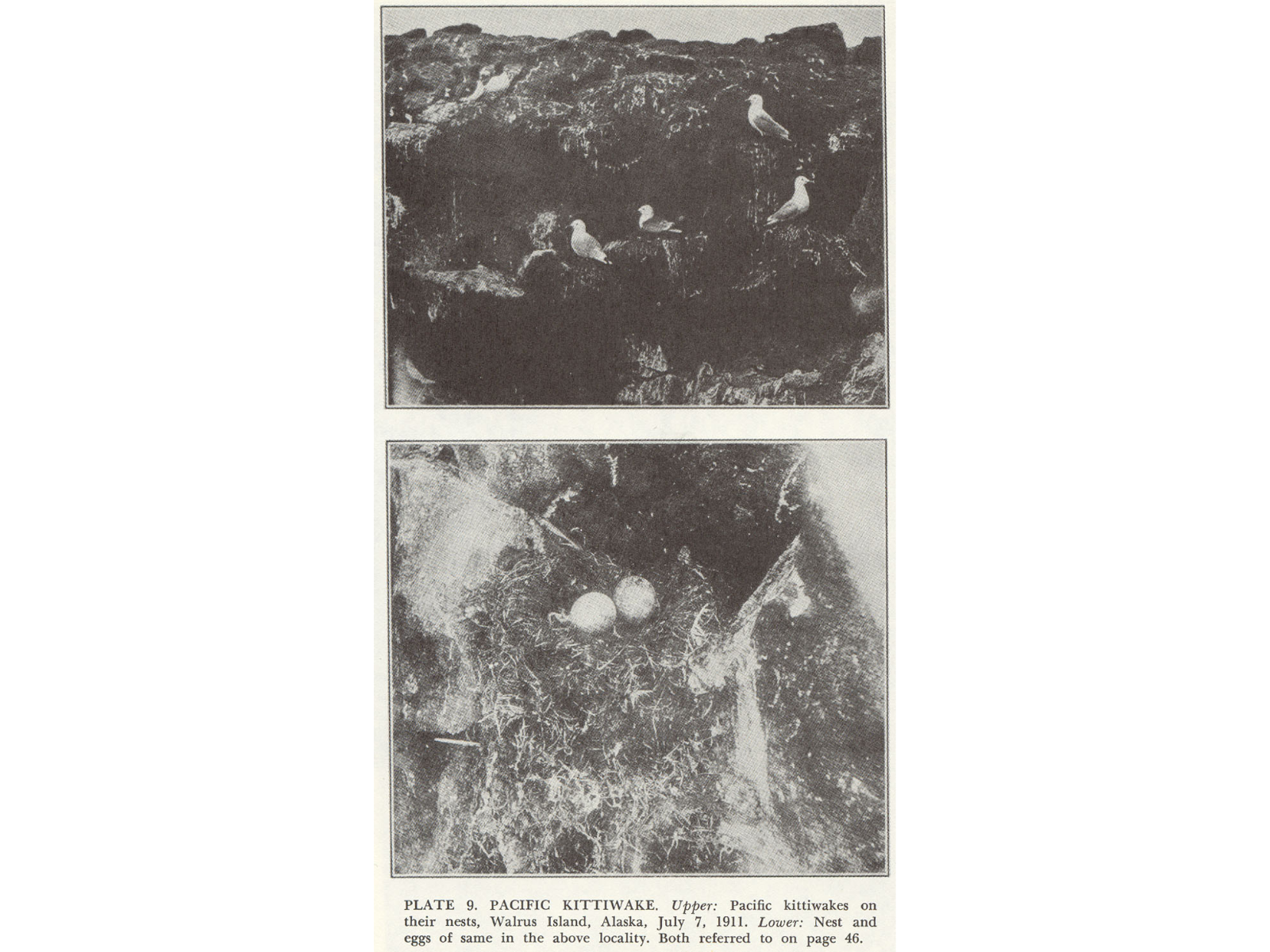
A newspaper clipping of two photos of Pacific kittiwakes. The top photo shows the birds on their cliffside nests, and the lower photo shows two eggs in a nest.

A plate from A.C. Bent’s “Life Histories of North American Gulls and Terns” (1921) likely showing the birds that laid the eggs in the Museum collection, and perhaps our eggs in the nest.

I am fond of Bent’s description of the kittiwakes and their nests from which our Museum eggs came: “In Bering Sea we found this to be one of the commonest gulls and found it breeding on all of the islands where it could find high rocky cliffs. On Walrus Island, where there are no high cliffs, we had an unusually good opportunity to examine the nests. Among the hosts of sea birds which made their summer home on this wonderful island a few little parties, of from four to six pairs each, of Pacific kittiwakes found a scanty foothold on the vertical faces of the low, rocky cliffs. Here their nests were skillfully placed on the narrow ledges or on little protuberances which seemed hardly wide enough to hold them, and often they were within a few feet of nesting California murres [another puffin relative] or red-faced cormorants, with which the island was overcrowded. The nests were well-made of soft green grass and bits of sod securely plastered onto the rocks and probably were repaired and used again year after year. They were well-rounded, deeply cupped on top, and lined with fine dry grass. Most of the nests, on July 7 [1911], contained two eggs, some only one, but none of them held young. The incubating birds and their mates standing near the nests were very gentle and tame. We had no difficulty in getting near enough to photograph them.” Or, apparently, to collect a few of their eggs!

Taking short trips like this in the Museum time machine, via collections and the natural history and human stories they tell, makes me wonder at times if I was somehow born a century (or more!) too late. Not as a knock on the modern approach, but wouldn’t it be fun to open up a modern nature guidebook and find such enjoyable, yet informative prose? Bent’s descriptions convey a joy in observation and discovery, as well as a respect for the organism that is inspiring. Museum collections and the stories they tell can help us make a better connection and foster a deeper appreciation for our fellow Earthlings and their habitats, something that can only be for the good as our world view is increasingly dominated by concrete, steel, asphalt, and electronic/entertainment media.

Dr. Randy Mooi

Dr. Randy Mooi

Curator of Zoology

Dr. Mooi received his Ph.D. in zoology from the University of Toronto working on the evolutionary history of coral reef fishes. Following a postdoctoral fellowship in the Division of Fishes of the Smithsonian Institution…
Meet Dr. Randy Mooi

On a Wild Gull Chase – A Rarity From Afar

Most of us, other than those interested in birds, don’t take much notice of the comings and goings of gulls. Some might even consider “seagulls” a nuisance of sorts as they soar effortlessly overhead… and metabolize. If pressed for natural history facts, though, it might be observed that gulls are here when it’s warm(er) and gone when it’s cold. Which seems simplistic, but is actually quite accurate. Gulls are much better harbingers of spring than the proverbial robin. Robins frequently overwinter in the southern third of Manitoba, whereas gulls of all species are almost universally gone by early December and will return in numbers only in late March or April.

For this reason, seeing any gull in December is noteworthy. So as I crossed the border from North Dakota into Manitoba returning from a post-Christmas soccer tournament in Minneapolis, I was shocked to see a gull flying north along Highway 75 parallel to the car. Despite eye-rolling from family (now used to, but not encouraging of, Dad’s bird diversions), I found a spur road and tried to track down the unusual feathered visitor. The impeccable timing of a train passing between us and the flying bird, and the complication of choosing the wrong side of a divided highway made a re-sighting challenging. But with help from bemused passengers, and after crossing to the west side service road, we did glimpse the gull just before it magically vanished! Cruising the service road just south of St. Jean Baptiste I managed to spot the bird huddled forlornly among the snow-drifted cattails of the drainge ditch beside the highway.

A white bird with grey to black wings and a yellow beak walking on sand backed by a blue sky and green brush.

Herring Gull (Larus argenteus) on Nueltin Lake; the quintessential “seagull.”

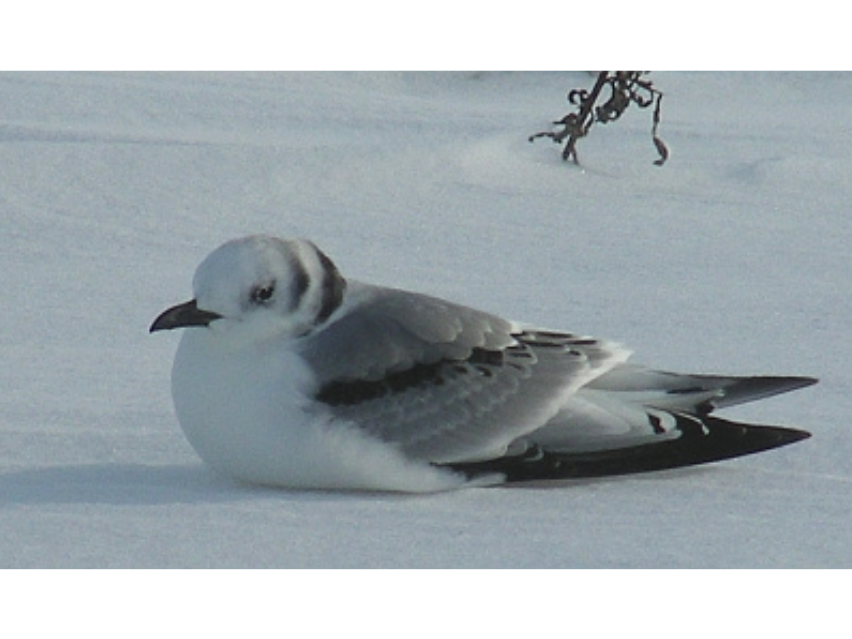
A bird with a white body and grey wings with black tips and a dark beak. The bird is fluffed up and huddled down on a snowy surface.

Black-legged Kittiwake (Rissa tridactyla), first-year plumage, St. Jean Baptiste, Manitoba, December 30 2010.

It was clearly a first-year bird, probably a Black-legged Kittiwake! It wasn’t until back in Winnipeg and after studying field guides and sharing my photos with more knowledgeable birders that I was certain. (I’ve always liked gulls, but their identification I find tricky.) This is only the third record for southern Manitoba! There are fewer than ten records for the province and most have been during the summer along Hudson Bay. The kittiwake is one of the more pelagic (ocean-going) gulls, breeding on cliffs along northern and temperate oceans of North America, Eurasia, and the high Arctic, spending the remainder of the year at sea. So it is not surprising it is such a rarity in southern Manitoba.

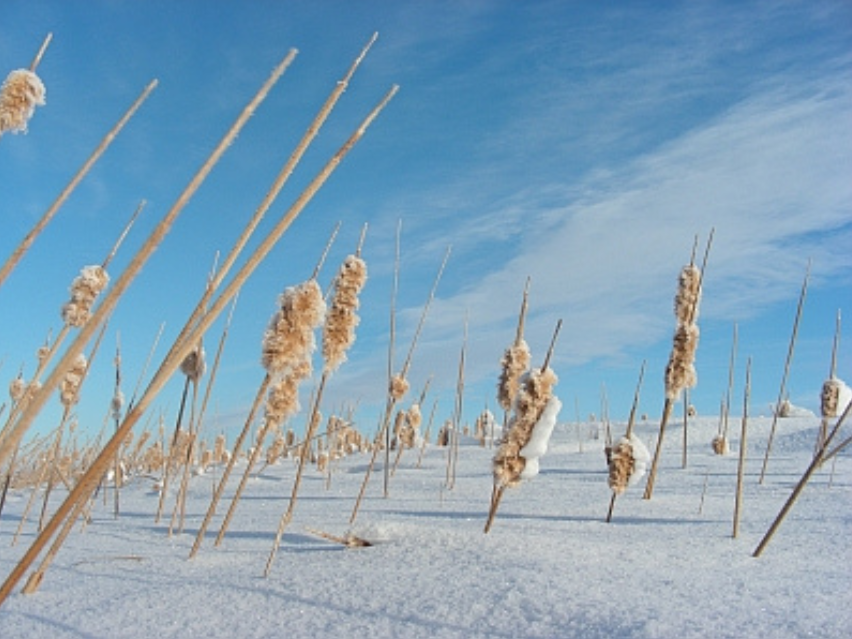
Fluffy, snow-covered cattails emerging from a snow-covered ground, backed by a bright blue sky.

So where did it come from? Hard to say, but there have been a surprising number of kittiwakes reported from the midwestern states this last fall and early winter. In November, Nebraska, and Minnesota each had one bird, and South Dakota had two at Pierre through at least the Christmas season. There was even one as close to Manitoba as Grand Forks, North Dakota in November (maybe, like some Manitobans, getting some early Christmas shopping in). It is possible that the Manitoba kittiwake was driven north by the incredible blizzard that hit North Dakota and Minnesota and was nipping at the heels of my family and I as we raced home that day to beat the weather.


Image: A frigid, but gorgeous prairie morning.

Because the kittiwake looked a little out of sorts, was clearly lost, and no one had managed to find the bird subsequently, a little less than a week later I thought I’d see if I could find its carcass to add to the collection. Looking for a mostly white bird in the drifting snow is worse than looking for a needle in a haystack, but I felt it to be a couple of hours well spent  – we have no Manitoba specimens of this species in the Museum collection. So I was back in St. Jean on a bone-chilling morning on a fool’s errand.

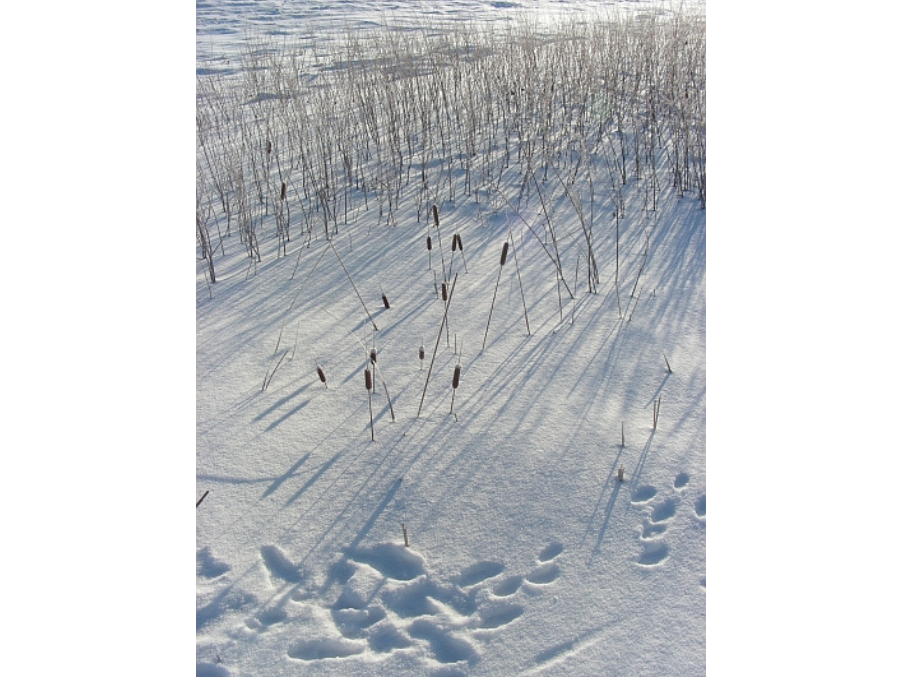
Cattails cast shadows across snowy ground on a bright winter day.

Cattails and their shadows, perhaps hiding a treasure.

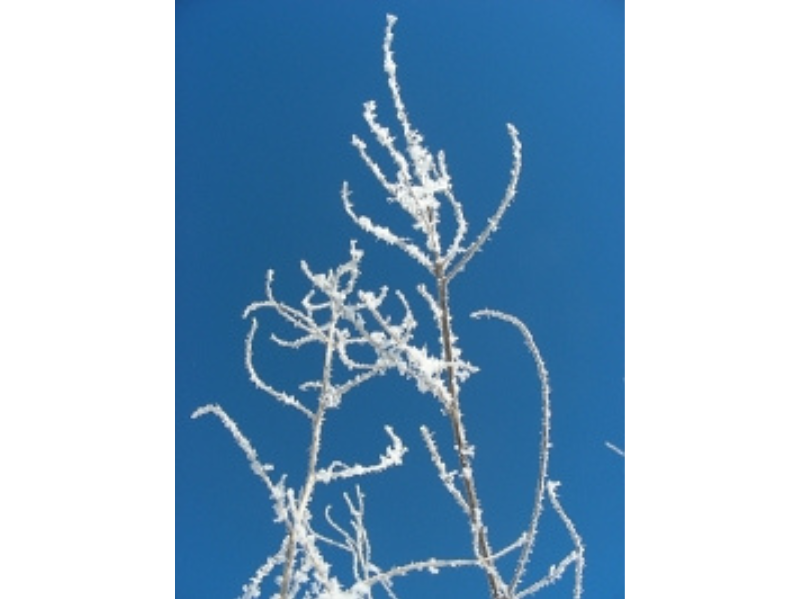
Hoar frost covered branches against a bright blue sky.

Frost-covered plants add to the chill.

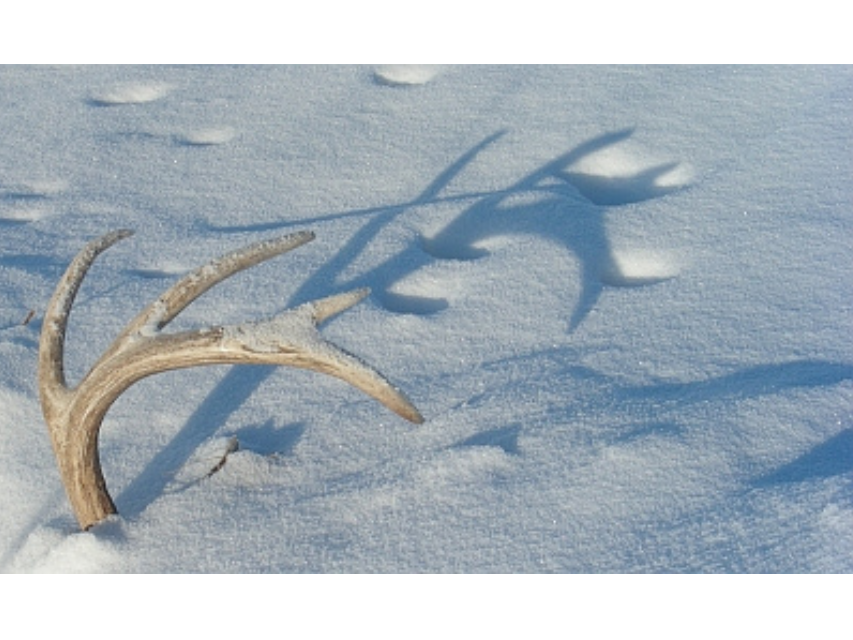
A deer antler sticking out of the snow.

Perhaps the kittiwake avoided the fate that befell this buck whitetail.

I knew exactly where I had last seen it sitting on the snow, and I searched a large area on foot, checking every suspicious snowy mound and looking for a few telltale feathers. I had no luck, but perhaps that meant that the bird had had some. I did flush a snowy owl and discovered instead a true winter wonderland of snow-capped cattails with their  shadows stretching over pristine snow, interrupted only by stories told by rabbit tracks.

Even an unsuccessful wild gull chase can have its rewards.
Dr. Randy Mooi

Dr. Randy Mooi

Curator of Zoology

Dr. Mooi received his Ph.D. in zoology from the University of Toronto working on the evolutionary history of coral reef fishes. Following a postdoctoral fellowship in the Division of Fishes of the Smithsonian Institution…
Meet Dr. Randy Mooi

A Typical (or is that atypical?) Day

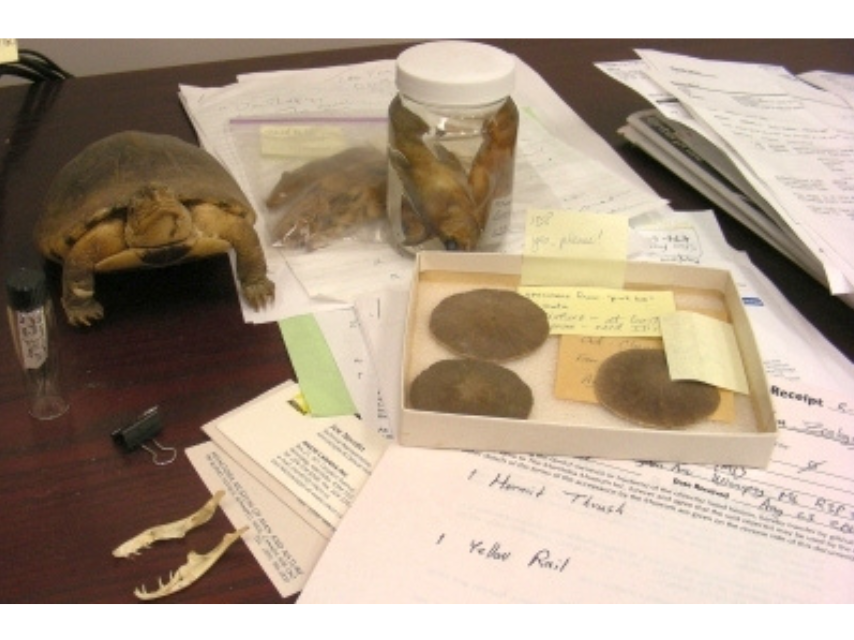
As I sit at my desk being stared at by a stuffed turtle surrounded by sand dollars, Australian mice, gut contents of a snake, Indo-Pacific fishes, a set of lizard dentaries, and a donation form for a frozen hermit thrush and yellow rail, it occurred to me that many of the typical tasks of curators would be considered atypical, if not downright bizarre, for anyone not working in a natural history museum.

For example, I just got off the phone with someone who was thinking about donating a taxidermied wolf. We frequently receive offers of wolf and bear rugs, various African animal skins, skulls and bones, along with window-killed birds. Before we accept any one of these interesting and generous offers, I need to determine if it meets the mandate of the Museum, is in good condition with quality data, has been legally obtained, fills a gap in our collections or might meet an exhibit need, as well as take into consideration storage issues (is there enough space, do we have the resources to maintain the item properly over the long term).

Earlier today, I took a baby rabbit out of the freezer that was such a donation last year. It needs to thaw so that a university student volunteer can make a study skin to add to the collection. The student is gaining a museum skill and learning mammal anatomy, experience useful in her pursuit of a science career studying mammals; the Museum gets some specimen preparation gratis.

A variety of specimens on a desk top amongst various paperwork.

Among the desk clutter: Australian mice, Indo-Pacific fishes, a stuffed turtle, sand dollars, a vial of snake gut contents, and a donation form for a yellow rail and hermit thrush.

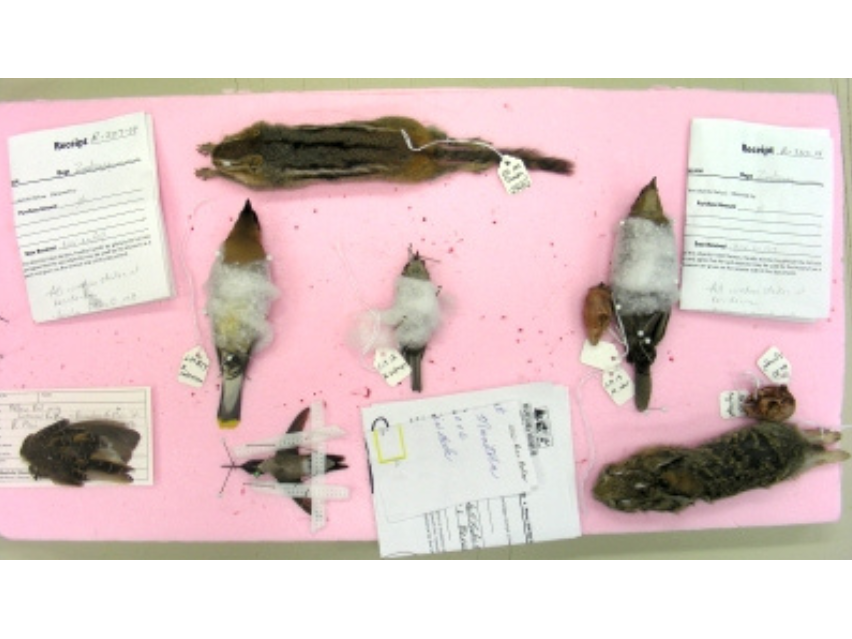
A variety of birds and small mammals pinned out on a light pink board along with some paperwork identifying the specimens.

A series of study skins of birds and mammals prepared by volunteers pinned out on a foam board. The cottontail is on the bottom right.

Another phone call comes in: how long do monarch butterflies stay in the chrysalis before hatching? [About two weeks.]

Everyone gets e-mail. But one of mine involves obtaining an old Marsh Wren nest from Oak Hammock Marsh to replace one in an exhibit that was damaged. They know of some nests, when can I come out and pick it up? Another e-mail is from a colleague at The Natural History Museum in London dealing with the visit of my PhD student to his molecular lab where she was extracting DNA of a genus of goby found on coral reefs throughout the Indo-Pacific.

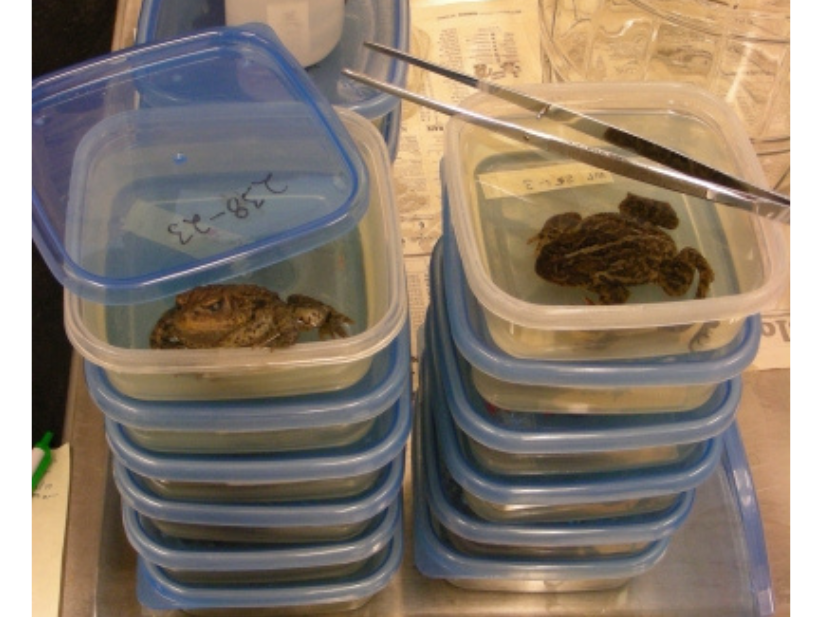
Two stacks of small clear plastic containers with blue lids. The top to lids are ajar, showing toad specimens inside each.

In the wet lab here, I just changed the fluid for a series of toads I collected in the Interlake during the spring. The switch from formalin (a nasty fixative) to 70% alcohol will ensure their long-term preservation and make them easier to use for anatomical studies examining the northern hybrid zone between American and Canadian toads. Next up is preparing specimens of Hudson Bay brachiopods for a loan to an eastern Canadian researcher looking at chemical composition and climate change.

Now to get back to correcting the page-proofs so I can get that  paper on colour variation in garter snakes published… or maybe I should review the new text panels for the snake den exhibit.

So, what did you do today?


Image: A series of toads collected in the Interlake last spring being prepared for addition to the permanent collections.

Dr. Randy Mooi

Dr. Randy Mooi

Curator of Zoology

Dr. Mooi received his Ph.D. in zoology from the University of Toronto working on the evolutionary history of coral reef fishes. Following a postdoctoral fellowship in the Division of Fishes of the Smithsonian Institution…
Meet Dr. Randy Mooi

Summer…Holidays?

“I will be unavailable until…” has been a frequent message when my number has been dialed over the last two months. And although a couple of days might have been vacation, the majority is explained by time spent on fieldwork, hence the lack of blogging. So what is “fieldwork”? For Museum curators, it means getting out of the office to collect information relevant to our collections or research projects. In zoology, this usually means to be out standing in the field – or sometimes forest, stream, or pond.

As wonderful as it is to be out of the city, away from phones and e-mail, and in a remote part of the province searching for fishes, frogs, toads, and snakes, fieldwork is challenging for all these same reasons. In the city, we have more-or-less regular hours, a family to come home to, and our needs and wants are only a phone call (or mouse-click) away. On remote islands, dirt tracks, or wading muskeg north of 60, you better have all you need in your backpack.

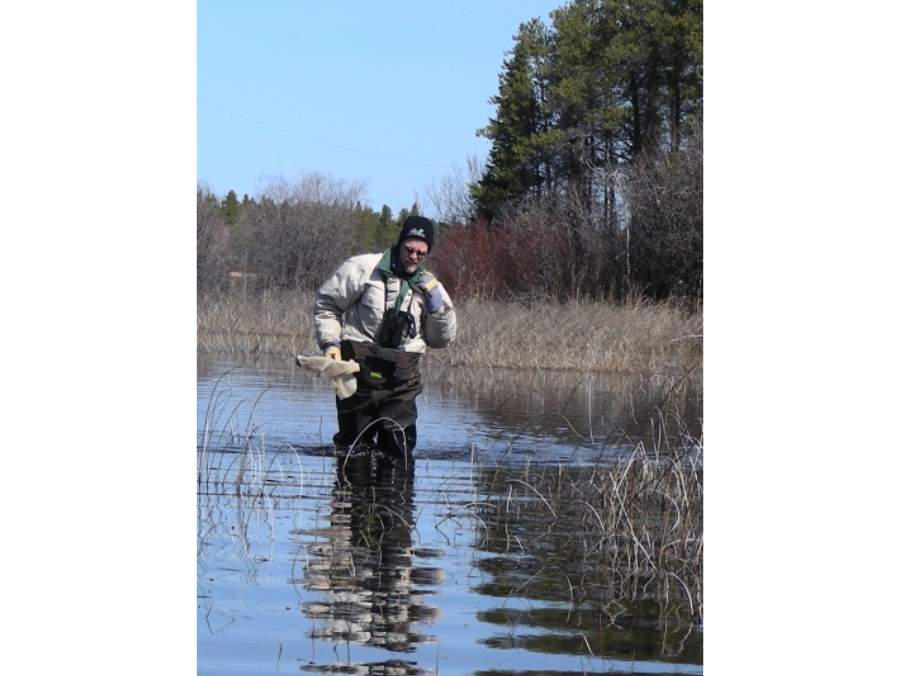
A man wearing hip-waders thigh-deep in a body of water near low-growing reeds and rushes.

Outstanding in the field – or is that out standing in a pond?

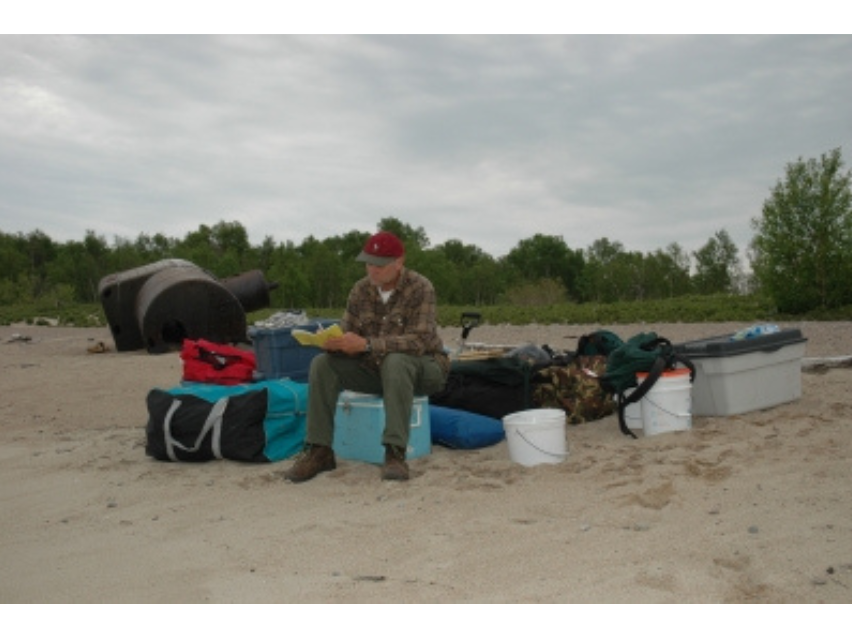
A man sitting with piles of luggage and packed boxes and bucks on a sandy beach.

Wonder if we brought enough food if the plane doesn’t show up?

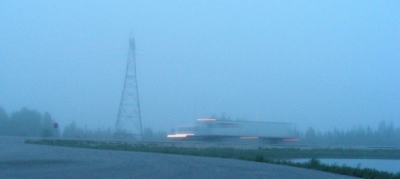
A truck blurred as it drives by across the frame in blue-ish morning low-light.
And you don’t do fieldwork because the hours are good. For frogs and toads, daylight hours are used to scout out potential habitat and to look for eggs and tadpoles. But to find the adults in any numbers, you need to return to these sites when it is dark and males are serenading for lady friends. Up north in June, when the mosquitoes are hungry, many frogs and toads don’t begin calling consistently until about 11 pm! It can make for a long day (and night).

Regardless, we’re crazy enough to enjoy it – the thrill of the chase and of the discovery is alluring. And the beautiful surroundings, fresh air, and the sounds of nature are interrupted only by the occasional late-night/early morning trucker trying to make a deadline.


Image: A truck zooms by a collection site towards Ponton at 4 am.

But why are we out there all hours of  the day and night? Even basic knowledge of many species in Manitoba gets to be pretty thin once you get out of the southern quarter of the province. The distributional limits of even common vertebrates like frogs and toads, never mind invertebrates (like spiders and insects), have not been accurately determined. This kind of basic knowledge is important if Manitobans want to know what kind of impact we might be having on the environment, or if we want to know if climate change might be altering living conditions. If we don’t even know where the animals (or plants) live, how can we know if their distributions are changing?

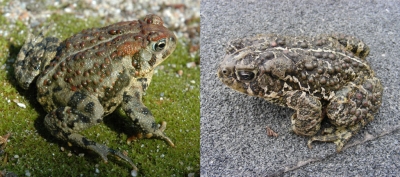
Two images side by side. On the left, a speckled toad on a mossy rock. On the right, a speckled toad on pavement.

In the south, the American toad (Anaxyrus americanus) and Canadian toad (A. hemiophrys) are reported to have a contact zone just east of Winnipeg running south from Patricia Beach to the Canada/U.S. border. Over the last few decades it appears to be moving westward. Is the same happening in the northern parts of the province? We just can’t say because we don’t even know for sure if there IS a contact zone.


Image: A Canadian toad, left, faces off with an American toad, right.

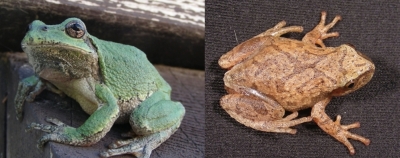
Two images side by side. On the left, a predominantly light green frog. On the right, a orangey-brown frog.

This spring, I extended the known range of Gray Treefrog (Hyla versicolor) northwards to the Saskatchewan River and that of the Spring Peeper (Pseudacris crucifer) westwards to almost the border with Saskatchewan. Are these recent species movements or just an artifact of more thorough searching and finding them where they’ve always been?


Image: Gray treefrog from near Grand Rapids, left, and spring peeper from Naosap Lake, right.

Future fieldwork by Museum personnel and by other scientists will give a clearer picture of where our animals (and plants) live now, and allow us to monitor these species for any changes in distribution. This seemingly basic information is critical to formulating environmental policy and to making informed decisions about the kind of province we want to live in. It also provides the data necessary to investigate the history of how species re-populated Manitoba after the last ice age. And museums, like The Manitoba Museum, play an important role in providing and archiving this information through fieldwork and collections, as well as analyzing it.

So the next time you call a curator and hear, “I will be unavailable until…”, we might just be trying to figure out what lives in your backyard and how it might have gotten there.

Dr. Randy Mooi

Dr. Randy Mooi

Curator of Zoology

Dr. Mooi received his Ph.D. in zoology from the University of Toronto working on the evolutionary history of coral reef fishes. Following a postdoctoral fellowship in the Division of Fishes of the Smithsonian Institution…
Meet Dr. Randy Mooi

RESTRICTED ACCESS… Come on in!

Close-up on the fourth floor button of an elevator panel. The label reads,

Welcome to the Zoology blog! This little corner of the Museum website will be a small window into the “restricted access” world of the 4th floor where specimens are housed and scientific research is undertaken that provides the foundation for exhibits on display in the public galleries. It often comes as a surprise to even frequent Museum visitors that less than 2% of our collections are on display at any one time. A tour of the zoology holdings would reveal a dimly-lit space with densely-packed shelves brimming with what might seem a grisly accumulation of mammal skins and skulls, bird mounts, pinned insects, and gruesome cocktails of fishes and frogs preserved in alcohol. Why all the dead stuff in a museum otherwise dedicated to the celebration of life and the natural world? Why so many? And how did they get here? These are some of the questions that will be explored during the development of this blog.

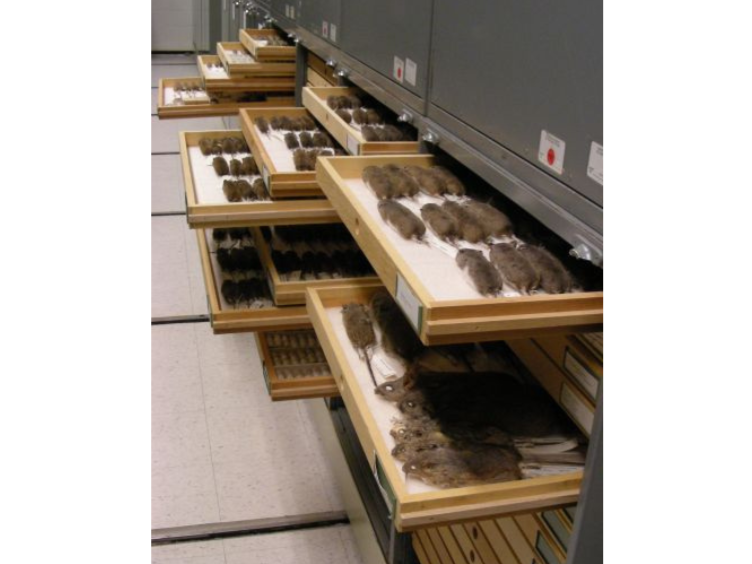
Looking down an aisle of storage cabinets. A number of drawers are pulled open along the row revealing numerous preserved rodent specimens.

A sample of the collection’s rodents.

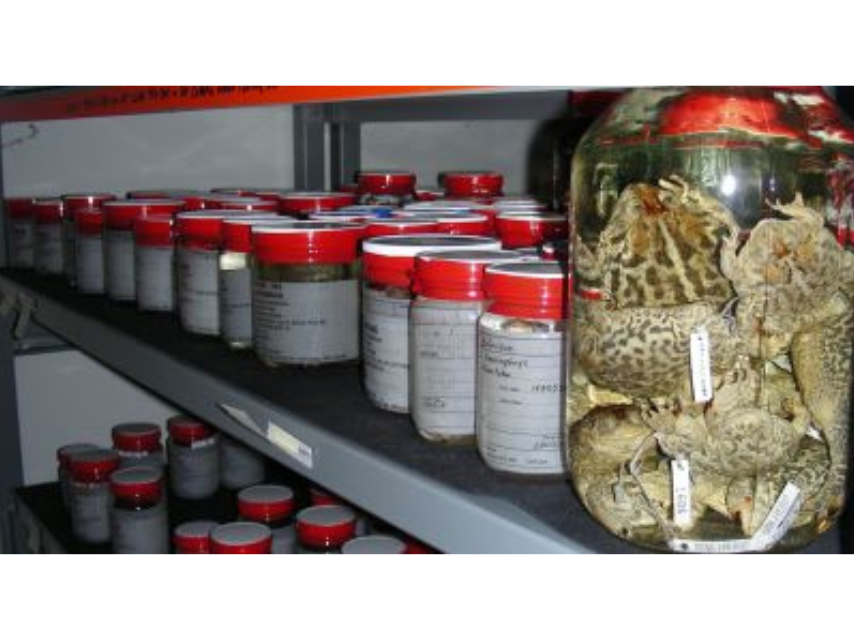
Close-up on a shelf holding numerous sealed jars with white labels and red tape sealing the top. The closest jar, which is largest is rotated to show several preserved toad specimens inside.

Toads preserved in alcohol.

The collection shelves are not as lifeless as they at first appear. Although the specimens are no longer physically alive, a good collection is a dynamic and exciting place. Researchers like myself, and others from around the world, examine the Museum’s collections to identify species new to science, to determine where and how various species live, and to uncover Manitoba’s and the world’s rich biological history – all important steps to understanding and conserving nature’s diversity.

Each specimen has two stories to tell: one biological that outlines what species live where, when, how, and with whom, the other a human story intimating the trials and tribulations of fieldwork often under difficult circumstances in interesting places or providing a taste of life in a different era.

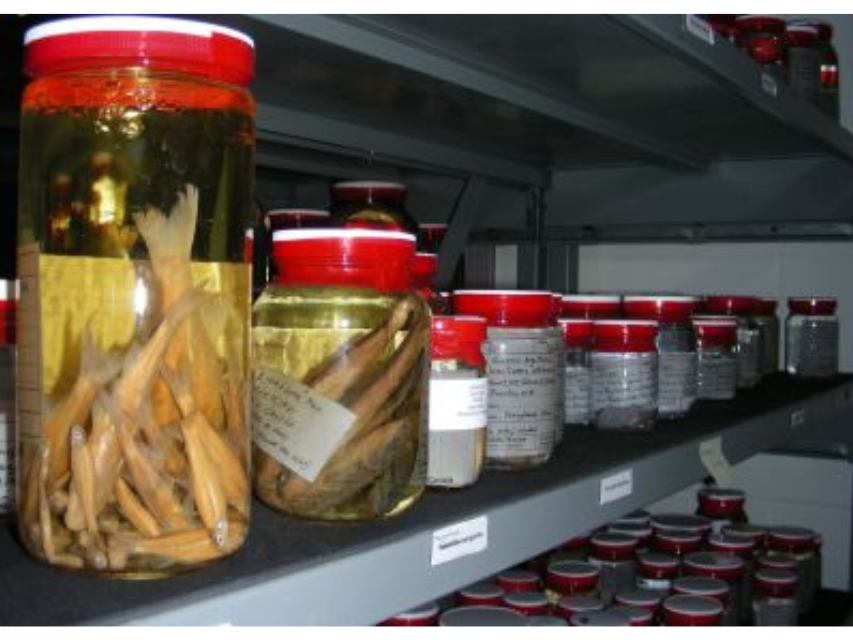
Close-up on a shelf holding numerous sealed jars with white labels and red tape sealing the top. The closest two jars, which are larger, are rotated to show small, preserved fish specimens inside.

Alcohol-preserved fishes – what stories might they hold?

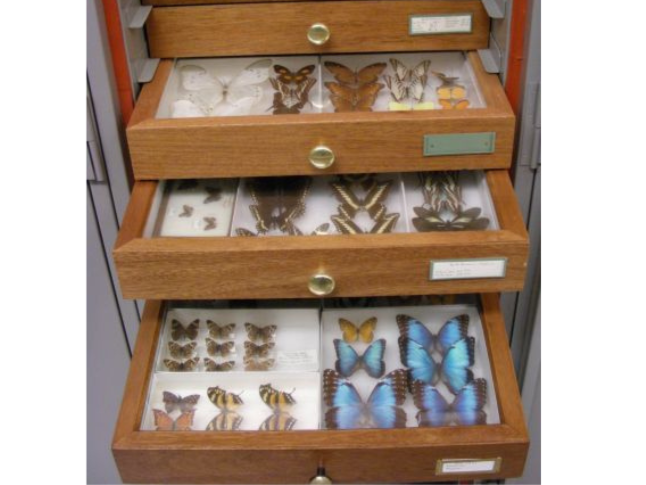
Three wooden drawers of a storage cabinet pulled open to different degrees showing a variety of pinned butterfly specimens.

Who collected and studied these butterflies? What motivated them?

For a zoology curator, picking up a jar of fishes conjures up an image of a research team slogging through marshes or hauling a trawl in heavy seas, whereas an aging pinned butterfly might bring to mind a monocled Victorian naturalist peering closely at that same specimen at a rolltop desk by kerosene lamp.

Future entries will examine specimens from biological and human perspectives and investigate the how and why of Museum collections.

Hope you join me.

Dr. Randy Mooi

Dr. Randy Mooi

Curator of Zoology

Dr. Mooi received his Ph.D. in zoology from the University of Toronto working on the evolutionary history of coral reef fishes. Following a postdoctoral fellowship in the Division of Fishes of the Smithsonian Institution…
Meet Dr. Randy Mooi