



Posted on: Friday November 14, 2025
Manitoban Emily A. Parker served as a Nursing Sister during the First World War; the recent discovery of her nursing cape in the Manitoba Museum collection is bringing her story back to life through careful conservation efforts.
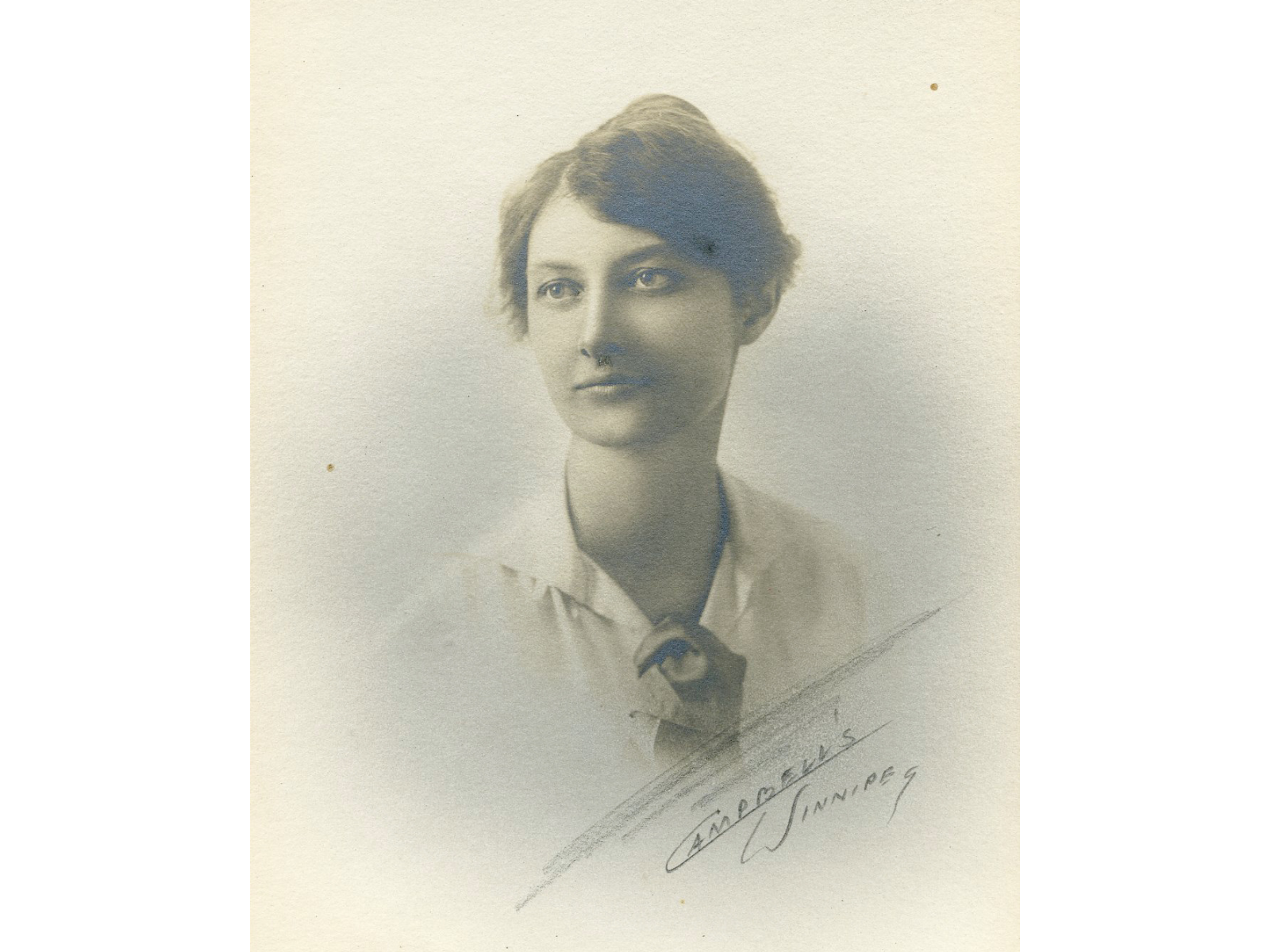
Lieutenant Emily A. Parker, originally from Morden, Manitoba, served as a Nursing Sister in No. 10 Canadian General Hospital in Brighton, England in 1917. After the war she returned to Canada where she resumed her role as a school nurse for the Winnipeg School Division. Parker’s contributions to the war effort were recently brought to light when Curator of Human History, Dr. Roland Sawatzky, discovered Parker’s nursing cape within our collection during his research on women in war.
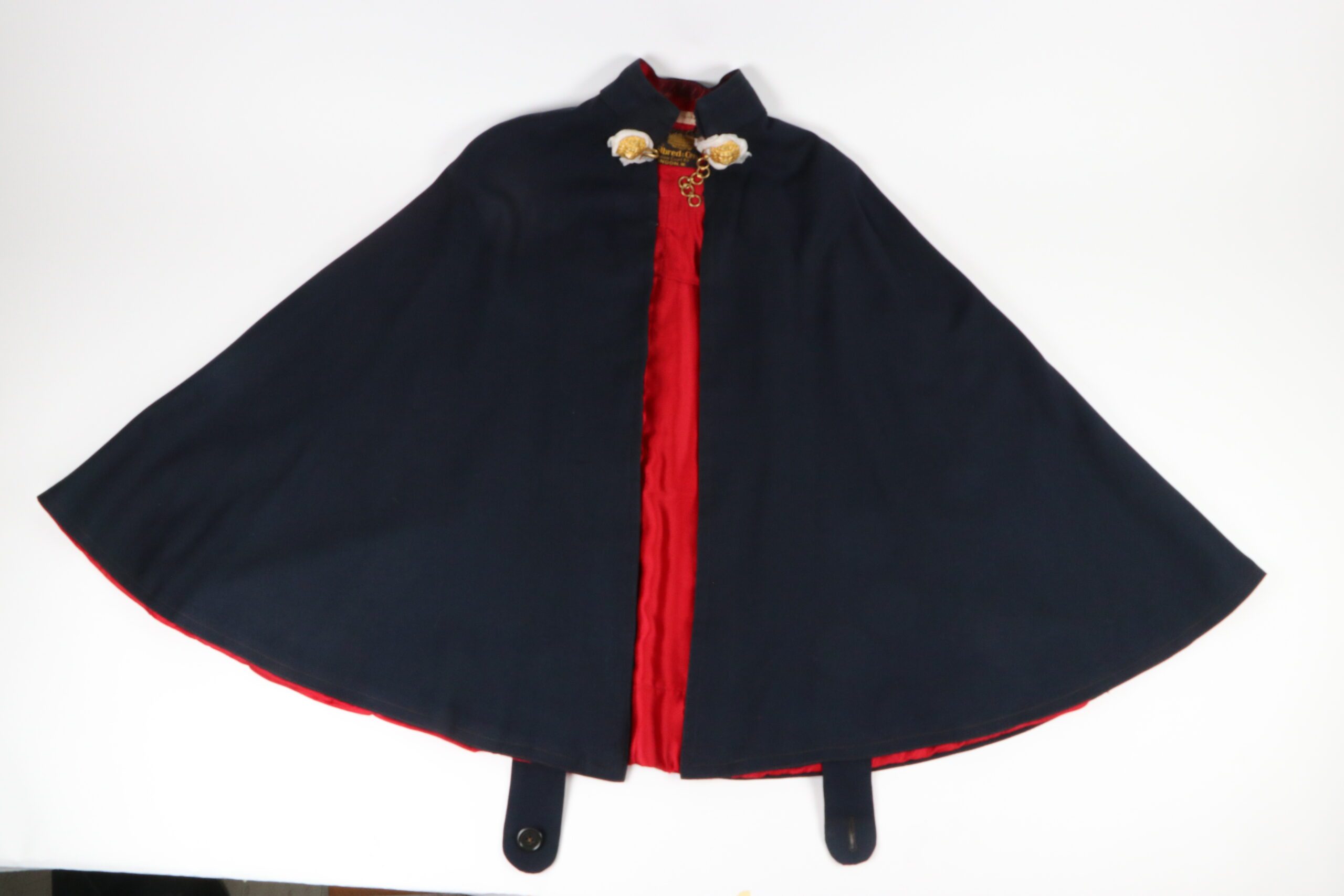
The cape is composed of a beautiful navy wool exterior that is lined with red silk and fastens at the neck with a chain connecting two gold-coloured lion’s heads. This is an amazing object for the quality of materials used and depicts a vibrant story of the contribution women made to the medical field during the war. Unfortunately, with time and other factors, the silk on the interior of the cape shattered along the hemline and showed significant losses around the neck.
Image: Portrait of Emily A. Parker – Courtesy of HSC Archives/Museum
Silk is a particularly tricky textile to repair because not all manufacturers used the same process to create the fabric. The weighted feeling of silk as you hold it in your hands is a result of adding metallic salts during the manufacturing process which can contain undesirable chlorides. The chlorides, in addition to poor storage, accelerate the damage with time and can create a shattered appearance in the fabric.
Despite the finnicky nature of silk, I recently undertook the treatment of the cape in the conservation lab for display in November 2026. Silk crepeline netting was carefully stitched overtop of the damaged areas, the hemline was stitched back into position using the original needle holes, and a support backing was used to stabilize areas of loss.

Detail of shattered silk on the collar of cape before treatment. © Manitoba Museum

Preparing backing material to repair silk hem. © Manitoba Museum

Netting carefully stitched over silk to protect from further damage. © Manitoba Museum
As stewards of the belongings found in our collections, it is important to preserve objects like Emily Parker’s cape, as they offer insights into the story of an individual or time that could otherwise be lost to the past.
Although Emily’s cape won’t be on display until November 2026, I invite you to visit the Manitoba Museum to explore other Manitoban stories, including the story of Robert Jamerson, who served in the famous all-Black No. 2 Construction Battalion during the First World War, and his son Frank, who served in the Second World War. This temporary exhibit, Father and Son in Service, will be on display until November 30.
Image: Emily A. Parker’s WWI nursing cape.© Manitoba Museum