


A lichen by any other name would be just as confusing

A lichen by any other name would be just as confusing

Scientists have spent many decades arguing with each other about lichens. It’s a plant! No, it’s a fungus! No, it’s an alga. It’s a fungus parasitizing an alga. No, it’s an alga parasitizing a fungus! Nobody’s parasitizing anybody! They’re living in harmony like a bunch of hippies in a commune! I prefer to think of a lichen as an organism with an identity crisis. No wait, that’s not very flattering. Perhaps they are more like legless organism support groups. Or maybe they’re akin to exclusive nightclubs with a “no animals allowed” sign on the door.
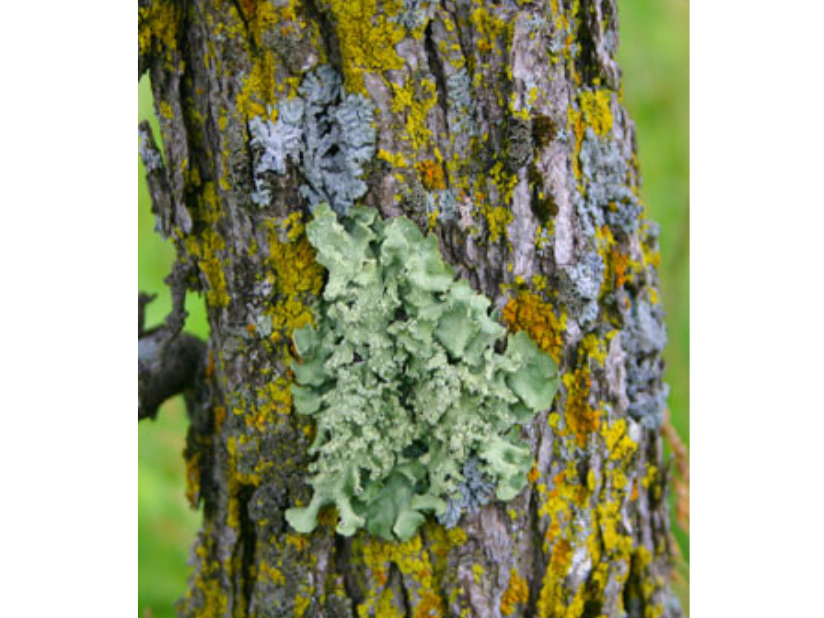
Green and yellow lichen growing on the bark of an oak tree.

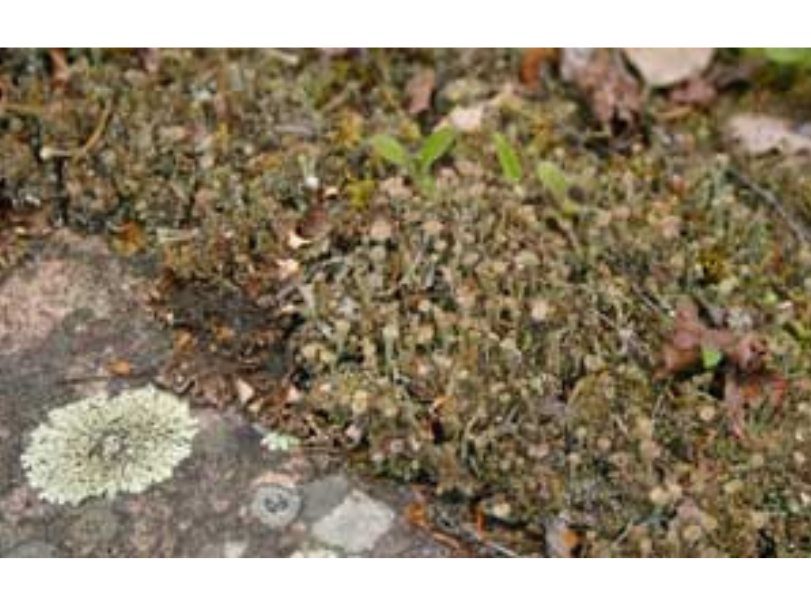
Lichens growing on a rocky surface.

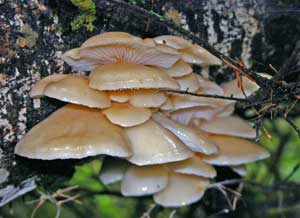
A cluster of flat-topped mushrooms growing directly off the trunk of a tree.

For a long time no one knew anything about the true nature of lichens. Back in the days before microscopes the only organisms that people could see were creatures that moved (animals) and creatures that didn’t move (plants). Fungi and lichens could not move and were thus considered “plants” albeit unusual ones as they were not green.

Eventually scientists began to realize that the natural world was much more complex than they could possibly have imagined. After microscopes were invented they realized that there were lots of “mini-organisms” and eventually a third Kingdom, the Protista, was proposed. However, it wasn’t until 1969 that Robert Whittaker’s five kingdom classification that considered “fungi” to be separate from plants, was published in the journal “Science”. When The Manitoba Museum opened in 1970, fungi were still broadly considered by the public to be “plants” as most biology textbooks did not incorporate the new five kingdom classification right away. This system of classification is still referred to in some of the Museum’s older galleries such as the “Lichens: The Good Partners” exhibit in the Arctic-Subarctic Gallery. A lack of funding for gallery renewal has prevented us from updating these old exhibits.

Image: Fungi were still considered to be primitive plants when the Museum first opened.

In reality, lichens cannot be classified as anything because they are composite organisms containing species from (probably) four different kingdoms. The scientific name of the lichen is based on the name for the fungal host (Kingdom Fungi) but lichens also contains photosynthetic organisms called “photobionts”. The photobiont is usually a green alga (Kingdom Plantae) but sometimes a golden or brown alga (Kingdom Chromista) or a cyanobacteria (Kingdom Bacteria). Some lichens, like the dog lichens (Peltigera spp.), have both green algae and cyanobacteria in them (it’s the party spot of the lichen world cause the cyanobacteria mix a mean nitrogen smoothie!). Some biologists even consider lichens as “self-contained mini-ecosystems”.
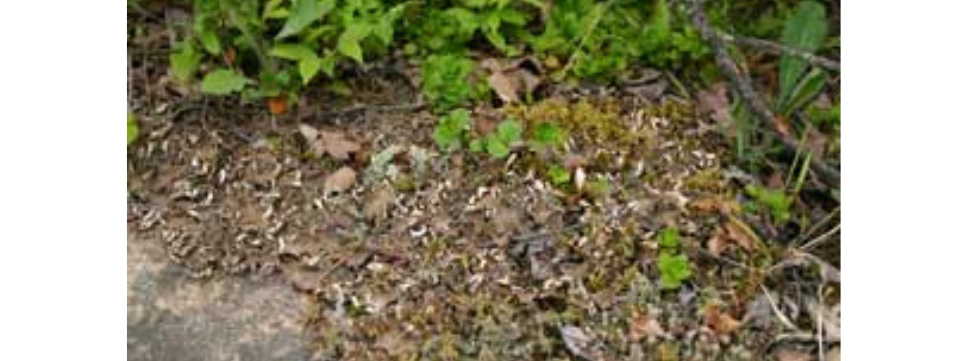
Lichens growing on a rocky surface.

You’d think with our high powered microscopes, fancy computers, and DNA analysis that we would have this classification thing all worked out. But the more things change the more they stay the same, and scientists are still arguing about how we should classify the organisms on our planet. Whatever we decide call them, there’s one thing for certain-the lichens are completely indifferent to our puzzlement over their true nature.

Dr. Diana Bizecki Robson

Dr. Diana Bizecki Robson

Curator of Botany

Dr. Bizecki Robson obtained a Master’s Degree in Plant Ecology at the University of Saskatchewan studying rare plants of the mixed grass prairies. After working as an environmental consultant and sessional lecturer…
Meet Dr. Bizecki Robson

National Anthropology Day

By Maureen Matthews, past Curator of Cultural Anthropology 


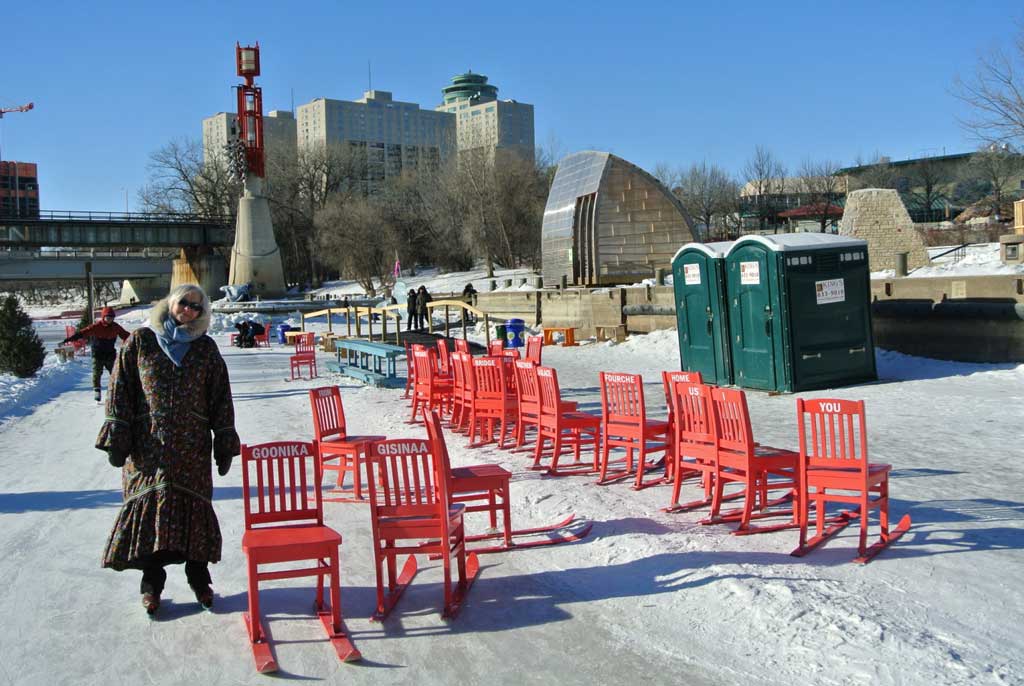
Today is National Anthropology Day and as the Museum’s Anthropologist, I have been participating in a number of public events. Most recently I assisted with one of three winning designs in this year’s Warming Huts Competition, organized annually by the University of Manitoba, School of Architecture. This entry, Recycled Words, is the work of KANVA, a team of young architects in Montreal. These are the ski/chairs you see down on the Riverwalk, each painted a bright salmon pink with two words stenciled on each so that at rest the chairs can be used like fridge-magnet words to create little sentences. My contribution was the words on the chairs. Because we could use so few words and because the idea was to combine them to make little thoughts, I made up a list of words that do double duty as nouns and verbs, words like canoe, skate, ski, etc. We added place names, a few connecting words and some French words as well.

Maureen Matthews, bundled up in winter clothes, standing outside on a cleared forzen river path beside a number of red chairs with skiis along their feet. On the two chairs closest to her, the words "Goonika" and "Gisinaa" are written on the chair backs.

Because I work with Anishinaabe people to emphasize the importance of the Anishinaabe language, I made sure, in addition to words like Métis, Cree and Ojibwe, that we included Anishinaabe words. Anishinaabe was beyond the letter limit for the chairs as were a great many other appropriate Anishinaabe words but there are two: Gisinaa (It is very cold) and Goonika (There is a lot of snow). The Ojibwe words were very efficient for this purpose. Because of the structure of the language, one word contains the elements of an entire sentence in English, so one chair is a sentence all by itself. The chairs project thus takes advantage of the “talents” of both language families. In French and English you could say that the kind of sentences which can be constructed are endless– in Anishinaabemowin there is no end to the words that can be created – each word as the famous linguist Edward Sapier used to say, a “tiny imagist poem.”

This week I have had visitors here from Arviat and when I told them about my Anishinaabe contribution to the chairs, they laughed because one of the words sounds like Inuktitut for “someone is kissing someone” – appropriate I suppose since it was Valentine’s Day.


Links:

KANVA website

CTV News report on the chairs

American Anthropological Association contacts

http://bit.ly/NationalAnthropologyDay

Social Hashtag: #nationalanthropologyday

Tag AAA on Twitter (@AmericanAnthro) and

Facebook (American Anthropological Association) and we’ll share your posts.

Public Archaeology Press

By Kevin Brownlee
Past Curator of Archaeology

Over the course of the past year I have been involved with a few publications highlighting Archaeology. Each is quite different, from public outreach to academic article to education online resources.

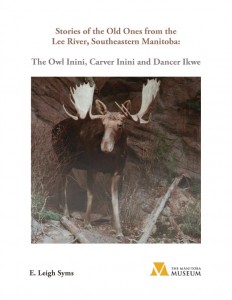
The first is a book published by the Manitoba Museum called Stories of the Old Ones from the Lee River, Southeastern Manitoba: The Owl Inini, Carver Inini and Dancer Ikwe (2014). The publication is the result of many years of work by the Museum and our community partner Sagkeeng First Nation. The lead author E. Leigh Syms retired Curator of Archaeology along with a diverse group of contributors including the late Elder Mark Thompson. The book is publically written and includes over 150 images, maps, drawings and paintings. I was the project manager for the publication.

Buy a copy from the Manitoba Museum Gift Shop.


The second publication is an academic journal article on quartz characterization which examines artifacts from the Manitoba Museum collection in relation to quartz quarries documented in northern Manitoba. The article was published in the prestigious journal Archaeometry vol 56, issue 6 pages 913-926 (December 2014). The results indicate quartz from quarries on Granville Lake were transported up to 200km away. The lead author is a brilliant young PhD, Rachel ten Bruggencate who worked on the Granville Lake Social Science and Humanities Research Council Project that was run through the Museum. Read the abstract online.

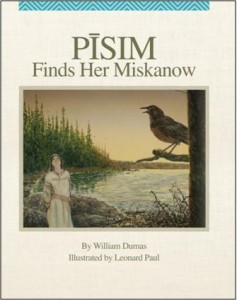
The last publication was an online resource put together by the Centre for Research in Young People’s Texts and Cultures the authors on the guide were Margaret Dumas and Deborah Schnitzer. The teachers guide was for the book Pīsim Finds Her Miskanow and written for the Grade 5 Manitoba Curriculum. Find the guide here.

Public Archaeology – What Should have been in The News

By Kevin Brownlee
Past Curator of Archaeology 

Open pages of the book Pīsim Finds her Miskanow showing text with diagrams, and artistic illustrations.

Today’s post is a bit of a stretch for the theme public archaeology in the news, since media did not pick up on our recent work. The project most deserving of media attention would be the teaching resources recently released for the book Pīsim Finds her Miskanow. 

Educational resources now available for Pīsim Finds her Miskanow, a nationally awarded publication. The centre for research in young people’s texts and cultures (CRYTC) at the University of Winnipeg has released an 80 page teachers guide available for download on their website. The guide is written for Grade 5 in the Manitoba curriculum. You can also listen to two of the songs from the book, the Paddling Song and the Lullaby. 

Image: Highly illustrated book brings Rocky Cree history to life, now easier to use in the classroom.

Noteworthy Public Archaeology

By Kevin Brownlee
Past Curator of Archaeology 

Open pages of the book Pīsim Finds her Miskanow showing text with diagrams, and artistic illustrations.A number of events have occurred this past year that are noteworthy. The book Pīsim finds her Misknaow won a public communications award from the Canadian Archaeological Association in May 2014. This national award recognizes archaeology publications that engage the general public. 

Two display cases were produced for the Sagkeeng First Nation Heritage Centre. The exhibits were unveiled at the Heritage Centre on May 12, 2014.

Looking into a blue display case shadow box with photographs and illustrations of artifacts as well as descriptive text.

Two Eagles Cache Education Exhibit showcases replica artifacts found with a 4,000 year old ancestor.

Looking into a green display case shadow box with photographs and illustrations of artifacts as well as descriptive text.

Rivermouth Cache Education Exhibit showcases replica artifacts found with two ancestors dating to 450 years ago.