

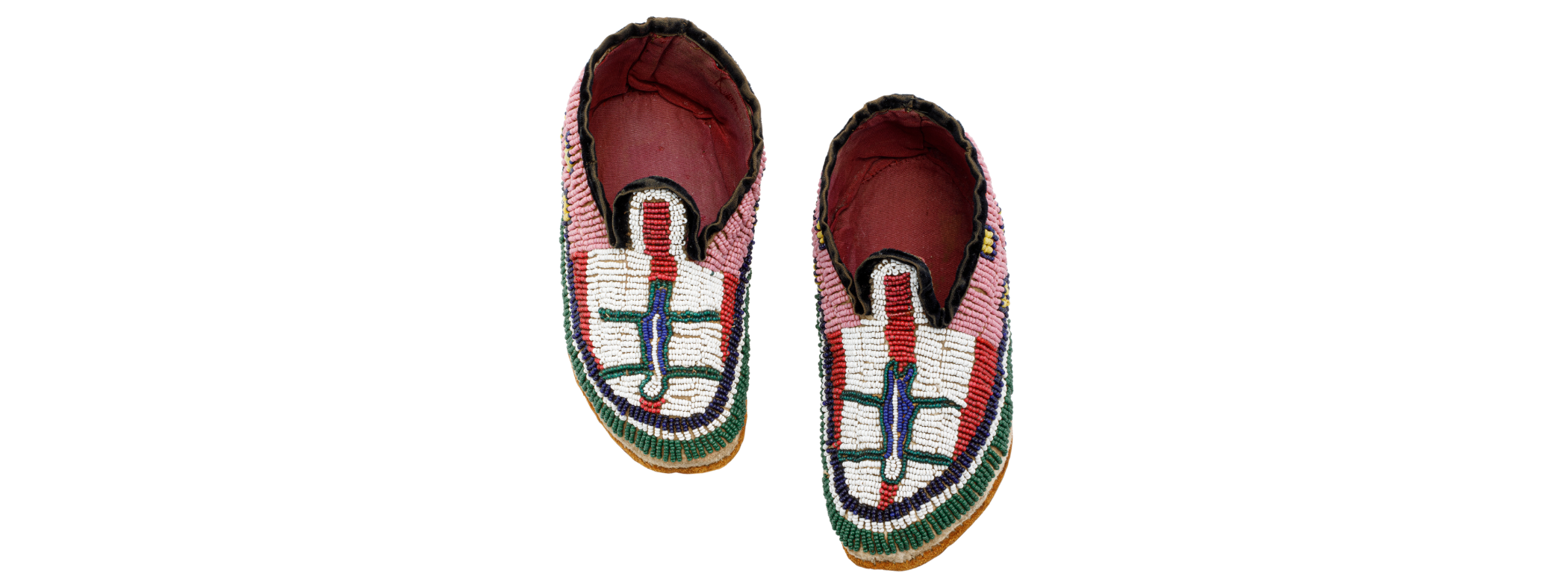
The Indigenous Collections (formerly called Anthropology or Native Ethnology) contain belongings, images, oral histories, and other documents of cultural and historical significance pertaining to First Nations, Inuit, and Métis communities in Manitoba and beyond. Some of the collection originates from northwestern Ontario, Saskatchewan, the southern prairie regions, Northwest Territories, and Nunavut. A smaller global collection consists of items donated by individuals who worked or travelled in Africa, Australia, Central America, New Guinea, and the Pacific.
Now more than 17,000 artifacts, the majority of our holdings date back to the 1890-1940 time period. Many were collected by individuals who worked in Indigenous communities. The most historically significant artifacts are the early nineteenth century items that were collected by the artist Paul Kane, the early twentieth century Caribou Inuit objects assembled by Bishop Donald B. Marsh, and our large collection of early twentieth century northern Cree and Métis/Cree materials.
Much of our research is dedicated to discovering more information about our present collection. This involves working with communities; studying documents, images and oral histories held in archives; and comparing our holdings with those in other institutions. Ongoing collecting and research are constantly being redefined as a result of community consultation, with a special focus on residential schools, treaties, post-1870 life, and the contemporary traditional arts movement. Collecting is also guided by community-based input into the development of our permanent and temporary exhibits, such as the contemporary Wambdi Wacasta Tipi exhibit in the Prairies Gallery.
There are also Indigenous belongings within the HBC Museum Collection that fall under the Curator of Indigenous Collections’ portfolio.
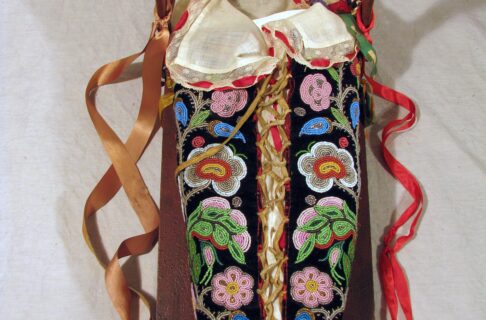
Cradleboard with beaded moss bag, used for carrying infants (Anthropology Collection, H4-21-83) Image © Manitoba Museum
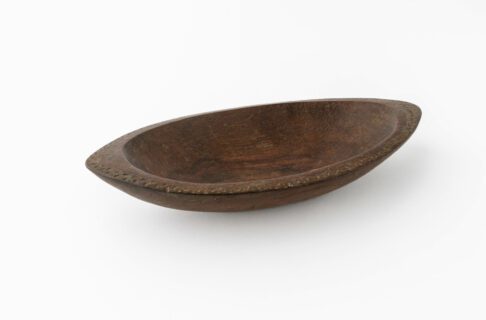
Wooden serving dish from Papau New Guinea, collected in the 1920s (Anthropology Collection, H4-0-304) Image © Manitoba Museum
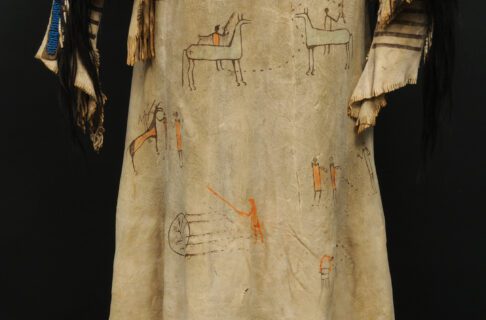
A Plains painted hide shirt with quillwork and horsehair, collected in the 1840s by artist Paul Kane (Anthropology Collection, H4-4-4) Image © Manitoba Museum