


Collections in Crisis

Collections in Crisis

Last week I attended the Canadian Botanical Association/Society for the Preservation of Natural History Collections joint conference in our nation’s capitol. I was able to meet Curators and Collection Managers from Museums all over the world, as well as attend a tour of the collections facilities at the Agriculture Canada Central Experimental Farm and the Canadian Museum of Nature.

Just about every person I talked to told me about how they are storing specimens in their hallways due to lack of space, losing knowledgeable Curators and collections staff at their institutions (sometimes only half their original staff is left), and scrounging for funding to digitize their collections and facilitate biodiversity research around the world.
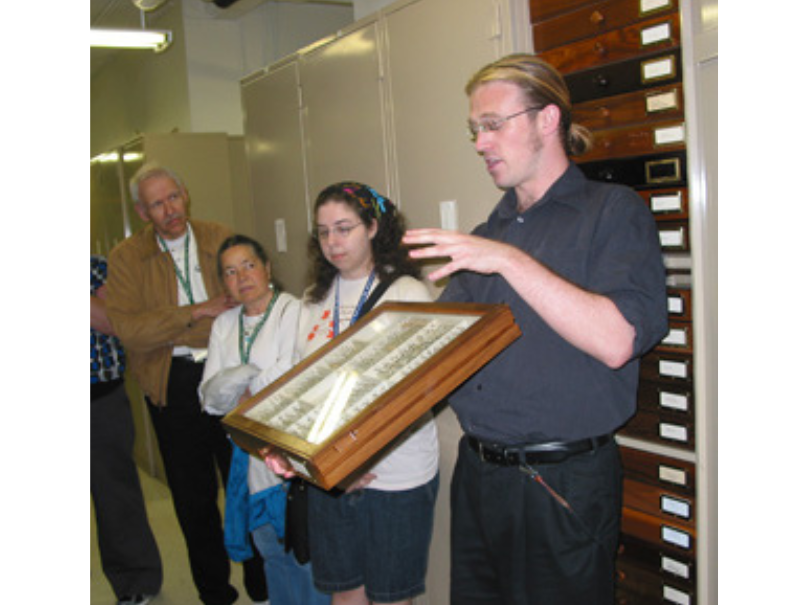
A museum staff person holding up a glass-covered museum storage drawer to a group of people.

Some of the insect specimens at the Experimental Farm have to be stored in the hallway.
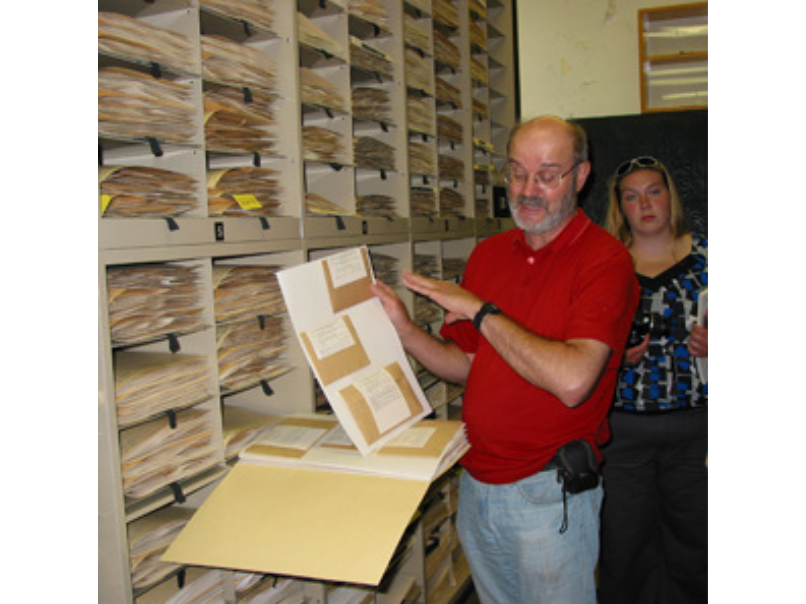
A museum staff person holding up a sheet of specimens from a museum storage drawer.

The fungal collection at the National Mycological Herbarium has not been digitized.
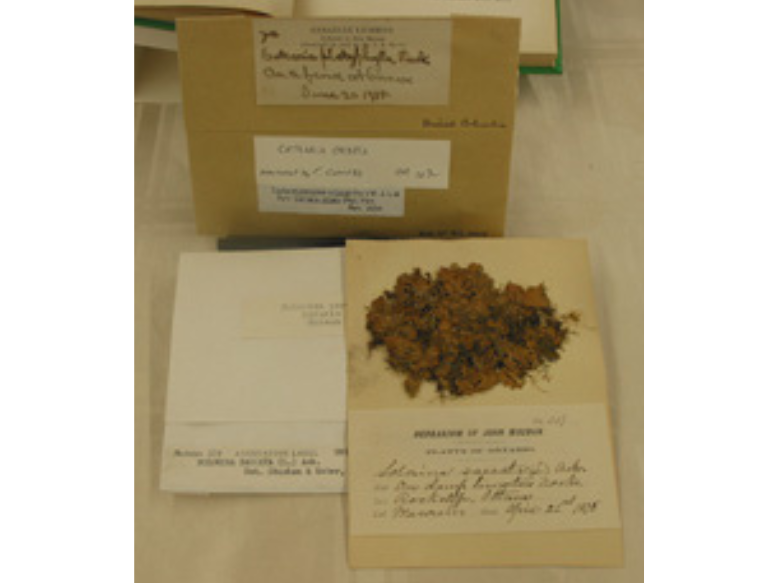
A lichen specimen laid out with collection notes on a sheet of paper in front of a storage bag.

It is ironic that at the period in time when biodiversity is in the most crisis, humanity is cutting the funding of the very people and institutions who know the most about it, and possess the knowledge to conserve it. Or perhaps it is not ironic at all, since we are living at a time when we are more interested in technological innovations than in the species we share our planet with. Most people can identify fewer than 10 native plants but more than 100 corporate logos. Biodiversity is valued less and less as we retreat into our digital worlds, oblivious to and seemingly unaffected by the loss of wild species. This is an extremely dangerous disconnect. After all, iPods don’t make oxygen for us to breathe-plants and protists do. Cell phones don’t cure cancer but plants can. HD-TV’s don’t pollinate the food you eat-animals, mostly insects, do.


Image: This lichen at the Canadian Museum of Nature was collected in 1898 and can help us monitor air quality.

I don’t have a problem with technology per se; I use the internet and e-mail daily, and I record field data using a PDA and a GPS. But lots of people can’t seem to stop using technology (e.g. cell phones) and become blind to everything else around them (e.g. innocent pedestrians). I once heard about a woman who fell into an open manhole because she was too busy sending a text message to actually pay attention to where she was going!

Oscar Wilde once said that “we know the price of everything but the value of nothing.” The fact that so little money is spent on even the most basic biodiversity work (we don’t even know the number of species on the earth within an order of magnitude) suggests that we as a society do not value it at all, even though it is the most valuable thing on earth. Perhaps the ecological and economic catastrophe that BP (and in fact everyone who drives a car) is responsible for in the Gulf of Mexico will help to change our minds about what is truly important: thriving, functioning ecosystems that help to feed and employ millions of people, or cheap oil for our gas-guzzling SUV’s? Subsidies for big corporations or money for scientific research and conservation? The choice is ours to make.

Dr. Diana Bizecki Robson

Dr. Diana Bizecki Robson

Curator of Botany

Dr. Bizecki Robson obtained a Master’s Degree in Plant Ecology at the University of Saskatchewan studying rare plants of the mixed grass prairies. After working as an environmental consultant and sessional lecturer…
Meet Dr. Bizecki Robson

41 Uses for a Dead Plant

Does anyone remember the book “101 Uses for a Dead Cat” that came out in the 1980’s? I know, I know animal rights activists accused the cartoonist of encouraging cruelty to animals but I can’t imagine that anyone took it seriously. I mean who would ever turn a dead cat into a pencil sharpener or a pair of roller blades?

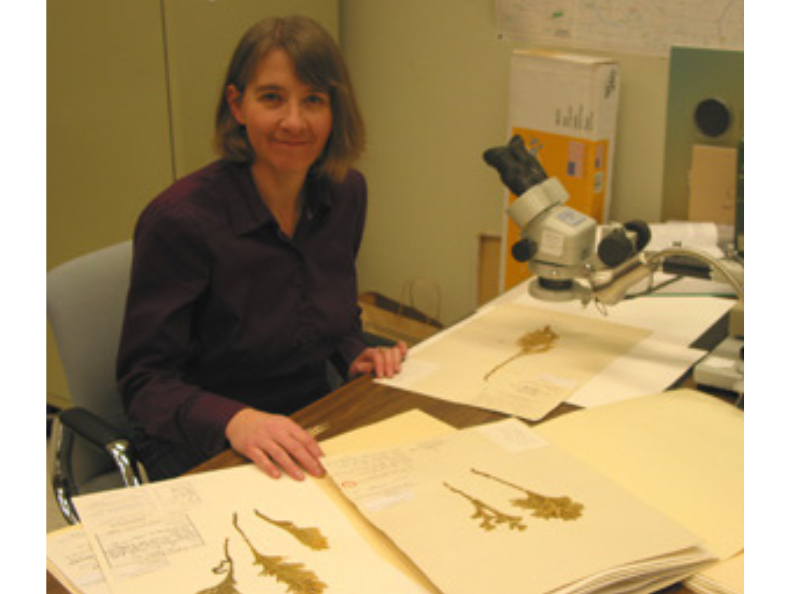
Dr. Diana Bizecki Robson seated at a desk with a selection of botanical samples laid out in front of her by a microscope.

Anyway, it turns out that dead plants are even more useful than dead cats. In fact, next week I will be attending a conference called “Biodiversity 2010 and Beyond” in which the participants will be spending five whole days extolling the virtues of dead plants. Although everyone that I am sure to meet at this conference will be familiar with the multitude of uses for dead plants, most people almost certainly don’t. In fact, a recent survey of our visitors revealed that very few people even know that The Manitoba Museum has a collection of dead, dried plants and fungus (called a herbarium) up in the tower.


Image: Studying, organizing and expanding the Museum’s collection of dead plants is part of my job.

So in the interest of education, here’s my own take on the what-to-do-with-a-dead-something theme, with the goal of letting everyone know some of the things that dead plants at The Manitoba Museum, and at other Museums and Universities, are really used for.

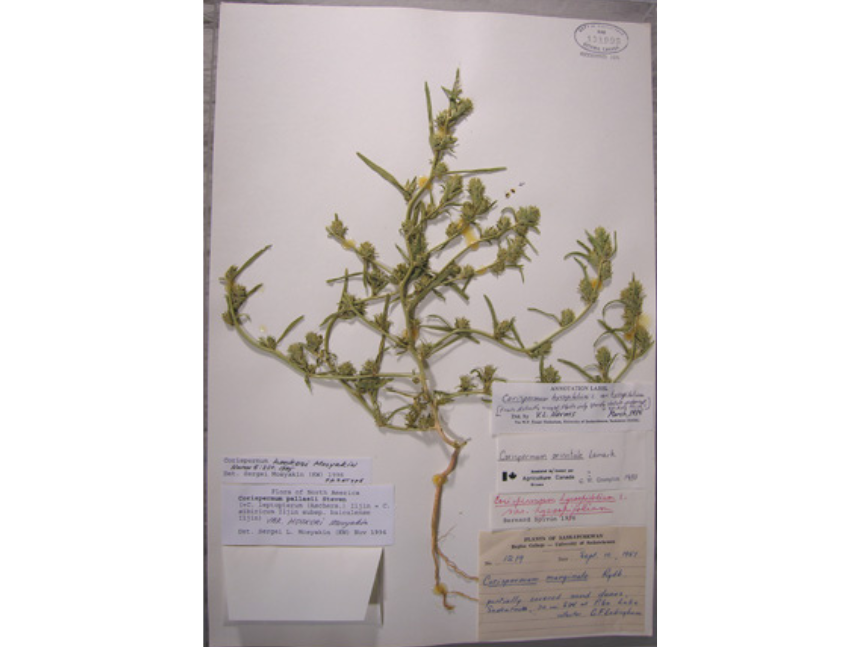
A dried and pressed botanical specimen on a sheet of paper accompanied by the collection and specimen details.

1. Documenting the existence of new species. All new species must have a type specimen (=a dead plant) designated at the time of publication and preserved in a Museum or University for all time.

2. Documenting the validity of ecological research. Without voucher specimens, scientific research is not publishable because there is no way of proving that the observations were really made.

3. Determining the population sizes and rarity status of species. Endangered species lists around the world are prepared by studying Museum collections.

4. Creating status reports and conservation plans for endangered species.


Image: This is a type specimen of a new species of bugseed from the Canadian Museum of Nature.

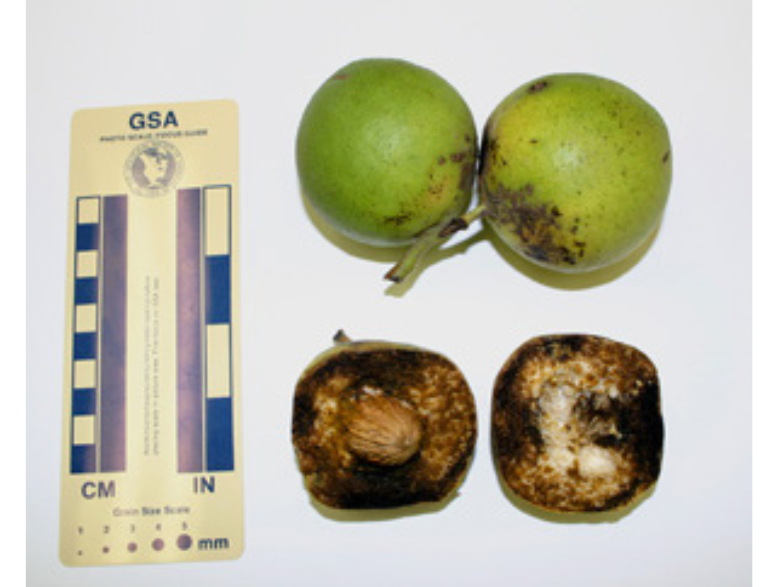
Four walnut specimens against a light-coloured backdrop. The top two are green, and the lower two are brown and split in half.

5. Documenting changes in the climate by comparing flowering dates and changes in distribution over time.

6. Documenting the spread and alternate hosts of plant diseases.

7. Documenting changes in air quality over time; lichens will die if air quality is bad.

8. Aiding in the production of Environmental Impact Assessments for development projects.

9. Acting as a storehouse of DNA for projects such as the DNA barcoding project at the University of Guelph.

10. Providing DNA for crop breeding.


Image: DNA from herbarium specimens, like these walnuts can be used for crop breeding.

11. Documenting the ecological relationships between plants, animals, and fungi.

12. Documenting changes in ecosystems over time (i.e. sand dune stabilization rates).

13. Documenting the location of illegal marijuana and poppy fields.

14. Documenting the mutations that occur when native plants are bombarded with gamma radiation (we have an entire collection of mutant plants from the Whiteshell Nuclear Research Establishment stored here).

15. Determining the authenticity of wooden artifacts (e.g. did this wooden necklace really come from a lost tribe in New Guinea? Not if it’s made of Bur Oak!).

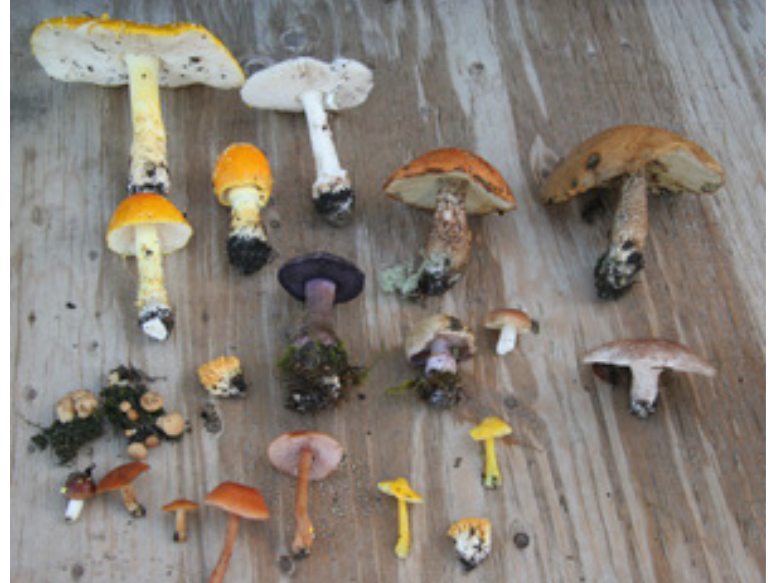
A variety of mushroom specimens laid out on a wooden surface.

16. Documenting the spread of illegal aliens (i.e. plants that are alien to Canada and potentially threaten our agricultural production and native ecosystems).

17. Aiding in the instruction of students.

18. Helping people identify plants and fungi that are edible.

19. Determining the food requirements of wild animals. I used the Museum’s collection to identify the seeds found in food caches of Ord’s Kangaroo Rats (an endangered rodent found on sand dunes in Saskatchewan and Alberta).

20. Aiding in the identification of potentially poisonous plants and fungi.


Image: Dead mushrooms stored in a Museum can be used to identify edible and poisonous ones.

21. Indicating water quality. The presence of certain plants indicates salinity in the groundwater.

22. Documenting the kinds of plants that were used by ancient peoples and how they were used. I’ve had to identify fossilized seeds found in clay pots during the Museum’s archaeological digs.

23. Determining which wild plants are ancestral to our modern cultivars.

24. Helping scientists identify plants that may produce useful chemicals for modern medicine and other industrial applications.

25. Determining the distribution of species.

26. Determining the habitat requirement of species (this is useful information for reclamation scientists).

27. Indicating the location of certain metals such as nickel.

28. Acting as a reference collection for the identification of species.

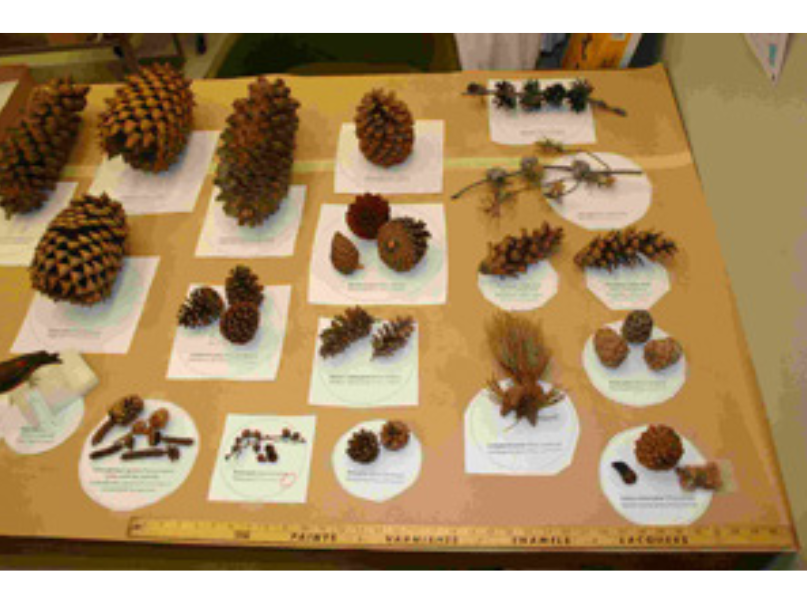
A variety of cone specimens laid out on individual sheets of paper with identifications on a large table top.

29. Documenting the variability in appearance of plants due to habitat differences or mutations.

30. Determining how species are related to each other (=systematics).

31. Determining the genetic structure of a species.

32. Determining the normal fire cycles of forests.

33. Reconstructing past environments (using tree and lichen rings).

34. Determining the level of genetic contamination from genetically modified organisms.


Image: These cones were displayed in the Museum’s “Travelling Plants” exhibit.

35. Determining how plants distribute their seeds.

36. Aiding in forensics investigations. Museum collections have been used to identify plant materials found at crime scenes and on the clothing of suspects.

37. Preparing manuscripts, books, floras, field guides and DVD’s that facilitate the identification of plant species by farmers, agronomists, consultants, government employees, students and naturalists.

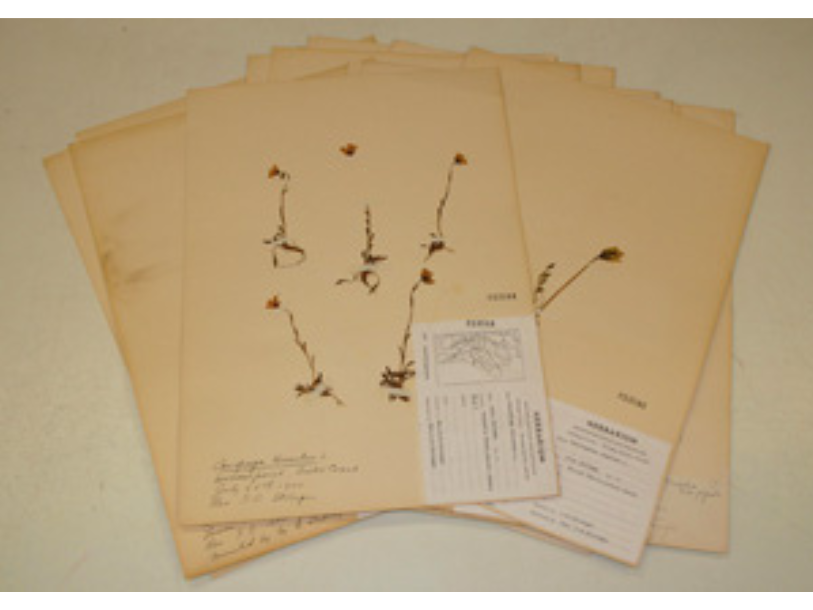
Historical specimens dried and pressed on sheets of yellowed paper with specimen details in the lower right corner of each sheet.

38. Aiding professional artists in creating realistic illustrations of plants.

39. Helping diorama artists create life-like models of native plants.

40. For putting on display in Museum galleries.

And lastly,

41. Providing future citizens of the world with the opportunity to study and utilize these specimens for whatever their future needs may be.


Image: These specimens were collected over a century ago and can help us detect climate changes.

When the great British explorer William Dampier began collecting plants back in the late 1600’s he had no idea that his specimens would be used for the purposes that I have just listed. I am humbled to think that the specimens that I collect will someday be used in marvellous and completely inconceivable ways to help our species’ collective descendants solve some of the problems they will inevitably be faced with.

Dr. Diana Bizecki Robson

Dr. Diana Bizecki Robson

Curator of Botany

Dr. Bizecki Robson obtained a Master’s Degree in Plant Ecology at the University of Saskatchewan studying rare plants of the mixed grass prairies. After working as an environmental consultant and sessional lecturer…
Meet Dr. Bizecki Robson

Recipe for a Perfect Field Day

With field season right around the corner I find that I spend a lot of time reminiscing about my past field work, and musing about what makes a perfect field day. I would say that it goes something like this:

  • 1 reliable vehicle
  • Good, dry roads and trails, to taste
  • 1 part nice weather: 20-24°C with a gentle wind
  • 1 beautiful landscape
  • 1 (or more) exciting discoveries or observations
  • 0 irritating insects

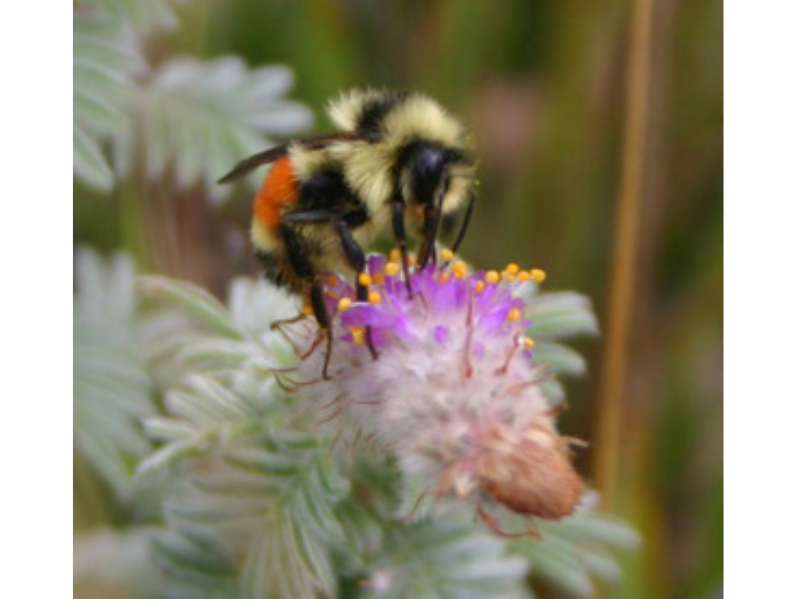
Close-up on a bumble bee on a purple Hairy Prairie Clover flower.

A bumblebee pollinating a rare Hairy Prairie Clover plant was a great field discovery.

Close-up looking into a birds nest with five white speckled eggs.

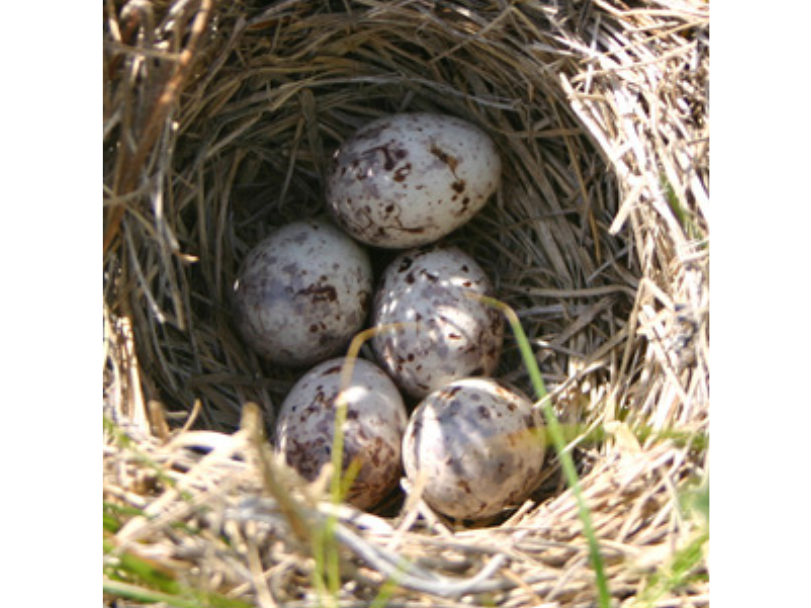
It’s always thrilling to find a bird’s nest hidden in the prairie grasses.

I had a perfect field day once. I was in the Frenchman River Valley of southern Saskatchewan surveying potential routes for a new highway. My plan was to walk the entire length of one route to document the vegetation and identify rare plants. My car didn’t break down or get stuck in mud on the way there. The weather was perfect and the view spectacular. There were thousands of beautiful wildflowers covering the hillsides. Meadowlarks were singing. I found a really cool snakeskin and bird’s nest. There were no mosquitoes. Ah if only every field day was this good.

Sadly most field days are not perfect. Just about anything that can go wrong has gone wrong for me at one time or another. I’ve dropped my portable computer on a rock and lost a morning’s worth of data. I’ve spend an entire day taking pictures only to realize later that I had forgotten to put my card in the camera. I’ve nearly gotten lost. My vehicle has broken down in the middle of nowhere (on several occasions). I’ve locked my keys in the car, miles from a gas station, in an area with no cell phone coverage. I’ve gotten blisters and bug bites and heat exhaustion. I’ve done field work in pouring rain, frosty August mornings (one of Mother Nature’s cruel jokes) and blistering heat.

Landscape view looking out over a marshy body of water and low growing vegetation along the banks.

Every field scientist that I’ve met likes to tell these sorts of “field stories”. It’s almost like a competition where each person tries to outdo the other in terms of the degree of discomfort experienced. One of my favourites was when a friend of mine was rescuing an injured hawk and the bird sunk its talons straight through his hand (and no, he wasn’t exaggerating-I saw the holes). Another is when a gale-force wind blew my husbands’ tent and nearly all his belongings right into Lake Winnipeg. He stood on shore and watched it float away. About a month later I got a call from the RCMP, asking if I knew where my husband was because they found his tent washed up on shore and thought he might have drowned. He was fine but had to spend an uncomfortable night in an old fishing cabin waiting for a plane to pick him up.

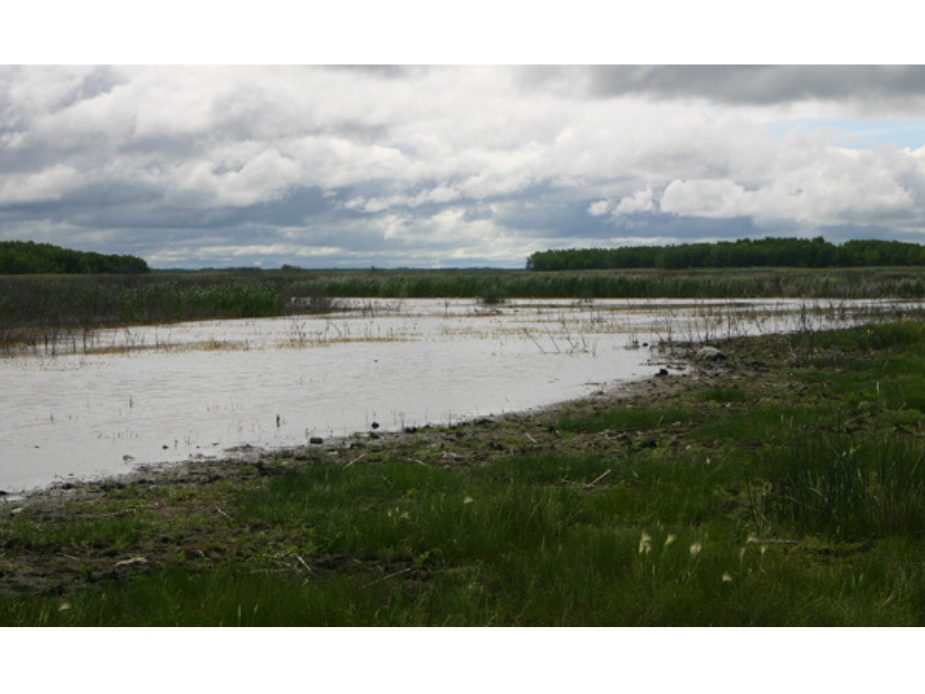
Image: I spent a cold, rainy June morning collecting plants at West Shoal Lake, Manitoba.

Like many field scientists I’ve had numerous uncomfortable days but fortunately no real tragic ones. Tragedies do happen on occasion so it is important to be as prepared for disaster as you can be. I’ve known at least three biologists who died in helicopter or plane crashes. Another friend was nearly killed by a black bear. Yet another consumed food that was likely contaminated with mycotoxins while working abroad and eventually died of liver cancer.

So by now you might be thinking I’m a bit crazy and that maybe a nice desk job would have been a better career choice. Despite all of the discomforts that I have to put up with I would never have chosen another career. The thrill of exploring the wild areas of our planet, discovering new things and being able to see animals up close and personal rather than through the lens of a camera is amazing. I’ve never been more at peace than I have been sitting on a grassy hillside over a valley or swimming in a remote lake. Even the most miserable day has a few perfect moments in it: seeing morning dew on a spider web, watching the sun shine through the clouds, looking into the eyes of another animal being (as Jane Goodall would call them).

Close up on several tan-coloured mushrooms growing low to the ground.

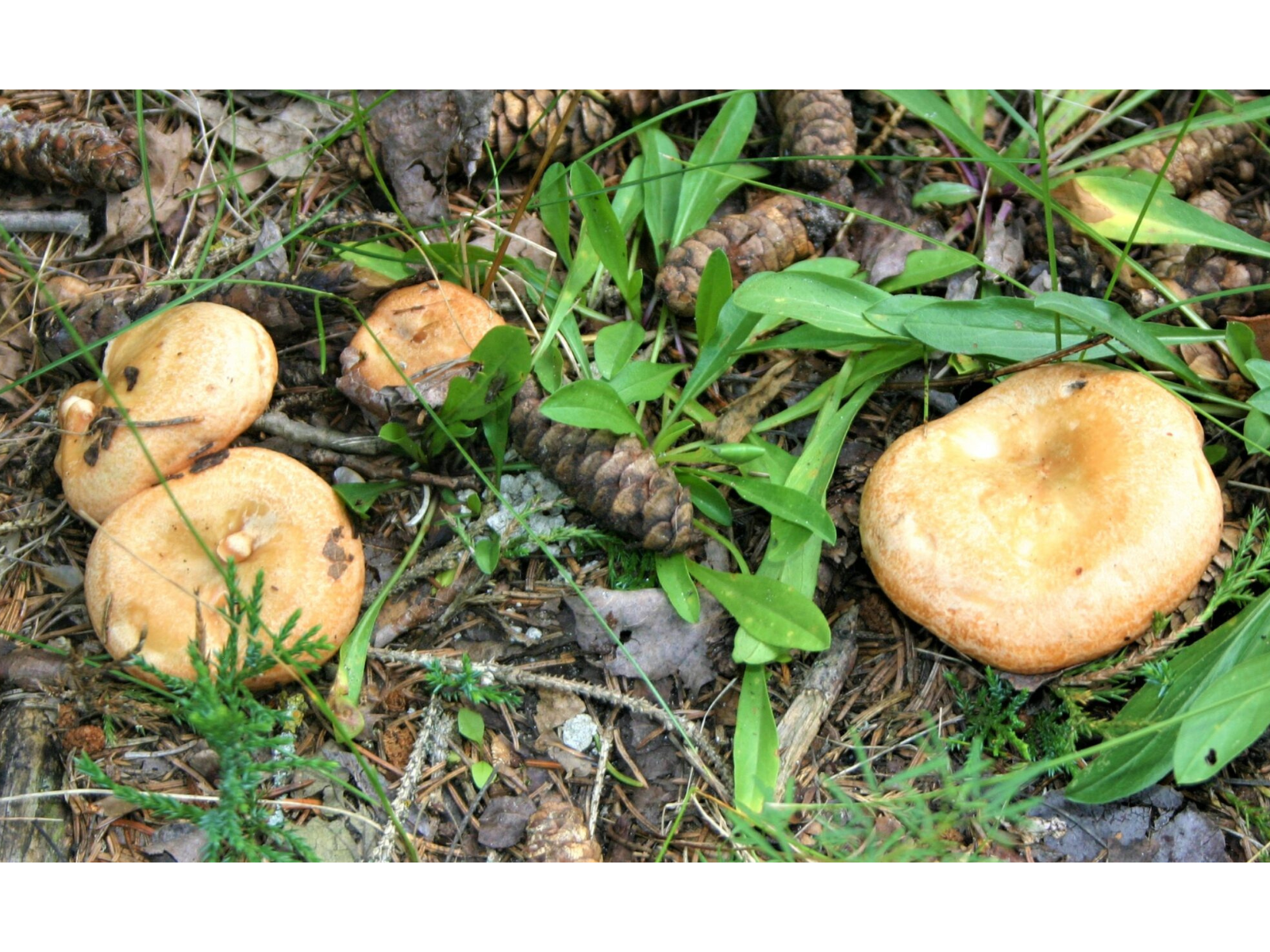
I got eaten alive by mosquitoes while collecting fungus in late September in 2009.

A landscape with gently rolling hills and lone trees and bushes.

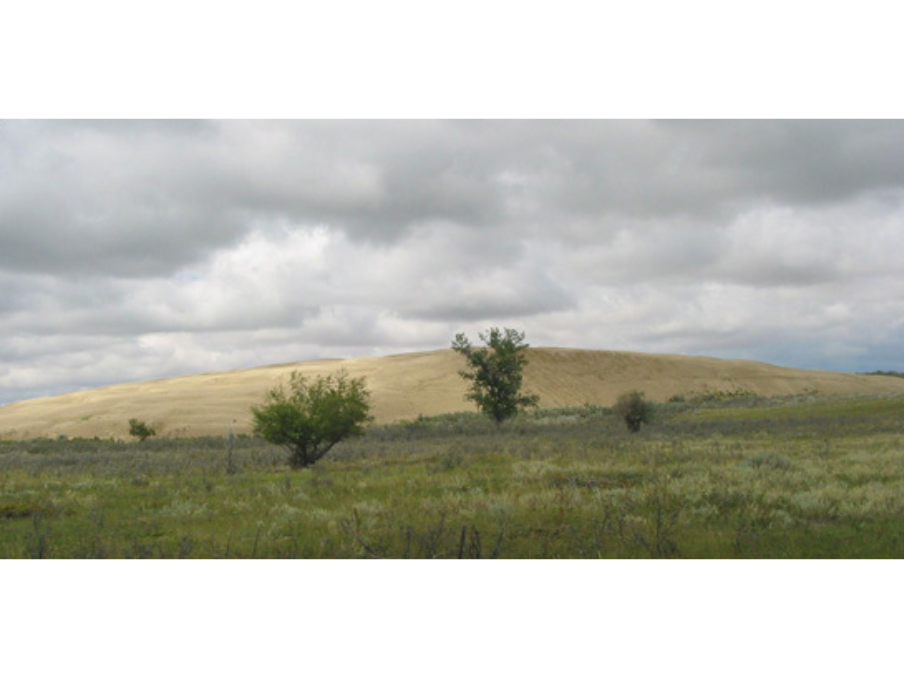
I had a wonderful time looking for rare plants in the Great Sand Hills of Saskatchewan.

Furthermore I find that experiencing some adversity makes you more appreciative of the good things in life. I’ll never forget the time I had to hike for 40 minutes through wind and pouring rain to harvest seeds in Grasslands National Park, Saskatchewan. I was cold, wet and my back and knees were aching from hunching over research plots all day. I was never more appreciative of the simple luxuries of life than I was that night: a bath, dry clothes, hot tea, a warm meal, and a soft bed to sleep in. Most people (at least in what we call the “developed world”) would not consider these things to be luxuries, but I do. For this reason, experiencing hardship, even a little bit, can make you a more compassionate, less materialistic, and ultimately happier person. I spend my days being grateful for what I have, rather than obsessing about what I don’t. So I don’t begrudge the bad field days. At the very least they make good story to tell.

Dr. Diana Bizecki Robson

Dr. Diana Bizecki Robson

Curator of Botany

Dr. Bizecki Robson obtained a Master’s Degree in Plant Ecology at the University of Saskatchewan studying rare plants of the mixed grass prairies. After working as an environmental consultant and sessional lecturer…
Meet Dr. Bizecki Robson

Creating Natural Wonders

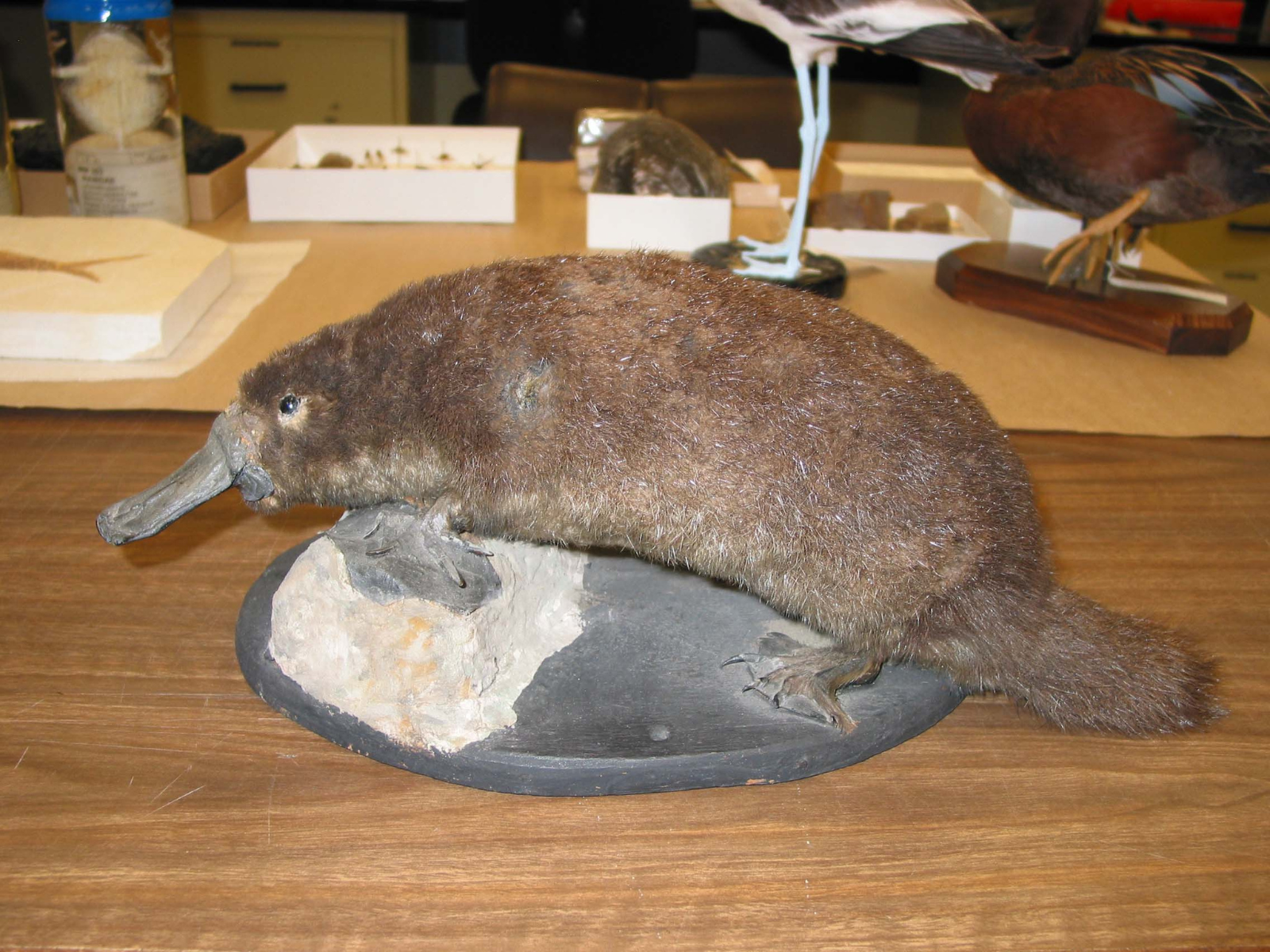
When I started working here at the Museum I used to spend part of my lunch break peeking into cabinets in the natural history collections room. I was amazed at the variety of organisms we have here: trays upon trays of tropical butterflies, huge beetles, giant fungi, exquisite fossils of long-extinct plants and sea creatures. One day I even came across a stuffed duck-billed platypus; an Australian mammal that I’ve been fascinated with since I read about its’ bizarre physiology (they lay eggs yet nurse their babies) in a textbook long ago. When I heard that 2010 was going to be the International Year of Biodiversity, and that we needed a new exhibit in the Museum’s Discovery Room, I thought that it would be a wonderful opportunity to show some of these amazing organisms to people who are not so lucky in their employment opportunities as I am. I’ve been working on this exhibit with the other Natural History Curators, Dr. Randy Mooi and Dr. Graham Young, for the last six months or so and am pleased that it is now open to the public.

A duck-billed platypus mounted on a dark-coloured base on a woorden-topped desk.

The Museum’s duck-billed platypus specimen.

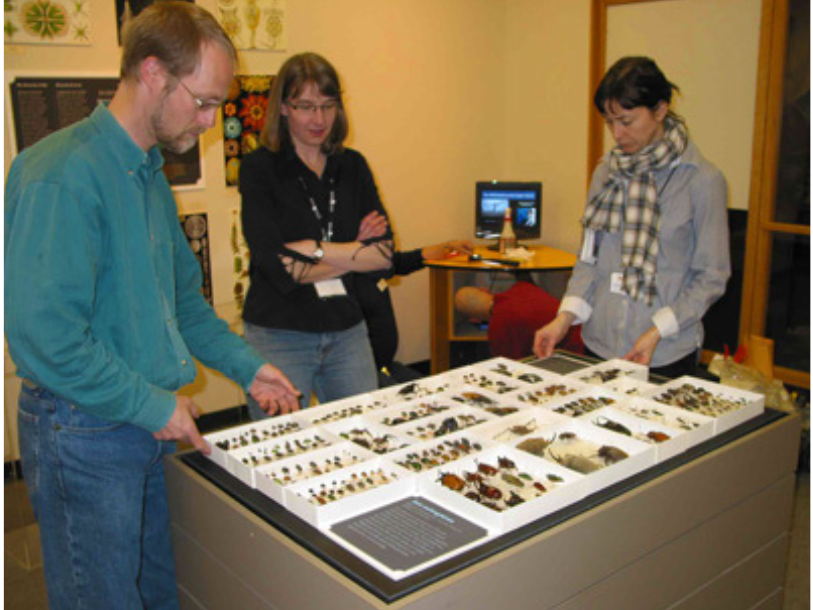
Three individuals standing around a rectangular base filled with small trays with beetle specimens.

Dr. Randy Mooi, me and designer Stephanie Whitehouse setting up the beetles case. Bert Valentin is setting up the monitor.

Biodiversity is simply the variation of all life forms on earth. Scientists have documented nearly 1.9 million different species, and estimate that there could be more than 50 million that are still unknown to science. Over 1200 new species of flies alone are described every year. Helping to document new species and preserving specimens that scientific descriptions are based on, is one of the main purposes of museums. Museum specimens are used by scientists to study all sorts of things: climate change, disease transmission, and the status of endangered species to name a few. We also care for many specimens that were donated by amateur naturalists and collectors, the source of most of our exotic specimens.

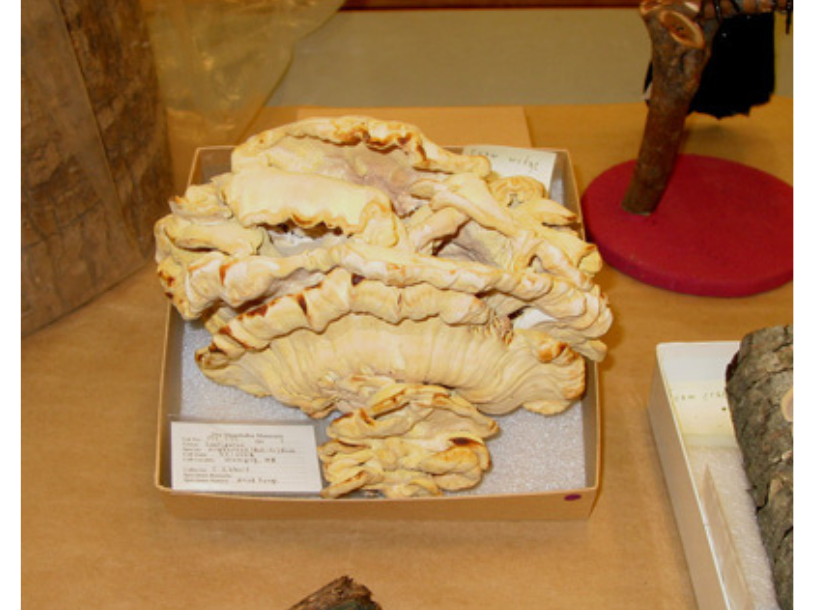
Amazingly, one fifth of all known species are beetles. To illustrate this point, we prepared a display case that contains just beetles, mostly exotic ones, including several huge Rhinoceros beetles. Another goal of this exhibit was to display as wide a variety of organisms as possible, so in addition to the spectacular giant clam and golden pheasant, we included some unusual species that we don’t normally exhibit, like parasites and blue-green algae. To remind people that the biodiversity that exists today evolved from earlier life forms, we’re displaying some fossil specimens, mainly aquatic invertebrates and plants. Several newly acquired specimens-including a very yummy smelling chicken-of-the-woods fungus that nearly ended up on my dinner plate-are displayed as well.

A large chicken-of-the-woods fungus specimen in a collections box.

Carol and Bob Hibbert donated this beautiful chicken-of-the-woods fungus to the Museum.

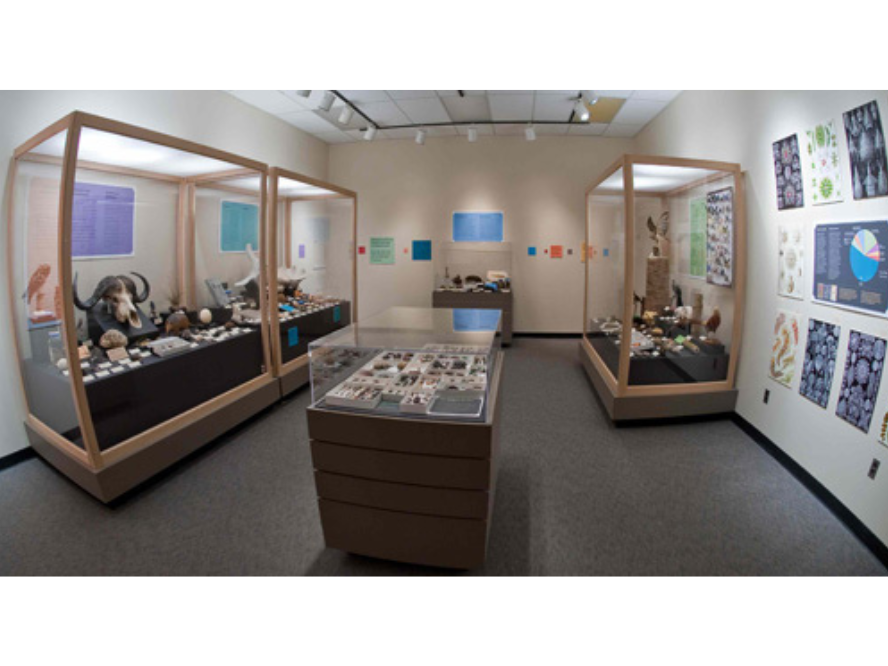
A Museum exhibit with a number of display cases with a variety of specimens on display.

The completed Natural Wonders exhibit in the Museum’s Discovery Room.

The more I study and observe nature, the more fascinating I find it. I think Charles Darwin expressed this sentiment most elegantly in the last sentence of On the Origin of Species: “…from so simple a beginning, endless forms most beautiful and most wonderful have been, and are being evolved.” I invite you to come to the Museum this summer to appreciate the beauty of nature and marvel at those endless forms in our new exhibit Natural Wonders: A Celebration of Biodiversity. And yes, my beloved duck-billed platypus is there for you to see.

Dr. Diana Bizecki Robson

Dr. Diana Bizecki Robson

Curator of Botany

Dr. Bizecki Robson obtained a Master’s Degree in Plant Ecology at the University of Saskatchewan studying rare plants of the mixed grass prairies. After working as an environmental consultant and sessional lecturer…
Meet Dr. Bizecki Robson

Museum Curation: More Than Mummies and Man-Eating Plants

I suspect that when people hear that I’m a Museum Curator they think of that evil Curator of the British Museum who resurrects the mummy Imhotep from the dead in “The Mummy Returns”. Sadly, my job doesn’t entail raising any long-dead Egyptian priests. Nor do I nurse giant man-eating plants with my own blood and the occasional visitor to my lab a la “The Little Shop of Horrors”. In this blog I will be describing in a bit more detail what a Curator of Botany really does do all day. I’ll be writing about the exhibits that I’m working on, the research that I’m doing and the collections that I’m studying.

Looking out over a prairie landscape with grasses and distant trees and bushes.

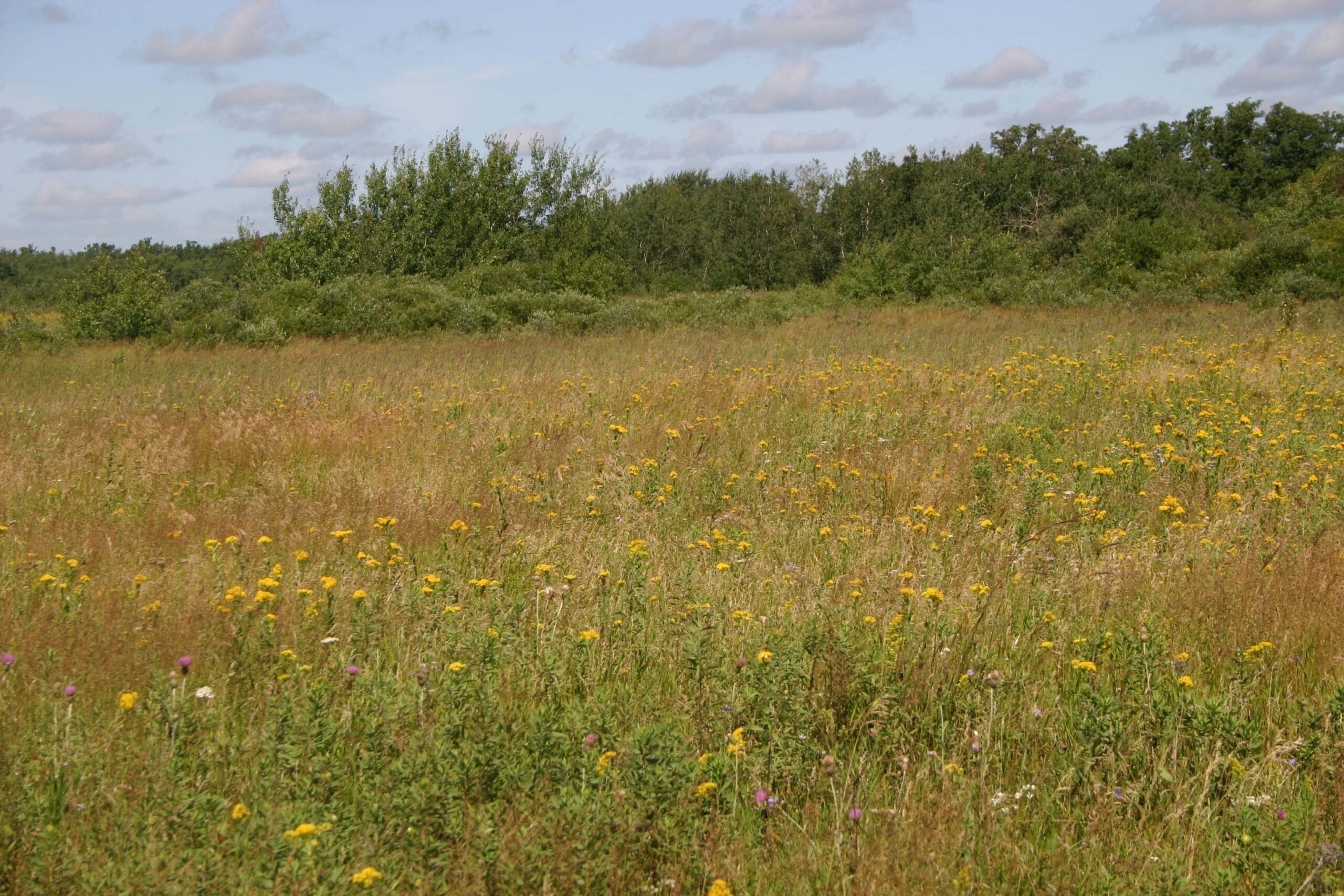
But first of all you may be wondering who I am and how I ended up here. I grew up in Saskatoon, Saskatchewan and it was there that I developed a passion for biology and a love of grasslands, spending many hours of my youth riding my bike along the paths bordering the South Saskatchewan River Valley. I proceeded to get a Bachelor’s degree, then a Masters, then a (glutton for punishment that I am) Ph.D. Ultimately all the hard work was worth it because I was offered my dream job here at The Manitoba Museum in 2003. Moving to Manitoba gave me an opportunity to study the rare tall-grass prairies-an ecosystem that I had never seen before. I will be sharing a bit of what I’ve learned about them with you in this blog.


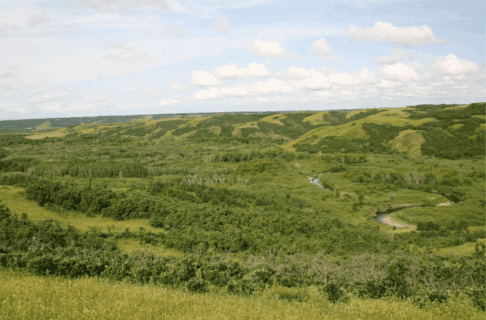
Image: The Tall-grass Prairie Preserve in southern Manitoba.

So if your curiosity is aroused I hope that you will check out my blog on a regular basis. Summer will soon be here and I’ll be able to tell you all about my field work. In June I’m going mushroom and lichen hunting in Whiteshell Provincial Park. In July and August I’ll be studying pollinators in Birds Hill Provincial Park, and in September I’ll be hunting for some rare plants along the lakeshores and sand dunes of southern Manitoba. Till then you can check out my soon to be posted blog on an exhibit I just helped to prepare called “Natural Wonders: A Celebration of Biodiversity.”

Dr. Diana Bizecki Robson

Dr. Diana Bizecki Robson

Curator of Botany

Dr. Bizecki Robson obtained a Master’s Degree in Plant Ecology at the University of Saskatchewan studying rare plants of the mixed grass prairies. After working as an environmental consultant and sessional lecturer…
Meet Dr. Bizecki Robson