


The Uglier the Better

The Uglier the Better

When people find out that I study and collect wild plants I suspect that they have visions of me tromping through the woods to study beautiful orchids and majestic wildflowers. The fact of that matter is that attractive plants, orchids in particular, are pretty well-studied compared to many other groups.

Orchids attract a devoted cult of nature lovers who, for fun on their weekends and vacations, wander through bogs and remote forests in the hopes of discovering new species or taking a perfect photograph of a rare Lady’s-slipper. In fact Manitoba has three non-profit organizations (Nature Manitoba, Native Orchid Conservation Inc. and Conserve Native Plant Society Inc.) that are involved in some way or another in the appreciation, documentation and conservation of orchids. So I’m not too worried about the orchids-I know that they are being meticulously documented by their legions of fans.
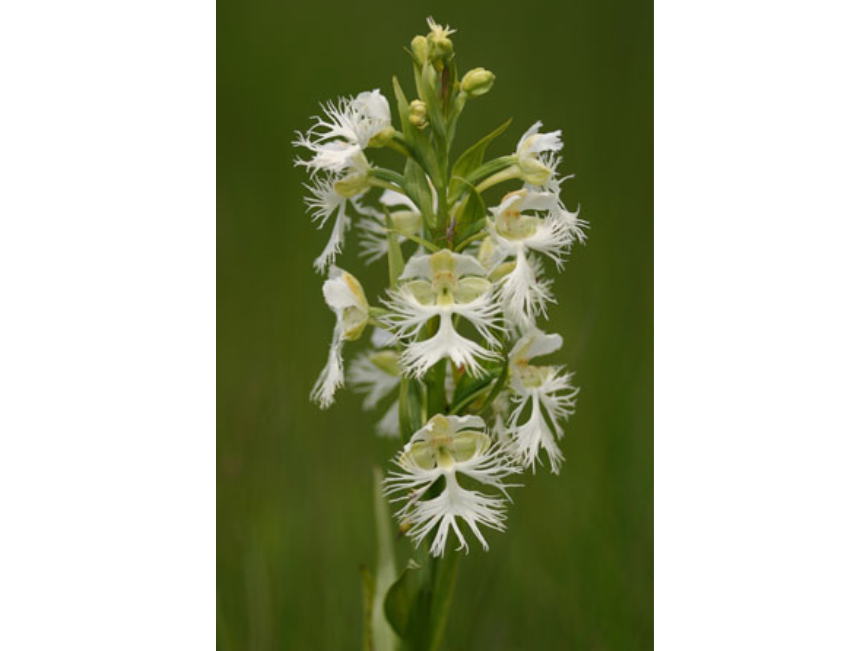
Close-up on the top of a plant with small fringed white flowers.

A stunning Western Prairie Fringed Orchid (Platanthera praeclara).
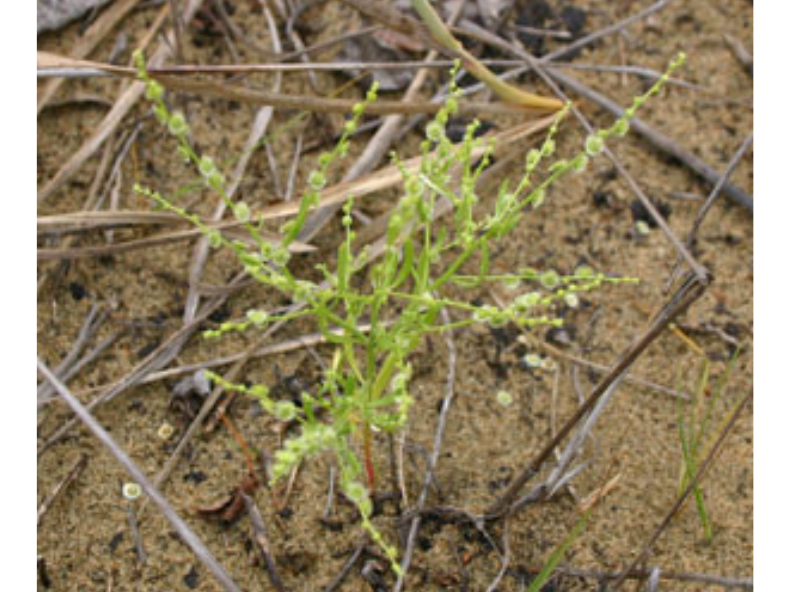
Close up on a small wispy plant growing in the ground.

We know very little about the rare annual Winged Pigweed (Cycloloma atriplicifolium).

What I am worried about are the ugly plants-the wind-pollinated ones with tiny flowers that grow in very specific microhabitats. These plants are either completely overlooked or regarded as weeds and stepped on. They are like neglected younger siblings in a large family that only get attention when they do something bad, like grow in someone’s garden or in a crack in the sidewalk. We don’t know much about the distribution and ecology of these ugly species and since they are unattractive and sometimes hay-fever inducing, no one loves them enough to study them. No one but me. I’ve developed and odd fondness for these homely plants because they are a challenge to locate and identify. I find it very satisfying to be able to identify plants that most amateur and even some professional botanists ignore.
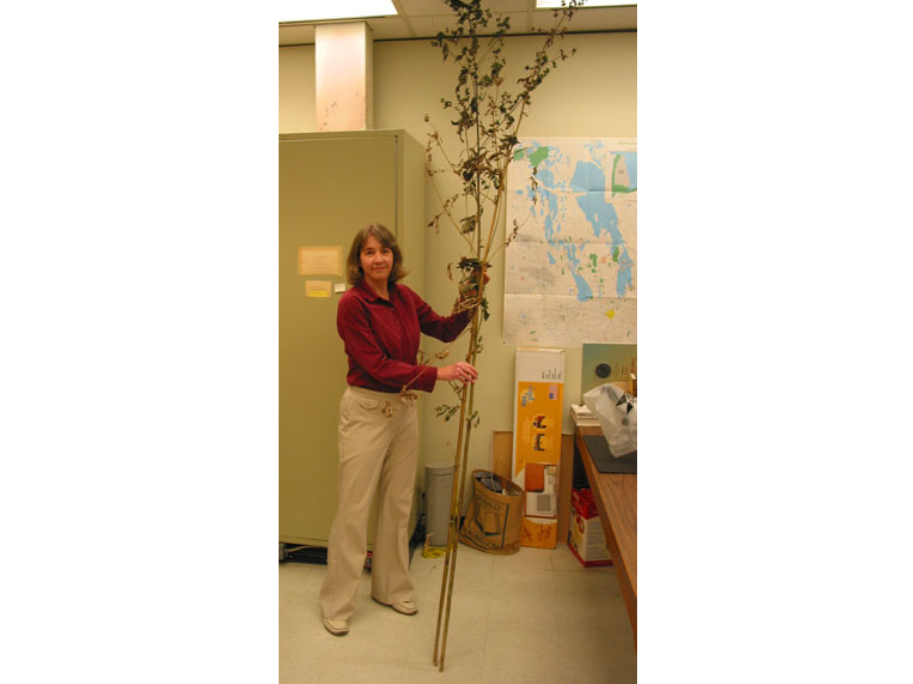
Dr. Diana Bizecki Robson in the botany lab holding a large ragweed specimen, taller than herself.

This ugly Giant Ragweed (Ambrosia trifida) specimen that was recently donated is 3 m tall.
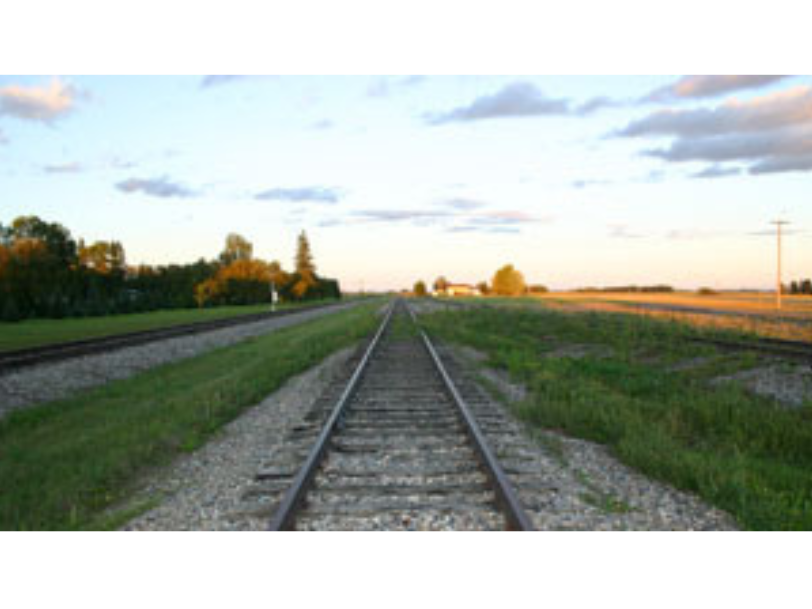
View looking down a set of railroad tracks with grass growing on both sides.

Abandoned railroad tracks are a great place to collect exotic weeds!

One of my recent projects has been to identify “taxonomic gaps” in the botanical collection here at the Museum. I prepared a list of plants that I know have been found in Manitoba but that we don’t have many (or any) specimens of. Most of them were “ugly” wind-pollinated sedges, rushes, grasses or exotic, naturalized “weeds.” Others were rare native annuals that don’t germinate every year and can be hard to find. Some were at the edges of their North American ranges and not present in high numbers. Quite a few are aquatic plants (like pondweeds) that grow in lakes, sloughs and rivers. Not a single native orchid though is unrepresented in our collection. In addition to our collection of specimens we also have a slide collection which features mostly pretty plants; there are 300 photographs of orchids but only one slide of goosefoot plant.

So I don’t really need a lot beautiful wildflowers in my collection (unless they are from a part of the province that hasn’t been visited before). What I DO need are the weeds growing by the side of the road, the pondweeds that cling to your leg when you’re going for a swim in the lake and the grass-like plants that grow in damp, muddy areas. But no orchids please, they’re just not ugly enough.

Dr. Diana Bizecki Robson

Dr. Diana Bizecki Robson

Curator of Botany

Dr. Bizecki Robson obtained a Master’s Degree in Plant Ecology at the University of Saskatchewan studying rare plants of the mixed grass prairies. After working as an environmental consultant and sessional lecturer…
Meet Dr. Bizecki Robson

Whom to be Thankful to on Thanksgiving

Ask anyone if they can name a type of Ukrainian food and they will immediately answer perogies. Italian food is clearly spaghetti and meatballs while spicy, peanut-based curries are classic Thai fare. But ask someone to name a Canadian or American dish and most people will either draw a blank or perhaps mutter something about hamburgers and hot dogs (which are actually German) or pizza (which is Italian). It is unfortunate that so many of us forget that a traditional Thanksgiving dinner features some of the many foods that are native to the Americas.

First of all what do I mean by a traditional Thanksgiving dinner? I tend to think of roast turkey, cranberry sauce, wild rice and chestnut stuffing, cornbread, mashed potatoes, sweet potatoes, baked squash and, for dessert, pumpkin, blueberry, maple sugar, and/or pecan pie. What is unknown to many people is that the main ingredient in each of these foods is native to the Americas.

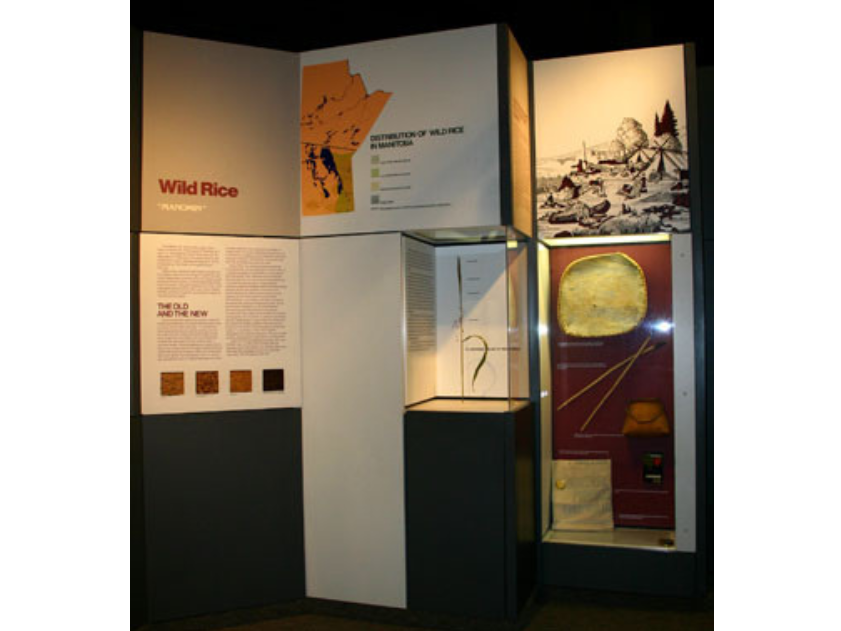
Museum display case of wild rice.

Manitoba Museum exhibit on wild rice in the Boreal Gallery.

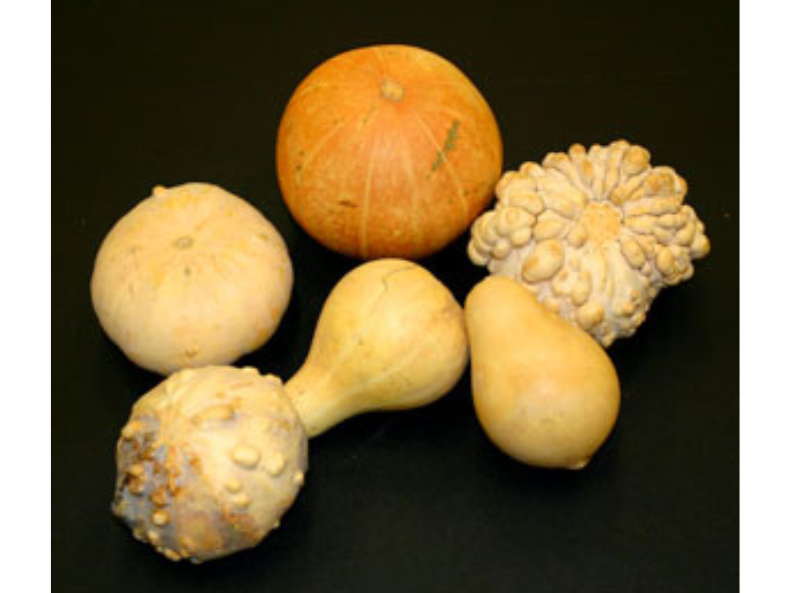
A selection of six gourds of various shapes and textures.

Gourds and winter squash are native to the Americas.

Turkeys were found wild all over North America. Cranberries and blueberries are low shrubs that grow in the boreal forests of Canada and the southern United States; they are now raised commercially. Wild rice is grown and harvested by First Nations in the wetlands of northeastern Canada. Pecan, maple, and American chestnut trees dominated the eastern deciduous forests in Canada and the United States. Although pecan and maple trees are still common, the American chestnut is almost extinct, the victim of a disease (i.e. Chestnut blight) accidentally brought to the Americas from Asia. Corn and squashes (including pumpkins) were originally bred by the indigenous peoples of Mexico and Central America, while potatoes were a staple of the Peruvian Inca.

The trade of seeds and migration of indigenous peoples throughout the Americas resulted in the spread of these food crops far from their centers of origin. When Europeans first arrived, corn, beans, and squash (called “the three sisters” by First Nations) were being grown in North America in a unique polycultural system. The corn acts as a pole for the beans to climb up, the beans fix nitrogen in the soil for the corn and the squashes suppress weeds and help the soil retain moisture. Eaten together, these three foods are also highly nutritious and complementary, giving you all your amino acids, many vitamins and fiber. In the 1980’s Manitoba Museum archaeologist Leigh Syms (now retired) discovered seeds of corn in storage chambers near Lockport and Snyder, evidence of pre-European agriculture in Manitoba. Eventually “new world” food crops spread to other continents after Europeans reached America and are now being grown all over the globe. In fact, one is hard pressed to find a type of cuisine that hasn’t been impacted by American food plants. Ukrainians weren’t stuffing their perogies with potatoes before 1,500 AD. Italians didn’t have any pizza or marinara sauce before then either as tomatoes are also a “new world” crop. And spicy Thai curries that rely on peanuts and hot peppers were also non-existent; both plants are native to Mexico. Desserts were also pretty boring before 1492 since the indigenous peoples of Central America discovered two of the most popular flavorings: chocolate and vanilla.


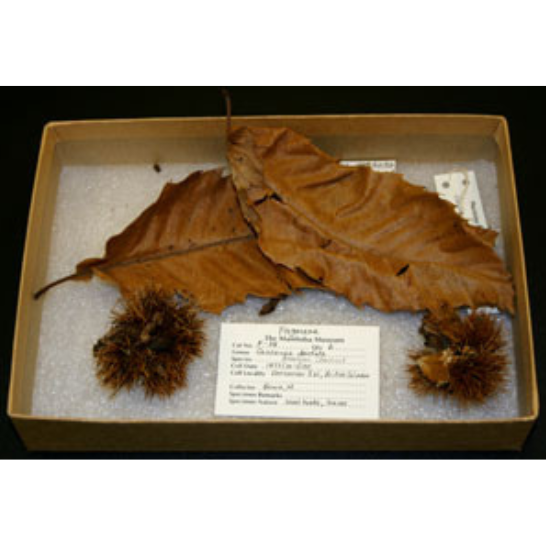
Image: Museum specimen of American Chestnut.

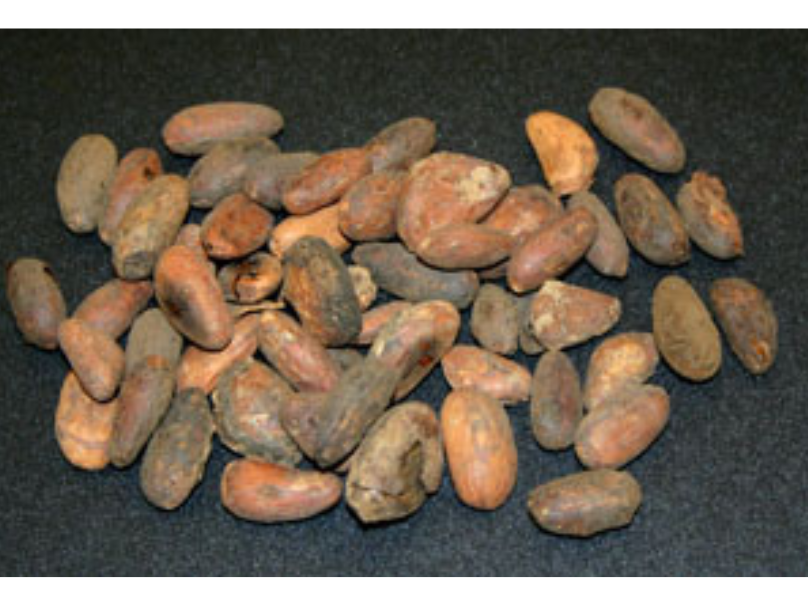
A small pile of brown cocoa nibs on a black backdrop.

Cocoa nibs from the Museum’s botany collection.

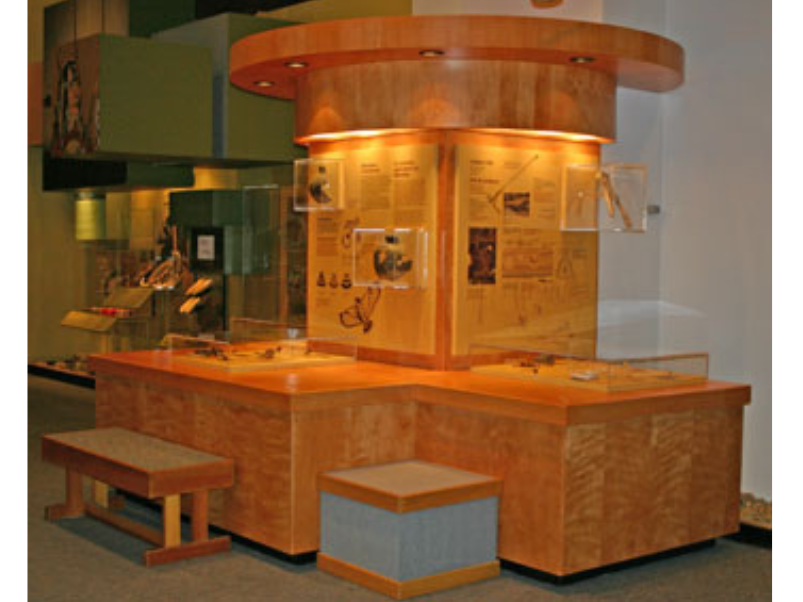
A Museum exhibit  with three sides and benches for seating to engage and read material.

First Farmers exhibit in the Museum’s Grasslands Gallery.

An examination of the history of agriculture and world cuisine reminds us that culture, far from being static, is constantly in flux. So the next time you encounter a foreigner who asks about Canadian culture mention the significance of the Thanksgiving dinner and all of the cultures whose world cuisines were forever changed by the plants of this continent and the First Nations who began cultivating them. Happy Thanksgiving!

Dr. Diana Bizecki Robson

Dr. Diana Bizecki Robson

Curator of Botany

Dr. Bizecki Robson obtained a Master’s Degree in Plant Ecology at the University of Saskatchewan studying rare plants of the mixed grass prairies. After working as an environmental consultant and sessional lecturer…
Meet Dr. Bizecki Robson

The Day the Birds Took Over the Beach

I was out on Victoria Beach after Labour Day looking for more bugseeds and it was like a scene from an Alfred Hitchcock movie or episode of that documentary “Life After People”.

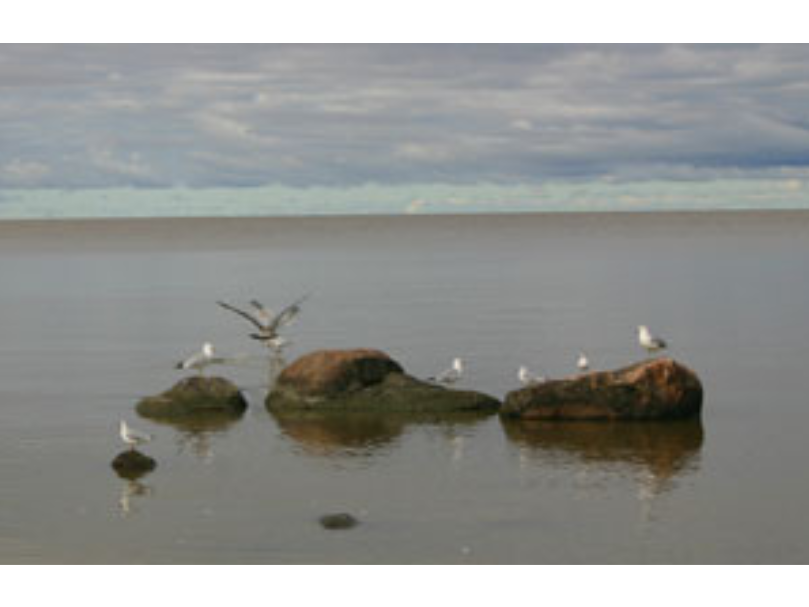
When I visited Victoria Beach before it was full of families and buff teenagers laying on brightly coloured towels or cavorting happily in the water. Now the only signs of any human presence at all were the occasional empty pop cans, discarded sandals, and cast off fluorescent pool noodles. It was like humanity had vanished off the face of the earth and I was destined to live out my final days as the last member of our species. The gulls were sitting quietly on the rocks by the shore, masters of all they surveyed. They looked rather smug, presumably with satisfaction that the human squatters were finally gone, leaving them in peace once more. Or perhaps I was just imagining it.

A small group of sea gulls perched on and flying around some rocks sticking out of the lake.

Gulls and shorebirds were the only denizens of Victoria Beach on September 8th.
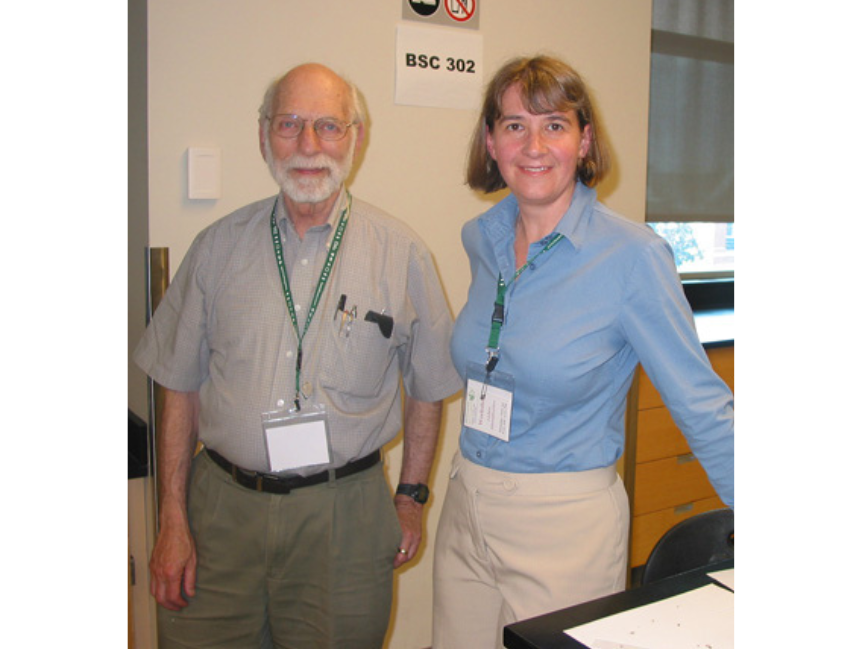
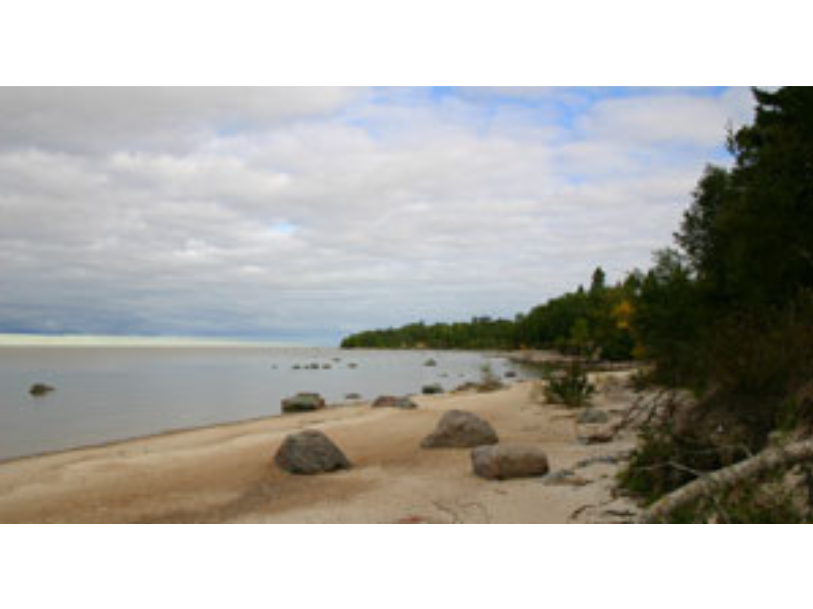
Empty shoreline of a lake with rocks scattered about the sand and dense trees on the edge of the sand.

A deserted Victoria Beach.

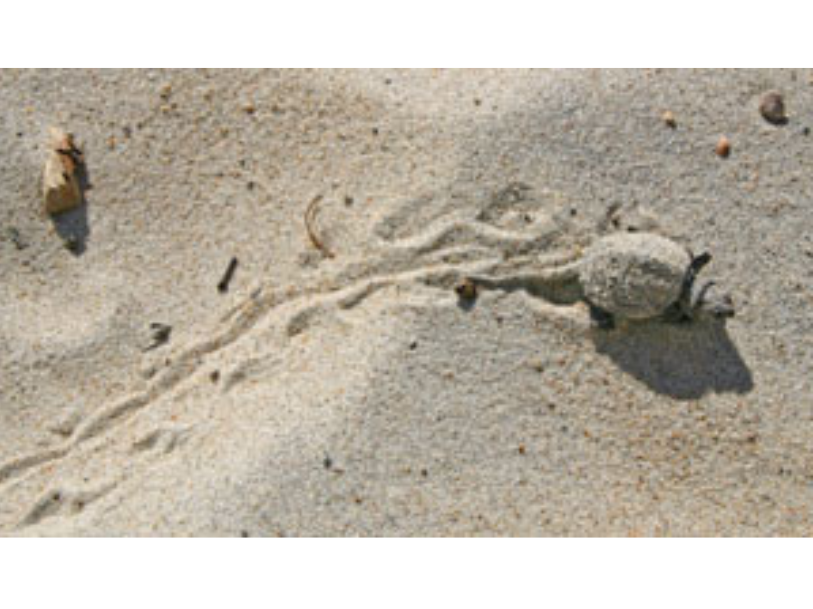
Later in the week while out at an equally deserted Grand Beach I was puzzled to find an odd animal track in the sand that I had never seen before: tiny little footprints and a pronounced tail mark. The tracks looked fresh so I figured that if I just did a bit more investigating I’d find the culprit. I was eventually overjoyed to find a tiny baby snapping turtle, only about 8 cm long from head to tail tip. He/she was probably only a few weeks old and heading to the lake to find a nice muddy spot to bury him/herself in for the winter. I’m sure that the journey from the marsh to the lake was easier without hundreds of sunbathers to crawl around or harass it.

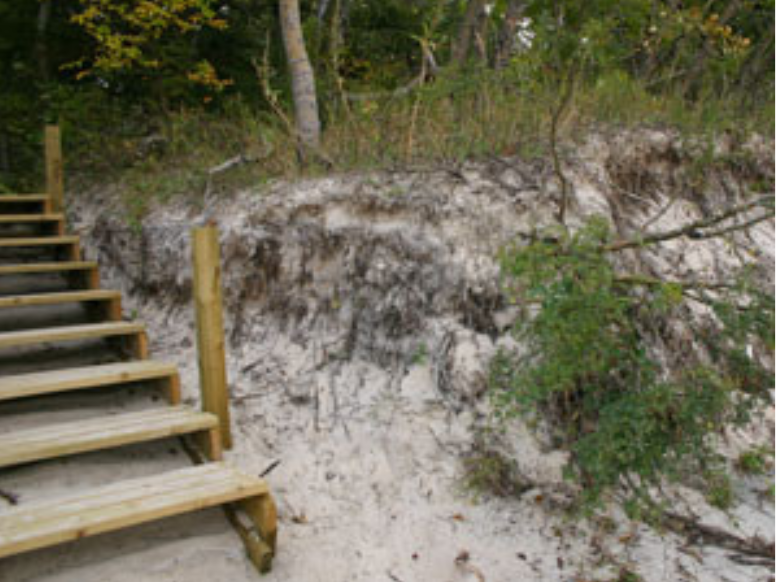
The absence of people made my task a lot easier as well as I could hike through the dunes without being fearful of barging in on any scantily clad young couples hoping for a few moments of privacy. I set out early in the morning to hike along shore and see if I could find some bugseeds in the sand dunes. Fortunately, it didn’t take long. I had just reached the beach and was bending over to tie my shoe when voila there it was on the eroding bank right next to the stairway. If only all my field work could be that easy! Anyway I spent the rest of the day walking along the beach to determine how widespread the species was. So this trip resulted in the rediscovery of two populations of bugseeds in the area and two new records of bugseeds at Traverse Bay and Grand Beach. Now it’s back to the laboratory to prepare my plant collection for processing and try to make some sense out of my field notes.

A small turtle crawling along the sand leaving behind foot prints and tail tracks.

This baby snapping turtle was only 8 cm long.

View of wooden steps coming up from the beach shoreline.

Where I found some American Bugseed.

I’m sure the birds were happy to see me go.

Dr. Diana Bizecki Robson

Dr. Diana Bizecki Robson

Curator of Botany

Dr. Bizecki Robson obtained a Master’s Degree in Plant Ecology at the University of Saskatchewan studying rare plants of the mixed grass prairies. After working as an environmental consultant and sessional lecturer…
Meet Dr. Bizecki Robson

Bagging Bugseeds

For the last several weeks I’ve been climbing over sand dunes, hiking over hills and sauntering along beaches in pursuit of bugseeds. What are bugseeds you may wonder? They are a group of annual plants that grow in sandy habitats. Up until fairly recently, they were thought to be weeds introduced to North America from Europe. Recent research revealed that they are in fact native to the Americas. After studying herbarium specimens from all over Canada, I realized that some of the species may be rare. Since most specimens of bugseed were collected 40 to 100 years ago, I decided to try to relocate the old populations to determine if the populations had disappeared or were still present.

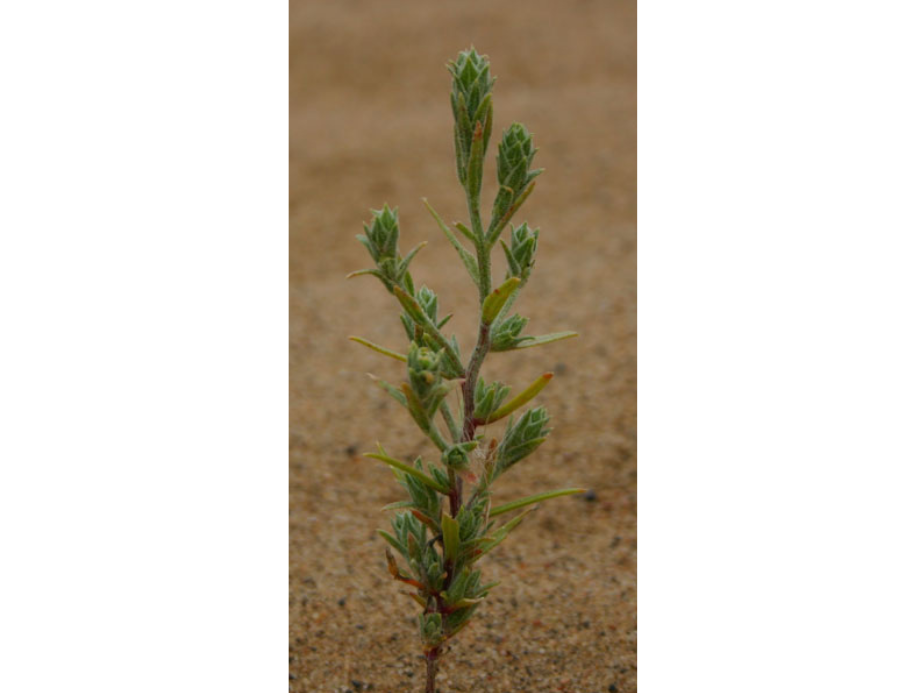
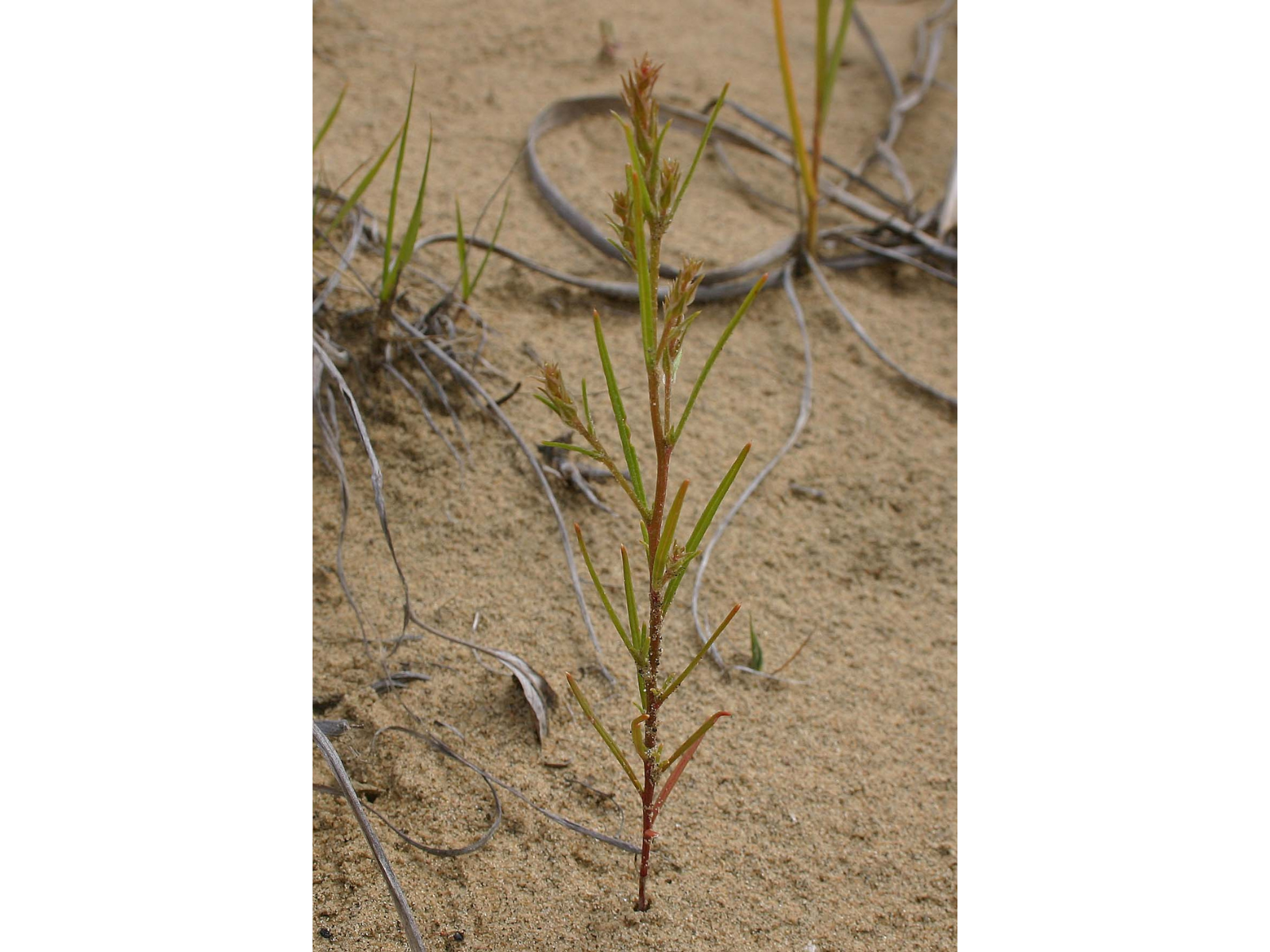
Close-up on a small green plant growing out of sand.

A rare Hooker’s Bugseed plant.

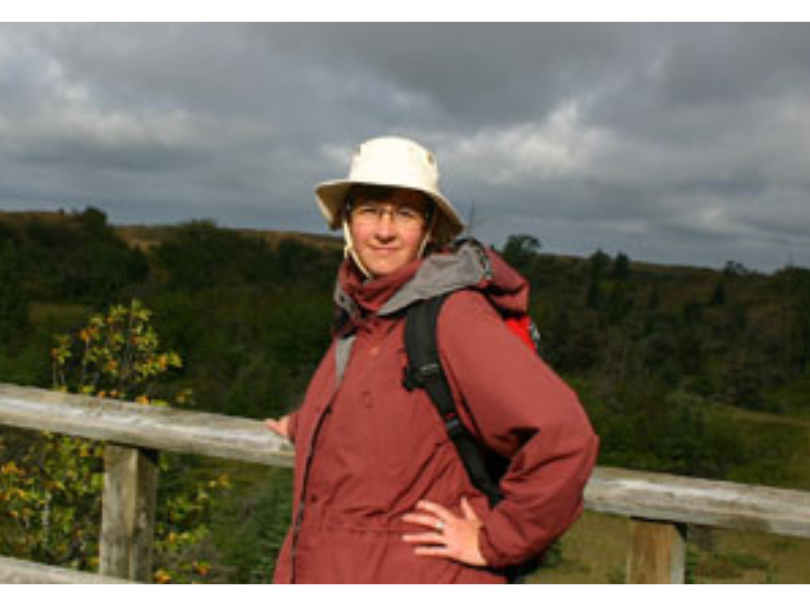
Dr. Diana Bizecki Robson wearing a rain jacket, wide-brimmed hat, and backpack standings at a wooden railing looking out over a treed landscape.

Standing on the lookout platform at Spruce Woods Provincial Park.

My first few days of field work were spent north of Glenboro in Spruce Woods Provincial Park and Canadian Forces Base Shilo. American bugseed was locally common at Shilo due to it’s tolerance and even preference for, areas with some disturbance. I found it on sandy roads, cutaways into sandy hills, bladed trails, and old sand pits as well as on sand dunes and natural blowouts. Hooker’s bugseed, on the other hand, was found in only one spot in the whole province: firm wind-swept dune blowouts in Spruce Woods Provincial Park. Hairy bugseed was also found on natural dune blowouts in the park and at Shilo. At several sites, particularly along railroads, the bugseeds appear to have been extirpated, their likely habitat taken over by exotic weeds like Russian thistle and Lamb’s quarters.

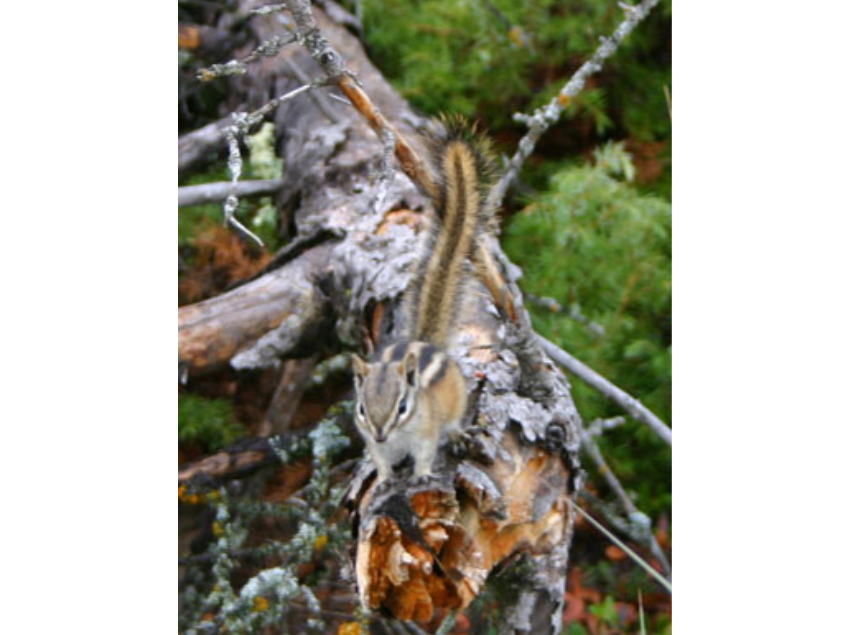
A striped chipmunk on a fallen log.

This little guy posed nicely for my camera.

A white frilly fungus growing on wood.

A lovely Branched Hericium fungus I found.

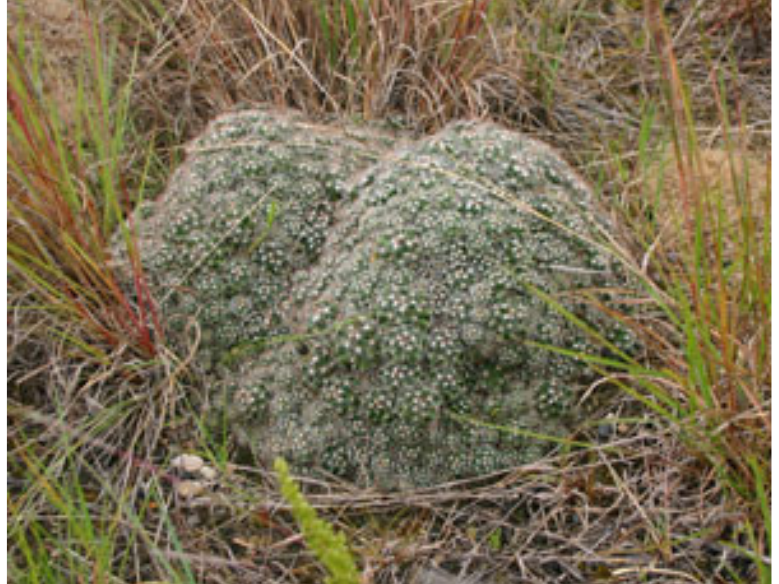
A lumpy prickly cactus growing among grasses.

A huge pincushion cactus I saw.

One of the things I love about doing field work is the opportunity to see interesting plants and animals while I’m searching for rare plants. I saw a tiny little chipmunk on a fallen spruce tree, very kindly posing for the camera for me. In a little bluff of trees I was thrilled to finally encounter a specimen of Branched Hericium (Hericium ramosum) growing on a rotting log. I’ve been looking for that species for years. I was also astounded to find the largest pincushion cactus (Coryphantha vivipara) that I’ve ever seen (about 25 cm high and 60 cm in diameter). So despite the windy weather that whipped sand in my face and made me feel like I could become airborne, it was an interesting and successful week.

Dr. Diana Bizecki Robson

Dr. Diana Bizecki Robson

Curator of Botany

Dr. Bizecki Robson obtained a Master’s Degree in Plant Ecology at the University of Saskatchewan studying rare plants of the mixed grass prairies. After working as an environmental consultant and sessional lecturer…
Meet Dr. Bizecki Robson

A Perfectly Miserable Field Day

I wrote a blog back in June about perfect field days. Today should have been one of the worst field days of my life. Hiking in the middle of an old gravel pit in 32°C heat (41°C humidex), with no clouds, virtually no wind, while sweating profusely is NOT a recipe for a perfect field day; more like a recipe for heat stroke! My day was salvaged however by making several interesting scientific discoveries. First of all I found a rare plant that I’d been looking for in that old gravel pit I was hiking in, namely American Bugseed. This species had not been collected in Birds Hill since 1929 so finding a population of about 800 plants was a good find.

A small green-yellow plant growing in sandy ground.

American Bugseed.

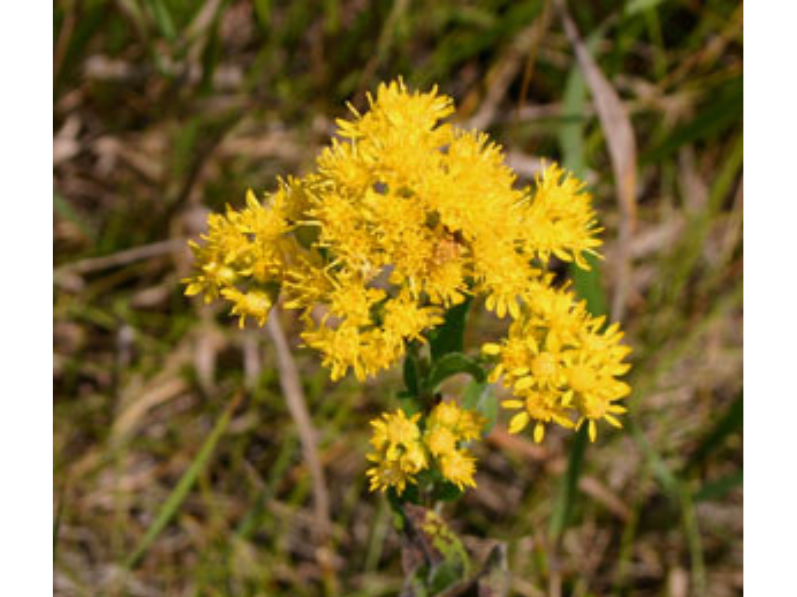
A close up on a cluster of yellow Goldenrod flowers on a yellow background.

Rigid Goldenrod.

My second high point was observing two species of insect (a bee fly and a bumblebee) visiting some of the common plants (Rigid Goldenrod and Hairy Golden Aster) in the park. The whole reason I was out at Birds Hill Park this week was because I needed some hard evidence (e.g. specimens and observations) to support my research hypothesis. I hypothesized that the rare Western Silvery Aster plant shares pollinators with common plants that bloom just before Western Silvery Aster does; the observation that I made today supports this statement. Essentially this means that the common plants in the park facilitate the persistence of Western Silvery Aster via their joint pollinators. The information I collected will be extremely useful in the development of my plant-insect interaction matrix for Manitoba’s tall-grass prairie, which will aid in conservation and restoration plans for this ecosystem.

Although I was way too hot to be excited about my findings at the time (I was too busy looking forward to getting back into the air-conditioned car) they helped to salvage what should have been a completely miserable field day.

Dr. Diana Bizecki Robson

Dr. Diana Bizecki Robson

Curator of Botany

Dr. Bizecki Robson obtained a Master’s Degree in Plant Ecology at the University of Saskatchewan studying rare plants of the mixed grass prairies. After working as an environmental consultant and sessional lecturer…
Meet Dr. Bizecki Robson

Bugs in Birds Hill

Although I am a botanist by training, over the last six years I developed a real passion for insects. It all started when I planted a wildflower garden in my back yard. I would sit on my patio after work, drink iced tea and watch an amazing variety of insects visit my flowers. When I started working here at the Museum I decided to pursue this interest by studying the pollinating insects in one of Manitoba’s rarest ecosystems, the tall-grass prairie.

For the last two weeks I’ve been sitting quietly on a stool in various places in Birds Hill Provincial Park to record the visitation sequences of pollinating insects. My favourite fly (I don’t imagine too many people can say they have one of those) is a little bee fly called Anastoechus. They look like tiny little pussy willows with wings and I think they’re adorable! They feed on the nectar of Western Silvery Aster and other flowers with their long proboscises, and parasitize grasshoppers by laying their own eggs on grasshopper eggs. The bee fly larvae then hatch and eat the grasshopper larvae. Cool! Gross too!

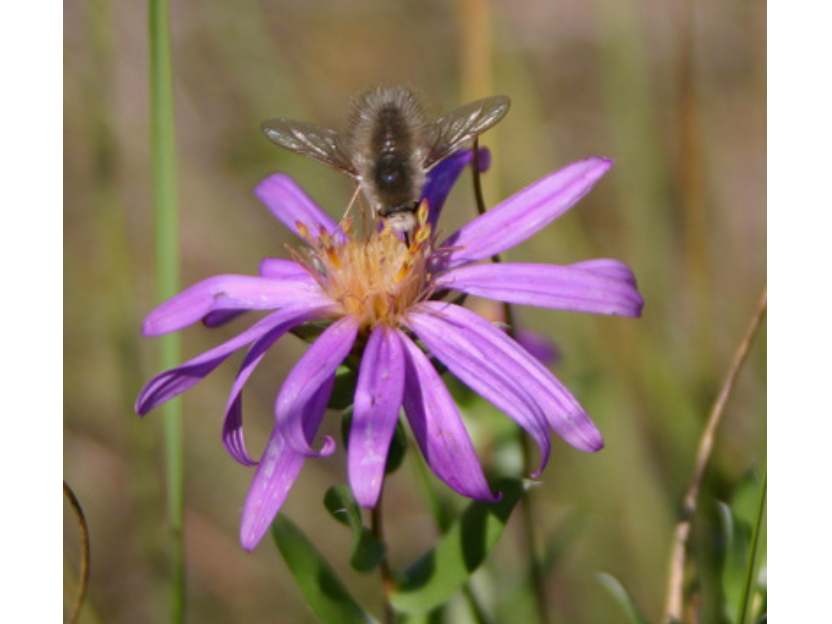
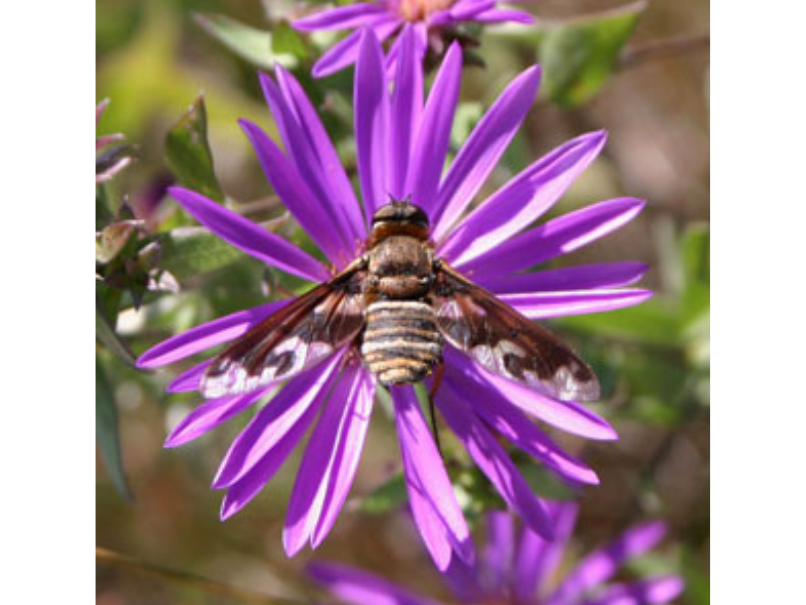
Close-up on a flower with long purple petals with an insect perched near the yellow centre.

Bee fly on Western Silvery Aster.

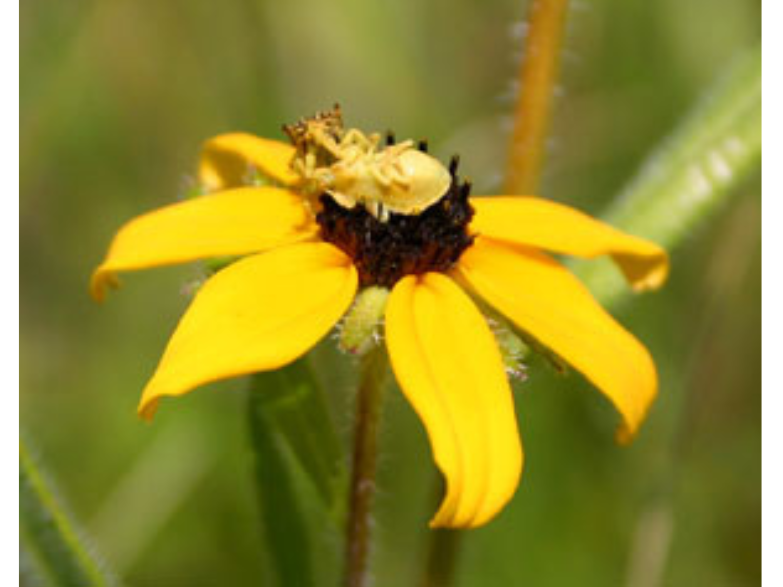
Close-up on a flower with yellow petals and a dark centre. A pale yellow insect sits on the centre.

Ambush bug canabalizing another.

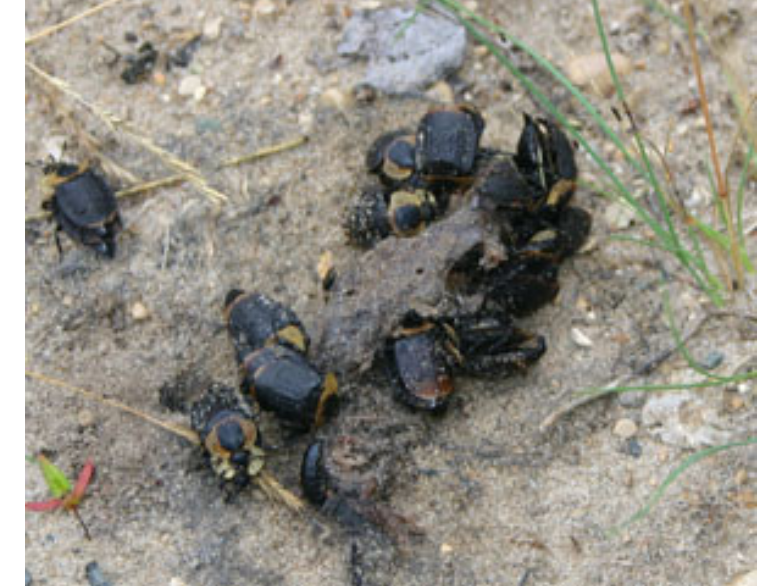
A small group of beetles gathered on a piece of dung.

I’m also rather fond of (or more accurately fascinated and repulsed at the same time) by ambush bugs (Phymata spp.). I remember the first time I saw one. I was recording the visitation sequence of a bee when all of a sudden it stopped moving. After a minute went by I moved closer to see what had happened to it. A strange bug had captured and appeared to be eating it. I contacted Rob Roughley at the University of Manitoba (sadly, he passed away in 2009), to see if he knew what this insect was. Being the fount of entomological knowledge that he was, he immediately identified it for me. Turns out that ambush bugs produce a paralytic poison to subdue their prey very rapidly. Then they inject digestive enzymes into the exoskeleton of the insect to liquefy the goo inside so they can suck it out. Sometimes they share their meals with each other and sometimes if they’re really hungry, they cannibalize each other. Cool! Gross too!


Image: American carrion beetles on, you guessed it, carrion!

Rob also identified a strange beetle that I had seen on prairie roses. I was doing field work at Living Prairie Museum when I observed male beetles chewing off all the stamens of rose flowers, which I thought was a bit odd. Later on I saw beetles mating on the emasculated flowers. Rob told me it was a “rose-emasculating beetle” (a pretty fitting name), and that the males trimmed the stamens to make a little “love nest” to attract females. So I guess it’s not just humans that use roses to attract mates.

Much less attractive scents -from our point of view at least- get other beetle species in the mood for love, namely the smell of rotting meat. I was hiking along a trail in the park to get to some of my research plots when I saw a congregation of about 20 mating beetles crawling over what looked like part of a carcass. I hypothesized that they were probably interested in laying eggs in or near the meat. A bit of research led me to conclude that they were likely American Carrion Beetles (Necrophila americana). Turns out that if you’re an American Carrion Beetle, carcasses are the equivalent of night clubs; males hang out there and wait for attractive females to show up. Then when the females arrive, they pounce on them so they can’t meet any other guys! Pretty clever!

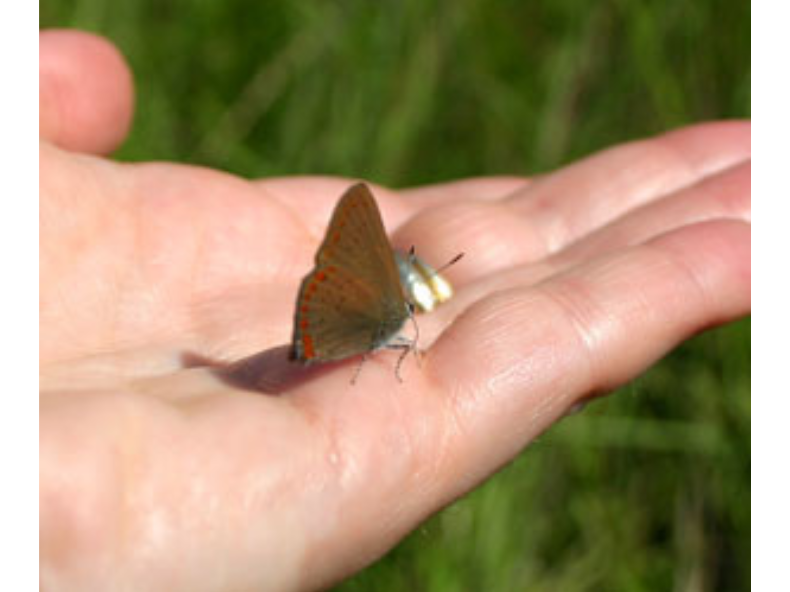
A small brown butterfly perched on the palm of an extended hand.

A Coral Hairstreak butterfly lapping up the salty sweat on my hand.

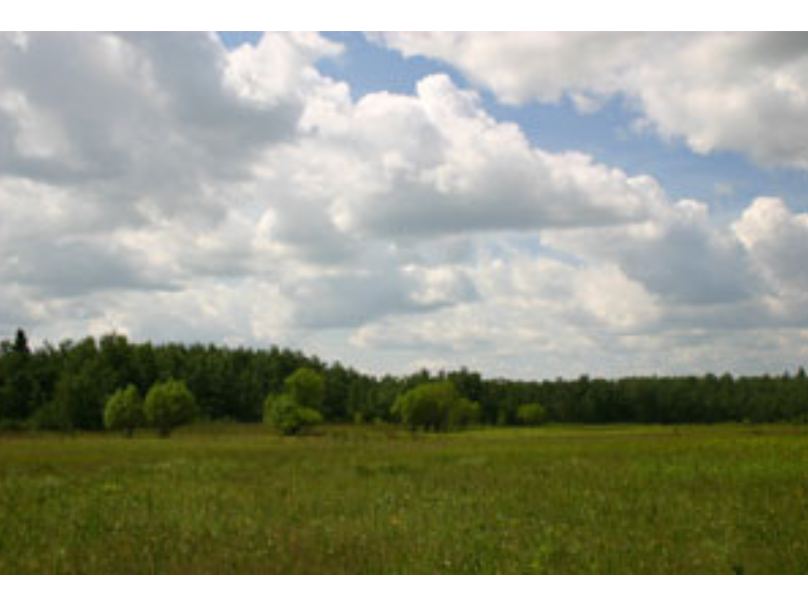
Expanse of grass with dense trees in the background, below a blue sky with many fluffy, white clouds.

A lovely day in Birds Hill Provincial Park.

This week I became a willing donor of bodily fluids to one of the local Hairstreak (Satyrium) butterflies. It landed on my hand while I was monitoring one of my plots and proceeded to lap up my sweat (given the heat this week there was no lack of it), presumably to get the salts. It licked my hand for about 30 minutes and even continued to do so while I walked to my car. I’ve also, in times past, donated salt to the local sweat bees. For this reason I usually pause before slapping something on my limbs lest I accidentally squish a friendly butterfly or bee instead of a mosquito (I’m not too keen on donating blood since I get horrible itchy welts).

The more I learn about insects through my observations of them, the more fascinated I become. Hopefully some of my fascination has now rubbed off on you. Now get off your computer and go look at some bugs!

Dr. Diana Bizecki Robson

Dr. Diana Bizecki Robson

Curator of Botany

Dr. Bizecki Robson obtained a Master’s Degree in Plant Ecology at the University of Saskatchewan studying rare plants of the mixed grass prairies. After working as an environmental consultant and sessional lecturer…
Meet Dr. Bizecki Robson

“All I know is that I know nothing”

I didn’t really understand this quote by Socrates until I started working on my Master’s degree. I soon discovered that no matter how much I learned, there was always much more TO learn. Although it is fair to say that scientists find answers, it is just as accurate to say that we discover questions.

Research sounds pretty simple. You start by asking an interesting question about how the world works, and then formulate an idea regarding what the answer will be based on your knowledge of the subject and a literature review (a hypothesis in scientific speak). If you’ve designed your study well, you should soon have an answer to your question. However, the answer you get usually creates additional questions that you hadn’t even thought to ask. Questions that need to be answered before you can publish your research, and send you to “back to the ol’ drawing board” to write yet another grant proposal. Science is kind of like cutting off the head of the mythical hydra: more heads (questions) keep popping up to replace the ones you’ve already dealt with. Ultimately this isn’t a bad thing as it ensures that good science gets done, but sometimes it can make you feel like you’re running on an unstoppable treadmill.

Close-up on a bee fly resting in the centre of a flower with purple petals.

A good example of this is my recent research on Western Silvery Aster. This nationally rare plant can be found in nearby Birds Hill Provincial Park. I discovered that very little was known about its pollination ecology, my personal area of research interest, so I embarked on a plan to identify its pollinators in the hopes of providing useful information to help government scientists prepare their recovery plan.

While conducting the pollination study, I observed that flower production was higher in some areas of the park than others. I began to wonder whether this difference was due to heavier competition with other species for soil resources such as nitrogen. The following year I attempted to answer this question by establishing some study-plots to determine the impact of fertilization on flower production. Although there was a slight increase in flower production in fertilized plots, the impact was not as high as I thought it would be, which suggests that there is some other limiting factor at work, perhaps water or phosphorus. I have yet to design a study to answer that question because I also wanted to know if other plants facilitate pollination of Western Silvery Aster by providing nectar to its pollinators earlier in the year. Next week I will begin conducting these pollination surveys so if you’re out in Birds Hill Park and see someone sitting on a stool in the middle of the prairie with a white hat and butterfly net-that’s me!


Image: A bee fly (Exoprosopa sp.) on a Western Silvery Aster flower.

One of things that can greatly affect the interpretation of data is the weather. One manuscript of mine was rejected because the reviewers deemed that only one year of data was insufficient to make any generalizations about pollinator communities. Collecting another year’s worth of data allowed me to demonstrate that insect and plant communities can vary substantially in terms of their abundance from year to year due to differences in the weather. I was fortunate to be able to compare a relatively cool summer (2004) to one that was more typical (2005). In general, it seems to take at least two field seasons (and ideally more) to detect meaningful patterns in nature due to variability in the weather. I’ve learned that a scientist has to build flexibility and redundancy into his/her research plans to obtain at least some good data and take advantage of serendipitous observations.

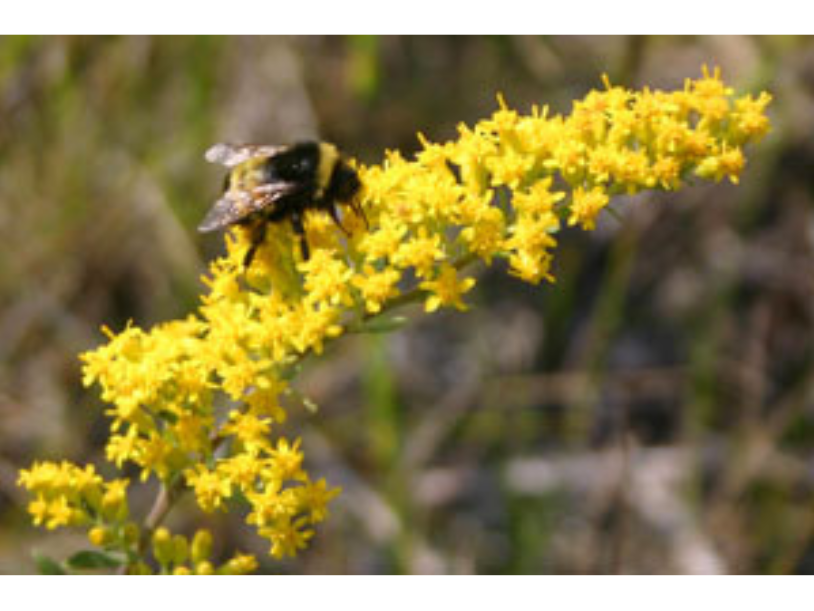
A bumblebee on a long extended yellow flower.

Despite the problems I’ve encountered, my efforts have met with success.  The results of my pollination research on Western Silvery Aster, “A comparison of flower-visiting insects to rare Symphyotrichum sericeum and common Solidago nemoralis (Asteraceae)” were published in the scientific journal Botany.  A second article, “Reproductive ecology of the western silvery aster Symphyotrichum sericeum in Canada”, was recently published in the open access journal Endangered Species Research (http://www.int-res.com/articles/esr2010/12/n012p049.pdf).  You can also check out my earlier paper, “The structure of the flower-insect visitor system in tall-grass prairie”,  in the journal Botany.


Image: Bumblebee (Bombus sp.) on Showy Goldenrod.

Dr. Diana Bizecki Robson

Dr. Diana Bizecki Robson

Curator of Botany

Dr. Bizecki Robson obtained a Master’s Degree in Plant Ecology at the University of Saskatchewan studying rare plants of the mixed grass prairies. After working as an environmental consultant and sessional lecturer…
Meet Dr. Bizecki Robson

Wandering in the Whiteshell

Ah it’s a beautiful day here in Whiteshell Provincial Park. It’s warm and sunny; perfect weather for lying on the beach. Unfortunately that’s not what I did today because I am not here on vacation: I am working. After a quick breakfast I was on a hiking trail near Falcon Lake, where no botanist (at least to my knowledge) has gone before. What was I doing? After putting on my nearly impenetrable mosquito-proof clothing and gloves, and my backpack full of gear, I set out to collect spring fungi, lichens, mosses and plants (mostly sedges and ferns) that had not been collected in the area before. If you’re wondering why I’m doing this, go back and read my blog “41 Uses for a Dead Plant.”

Even though the trail I was on was only 5 km long, it took me 3.5 hours to reach the end. Botanists spend a lot of time staring intently at the forest floor and periodically crawling around on it to find tiny little plants and lichens. I spent half an hour in one little patch of birch and fir collecting a bewildering diversity of Cladonia lichens. The only problem with pausing for so long is that all the mosquitoes, horseflies and black flies find you. The hike back was not so buggy as I stopped only occasionally to collect a few plants that I missed.

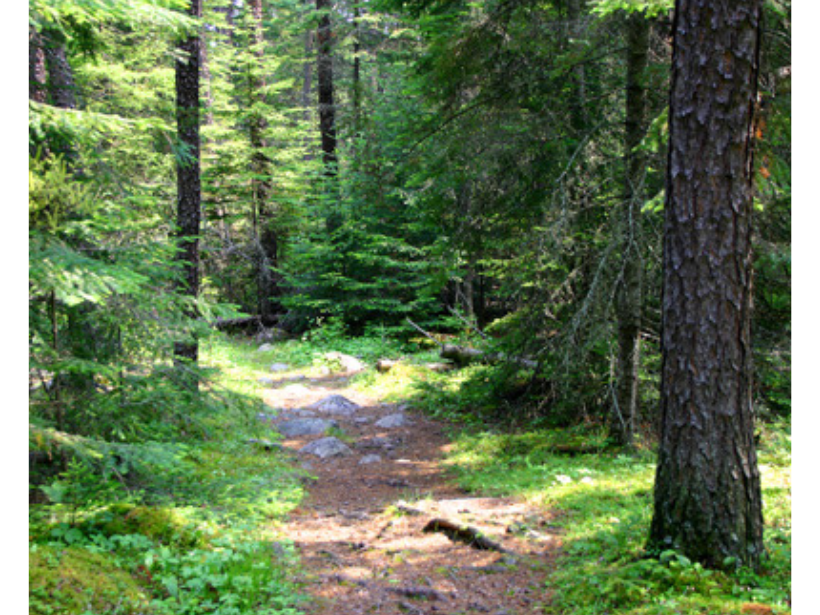
An uneven path through a wooded area.

Hiking trail in the Whiteshell.

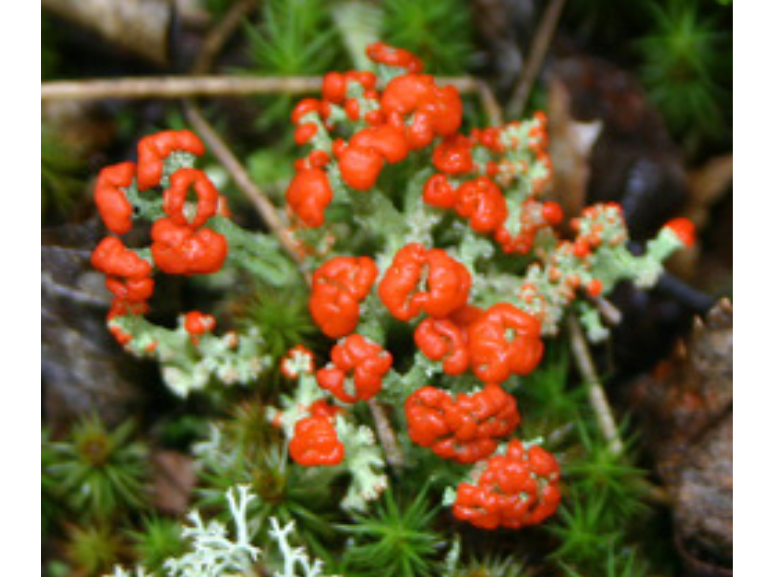
Close-up on a low-growing plant with lots of small red flowers.

A pixie-cup (Cladonia) lichen.

At one point I stopped to collect some mushrooms from an old log. Breathing deeply, I was enchanted by the scent: the rich smell of decaying wood combined with the resinous scent of fir needles and the crispness of moss. It smelled like life. I wondered briefly how many species of insects, fungi and bacteria were in a single handful of this humus? Probably millions. Urban soils, poisoned and stripped of all their diversity, just don’t have the same odor. I’m not sure why people insist on ripping out the native vegetation at their cabins and replacing them with lawn; it just doesn’t smell as good.

At the end of my hike, I was sweating profusely (it was very humid), hungry, thirsty and experiencing “the willies” from being surrounded by the various insects that were intoxicated by the large quantities of carbon dioxide I was exhaling (I’m not in peak hiking condition yet). Once I got to my car, I headed back to the cabin for a late lunch and a much needed shower. After lunch I hiked along the shore of the lake to collect some aquatics. The remainder of the day was spend carefully pressing and labeling my specimens, making spore prints, putting mushrooms in the dehydrator and recording field notes. Tomorrow I get to do this all over again.

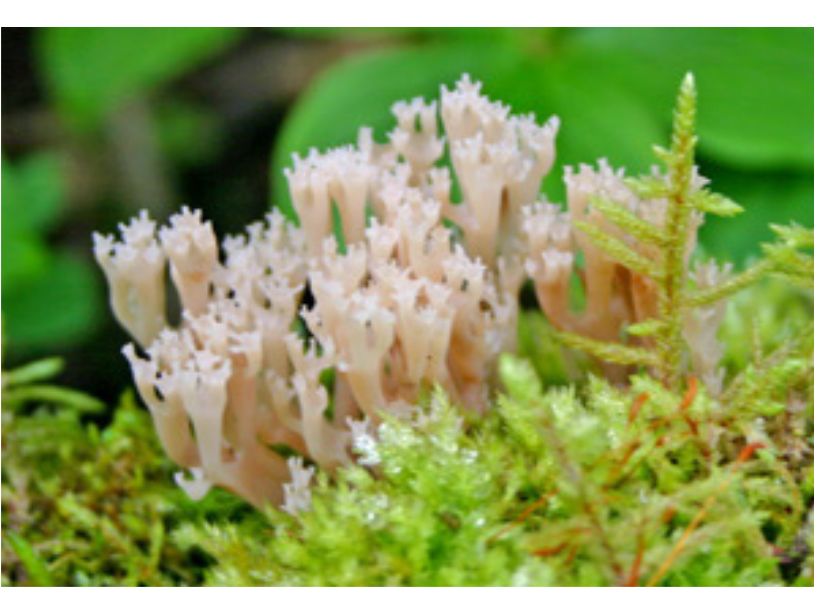
Close-up on a pale pink-white coral like plant growing from a green surface.

A beautiful coral (Ramaria) fungus I found.

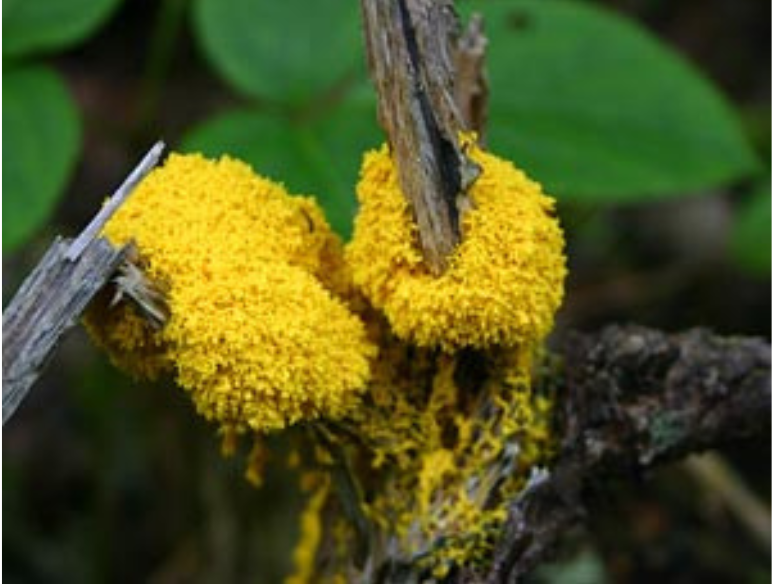
A textured, bright yellow mold growing around a slim branch.

A spectacular slime mold!

Given the choice between being out here and being in my office at the computer, I would much rather be out here. I’ve seen several deer, leopard frogs, a great blue heron, butterflies, lots of birds and a really cool bright yellow slime mold! At night the local pair of loons serenades me to sleep.

Dr. Diana Bizecki Robson

Dr. Diana Bizecki Robson

Curator of Botany

Dr. Bizecki Robson obtained a Master’s Degree in Plant Ecology at the University of Saskatchewan studying rare plants of the mixed grass prairies. After working as an environmental consultant and sessional lecturer…
Meet Dr. Bizecki Robson

Botanical Black Holes

Next week I will be going out to Whiteshell Provincial Park to do some collecting. Why you might ask? I’m trying to fill in Manitoba’s botanical black holes.

While looking through several recent botanical publications I noticed an odd pattern. The Canadian distribution for quite a few species was listed as being: British Columbia, Alberta, Saskatchewan, Ontario, Quebec and Newfoundland but not Manitoba. Since the species’ were found on “rock outcrops in the boreal forest” or “acidic bogs”, a lack of appropriate habitat was probably not the reason why they had not been found here. The answer, quite simply, is that no one has ever collected samples of those species in Manitoba before, even though they are probably quite common. In total, there are at least 74 species of lichens and 85 species of moss that likely occur here, but are undocumented, representing a black hole in our knowledge of the provinces’ biodiversity. If we, as a society, are to protect our nation’s biodiversity we need to know what exists here. Although we know which birds, mammals, fish, amphibians, and reptiles are native to Manitoba, our understanding of the invertebrate, fungal, and botanical diversity is still very incomplete.

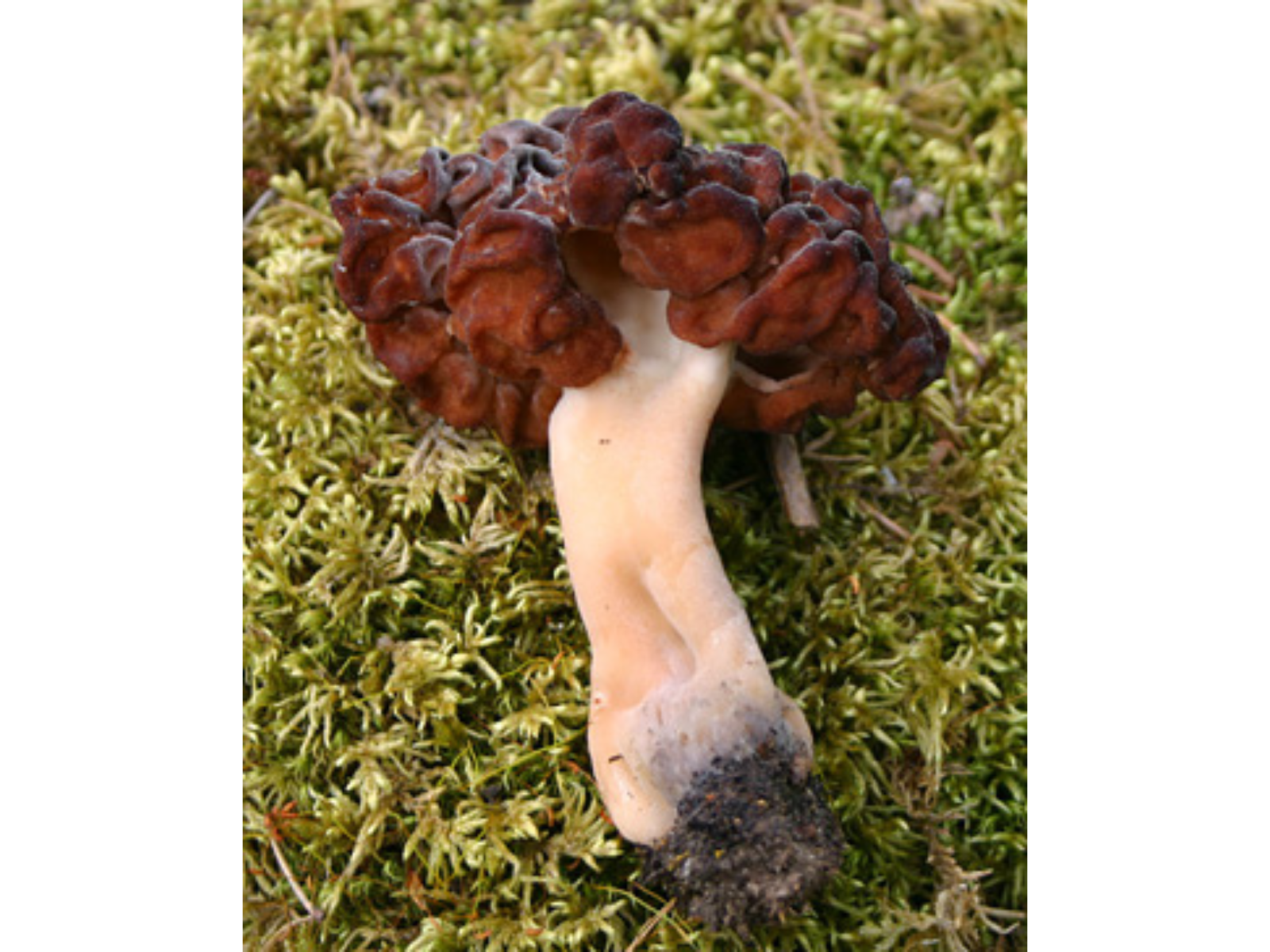
A mushroom with a ridged, brown cap and a light-coloured stem lying on green moss.

The distribution of fungi like this false morel are poorly known.

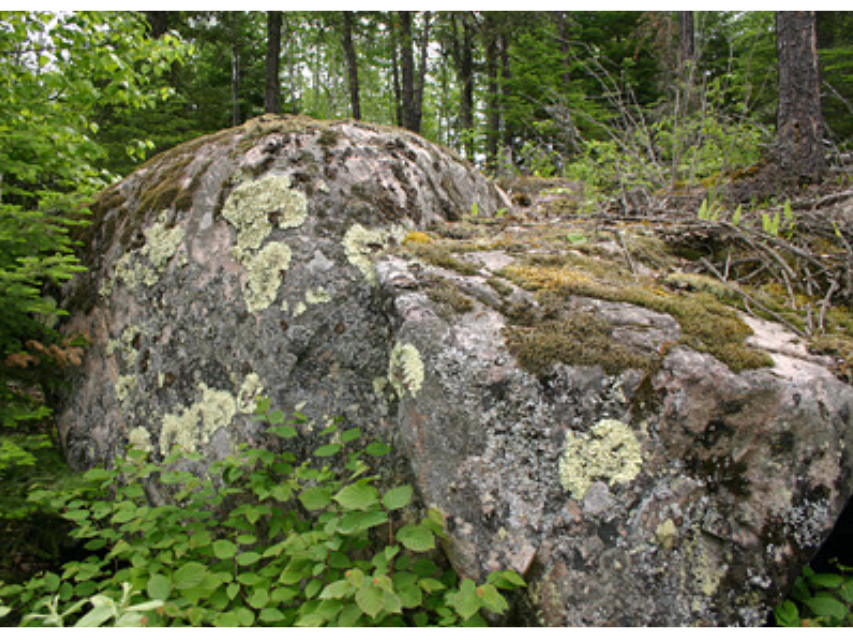
A large rock covered in lichen and mosses in a wooded area.

Rock outcrops are covered with a diverse assemblage of lichens and mosses.

For anyone out there worried that I “kill” plants when I collect them, you can stop worrying. I only collect a single branch with a few flowers and/or fruits, leaving the root system intact and the plant still very much alive. Since the bulk of fungi consist of subterranean “roots” called hyphae, collecting a few mushrooms does not kill the fungi. I do much less damage to wild plants when I collect them than the various wild herbivores do when they eat and trample them. Further, I do not collect any species that are protected under federal or provincial legislation, or that are rare and present in small numbers.

One of my latest endeavours is to try and complete The Manitoba Museum’s botanical collection by obtaining at least one specimen of every species found in the province. In 2008 it was estimated that the Museum possessed slightly less than 83% of all vascular plants, 45% of all lichens, 21% of all bryophytes, 4% of all fungi and less than 1% of all algae. Further, the Museum possesses fewer than five specimens of 45% of our vascular plant species and of most non-vascular plants and fungi. This means that we simply don’t know how widely distributed our native species are or whether their distribution has changed over the years.

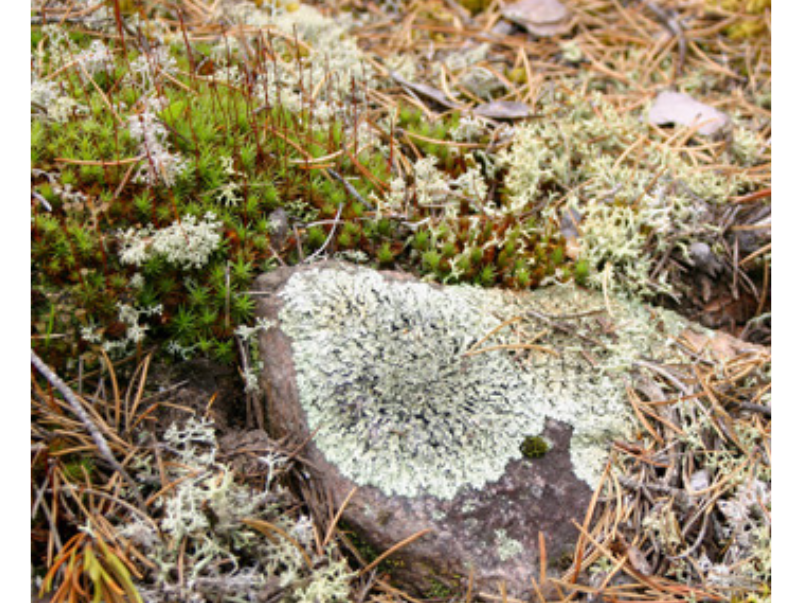
Close-up on a stone with lichen and mosses growing on and next to it.

Lichens and mosses are undercollected in Manitoba.

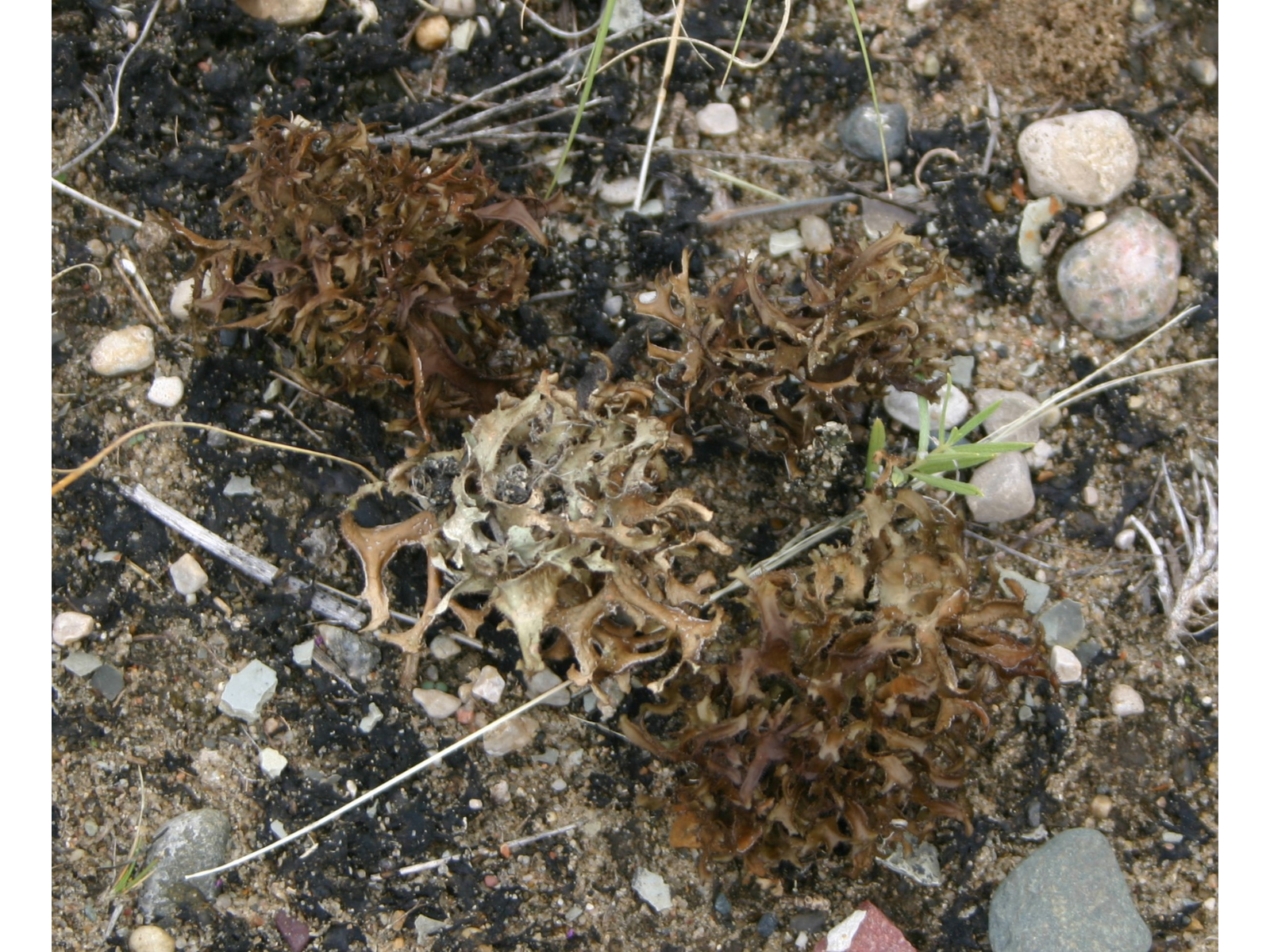
Close up looking down at damp, sandy/rocky soil with lichens and algae growing from it.

Lichens and blue-green algae are early colonizers of bare soil and rock.

The fact of the matter is that this project will likely never be completed during my stint as Curator here. Documenting biodiversity simply isn’t “sexy” enough to attract the large amounts funds that are needed to do the job properly. I would need to spend several months every year hiking around in the bush with a team of field assistants to achieve this goal. Then I would need staff to properly preserve and catalogue the specimens, and additional collection space to store them in. This year I can only spend 13 days in total to do my field collecting. Given the lack of funding to document the provinces’ biodiversity, the most I can expect to do is make the hole a little bit smaller.

Dr. Diana Bizecki Robson

Dr. Diana Bizecki Robson

Curator of Botany

Dr. Bizecki Robson obtained a Master’s Degree in Plant Ecology at the University of Saskatchewan studying rare plants of the mixed grass prairies. After working as an environmental consultant and sessional lecturer…
Meet Dr. Bizecki Robson

Scientific Hero Worship

Attending conferences can provide scientists with wonderful opportunities to network, develop new insights into natural phenomenon, refine research, and initiate new partnerships. As a Museum professional I also get to visit Museums and develop ideas for new exhibits and programs at my own institution. On the lighter side, scientists also share a few drinks, commiserate with each other (I had my funding cut too!), meet old friends, exchange field stories, and sometimes even get funky on the dance floor after the conference banquet.

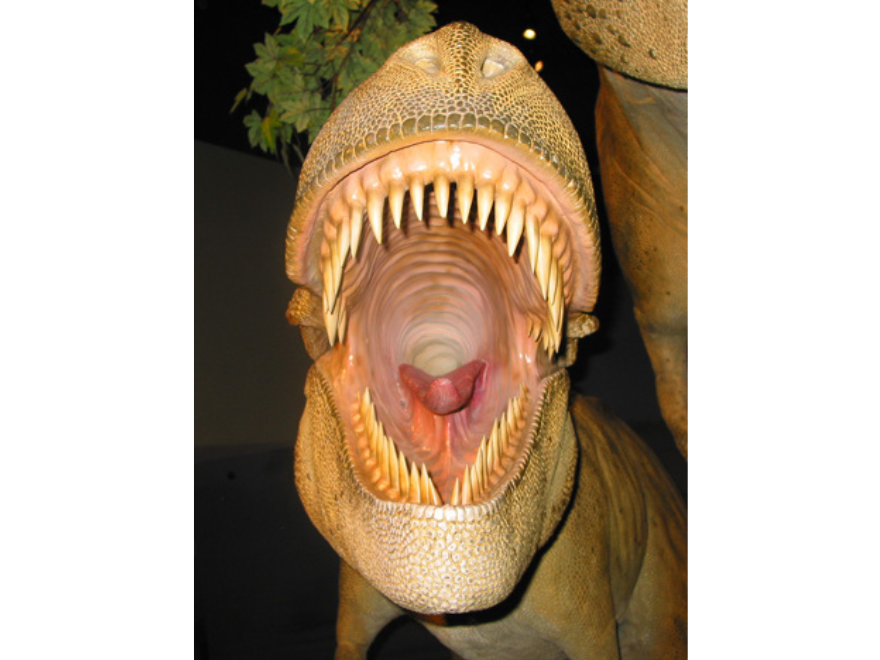
Photo looking into the open mouth of a large T-Rex model.

One of amusing things that goes on at conferences is scientific hero worship. Many a young graduate student has fantasized about meeting a famous scientist, dazzling them with their impressive knowledge of natural history, and then forming a fruitful lifelong research partnership (I’d love to spend three years in the jungles of Borneo collecting plants with you and discovering a cure for cancer). In reality, I suspect that this rarely happens. There’s something about meeting a distinguished scientist that makes young scientists go completely blank.


Image: I was inspired by the new exhibits at the Canadian Museum of Nature.

I got to meet the late Stan Rowe (the Canadian ecologist who wrote “Home Place”) when I was a twenty-something graduate student. Instead of saying something impressive, I smiled and stared at him blankly like I was an imbecile for a few seconds before eventually remembering to ask him to sign my copy of his book. It reminded me of that scene in “A Christmas Story” when Ralphie finally meets Santa but can’t remember that he wants a Red Rider BB Gun for Christmas.

A colleague of mine recounted a similar tale of how he met the late Stephan J. Gould, one of the most famous palaeontologists in the world. He was visiting the field museum over the lunch hour of a conference but didn’t realize they were serving food, instead choosing to drink three bottles of free beer on an empty stomach. It was in this slightly inebriated state he ran in Stephan. Instead of the witty banter that he would have liked to have engaged in with the world’s most preeminent palaeontologist, he muttered something nearly unintelligible and completely forgettable. Ah such is life!

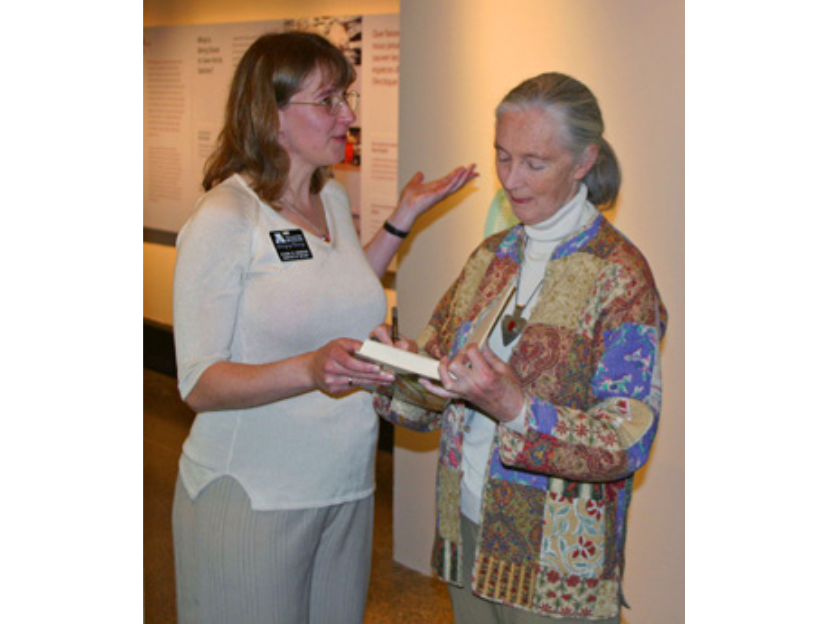
Dr. Diana Bizecki Robson handing a book to Dr. Jane Goodall.

I was reasonably coherent when I met Jane Goodall (she signed my book!).

Dr. Diana Bizecki Robson posing for a photo with Dr. Brodo, an older gentleman.

Dr. Brodo helped me learn to identify lichens.

As you get older you clam up a lot less, probably because you actually have some original research of your own to discuss with other scientists. I had a wonderful time chatting with Jane Goodall when she came to the Museum in 2005 for the Chimpanzee exhibit that we hosted. At the Canadian Botanical Association conference this year I was able to meet Irvine Brodo, the Canadian lichenologist that I have admired ever since reading his book on lichens of North America. Who knows? Perhaps one day I’ll know what it’s like to be on the receiving end of the clumsy yet heartfelt admiration that young scientists have for their older colleagues.

Dr. Diana Bizecki Robson

Dr. Diana Bizecki Robson

Curator of Botany

Dr. Bizecki Robson obtained a Master’s Degree in Plant Ecology at the University of Saskatchewan studying rare plants of the mixed grass prairies. After working as an environmental consultant and sessional lecturer…
Meet Dr. Bizecki Robson