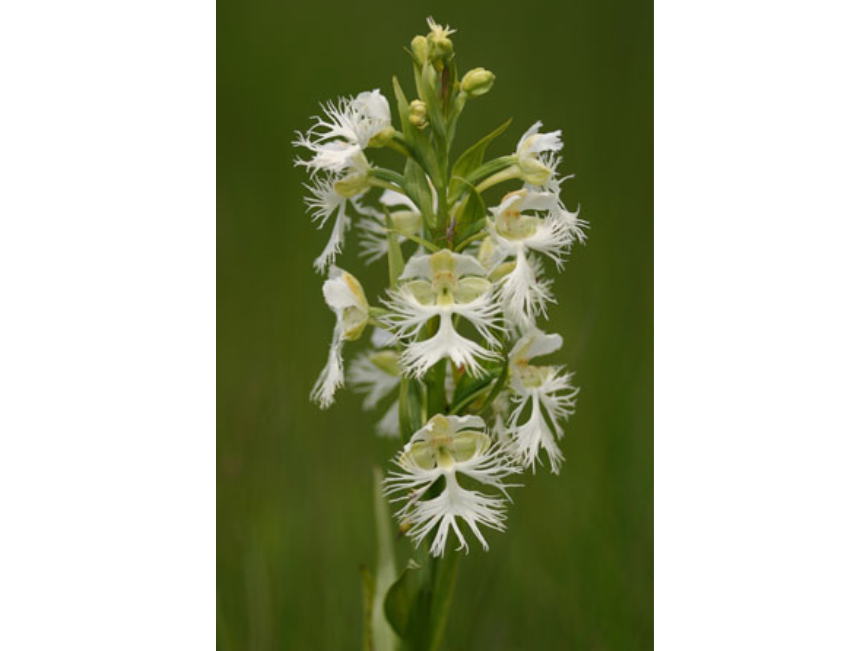




Confessions of a Genuine Science Geek

Confessions of a Genuine Science Geek

For the last several weeks I have been recording the pollinators of wild flowers in Birds Hill Provincial Park. One rather windy and uneventful day I was able to reflect on my chosen profession and was forced to conclude that I am a science geek. I remembered an old episode of the Simpsons where Bart discovers a comet. While searching the heavens with Bart, Principal Seymour Skinner says, “There’s nothing more exciting than science! You get all the fun of sitting still, being quiet, writing down numbers, paying attention – science has it all!” That pretty much describes what I’ve been doing for the last seven years: sitting quietly, waiting for an insect to land on a flower, and writing down the number of flowers she/he visits. In the winter I identify plants and insects, study the data I collected, make graphs, run statistical analyses, and write scientific papers. The funny part is that I really do find it exciting. It’s fun to find out if the patterns you surmised while in the field were real or indistinguishable from nature’s background noise. Plus, there’s nothing more thrilling than correctly identifying a mysterious species of sedge! Hence my revelation and this confession.
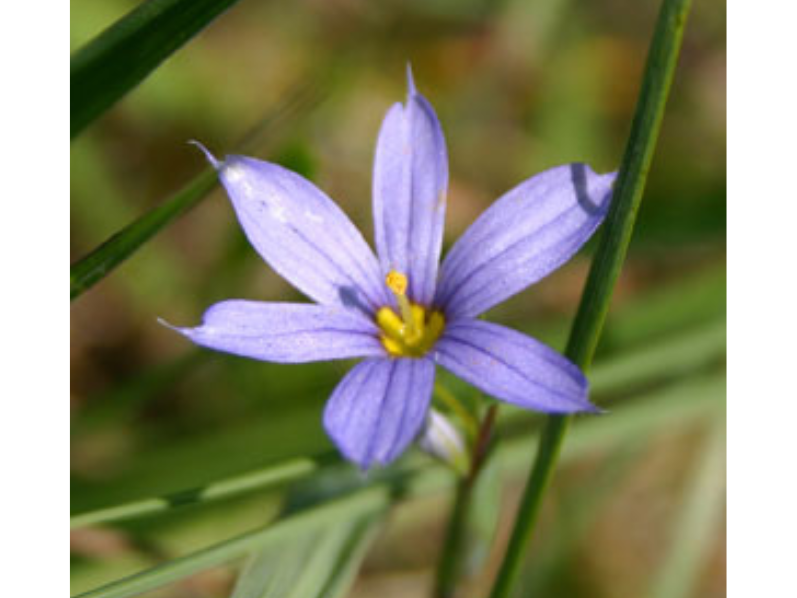
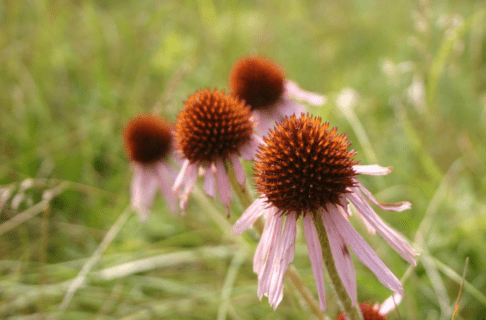
A small, six-petaled purple flower with a yellow centre.

I love staring at the delicate Blue-eyed grass flowers!
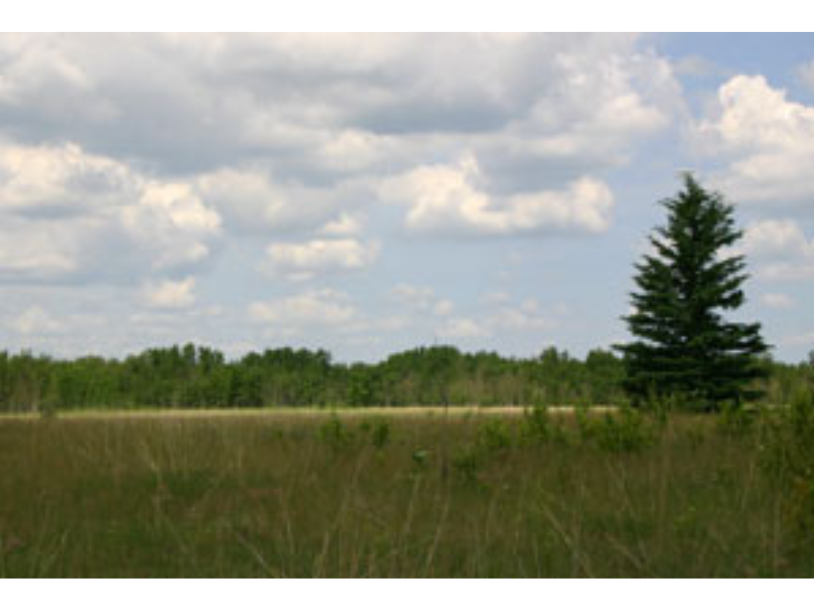
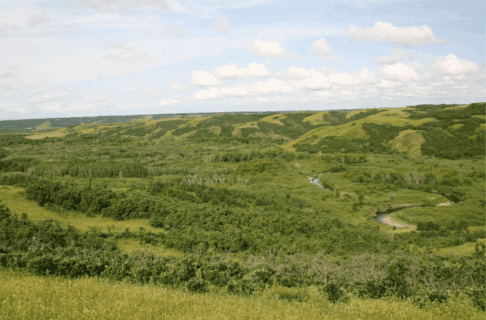
View looking out over a prairie grassland, with a single fir tree in the mid ground, and a tree line in the distance.

My summertime office.

I know that to some (probably all those extroverted people out there) my job sounds dull and tedious (a bit like watching paint dry, perhaps).  But for an introvert like me, who is energized by solitude, it’s actually the perfect job.  Being in a crowded, noisy environment with lots of people around would just drain me.

Perhaps I’m being a little too self depracating though.  Having a job where you’re constantly stuck indoors on beautiful summer days isn’t that great either.  I get to watch all sorts of wildlife while I do my work, smell fragrant wildflowers and feel the wind on my face.  Plus I don’t need to take any vitamin D tablets (skin cancer’s a possibility though).  The fact of the matter is some people pay money to do what I get paid to do: observing and photographing wildlife.  I can’t imagine too many people paying money to be a lawyer or a stockbroker for a day.


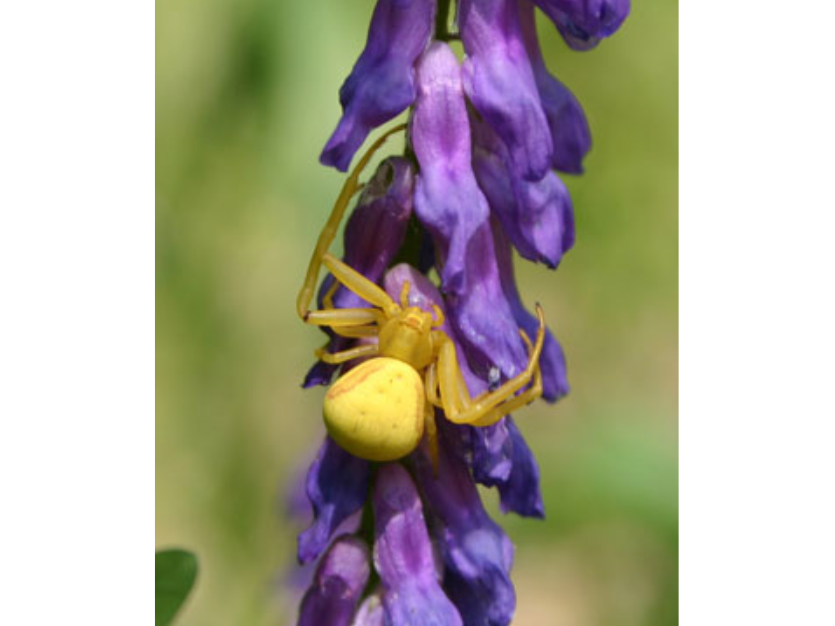
Image: One of the facinating creatures I share my work space with: a crab spider.

I also take solace in the fact that the specimens and data I collect will probably be studied long after I’m dead.  Not everyone can say that about their life’s work.  So even though I am a science geek, I don’t mind at all.

Dr. Diana Bizecki Robson

Dr. Diana Bizecki Robson

Curator of Botany

Dr. Bizecki Robson obtained a Master’s Degree in Plant Ecology at the University of Saskatchewan studying rare plants of the mixed grass prairies. After working as an environmental consultant and sessional lecturer…
Meet Dr. Bizecki Robson

A Museum of a Museum

I recently attended the annual meeting of the Canadian Society of Ecology and Evolution in Banff, Alberta. However, being stuck inside a building on several beautiful sunny days was agonizing and on several occasions I found myself gazing wistfully out the windows at the mountains beyond. Fortunately, visiting other museums while I travel is an important part of my job as it helps me to plan exhibits here at the Manitoba Museum. This trip was no exception and I was able to visit the Banff Park Museum during a long lunch break one day.

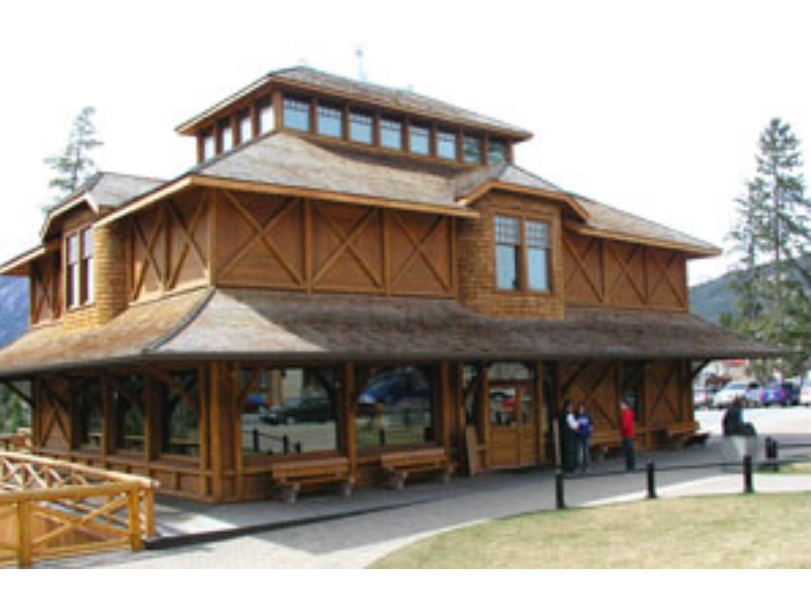
A multi storey wooden building. The main floor consists of primarily windows under an awning stretching the perimeter of the building. Wooden benches are placed periodically under the windows.

The Banff Park Museum in Alberta.

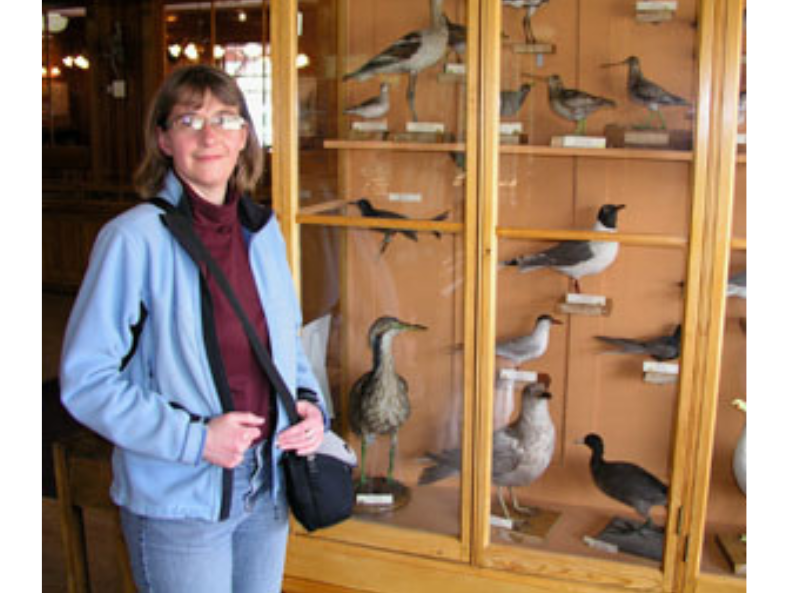
A smiling individual posing beside a display case containing a variety of taxidermized birds.

Next to a case of very old birds.

The Banff Park Museum is such an old museum (1903) that the building and its collection were protected as a National Historic Site in 1985. So basically it is a museum of what old museums used to look like. Apparently in the late 1950’s some people in the community wanted the Museum torn down and replaced with a new building and more modern exhibits. Looking around at the beautifully crafted wooden cases, hundred-year old specimens and gorgeous Douglas Fir wood panelling on the ceilings, I was thankful that cooler heads prevailed.

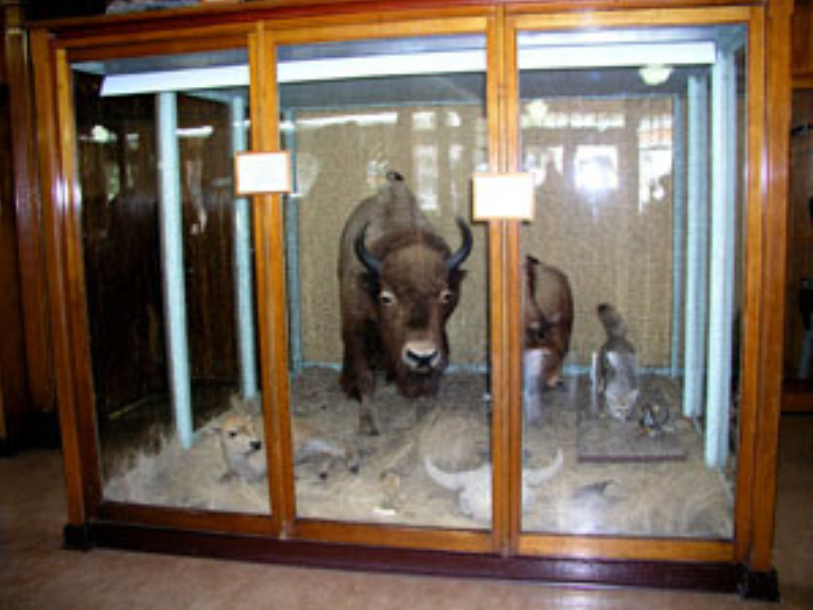
The Museum contains numerous “cabinets of curiosity”, as they used to be called. These cabinets contain more than 5,000 mounted birds, mammals, insects, plants and eggs collected in western Canada mainly between 1890 and 1930. Some of the “newer” exhibits created in 1914, displayed animals in their habitat, an approach that was considered radical at the time. Eventually this approach evolved into our modern-day dioramas. Nowadays some Museums are tearing down their dioramas and putting in “cabinets of curiosities” again, albeit with a modern twist. So I guess that “what goes around comes around” even in Museum design. I myself tend to think that what is most desirable is a mixture of the best of both, especially when many dioramas themselves have become worthy of preservation.

A taxidermized bison and calves in a large squared display case, with a prairie groundscape set up.

A “radical” new diorama circa 1914.

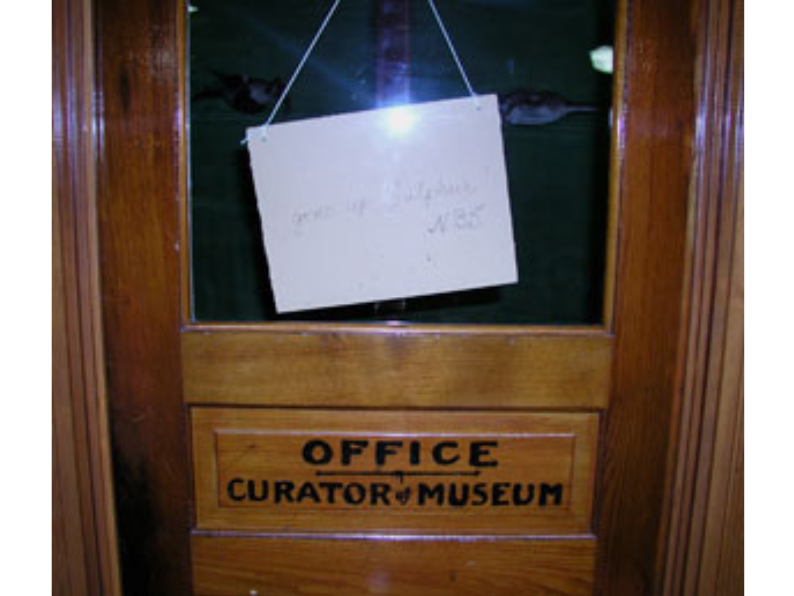
A wooden door with a large window in the front. Printed on the door is "Office / Curator of Museum". A white sign hangs in the window - unintelligible due to image quality.

The Curator left and never came back.

The Banff Park Museum is a museum of a museum in yet another way-there has not been a Curator there since 1932 when the last one retired. What this means is that the collection has effectively “died”. Curators keep collections alive through research, promotion and interpretation. Collections that cease to grow cannot incorporate new, valuable information about genetic, population and ecosystem changes over time. Without this information, our societal ability to make wise decisions about resource use is hindered. Curators ensure that information from the collections is accurate and promote collections use by anyone who needs it, such as scientists, managers, and government employees. Curators are also able to interpret the collection in the context of our current society. Unfortunately the important supporting role that collections play in science is rarely understood or appreciated, even by some scientists.


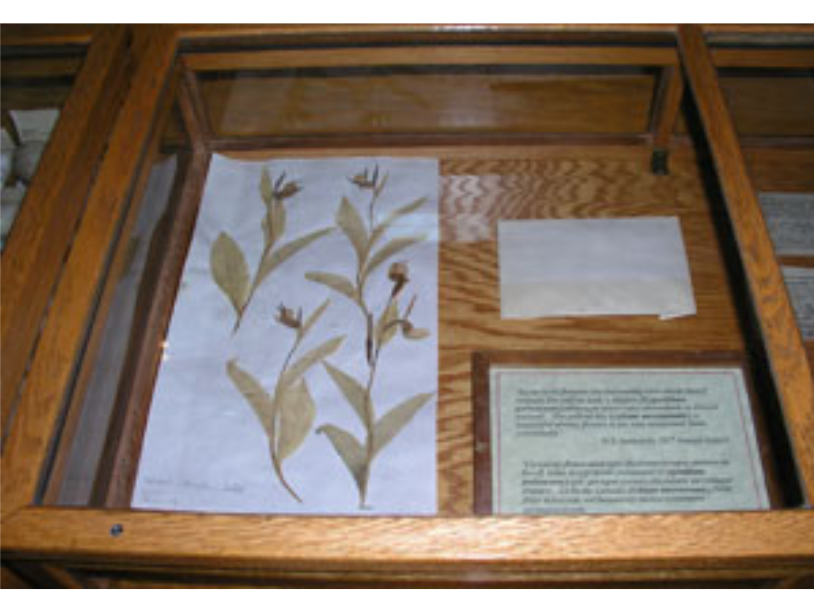
Image: An orchid on display at the Museum.

I was reading the job description of the ideal Curator in the Museum’s interpretive brochure. Professor John Macoun suggested in an 1895 correspondence that the ideal Curator should possess the following qualifications:

  • “A man of wide intelligence;
  • Energetic (not a hotel lounger);
  • Ought to be able to skin a bird or mammal;
  • Will talk natural history, mineralogy, geology or anything else to the visitor, and
  • A political bloke should be the last man for that place.”
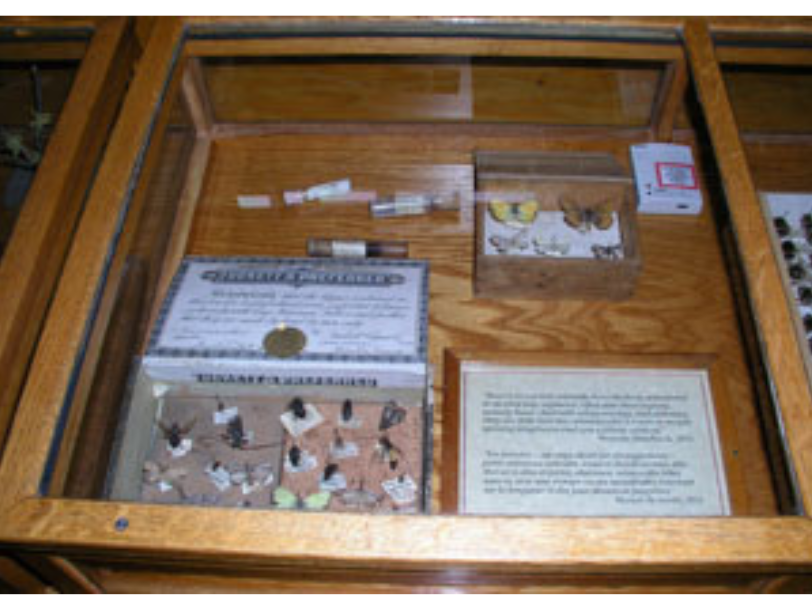
A museum display case featuring a number of insect specimens.

What’s amusing is that a natural history Curators’ job description hasn’t really changed in a hundred years! You still need to be energetic to conduct field work and collect specimens. You still need to know how to prepare specimens for preservation. You still have to have a broad interest in natural history and the ability to communicate with visitors. And we are most definitely NOT “political blokes”. Really the only thing that has changed is the technology that modern Curators employ. I use a palm pilot to record my field notes instead of a notebook, a GPS to navigate instead of a map and compass, and a blog page to “talk natural history” with the visitor. It seems that “the more things change the more they stay the same”.


Image: Museum display of pinned insects.

Dr. Diana Bizecki Robson

Dr. Diana Bizecki Robson

Curator of Botany

Dr. Bizecki Robson obtained a Master’s Degree in Plant Ecology at the University of Saskatchewan studying rare plants of the mixed grass prairies. After working as an environmental consultant and sessional lecturer…
Meet Dr. Bizecki Robson

Taxonomists: The Curious George’s of Science

At the heart of every taxonomist is a curious little monkey who just can’t stop exploring the world around him or her, sometimes to their detriment. I was reading a great book called “The Plant Hunters” by Tyler Whittle and was amazed at the trials and tribulations that early botanists like William Dampier (1651-1715), Philibert Commerson (1727-1773), and David Douglas (1799-1834) went through. Curiosity drove them to explore the remote areas of the world under extremely difficult circumstances in the hopes of finding plant species unknown to Western scientists. Many of the specimens that these men collected can still be found in European herbaria, providing us with a valuable snapshot of the past.

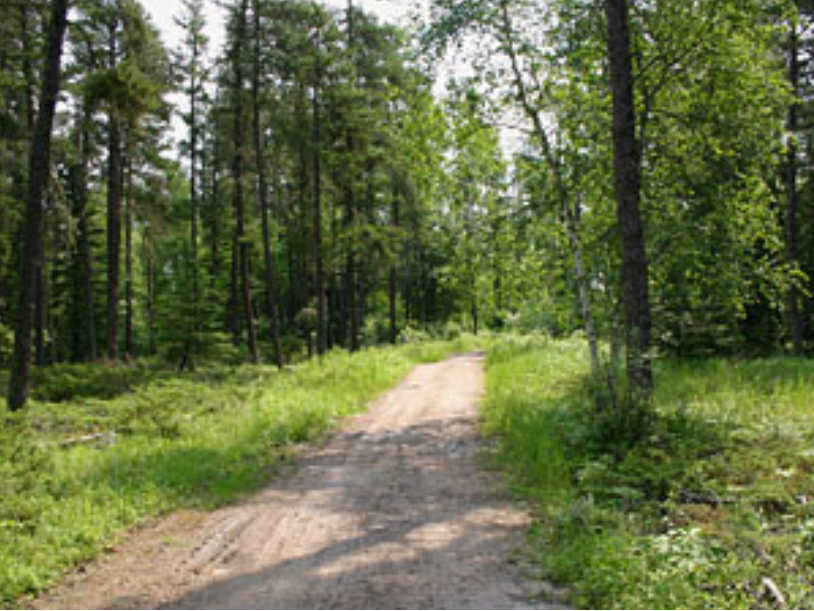
A path through a wooded area.

What exciting plants and fungi are lurking along this trail?

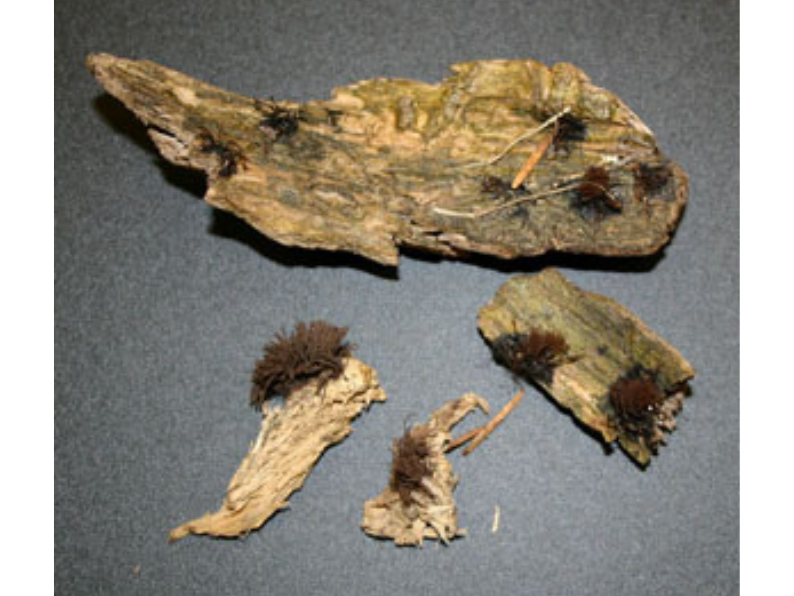
Four pieces of dried mouldy vegetation.

It took me quite a while to determine that this strange thing was a slime mold!

How about you?  Have you ever seen a mysterious plant or fungus that you just couldn’t identify?  If you were in Manitoba, Saskatchewan, eastern Alberta or northern Ontario, I may be able to help you, or if not, I can put you in touch with someone who can.  I can identify some plants and fungi from good photographs but it is usually preferable to have the actual specimen.  Most plants and fungi can be collected without killing them as long as the root system is left intact; orchids are the exception as they typically have only one stem and are sensitive to disturbance.  The Native Orchid Conservation Inc. has a great field guide called “Orchids of Manitoba” if you are interested in identifying these plants.


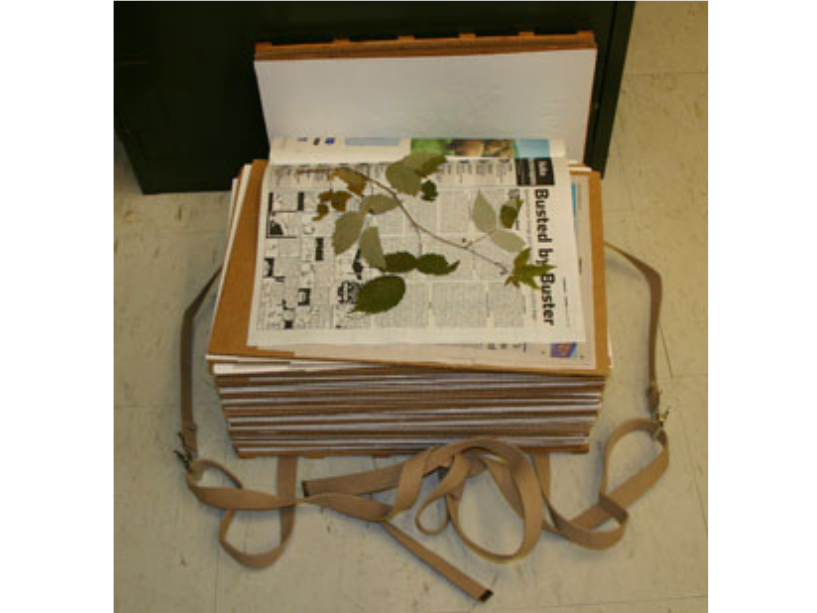
Image: A plant fresh out of the press.

If you wish to bring a specimen in to the Museum for identification, please call first to make an appointment as I am often in the field over the summer. Vascular plants and mosses can be brought fresh in a plastic bag with some moist paper towel inside, or pressed and dried between two sheets of newspaper. If you don’t have a plant press, you can use several large books to weigh it down. Try to collect specimens with leaves and flowers or fruits as you need both to identify some species.

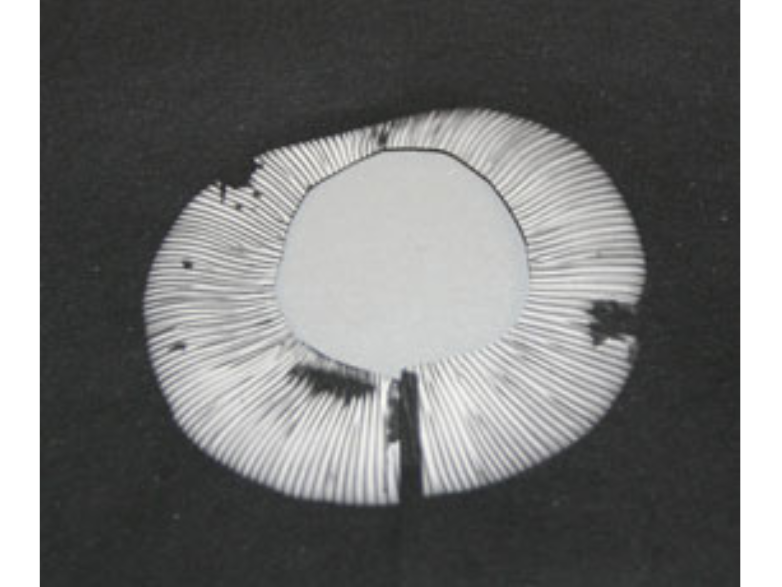
A white mostly circular mushroom spore on a  black background.

A beautiful spore print on black paper.

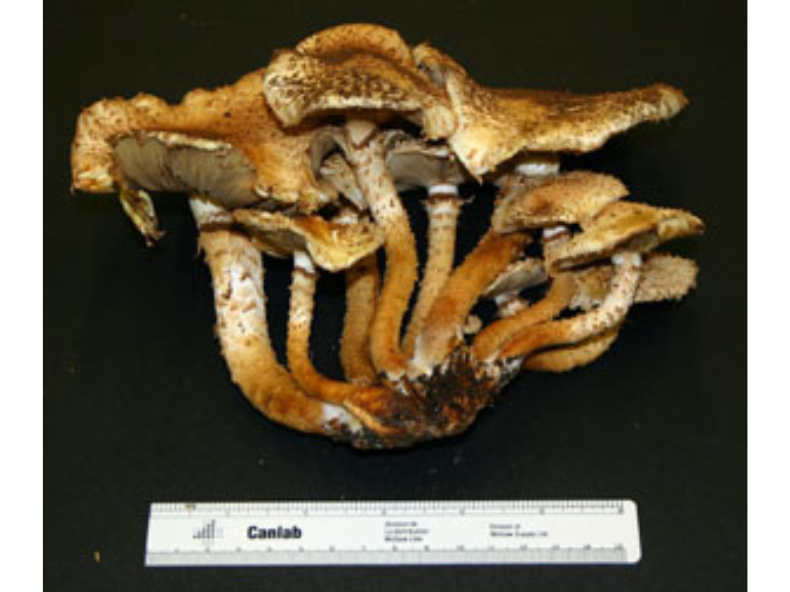
A fresh mushroom specimen, with several caps growing out of a plant with a shared base.

Photographing the fungus while fresh with a ruler can aid greatly in identification.

If you wish to bring in a fungus, it should be kept in a paper bag as plastic will make it go slimy. As some mushrooms get eaten by maggots quickly, they need to be brought in soon after picking or dried using a fan, dehydrator, silica gel dessicant or a warm (140°F/60°C) oven. Since dried mushrooms change colour quite drastically and shrink in size, photographs and measurements of the cap and stem are useful. A spore print, made by laying a mushroom cap over a piece of paper and covering it with a glass or bowl for a few hours, is also useful for mushroom identification. Happy hunting!

Dr. Diana Bizecki Robson

Dr. Diana Bizecki Robson

Curator of Botany

Dr. Bizecki Robson obtained a Master’s Degree in Plant Ecology at the University of Saskatchewan studying rare plants of the mixed grass prairies. After working as an environmental consultant and sessional lecturer…
Meet Dr. Bizecki Robson

What Ecology has Taught Me About Economics

In order to get my degree in environmental studies I had to take six classes in economics so that I would have some understanding of how the economy worked. In reality, I only needed three weeks of economics to understand that much of what they were teaching was a load of bunk. When I asked my professor how pollution and environmental degradation were accounted for in the economic theories she was teaching us she replied that those things were “externalities” and would not be discussed, as if we as a society could somehow pretend that they didn’t exist. I decided that perhaps nature would be a better teacher of economics.

So what have I learned about economics from the study of ecology? First of all diversity is a good thing. Although some species of plants rely on only a few pollinators, most are serviced by a wide variety of insects. This means that even if one species is doing poorly, others can fulfill the same functional role. Diverse systems are more resilient, can continue to function under atypical circumstances and recover faster from perturbations. The globalization of our economy means that we increasingly depend on just a few companies or countries to produce certain goods in the name of efficiency. Unfortunately when disaster strikes, as it just did in Japan, key parts that only Japanese companies manufacture are now in short supply, threatening the functioning of other companies half way around the globe! Imagine for a second that we were suddenly unable to rely on China for manufacturing? Would anyone else in the world be able to produce the things we need in the quantities we need them in? Species that are highly specialized are efficient but that efficiency comes at a price and that price is resiliency. With an unpredictable global climate confronting us, it is the resiliency that comes from diversity that will prevent ecosystems and economies from totally unravelling.

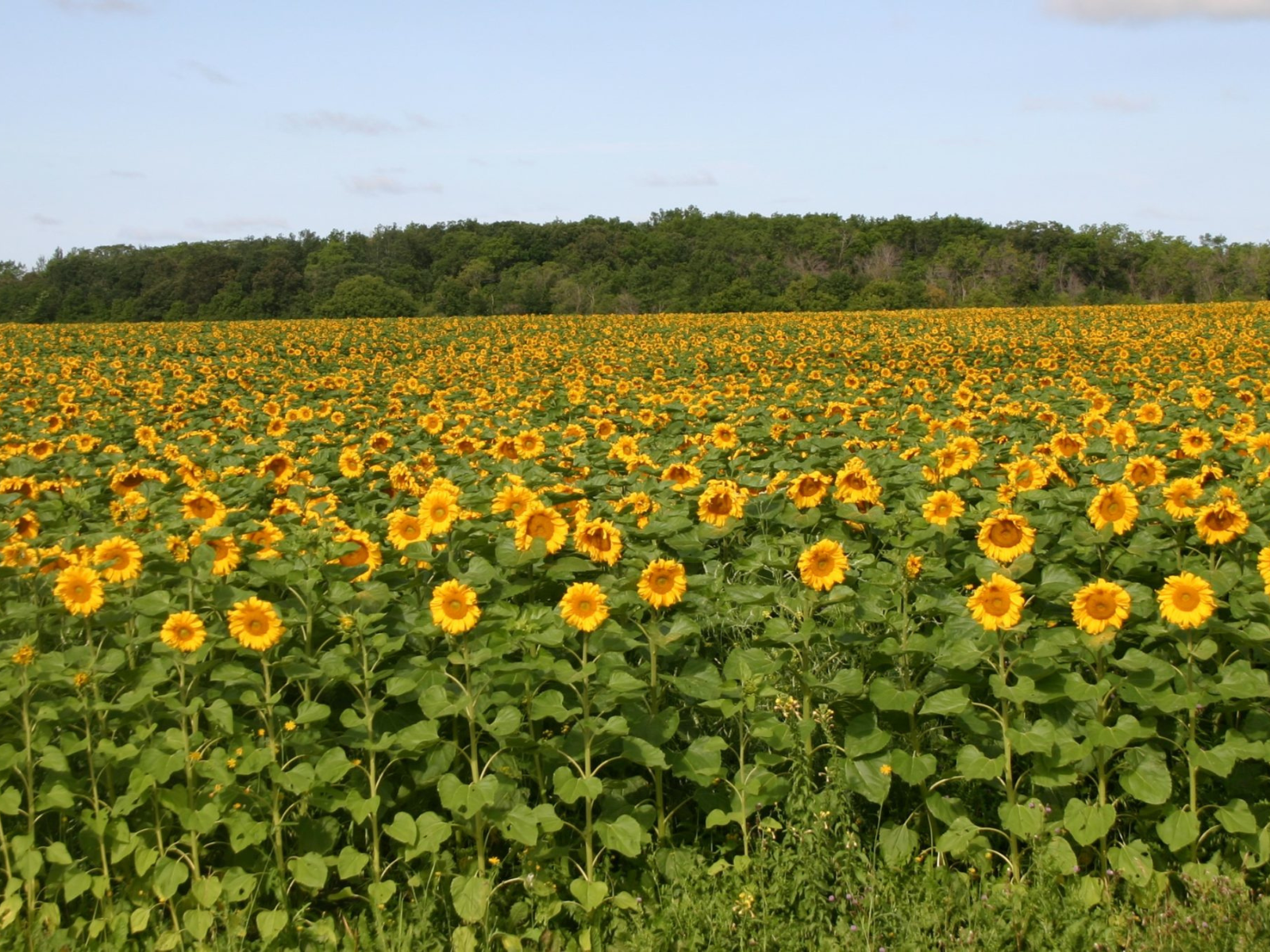
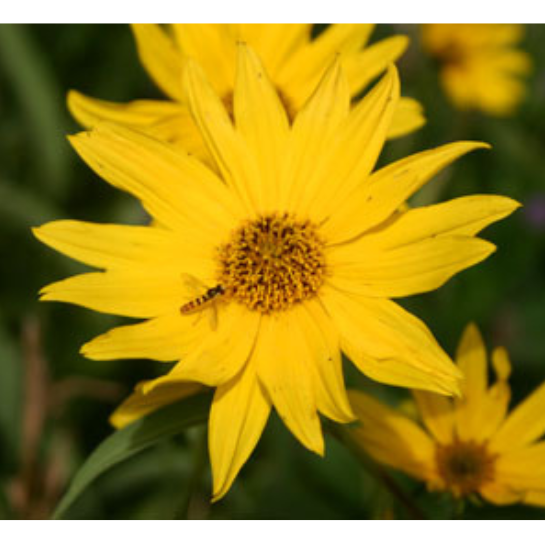
Looking out over a sunflower field on a sunny day.

Sunflowers are pollinated by numerous insect species.

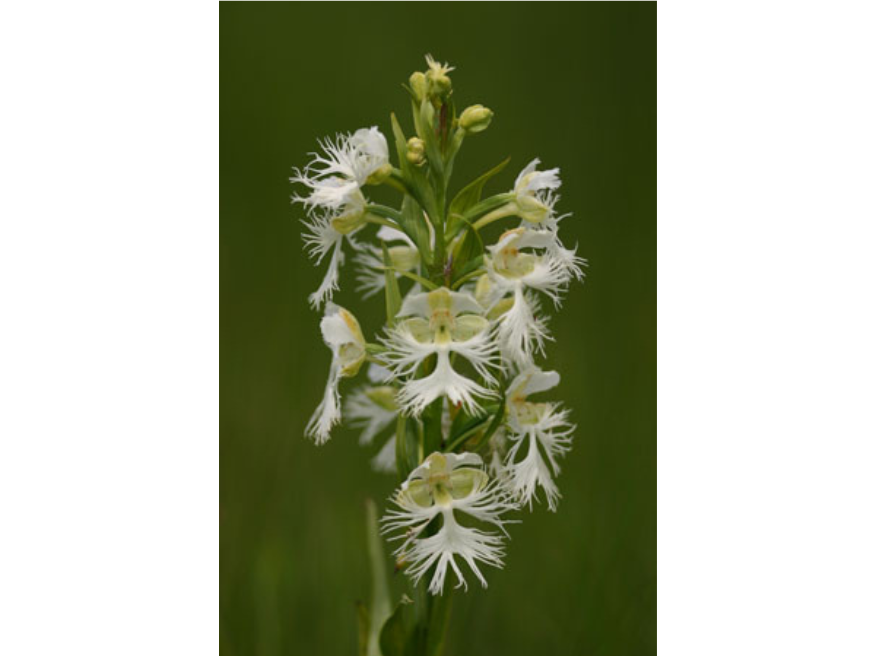
Close up on the top of a plant with small, fringed white flowers.

Like many species, the Western Prairie Fringed Orchid
depends on other plants, fungi and insects to survive.

Another lesson I’ve learned is that EVERYTHING is interconnected. The rare Western Prairie Fringed Orchid is a fascinating plant in terms of its interconnections. In order to grow it depends on a mychorrhizal fungus found in certain soils. To reproduce, it requires the pollination services of a few species of moths. The larvae of those moths require trembling aspen trees for food. We cannot save the orchid without also saving the fungus and the moth and the aspen and all of the other organisms they in turn are connected to. We Canadians like to think that we are isolated from the troubles in the rest of the world but, as the recent collapse of the banking system and subsequent decrease in the value of every Canadian’s retirement savings has shown, we are not. The fact of the matter is that we are all in this crisis together so we’d  better start getting along.

A yellow flower with a small, slender yellow and black Syrphid fly near the centre.

One of the most important lessons I’ve learned is the one that just about every economist chooses to ignore: that perpetual growth is a physical impossibility.  The population size of every species fluctuates over time and so does our economy because it is based on natural systems.  The 1929 and 2008 market crashes were inevitable because no system can grow perpetually.  The only reason the human population has been able to grow exponentially until now is because we have been co-opting more and more of the earth’s resources for ourselves at the expense of other species.  Fossil fuels have enabled us to increase productivity beyond what is normal for our planet’s systems but as these fuels are non-renewable eventually we will be back to where we started.  Nuclear power can potentially provide us with energy when fossil fuels become scarce but as is so abundantly clear from the recent disaster in Japan, it comes with grave risks that threaten humanity in other ways.  We simply have to accept that busts will always follow booms; the only thing we might be able to control is how severe each of the peaks and troughs are.  If we refuse to control our growth, nature will control it for us.


Image: More and more of the earth’s land is being used to sustain humans.

The last thing I’ve learned is that every system has its breaking point. Yes, diversity can buffer an ecosystem from extreme changes but that only goes so far. Once too many species are lost, cascading extinctions due to the interconnectivity of the world’s ecosystems will bring just about everything down. Sure there will be a few hardy survivors left behind to evolve into new and wonderful creatures in a couple million years, but they are unlikely to be the ones that humanity needs to survive. Unless you really enjoy eating jellyfish and cockroaches, I’d be concerned! The fact is 99% of all species that have ever existed have gone extinct; we know this through the fossil record. It is inevitable that humans will one day follow in the footsteps of the dinosaurs to a rocky grave. The only questions are when and how. That is what humanity has just a little bit of control over. The good news is that you have a little bit of that control too. Every day, through the choices you make, you alter the destiny of humanity for good or ill. Which one will it be?

Dr. Diana Bizecki Robson

Dr. Diana Bizecki Robson

Curator of Botany

Dr. Bizecki Robson obtained a Master’s Degree in Plant Ecology at the University of Saskatchewan studying rare plants of the mixed grass prairies. After working as an environmental consultant and sessional lecturer…
Meet Dr. Bizecki Robson

Fun with Fungus!

It’s that time of the year when I’ve finished writing reports and analyzing data and actually get to look at all the stuff I collected last summer. I’ve just finished identifying my vascular plants and now I get to look at the fungus! Using the photographs I took of the fresh mushrooms and the notes I wrote up in the field, I settle down at my desk with a hand lens, a ruler, and a big stack of mushroom books to try and figure out what I’ve got.

A selection of fungus specimens in various storage containers laid out on a desk.

Trays of fungus that I’ve been identifying.

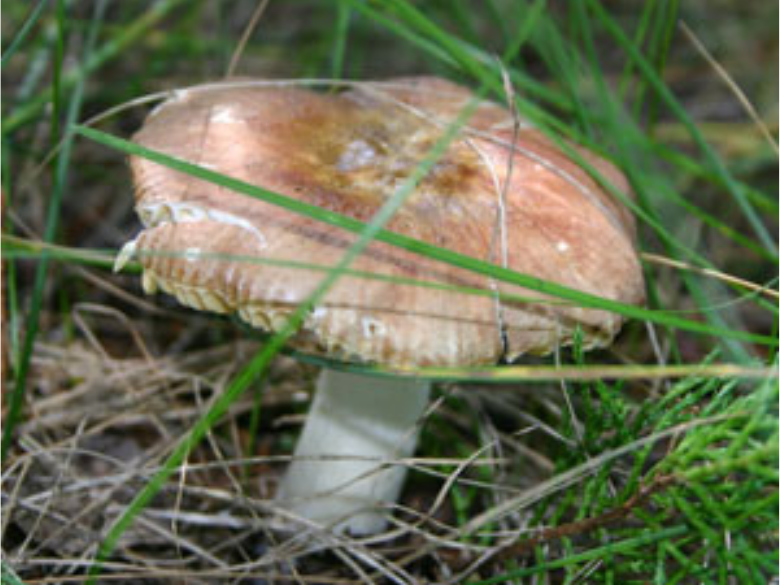
A flat capped mushroom growing in the grass.

My unknown Russula while still fresh in the ground.

Mushroom identification is a bit different than plant identification because you need to use your sense of smell. After determining that one of my mushrooms is some kind of Russula, I move onto the species descriptions. One of the distinguishing characteristics of a candidate species is that it smells “fruity when young and dirty when older” while the other is only “slightly dirty”. Hmm, how does one ascertain the level of dirtiness? I’m stumped and decide to move on to the next character on the list: taste. One candidate species is described as tasting “very sharp and burning” which sounds more like a description of a bladder infection than a gustatory sensation to me. I decide to skip over the taste part too; I’ve read too many articles about exactly what happens to you if you eat the poisonous ones. You probably don’t want to know the details: it’s not pretty. After reading more of the descriptions I finally settle on Russula alutacea and my work on this species is done.

Two mushrooms picked and laying on the ground.

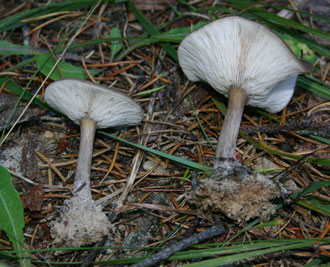
On to the next fungus, which is providing me with a fair bit of grief since it doesn’t seem to have any distinguishing characters at all! It is beige and light brown with white spores, no volva, no annulus, no partial veil, no bumps. Plus I can’t really find anything that looks quite like it in my field guides. I decide to try the internet and come across a wonderful mushroom identification web page by Micheal Kuo (http://www.mushroomexpert.com/index.html). Using his on line keys I decide that my unknown species could very well be Melanoleuca. Mr. Kuo writes that identifying species in this genus is nearly as tedious as singing Suzanne Vega’s “My Name is Luka” with the words changed to “Melanoleuca” (watch here). Oh no! Now I’m going to be singing that song all day. But the lyrics aren’t quite right. Ah, here we go “Melanoleuca, it lives on the forest floor, its’ not very colourful, yes I think I’ve seen it before. If you find mushrooms with white spores, flattened caps and amyloid warts, you just might have found this genus, you just might have found this genus, you just might have found this genus”.


Image: A suspected Melanoleuca sp.

As you can probably tell I get a little “office-bound” and antsy this time of year. It’s actually quite enjoyable to open up the containers that I placed the fungi in earlier in the year because the scent becomes concentrated. When the container is opened the wonderful earthy, spicy fragrance of the fungus is released and I am transported back to that mossy forest floor where I found it–a nice place to be (even if it is only in my head) on a cold, grey, February day. Unfortunately, smelling these fungi tends to make me hungry. Right now I’m craving linguini with mushroom cream sauce and bacon. Oh well, I guess I know what I’m having for dinner tonight!

Dr. Diana Bizecki Robson

Dr. Diana Bizecki Robson

Curator of Botany

Dr. Bizecki Robson obtained a Master’s Degree in Plant Ecology at the University of Saskatchewan studying rare plants of the mixed grass prairies. After working as an environmental consultant and sessional lecturer…
Meet Dr. Bizecki Robson

Christmas Fruits

Botanically speaking, a fruit is the plant part that contains seeds. Before the invention of modern refrigeration, fresh fruit was only eaten when it was in season. To enjoy fruits at other times of the year, preservation was necessary. Drying fruits by burying them in sand or sun-drying them is the oldest method, beginning in ancient Egypt over 6,000 years ago. Plums, currants and cranberries are all native to northern Europe and Canada, and would have been the most common dried fruits in these areas. Raisins were being imported to northern Europe in the 11th century, and dates and figs in the 13th. Dried, rather than fresh, fruits are key ingredients in many traditional northern European and Canadian Christmas dishes.

Cranberries

(Vaccinium spp.)

For many people, a Christmas turkey dinner would not be complete without cranberry sauce. Cranberries are closely related to blueberries and grow in similar habitats: sandy and peaty soil. Cranberries are sometimes harvested by flooding the entire field and scooping up the floating cranberries. The North American cranberry (V. macrocarpon) is larger than the European cranberry (V. oxycoccus) or lingonberry. Dried cranberries are used as substitutes for raisins and currants in fruitcakes, and are sometimes added to the Austrian fruit cake Kugelhopf. Cranberry kisel is a popular dessert in Russia. Cranberry or lingonberry sauce is a traditional accompaniment to roast turkey or goose.

Currants

(Ribes spp.)

Although similar in appearance to raisins, currants are more closely related to gooseberries than to grapes. Confusing the matter, a variety of small, dark raisins are called currants as well. Currants are native to North America and Europe, and grow on shrubs that reach 1-metre. Many currants have spiny stems and are easily identified by their lobed, palm-like leaves. Historically, dried, wild black currants were put into fruitcakes and fruit breads by Canadian women before foreign fruits became common.

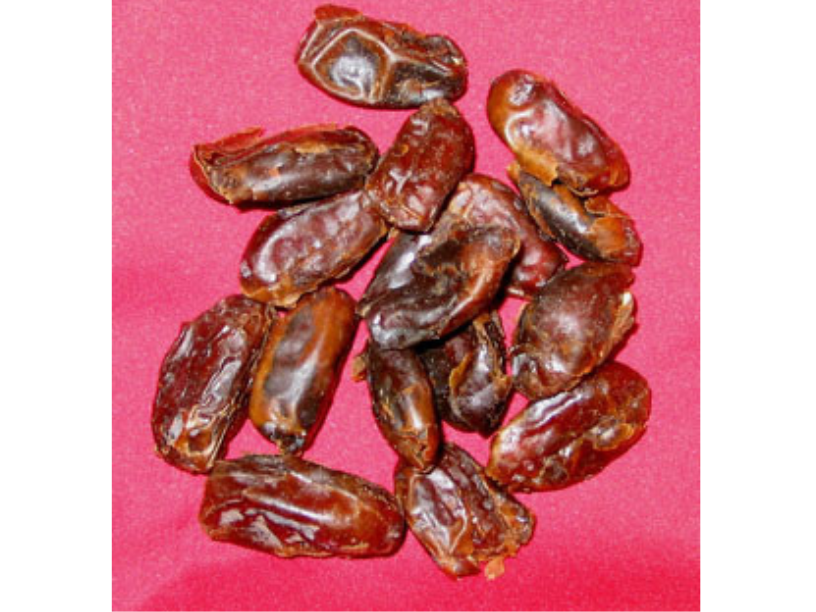
Small pile of dried dates on a red background.

Dates

(Phoenix dactylifera)

The date palm is one of the oldest cultivated fruits, being popular in ancient Mesopotamia and Persia. Date palm trees can grow up to 30-m. Dates grow in hanging bunches; a single tree can produce 1,000 dates a year. There are hundreds of varieties of dates but only some are grown commercially. The word date is derived from the Greek daktulos meaning finger and referring to the elongated shape of the fruit. Dried dates are popular Christmas snacks plain or stuffed with nuts, almond paste or cream cheese. Dates are sometimes added to British puddings and fruitcakes and are found in Canadian Matrimonial Cake (date squares).


Image: Dates have been eaten by humans for over 8,000 years.

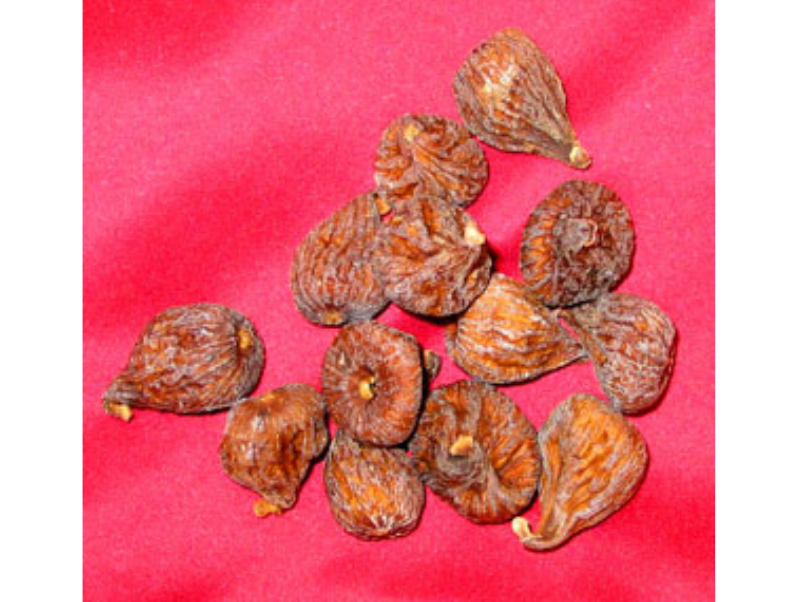
Small pile of dried figs on a red background.

Figs

(Ficus carica)

Figs, native to the Mediterranean, have been cultivated since the 4th century. In fact, baskets of dried figs were found in ancient Egyptian tombs. Since figs are highly perishable, they are mainly sold dried. Figs are fleshy receptacles that contain many tiny fruits inside them called achenes. Figs either self-pollinate or are pollinated by fig wasps that crawl into the fig to reach to flowers inside. Figgy pudding was immortalized in the carol “We Wish You a Merry Christmas”. The Greek cake Christopsomo is made with dried figs.


Image: Figs are highly perishable and rarely available fresh.

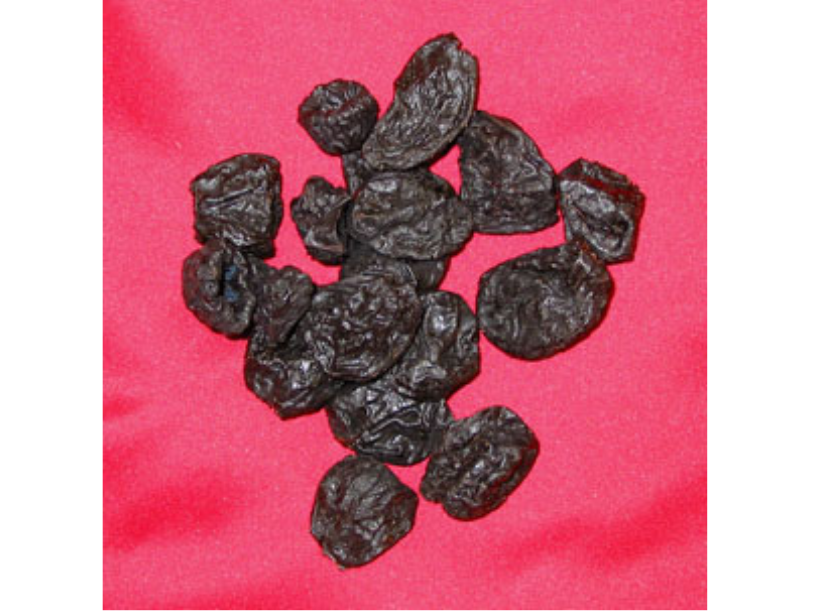
Small pile of dried prunes on a red background.

Prunes

(Prunus spp.)

Prunes are simply dried plums. However, only certain varieties of plums, those that dry well without stone removal and have high sugar content, are used to make prunes. Prunes were traditionally sun-dried but modern drying facilities are used today. Plum trees are found all over the Northern hemisphere and were the most commonly available dried fruit in parts of northern Europe for a long time. Prunes are made into juice or added to fruitcakes and puddings. Ironically, many recipes for “plum” pudding don’t actually contain plums but raisins. The true identity of the “sugar plums” referred to in “Twas the Night Before Christmas” is debatable but probably refers to boiled, sugar-coated seeds rather than actual plums.


Image: Prunes have long been known to help cure constipation.

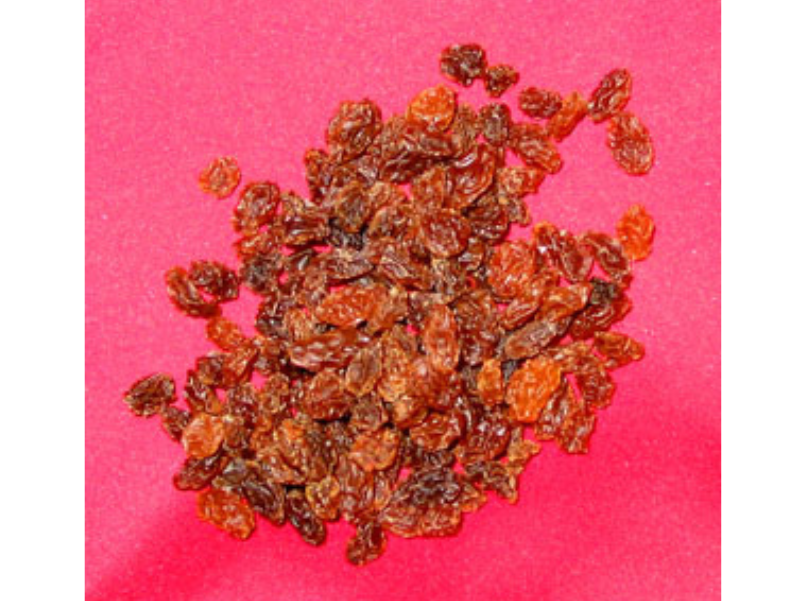
Small pile of dried raisins on a red background.

Raisins

(Vitis spp.)

The grape varieties used to make raisins are table grapes rather than wine grapes. The Sultana grape variety is most popular as they are seedless, eliminating the need to remove seeds after drying. Table grapes seem to have originated in Western Asia and have been cultivated since ancient times. Grape vines support themselves using modified leaves called tendrils. Sensitive to touch, tendrils wrap themselves tightly around supports. Raisins are common in Christmas breads like the Croatian Badnji Kruh, Italian Panettone and Czech Hoska and in the Newfoundland pudding Figgy Duff. Butter tarts are an original Canadian dessert that contains raisins, dating back to at least 1900.


Image: Dried raisins were popular in northern countries before fresh fruit was available in winter.

This blog is part of a series on The Botany of Christmas. Learn more in:

Christmas Nuts

Christmas Spices

Dr. Diana Bizecki Robson

Dr. Diana Bizecki Robson

Curator of Botany

Dr. Bizecki Robson obtained a Master’s Degree in Plant Ecology at the University of Saskatchewan studying rare plants of the mixed grass prairies. After working as an environmental consultant and sessional lecturer…
Meet Dr. Bizecki Robson

Christmas Spices

The spices we typically associate with Christmas baking, like nutmeg and cinnamon, all grow in tropical areas. Before the shipping of spices became reliable, they were rare and expensive in Europe, and for this reason used only for special occasions like weddings and holidays. Many traditional Christmas desserts are made with a variety of exotic spices. Mulled beverages, like wassail, are prepared by heating the liquid with a mixture of whole spices wrapped in cheesecloth or placed in a tea ball. The most popular spices are described below.
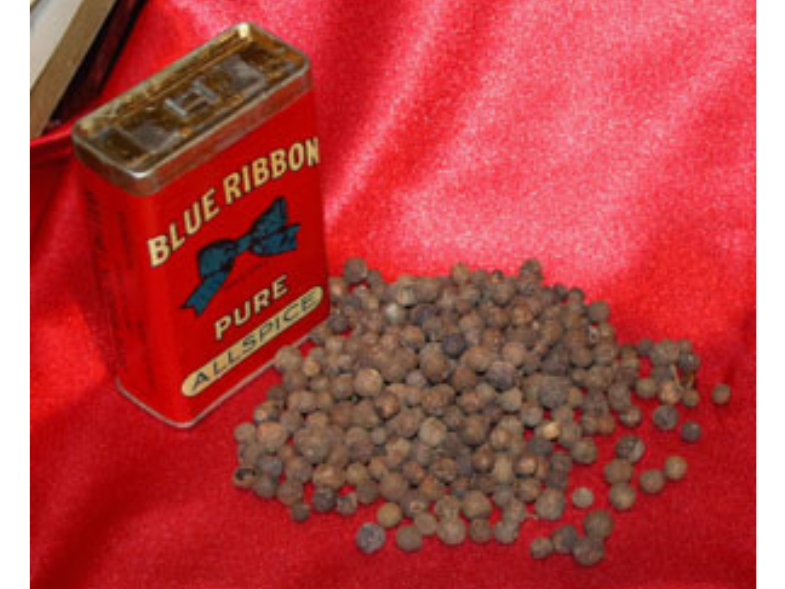
A small pile of allspice next to an allspice container on a red background.

Allspice

(Pimenta dioica)

Allspice is a dried, unripe berry that grows on a small, evergreen tree native to Jamaica. In the wild, allspice seeds will not germinate until they pass through the digestive systems of birds. West Indian Arawak and Carib Indigenous peoples were the first to use allspice in cooking. Christopher Columbus brought allspice to Spain where it was named pimenta, Spanish for pepper. It is now commonly called allspice because its flavour seems to be a combination of several popular spices. Allspice is used in British steamed puddings, Scottish Black Bun, mince pies and hot mulled wine.


Image: Allspice looks very similar to pepper.

Cinnamon/Cassia

(Cinnamomum spp.)

Cinnamon and Cassia are trees native to India and Ceylon. Cassia is cheaper than cinnamon but not as flavourful. Once Cinnamomum trees are three years old, the outer bark is harvested. This distorts their growth forms into dense shrubs rather than trees. Cinnamon and Cassia have been popular for a long time; Egyptians imported it from China in 2000 B.C.! Cinnamon is a common spice used to flavour Christmas puddings, cakes, cookies, and the Danish pastry Klejne.

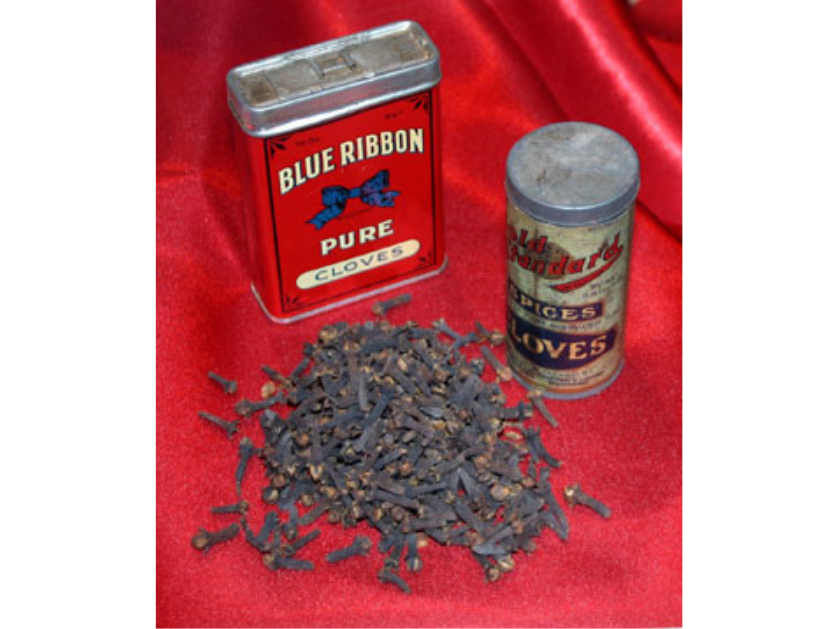
A small pile of cloves next two two different containers of cloves on a red background.

Cloves

(Syzygium aromaticum)

Cloves are sun-dried, unopened flower buds of an evergreen tree native to the Molucca Islands of Indonesia. The Dutch originally had a monopoly on clove exports until seeds were smuggled by the French to Mauritius in the 18th century. Clove oil is used to make vanillin, an artificial substitute for vanilla. Cloves are used in a variety of Christmas cookies such as German Speculaaas and Pfeffernusse, and are an essential ingredient in mulled wine and hot toddies. Oranges studded with cloves make popular Christmas decorations.


Image: Cloves are tiny dried flower buds.

Ginger

(Zingiber officinale)

Ginger is the rhizome (an underground stem) of a tropical herbaceous plant native to southern Asia. Ginger has been cultivated for over 3,000 years! In Asia, ginger is mainly used fresh or pickled in savory dishes, like curries and stir-fries, but in Europe it was traditionally used dried, in desserts like gingerbread and gingersnaps. This is because, until recently, ginger was not sold fresh in other parts of the world. Ginger is also sold crystallized and coated in chocolate, another popular Christmas snack.

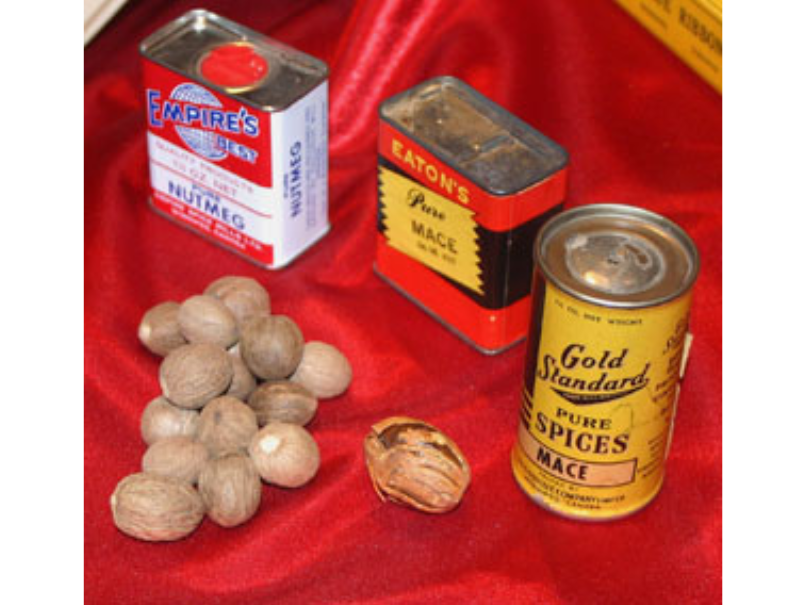
A small pile of nutmeg next to three containers of nutmeg on a red background.

Nutmeg/Mace

(Myristica fragrans)

These two spices are derived from the same species of evergreen tree. Nutmeg is the hard stone inside a fleshy fruit similar to an apricot, while mace is the fleshy net that covers the stone. The nutmeg tree is native to the Molucca Islands of Indonesia where it is a major cash crop. This species is pollinated by small beetles that are deceived into thinking that they will be rewarded with pollen or nectar. Nutmeg flavours British fruit cakes and mince tarts as well as the Italian Certosino cake, and is the traditional garnish to a glass of egg nog.


Image: Nutmeg is the “nut” and mace is the “net” that surrounds it.

Saffron

(Crocus sativus)

Saffron is the world’s most expensive spice, costing over $10,000 per kilogram!  The tiny orange threads are actually the stigmas, or pollen-receiving organs, of a crocus flower that is native to southwest Asia.  The stamens on these tiny flowers must be hand-harvested, which is extremely expensive.  Fortunately, very little saffron is needed to add flavour and colour to a dish.  The Scandanavian Lussebulle or saffron buns are traditionally made on St. Lucia’s Day, December 13, and served by young women dressed in white.

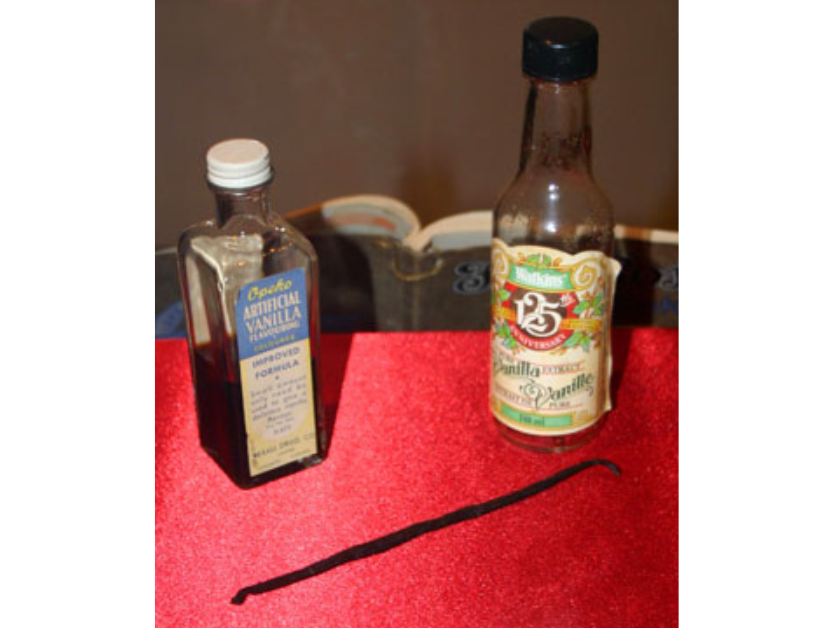
Two bottles of vanilla extract next to a long vanilla bean on a red base.

Vanilla

(Vanilla planifolia)

Vanilla is an orchid native to Central America. The vanilla “bean” is a fruit called a capsule. Vanilla beans are cured after harvesting, a process that takes six weeks. The beans are sold whole, or steeped in alcohol to produce extract. The Aztecs of Mexico mixed vanilla with chocolate to produce a tasty beverage. The Spanish conquistador Hernando Cortez brought vanilla to Spain in the 16th century, where it quickly became popular. Vanilla from Central America is naturally pollinated by wild bees. Madagascar vanilla on the other hand, must be hand-pollinated as there are no suitable wild pollinators in Africa, resulting in a higher price. Vanilla is the main flavouring in Christmas desserts like the Ukrainian honey cake, Medivnyk.


Image: Vanilla “beans” are actually orchid fruits. Vanilla is usually sold as an extract in alcohol.

This blog is part of a series on The Botany of Christmas. Learn more in:

Christmas Nuts

Christmas Fruits

Dr. Diana Bizecki Robson

Dr. Diana Bizecki Robson

Curator of Botany

Dr. Bizecki Robson obtained a Master’s Degree in Plant Ecology at the University of Saskatchewan studying rare plants of the mixed grass prairies. After working as an environmental consultant and sessional lecturer…
Meet Dr. Bizecki Robson

Christmas Nuts

For many people, roasting chestnuts and snacking on fresh nuts is a Christmas tradition. Besides humans, the only other animals that can effectively crack the shells of nuts are those with strong, chisel-like teeth, namely rodents. Rodents, like squirrels, harvest nuts in the fall and store them for the cold winter months just like we do. Nuts are a good source of protein and contain many vitamins, minerals, and healthy fats. Not all nuts are alike; some nuts, like hazelnuts, are fruits with thick outer shells. Other nuts, like almonds and walnuts form a hard pit in the centre of a fruit called a drupe, like a peach or a cherry. Sadly, many people in North America have developed life-threatening allergies to nuts.

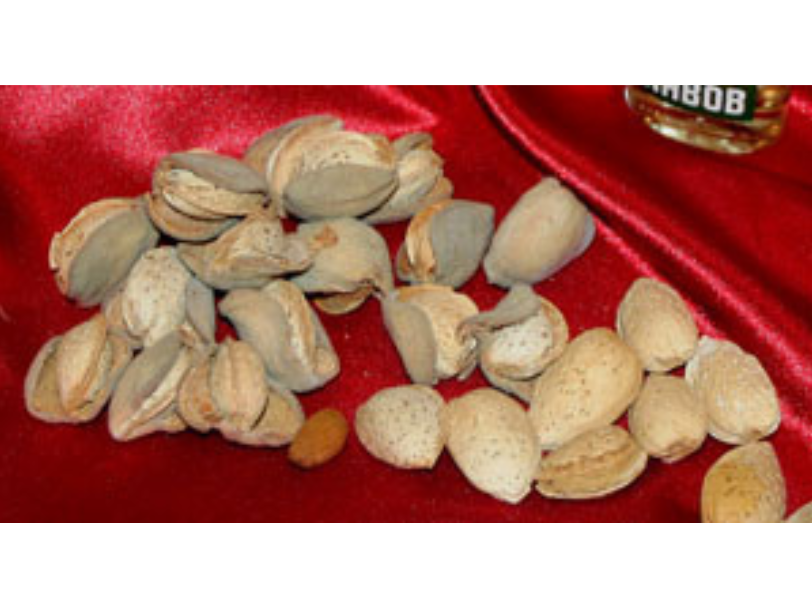
A small pile of almonds on a silky red fabric.

Almond

(Prunus dulcis)

Almond is a small tree related to plums, peaches and apricots.  The fleshy coats of almond fruits crack open, releasing the nut inside.  Sweet almonds are edible, while bitter almonds, which contain toxic prussic acid, are used to obtain almond oil.  Originally from Asia and North Africa, almond has been planted in semi-tropical areas all over the world.  Almonds need to be insect-pollinated; nearly half of all honey beehives in the U.S.A. are located in almond plantations.  Almonds are used in many traditional Christmas desserts including Scottish Dundee cake, Greek Kourabiethes and French Galette des Rois.  Almond paste is placed in the middle of the traditional Dutch and German fruit breads Kerststol and Stollen.


Image: Almonds are encased in a rough husk.

Brazil Nut

(Bertholletia excelsa)

Brazil nuts grow in clusters of 12-24 inside coconut-like capsules. Native to South America, Brazil nuts are popular snacks in Europe and North America. Brazil nuts are not commercially grown outside South America as they perform poorly in monocultures, relying on wild bees for pollination. One of the only animals that can eat Brazil nuts is the Agouti, a large rodent. Agoutis use their sharp incisors to open the hard capsule and shell. Since Agoutis hide nuts they don’t eat, they disperse them into new habitats. Brazil nuts are commonly added to South American fruitcakes.
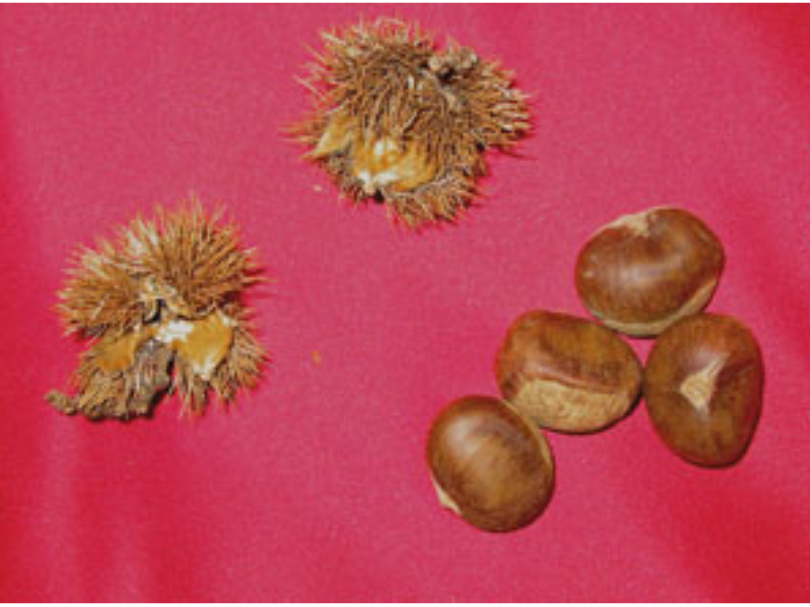
Two chestnuts in their prickly husk, and four unhusked chestnuts grouped together on a red background.

Chestnut

(Castanea spp.)

Sweet Chestnut (C. sativa) is a wind-pollinated, deciduous tree native to southern Europe. American Chestnut (C. dentata) grew abundantly in eastern deciduous forests of North America but, sadly, the introduction of chestnut blight disease (Cryphonectria parasitica) in 1904 destroyed almost all the trees on this continent. Three chestnuts grow inside each prickly husk. Roasting chestnuts splits the shell so the nut can be easily removed. Chestnuts are used to make the traditional Italian dessert, Dolci de Cucchiaio and the Russian pudding Nesselrode.


Image: Chestnuts grow inside a prickly husk.

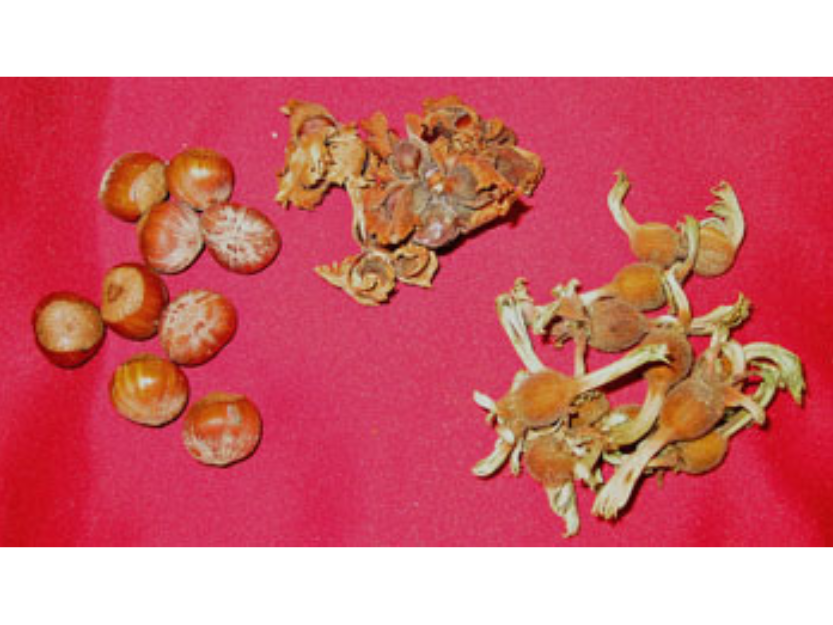
Three small piles of various hazelnut types on a red background.

Hazelnut/Filbert

(Corylus spp.)

The species of hazelnut we purchase in the store (Corylus avellana) is native to Asia minor and Europe but there are two edible Canadian species: beaked hazelnut (C. cornuta) and American hazelnut (C. americana).  Hazelnuts are wind-pollinated deciduous shrubs or small trees.  The nuts are encased in a greenish-coloured husk.  Hazelnuts were traditionally roasted and eaten by the Indigenous peoples of North America.  In Europe, hazelnuts are often used to make chocolates, chocolate butter spread and cakes like the Italian Panforte and German Lebkuchen.


Image: Three different hazelnut species (from left to right): European, American, and beaked.

(Carya illinoensis)

Pecan is a large, wind-pollinated deciduous tree native to North America that can reach heights of 170 ft. The nut is encased in a leathery, green husk that cracks open when ripe. A single tree can yield over 400 lbs of pecans each year. Pecans were harvested extensively by eastern Indigenous peoples. European settlers quickly embraced the pecan, eating them plain, spiced, or in baking. Pecan pie, often served at American Thanksgiving and Christmas dinners, is a classic example of pioneer “fusion” cooking. Pecans are sometimes added to Canadian butter tarts instead of raisins, as well.

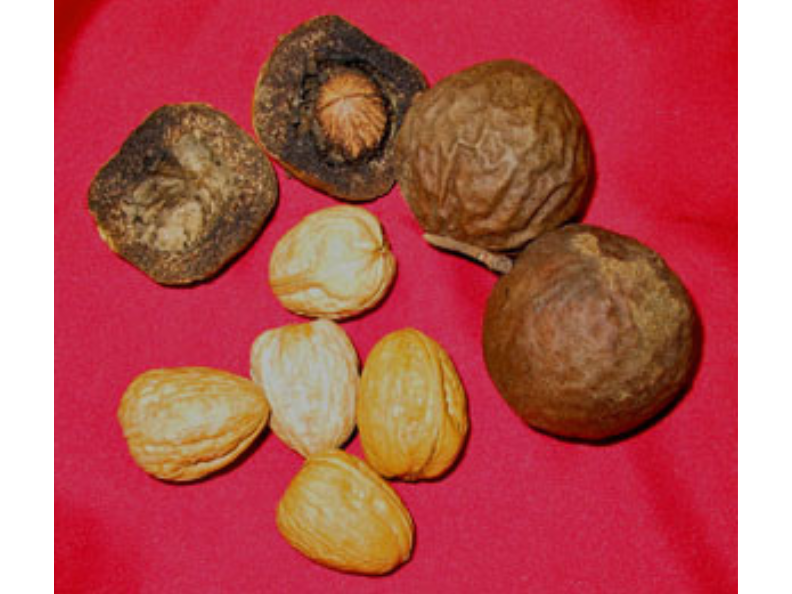
Two leathery round fruits, next to two round dried fruits, and five dried walnuts on a red background.

Walnut

(Juglans spp.)

There are several edible species of walnuts: English walnut (J. regia) grows in south-eastern Europe and western Asia, while black walnut (J. nigra) and butternut (J. cinerea) grow in the forests of eastern North America. Walnut trees are valued for their timber as well as their nuts. The walnut, like the almond, is a drupe; the nut is encased in a fleshy, green husk. Walnuts are used in such Christmas treats as Spanish Pastel de Navidad and Hungarian nut bread Beigli.


Image: Walnuts occur in the center of a leathery fruit that dries to a brown colour.

This blog is part of a series on The Botany of Christmas. Learn more in:

Christmas Spices

Christmas Fruits

Dr. Diana Bizecki Robson

Dr. Diana Bizecki Robson

Curator of Botany

Dr. Bizecki Robson obtained a Master’s Degree in Plant Ecology at the University of Saskatchewan studying rare plants of the mixed grass prairies. After working as an environmental consultant and sessional lecturer…
Meet Dr. Bizecki Robson

The Botany of Christmas

I come from a long line of European women who did a lot of baking: fresh bread and buns, pies, squares, cookies, and strudels. Although my mother and grandmother baked throughout the year, Christmas was my favourite time because that’s when the really special treats were made, things that you didn’t eat just every day: hot roasted chestnuts, fruitcake, butter tarts, honey cake, shortbread, and chocolate Yule logs.

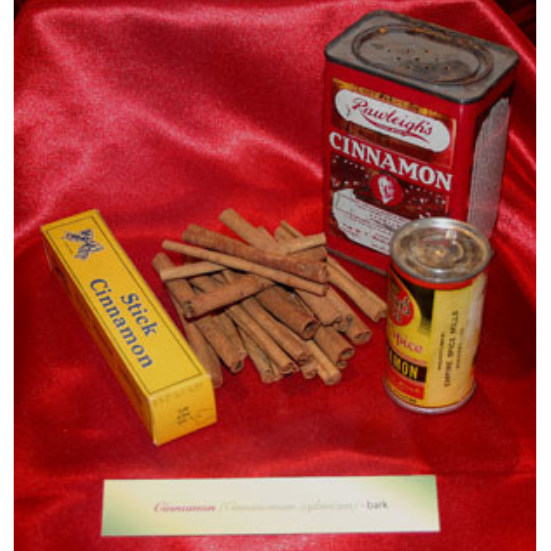
Three containers of various forms of cinnamon on a silky red backdrop accompanied by a small stack of cinnamon sticks.

As I grew older, I began to wonder why so many Christmas desserts and snacks featured nuts, dried fruits and lots of spices.  As I learned more about these traditional Christmas foods, I realized that nuts and dried fruits were some of the only food items available in the northern hemisphere in winter.  We tend to forget nowadays that 150 years ago just about everyone was on the 100-mile diet (no Mandarin oranges for Christmas back then!).  Spices were too expensive for common people to use frequently, so they were saved for special occasions, like weddings and holidays.

In this series of blogs, I will be talking about some of the plant foods that tend to show up in traditional Christmas baking.  First up, get ready to learn more about Christmas nuts (and no, I’m not referring to your crazy uncle Joe).


Image: Cinnamon sticks and old spice jars from the 2004 exhibit “A Natural History of Christmas Foods.”

Dr. Diana Bizecki Robson

Dr. Diana Bizecki Robson

Curator of Botany

Dr. Bizecki Robson obtained a Master’s Degree in Plant Ecology at the University of Saskatchewan studying rare plants of the mixed grass prairies. After working as an environmental consultant and sessional lecturer…
Meet Dr. Bizecki Robson

The Uglier the Better

When people find out that I study and collect wild plants I suspect that they have visions of me tromping through the woods to study beautiful orchids and majestic wildflowers. The fact of that matter is that attractive plants, orchids in particular, are pretty well-studied compared to many other groups.

Orchids attract a devoted cult of nature lovers who, for fun on their weekends and vacations, wander through bogs and remote forests in the hopes of discovering new species or taking a perfect photograph of a rare Lady’s-slipper. In fact Manitoba has three non-profit organizations (Nature Manitoba, Native Orchid Conservation Inc. and Conserve Native Plant Society Inc.) that are involved in some way or another in the appreciation, documentation and conservation of orchids. So I’m not too worried about the orchids-I know that they are being meticulously documented by their legions of fans.

Close-up on the top of a plant with small fringed white flowers.

A stunning Western Prairie Fringed Orchid (Platanthera praeclara).

Close up on a small wispy plant growing in the ground.

We know very little about the rare annual Winged Pigweed (Cycloloma atriplicifolium).

What I am worried about are the ugly plants-the wind-pollinated ones with tiny flowers that grow in very specific microhabitats. These plants are either completely overlooked or regarded as weeds and stepped on. They are like neglected younger siblings in a large family that only get attention when they do something bad, like grow in someone’s garden or in a crack in the sidewalk. We don’t know much about the distribution and ecology of these ugly species and since they are unattractive and sometimes hay-fever inducing, no one loves them enough to study them. No one but me. I’ve developed and odd fondness for these homely plants because they are a challenge to locate and identify. I find it very satisfying to be able to identify plants that most amateur and even some professional botanists ignore.

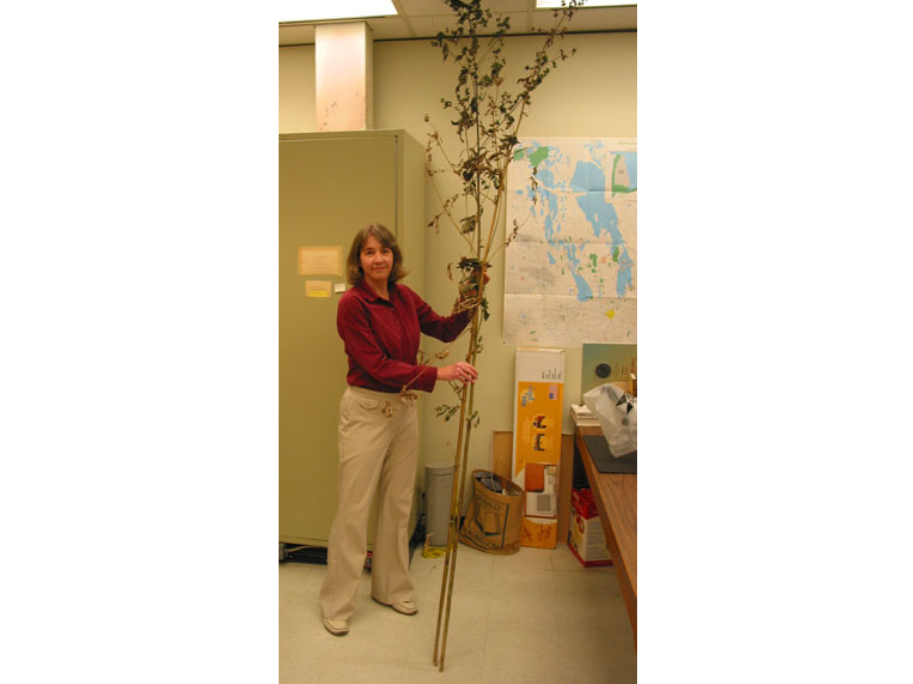
Dr. Diana Bizecki Robson in the botany lab holding a large ragweed specimen, taller than herself.

This ugly Giant Ragweed (Ambrosia trifida) specimen that was recently donated is 3 m tall.

View looking down a set of railroad tracks with grass growing on both sides.

Abandoned railroad tracks are a great place to collect exotic weeds!

One of my recent projects has been to identify “taxonomic gaps” in the botanical collection here at the Museum. I prepared a list of plants that I know have been found in Manitoba but that we don’t have many (or any) specimens of. Most of them were “ugly” wind-pollinated sedges, rushes, grasses or exotic, naturalized “weeds.” Others were rare native annuals that don’t germinate every year and can be hard to find. Some were at the edges of their North American ranges and not present in high numbers. Quite a few are aquatic plants (like pondweeds) that grow in lakes, sloughs and rivers. Not a single native orchid though is unrepresented in our collection. In addition to our collection of specimens we also have a slide collection which features mostly pretty plants; there are 300 photographs of orchids but only one slide of goosefoot plant.

So I don’t really need a lot beautiful wildflowers in my collection (unless they are from a part of the province that hasn’t been visited before). What I DO need are the weeds growing by the side of the road, the pondweeds that cling to your leg when you’re going for a swim in the lake and the grass-like plants that grow in damp, muddy areas. But no orchids please, they’re just not ugly enough.

Dr. Diana Bizecki Robson

Dr. Diana Bizecki Robson

Curator of Botany

Dr. Bizecki Robson obtained a Master’s Degree in Plant Ecology at the University of Saskatchewan studying rare plants of the mixed grass prairies. After working as an environmental consultant and sessional lecturer…
Meet Dr. Bizecki Robson