



Posted on: Monday June 8, 2026
There are few more magical or mesmerizing ways to spend a warm, humid June evening than watching fireflies as they rhythmically flash their tiny lights while they skim over a grassy field. It becomes even more romantic knowing that they are signaling in specific patterns in order to find a mate. Fireflies, sometimes called lightning bugs, are neither flies nor true bugs but, rather, are beetles rightly famous for their ability to produce their own light, called bioluminescence. They do this by producing a special chemical, firefly luciferin, and a complimentary enzyme that, when combined with oxygen, produces a “cold” yellow, green, or pale reddish light, depending on conditions within the particular beetle species. This chemical reaction is concentrated in areas in the rear, lower abdomen, in effect creating a small, flashing lightbulb. Different species of fireflies produce different colours and flash at different frequencies and durations which helps the usually ground-based females identify the right males as they fly over and then they can flash back.
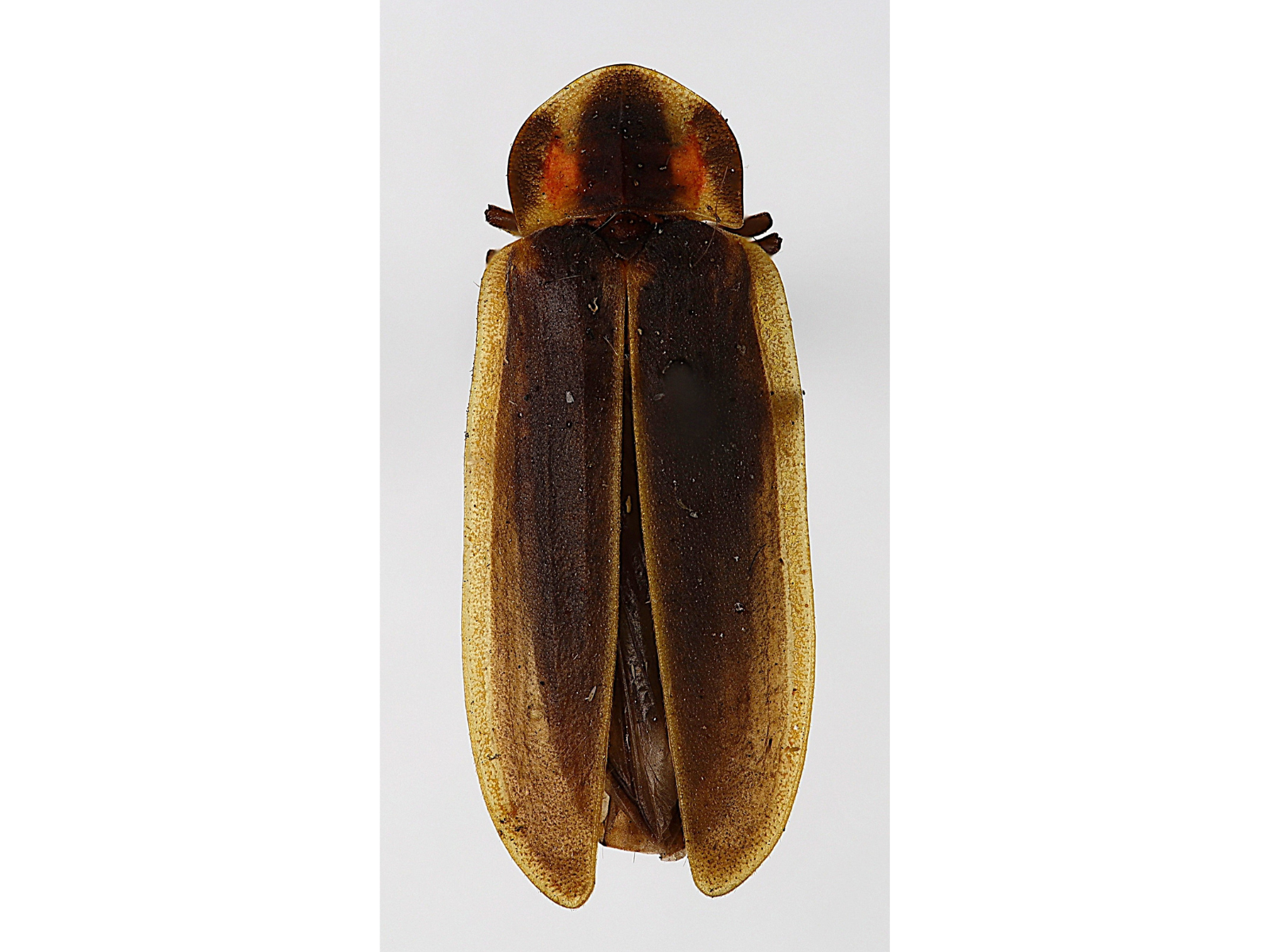
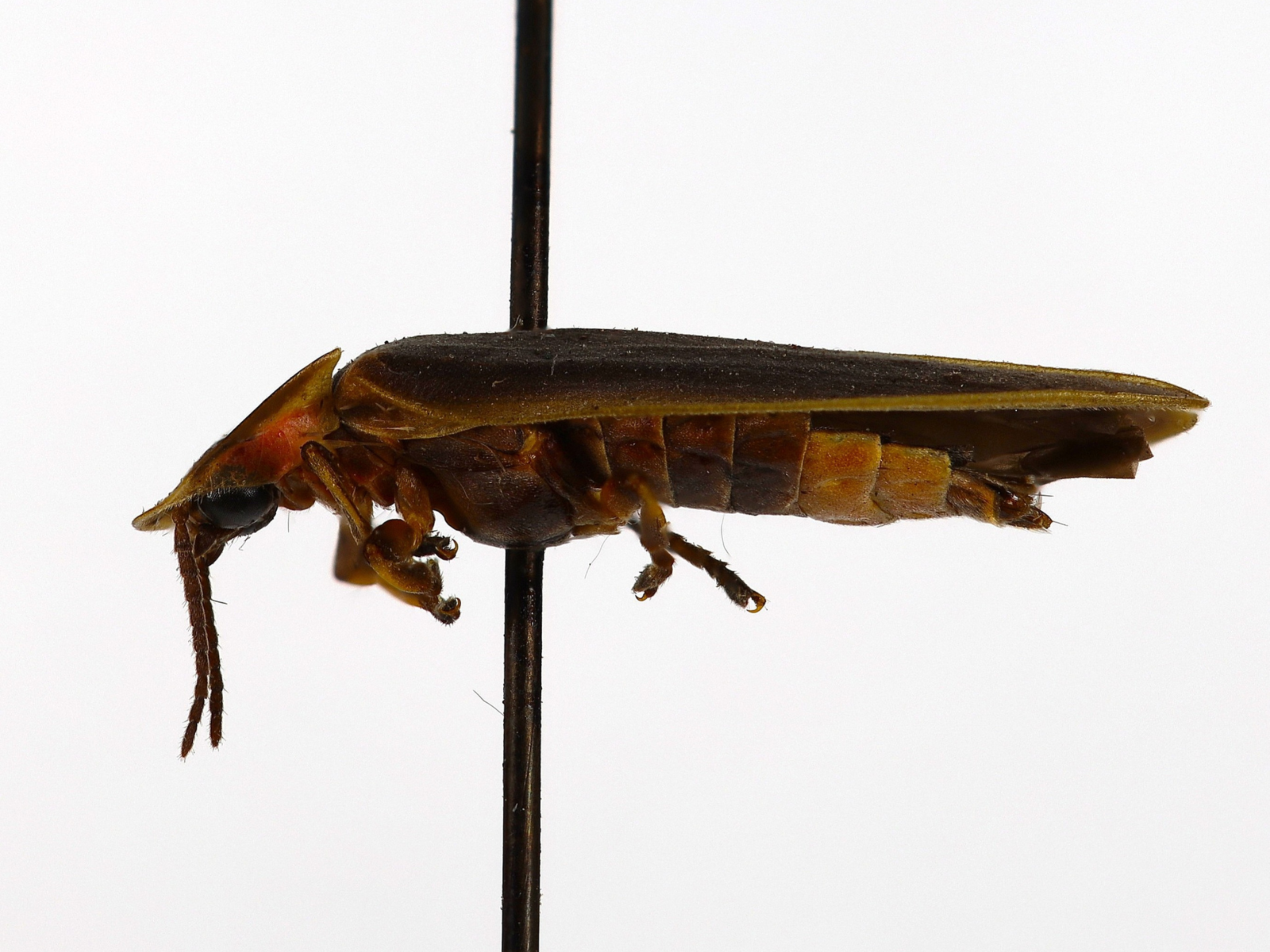
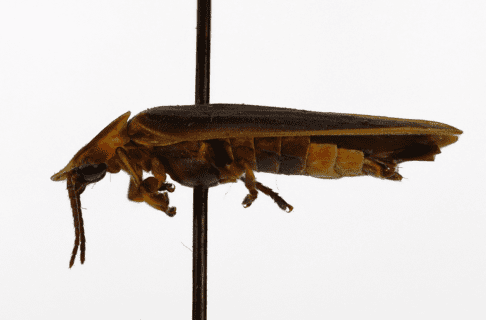
An angled candle firefly (Pyractomena angulata) from the Manitoba Museum collection. Note the pale bioluminescent organs on the underside of the abdomen. At night, males produce a distinctive orangey, rapid flickering pattern, a bit like a candle, repeated every 2-4 seconds as they fly to signal to females below. MM 54906, 12.3 mm long © Manitoba Museum
Not all adult fireflies are all that “fiery”; some are active in the daytime when bioluminescence would be a waste of energy. Instead, they use pheromones (chemical signals) to find or attract mates.
However, all firefly larvae ARE bioluminescent! Fireflies spend most of their lives as larvae in darker places (in logs, under leaves or in wet, often marshy soil) and it is thought that producing light evolved first in larvae to serve as a warning to predators that they taste terrible! Fireflies produce defensive steroids that birds and spiders are known to avoid – a glowing larva means “Don’t eat!” Bioluminescence was retained into adulthood in some species to be used for finding mates. Being active at night reduces the chances of being seen and eaten, and flashing intermittently makes the insect hard to follow.
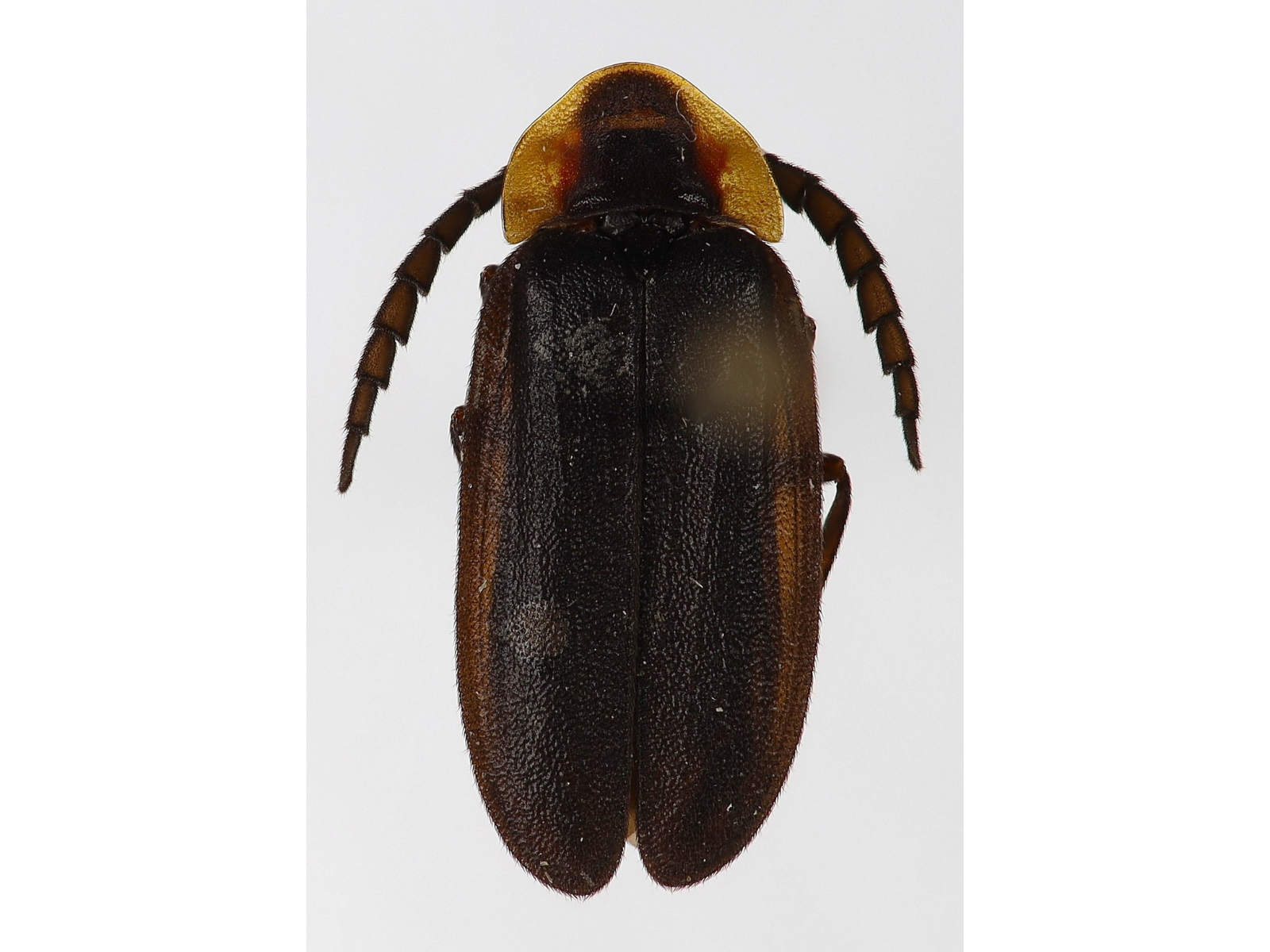
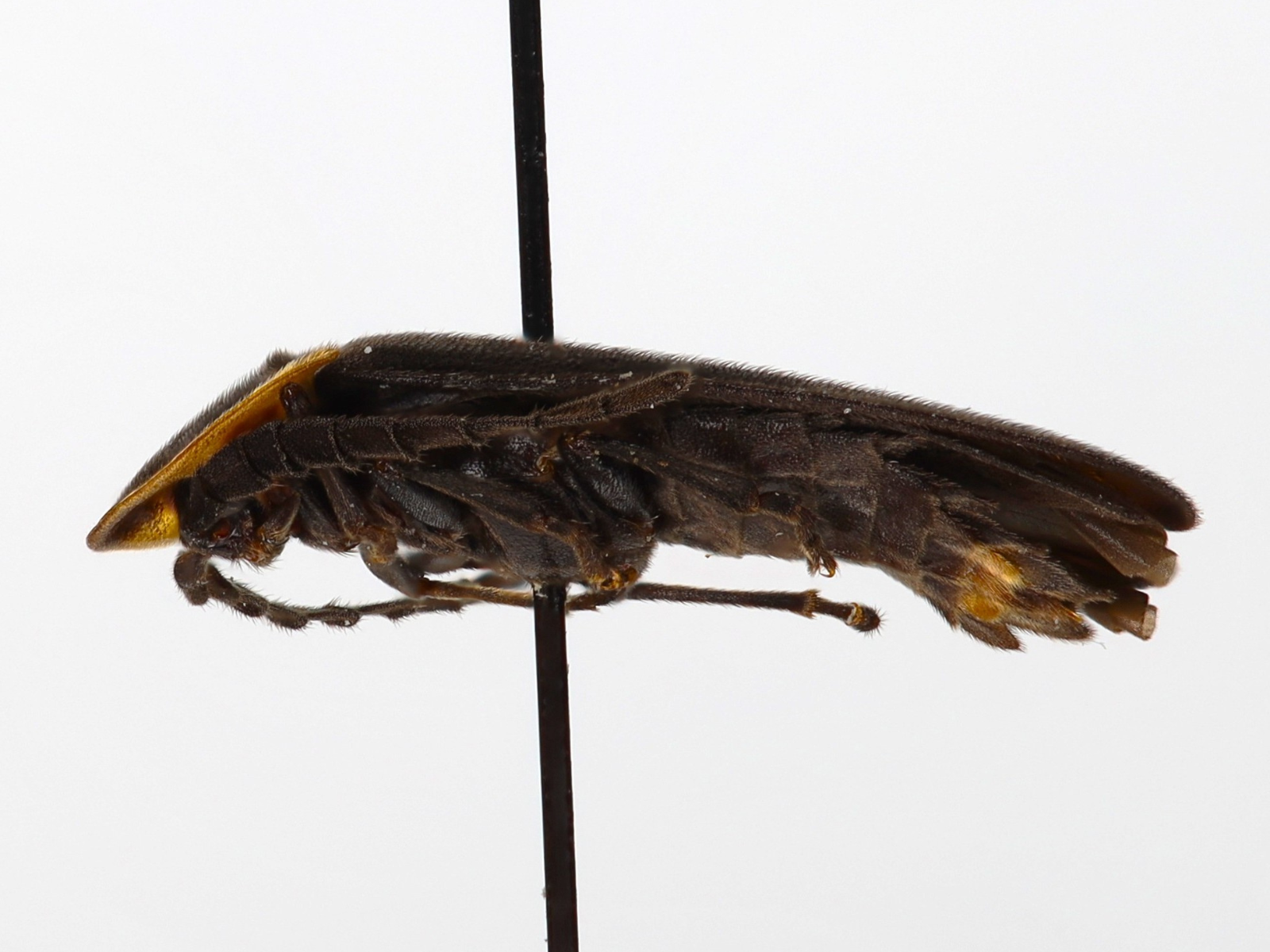
A species of firefly (Lucidota) active during the day with reduced light-producing organs as an adult. They use chemical signals (pheromones) to find mates instead of flashing light. MM 54932, 8.9 mm long © Manitoba Museum
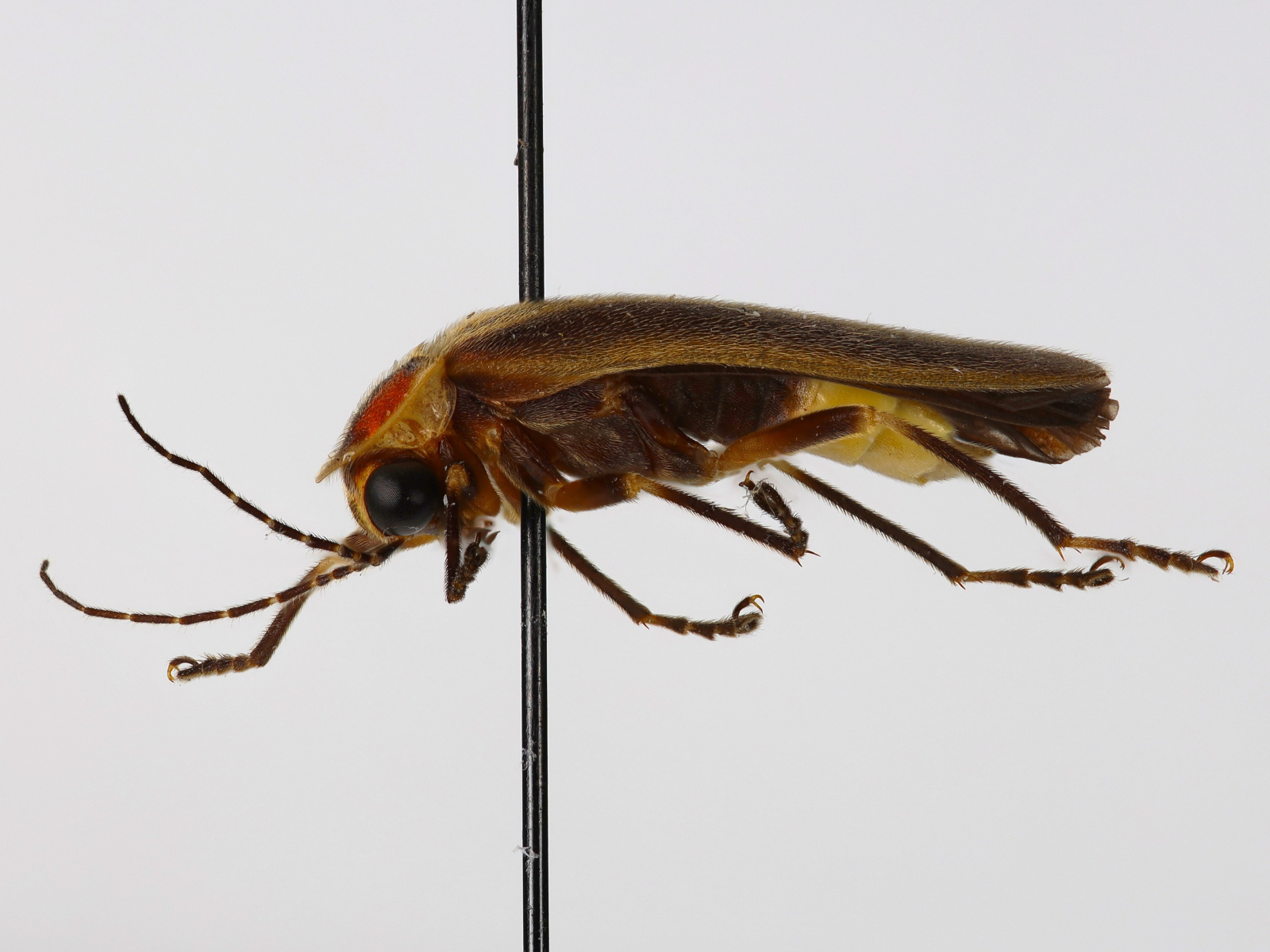
Despite the tens of millions of years of evolution, the wonders of nighttime firefly dating strategies are no match for human-altered habitats. Urban settings are lit throughout the night, and this light pollution has made many city sites unsuitable habitat. Even in rural areas, commercial agricultural fields can limit fireflies to roadside ditches and use of insecticides is a threat.
Image: Another species of light-producing firefly (Photuris) with yellowish segments where the bioluminescent organs are located at the end of the abdomen. MM 54992, 12.5 mm long © Manitoba Museum
Regardless, the “sparks of love” creating the patterns of the various species of fireflies (or as we should know them: fire-beetles) makes for a lovely summer evening. If you can’t manage to see them outside, come and see fireflies performing on video in the Prairies Gallery at the Manitoba Museum.
Either way, enjoy the light show!