


Posted on: Thursday February 12, 2026
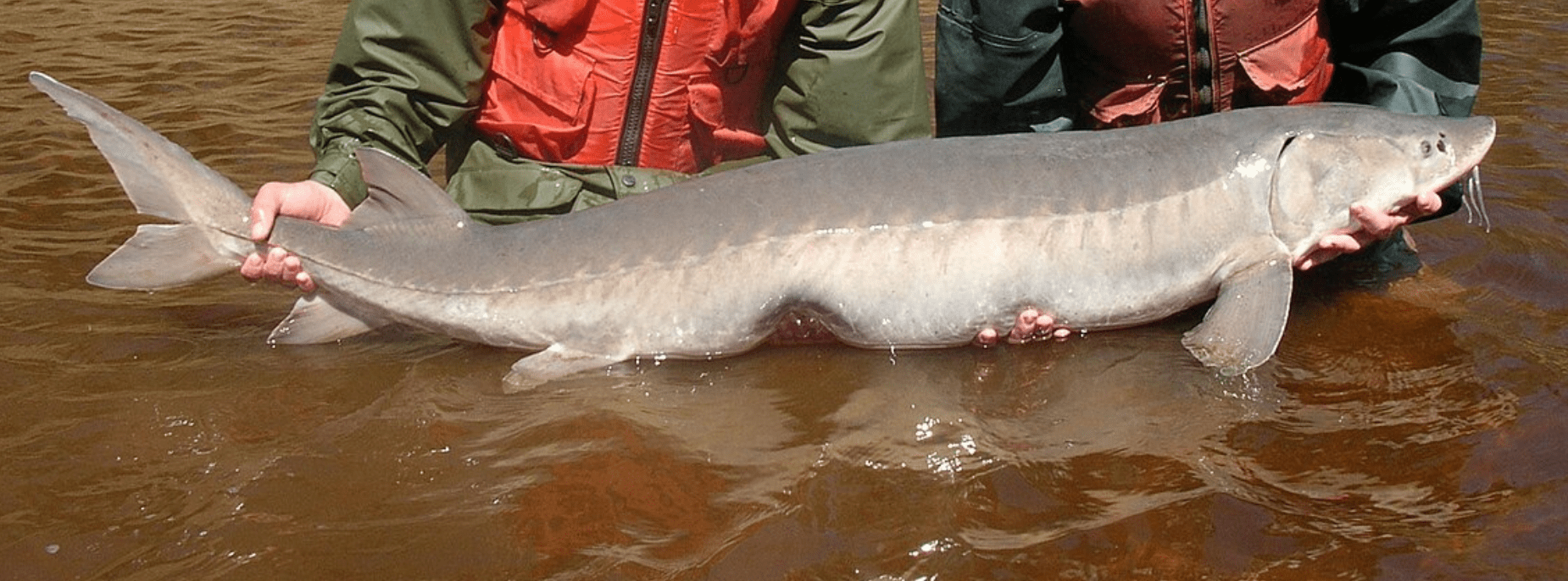
The Lake Sturgeon is Manitoba’s largest freshwater fish. This already makes it special enough to deserve some attention, but sturgeons are an incredible story in so many other ways, too: their ancestors date back to well before famous dinosaurs like Tyrannosaurus rex, individuals can be over 100 years old, they hunt using electroreception like sharks, and they have been important to people both culturally and as a resource for thousands of years. Let me introduce you to the amazing Lake Sturgeon…
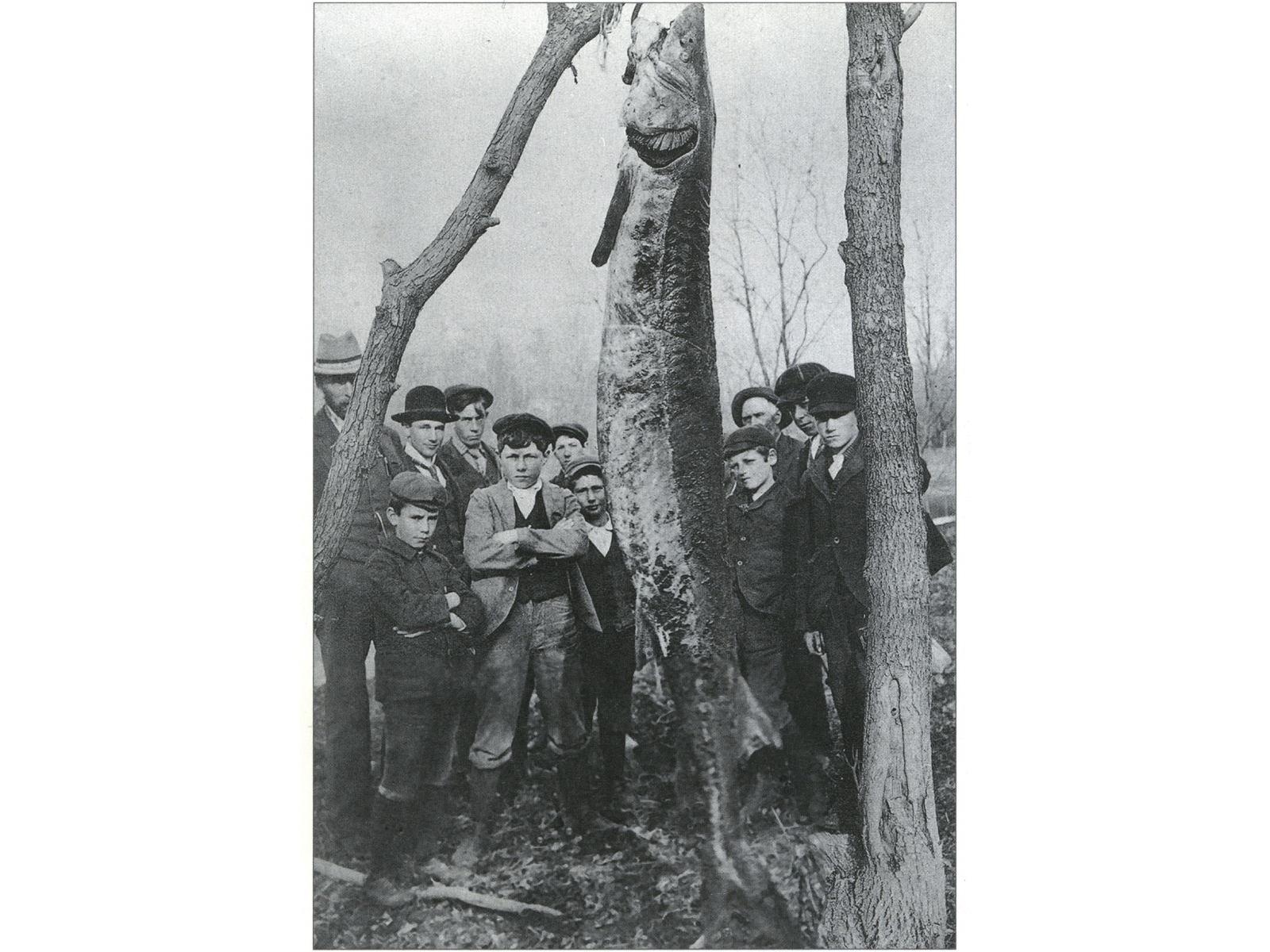
It was THIS big!
The largest Lake Sturgeon ever recorded was caught on October 3, 1903, right here in Manitoba near Dominion City in the Roseau River, about 80 km south of Winnipeg. Although reported as over 4.5 m long, a closer look at the photograph suggests it was closer to 3 m – still a monster catch, especially because it weighed 184 kg!
Today, the biggest Lake Sturgeons caught (and released) have been about 2 m long and weighed around 60 kg, much smaller than the record, but a great fishing story regardless!
Image: Photo by G. Barraclough. Manitoba Museum Neg. #17455/Original image in the collection of the Franklin Museum, Dominion City.
How old can a sturgeon be?
Lake Sturgeons are very long-lived fish, with some of the largest individuals suggested to be over 150 years old! But aging a sturgeon can be tricky. They grow relatively quickly for the first ten years of their lives to about 70 cm, but then begin to slow their growth more and more over the years. Scientists can age sturgeon without harm by taking a small section of the pectoral-fin spine (the leading ray of the front fin), a procedure a bit like clipping a fingernail. This spine cross-section has growth rings like those seen in tree sections. These can be counted accurately up to about the age of 25 years, when the fish is about a metre in length. In fishes older than that, the growth rings get closer together and difficult to count.
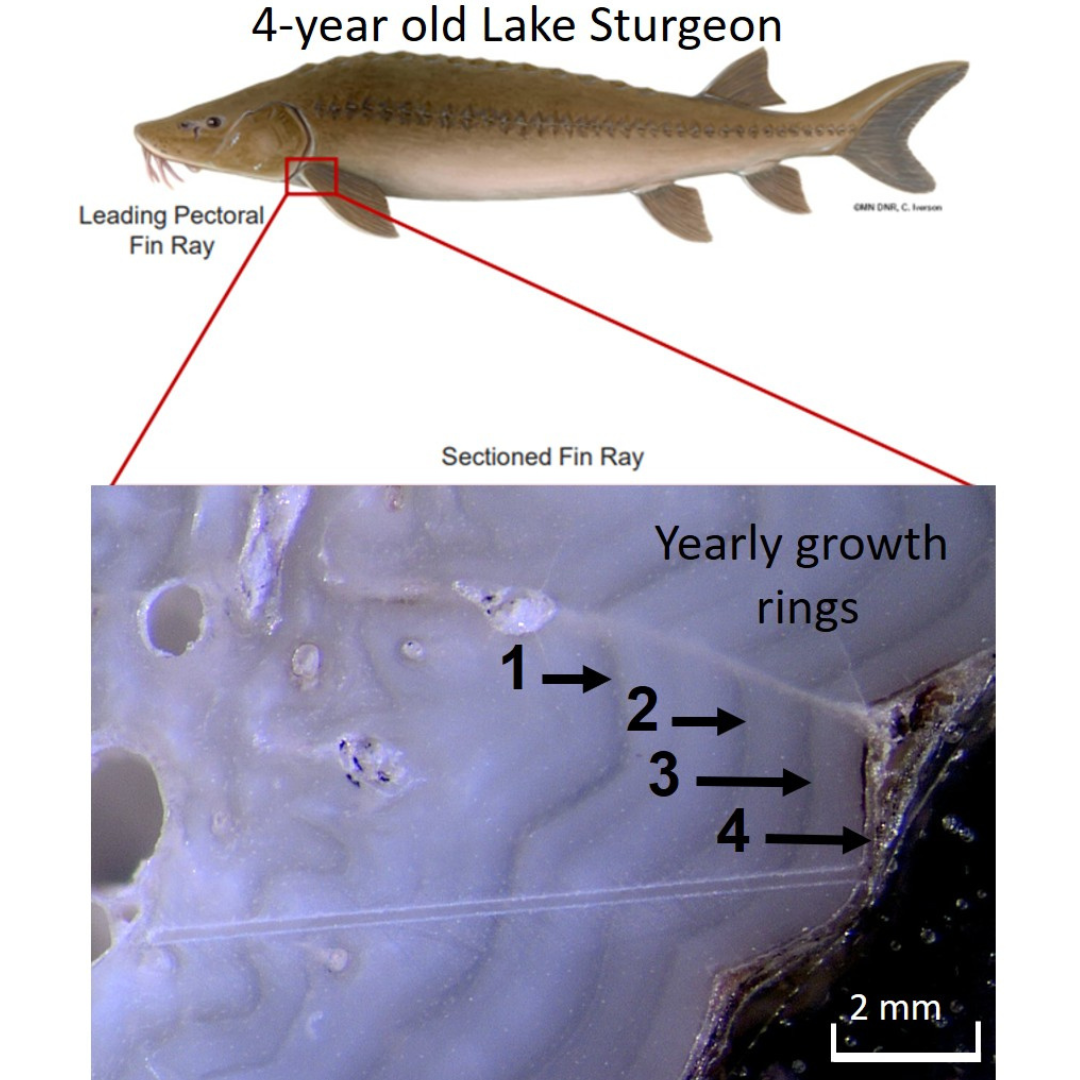
This is a thin-section of the pectoral-fin spine of a 4-year old Lake Sturgeon. The annual growth rings are easy to count. Modified from an illustration kindly provided by A. Loeppky (©, used with permission).
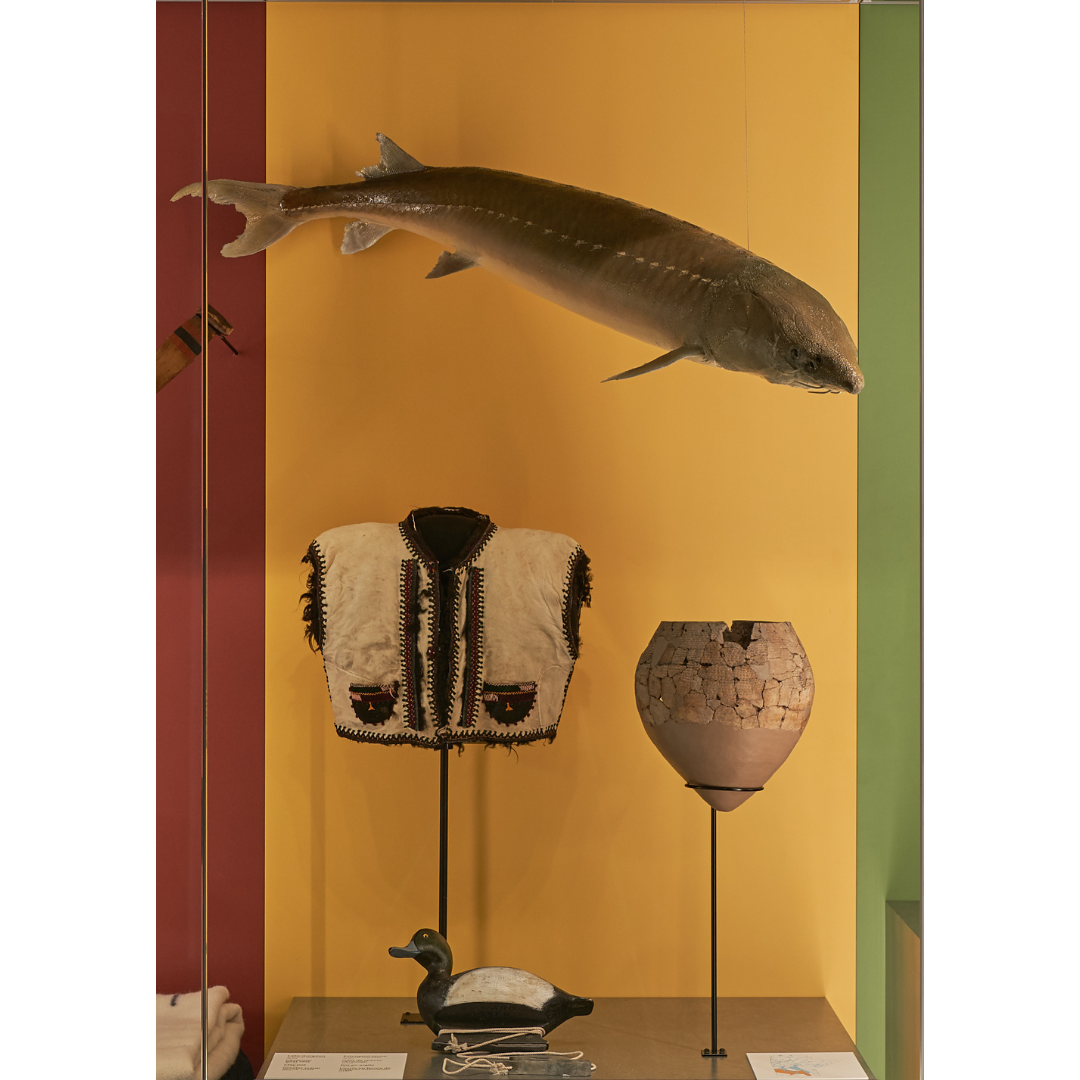
The 1.4 m female that is hanging in the Welcome Gallery of the Manitoba Museum was estimated to be 45-50 years old, showing how growth slows as sturgeons age; a metre-long sturgeon is usually about 25 years old. © Manitoba Museum
The life of a sturgeon
Although sturgeons can end up huge, they start as tiny, 3-4 mm eggs released into the water, usually in areas of rapids in large rivers. When the eggs are fertilized, they become sticky and attach onto the bottom. Within two weeks, these hatch into larvae nourished by a yolk sac on their bellies. Three weeks later they have drifted downstream to deeper, slower water and begin to feed. After one year, they are about 20 cm long, at five years close to 50 cm, and can reach a metre by age 20-25. Males mature between 8-12 years, and females between 15-30 years. Large females produce up to one million eggs, but few of these will reach adulthood – the eggs and young sturgeon are food for many predators. Even after reaching maturity, adults do not breed every year. This makes sturgeon populations vulnerable to over-harvest.
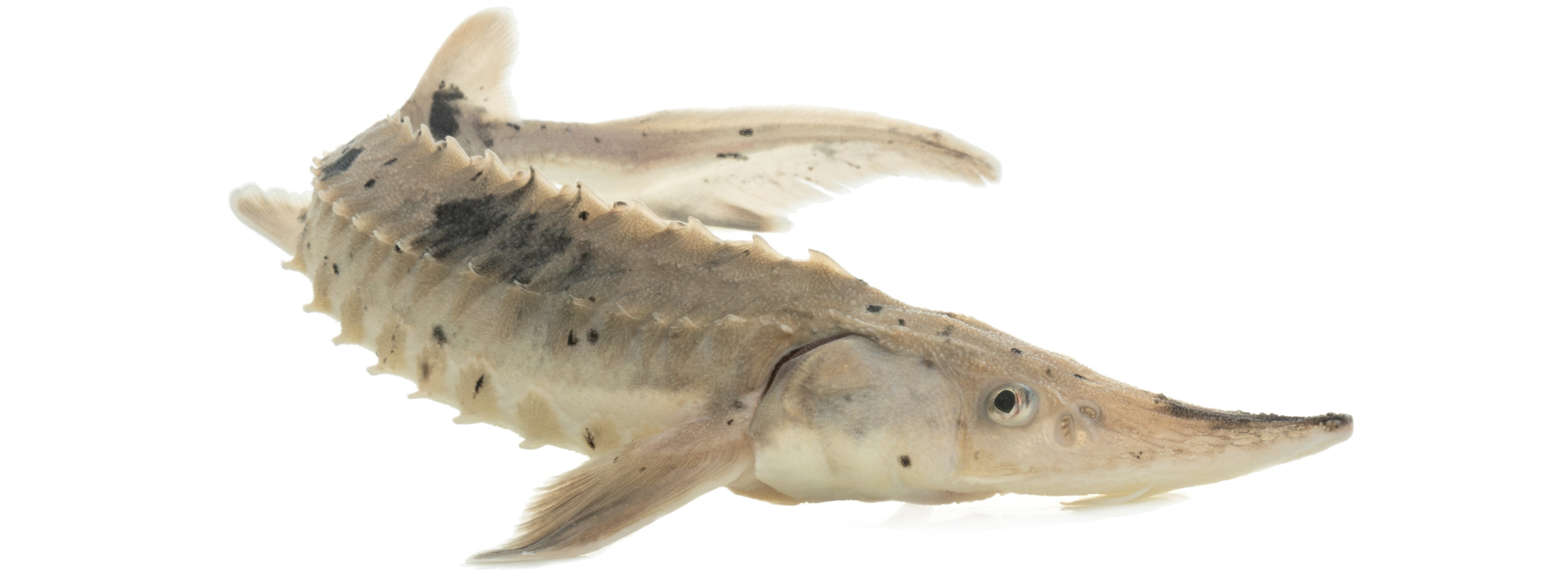
Young sturgeons develop an armour of sharp spines on large protective scales (or scutes). These wear down with age. Credit: USFWS
What do they eat and how do they find it?
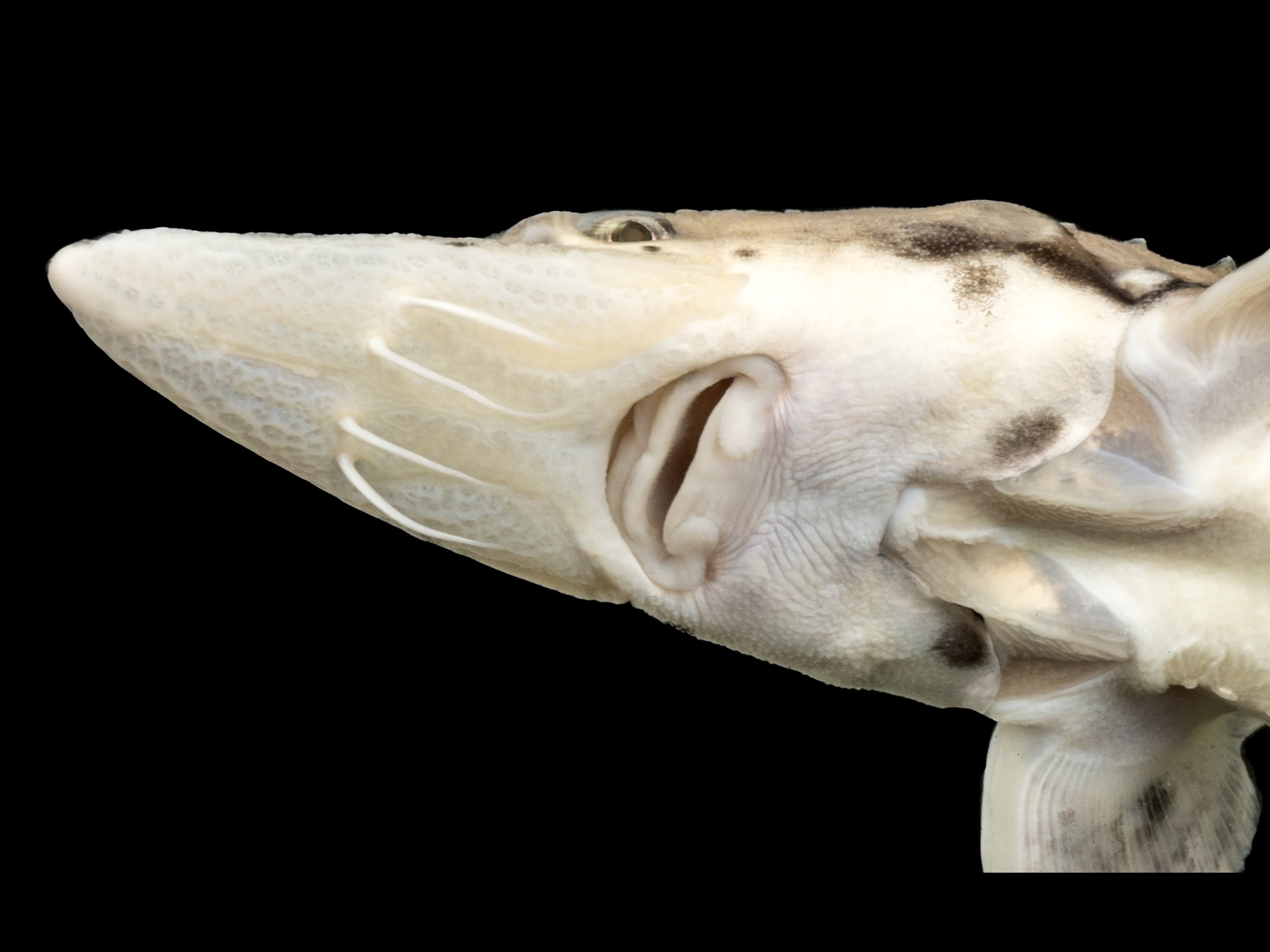
Sturgeons feed on the bottom of lakes and rivers, eating snails, mussels, crayfish, aquatic insects and their larvae, fish eggs, and occasionally small fish and algae. The mouth is on the underside of the head and can be extended as a short tube to act like a vacuum. Adults don’t have teeth and most food is swallowed whole. Sturgeons are non-visual feeders, meaning they find food using a combination of touch, smell, and taste using sensory barbels in front of the mouth. Like sharks, they have electroreceptors in pores on their head that are sensitive to the weak electric fields generated by muscles and nerves in prey, making otherwise invisible prey detectable.
Image: The mouth of a Lake Sturgeon is under the head, toothless, but extensible to suck up small animals from the bottom of lakes and rivers. Four finger-like barbels provide touch, taste, and smell while special pores can sense weak electric fields produced by prey. Credit: USFWS
Sturgeons and Indigenous Peoples
First Nations have fished sturgeons for thousands of years, harvesting spawning sites annually with spears, nets, and weirs. Namêw [Nēhiyawēwin (Cree): na-MAY-o] or name [Anishinaabemowin (Ojibwe): na-MAY] remain highly prized, not only as food, but as an important connection to cultural traditions. The meat can be dried and pounded into a powder and stored long-term in sturgeon-skin containers. Adding fat and berries to the powder makes sturgeon pemmican. The eggs are a delicacy, but also used to soften animal hides for tanning. The airbladder contains a sticky substance (isinglass) used as glue to repair canoes and as a paint adhesive. Sturgeons also became a valuable economic commodity through trade and commercial fisheries.
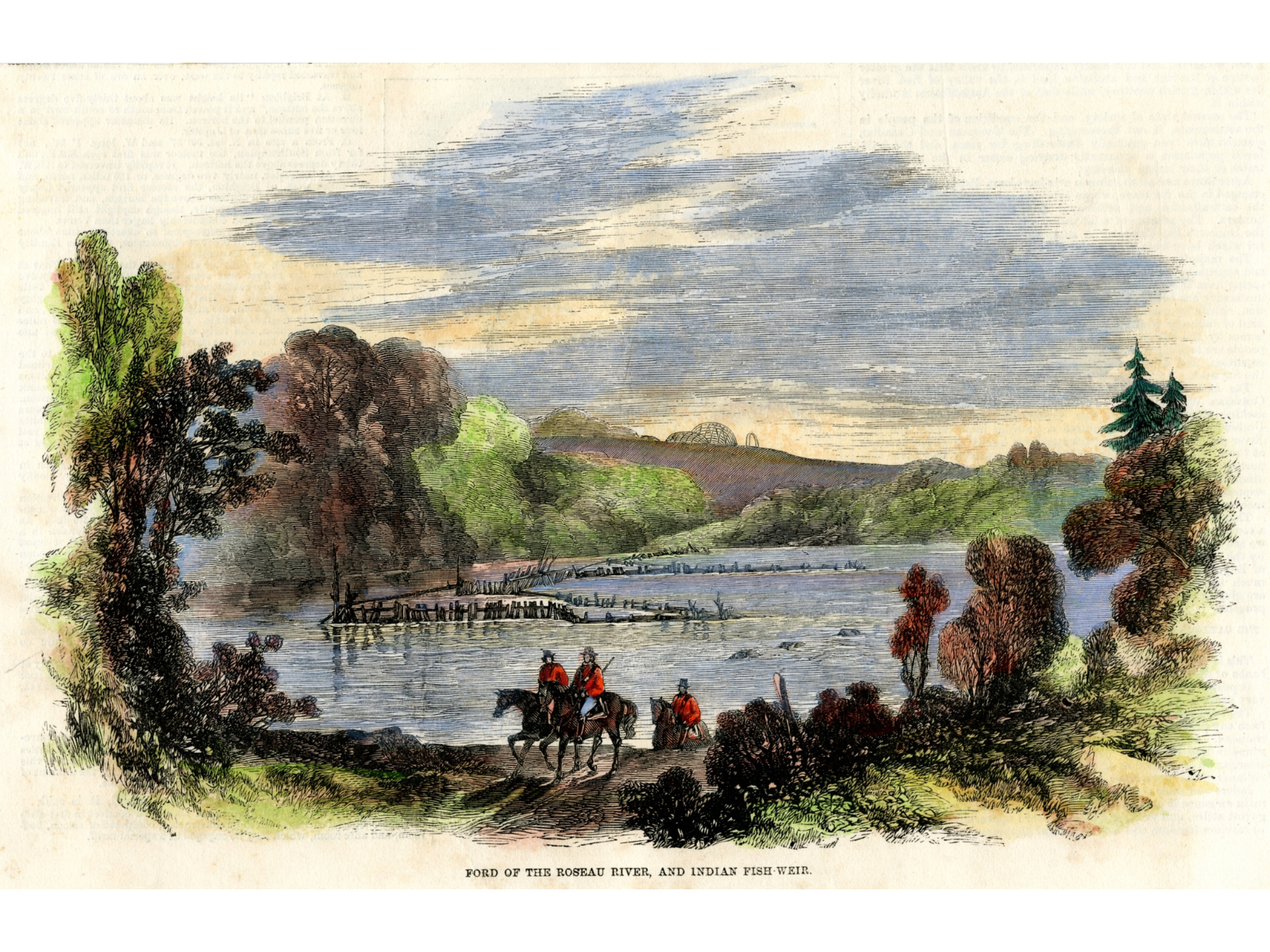
This 1858 lithograph shows a First Nations fish weir on the Roseau River in Manitoba, a site that attracted fishers each spring to harvest sturgeons moving to spawning areas. Sometimes fences were built across rivers to prevent the return migration to lakes, providing a source of sturgeons through much of the summer. From Illustrated London News, 1858, Manitoba Museum H9-38-309
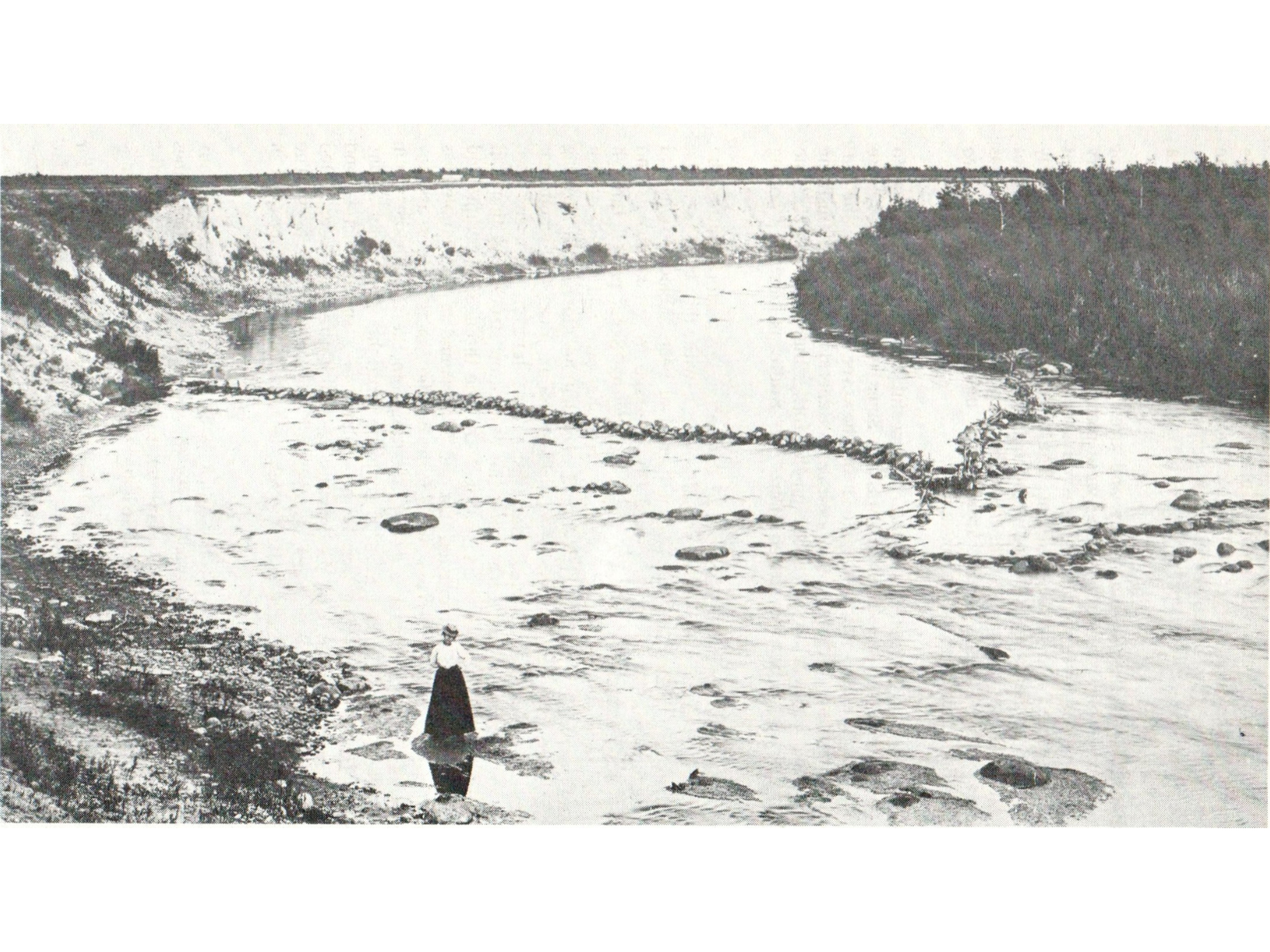
Perhaps the same weir in the Roseau River in 1900. The weir would guide migrating sturgeon to the centre of the “V” where they would be taken in small nets or clubbed, then prepared and dried ashore. From Waddell, 1970.
Sturgeon, Fur Traders, and Colonists
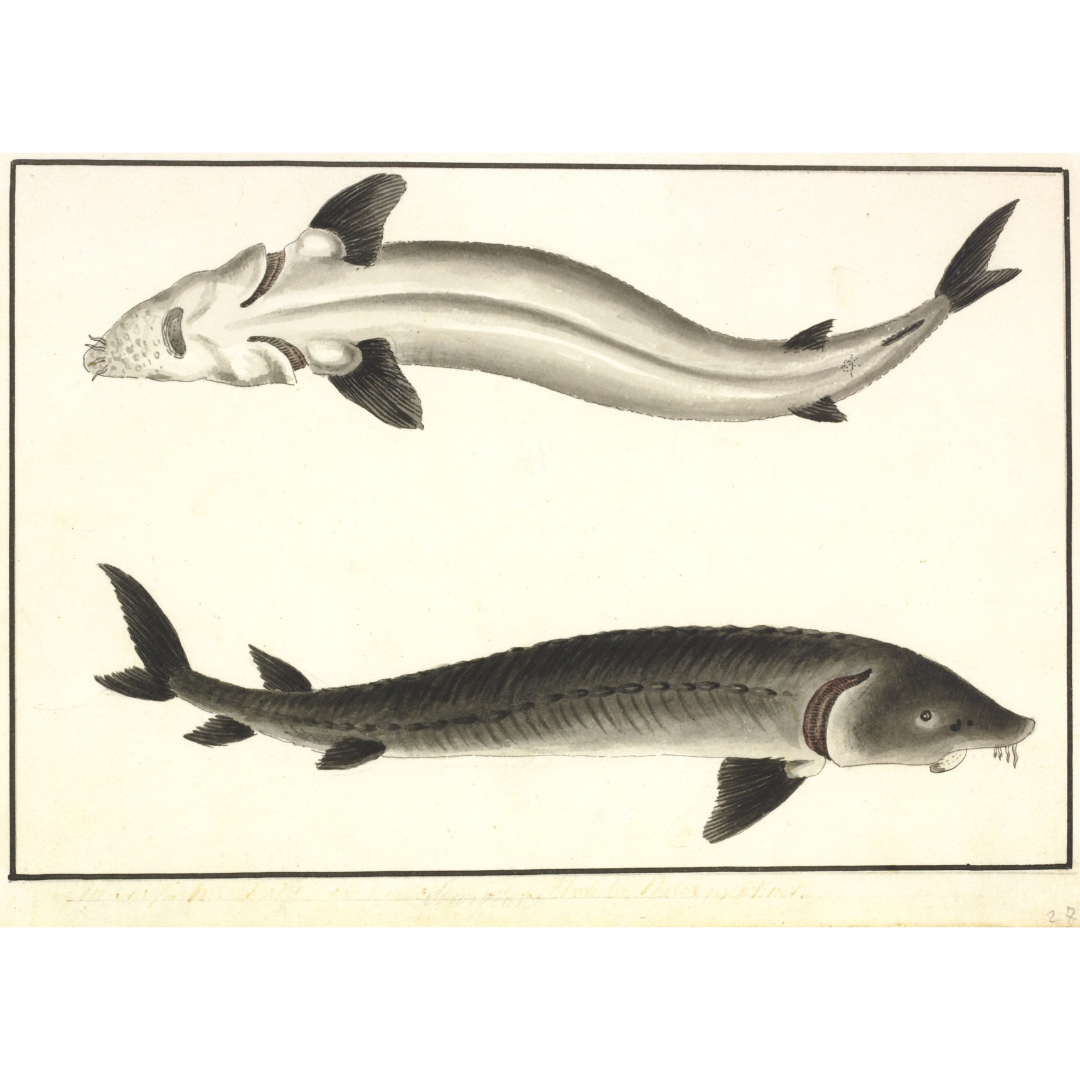
Journals of early fur traders and colonists often mention how important sturgeons were as a source of food, sometimes almost as important as bison. In 1808, a trading post on the Red River landed 775 sturgeons in just one month! At the Red River Settlement, where Winnipeg is now, enough sturgeons were caught to feed the settlers for five weeks each spring through the early 1820s, a critical time when the early settlement suffered crop failures. The water was so low on the Assiniboine River in 1805 that the traders of the North West Company drove sturgeons onto sand banks, reporting “we have no difficulty in killing any number of them… We now subsist entirely on these fish; and they are excellent food.”
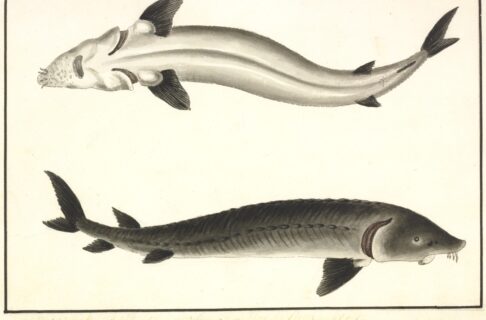
Image: Peter Rindisbacher painted his detailed and accurate A Sturgeon from the Red River in 1821. He was a colonist of the Red River Settlement and this rendering was likely inspired by the generosity of Chief Peguis, the famous Ojibwe leader, who had supplied sturgeon meat to feed him and his fellow starving colonists during the arduous trip from York Factory on Hudson Bay to the settlement. Library and Archives Canada, 1988-250-26
A long history threatened
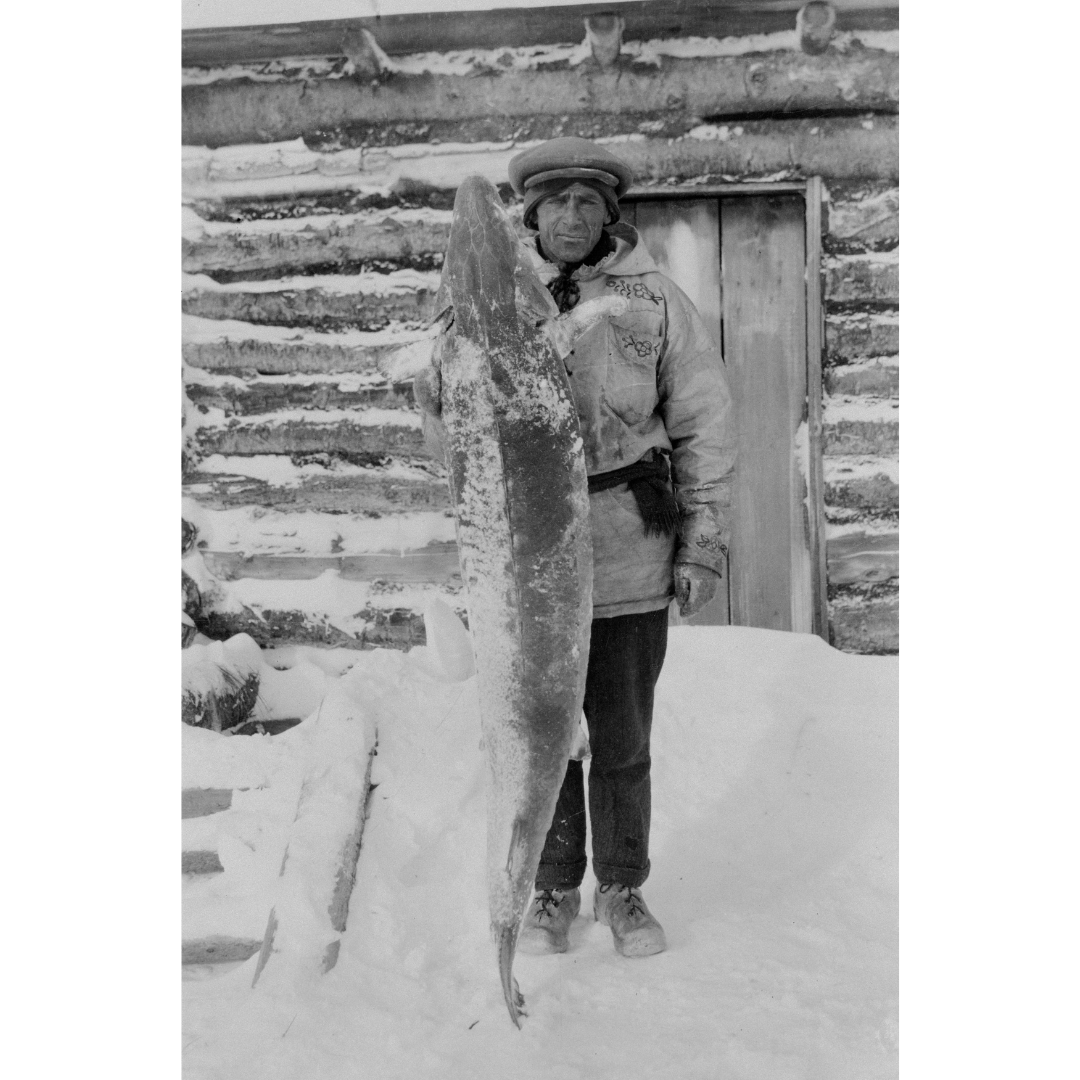
Sturgeons appeared at least 120 million years ago, 40-50 million years before dinosaurs such as Triceratops and Tyrannosaurus rex. They have lived through geological events that wiped out many other animals, including those dinosaurs. But commercial fishing and sudden demand for sturgeons in the 1880s were almost their undoing. Commercial catch peaked in 1900 at about 30,000 sturgeons caught in Manitoba, alone! Their late maturity (8-12 years in males, 15-30 years in females) made this harvest unsustainable, as the larger and older individuals were fished out. Damming of rivers for hydroelectric power has significantly altered habitat and restricted access to spawning sites, bringing further population declines. Lake Sturgeon have become rare in many parts of the province.
Image: A large sturgeon caught near Berens River in the 1930s. Commercial over-exploitation and changes to the environment meant that traditional fishers could neither catch Lake Sturgeons in sufficient numbers for food nor maintain important cultural connections. Archives of Manitoba, N27831
Bringing back a giant
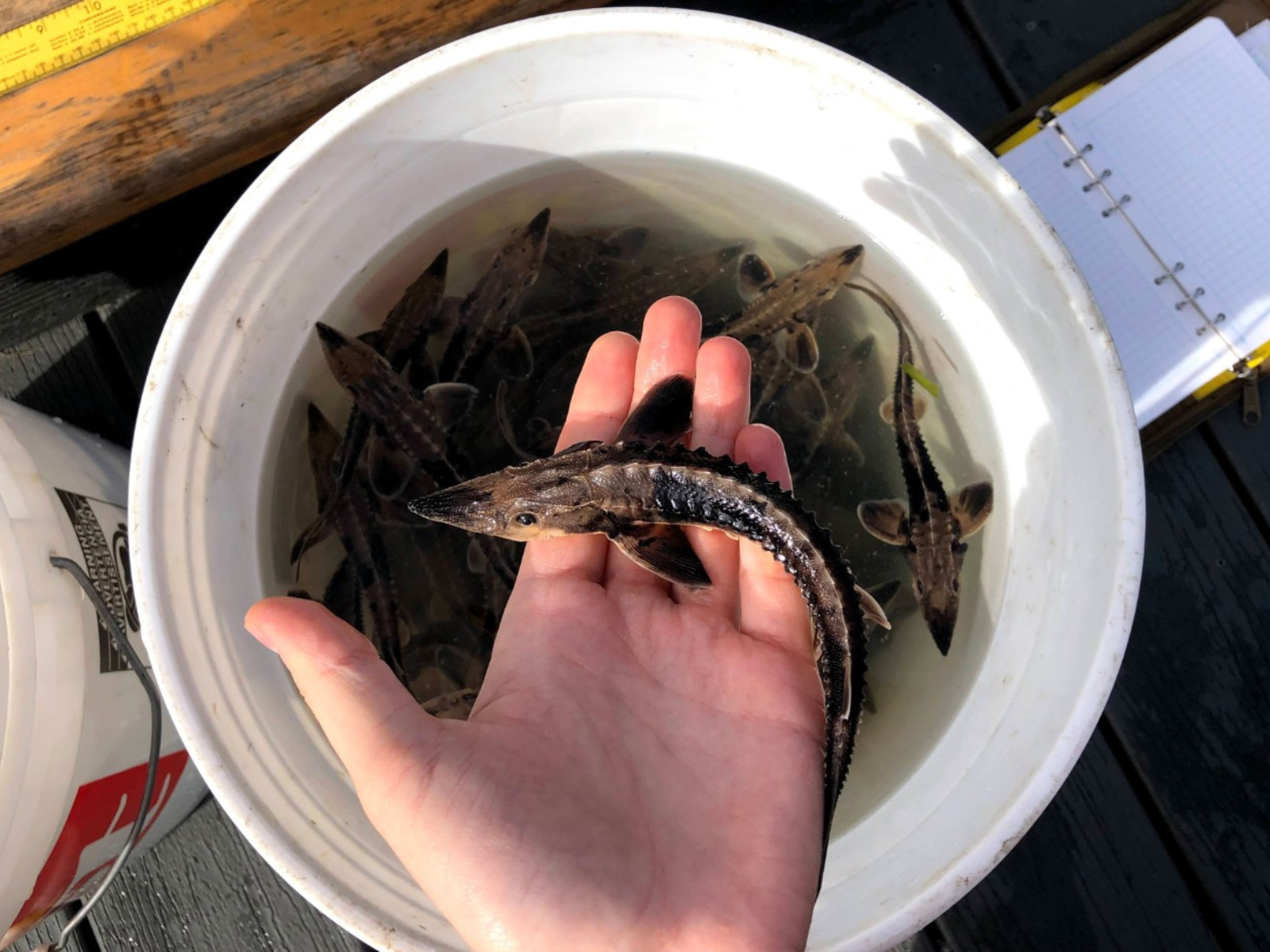
Over the last several decades, dedicated efforts have been made to bring sturgeon populations back to sustainable numbers. Research and traditional ecological knowledge have improved understanding of sturgeon biology in Manitoba. Collaborative stocking programs collect wild sturgeon eggs, with hatched larvae raised in captivity for a year to increase survival rate upon release. This can help rebuild depleted populations or reintroduce sturgeons to former territory. Cooperation and careful management among industries, fishers, scientists, and Indigenous groups combining science, traditional knowledge, and education has helped save Manitoba’s Lake Sturgeon, an important natural, historical, and cultural icon.
Image: Young hatchery-raised Lake Sturgeons ready for release into the wild. Credit: USFWS
At the Manitoba Museum, you can get up close and personal to a 50-year old, 1.4 m Lake Sturgeon in the Welcome Gallery, and learn more about these and other amazing fishes in our Parklands Gallery.