
Exhibit Layouts

Exhibit Layouts

By Dr. Graham Young, past Curator of Palaeontology & Geology


Last week, in our lab and in the small layout room next door, we were juggling specimens for two Earth History Gallery exhibits. We are developing a timeline that will lead the visitor from the formation of the Earth (4.5 billion years ago) right up to the Ordovician Period of our Ancient Seas exhibit (about 450 million years ago). This timeline will feature quite a number of unusual geological specimens and reconstructions, each of which will be placed in a little case. So there was a group meeting of the people involved: the designer, collections staff, conservators, and me. We contemplated each specimen, as I lifted them in turn to show how they should be oriented and placed. In the course of an hour or so, we contemplated a piece of the oldest rock in the world, a banded iron formed on an early seafloor, some beautiful Cambrian sponges, and many other pieces. I can hardly wait to see these installed in the exhibit, but that is still a couple of months off.  We are continuing to work together on the “look” of the exhibit; more of that in my next post.
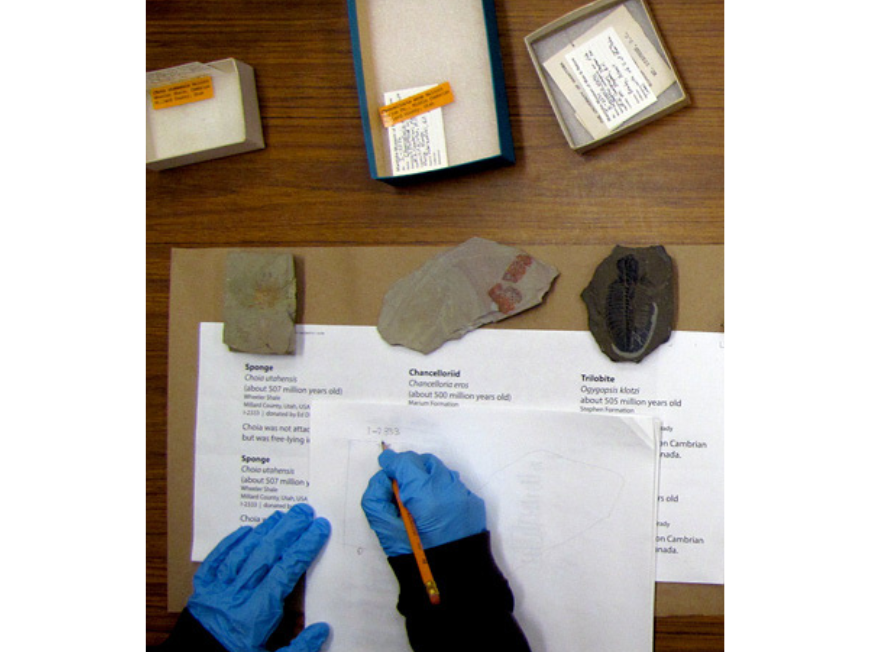
Photo looking down to a desk where some one's hands are in frame writing notes in paper with specimens placed along the top.

Specimens for the Cambrian exhibit are laid out on a lab table together with a draft design of exhibit copy (those hands belong to conservator Lisa May).
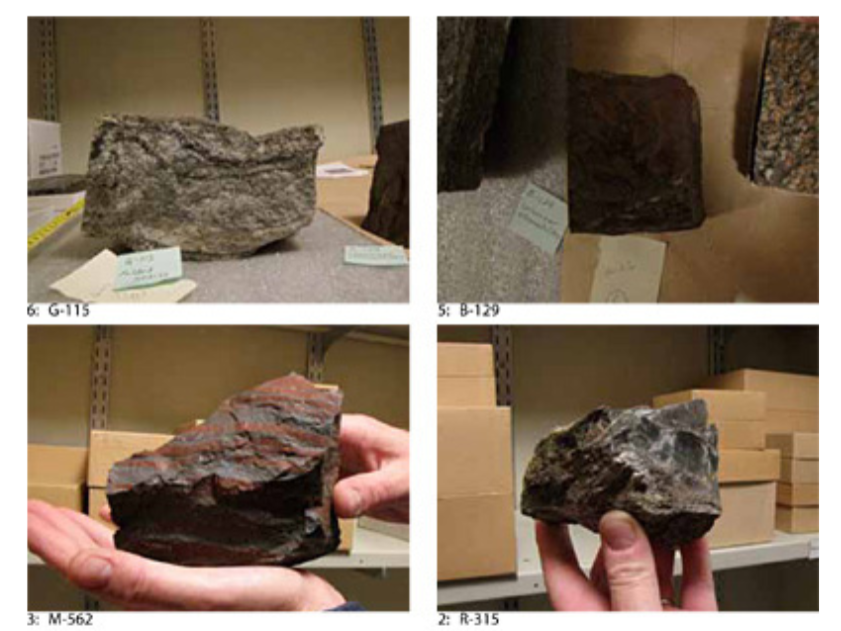
Four images of varying specimens, some on shelves, some held in the photographer's hand.

As exhibits are planned, specimens are photographed as they will be oriented on mounts. Then the conservators and technical staff get to work to produce the beautiful permanent supports. These are some of the Precambrian rocks and fossils that will be placed in the timeline exhibit.

Meanwhile, the final specimens for our Ancient Seas exhibit were being “staged,” along with their mounts, prior to being moved downstairs for final installation in the Earth History Gallery. The main part of this exhibit was opened early in the spring, but some of the specimen installation and lighting were delayed until now because mount-making and light installation are very laborious tasks and cannot be rushed.

At the end of last week and start of this week, we placed specimens into special “windows” that had been cut into the boxes of the Ancient Seas info rail, so that the visitors will be able to see at least one fossil for every kind of creature depicted in the video animation. As the job is complicated, we were only able to install a couple of specimens each day.
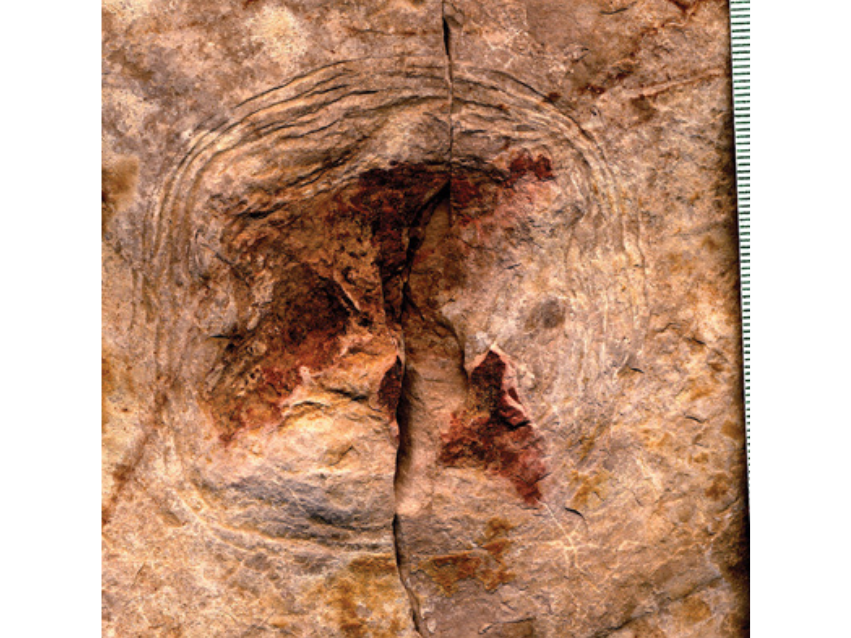
Close-up on a fossilized jellyfish.

This splendid Ordovician jellyfish from central Manitoba was inserted into a case in the Ancient Seas interpretive rail a couple of days ago.
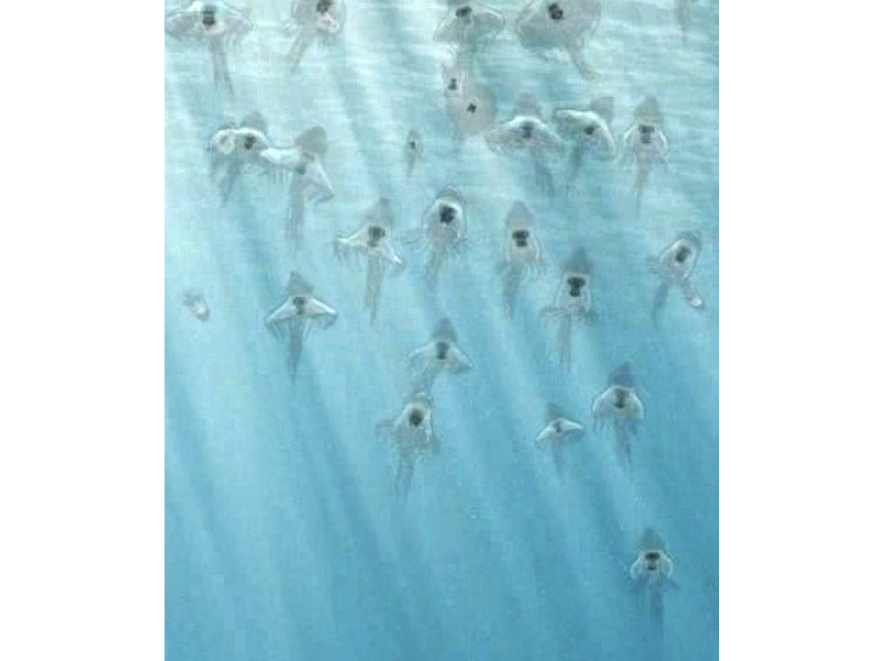
Close-up on an illustration of a group of jellyfish swimming in blue water in the Ancient Seas exhibit of the Manitoba Museum.

The animated jellyfish in Ancient Seas are based on the fossil jellies from central Manitoba.
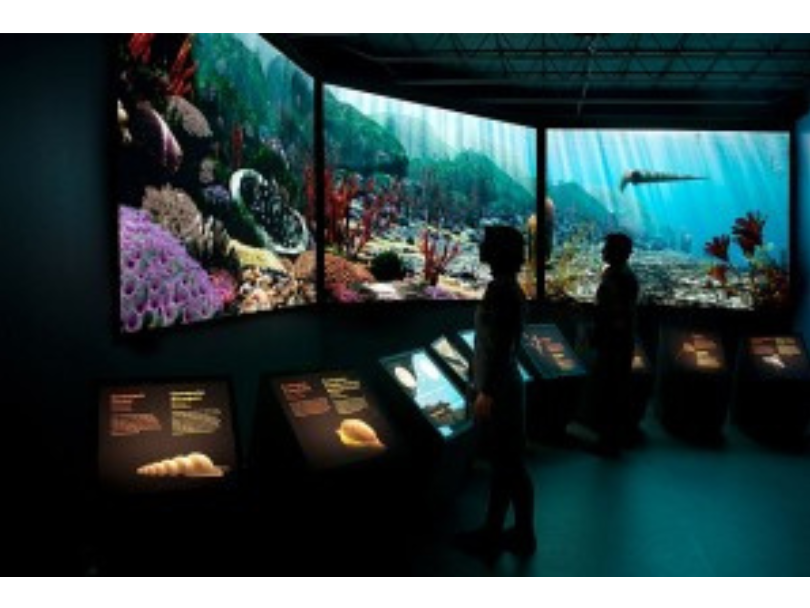
The Manitoba Museum Ancient Seas exhibit, a large curving screen along a wall showing animation of a view of a tropical sea with the silhouettes of two individuals engaging in the exhibit.

Under the guiding eye of designer Stephanie Whitehouse, technical wizards Bert Valentin and Wayne Switek sorted out the complicated fibre optic lighting and mounts, then they worked with conservator Lisa May to place each specimen in exactly the right position. I came in toward the end of each installation to serve as quality control on the placement and lighting (or as chief pain, perhaps), then each case was closed up and ready for the public. The exhibit is now absolutely, finally, 100% complete, and it is gorgeous!


Image: The Ancient Seas exhibit, in a photo from earlier this year. This week, we finished installing the final specimens in cases in the rail in front of the video.
Gear

By Dr. Graham Young, past Curator of Palaeontology & Geology


Last week, in the lab next to my office, we finished sorting and putting away the remainder of the gear from this summer’s field expedition. As you might expect, there were hammers, chisels, and field bags, the basic necessities for collecting fossils from hard limestone bedrock. But in addition to these, we washed multiple pry bars, shovels, geo-tools (mattocks), knee pads, and gloves. We sorted tool boxes, whisk brooms, insect repellent, bug jackets, camera equipment, permanent markers, pencils, tarpaulins, metal tags, wires, nails, coolers, and thermoses, and filed away long-life food items to await our next field season.

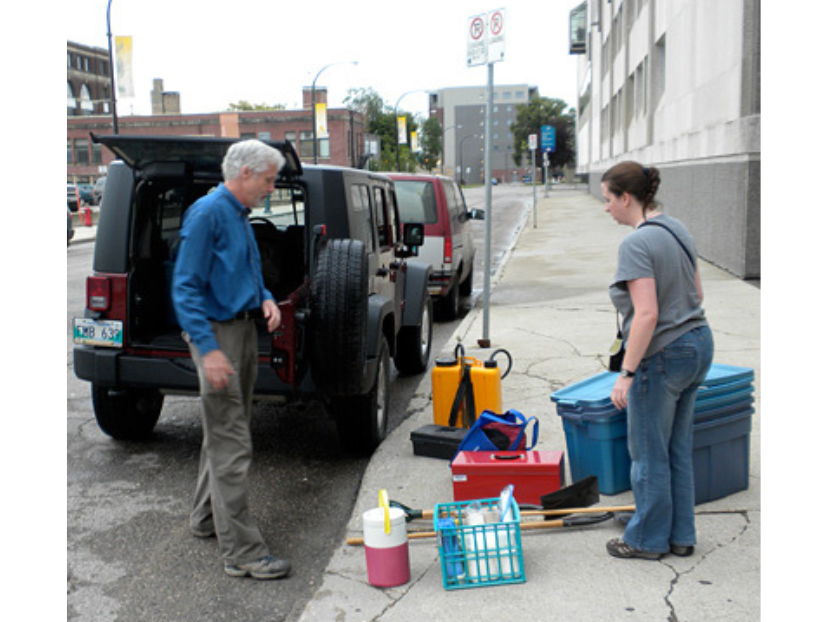
Two individuals with a variety of packs and bins of gear on the sidewalk next to a Jeep with an open back hatch.

Outside the Museum door, Debbie Thompson (R) and I are contemplating how to fit gear into a Jeep as we prepare for 2010 fieldwork in the Grand Rapids Uplands. (photo © David Rudkin, Royal Ontario Museum)

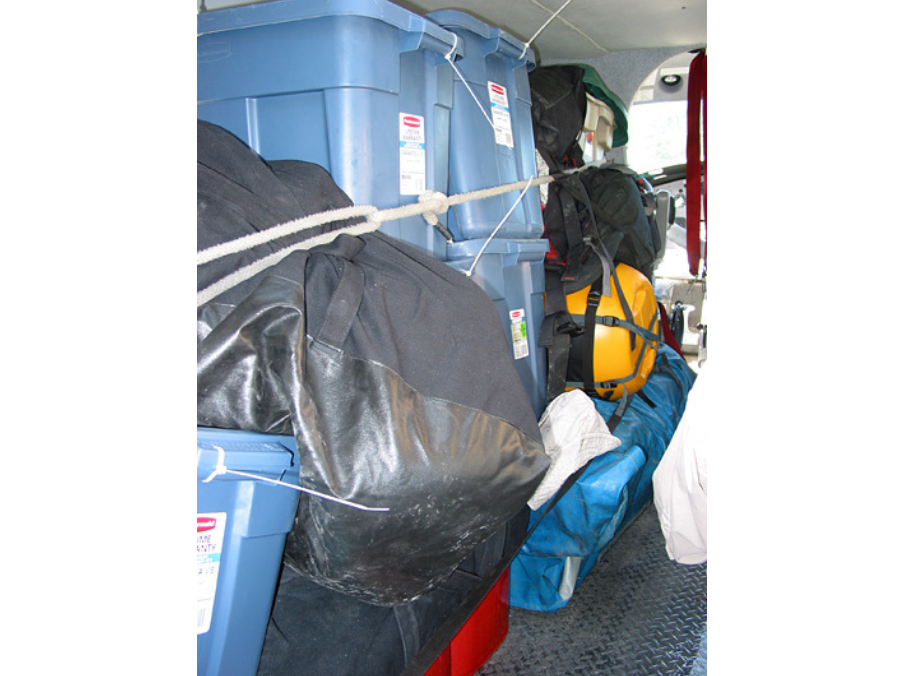
Tightly packed and bound gear in the back of a floatplane. Bins and bags are tied to the left side with some ropes.

The field gear jams one side of an Otter floatplane, on the way to our camp at McBeth Point, Lake Winnipeg (August, 2006).

I often hear from people outside the “business” that it must be a lot of fun to do paleontological fieldwork. Of course it is, but many of those people probably don’t realize that a collecting trip carried out any distance from the Museum can be a very complex operation, one that may require almost military planning. When I started this sort of work, I certainly didn’t realize that I would have to become a “master of gear”. Depending on the type of fieldwork, we have had to become familiar with items as disparate as a firefighter’s backpack sprayer, a laser levelling survey device, and a Zodiac boat.

I am always fortunate that other people (Ed Dobrzanski in particular) take on a lot of the hard work of assembling field gear, but as I am often the leader of the field party, it is up to me to ensure that we have the requisite tools, food, and transportation. And woe betide me if I forget some of the more “subtle” essentials such as toilet paper!

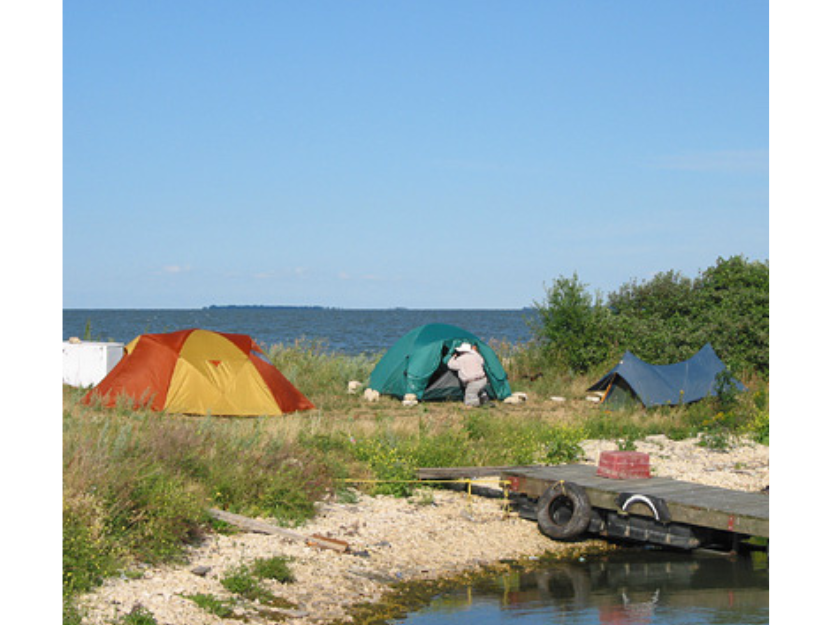
Three tents set up on a grassy space near water near a dock.

Our tents are set up on the shore at McBeth Point in summer, 2006.

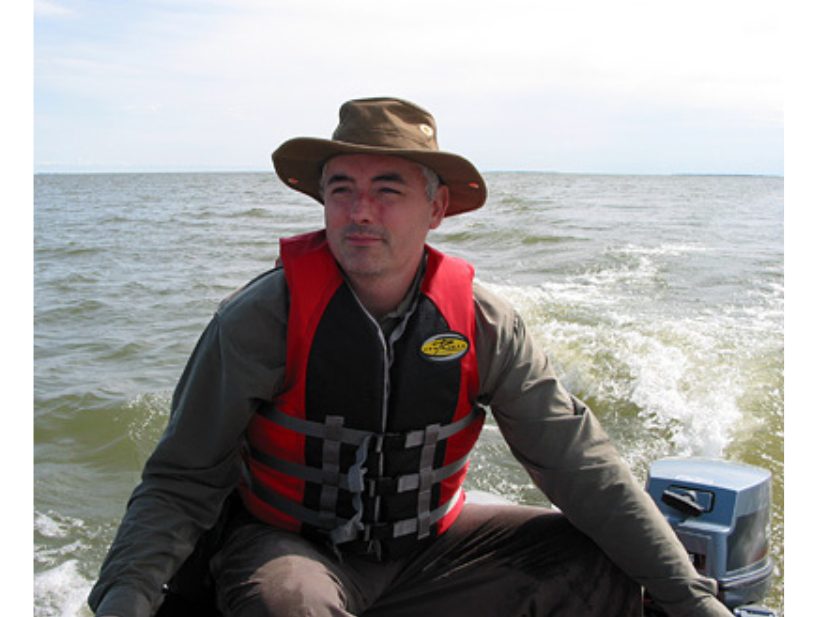
An individual wearing a brimmed hat and a red and black lifejacket steering the motor of a boat on a lake.

Sean Robson pilots the Museum’s Zodiac on the broad waters of Lake Winnipeg’s north basin.

Of course, all of the gear experience can have its practical advantages. I feel that I have nearly expert knowledge when it comes to selecting cold chisels or hammers. I know which types of tents are likely to stand up to heavy winds (and, more importantly, which ones aren’t!). I know how to enter and exit a helicopter or a float plane, and can shoot a cracker pistol to ward off bears. I can assemble a Zodiac boat from a few packages of unlikely looking parts. Not without bruising and bleeding, occasionally, but at least I am capable of practical and potentially useful tasks that may seem unlikely for someone in an academic discipline.

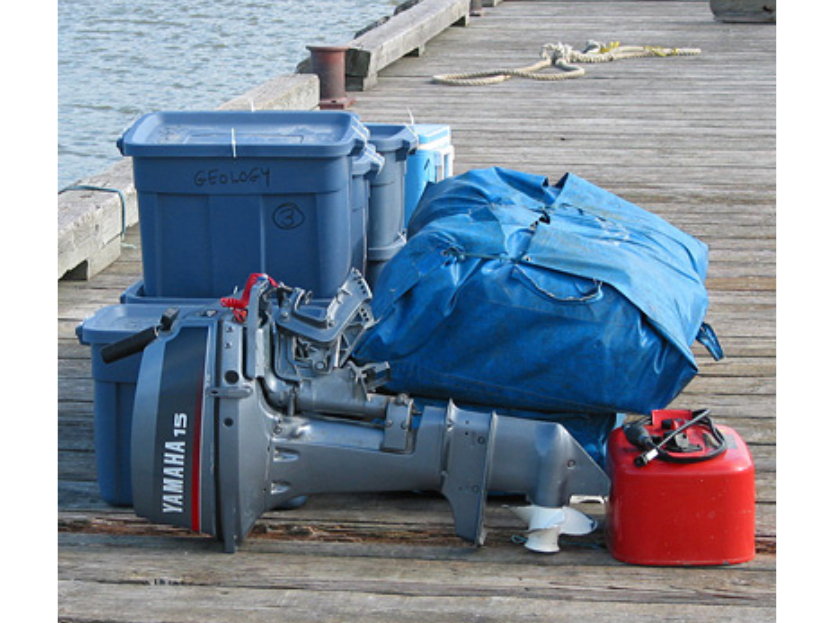
Pile of gear and a boat motor stacked on the dock of a lake.

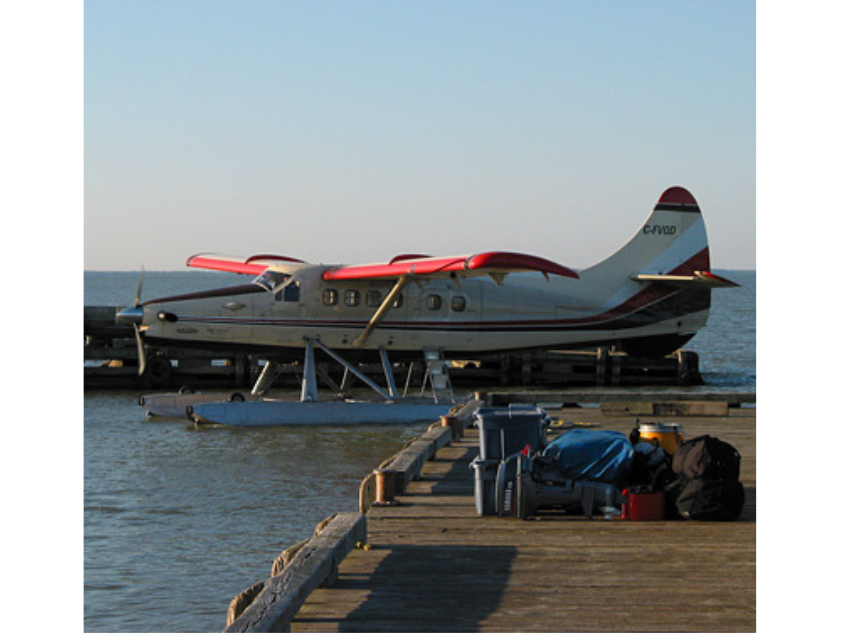
A float plane on the water near a dock, on which there's a pile gear and a boat motor.

A mound of gear on the dock at McBeth Point awaits the arrival of a turbo Otter (below) for the return trip to civilization. As it turned out, winds prevented the Otter from tying to the dock, and we had to carry the hundreds of kilos of gear all the way around the harbour and load from the float!

Incoming!

By Dr. Graham Young, past Curator of Palaeontology & Geology


At the Museum, events often take place in cycles. Of course we have the cycle of fieldwork and laboratory research, a cycle of exhibit preparation followed by installation, and, like many other workplaces, cycles in which there are periods with many meetings, followed by blessed intervals with very few meetings.

What you may not appreciate is that there are also cycles in our dealings with members of the public. There are quiet periods when I might handle about one inquiry a week, and then there are those other times when it feels like hardly a day passes without at least a couple of calls or e-mails asking me to identify fossils or explain geological phenomena. And invariably, when the inquiries heat up, so do the donations.

The past few weeks have been a very rich period for both inquiries and donations. I have identified some very interesting rocks and fossils, and we have received the three superb donations shown here. It is unusual to receive objects having this sort of quality and significance; to receive three within just a few weeks is quite wonderful!

Fossil starfish are about as rare as Archaeopteryx teeth!  Of course an Archaeopteryx had a lot of teeth, but very few specimens of those teeth have ever been found. It is the same with fossil starfish. I’m sure that there were large numbers of starfish in ancient seas, but starfish are broken up very easily after death, by waves, currents, and scavengers.

This is the first proper starfish we have ever seen from Stony Mountain, even though fossil collectors working in that area have found many thousands of (non-starfish) specimens representing about 100 species (Young et al., 2008). The Museum’s collections also have a Stony Mountain ophiuroid (brittle star) and several crinoids, so this find nicely rounds out the echinoderms from that site.

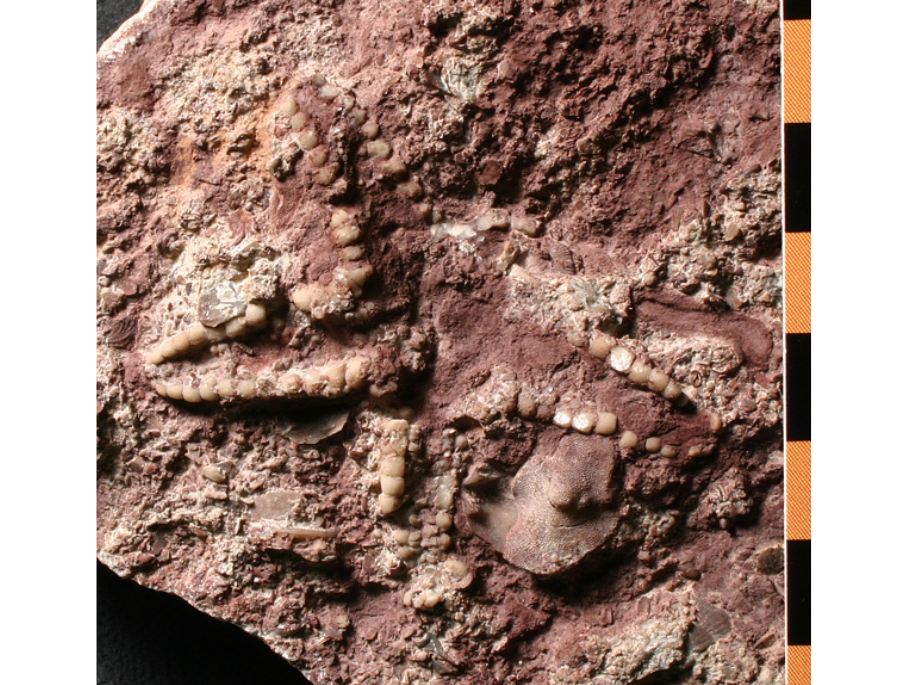
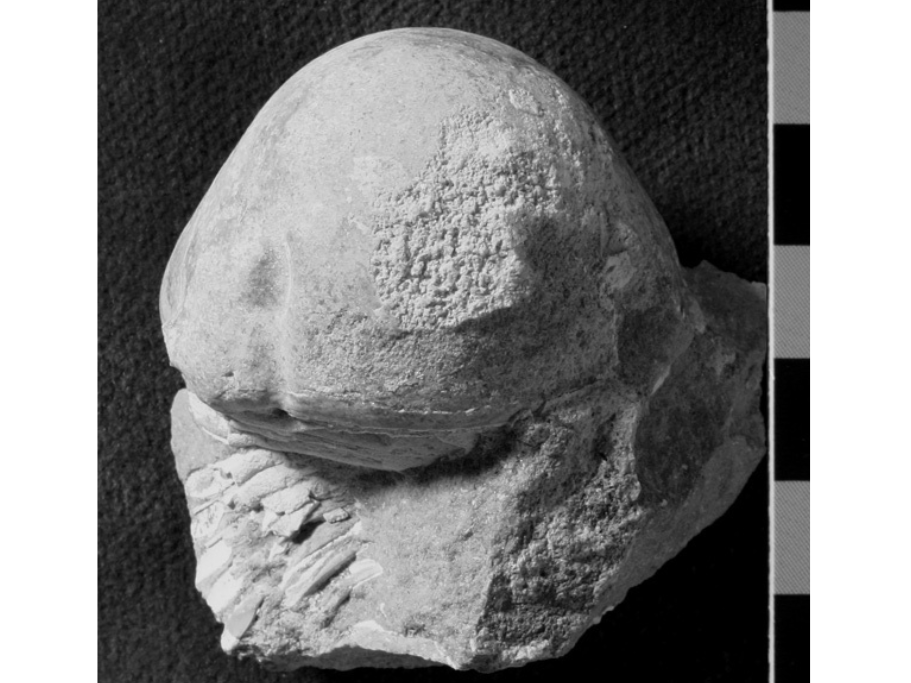
A fossilized starfish.

An Ordovician starfish (asteroid) from the Stony Mountain Formation at Stony Mountain (about 450 million years old).

Black and white photograph of a Ordovician aged trilobite.

An Ordovician trilobite, possibly Stenopareia garsonensis, from the Red River Formation (Tyndall Stone) at Garson (about 450 million years old).

Tyndall Stone is, of course, one of Canada’s favourite building stones. Trilobites have been found in this rock in the past, but examples that have not disarticulated (gone to pieces) are surprisingly rare (Westrop and Ludvigsen, 1983; Young et al., 2008). The example above is not complete, but the tortuous curve between the cephalon (head) and thorax suggests that the body underwent unusual twisting during or after death. Although trilobites, like other arthropods, grew by moulting, I don’t think this is a moult because the free cheeks (outer parts of the cephalon) are still attached, and they tended to be lost when a trilobite moulted.

PaleoGeo - tusk

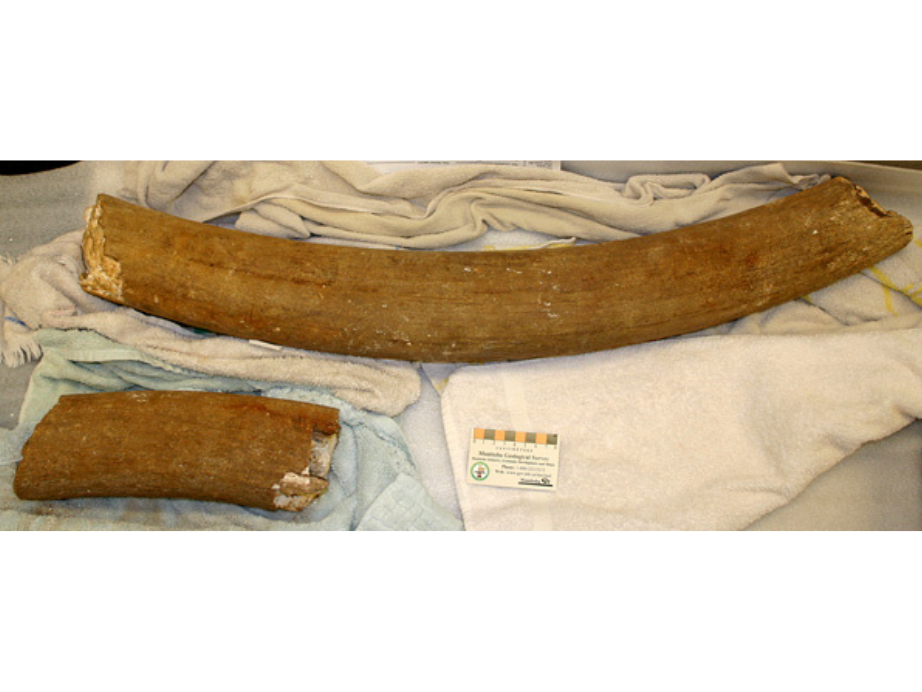
This beautiful mammoth tusk arrived about a week ago. It had only been dug out of the ground the day before, and it was soaking wet!  It is surrounded by towels in this photo because we are keeping it wrapped up so that it dries out very slowly over a period of many weeks. If mammoth tusks and teeth are dried too quickly, they tend to go completely to pieces, and we are trying to keep this one as intact as possible. Mammoth tusks are, of course, common in some regions (such as Siberia and Alaska), but only a few are known from Manitoba, and we are delighted to be adding this example to the Museum’s collection. All mammoth specimens from Manitoba seem to belong to the woolly mammoth (Mammuthus primigenius), but there are also rare examples of mastodons (Mammut americanum) in the province (see Leith, 1949).

Image: Pleistocene mammoth tusk from southeastern Manitoba (tens of thousands of years old).


LEITH, EI. 1949. Fossil elephants of Manitoba. Canadian Field-Naturalist, 63: 135-137.

WESTROP, S.R. AND R. LUDVIGSEN. 1983. Systematics and paleoecology of Upper Ordovician trilobites from the Selkirk Member of the Red River Formation, southern Manitoba. Manitoba Energy and Mines, Geological Report GR 82-2, 51 p.

YOUNG, G.A., R.J. ELIAS, S. WONG, AND E.P. DOBRZANSKI. 2008. Upper Ordovician Rocks and Fossils in Southern Manitoba. Canadian Paleontology Conference, Field Trip Guidebook No. 13, CPC-2008 Winnipeg, The Manitoba Museum, 19-21 September 2008, 97 p.

Historical Event in Cross Lake

By Kevin Brownlee, past Curator of Archaeology


I recently returned from the community of Cross Lake with a great experience I want to share.

We experimented with cooking a meal inside a replica clay pot over a campfire. It wasn’t until we were cooking that we realized that it has probably been over 300 years since a meal was cooked inside a clay pot in northern Manitoba.

The pot was made by Grant Goltz (Minnesota) copying one from Minnesota that is over 900 years old. Grant generously loaned the pot so we could cook a meal.

You may ask “how is this relevant to archaeology?”. Broken pot sherds are often found at ancient camp sites and we have thousands in the collection in The Manitoba Museum. We were doing experimental archaeology, which is basically trying to see how things were done in the past through experimentation.

In this case we cooked up a meal of moose meat and wild rice. Before we began I worried that the pot may break in the campfire, food would stick and the pot would always boil over. To my surprise the pot did not break, none of the food stuck to the pot and when the pot boiled over once we just moved the fire away from the pot and it kept a gentle boil until the food was cooked.

While the pot we experimented with is a copy from one found in Minnesota the same style of pots are found in Manitoba.

In the end, thirteen of us enjoyed a wonderful meal cooked the old way. Now when any of us talk about pottery found at an archaeological site we can tell people how well these pots cook a meal.

On My Scanner

By Dr. Graham Young, past Curator of Palaeontology & Geology


This week I have been working on an exhibit about the early history of life on Earth. We have selected several specimens for this exhibit, including examples of stromatolites, mat-like structures formed by bacteria and Cyanobacteria (blue-green algae). Some of the Precambrian specimens in our collection had been cut and polished, so I have been putting them on my flatbed scanner to produce images.

Modern scanners are very sophisticated digital imaging devices. Most people don’t seem to consider using them for anything other than photos and documents, but I know many paleontologists who scan flat fossils and microscope slides.

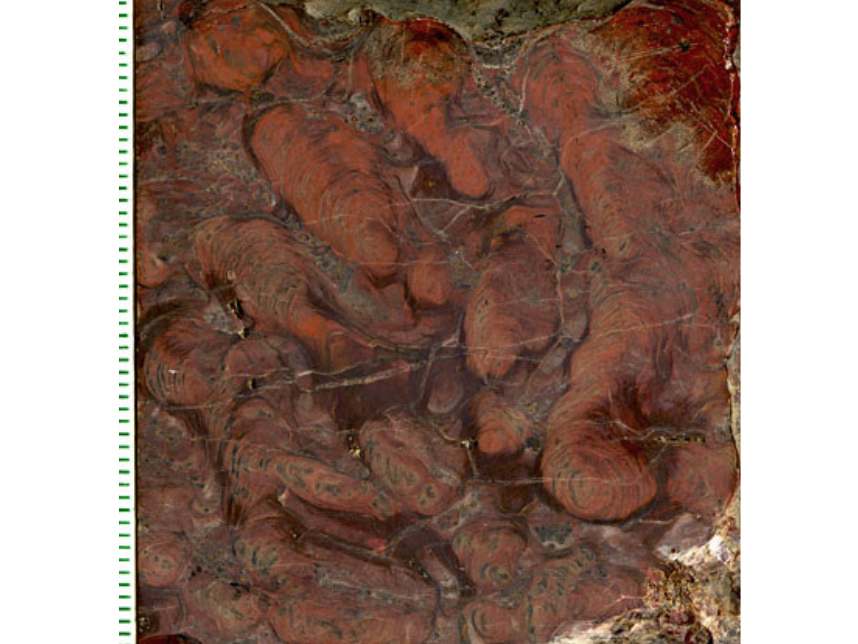
A reddish-brown fossil containing the polished surface of small finger-like stromatolites, mounds made by Cyanobacteria (blue-green algae) and other microorganisms.

A polished surface of small finger-like stromatolites, mounds made by Cyanobacteria (blue-green algae) and other microorganisms. This specimen is 1.9 billion years old, from the Gunflint Formation, Lybster Township, northwest Ontario (The Manitoba Museum, B-129; all scales are in millimetres).

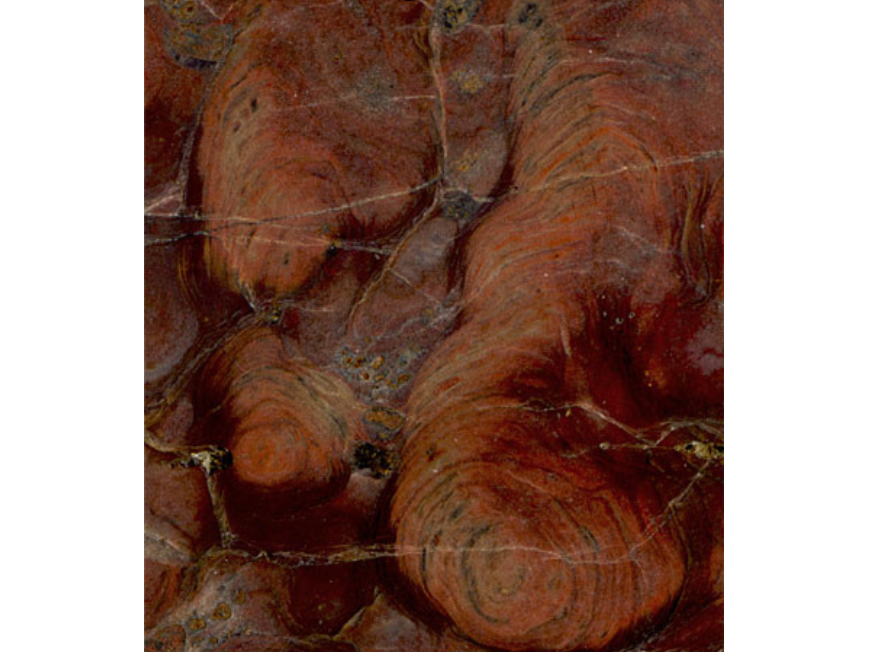
Close-up of a reddish-brown fossil containing the polished surface of small finger-like stromatolites, mounds made by Cyanobacteria (blue-green algae) and other microorganisms.

A detail of part of the specimen shown in the previous image. The layers were produced as the microbes bound limey sediment on the seafloor (TMM B-129).

I have been doing this for years; I used to put a sheet of mylar on the glass to protect it from scratching, but I found that produced weird light effects (or “artifacts”). So nowadays I am just very careful, and place the fossil on the end of the scanner bed opposite the part usually used for photos.

Scanners are generally better than cameras when you want to photograph items that are flat or nearly flat; any imperfections in these images come from the way in which the rocks were polished.

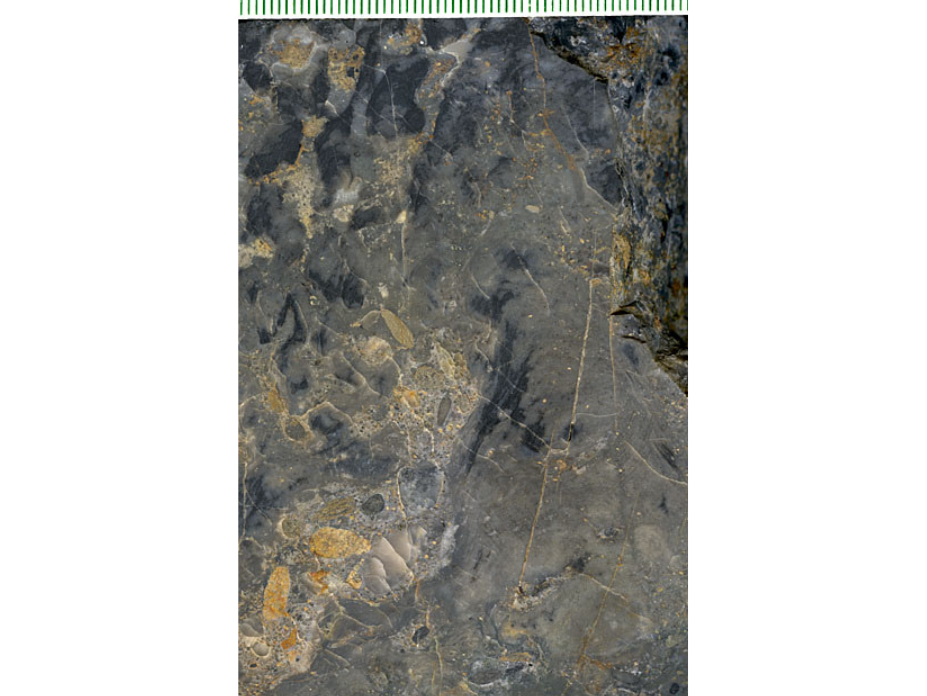
A grey-blue specimen with flecks of gold-coloured material. The clotted and layered microbial textures in a specimen.

Clotted and layered microbial textures in a specimen from the Gunflint Formation at Schreiber Channel, northwest Ontario (TMM B-130). This is the same site from which Tyler and Barghoorn described microscopic examples of early bacteria.

Cream coloured thin section (microscope slide) of a layered structure from Schreiber Channel.

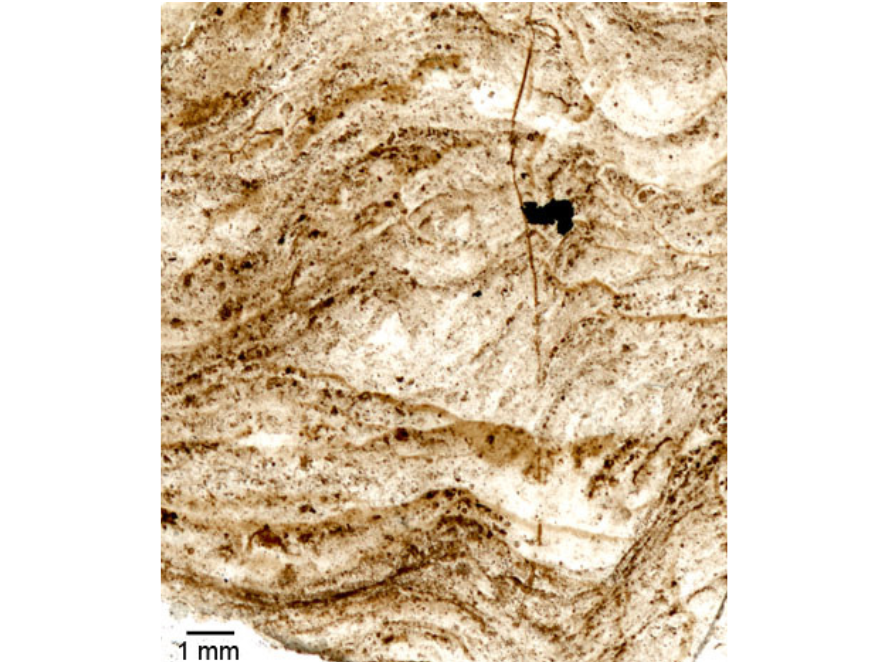
Thin section (microscope slide) of a layered structure from Schreiber Channel.

The Gunflint Formation (or “Gunflint chert”) is a succession of iron-rich sedimentary rocks exposed in northwest Ontario and northern Minnesota. This unit, dating from about 1.9 billion years ago in the Proterozoic Eon of the Precambrian, yielded some of the first-known well-preserved Precambrian microfossils.

Welcome to the Twenty-Metre Blog

By Dr. Graham Young, past Curator of Palaeontology & Geology


Some time ago, it was suggested that The Manitoba Museum would be adding curatorial blogs to our website, as a feature that would take visitors “behind the scenes.” This seemed like a fantastic idea, but I also wondered how I would approach this; I already have a blog in which I talk about paleontology, geology, and landscape, and it attracts a reasonable and steady following. It is a lot of fun to have personal blog in which I am free to muse about what I see as I wander around the world. Certainly Ancientshore is relevant to my work, but it also is not limited to my work or to this region of the world, and it is largely a collection of pieces about my personal travels.

So how could I develop another blog that would complement the existing one without conflicting with it? I was sitting at my desk, here in the perennially chaotic curatorial office, when I realized that the answer lay all around me.

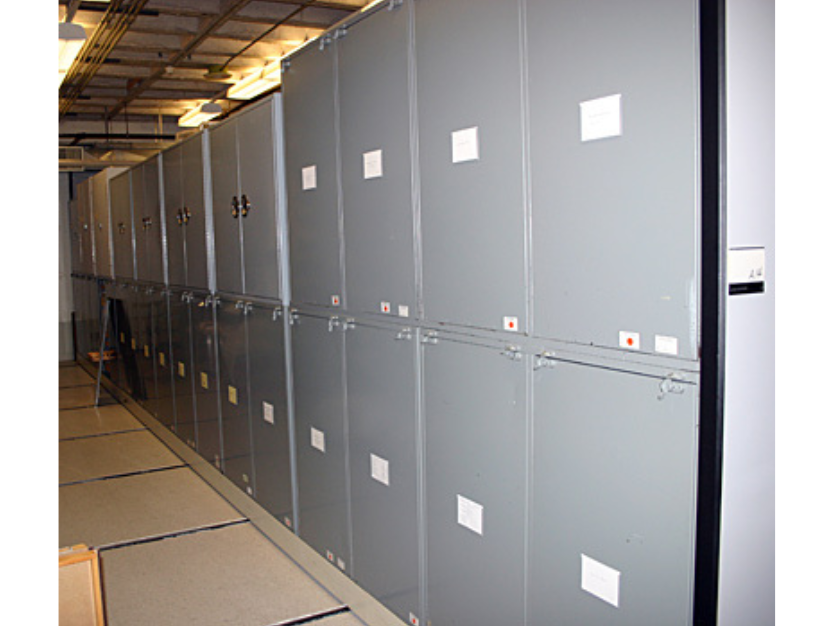
Looking down a row of metal cabinets in Museum collections storage.

A bank of cabinets in the Natural History Collections Room.

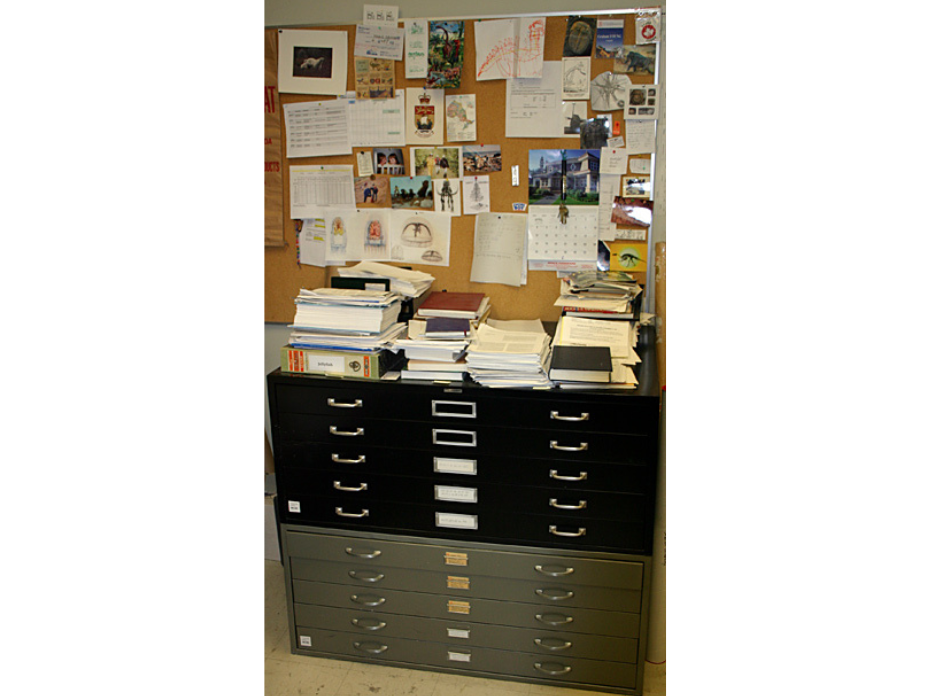
Two stacked cabinet with thin drawers against a wall below  bulletin board filled with pinned papers and images.

Story cabinet: this cabinet in my office stores jellyfish and other unusual fossils, while the bulletin board above holds endless stories.

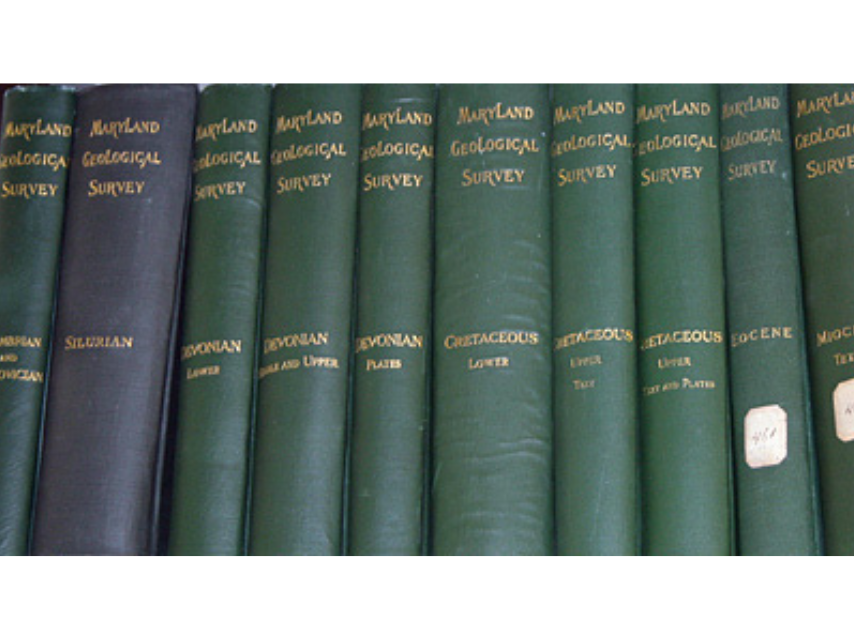
Close-up on the spine of a row of green and navy books in the series of the Maryland Geological Society.

We are living in an age where we are constantly encouraged to recognize our local environment, and our commitment to it, by eating locally, shopping locally, thinking locally. So why not blog locally? And in this particular instance, I am thinking very locally. I sit in an office where I am surrounded by strange and remarkable things: corals from the south Pacific, fossils from the Grand Rapids Uplands, antiquarian paleontology books, and ancient lamp shells that I pulled out of a ditch in England. Next door is the Geology Lab, filled to the brim with an endless variety of rocks and fossils, and right across the hall, in the Natural History Collections Room, I can open drawers to examine many thousands of objects, everything from mammoth tusks to meteorites to marcasite.

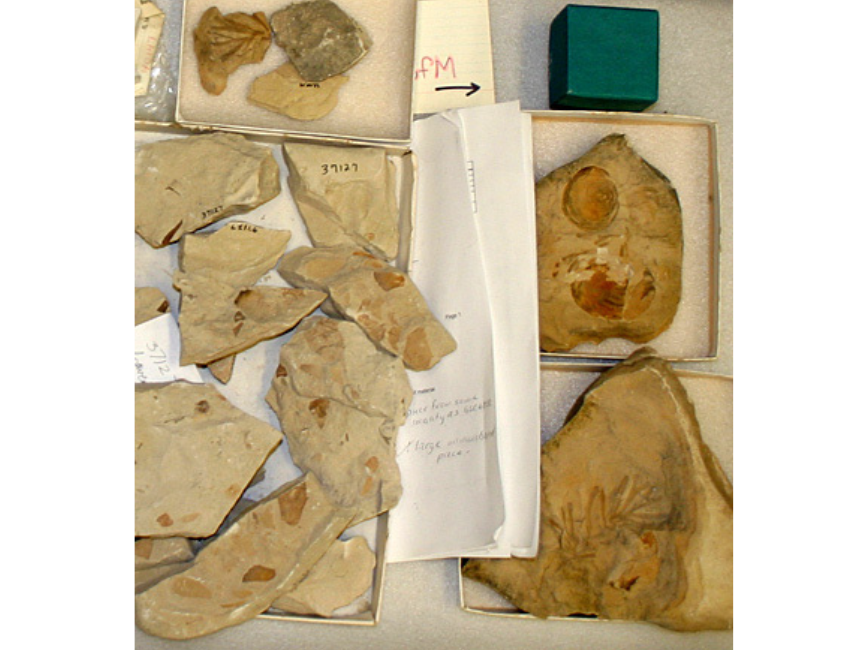
Fossil specimens laid out closely on a cart-top.

A cart in my office holds an array of unusual Ordovician fossils from the Cat Head area, Lake Winnipeg (on research loan from the Geological Survey of Canada). On the lower right is an example of Winnipegia, one of the seaweeds depicted in our Ancient Seas exhibit.

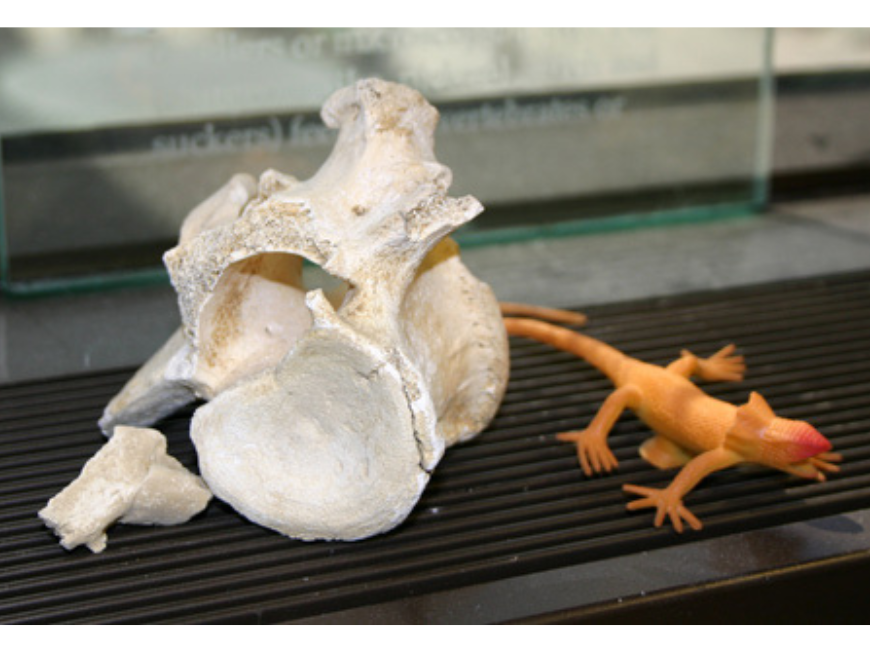
A white vertebrae bone next to a small orange plastic toy lizard.

Flotsam and jetsam that have washed up on my windowsill over the years. The vertebra belongs to a cow crushed by a collapsing hoodoo in the Alberta Badlands. The lizard has its own story, which may turn up here at some point.

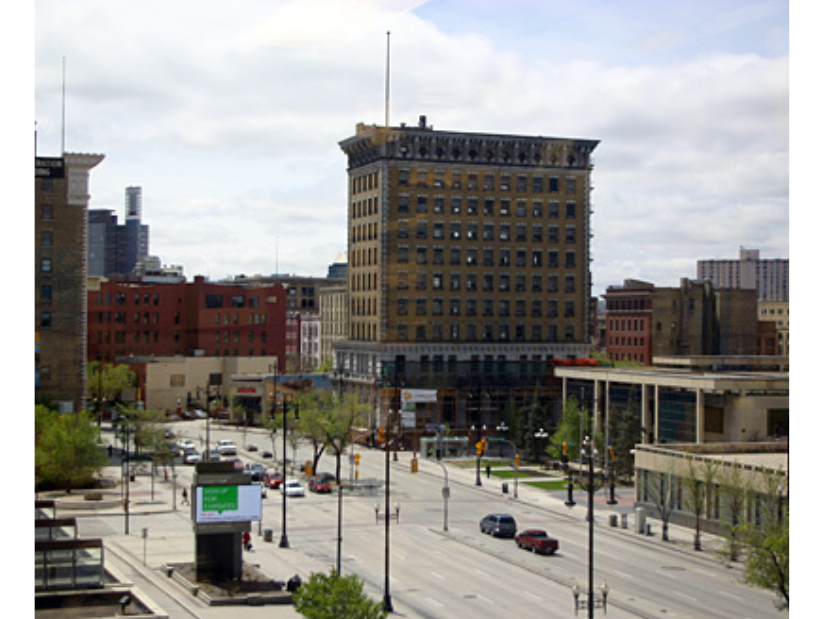
View looking south on Main Street towards the Winnipeg City Hall. The road is quiet under the midday sky.

Flotsam and jetsam that have washed up on my windowsill over the years. The vertebra belongs to a cow crushed by a collapsing hoodoo in the Alberta Badlands. The lizard has its own story, which may turn up here at some point.

Every one of these objects has at least one story, and many of them hold remarkable tales: tales of Arctic exploration, heroism, bizarre field events, exhibits, even politics. By limiting myself to writing about things that are within 20 metres of this computer, I am forcing myself to consider and develop those wonderful stories. But I do not consider this to be at all limiting, since so many will reach outward to explanations of fieldwork and other travels. It would not be at all difficult to write for a year just about items that I can reach from this comfortable chair, so extending the reach to 20 metres, or about 60 feet, could permit a lifetime of writing!

This Museum is a fascinating place. I hope you will revisit this page to see some of the stories behind our collections and exhibits.