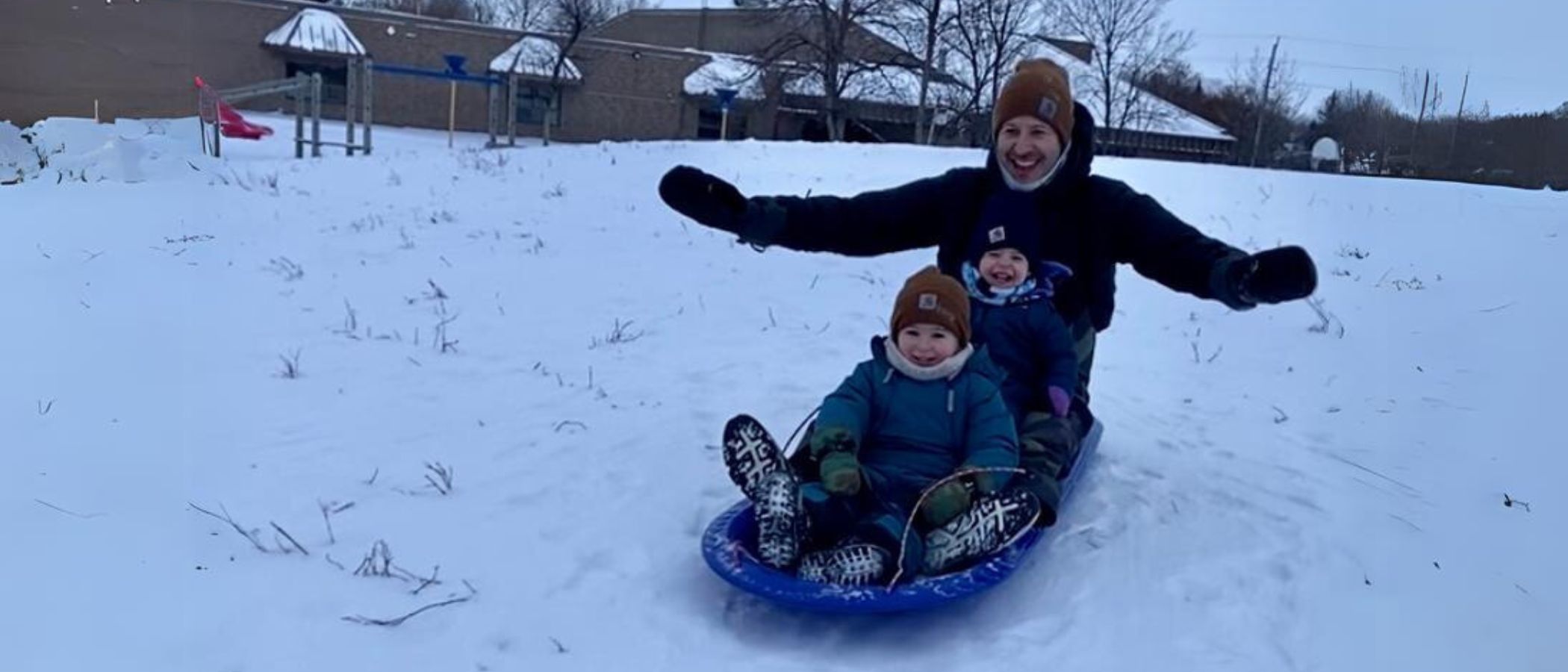
An adult and two children smiling as they ride a sled together down a snowy hill.
January 20, 2023

Science in the Snow

Science in the Snow

By Mike Jensen, Planetarium/Science Gallery Programs Supervisor 


When thinking of activities to do on a bright Winter’s day, science doesn’t usually come to mind. Surprisingly, science is at work with almost every fun pastime you can conduct out in the snow. You just need to know what to look for!

Of course, the first thing you think about as you zoom down a snow-covered hill on your favorite toboggan is physics, right? Well, it should be, because the laws of physics are actually in the driver’s seat when you are careening down a slope with no brakes. Next time you hit the slopes, conduct some experiments.

  • Do you go faster with more or less weight?
  • Does the shape or type of material of your toboggan affect how fast you go?
  • Does a steeper or gentler slope make a difference to your speed?
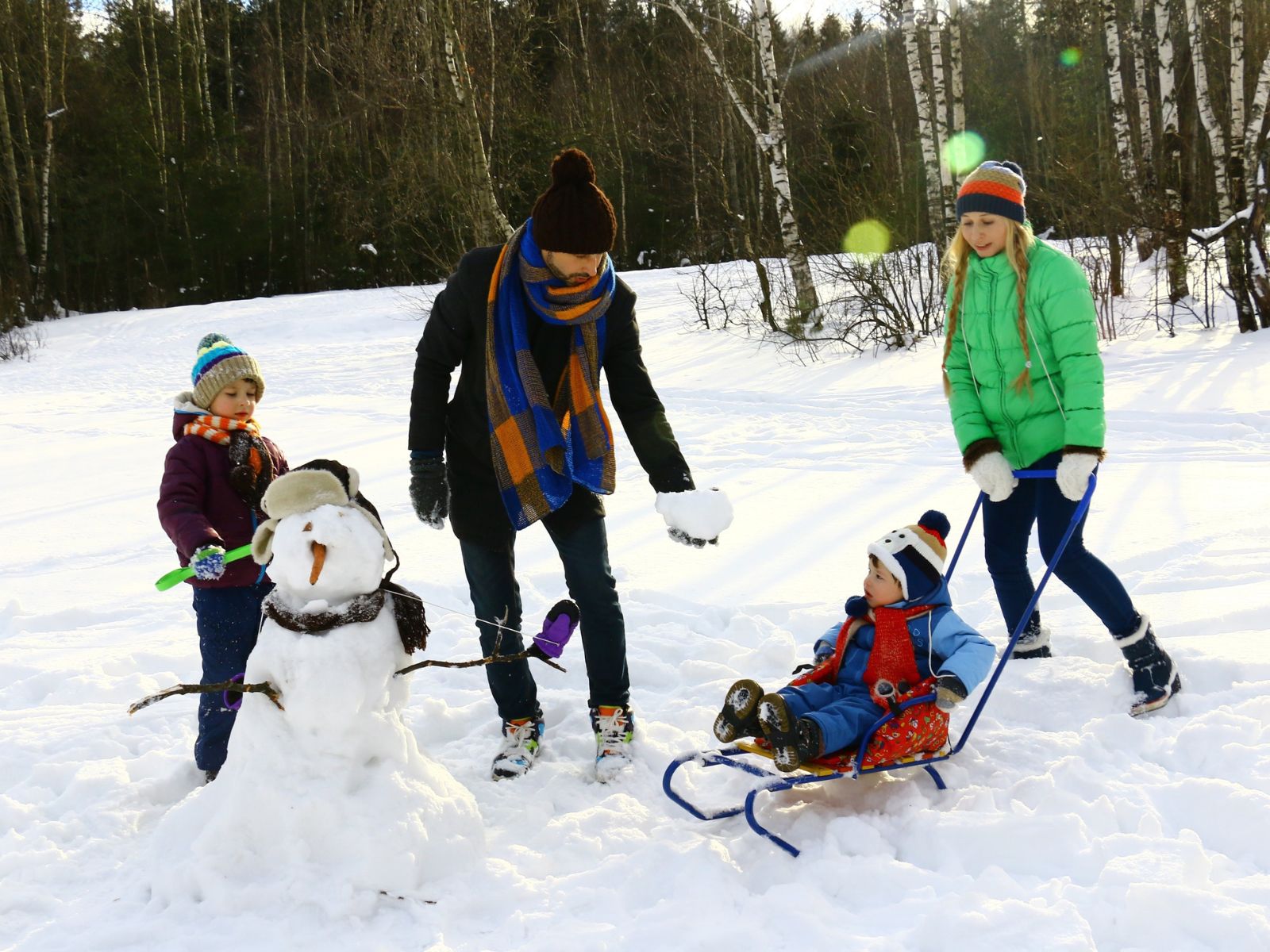
Two adults and two children in winter-wear playing in the snow making snowballs and a snowman.

Once you are done experimenting with your sled, shore up your engineering skills by building a snowman. Surprisingly, it’s not as simple as you think. Here are some science and engineering factors to consider when making Frosty in your front yard.

  • Moisture content. Snow can be too wet or too dry, so having the right amount of water to ice crystals can make or break your construction. Water is the glue that sticks the ice crystals together.
  • Pack it down. This actually melts some of the snow, which then re-freezes and helps to bind the snow together.
  • Watch your center of mass. There’s a reason the largest snowballs go on the bottom. Don’t go making Frosty top-heavy, otherwise you risk catastrophic failure.

After you’ve had your fill, come put your new-found science and engineering skills to the test at the Manitoba Museum’s Science Gallery. Design and build your newest creation at the LEGO brickyard, or see if you can be the first to cross the finish line at the Engineered for Speed Race Track!
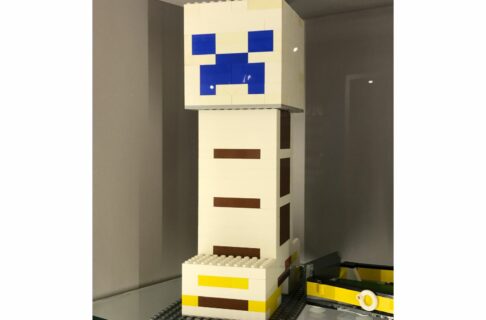
A square “snowman” made of LEGO bricks with a downturned mouth.

Try your hand at building your own LEGO snowman in the LEGO brickyard at the Science Gallery! ©Manitoba Museum 
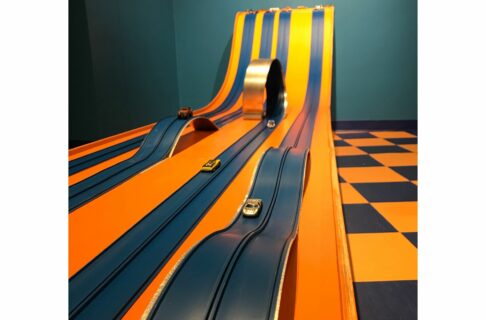
View looking up a matchbox car gravity racetrack. Four different lanes have differing obstacles and dimensions including hills and loops.

Explore the physics of gravity with a Hot Wheels race at the Science Gallery. ©Manitoba Museum

Three attractions, unlimited fun! Purchase a $99* Family Membership today.

*cannot be combined with other discounts 
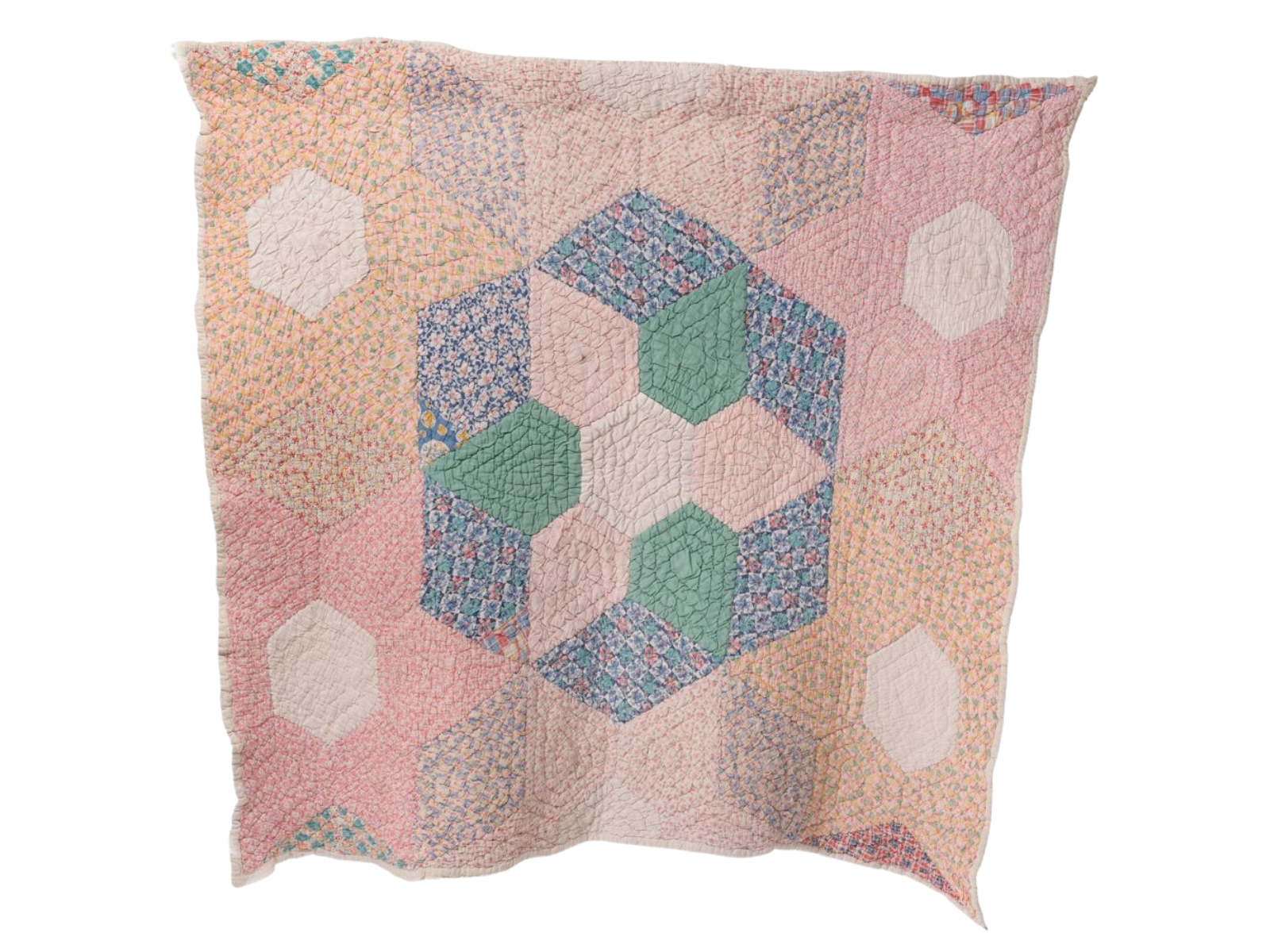
The Blanket That Crossed the Atlantic During WWII

Did you know that this quilt crossed the Atlantic during war-time only to find its way home over 70 years later? 
   
When the weather turns cold, many of us reach for the warmth and comfort of a handcrafted quilt or afghan. During WWII, local volunteers gathered in Steep Rock, MB to create Red Cross quilts for civilian victims of the war. Across the Atlantic, at Dudley Road Hospital in Birmingham, England, a Matron passed their gift on to Cynthia (Betty) Craddock. Her husband Joe was serving in the army when their only son Anthony was born in 1945.

A quilt stitched of pastel pink, orange, and cream fabric with an accent portion in the middle in blues and greens.

Anthony’s earliest memories are “of this quilt being on my bed and keeping me warm when times were hard. With no central heating, frost would often appear on the inside of the window.” The young Anthony remembers reading the message on a tag on one corner of the quilt. Betty treasured the gift for many years until finally they decided that it was time for the quilt to be sent home. 
   
You can see the quilt along with photos of Betty and Anthony Craddock in our Parklands Gallery.

“Ketch” up with the Nonsuch!

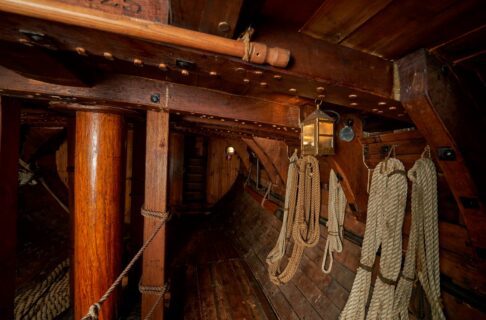
This Winter Break, for a limited time only, the Manitoba Museum will be offering tours that give a rare look into the cargo hold of the Nonsuch. In light of this unique opportunity, I’d like to share some interesting tidbits about this replica ship and surrounding gallery. 

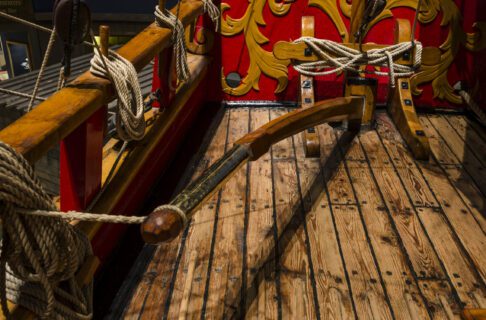
The Nonsuch is a full-sized replica of a 17th century ketch that was constructed in the mid-20th century to celebrate Hudson’s Bay Company’s 300th anniversary. You may have noticed that there is no wheel to steer the ship; that’s because the original Nonsuch pre-dated the invention of the ship’s wheel! Instead, the ship is guided by the tiller, a lever that connects directly to the ship’s rudder. Imagine sailing this ship across the cold North Atlantic and into the icy waters of the Hudson Strait.

A long wooden pole (tiller) extending from the back of the upper deck. The tiller is tied off to the railing on the left.

There’s no steering wheel on this ship – the Nonsuch was guided by a tiller. Image ©Manitoba Museum

The wooden hold of the Nonsuch. Coiled ropes hand on the curved walls to the right.

Usually closed to the public, Nonsuch Hold Tours will be back for a limited time this December. ©Manitoba Museum/Ian McCausland

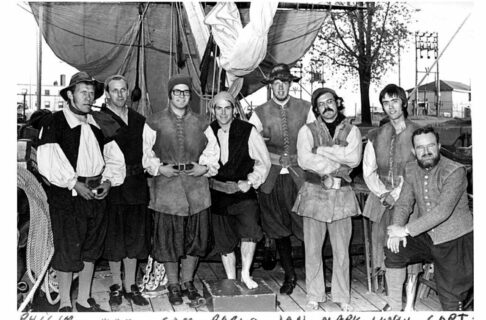
Eight men in old fashioned sailor outfits stand together posing for the camera on the deck of the Nonsuch. Along the bottom of the photo, aligning with each person, their names have been handwritten, “Philip, Max, Sam, Pablo, Jan, Mark, Hugh, Capt”.

The hardy crew that sailed the Nonsuch along the St. Lawrence River. ©Gaby Demers. 

I think it would have been pretty terrifying, and the chosen captain for the replica agreed. Captain Adrian Small advised that Nonsuch be towed across the Atlantic, and it began its sailing tour of North America along the St. Lawrence River. I’m often asked why the beds in the Captain’s quarters are so small, and it has nothing to do with stature. Sleeping somewhat upright, propped up with pillows, was very common during the 17th century to help with digestion and assist with breathing. Although people were a bit shorter in the past, the difference is not that great. The average height for British men in the late 1600s was 5’5”, while today the average is 5’8”.

As you wander the gallery, take note of the sights and sounds. Extensive research went in to every prop and sound in the gallery to ensure historical accuracy. All of the dishes in the tavern are replicas of actual ceramics and pewter that have been recovered archaeologically from Deptford, England that date to the late 1660s. Enjoy your visit to the Museum this Winter Break, and get ready to wow your friends and family with your newfound knowledge! 


A wooden sailing vessel, the Nonsuch, with full sails and flags raised, sailing on open water. A number of people can be seen standing on the deck.
The Nonsuch off the coast of BC, 1972. Photographer: A.M Sharp. HBCA 1987/363-N-18.5/13.
Dr. Amelia Fay

Dr. Amelia Fay

Curator of Anthropology & the HBC Museum Collection

Amelia Fay is Curator of Anthropology and the HBC Museum Collection at the Manitoba Museum. She received her BA in Anthropology from the University of Manitoba (2004), an MA in Archaeology…
Meet Dr. Amelia Fay

Easter Eggs in the Museum

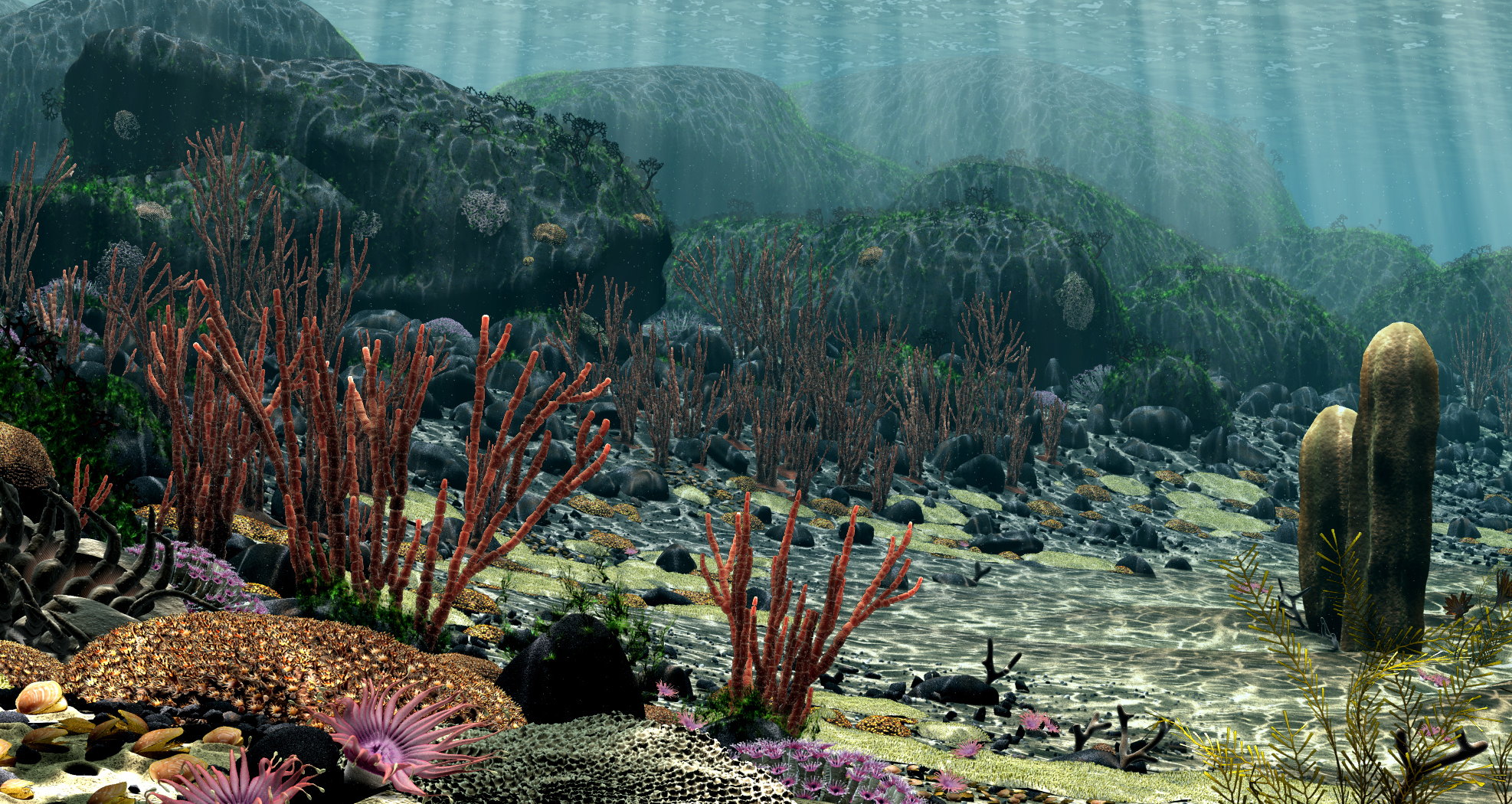
Did you know there’s an “Easter egg” in the Ancient Seas exhibit of the Earth History Gallery? The animators told us that they hid a Coke can in the boulder field!

Close-up of underwater boulder field in Ancient Seas video exhibit.

Hidden features in video games and films are often called “Easter eggs.” Museum exhibits can also include secret elements, some of which are not even known by most museum staff! When we built the Parklands Gallery, the team hid some “entertainment” – you have likely seen the black bear hiding in the cave, but do you know about the place where two visitors can reach into narrow passages in the cave wall, until their fingers touch? 
 
What “Easter eggs” have you found in the Museum?

Making a Splash in the Indian Ocean

During the current pandemic, we have all become used to the idea of virtual connections and well aware of opportunities to serve communities at home and even around the world. This is nothing new for scientific research at the Manitoba Museum – it has been reaching global audiences since we opened in 1970.


Image below: Museum exhibitions, like the new Prairies Gallery, are the result of scientific research and collaborations which provide both the specimens and their interpretation that visitors see when they visit. © Manitoba Museum/Ian McCausland 

The Global Reach of Museum Science

The natural world isn’t bound by provincial and national borders, so scientific discoveries at the Manitoba Museum, made available in international publications, inform scientists, conservationists, and policy-makers here in Manitoba and abroad. Expertise in the Natural History section extends to animals and plants, both living and fossil, that occur around the world. 

Book cover featuring a school of yellow and white fish swimming downwards in a group. Title reads, “Volumes 1-5 / Coastal Fishes of the Western Indian Ocean”.

Fishes on the other side of the World

The Museum has recently collaborated on a comprehensive guide to the coastal fishes of the western Indian Ocean, an area including the Red Sea, east coast of Africa, and Madagascar to the southern tip of India. This project, spear-headed by the South African Institute for Aquatic Biodiversity, involved over 100 contributors from 20 countries, including the Manitoba Museum.

The five volumes include descriptions of 3500 species of fishes and their distributions over the largest area of ocean ever to be covered by a publication of this kind. Because it is available online for free, it is a valuable resource for local fishermen, educators, conservationists, and governments – regardless of economic status – providing baseline data to understand and conserve ecosystems and manage fisheries resources.
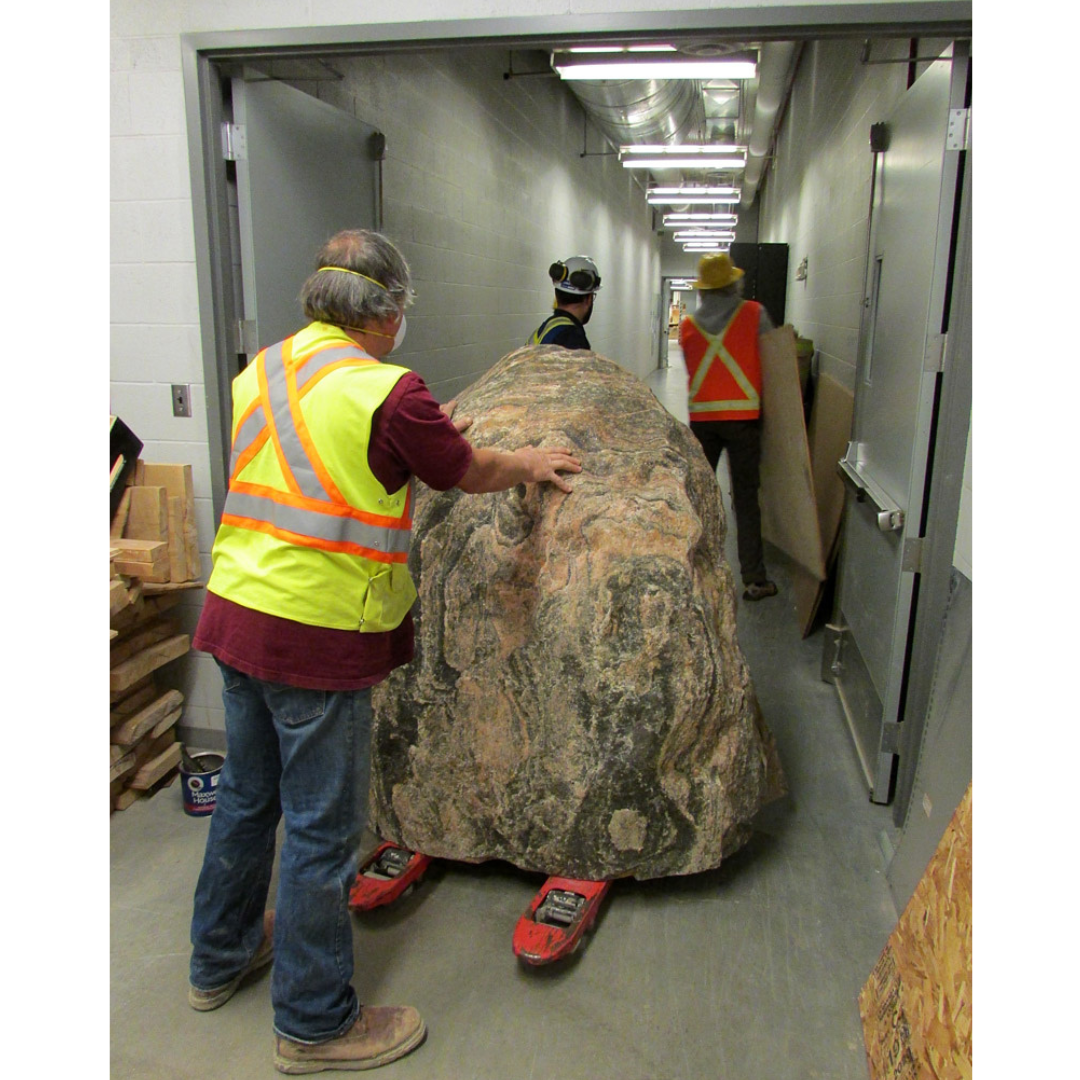
Image above: Known from only four specimens in museum collections, Winterbottom’s goby (Callogobius winterbottomi Delventhal & Mooi) was first recognized during detailed study at the Manitoba Museum. ©Manitoba Museum

Museum Science – Collaboration and Community Impact

These kinds of partnerships are a direct result of the expertise that the Manitoba Museum brings to the scientific community through original research. In turn, these scientific contributions shape how society understands and responsibly engages with the environment. The work of Manitoba Museum scientists and their national and international collaborators not only helps to understand and conserve the natural ecosystems at home, but makes an impact around the world.
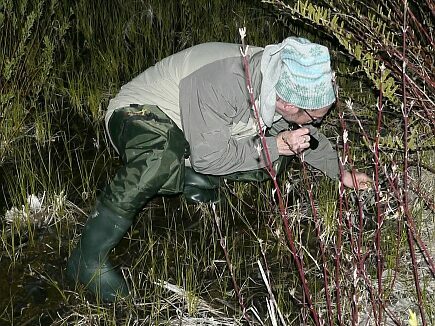
Dr. Randy Mooi wearing green rubber boots and waterproof pants crouching in a boggy area looking at something near the ground. It is night and he is holding a small flashlight.

Most Manitoba Museum scientific research is focused on Manitoba, including spring frog surveys by Curator of Zoology Randy Mooi that examine possible distribution changes due to climate change. Many discoveries, though, have applications well beyond our provincial borders. (Pictured. © P. Taylor)

Dr. Randall Mooi

Dr. Randall Mooi

Curator of Zoology

Dr. Mooi received his Ph.D. in zoology from the University of Toronto working on the evolutionary history of coral reef fishes. Following a postdoctoral fellowship in the Division of Fishes of the Smithsonian Institution…
Meet Dr. Randall Mooi

Manitoba Museum acquires significant Canadian painting for Prairies Gallery Exhibit Shared Legacies

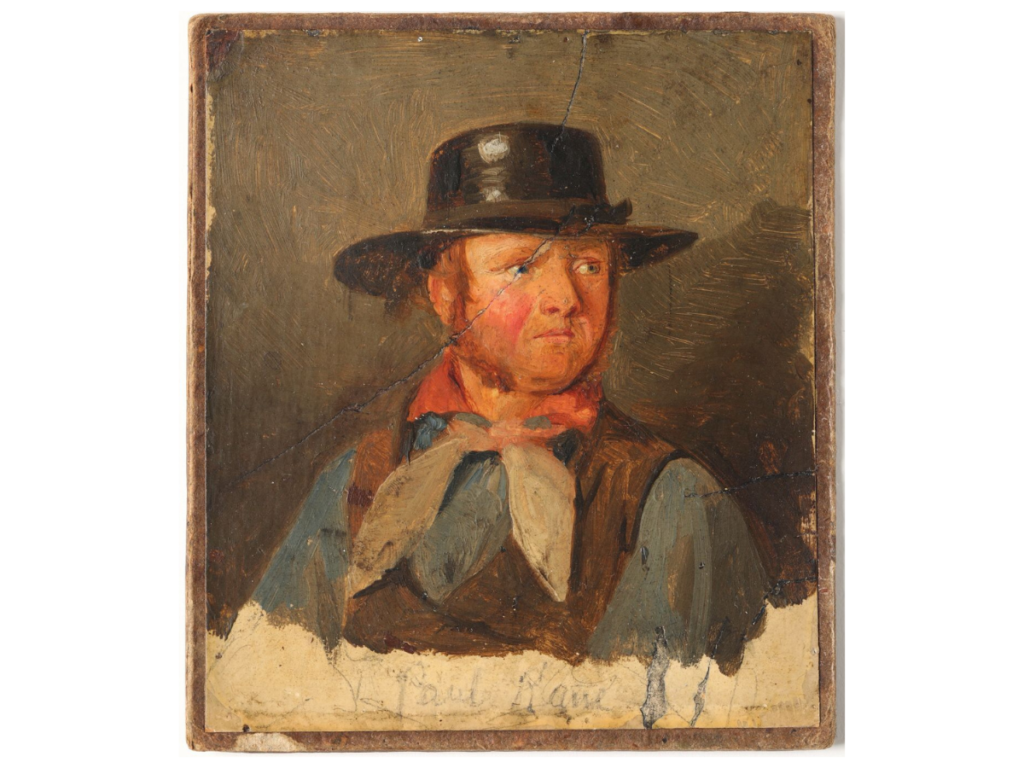
A painting of a red-haired man from chest up. His sideburns grow down to his chin. He looks off frame, wearing a dark brimmed hat, a blue shirt, brown vest, and pale neck kerchief.

“The Fur Trader” by Paul Kane, (H9-39-980), Image: ©Manitoba Museum

(Winnipeg, MB: November 4, 2022) – The Manitoba Museum has recently acquired an original, signed oil painting on paper by important early Canadian artist, Paul Kane. The painting, “The Fur Trader,” is a field sketch depicting Andrew McDermot, an extremely influential free trader and settler at Red River in the mid 1800s. It was painted here at the Red River Settlement, probably during a two month-long visit to the community in 1849. Paul Kane’s paintings of the West before Confederation provide images of an important moment in Canadian history and with this painting, an image of an important Manitoba historical figure.

Members of the media are invited to preview the painting in
The Prairies Gallery
Monday, November 7, 2022 • 11 am – 1 pm. 

Please contact Brandi Hayberg at 204-988-0614 or bhayberg@manitobamuseum.ca
to arrange for interviews.

“Andrew McDermot, who was born in Ireland, was one of the earliest independent merchants at Red River, challenging the Hudson’s Bay Company’s monopoly on trade,” says Dr. Roland Sawatzky, Curator of History. “He was a member of the Council of Assiniboia and was an influential personality in Red River society. He married Sarah McNab, a Metis woman from Berens River with whom he had 17 children, and who was instrumental in the family’s business and social success. Known for their generosity, they gave land to the city for the Winnipeg General Hospital and Post Office. This incredible new acquisition helps the museum highlight an important Red River family.”

Paul Kane (1810 -1871) is considered one of the most important Canadian painters of the peoples and landscapes of the Canadian Northwest in the 19th Century. His expeditions to Western Canada spanned the period from 1845 to 1852. Kane’s work, particularly his field sketches, are considered an excellent record of the individuals and material culture of the Northwest. Although his focus was Indigenous peoples of the Plains, he painted at least four European traders on his 1849 trip, which seems to be the trip during which this painting was created. Today Kane’s paintings are highly valued in art galleries and historical museums in North America and Europe.

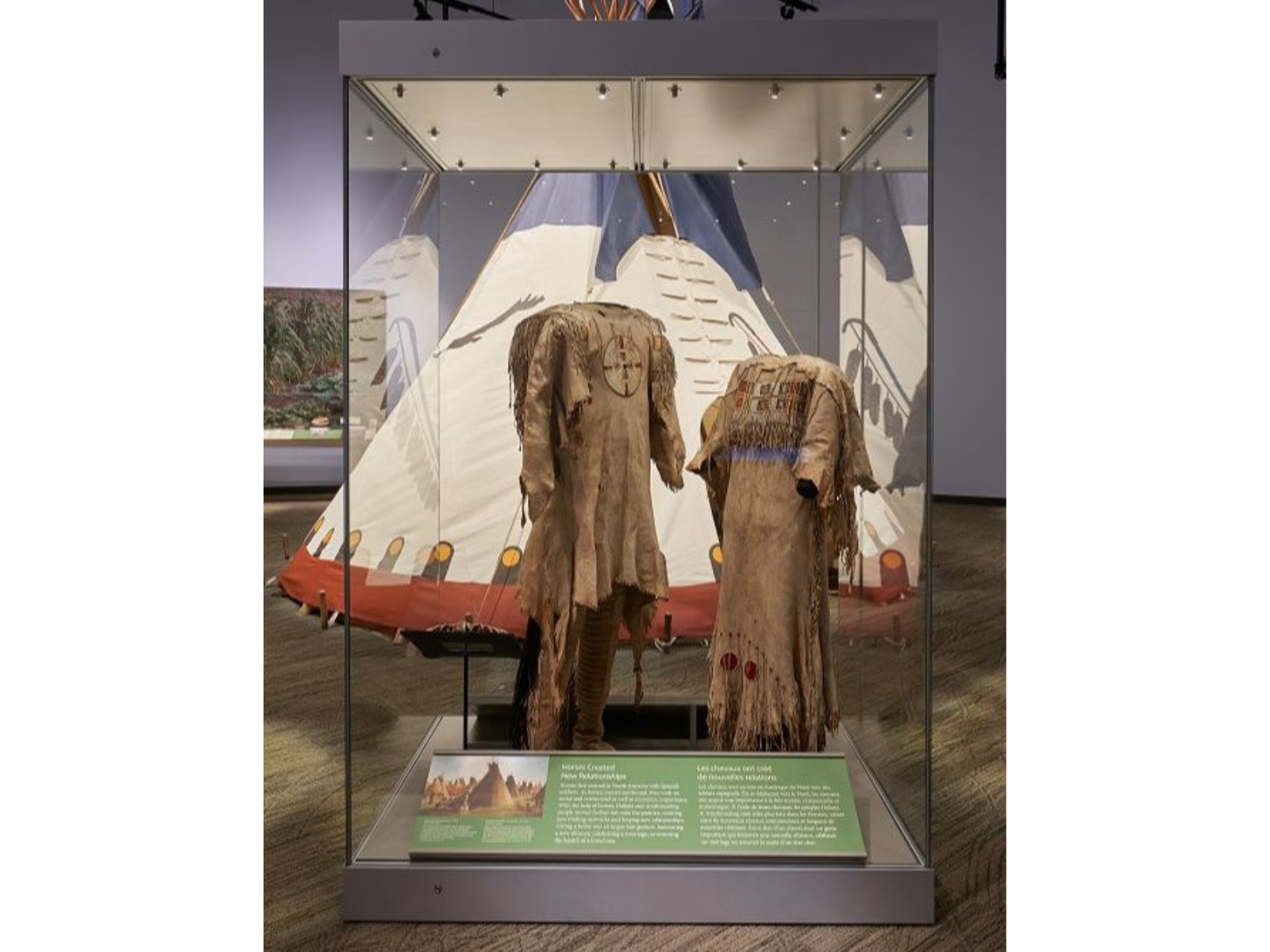
A display case with men's and women's Northern Plains style clothing on display. Through the glass part of a tipi can be seen.

“Paul Kane was an Irish-born artist who decided to paint and research the peoples of fur trade country two decades before Canadian Confederation. His field sketches, made during a series of trips to what became Manitoba, provide an immediate impression of the people living here at the time,” says Dr. Maureen Matthews, Curator of Cultural Anthropology. “This small sketch of Andrew McDermot illustrates Kane’s skill at capturing telling details and even though it is very small, the Irish hat and the bright scarf he is wearing give a sense of life on the plains at the time. This is a period of Manitoba’s history which would be hard to imagine without Kane’s paintings.”


Image: Northern Plains clothing collected by Paul Kane on exhibit in the Museum’s Prairies Gallery. ©Manitoba Museum/Ian McCausland

The painting was in the possession of a private collector in Germany who approached the Museum’s Curator of Cultural Anthropology with the intention of making the painting available directly to the Manitoba Museum. Now that the McDermot portrait has been repatriated to the Manitoba Museum, and is sitting so close to the Winnipeg street which bears McDermot’s name, the painting will be accessible to future generations of visitors and researchers.

“The importance of this painting to the history of Manitoba, and to the Museum collection, cannot be overstated,” says Seema Hollenberg, Director of Research, Collections, and Exhibitions. “Thanks to a generous donation of Paul Kane artifacts by the Allen family in the 1940s, the Manitoba Museum has an important collection of over 80 artifacts gathered by Kane during his expeditions. Until now, the Museum did not have one of Kane’s paintings. This acquisition compliments our collection of artifacts and enhances our ability to interpret this important Canadian artist.”

“The Fur Trader” is now on exhibit in the new permanent Prairies Gallery, in the Shared Legacies area of the gallery which explores the lives of Red River families. Here visitors can learn more about the painting, about Andrew McDermot and his family, and about the artist, Paul Kane.

The Manitoba Museum sincerely thanks the Government of Canada for financial support through the Canadian Heritage Movable Cultural Properties Grant Program, The Manitoba Museum Foundation, and the four private donors who made the return and purchase of this important painting possible.

-30-


Media contact:


Brandi Hayberg
Communications Specialist, Manitoba Museum
BHayberg@ManitobaMuseum.ca
204-988-0614

Winnipeg Grotesque

Gargoyles once roosted above the streets of historic Winnipeg, and if you look closely a few might still linger, jeering at passersby. The best set of Winnipeg gargoyles, or in this case “grotesques,” were found on the old Winnipeg Tribune Newspaper building, and the Manitoba Museum is now home to four of them.

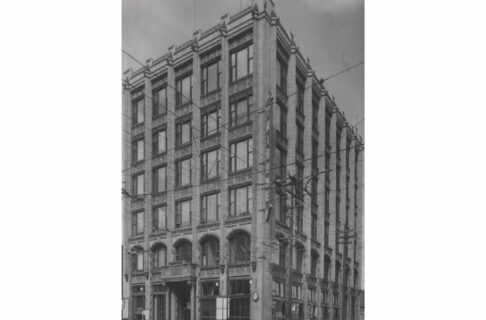
The six-storey Tribune building was designed by Chicago architect John D. Atchison for the successful Winnipeg Tribune newspaper, completed in 1914. It was remodelled in 1969 to look more modern, and the grotesques were removed and given to various employees. The Tribune closed in 1980, after which the building was demolished.

Most of the grotesques are still in private hands and have moved around the country, but two of the original terra cotta figures can be seen in the Winnipeg Gallery. We have also added four replicas to one of our buildings in the Winnipeg 1920 cityscape.

Black and white photograph of a rectangular six-story office building. Accent pillars rise up between each column of windows and there is a grotesque at the top of each, and a grinning head at the bottom.

The Winnipeg Tribune Building, 1914, built at 257 Smith St. Fourteen grotesques lined the top of the building, while fourteen heads stared down from the top of the first storey. Image: University of Manitoba Libraries

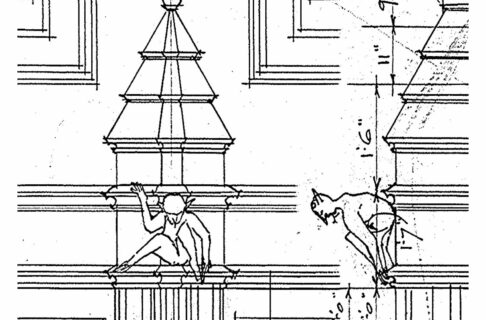
Architectural sketch showing a crouching grotesque on the building from the front and from the side.

In his design, Atchison sketched in grotesque figures leaning off the top of the building. The final grotesques were made with terra cotta, a type of ceramic, in the American Terra Cotta and Ceramic Co. factory in Illinois. Image: Archives of Manitoba

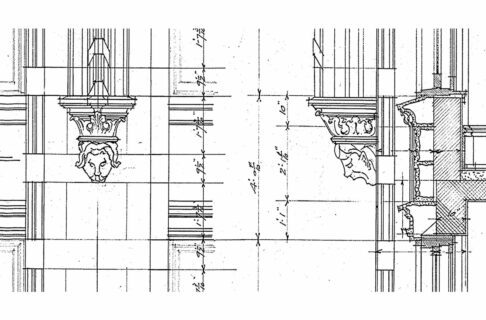
Architectural sketch showing a grotesque head on the building from the front and from the side.

The heads were located at the bottom of exterior columns. Atchison included neo-Gothic elements in some of his designs, and such grotesques completed the look. Image: Archives of Manitoba

Grotesques and gargoyles were originally found on medieval cathedrals, but here we see them on a business in downtown Winnipeg in 1914. Why? There were six original figures on the Tribune that repeated, making a total of fourteen.

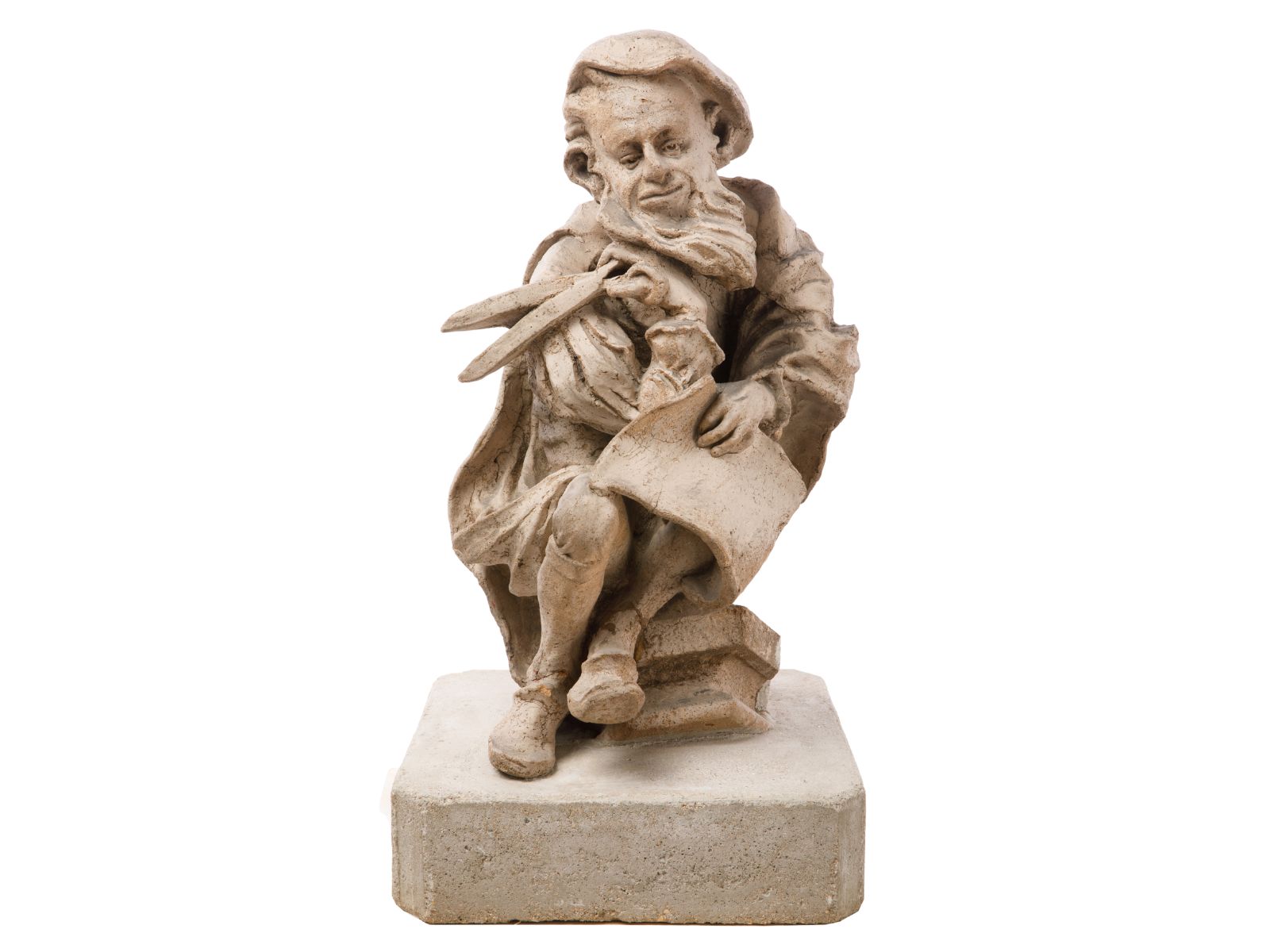
Beige-coloured terra-cotta figure sitting perched on something, holding scissors in one hand and a sheet of paper in another.

Each of the six figures was representative of a newspaper job: 

  • City Editor, complete with scissors (pictured. MM H9-37-581) 
  • The Printer, holding an ancient printing press 
  • The Fish Story Teller, holding a huge fish. 
  • This likely represented a keen member of the public embellishing a story for a reporter. 
  • The Contributor (reporter) 
  • The Proof Reader 
  • Newsboy 

Oddly, the grotesques were all wearing medieval clothing, complete with cloaks and pointy shoes! In other words, it was a whimsical affair – a modern office building with a gothic flair. There was even a legend that the figures resembled the  actual people working at the paper.

Frightening Fact!

A gargoyle is a stone figure that also acts as a waterspout to carry rainwater away from the building – the water is usually funneled out of the mouth of the figure. The word gargoyle comes from the Old French gargouille, meaning “throat.” Other decorative figures on buildings are known as grotesques.

Dr. Roland Sawatzky

Dr. Roland Sawatzky

Curator of History

Roland Sawatzky joined The Manitoba Museum in 2011. He received his B.A. in Anthropology from the University of Winnipeg, M.A. in Anthropology from the University of South Carolina, and Ph.D. in Archaeology…
Meet Dr. Roland Sawatzky

Top Flight: The Churchill Rocket Range

By Tamika Reid, Volunteer Researcher, and Roland Sawatzky, Curator of History, Manitoba Museum

Churchill, Manitoba is well known for its scenic arctic landscape, polar bears, and vibrant northern lights, but did you know that Churchill was once home to the most active rocket range in Canada?

While the Churchill Rocket Range was in regular operation, between 1957 and 1985, Churchill hosted an international array of scientists, technicians, students, contractors, and military personnel. Through their pioneering studies, Manitoba has a permanent place in the history of early rocket development, and research into the mysteries of the upper atmosphere and aurora borealis. This work enriched humanity’s understanding of the thin layer surrounding our fragile planet.

Ken Pilon worked at the Churchill Rocket Range in the early 1980s as a meteorologist, supporting winter launches by providing crucial wind and temperature information. The northern climate made blizzards and high surface wind speeds a concern for launch trajectory. Pilon worked with a team of up to 60 people. “The hours and working conditions were extreme at times, but I never heard a single complaint from any of them,” said Pilon.

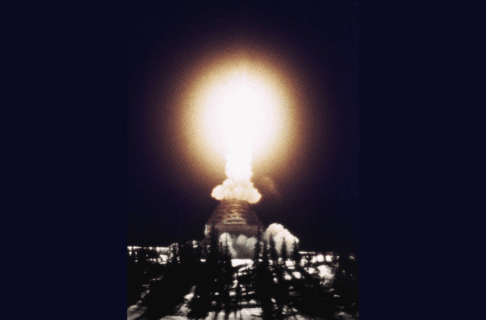
A large, bright sphere in the night sky as a rocket is launched with clouds of smoke erupting down from it over the launch site. In the foreground are starkly lit trees on a snowy landscape.

An Aerobee rocket is launched in the darkness of winter, in February 1981. The glare of the fuel combustion casts stark shadows among the surrounding trees. Photo by Ken Pilon.

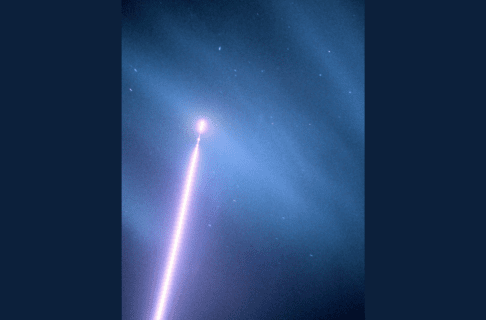
A rocket streaming up into the night sky with a bright tail behind it. In the dark blue night sky, light lines of aurora and stars are visible.

A two-stage rocket is launched into the Aurora. Both the first stage booster and the second-stage rocket ignition are visible. Photo by Ken Pilon. 

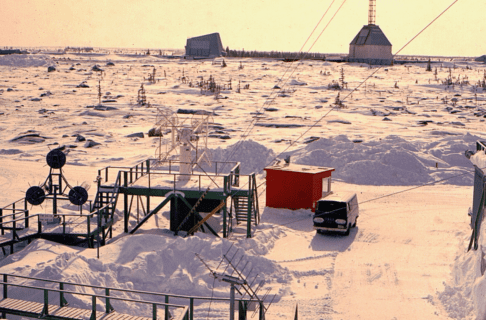
Low viewing platforms and ramps built into a snowy landscape looking towards two larger industrial buildings in the distance.

The Churchill Rocket Range, 1975. Photo by Ron Estler. 

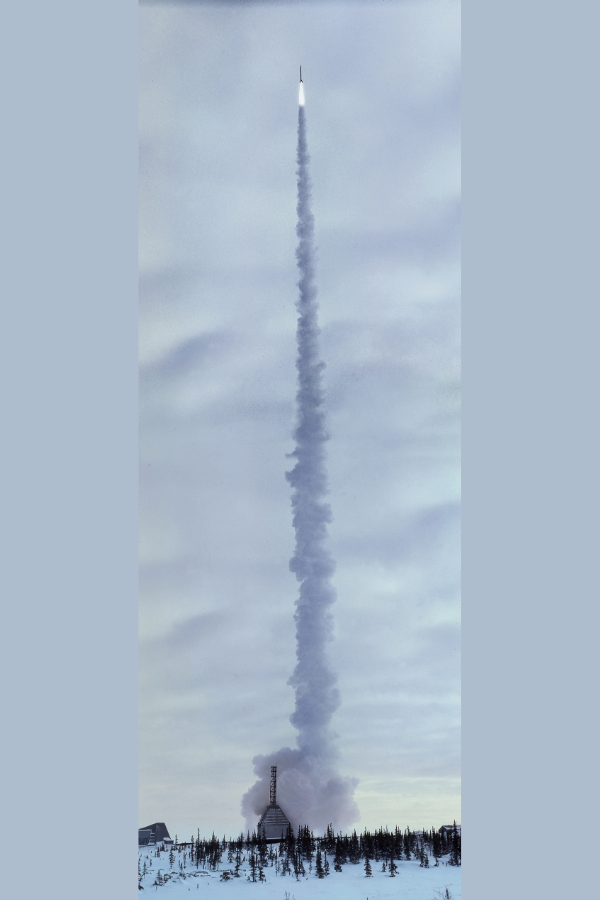
A long plume of smoke rising straight up from the ground to high in a cloudy sky where a rocket launches upwards. On the ground, a pointy building surrounded by evergreen trees on a snowy landscape.

A recent episode of Dome@Home, a bi-weekly virtual program hosted by Planetarium Astronomer, Scott Young, featured Pilon’s artifacts and images. In response, a viewer from Colorado, Dr. Ron Estler, contacted the Museum and shared his experience as a graduate student at the Churchill Rocket Range, along with more photographs.

For six weeks in 1975, Estler was part of an Aerobee 150 rocket launch funded by NASA, through John Hopkins University. Studying Chemical Physics, Estler was tasked with overseeing electron spectrometers to be launched with the Aerobee, for analyzing the energy of electrons.

Having visited Churchill last March for the first time since working there as a student, Estler is already planning another trip north. On the way, he plans to visit the Manitoba Museum. “It will remind me that I played a very small role in something much bigger and fundamentally important to the knowledge of our own planet,” said Estler. 

The Manitoba Museum is planning a future exhibit on the Churchill Rocket Range to highlight stories like these, and the role of the Rocket Range in space and science research. You can see a Black Brant V, a type of rocket also used at the Churchill Rocket Range, in the Science Gallery at the Manitoba Museum.  

Dr. Roland Sawatzky

Dr. Roland Sawatzky

Curator of History

Roland Sawatzky joined The Manitoba Museum in 2011. He received his B.A. in Anthropology from the University of Winnipeg, M.A. in Anthropology from the University of South Carolina, and Ph.D. in Archaeology…
Meet Dr. Roland Sawatzky

Secrets in Stone: Finding Fossils in Manitoba’s Limestones

By Dr. Graham Young
Past Curator of Geology and Paleontology

When you hear the word “fossil”, you probably think of giant dinosaurs, or perhaps marine reptiles such as Morden’s “Bruce”, but fossils actually include all evidence of past life. Fossils may be the remains of plants or animals, such as leaves or bones, and they also can be tracks or traces made by animals. Fossils tell us about the evolution of life, the age of rocks, and the environments of the distant past. 

For many Manitobans, the most familiar fossils are those in our beautiful limestones. On almost any block in Winnipeg you can see Tyndall Stone walls packed with fossils! Our limestones document the rise and fall of a series of warm, salty inland seas. Rocks from the Ordovician, Silurian, and Devonian periods of geological time, about 450 to 380 million years old, hold varied remains: corals, brachiopods (lamp shells), cephalopods (relatives of squids), trilobites (relatives of crustaceans), and other groups. These can be seen near Manitoba’s Great Lakes, in the Grand Rapids Uplands, and across the Hudson Bay Lowland. 

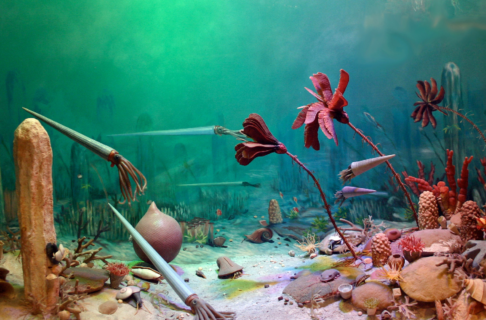
View into a Museum diorama. Seafloor scene showing various corals, sponges, seaweeds, and sea creatures.

The Ordovician seafloor diorama depicts sea life in the Winnipeg area about 450 million years ago. Manitoba is a big place, a bit bigger than France, and much of it is still poorly known. Fossil-rich rocks occur in many parts of Manitoba, and new discoveries are made every year, by both professional and amateur paleontologists.

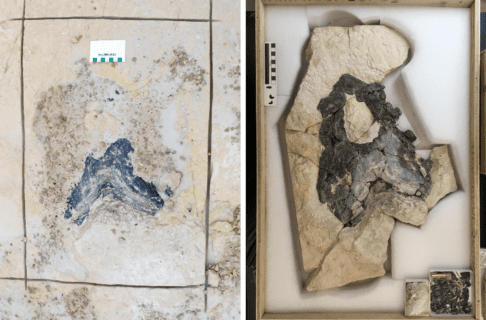
Two photographs, side-by-side. On the left a section of rock with a fossil in the centre, a rectangular outline chiselled around it. On the right, the same fossil, now prepared. The rock trimmed back, and the fossil more clearly revealed. The prepared fossil sits in a padded wooden box.

Part of the skull of a Devonian age fossil fish (about 390 million years old), as it was in the field (left) and after preparation at the Manitoba Museum (right). (MM-V-3184) 

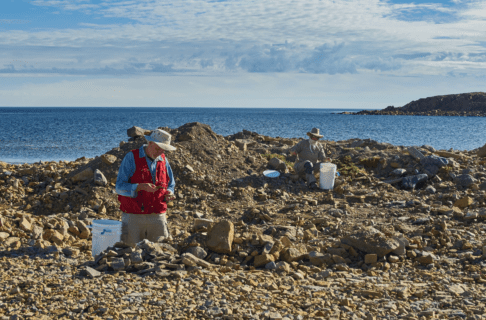
Dr. Graham Young, wearing a red vest with a white pail beside him, kneels on a rocky shoreline in front of a pile of rocks, examining two thin pieces more closely. Further back to the right side of the photo another individual sits on a rock with a pail in front of them. In the background is open water.

Manitoba Museum staff collecting fossils from a site near Churchill that has yielded some of the world’s oldest horseshoe crabs.

Anyone searching for fossils should know that Manitoba’s heritage laws protect fossils and archaeological artifacts. If you plan to do serious collecting, you should apply for a provincial Heritage Permit. If you find a significant fossil in bedrock, and you do not have a permit, please consider taking a photo, recording location information (such as latitude and longitude), and sharing that information with the Manitoba Museum or the Canadian Fossil Discovery Centre, or with Manitoba Historic Resources.

To walk across private land to look for fossils, ask permission from the landowner. Fossil hunters should also take basic precautions – tell others where you are going, wear appropriate clothing, and carry water and food. 

Dr. Graham Young, who has worked at the Manitoba Museum since 1993, recently received a significant honour. The trilobite species Glossopleura youngi, newly discovered in rocks in the Northwest Territories, was named for Dr. Young in a scientific publication by former student Neal Handkamer. 

Discover more about fossils from Manitoba and beyond in the Museum Galleries and at Ultimate Dinosaurs! Open daily from 11 am to 5 pm until September 5, 2022. 

The head and tail of a large dinosaur curling around the edge of the frame onto a black background. Text reads,

A Bison Rubbing Stone in the Prairies Gallery: How Did That Boulder Get There?

By Dr. Graham Young, past Curator of Palaeontology & Geology


Bison rubbing stones are icons of the prairies. These large stones were originally transported south by Ice Age glaciers, then left behind on the prairies when the glaciers melted and receded roughly 12,000 years ago. They are therefore considered to be a form of fieldstone, and such large blocks of fieldstone are commonly called glacial erratics.

In the millennia since the glaciers left this region, rubbing stones have undergone a lengthy and intensive polishing process. These are boulders that were tall enough that they were made use of by itchy bison, who needed to shed their heavy winter coats or scratch after being bitten by flies and mosquitoes. The rubbing by bison over such a long time interval, along with the oils from the animals’ hides, gives rubbing stones a distinctive patina, and a rubbing stone is typically surrounded by a ring of flattened, eroded earth.

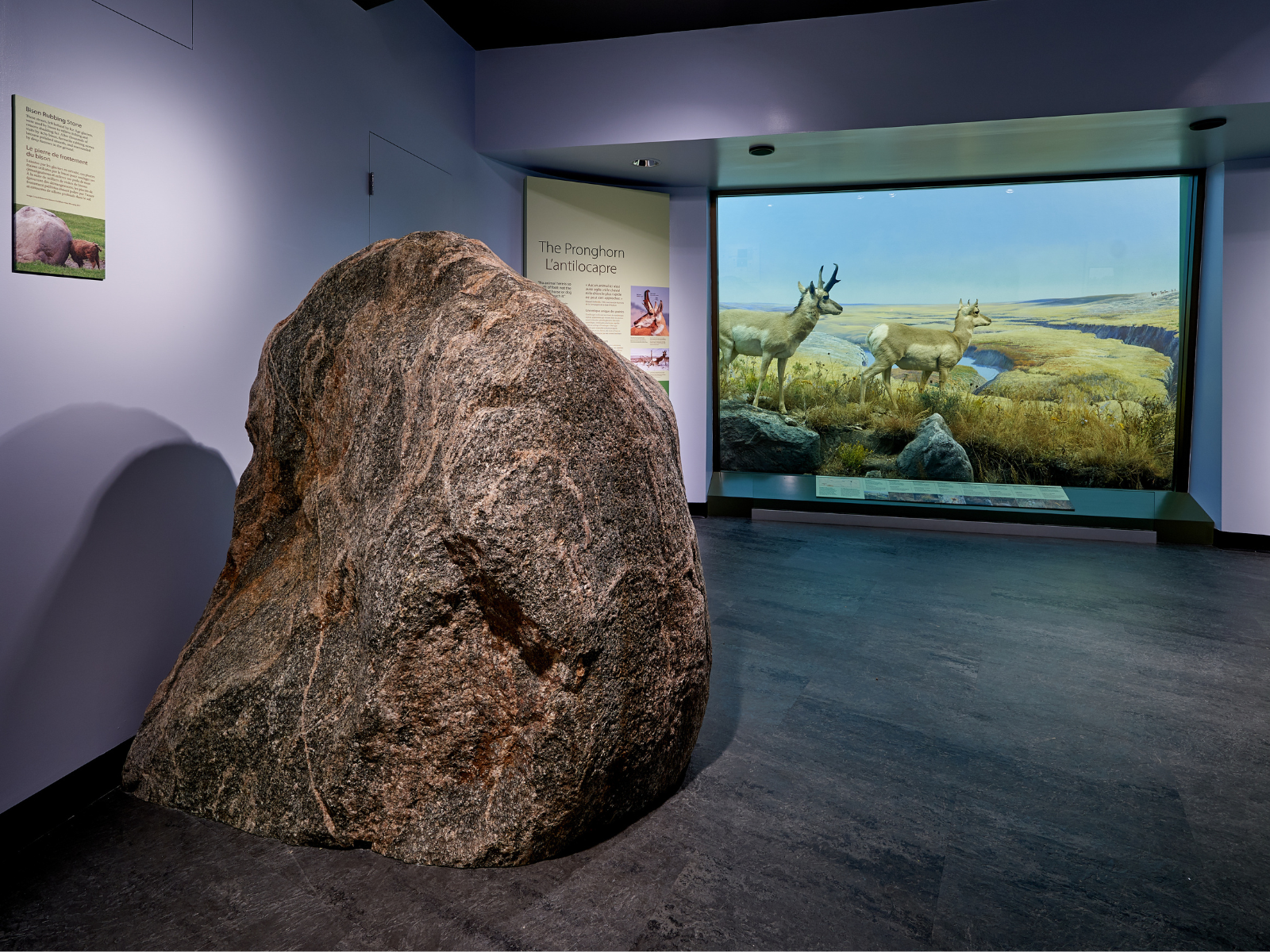
In the foreground a large mottled grey-brown boulder in the Museum Galleries. In the background is a diorama with two Pronghorns walking across.

The bison rubbing stone is beside the Pronghorn Diorama, at the entrance to the Prairies Gallery.

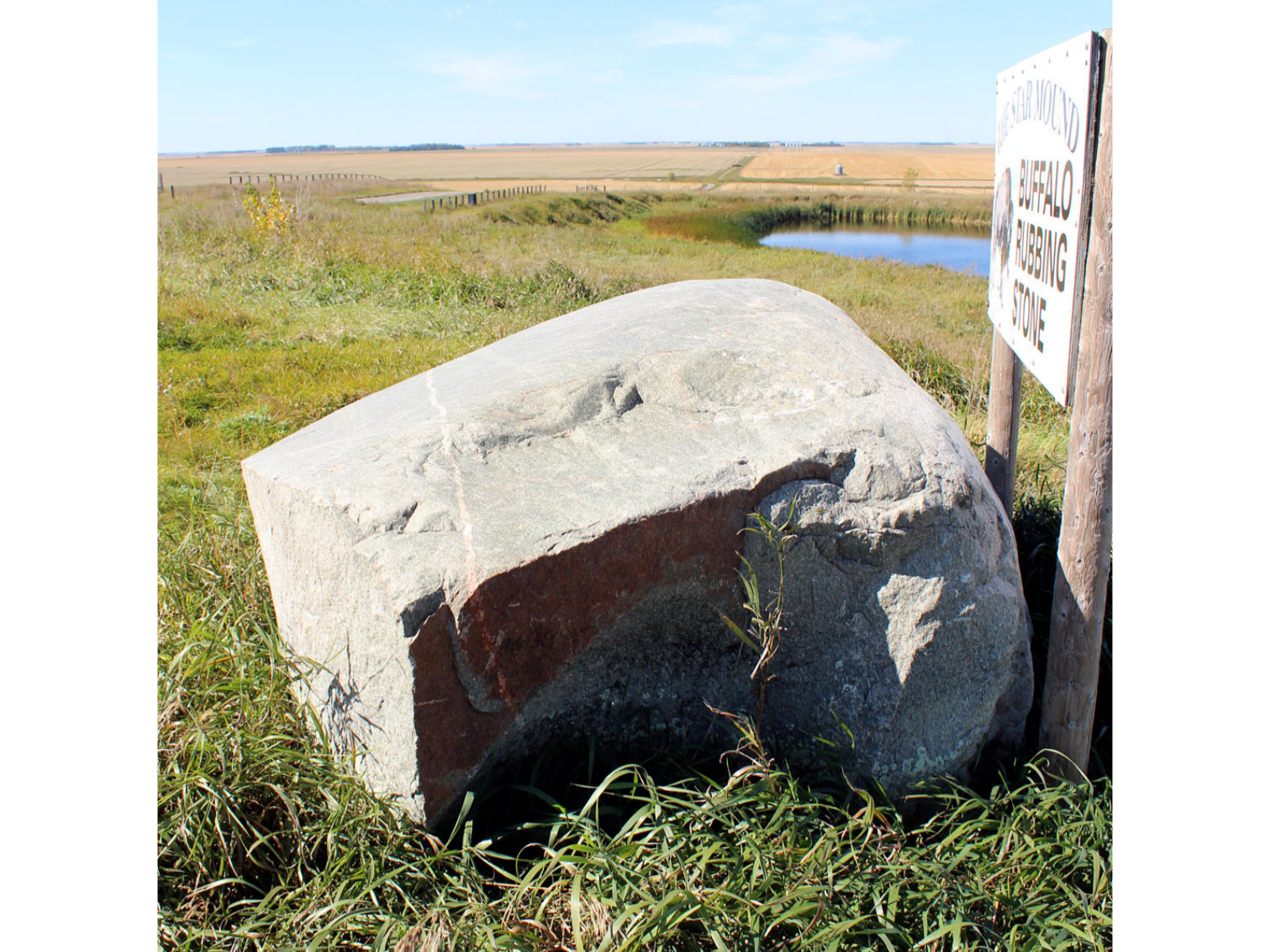
A large grey boulder in the grass next to a sign angled away from the camera that cannot be read. The top and sides of the boulder are slightly rounded.

A rubbing stone at the Star Mound historic site.

For our new Prairies Gallery, we knew that we wanted to include this sort of defining prairie element as a full-sized touchable piece, but we also knew that a cast or sculpted stone just wouldn’t do it. We had to acquire a real stone, and it had to be light enough that it could be moved into our gallery and placed safely on the gallery floor for an indefinite period of time. Since the gallery’s weight allowance is quite limited, how could this possibly be done?

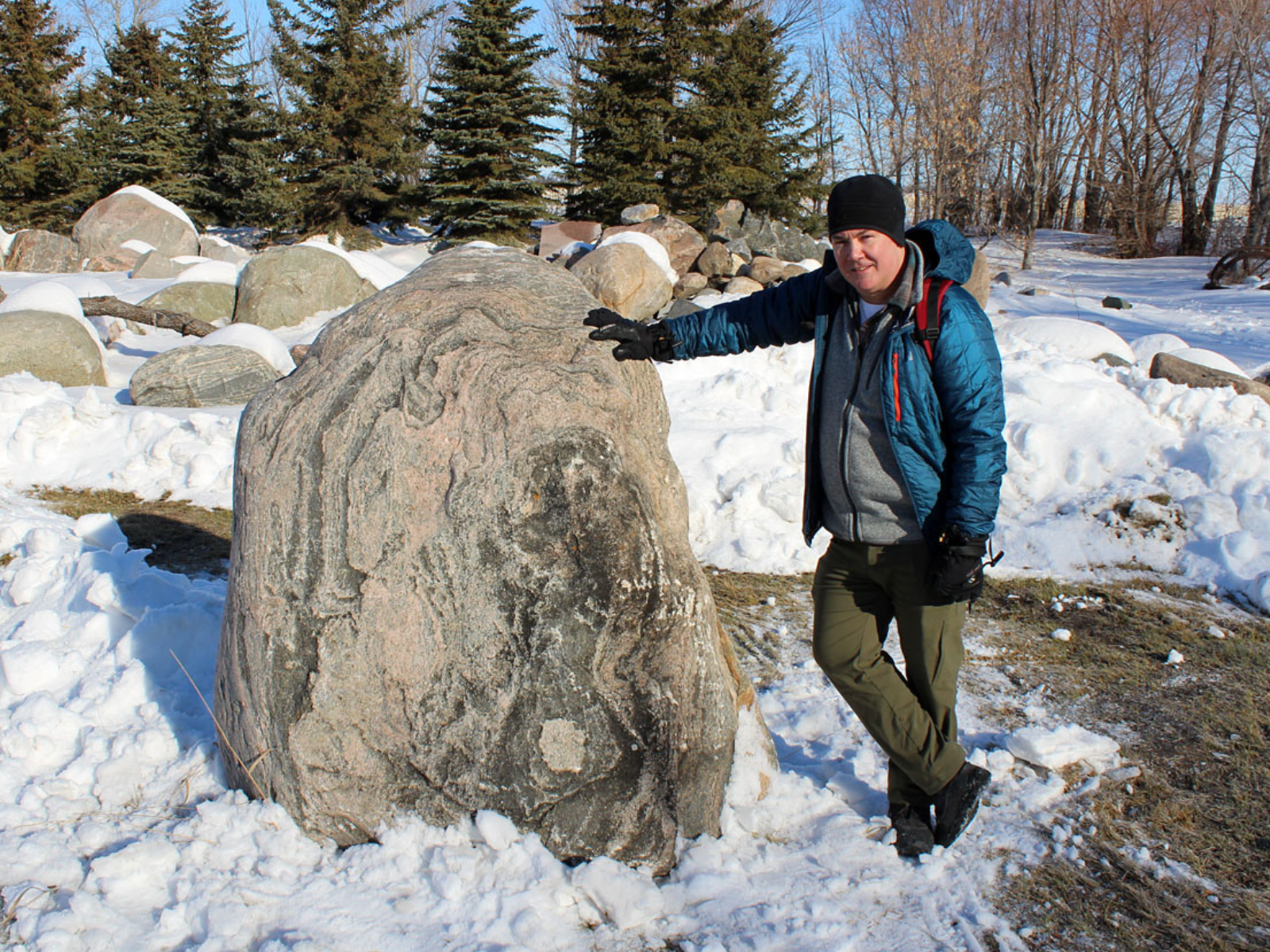
As was the case for our fieldstone wall, we discussed this with stonemason Todd Braun quite early in the gallery development process. Although we thought that there should be a real boulder in the gallery, we also knew that it could not be a recognized rubbing stone, as those are heritage objects that should be left undisturbed in their original locations. Instead, Todd suggested that he could acquire a boulder of suitable size and rock type from gravel pits in the Morden area, and that he would prepare the boulder so that it could meet the floor loading limits and other requirements for placement in our gallery.

A person wearing winter gear smiles at the camera and leans against a large boulder that comes as high as their shoulder.

Kevin Brownlee, Curator of Archaeology, examined the stone when we first saw it outside Todd Braun’s workshop in February, 2020.

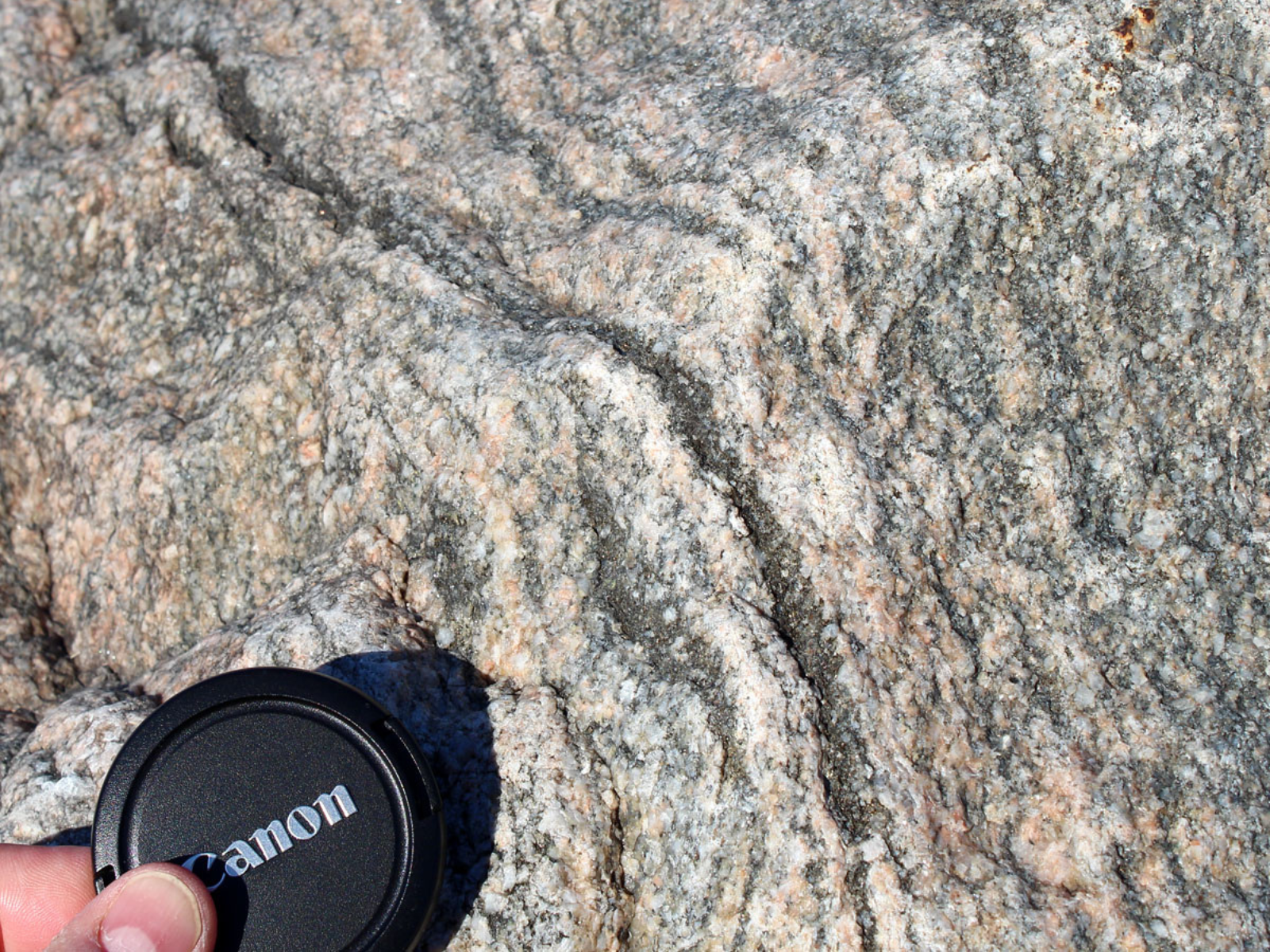
Close up on the detail and texture of a large mottled stone. In the bottom left corner a hand holds a lens cap into frame for scale.

The stone is a boulder of migmatite, a rock type that exhibits coloured bands made up of different minerals.

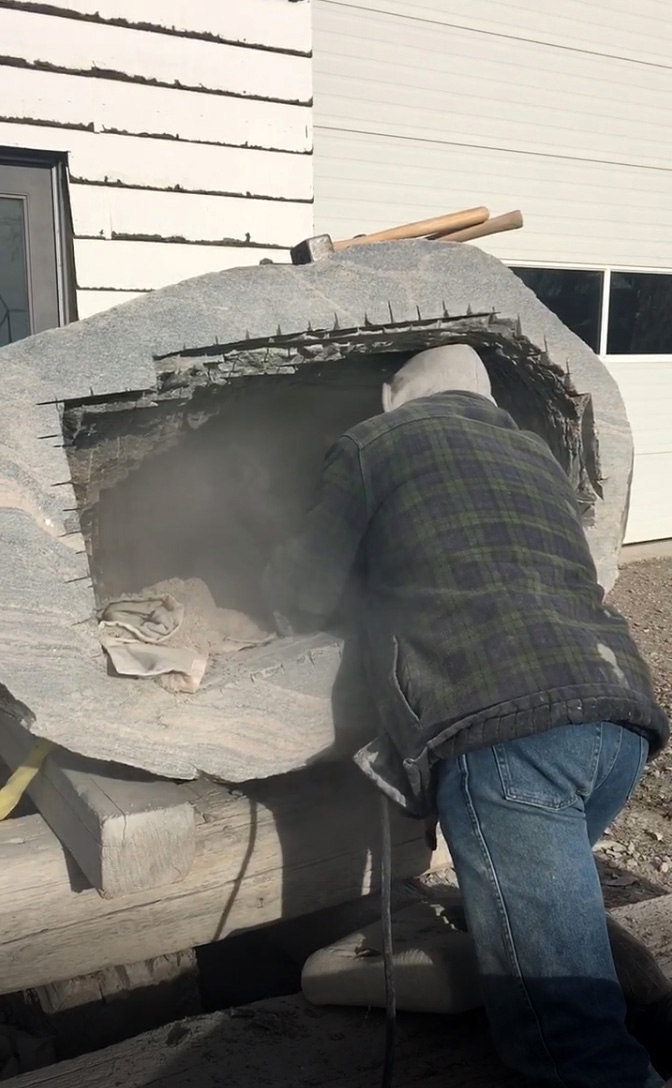
An individual leaning inside a partially hollowed out boulder.

Todd located the stone in late 2019, and we first saw it during a visit to his workshop in February, 2020. It is a very substantial boulder of migmatite, a high-grade metamorphic rock with aligned layers of minerals, which was formed under great heat and pressure deep in the Earth. Todd explained how he planned to cut off one end of the boulder so that it would be lighter and so that it would be stable standing on the floor. He would then use cutting and grinding power tools to hollow out the stone, starting from that flat end. It would therefore still look like a large solid boulder, but it would actually be more like a thick-shelled egg, with much of its internal mass replaced by air.

Once we had a plan in place, the boulder had to wait until Todd had the time to prepare it. He was busy completing the fieldstone wall for our gallery, and was not able to turn his attention to the boulder until the fall of 2020. The cutting and hollowing of the stone turned out to be very labour intensive; the rock was very hard, and Todd was also afraid that fractures might develop if he tried to remove too much rock at once, or pushed too hard on it. It would have been a disaster to have the boulder go to pieces at this stage!


Todd Braun used power tools to hollow out the boulder (this is a still from a video by Todd).

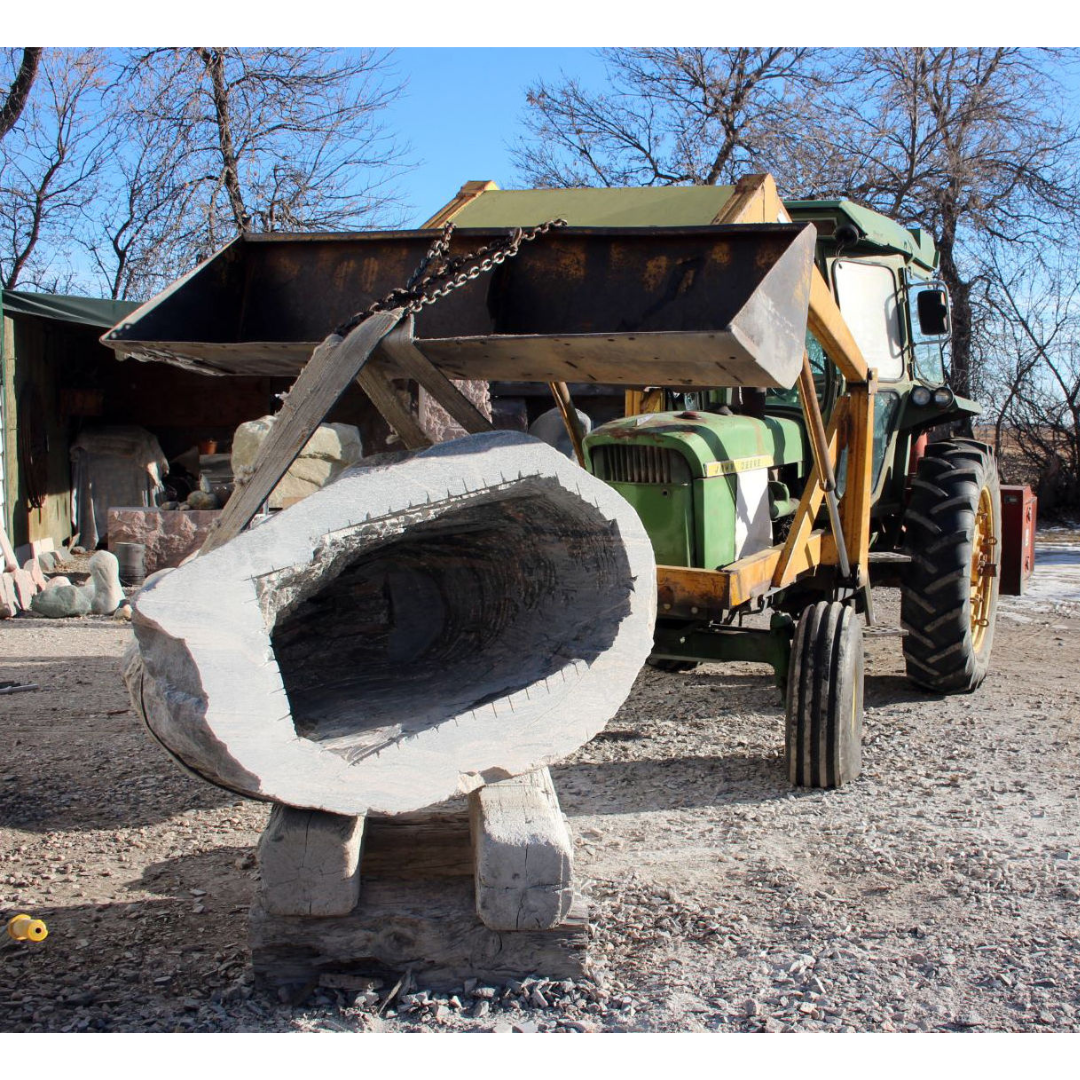
Todd told us that we were getting our money’s worth, since the job was more work than he had anticipated, but the hollowing out was completed by late November. He was also able to put a bit of a polish on the outer surface of the stone, to mimic the effect of rubbing by thousands of bison.

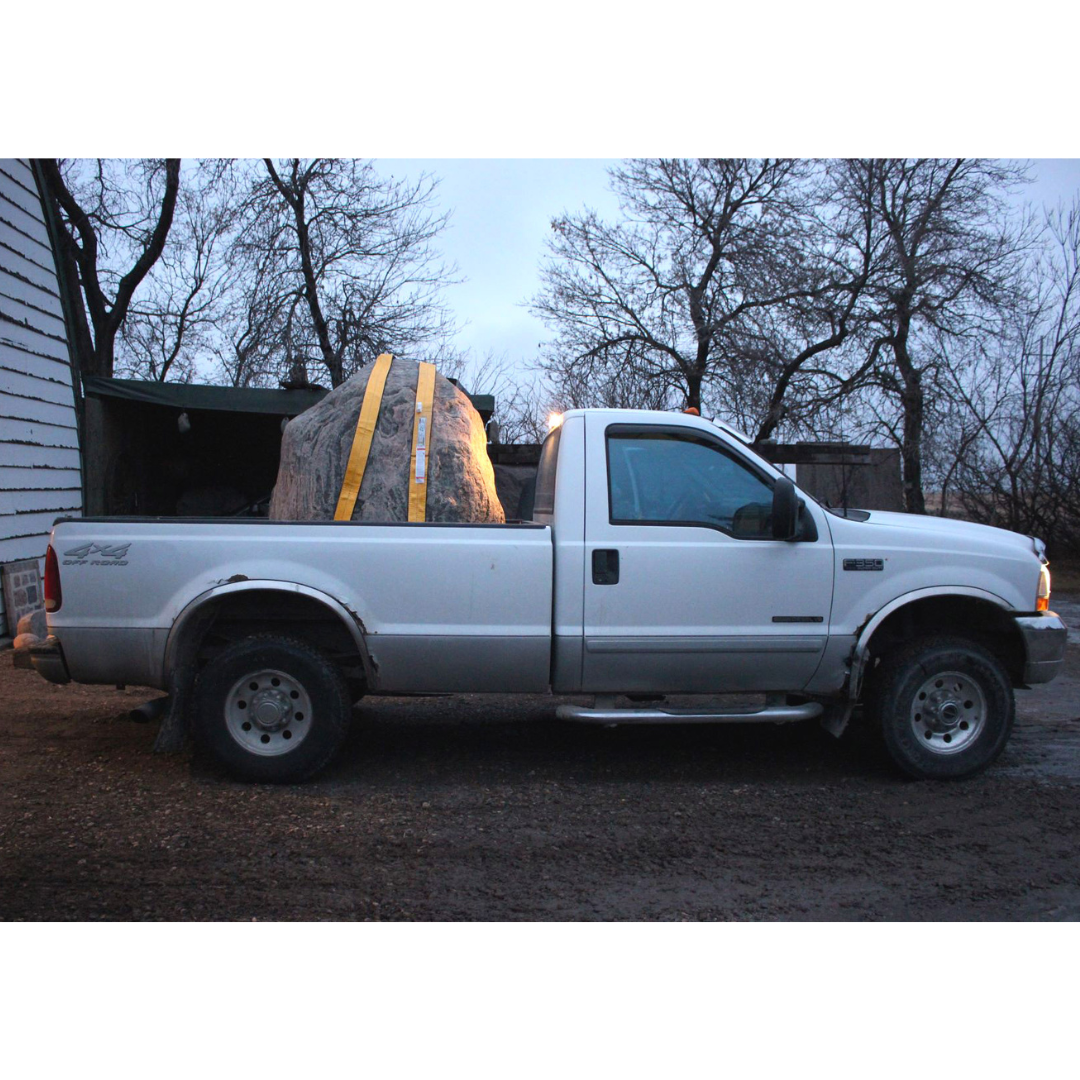
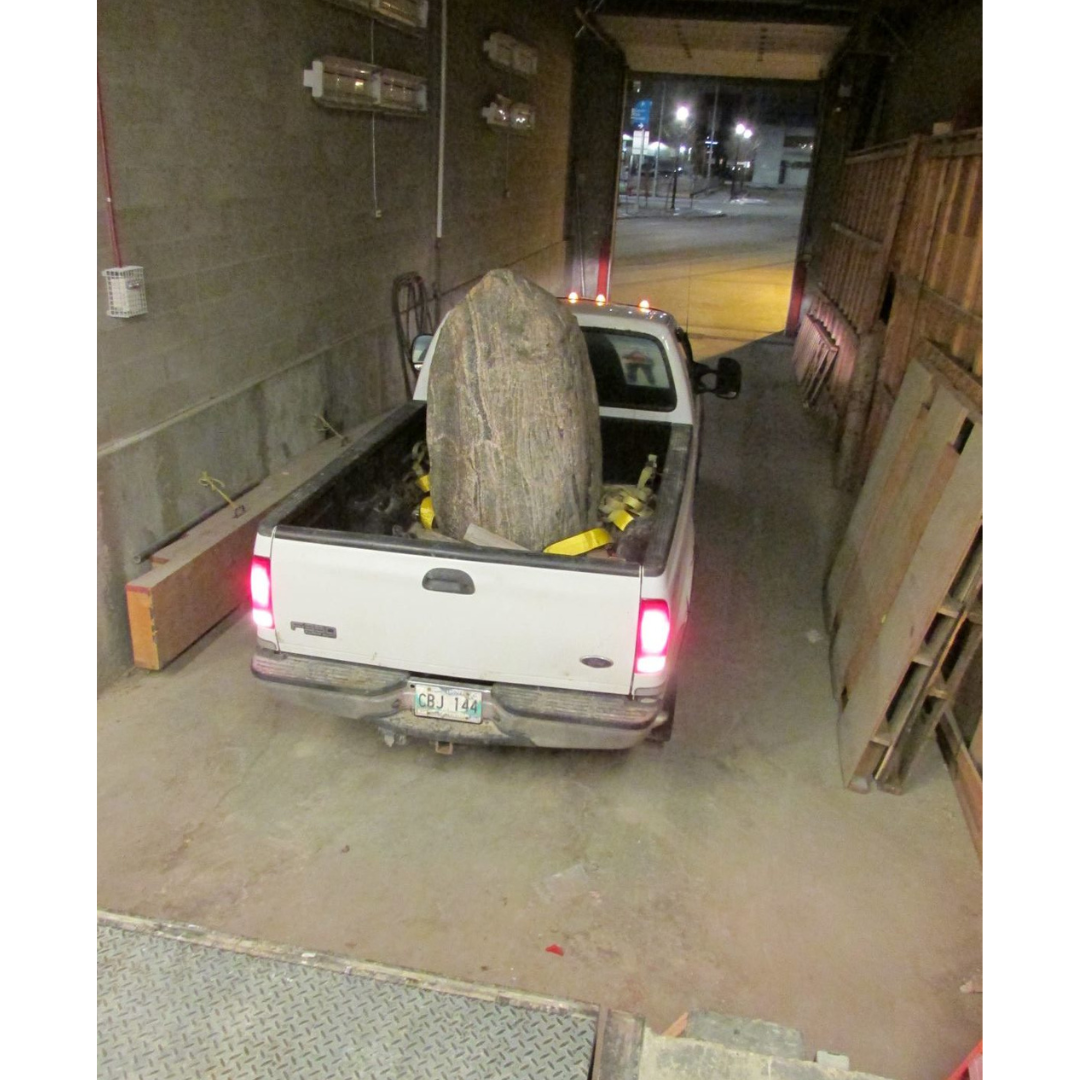
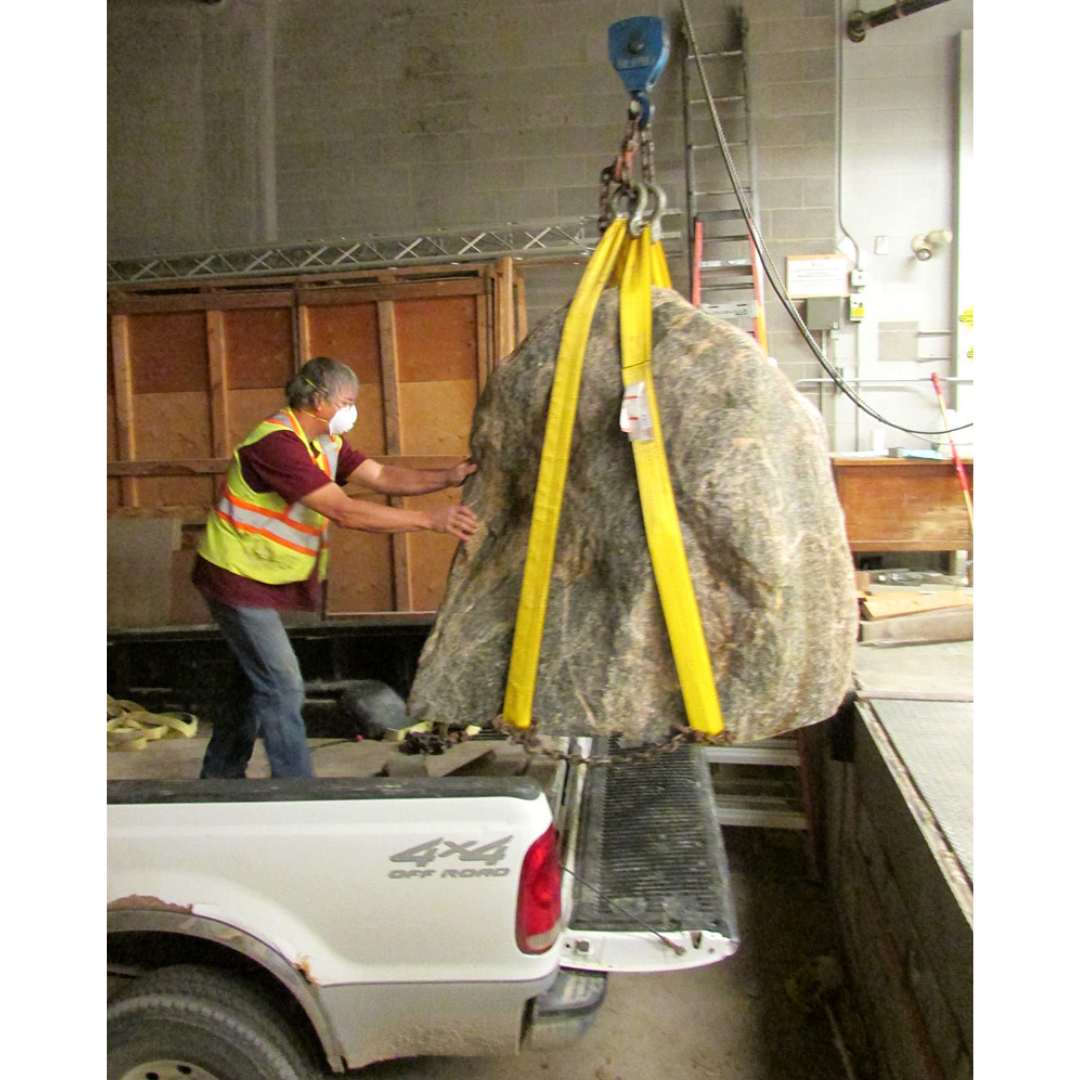
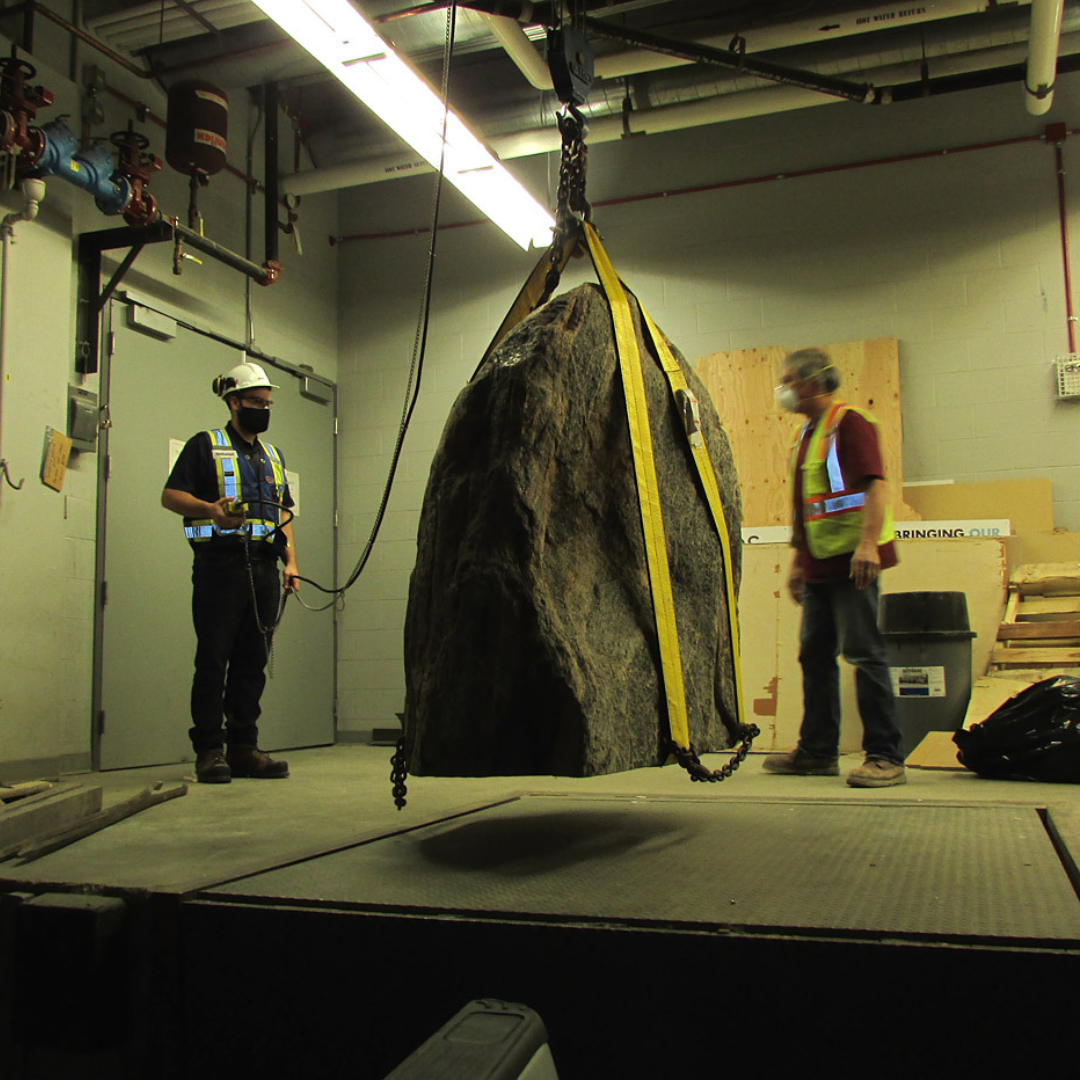
Todd used his tractor to lift the boulder into the back of his truck. Very early one morning, he drove to Winnipeg before there was significant traffic on the roads. The truck was backed into our loading dock, the hoist was attached to the heavy-duty straps that Todd had placed beneath the boulder, and the stone was lifted very smoothly onto a pallet jack. We were grateful at this stage that the boulder had lost so much of its original weight!

A large hollowed out boulder being lifted with straps and chains by a bulldozer.

The boulder was hollowed out and ready to travel to Winnipeg (photo by Todd Braun).

A large boulder secured in the back of a white pick-up truck.

The boulder was lifted into Todd’s truck . . . (photo by Todd Braun).

A white pick-up truck backed into an enclosed loading zone with a large boulder in the back of the truck.

. . . and arrived at our loading dock very early in the morning (photo by Randy Mooi).

We had a crew of four on hand to assist Todd with moving the boulder into the gallery: an expert construction manager, and three curators to provide the grunt labour. Since we had measured all the doorways and halls in advance of this move, we knew that there would be a few tricky spots during the stone’s travel through the building, but that it should just fit through all of those.

A large boulder being lifted with a dock hoist from the back of a white pick-up truck. An individual wearing a high-vis vest guides the boulder off the truck.

The loading dock hoist was used to lift the boulder from the back of the truck (photo by Randy Mooi)…

Two individuals wearing high-vis vests observe as a large boulder is lifted over a loading dock platform with a dock hoist operated by one of them.

… and to position it on the platform, where the pallet jack could be lined up underneath (photo by Randy Mooi).

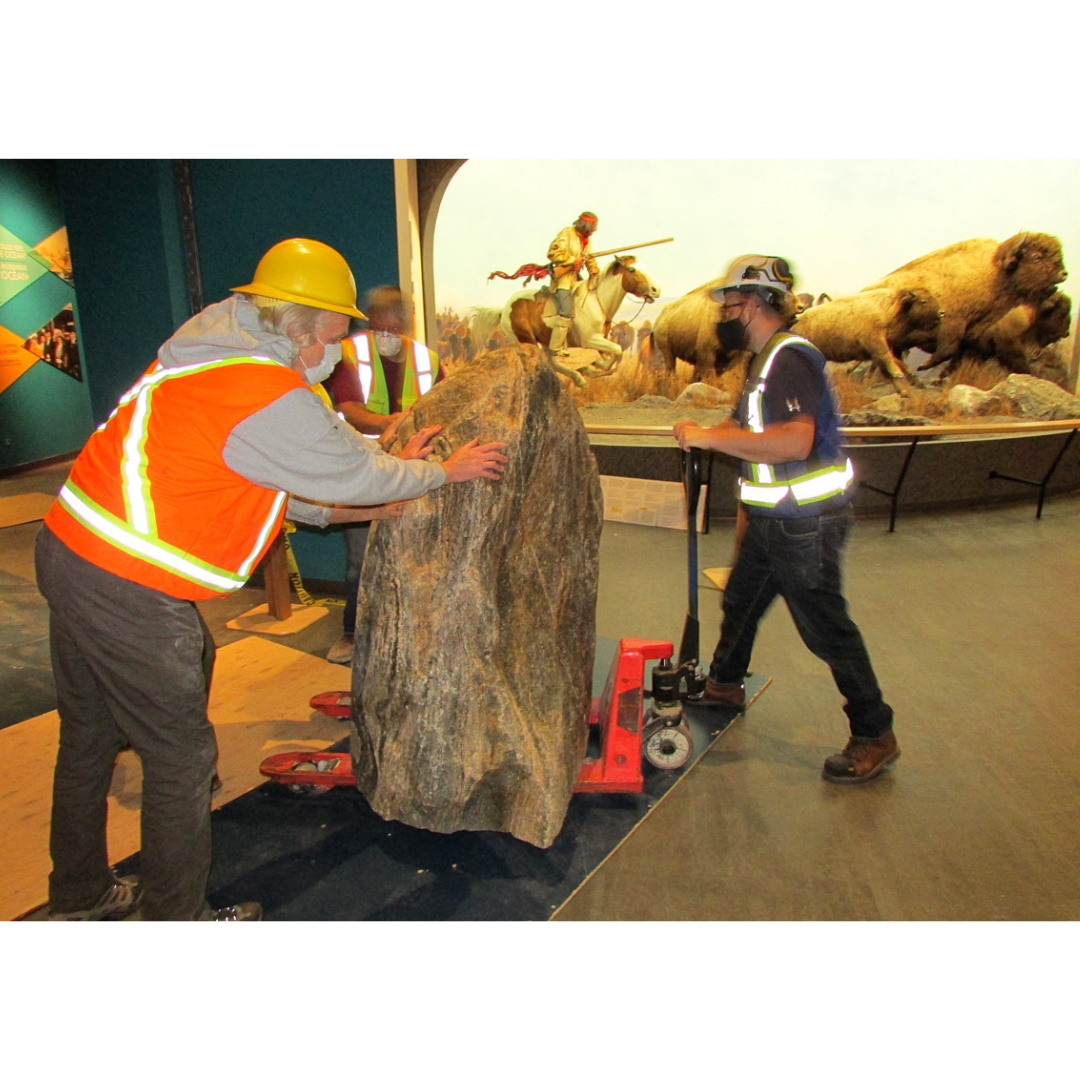
First, we trundled it down a long corridor and through the Museum’s workshops, then out into the Welcome Gallery. Since there was new flooring in the galleries, we had to begin laying down sheets of board when we left the workshop space. There were several large plywood sheets, so it was a matter of laying down a row of boards along the planned path, then lifting each board after we passed over it, and moving it to the front of the other boards so that there would always be a safe surface for the pallet jack.

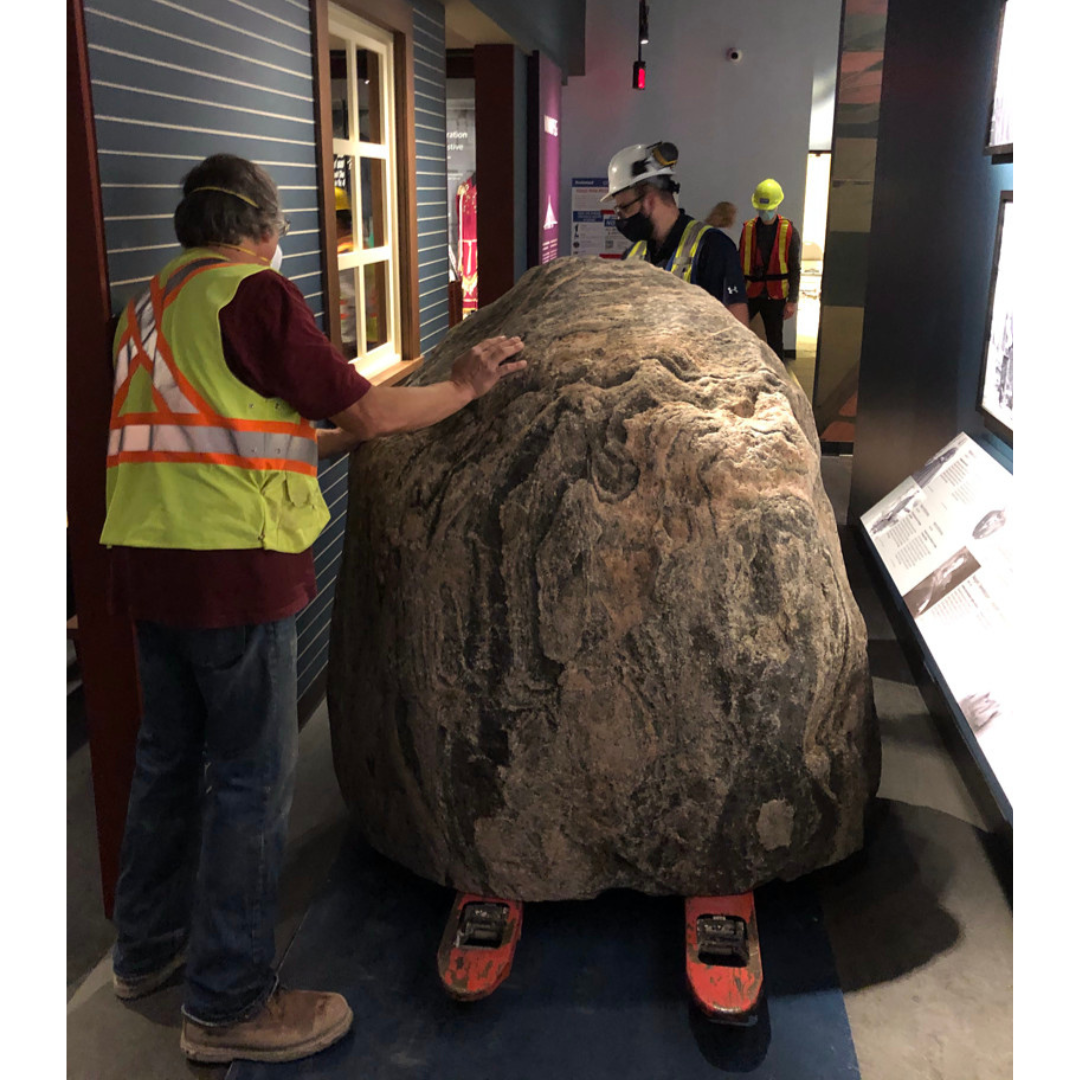
The stone turned out to have a bit of a “mind of its own” when it came to the direction our route would take, and there was some manoeuvring required to get it lined up with the doorway that would take us into the Winnipeg Gallery area. This gallery was another tight spot, and after some discussion and changing of direction, the boulder slipped through. We then had a clear run to its final location by the Pronghorn Diorama.

Three individuals in high-vis vests guide a large boulder secured on a pallet jack down a hallway.

The boulder began its journey down the corridor toward the workshops (photo by Randy Mooi).

Three individuals in high-vis vests maneuver a large boulder secured on a pallet jack through the Welcome Gallery, past the Bison Diorama.

In the Welcome Gallery, the stone came as close to bison as it would ever be in its time at the Museum! Note the sheets of plywood protecting the gallery floor (photo by Randy Mooi).

Three individuals in high-vis vests guide a large boulder secured on a pallet jack through a narrow space in the Winnipeg Gallery.

In the Winnipeg Gallery, there was discussion of how we could get the boulder past some exhibits.

One individual wearing a high-vis vest braces a large boulder in place as two other individuals kneel either side to remove wooden braces.

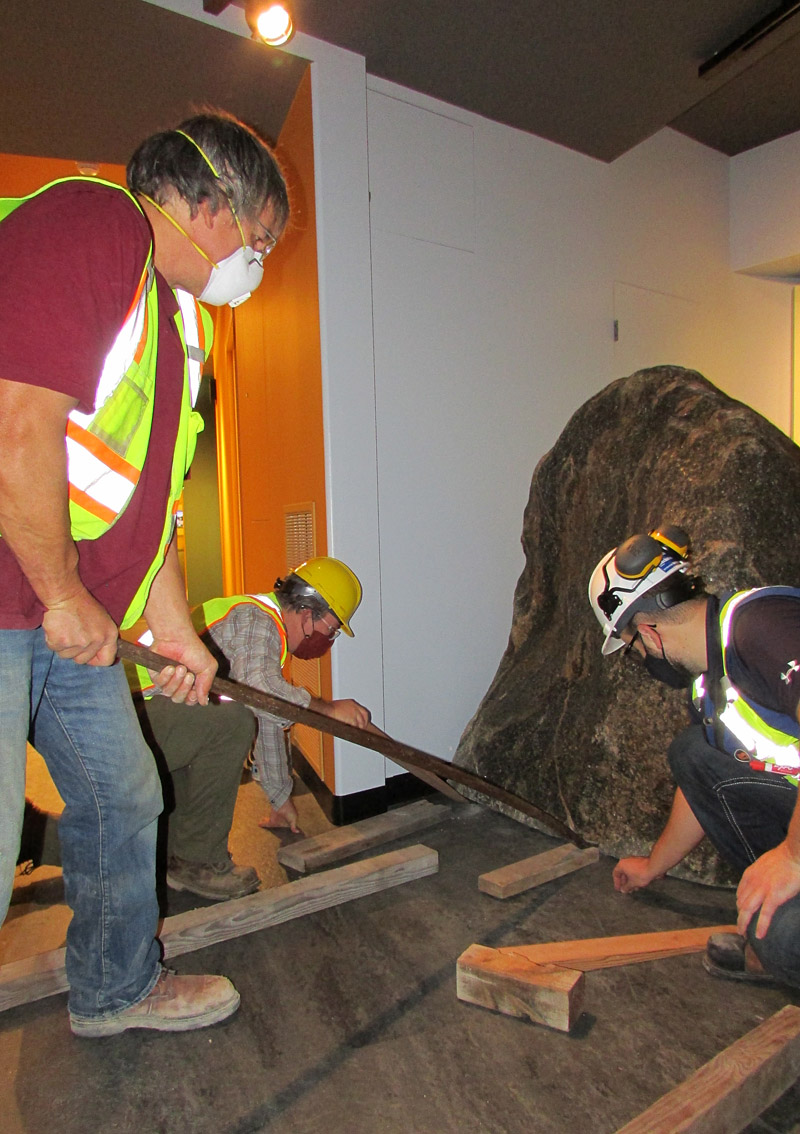
The pallet jack was rolled to the location that had been selected for the boulder’s final position, and the stone was gently (VERY gently!) shifted onto some large wedges that Todd had brought along for the task. By levering with heavy pry bars, the wedges could be gradually removed and the boulder settled into place.

The next time you are in our new Prairies Gallery, I hope you will take a good look at the rubbing stone and other exhibits. Many Museum exhibits may look like simple things, but the stories behind them are often quite complicated!


The last wedges were removed as the boulder was lowered into place (photo by Randy Mooi).