


The Botany of Christmas

The Botany of Christmas

I come from a long line of European women who did a lot of baking: fresh bread and buns, pies, squares, cookies, and strudels. Although my mother and grandmother baked throughout the year, Christmas was my favourite time because that’s when the really special treats were made, things that you didn’t eat just every day: hot roasted chestnuts, fruitcake, butter tarts, honey cake, shortbread, and chocolate Yule logs.
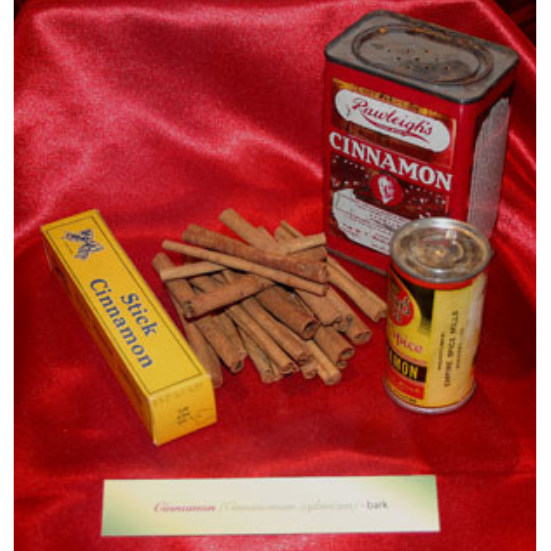
Three containers of various forms of cinnamon on a silky red backdrop accompanied by a small stack of cinnamon sticks.

As I grew older, I began to wonder why so many Christmas desserts and snacks featured nuts, dried fruits and lots of spices.  As I learned more about these traditional Christmas foods, I realized that nuts and dried fruits were some of the only food items available in the northern hemisphere in winter.  We tend to forget nowadays that 150 years ago just about everyone was on the 100-mile diet (no Mandarin oranges for Christmas back then!).  Spices were too expensive for common people to use frequently, so they were saved for special occasions, like weddings and holidays.

In this series of blogs, I will be talking about some of the plant foods that tend to show up in traditional Christmas baking.  First up, get ready to learn more about Christmas nuts (and no, I’m not referring to your crazy uncle Joe).


Image: Cinnamon sticks and old spice jars from the 2004 exhibit “A Natural History of Christmas Foods.”

Dr. Diana Bizecki Robson

Dr. Diana Bizecki Robson

Curator of Botany

Dr. Bizecki Robson obtained a Master’s Degree in Plant Ecology at the University of Saskatchewan studying rare plants of the mixed grass prairies. After working as an environmental consultant and sessional lecturer…
Meet Dr. Bizecki Robson

Beneath the Streets of Wolseley…

By Dr. Graham Young, past Curator of Palaeontology & Geology


The following is modified from a piece I wrote for the Museum’s newsletter Features, with the addition of several images that would not fit into the print version.

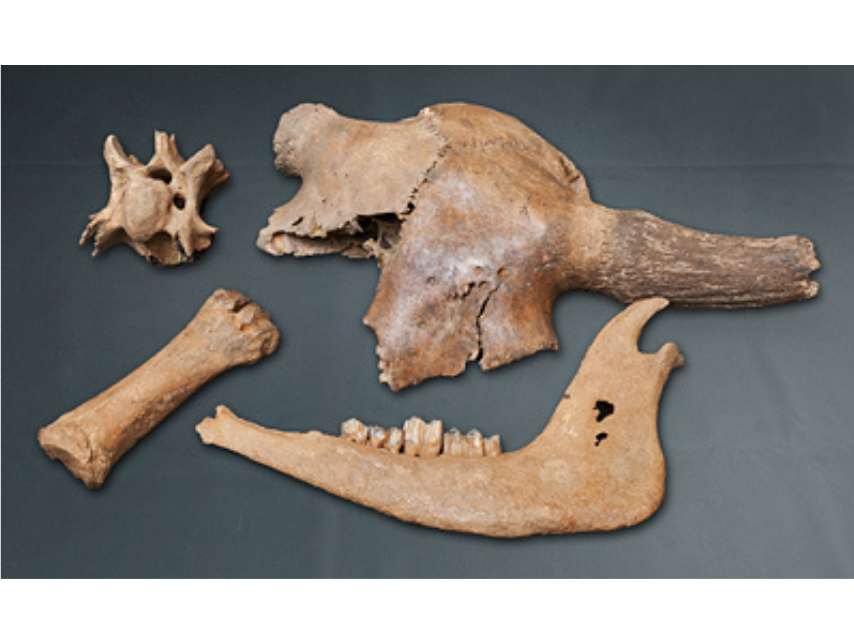
A selection of recovered bones from an excavation including a partial bison skull, a bison mandibles, and two other skeletal bones.

Walking through the streets of Winnipeg, I have sometimes imagined the sediment and rock beneath. First the soil, then the old river deposits, beneath them the lakebed clays of Lake Agassiz, and then layer after layer of ancient limestone extending downward toward the Precambrian Shield.

Although we know all of those things are present, we rarely get to see them unless something is brought to the surface by some lucky coincidence. Each of those lucky coincidences can help us to understand the past that is preserved beneath our feet.


Image: A selection of the bones found at the Ruby Street site (photo: Hans Thater).

In November, 1969, workers were excavating a sewer in the Wolseley area of Winnipeg, near Ruby Street and Palmerston Avenue. At the bottom of a 10.7 metre (35 foot) deep trench, a stiff blue clay was found. Above the clay were sand and gravel containing bison bones, along with clams and pieces of wood.

Tipped off by an anonymous phone call, Dr. George Lammers, the Museum’s first Curator of Geology and Paleontology (and my predecessor in this job), visited the site and collected the fossils. Since then, these unusual pieces have resided in the Museum’s collection, where they have provided much information about Winnipeg’s distant past.

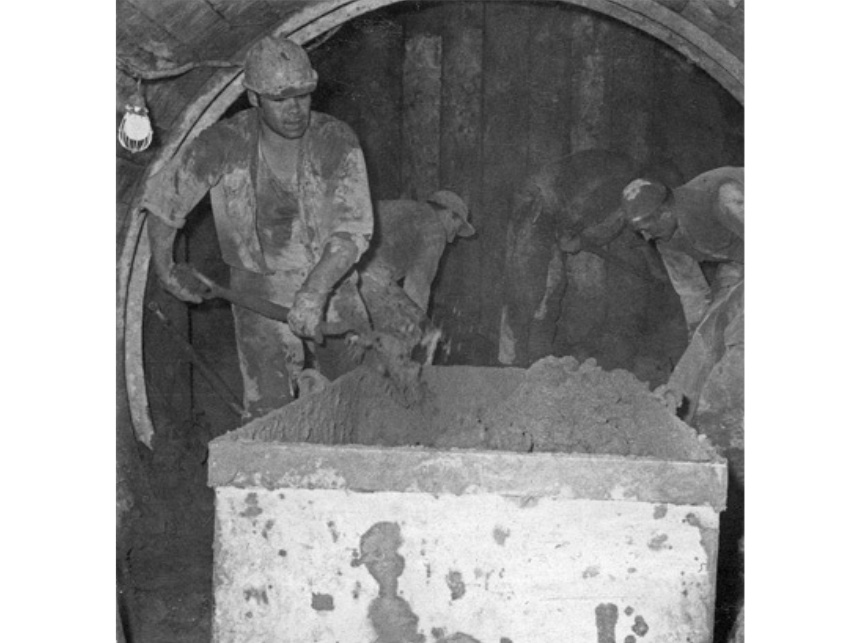
A black and white photograph of workers excavating a sewer in 1969 with shovels and a rail cart.

Crew working on the sewer excavation under Ruby Street.

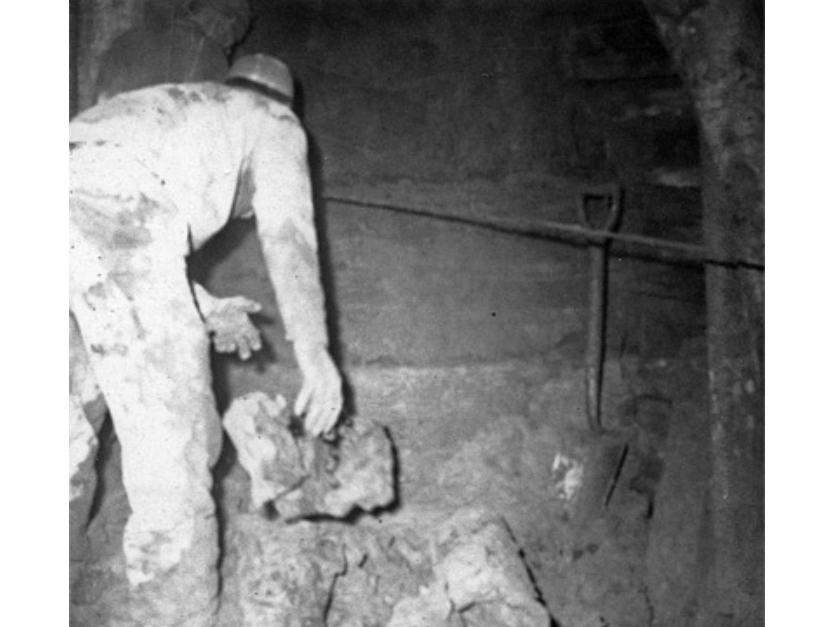
A black and white photograph of a construction worker in 1969 working on a sewer evacuation.

It looks as though sewer excavation was dirty, unpleasant work forty-one years ago (as I’m sure it still is today).

Some of the wood from deep in the trench was radiocarbon dated at about 7,500 years old (7,490 ± 80 years before the present). The bison parts include a portion of a robust skull, probably of the extinct species Bison antiquus occidentalis. This species, which became extinct about 5,000 to 4,000 years ago, had horns that were significantly larger than those of modern bison. We know that the bones came from more than one bison, because they include two left mandibles (jaw bones).

There are other bones that are probably elk, and it is quite likely that all of the skeletal parts belong to animals that had been broken up by decomposition, water flow and scavengers. One of the most interesting associated pieces is a log that had been gnawed by a beaver!

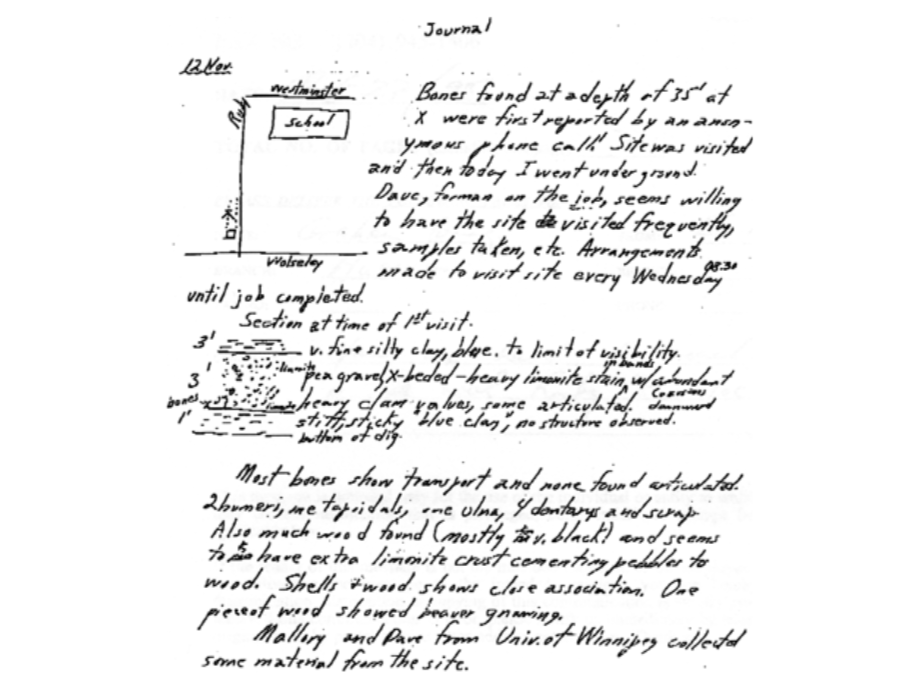
Handwritten notes on a piece of paper.

This page of field notes above was written by my predecessor as curator, George Lammers, when he first visited the Ruby Street site in November, 1969. If you go looking for this place, please be aware that Erik Nielsen, of the Manitoba Geological Survey, sent me a note in the 1990s suggesting that the actual site was at the corner of Ruby and Palmerston, as the school is on Wolseley, not Westminster.

The age information, together with the sediments and fossils, tells us a lot about prehistoric events in this area. The sand and gravel have features of an ancient river bar, in which the clams lived, and onto which the wood and the bison were deposited. We can imagine a spring flood carrying pieces of wood from oak and larch trees, along with the occasional carcass of an animal that fell into the water upstream.


Image: Field notes from George Lammers.

The clay at the bottom of the trench was probably deposited in Lake Agassiz, the giant lake that covered much of Manitoba as the glaciers melted at the end of the last Ice Age. Lake Agassiz receded from this area by 8,000 years ago, and this site tells us that the ancient Assiniboine River had already cut a  valley within a thousand years after the lake had left the area.

Sometimes we don’t have to travel far to find evidence of long past worlds!

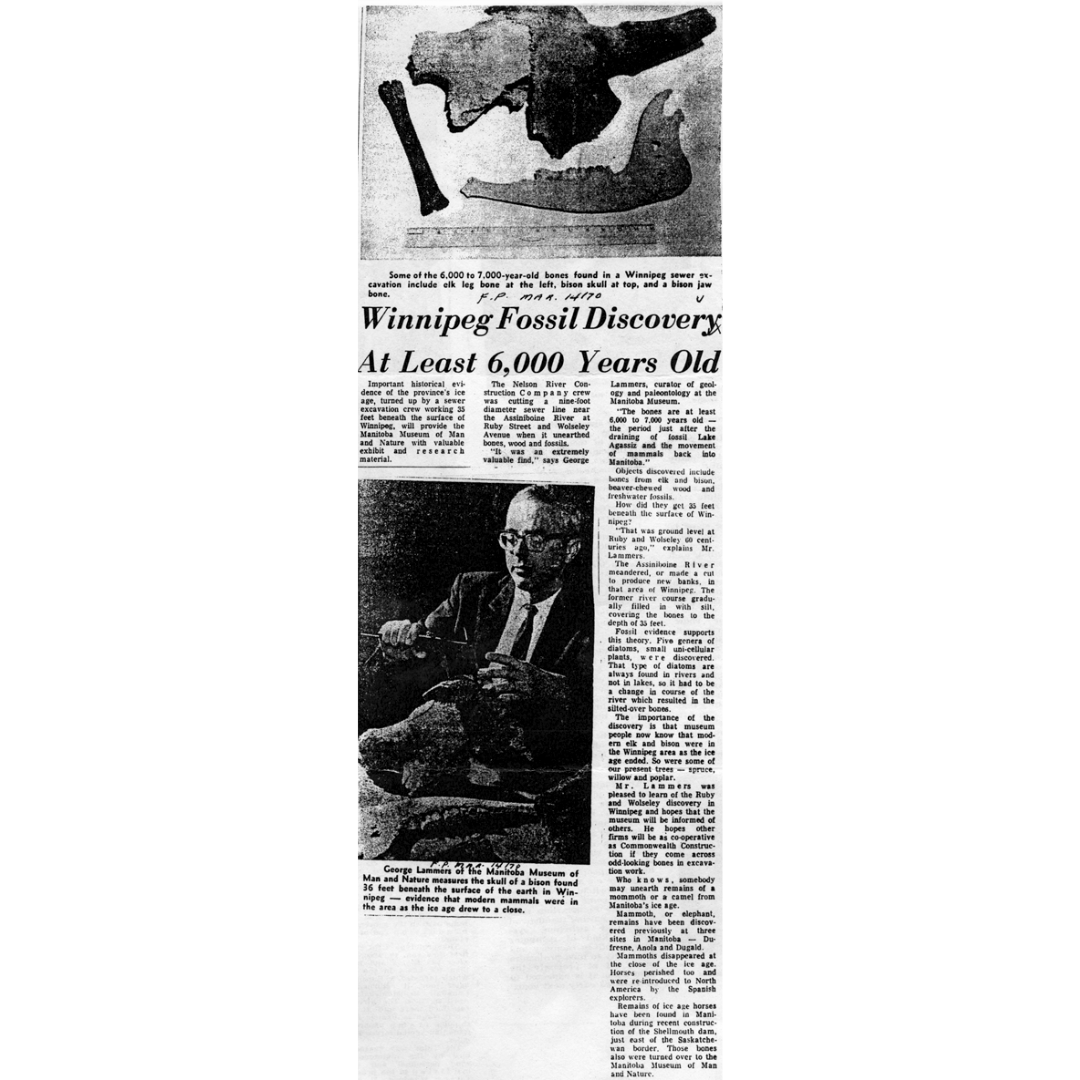
Newspaper clipping with black and white photographs and the headline "Winnipeg Fossil Discovery at Least 6,000 Years Old".

References:

Lammers, G. 1969. Unpublished field notes for 12 November, 1969. Manitoba Museum of Man and Nature.

Winnipeg Free Press. 1970. Winnipeg fossil discovery at least 6,000 years old (March 14, 1970).

Nielsen, E., W.B. McKillop, and G.G. Conley. 1993. Fluvial Sedimentology And paleoecology Of Holocene alluvial deposits, Red River, Manitoba. Géographie Physique et Quaternaire, 47(2): 193-210.


Image: This article from the Winnipeg Free Press of March 14th, 1970, shows how exciting the Ruby Street find was considered at the time!

Installing the Paul Kane Exhibit

When an exhibit comes down, our Productions staff open up the cases for us, then Collections and Conservation staff remove the artifacts and/or specimens and put them back in storage, or take them for treatment by freezing or carbon dioxide fumigation. Then the next exhibit can go in.

For this exhibit, the same large cases were used as for the previous exhibit.  The case in the centre of the room was removed, and a small square case was added on one wall.  Productions staff does all the moving of cases for us. Before any objects are put in, Productions also installs the graphics panels with text and images on the walls.

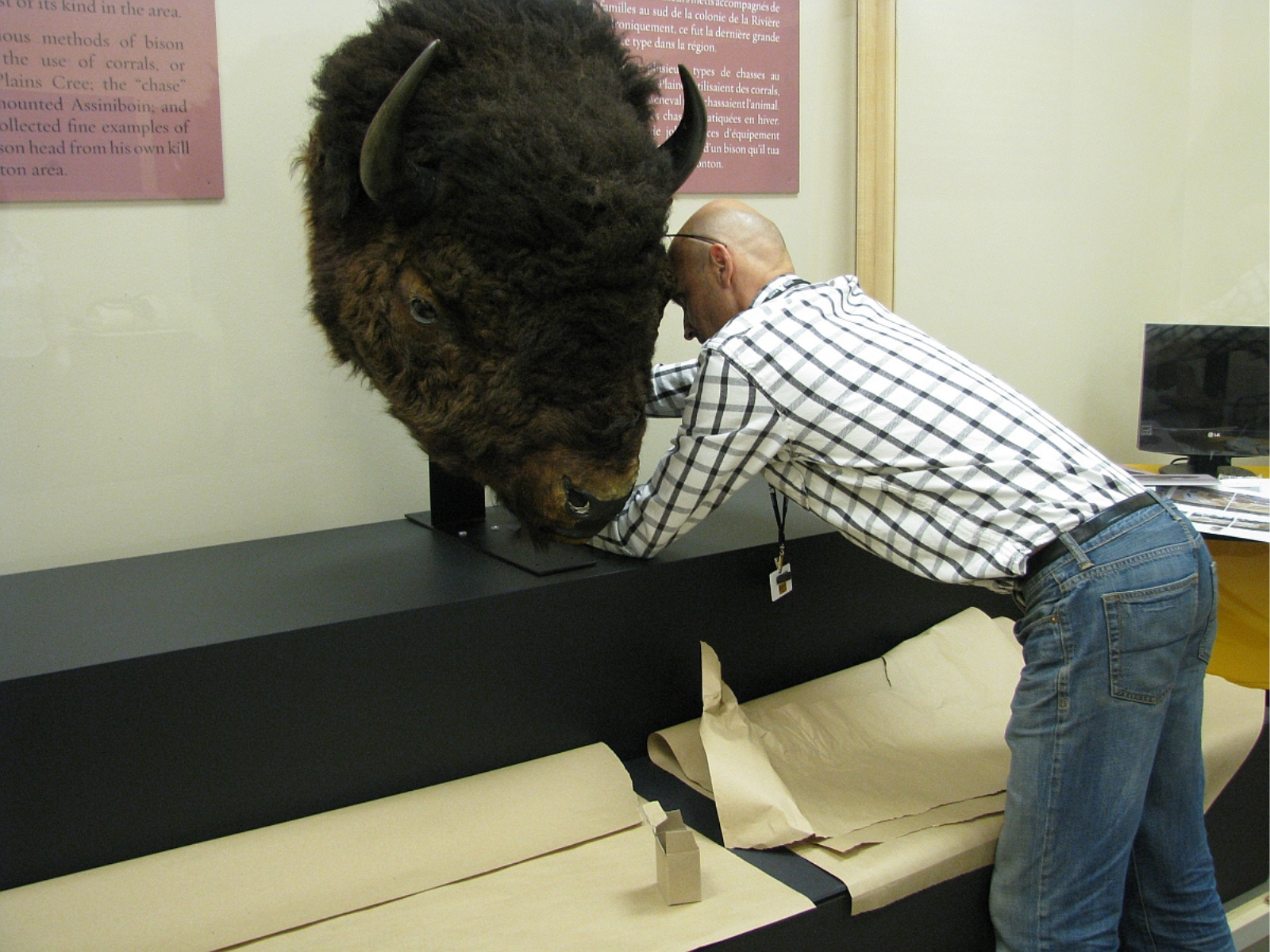
The first thing installed was a bison head. Technical Supervisor Bert Valentin oversaw the installation; the mount is heavy and needed to be screwed into the plinth it sat on.

After that, it was a matter of placing the artifacts in their cases according to the layout Designer Stephanie Whitehouse had drawn up.

A person leaning out over a base attaching a large mounted bison head.

The mount is screwed down to the plinth.

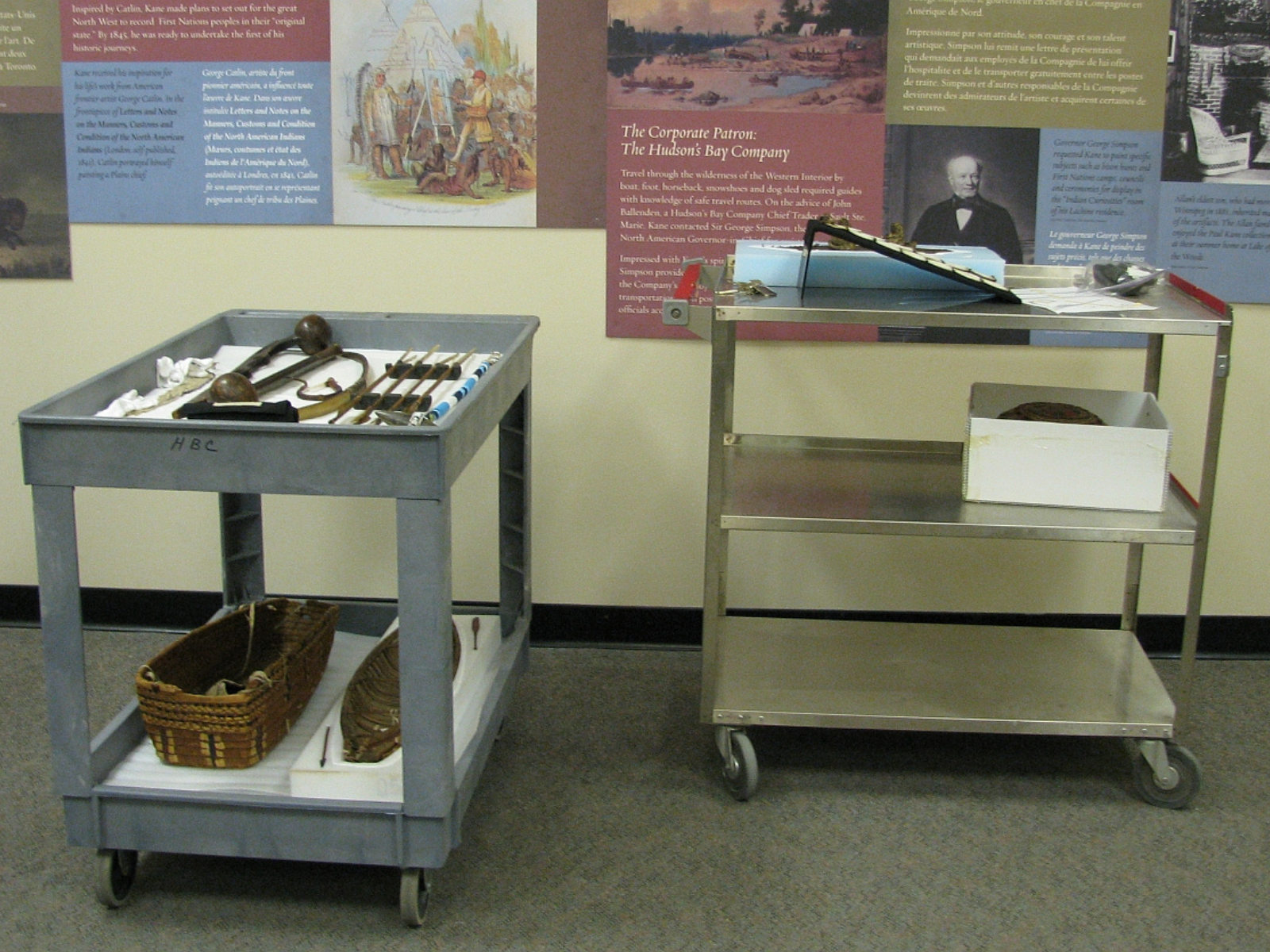
Two rolling carts with artifacts and objects laid out on their shelves.

Artifacts on carts, ready to install. Some of them have storage mounts.

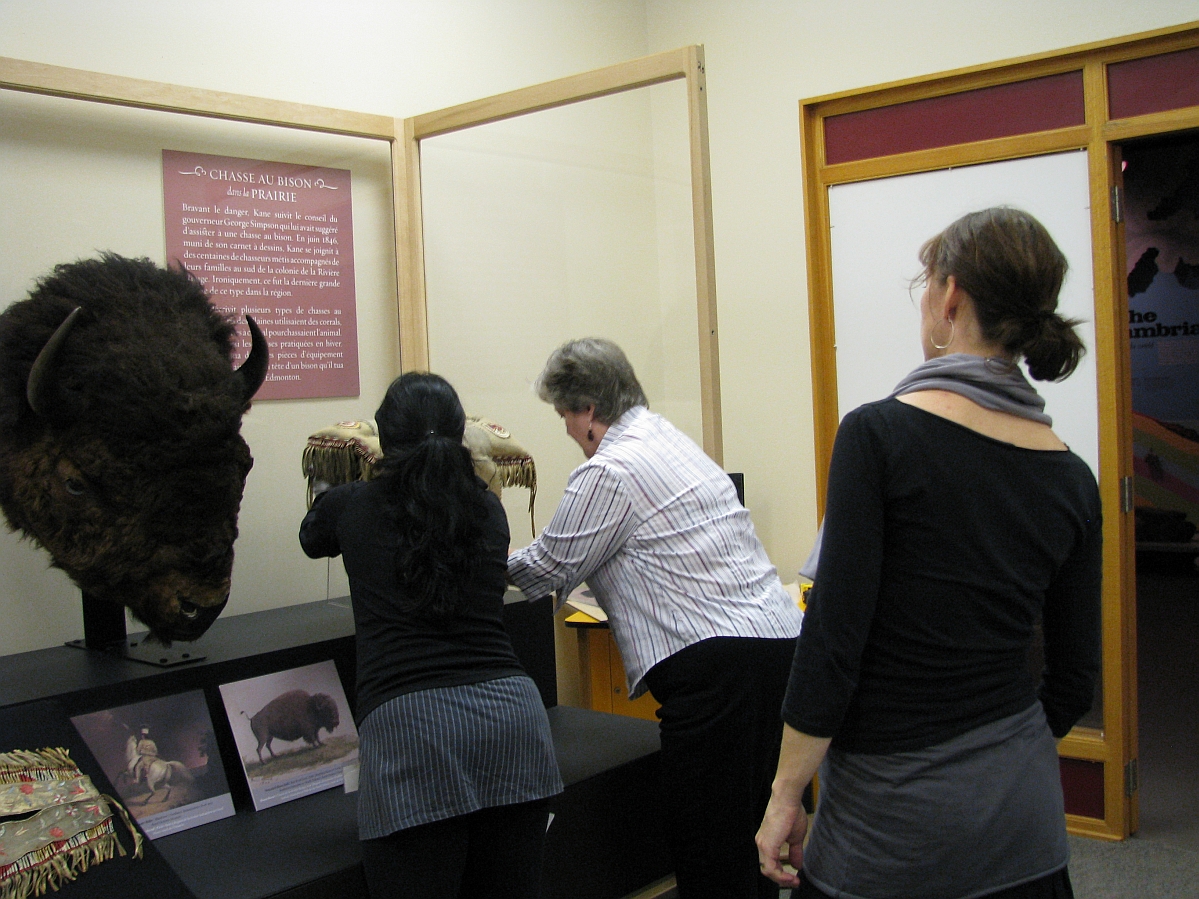
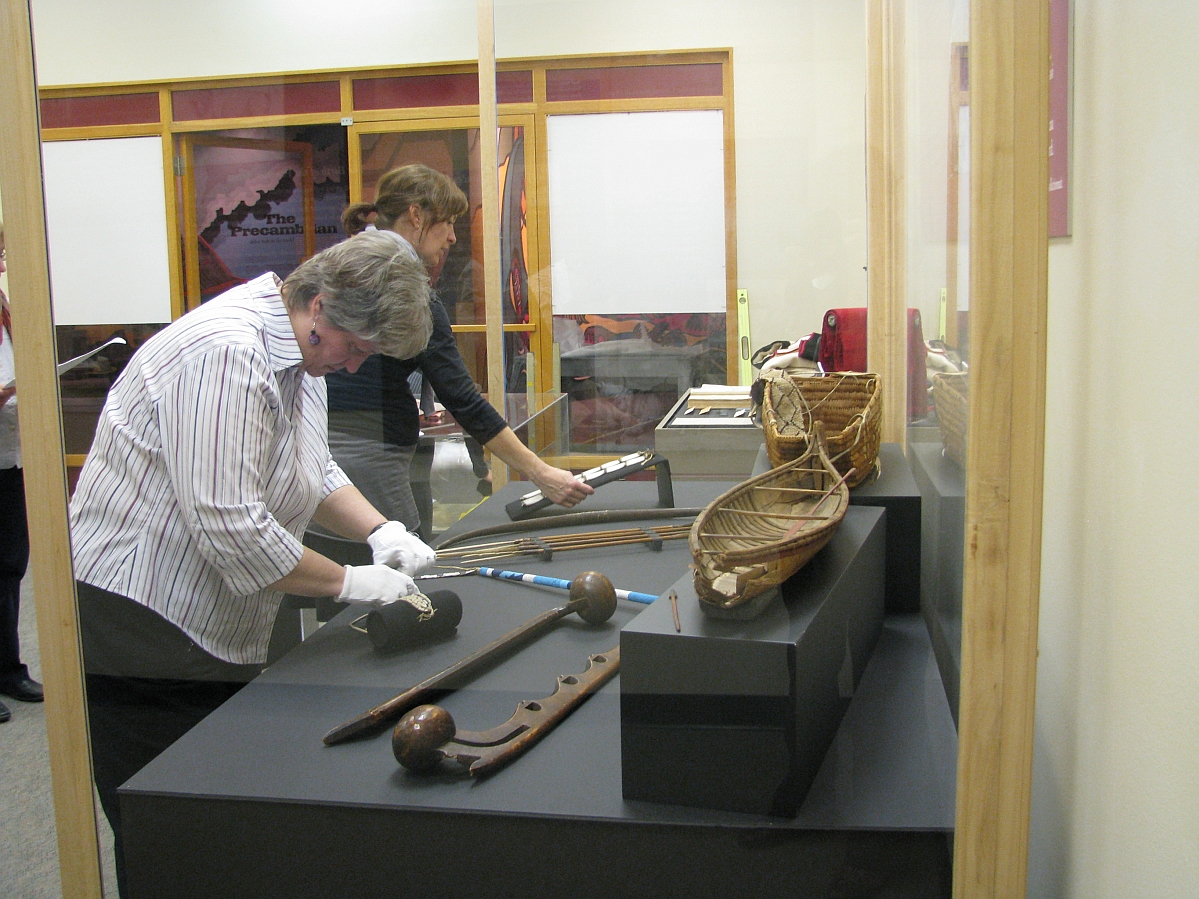
Three people around a display case, two of whom are adjusting a piece on a mount as the other looks on.

Conservator Lisa May and Collections Assistant Nancy Anderson adjust a saddle while Designer Stephanie Whitehouse looks on.

Two individuals placing artifacts into display cases.

Nancy and Stephanie placing artifacts.

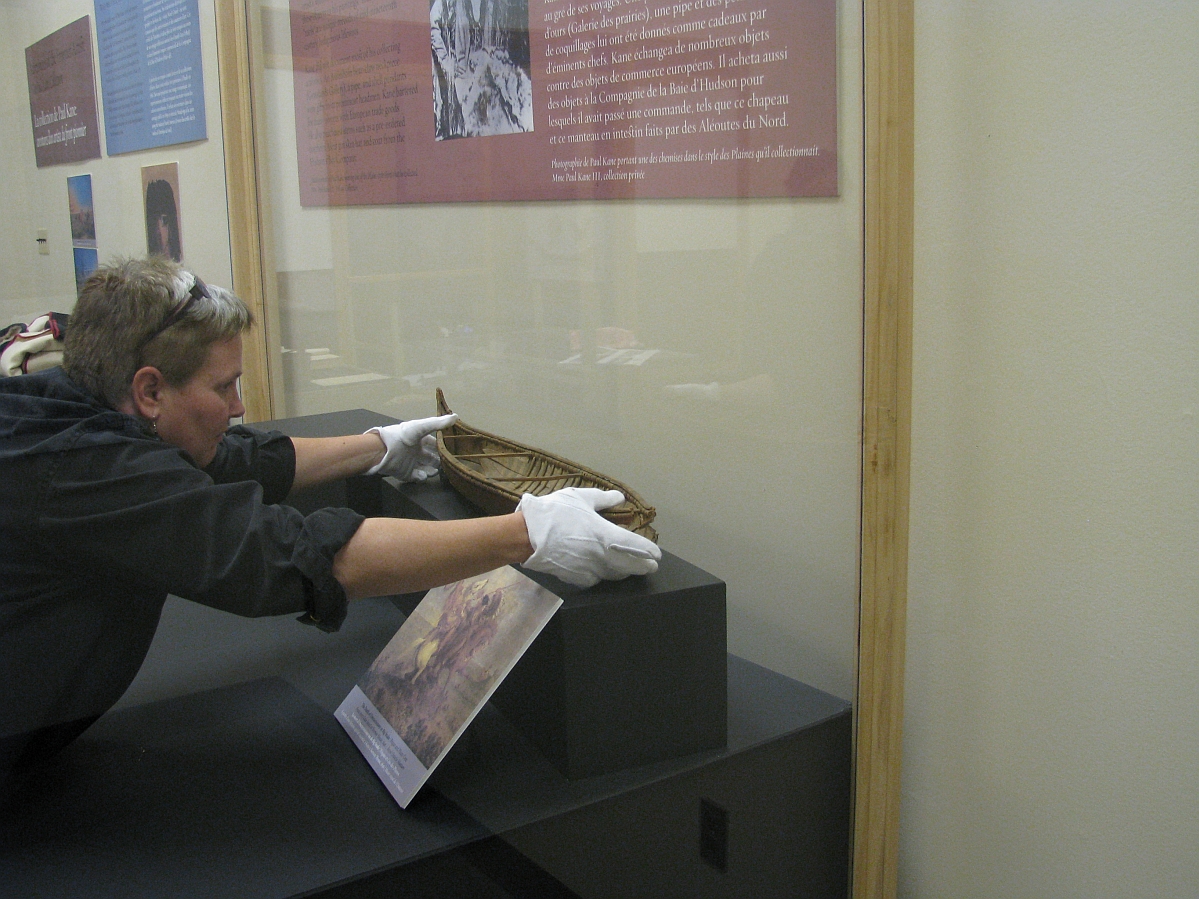
A museum staff person reaching into a display case, placing a model canoe in place.

A model canoe is carefully put in place. The staff wear cotton gloves to protect objects from dirt and oils that may be on their hands.

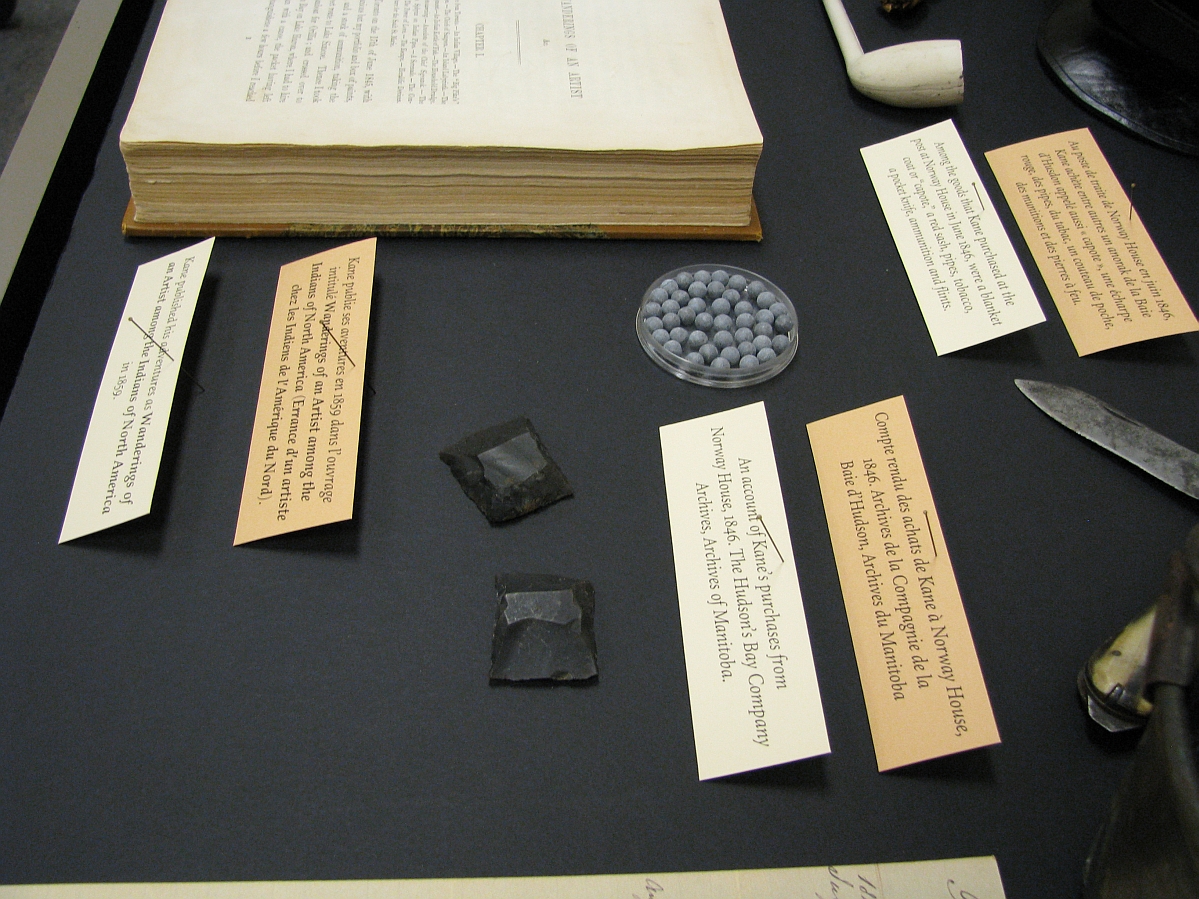
Labels propped up and placed in a display case next to objects.

Labels also have to be placed in the cases. These are supported simply on pins.

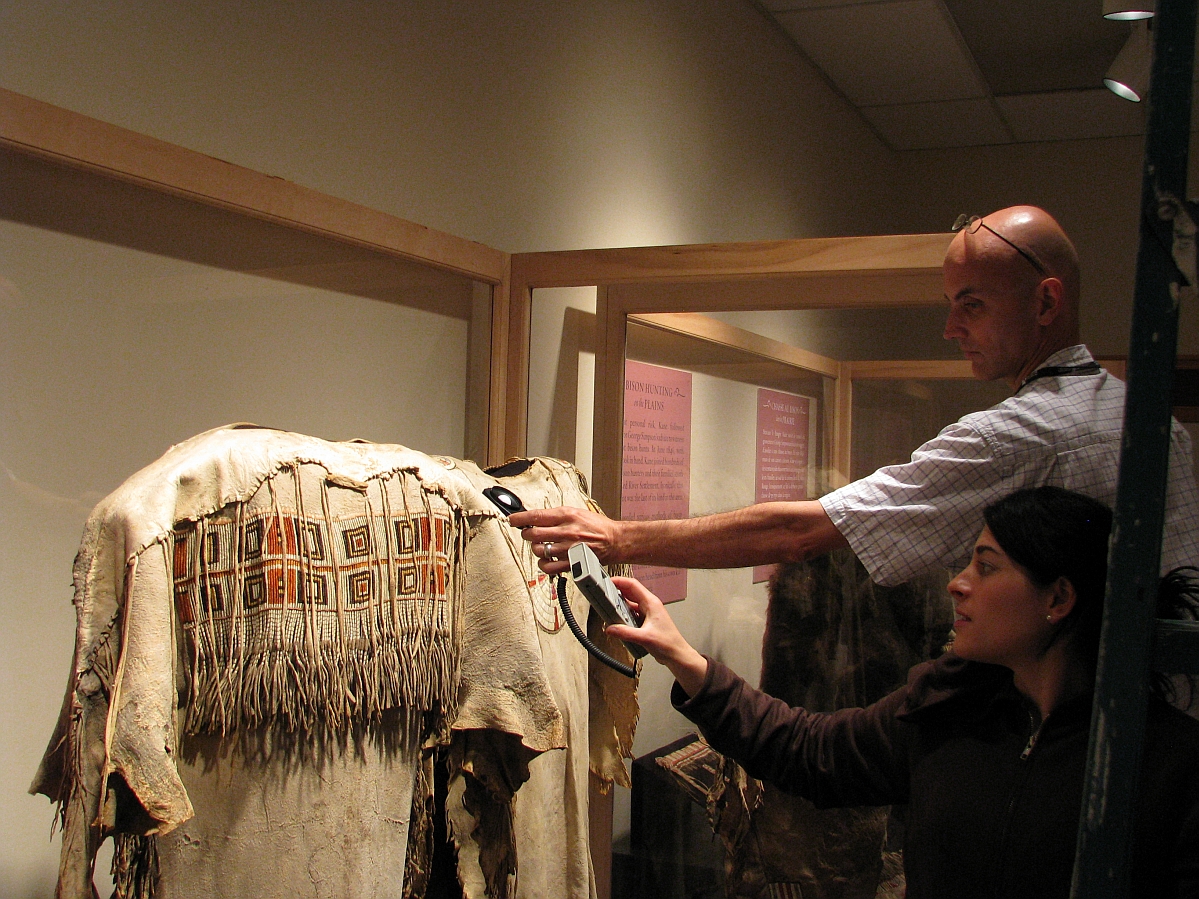
Two museum staff persons holding either end of a light reader over an object in a display case.

When all the artifacts and labels were in place, Conservator Lisa May checked light levels. Too much light can be damaging to objects; we try to restrict light exposure by using lower wattage lamps, turning down dimmers, aiming lights away from very sensitive things, and in general limiting exhibit times and storing collections in the dark as much as possible.

The final step was the closing up of the cases, done again by Productions staff.

Come down to the Museum to see the finished exhibit! It’s up until April 2011.


Image: Taking a reading with the light meter. The sensor is connected by a cord to the rest of the meter.

The Uglier the Better

When people find out that I study and collect wild plants I suspect that they have visions of me tromping through the woods to study beautiful orchids and majestic wildflowers. The fact of that matter is that attractive plants, orchids in particular, are pretty well-studied compared to many other groups.

Orchids attract a devoted cult of nature lovers who, for fun on their weekends and vacations, wander through bogs and remote forests in the hopes of discovering new species or taking a perfect photograph of a rare Lady’s-slipper. In fact Manitoba has three non-profit organizations (Nature Manitoba, Native Orchid Conservation Inc. and Conserve Native Plant Society Inc.) that are involved in some way or another in the appreciation, documentation and conservation of orchids. So I’m not too worried about the orchids-I know that they are being meticulously documented by their legions of fans.

Close-up on the top of a plant with small fringed white flowers.

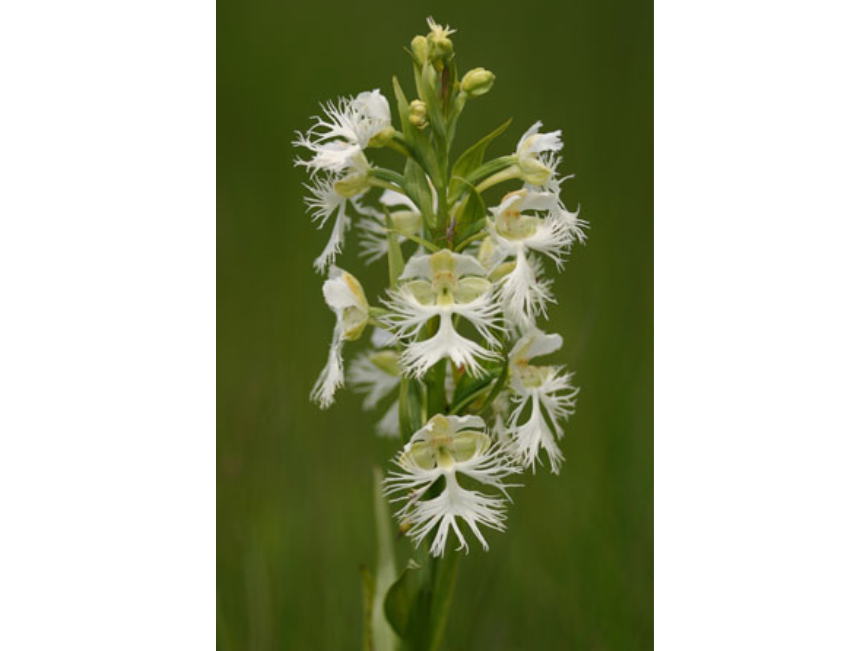
A stunning Western Prairie Fringed Orchid (Platanthera praeclara).

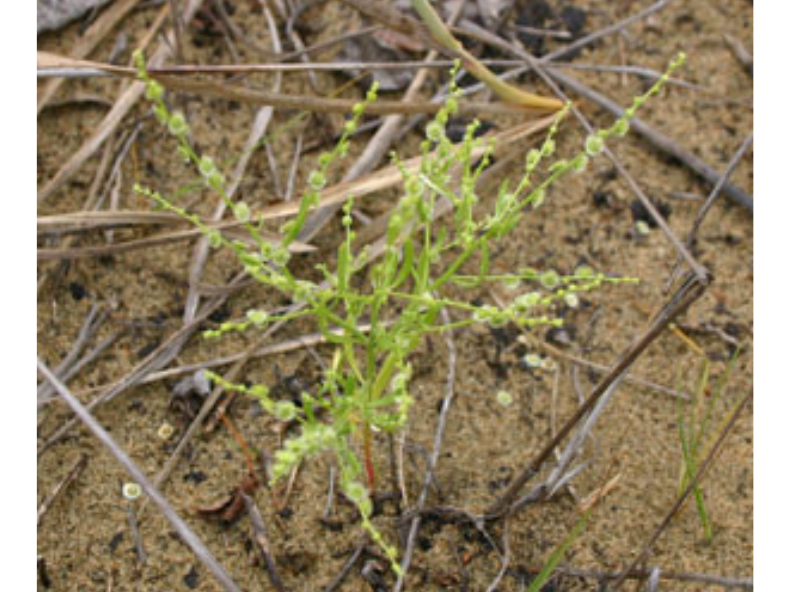
Close up on a small wispy plant growing in the ground.

We know very little about the rare annual Winged Pigweed (Cycloloma atriplicifolium).

What I am worried about are the ugly plants-the wind-pollinated ones with tiny flowers that grow in very specific microhabitats. These plants are either completely overlooked or regarded as weeds and stepped on. They are like neglected younger siblings in a large family that only get attention when they do something bad, like grow in someone’s garden or in a crack in the sidewalk. We don’t know much about the distribution and ecology of these ugly species and since they are unattractive and sometimes hay-fever inducing, no one loves them enough to study them. No one but me. I’ve developed and odd fondness for these homely plants because they are a challenge to locate and identify. I find it very satisfying to be able to identify plants that most amateur and even some professional botanists ignore.

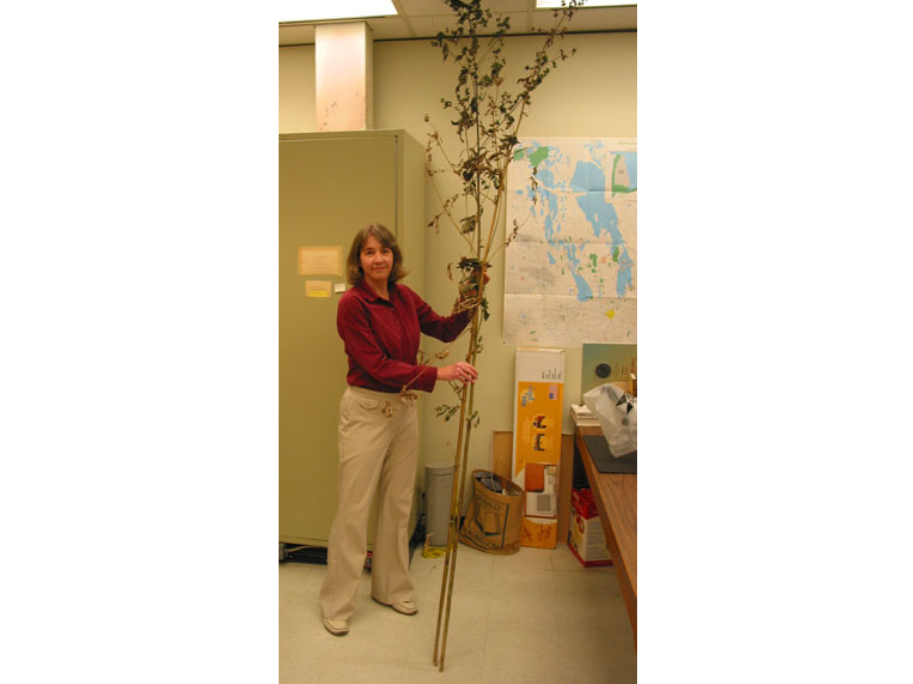
Dr. Diana Bizecki Robson in the botany lab holding a large ragweed specimen, taller than herself.

This ugly Giant Ragweed (Ambrosia trifida) specimen that was recently donated is 3 m tall.

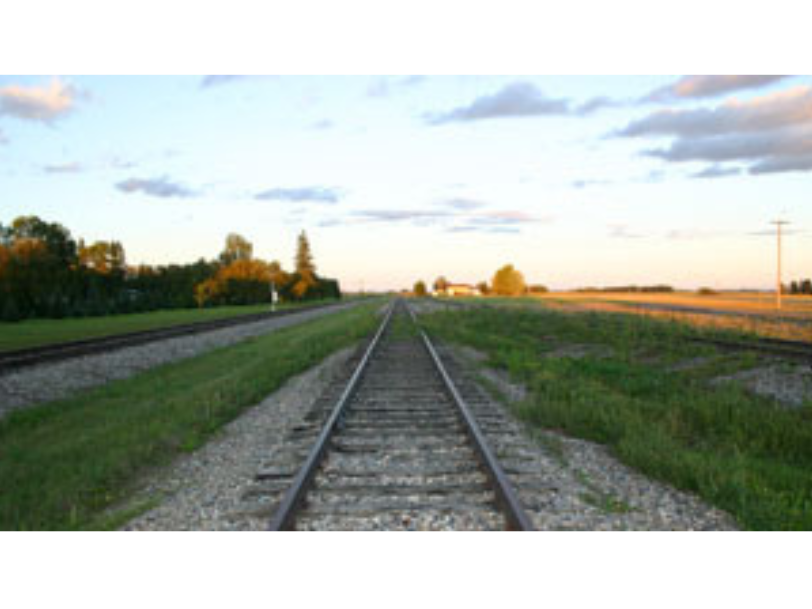
View looking down a set of railroad tracks with grass growing on both sides.

Abandoned railroad tracks are a great place to collect exotic weeds!

One of my recent projects has been to identify “taxonomic gaps” in the botanical collection here at the Museum. I prepared a list of plants that I know have been found in Manitoba but that we don’t have many (or any) specimens of. Most of them were “ugly” wind-pollinated sedges, rushes, grasses or exotic, naturalized “weeds.” Others were rare native annuals that don’t germinate every year and can be hard to find. Some were at the edges of their North American ranges and not present in high numbers. Quite a few are aquatic plants (like pondweeds) that grow in lakes, sloughs and rivers. Not a single native orchid though is unrepresented in our collection. In addition to our collection of specimens we also have a slide collection which features mostly pretty plants; there are 300 photographs of orchids but only one slide of goosefoot plant.

So I don’t really need a lot beautiful wildflowers in my collection (unless they are from a part of the province that hasn’t been visited before). What I DO need are the weeds growing by the side of the road, the pondweeds that cling to your leg when you’re going for a swim in the lake and the grass-like plants that grow in damp, muddy areas. But no orchids please, they’re just not ugly enough.

Dr. Diana Bizecki Robson

Dr. Diana Bizecki Robson

Curator of Botany

Dr. Bizecki Robson obtained a Master’s Degree in Plant Ecology at the University of Saskatchewan studying rare plants of the mixed grass prairies. After working as an environmental consultant and sessional lecturer…
Meet Dr. Bizecki Robson